







Whole wheat pizza dough with freshly milled flour produces a hearty and delicious pizza crust perfect for all of your favorite toppings.

Freshly milled flour adds extra flavor and a chewy, delicious texture to homemade pizza dough. With a handful of simple ingredients and one hour of rise time, you’ll have the perfect base for homemade pizza sauce, crumbled ground beef sausage or sliced pepperoni, and lots of cheese and veggies.
Whole grains also give your pizza a boost of fiber, vitamins, and minerals. Store-bought white flour lacks the bran and germ, components of whole wheat that contribute to higher nutritional value. Milling your own flour keeps the nutrition intact, making pizza night that much more special.
One of our favorite ways to enjoy both freshly milled flour and delicious pizzas, this easy recipe makes four 12-inch pizzas that will easily feed the whole family.
Choose traditional pizza toppings like pepperoni and sausage, or branch out with alfredo pizza or breakfast pizza toppings. Serve with a green salad, some pickled red onions, and a side of homemade ranch dressing for dipping.
Why You’ll Love This Recipe
Deep flavor – Freshly milled whole wheat adds robust flavor to homemade pizzas. It’s earthy and wholesome with a touch of natural sweetness.
Better nutrition – When milled fresh and used shortly after, wheat flour maintains more of its vitamins, minerals, and fiber than the flour you’d buy at the grocery store.
Great use of milled flour – If you’re new to milling flour, this whole wheat pizza dough recipe is a great avenue to put all your fresh flour to good use.
Ingredients
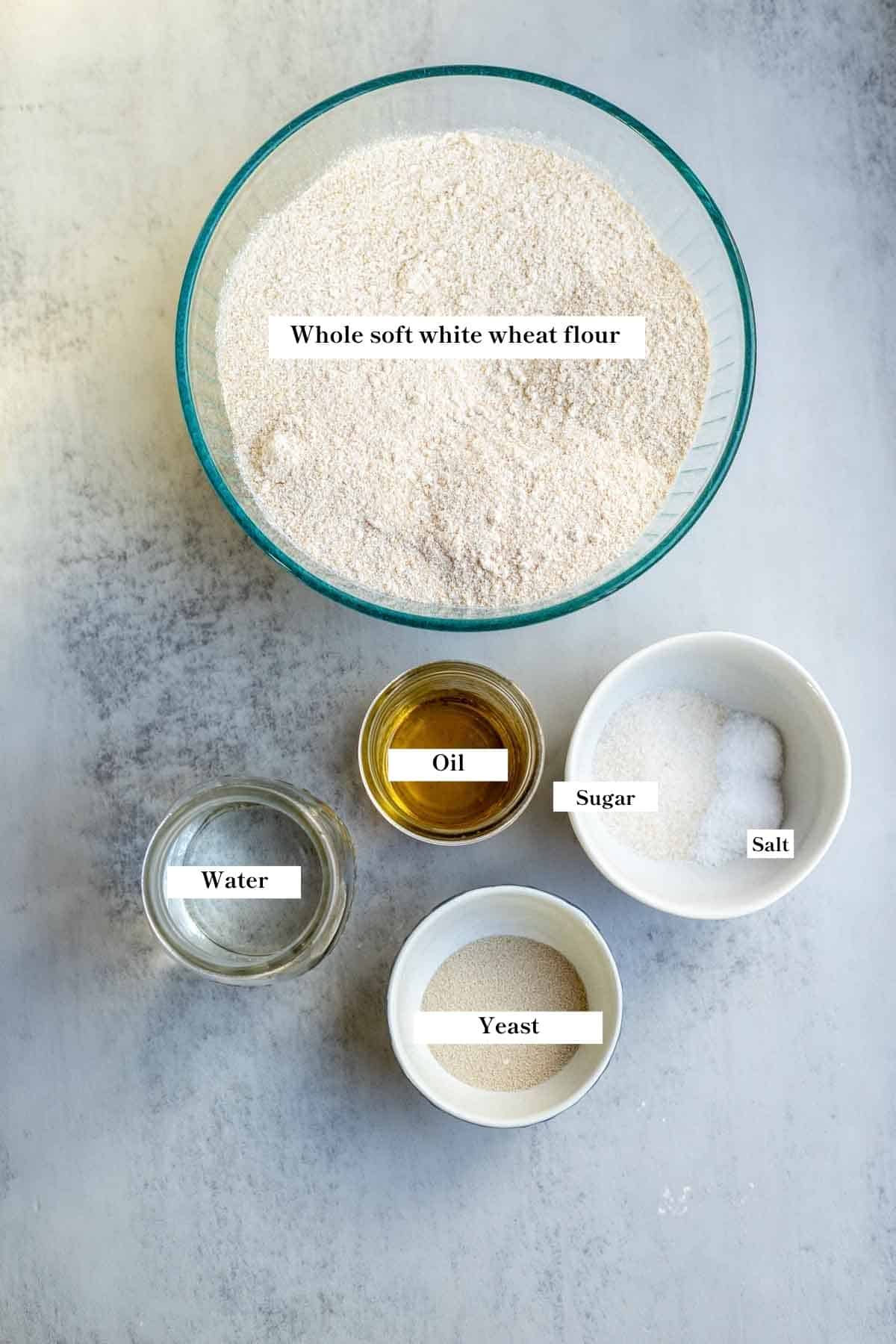
Flour – I use soft white wheat berries, milled at home. Weighing freshly milled flour with a kitchen scale provides the most accuracy.
Water – I always recommend filtered water, and I love my Boroux filters.
Oil – Extra-virgin olive oil adds wonderful flavor, but you can use whichever oil you prefer.
Yeast – Instant yeast works more quickly, while active dry yeast has a slow rise. Try my sourdough pizza dough, too.
A full ingredient list with exact amounts can be found in the recipe card below.
Tools You May Need
Grain mill – I use a Mockmill.
Stand mixer – A stand mixer makes the kneading process a breeze.
How to Make Homemade Whole Wheat Pizza Dough
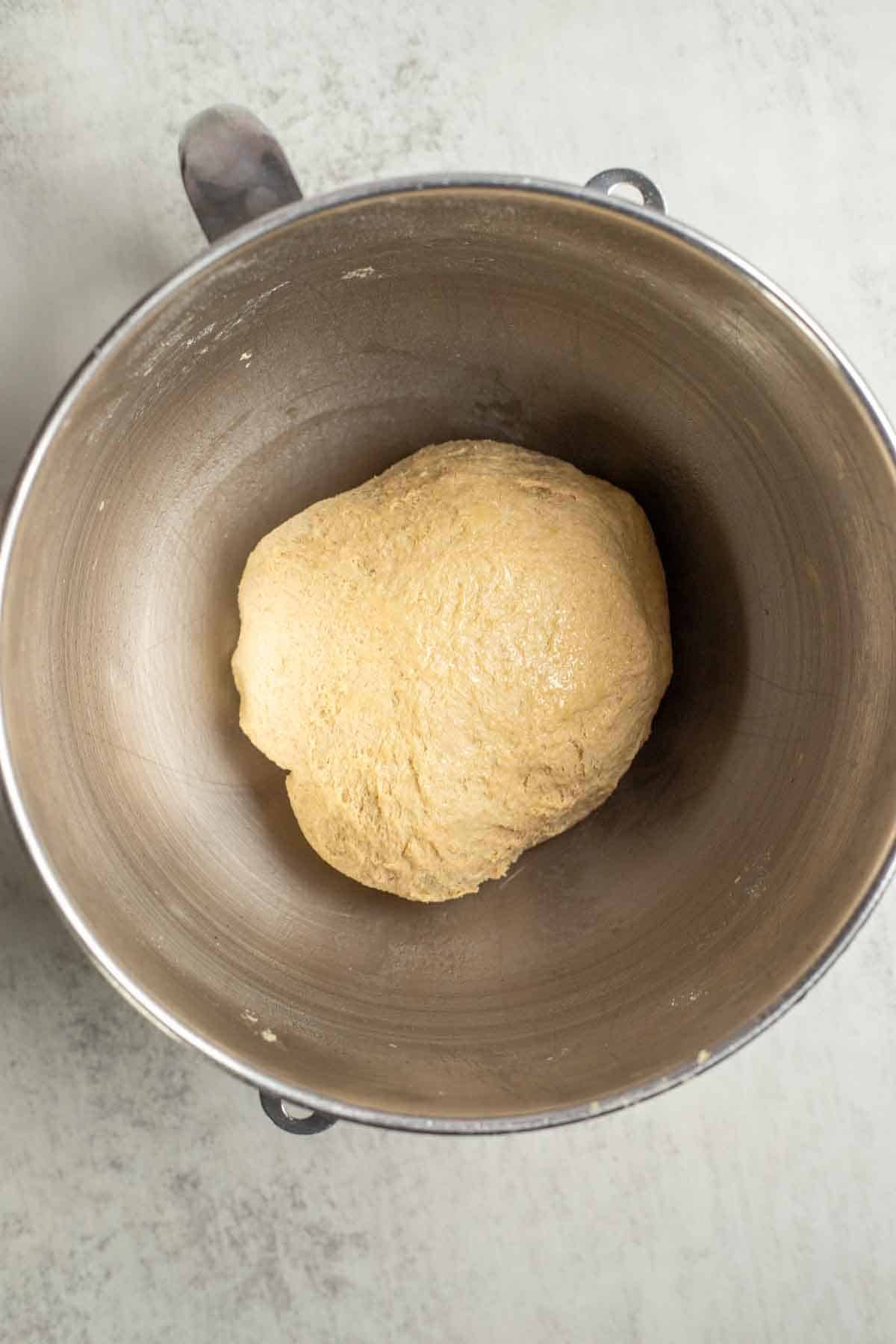
Step 1: Add flour, water, salt, oil, yeast, and sugar to the bowl of your stand mixer with a dough hook attachment. Mix on low to combine, then increase to medium speed and mix until the dough is smooth and elastic. Freshly milled flour requires longer kneading to develop the gluten. The mixing may take 8 to10 minutes or more. Use the windowpane test (see notes) to ensure the dough is ready.
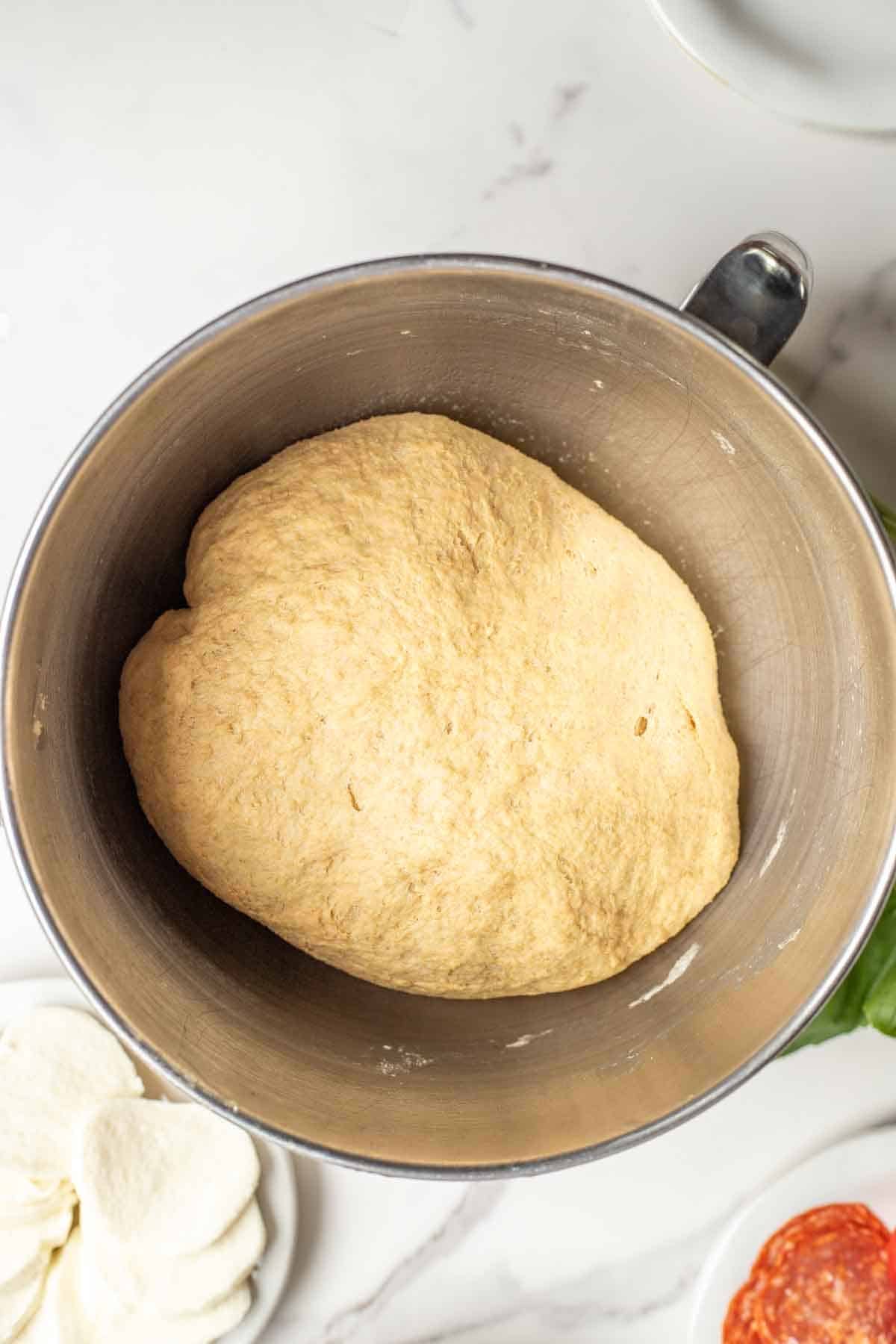
Step 2: Once the dough passes the windowpane test, cover the bowl with a lid or a clean kitchen towel and let it rise for about one hour or until doubled.
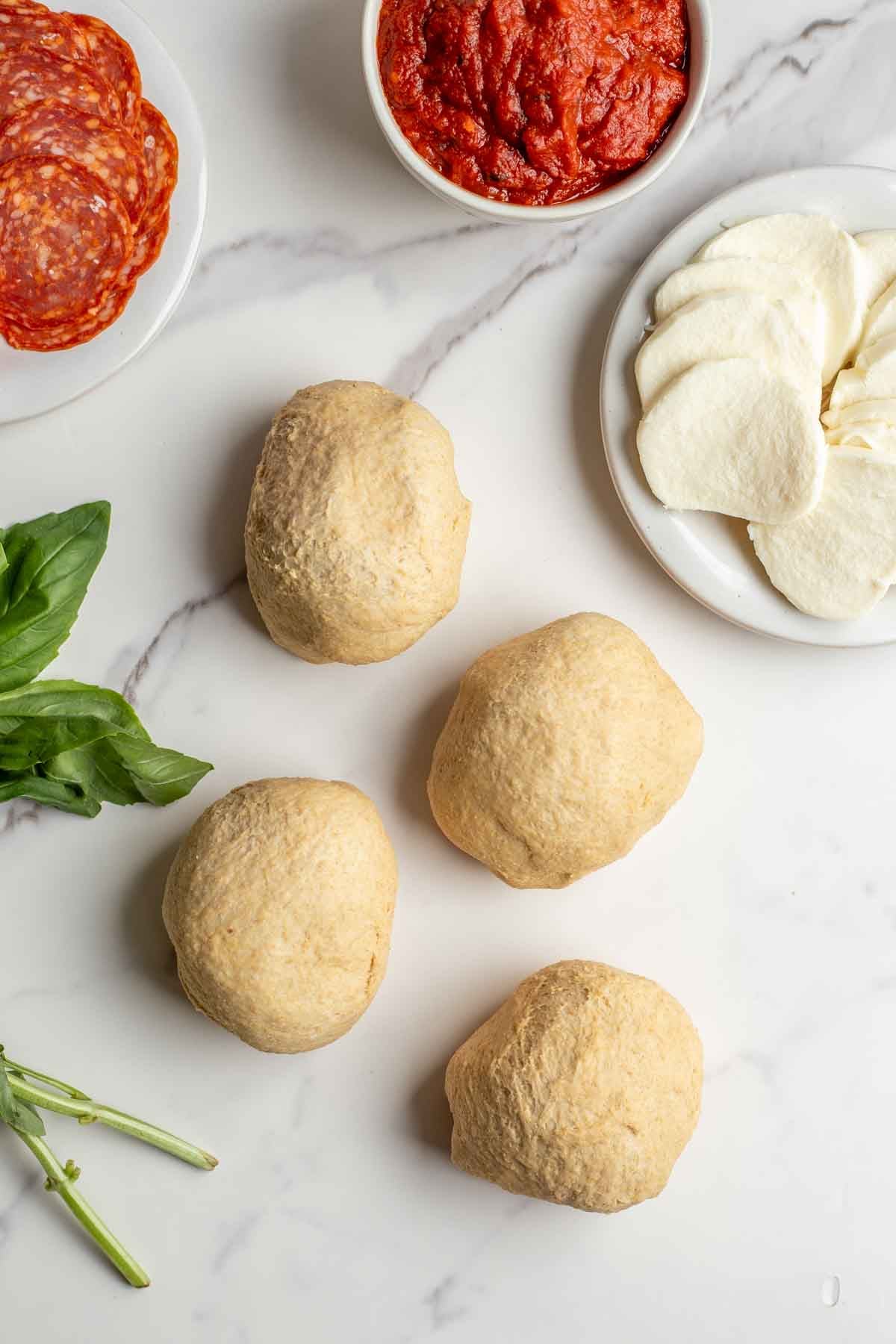
Step 3: While the pizza dough rises, preheat the oven to 425 degrees Fahrenheit. If using pizza stones, you can place them in the oven to preheat now. After the dough has doubled, place it on a lightly floured work surface and use a bench scraper to split it evenly into four pieces.
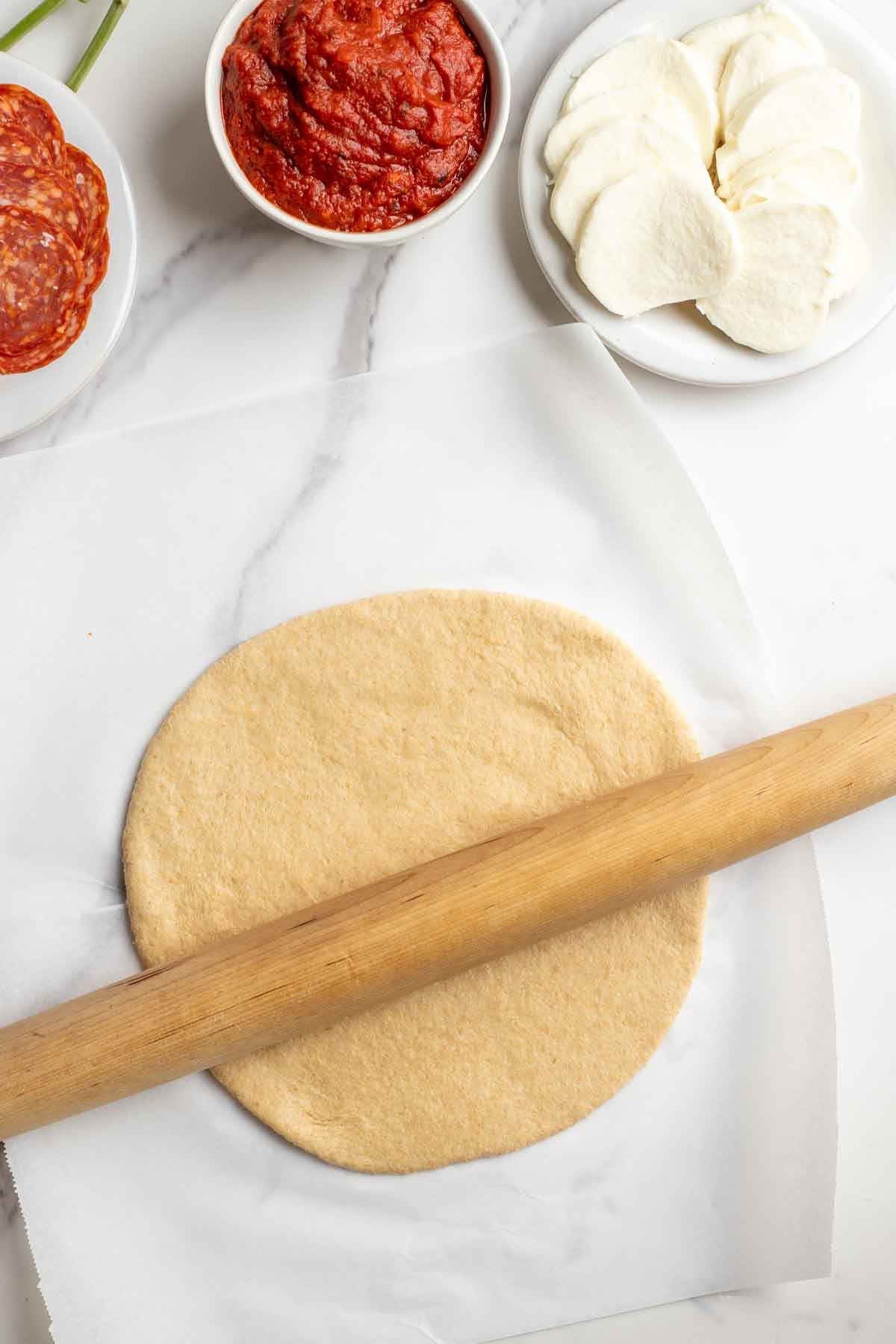
Step 4: Use a rolling pin to roll each of the four balls of dough into a 12-inch circle. Add sauce and your toppings of choice.

Step 5: Place the pizzas on pizza pans and bake for 12 to 15 minutes or until cooked through and bubbly. The crust should be golden brown.

Step 6: Let the pizzas cool for several minutes before slicing. This lets the cheese set so that it doesn’t pull away from the crust during slicing. Enjoy!
Tips
- Using warm water when mixing the dough may bring a faster rise.
- If your dough is sticky, try wetting your hands or rolling it out between sheets of parchment paper. Adding more flour to the dough may result in a dry crust. Whole wheat flour is more absorbent than white flour, but it absorbs more slowly.
- Rising dough in a warm place can speed up the process.
- Placing the dough on parchment paper makes it easier to transfer to the pizza pans from your workspace.
- A pizza stone preheated in the oven can produce a crisp crust.
- Don’t overload the sauce or toppings. Too much on top can create a soggy crust.
- If you are using freshly milled grains for this recipe, I recommend weighing the flour instead of using volume measurements. Grain mills vary greatly – some create very fine and fluffy flour, while others are a little more coarse. This makes volume measurements unpredictable. Using a kitchen scale and calculating the grams is much more reliable, ensuring you end up with a delicious end product.

Recipe FAQs
Leftovers can be kept in an airtight container in the refrigerator. Homemade pizza also freezes well and can be reheated in the oven at a later time.
A whole wheat pizza crust tastes wholesome and sweet, with a robust, earthy flavor. The chewy texture is enjoyable, though more dense than crusts made with all-purpose flour.
You can prepare the dough, wrap it in plastic wrap, and keep it in the refrigerator for a few days until ready to bake. Let it warm to room temperature before rolling out.
When wrapped securely, this dough can be frozen for several months. Frozen pizza dough should be thawed in the refrigerator or at room temperature.
Traditional toppings work just as well with a whole wheat crust as with a typical all-purpose flour crust.
More Freshly Milled Recipes from the Farmhouse
- Whole Wheat Blueberry Muffins
- Whole Wheat Cake
- Whole Wheat Brownies
- Freshly Milled Whole Wheat Pancakes
- Whole Wheat Cinnamon Rolls
- Quick Sourdough Discard Pizza Crust
If you try this recipe and love it, I would love it if you could come back and give it 5 stars! Tag me on Instagram @farmhouseonboone.

Whole Wheat Pizza Dough with Freshly Milled Flour

Equipment
Ingredients
- 4 cups soft white whole wheat flour, 560 grams
- 1½ cups water, 354 grams
- 2 teaspoons salt, 10 grams
- 4 tablespoons olive oil, 44 grams
- 4½ teaspoons yeast, 14 grams
- 2 tablespoons sugar, 24 grams
Instructions
- Add flour, water, salt, oil, yeast, and sugar to the bowl of your stand mixer with a dough hook attachment. Mix on low to combine, then increase to medium speed and mix until the dough is smooth and elastic. Freshly milled flour requires longer kneading to develop the gluten. The mixing may take 8 to 10 minutes or more. Use the windowpane test (see notes) to ensure the dough is ready.
- Once the dough passes the windowpane test, cover the bowl with a lid or a clean kitchen towel and let the dough rest for about one hour or until doubled.
- Preheat the oven to 425 degrees Fahrenheit. If using pizza stones, you can place them in the oven to preheat now. After the dough has doubled, use a bench scraper and split it evenly into four pieces.
- Use a rolling pin to roll the four balls of dough into circles about 12 inches wide. Add sauce and your toppings of choice.
- Place the pizzas on pizza pans and bake for 12 to15 minutes or until cooked through and bubbly. The crust should be golden brown.
- Let the pizzas cool for several minutes before slicing. This lets the cheese set so that it doesn’t pull away from the crust during slicing. Enjoy!
Notes
Nutrition
Nutrition information is automatically calculated, so should only be used as an approximation.









I’ve loved all your sourdough recipes for quite a while, I’m really wanting to mix sourdough and fresh milled more vs yeast. do you have any tips for that?? I’d love to stop using yeast and only use sourdough all together.
I use mostly fresh milled hard white for mine at 140 grams fresh milled per cup of ap flour listed. Typically fmf will proof faster than reg sourdough recipes made with ap flour so keep an eye on it. I have more sourdough recipes using fresh milled on my blog and I have a fresh milled class for purchase on the blog.
Delicious! I’ve made it with both soft and hard white wheat (separately, not combined) and it has turned out delicious each time. We like to keep this on rotation with your sourdough pizza recipe!
I thought soft white wheat was more for cookies and cakes, and hard white was for anything requiring kneading (including pizza dough)?
At what stage would you recommend freezing these? I’ve made your sourdough pizza dough before and had great success freezing it after its 8hr bulk rise. Would you freeze after the ~1hr bulk rise with this?
Yes, that would work!
Can you store the dough in the fridge overnight to bake the next day if you only want to use half for one evening and half the next? (Thinking after shaping and dividing into 4, storing 2 of the dough balls in the fridge.)
Yes, you can.
Thank you for this recipe. Would this recipe also work if you added sourdough discard in addition?
Yes.
Such a delicious recipe that our whole family loves
Such a delicious recipe that our whole family loves!
We have only recently switched to clean eating along with fresh milled wheat. We aren’t eating sugar either. What would you suggest to replace the sugar with in this recipe?
You can replace it with honey.
I have never tried soft white wheat for a crust because of the lack of gluten. I usually use a combination of Kamut and hard white wheat. I may try it.