
This stuff is the best diaper rash cream on the planet. The bentonite clay aids in quick healing, and the zinc oxide creates a moisture barrier for baby’s skin.
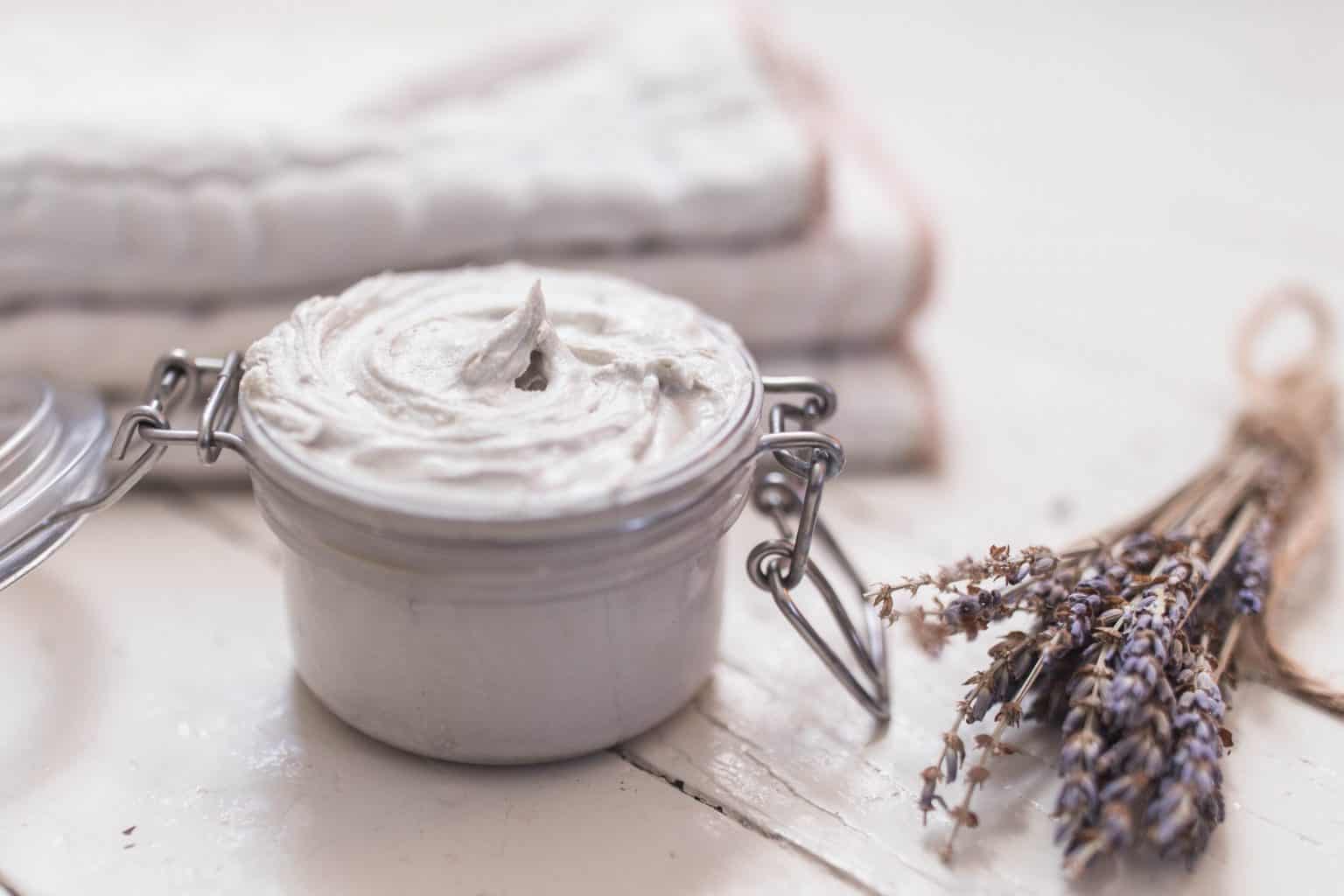
I recently shared my favorite cloth diaper covers and my cloth diaper washing routine. Seemed only fitting to me that I stick to the topic of baby bums, and talk about my favorite cloth diaper cream.
I like to make my own diaper rash cream to avoid the harmful chemicals found in conventional brands.

The ingredients in this super simple cream are all natural and effective.
Our skin is our body’s largest organ, and chemicals that go on it actually make their way in.
Think about nicotine patches, and progesterone cream. They work, because the active, medicinal ingredients absorb into the body.
I think sometimes we like to assume that lotion, shampoo, and cosmetic products are benign. We tell ourselves that, yes, they have bad stuff in them, but they just sit on top of the skin.
If only it were true.

The last thing I want to do is slather a chemical laden cream all over my baby’s rash-y bottom. This cream solves that problem.
But…does it actually work?
Yes, my friend, it most certainly does!
How is Bentonite clay healing for a diaper rash?
Bentonite clay has amazing healing and detoxifying benefits. It absorbs moisture and removes toxins and impurities. It also fights bacteria.
Basically, its the bees knees for healing a diaper rash.

Why add zinc oxide to this homemade diaper rash cream?
Zinc oxide is great for adding a barrier between the wet diaper and the skin. This gives the body a chance to heal on its own, without moisture and other not-so-pleasant things interfering with the process.
I wrote more about zinc oxide in my post on How to Make All Natural Sunscreen. Just like it provides a moisture barrier, it also creates a barrier between the sun and skin.
Shea butter, coconut oil, and essential oils
The shea butter and coconut oil give this diaper cream a nice consistency, akin to the store bought creams you may be used to.
Lavender and Roman Chamomile essential oils are commonly used for their skin-healing properties.

Is this diaper rash cream safe for cloth diapers?
The answer to this question depends on who you ask.
Some people say zinc oxide is totally safe for cloth diapering. Personally, I would rather leave it out. I’m afraid it would put a moisture barrier on the diaper.
The bentonite clay is sufficient to heal rashes. If your baby has a really bad rash, it may be best to bust out the big guns and put him/her in a disposable diaper for a few days.
We hardly ever have to deal with rashes, so I prefer to make the cream with all the ingredients, and use it sparingly.
*If your little one ever has a diaper rash that will not ago away for several days, you are most likely dealing with yeast. In this case, stop all other creams and fight the infection with anti-fungal cream and essential oils.

Diaper Rash Cream Ingredients
1/2 cup shea butter
4 tablespoons coconut oil
4 tablespoons zinc oxide
4 tablespoons bentonite clay
5 drops lavender and/or Roman Chamomile, essential oil
Diaper Rash Cream Process
- Add the shea butter and coconut oil to a double boiler. Heat until melted.
- Stir in the zinc oxide.
- Stir in the bentonite clay.
- Add the essential oil and stir.
- Pour in a lidded mason jar.
It will keep for one year.
Shop the ingredients
The following are affiliate links, which means I make a small commission at no extra cost to you.:)
Want essential oils 25% off? Sign up HERE for a wholesale account.
Download the all natural diaper cream label


Print the recipe Best diaper rash cream remove

The Best Diaper Rash Cream

Video
Equipment
- Double Boiler
Ingredients
- 1/2 cup shea butter
- 4 tablespoons coconut oil
- 4 tablespoons zinc oxide
- 4 tbspatablespoons bentonite clay
- 5 drops lavender or chamomile essential oil, optional
Instructions
- Add the shea butter and coconut oil to a double boiler. Heat until melted.
- Stir in the zinc oxide.
- Stir in the bentonite clay.
- Add the essential oil.
- Store in a lidded mason jar, for up to one year.
Notes
- Keeps for one year.
Nutrition information is automatically calculated, so should only be used as an approximation.
Grab my free ebook with even more natural body essential oil recipes
[thrive_lead_lock id=’14105′]Hidden Content[/thrive_lead_lock]
Pin it for later







So excited for this. When I go to apply it, it turns very runny. Like it’s firmer in jar but as soon as I put it on the skin, it is runny. So it doesn’t really “coat” the skin like I think it should. Almost feels like the equivalent of rubbing jojoba oil or something on skin versus a thick cream. If that makes sense… is yours like that?
No, it shouldn’t be runny—it is designed to mimic a thick, conventional cream.
Because the recipe relies on natural oils like coconut oil and shea butter, a warm room or body heat can easily liquefy it if the ingredients separated during cooling.
Here is a quick fix to restore its thick, coating texture:
1. Re-melt: Place the jar in a pan of gently simmering water just until the mixture liquefies.
2. Stir: Whisk thoroughly to completely redistribute the heavy bentonite clay and zinc oxide powders back into the oils.
3. Flash Cool: Put the jar straight into the frfrigerator or freezer for 20 to 30 minutes until solid. Fast-cooling forces the fats to bond quickly, trapping the powders in place so it stays thick upon skin contact.
Tip for future batches: If your home is very warm, reduce the coconut oil slightly or add a tiny pinch of melted beeswax to give it a firmer, melt-resistant hold. you can also find more information on my sister Laura’s blog…OurOilyHouse
Hi is it 5 drops of lavender EO and 5 drops of chamomile EO so a total of 10 drops of essential oils?
It is a total of 5 drops. You can use all lavender or all chamomile or mix of the two totaling 5 drops