
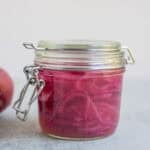
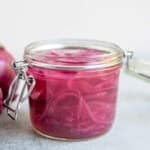
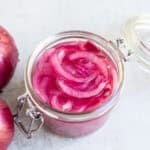
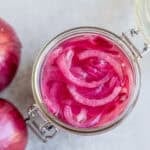
Rich in probiotics and full of tangy, zesty flavor, fermented onions are easy to prepare and pair refreshingly with many different dishes. This simple fermentation method is one of the easiest ways to preserve and enjoy onions, turning a simple vegetable into a robustly-flavored and health-packed garnish.
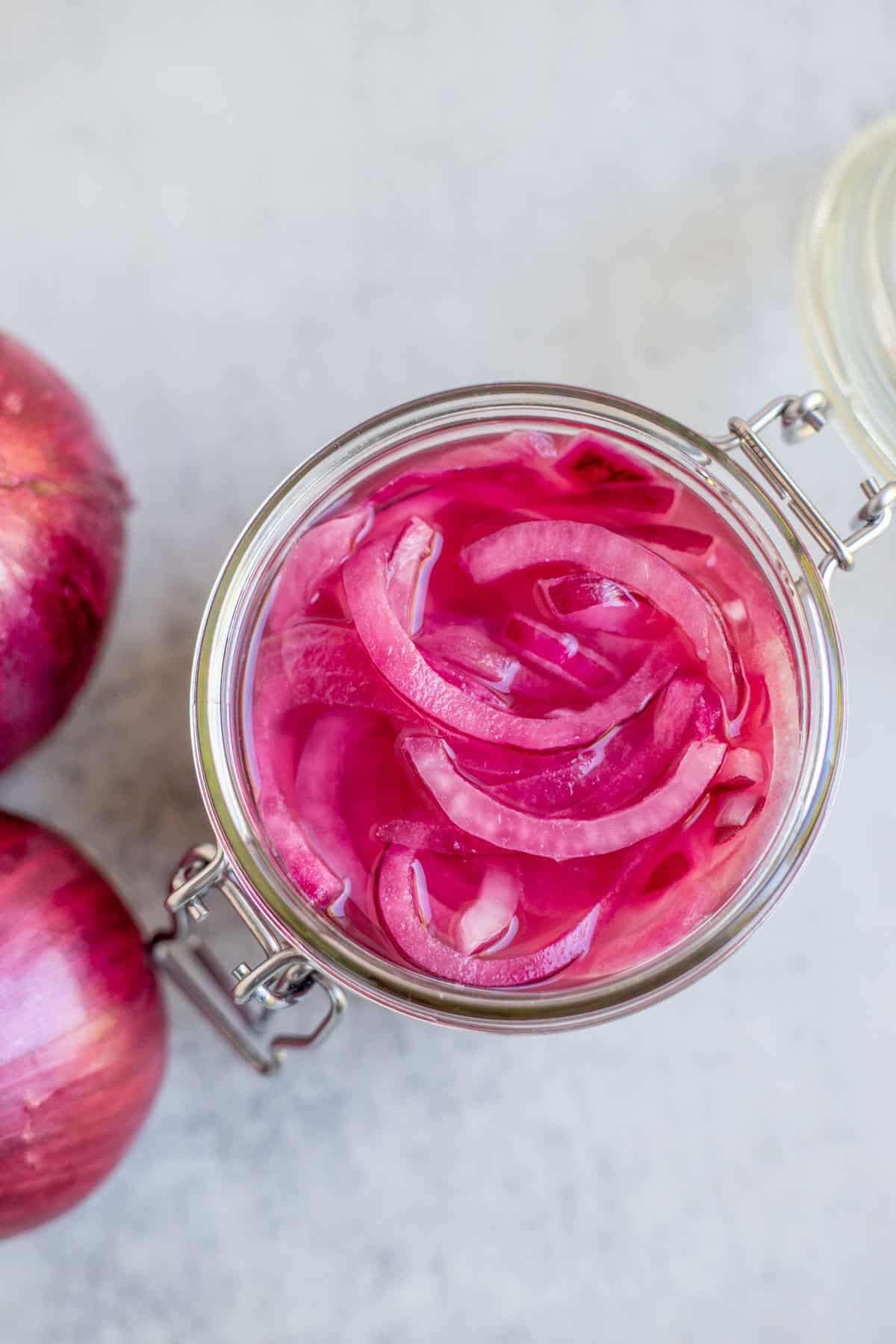
Fermentation is the key to many things. With fermentation, you can make your own sourdough starter from scratch, leading to a joyful life of baking all kinds of sourdough treats, like sourdough croissant bread, whole wheat sourdough dinner rolls, and sourdough peanut butter cookies.
Fermentation is also the answer for thick, creamy Greek yogurt and refreshing milk kefir, perfect for berry breakfast smoothies.
But like these fermented onion slices, fermentation is also a favorite way for amplifying the nutrition and extending the life of many tasty vegetables. Check out this list of twelve easy fermented vegetables!
You’ll love how simple this recipe is. With nothing more than onions, water, and salt, you’re ready to start filling those jars.
After creating a salty brine and submerging the onions in it, the rest of the process is hands-off and simply waiting for the good bacteria to do their work. These naturally present bacteria eat the natural sugars in the onions, turning them into lactic acid, a preservative. This not only extends the life of the vegetable, but it also adds that zesty kick of tangy flavor.
I find wide-mouth glass jars to be the most convenient container for this recipe, allowing you plenty of space to fill the jars and serve the onions when they’re ready. A few simple tools, like fermentation lids and fermentation weights, can also make the process simpler if you have them. If you don’t, there’s nothing to worry about. You can absolutely prepare and enjoy these zesty fermented onions without any special tools.
Serve these crisp, sour onion slices with crockpot chicken tacos, on a savory egg salad sandwich, alongside pot roast, or wrapped up in soft sourdough pita bread for beef gyros.
Why You’ll Love This Recipe
Taste and texture – Fermentation time adds a tangy twist to sliced onions, while simultaneously taming the heat. The onions also keep a delightfully crisp texture that works well in a variety of dishes.
Simple ingredients – With a simple saltwater brine, this recipe is a delicious way to get started with fermentation and food preservation with minimal effort. It’s an easy recipe with the most basic ingredients, perfect for transforming a common ingredient like onions into a powerful and healthy side dish.
Probiotic-rich – Fermented onions are teeming with beneficial bacteria and wild yeast, which not only improve gut-health, but also boost immunity and digestion.
Ingredients
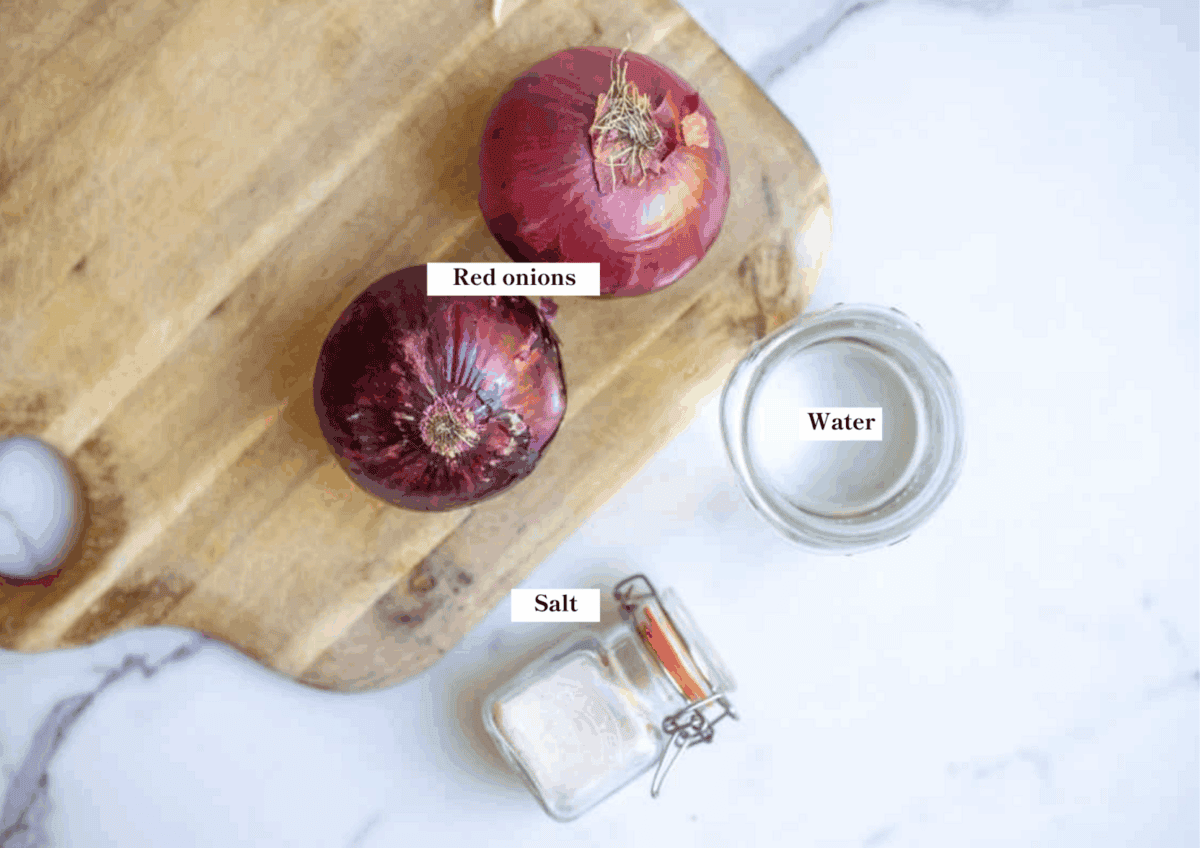
Onions – I used red onions in this recipe, but feel free to use your favorite kind.
Water – Filtered water will provide the best results, as the chlorine and other chemicals found in tap water can kill the natural yeast and good bacteria. If you’re interested in learning more about how and why we filter our water, read my post on why I use Boroux water filters.
Salt – Sea salt will add better flavor and texture to the onions than table salt. Additionally, the naturally present minerals in sea salt will support the healthy bacteria in the fermentation process.
A full ingredient list with exact amounts can be found in the recipe card below.
Tools You May Need
Fermentation lids – Fermentation lids utilize a one-way valve to release gases while preventing oxygen or other contaminants from entering the jar. This keeps the environment clean and ideal for fermentation. A clean towel or coffee filter with a rubber band will work, as well.
Fermentation weights – These little glass weights keep the onions submerged in the salt brine. I’ve also used a smaller glass jar that can sit on top of the onions inside the bigger jar, serving the same purpose.
Jars – Canning jars, like Mason jars, work great. You can use one quart-sized jar or two pint-sized jars for this recipe.
How to Make Fermented Onions
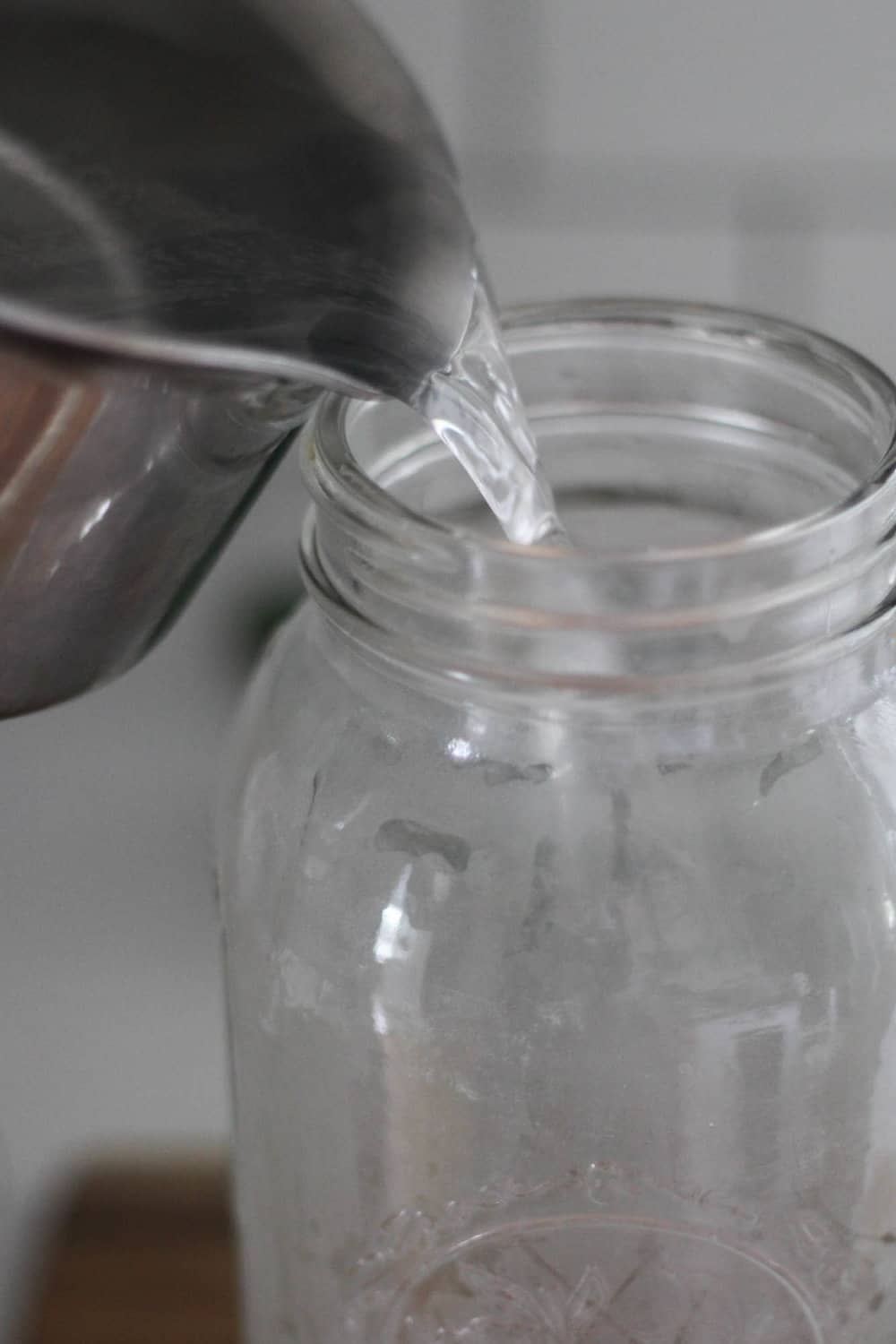
Step 1: Prepare the brine by warming the water in a saucepan and adding the salt. You do not need to boil the water. Stir until the salt is fully dissolved, then set it aside to cool to room temperature.
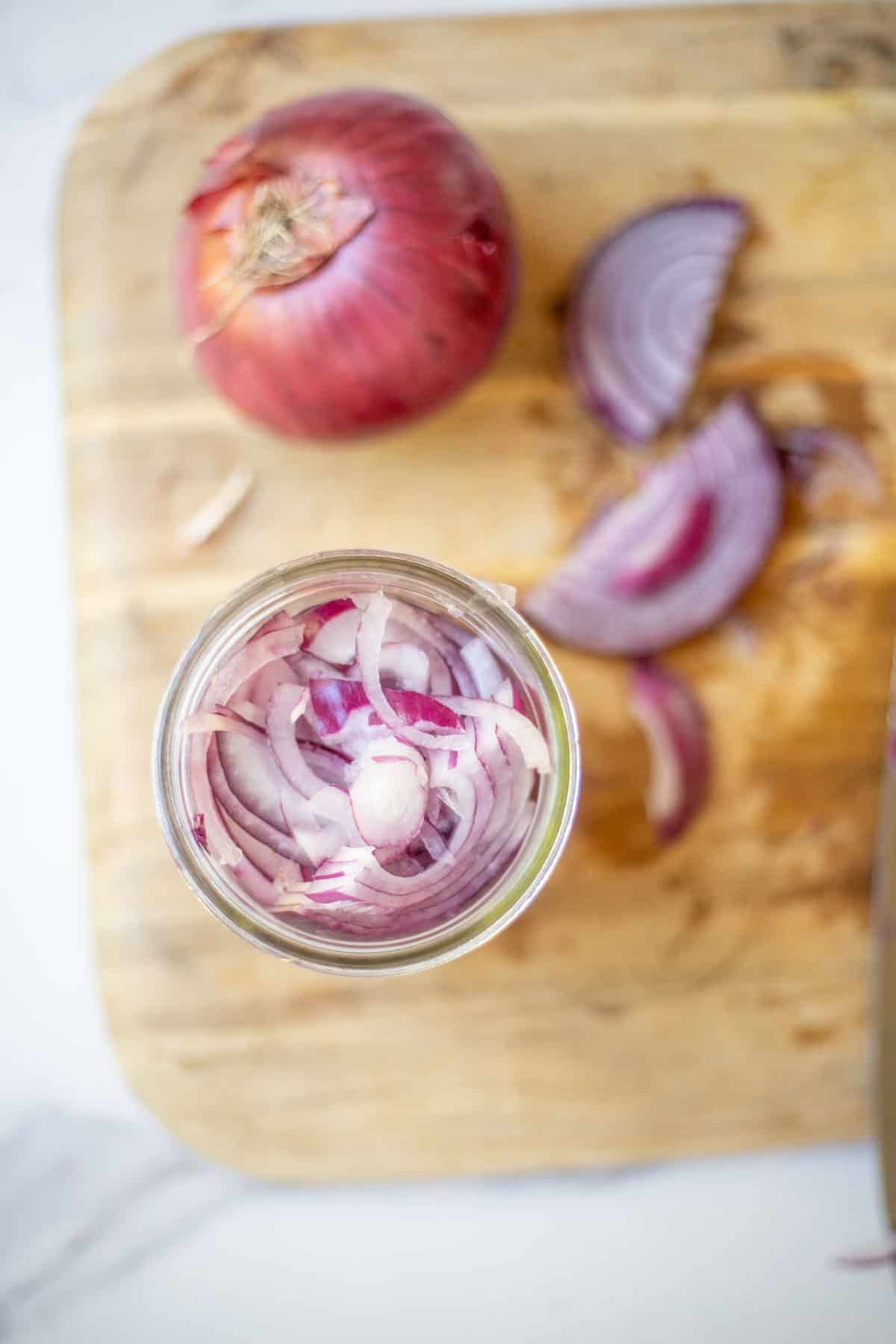
Step 2: Peel the onions, removing the tough top, then slice them thinly. Pack tightly in a clean glass jar, leaving about 1-2 inches of headspace. Fermentation will cause the onions to shrink somewhat, but the gases in fermentation can also seep over the top without enough space.
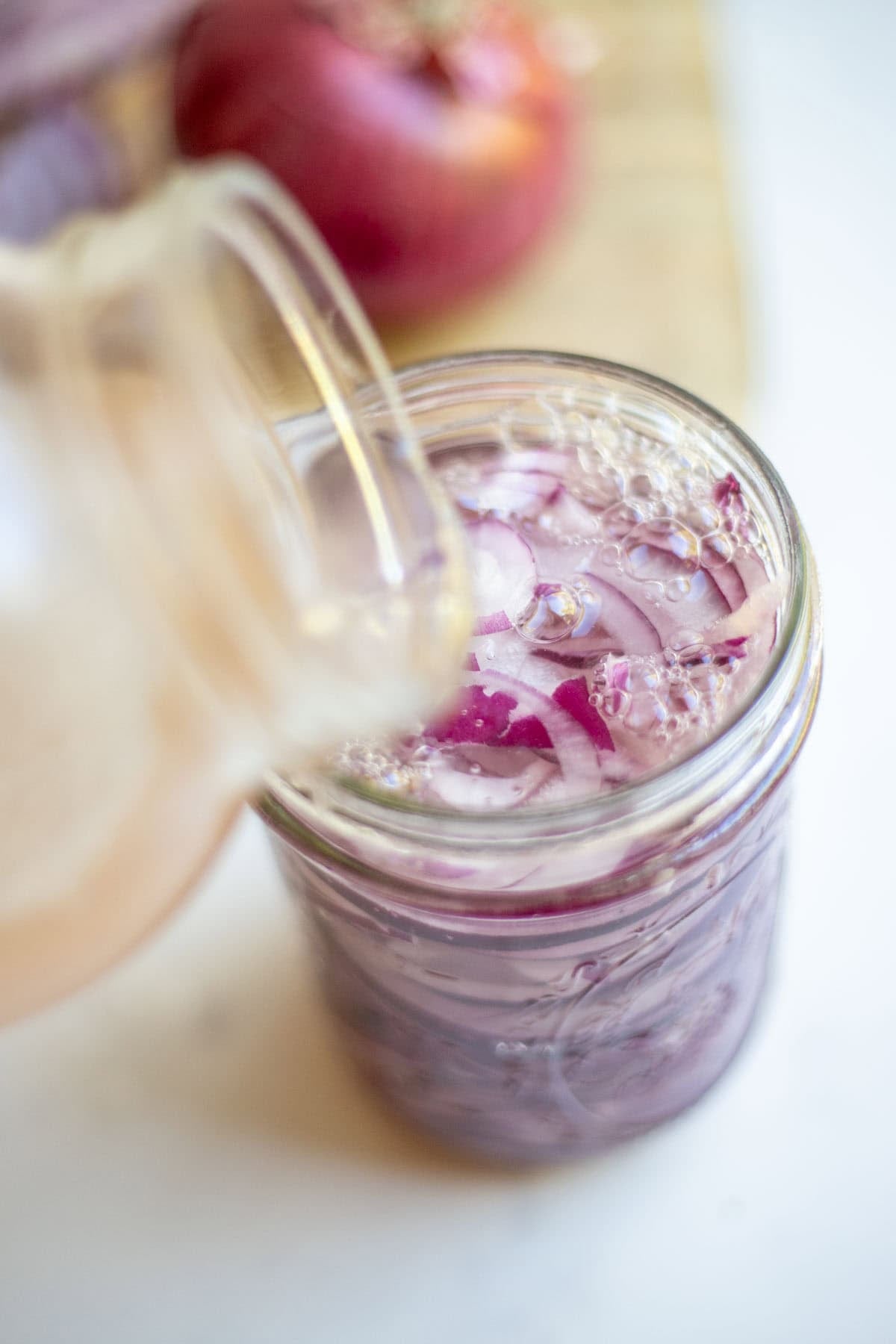
Step 3: Pour the cooled brine over the onions until they are completely covered. Keep the onions submerged with glass fermentation weights or a small, glass jar resting on top of the onions. Place the fermentation lid on top of the jar. If you don’t have fermentation lids, you can also use a clean towel or a coffee filter, place it over the jar, and secure it in place with a rubber band. If you’d rather, you can also use a plastic screw-top lid to keep contaminants out of the jar.
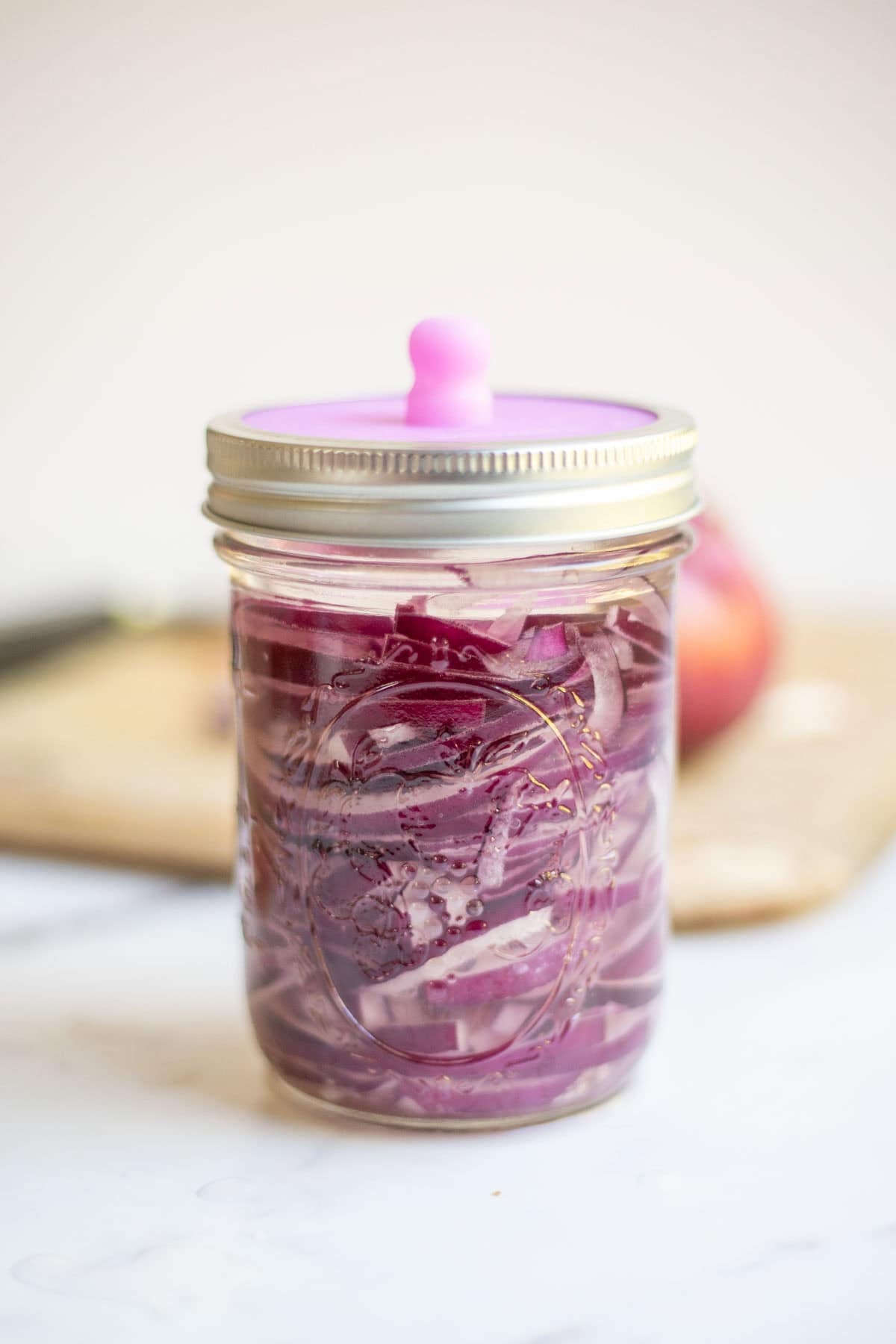
Step 4: Place the jar in a cool, dark place and ferment for 3 to 7 days. The longer they ferment, the more acidic they will become, resulting in a tangy flavor. If using an airtight lid, you will need to loosen it occasionally to “burp” the jar, which releases built-up gases. A fermentation lid does this automatically, and a coffee filter or towel won’t trap gases, but will protect the jar from contaminants. Ferment to suit your taste preferences, then store in the refrigerator with an airtight lid.
Tips
- This brine makes enough for one quart jar of fermented onions or two pint jars. You may need to add more or fewer onions depending on their size and the size of the slices.
- Make sure that the brine is fully cooled before adding it to the jars.
- Leave 1-2 inches of space at the top of the jar to prevent any overflows from the fermentation gases.
- You can add sliced garlic cloves, whole peppercorns, or your favorite herbs with the onions to create your own spin.
- Don’t ferment in direct sunlight. Find a cool, dark place like a pantry, closet, or kitchen cupboard.
- Make sure the brine level stays above the onions during fermentation and even after, while refrigerated.
- Keep refrigerated and airtight once fermented.
- Serve cold or at room temperature. Heating the onions will kill the good bacteria.
Recipe FAQs
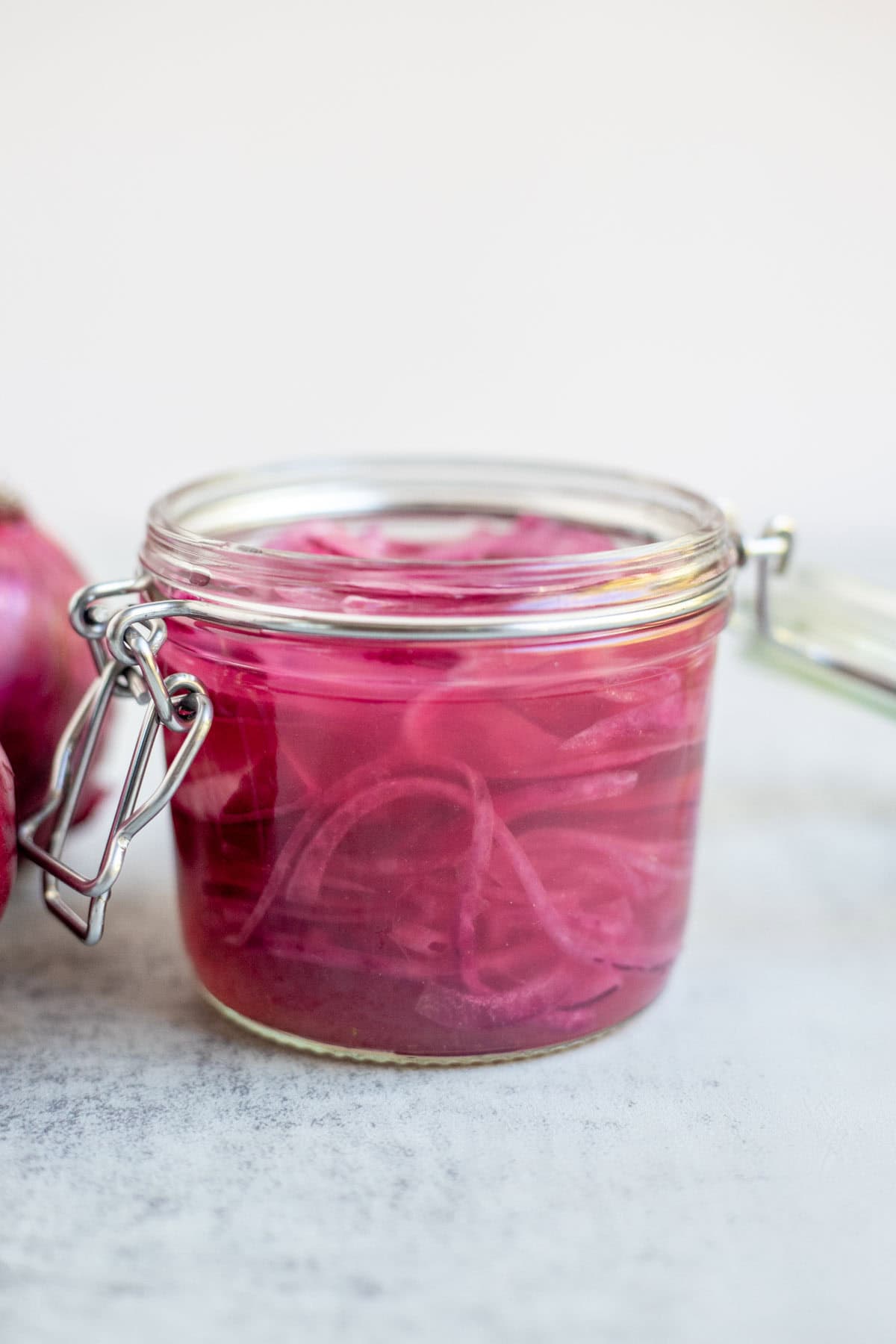
Fermented onions should be kept in the refrigerator with an airtight lid. Stored in this way, they can last several months and up to one year.
Onions already offer antioxidants, vitamins, minerals, and prebiotics, health benefits that increase with fermentation. The fermentation process essentially predigests the thin slices of onions, making the nutrients more readily absorbed. Fermented onions are also a great way to add probiotics to your diet, which are beneficial bacteria that build and maintain strong gut health.
I recommend 3-7 days. Three days is the minimum to allow enough time for the flavor to develop, though I suggest taste-testing periodically to determine how tangy you want your onions to be. Be sure to use a clean utensil so as not to introduce any harmful bacteria to the jar.
While I like to use red onions for their vibrant color, flavor, and nutrition, you can really use any kind of onion for this recipe.
Pickled recipes are made with the intent of long-term storage using heat, acid, and sterilized equipment. Fermented recipes rely on the power of beneficial bacteria to preserve the food, adding probiotics, better nutrient absorption, and a tangy flavor.
More Fermented Recipes from the Farmhouse
- Easy Fermented Lemonade
- Fermented Hot Sauce
- Homemade Fermented Ketchup
- Lacto-fermented Salsa
- Fermented Jalapeños
If you try this recipe and love it, I would love it if you could come back and give it 5 stars! Tag me on Instagram @farmhouseonboone.

Fermented Onions
Equipment
Ingredients
- 2 medium raw onions, thinly sliced
- 1 quart water, filtered
- 2 1/2 tablespoons sea salt
Instructions
- Prepare the brine by dissolving the salt in a pan of warm water over the stove. Don’t boil the water. Set aside to cool to room temperature.
- Peel and thinly slice the onions. Pack them into a clean glass jar.
- Pour the cooled brine over the onions until they are completely covered, keeping 1-2 inches of headspace. Keep the onions submerged and add the lid.
- Place the jar in a cool, dark place and ferment for 3 to 7 days, depending on your preference for taste. Store airtight in the refrigerator.
Notes
Nutrition
Nutrition information is automatically calculated, so should only be used as an approximation.






My fermented onions smelled SSSSOOOO strongly of onions, that I was afraid to try it at first. But the taste was very mild and delicious, and I ate them on everything!
My husband and I both enjoy the fermented onions!! Thanks for the recipe!
You’re welcome….so glad you all enjoy them!
We just sampled our first fermented onions. I followed the recipe closely and waited until the 7th day to sample the onions. I used two red medium onions for my first foray into fermentation. The results were very good as the process resulted in a tangy flavor that went well on our evening salads. Next up, more onions but adding a cayenne pepper to the mix to see what happens and also some fermented peppers.
Is there not vinegar in the brine? Just salt and water?
Are these aerobic or anaerobic? As in, do we need to cover tightly and burp or do we allow air in the jar?
I’m assuming it’s similar to fermenting sauerkraut which as long as you keep the onions submerged in the brine, you should be able to have them with covered with a cloth on top and not have to them sealed with a lid till you’re ready to put them in the fridge. Though you could technically put a lid on them, but you definitely wanna burp them.
Delicious
So yummy!