

Learn how to clean a Boroux water filter, a simple but necessary step in maintaining the quality and taste of your filtered water.
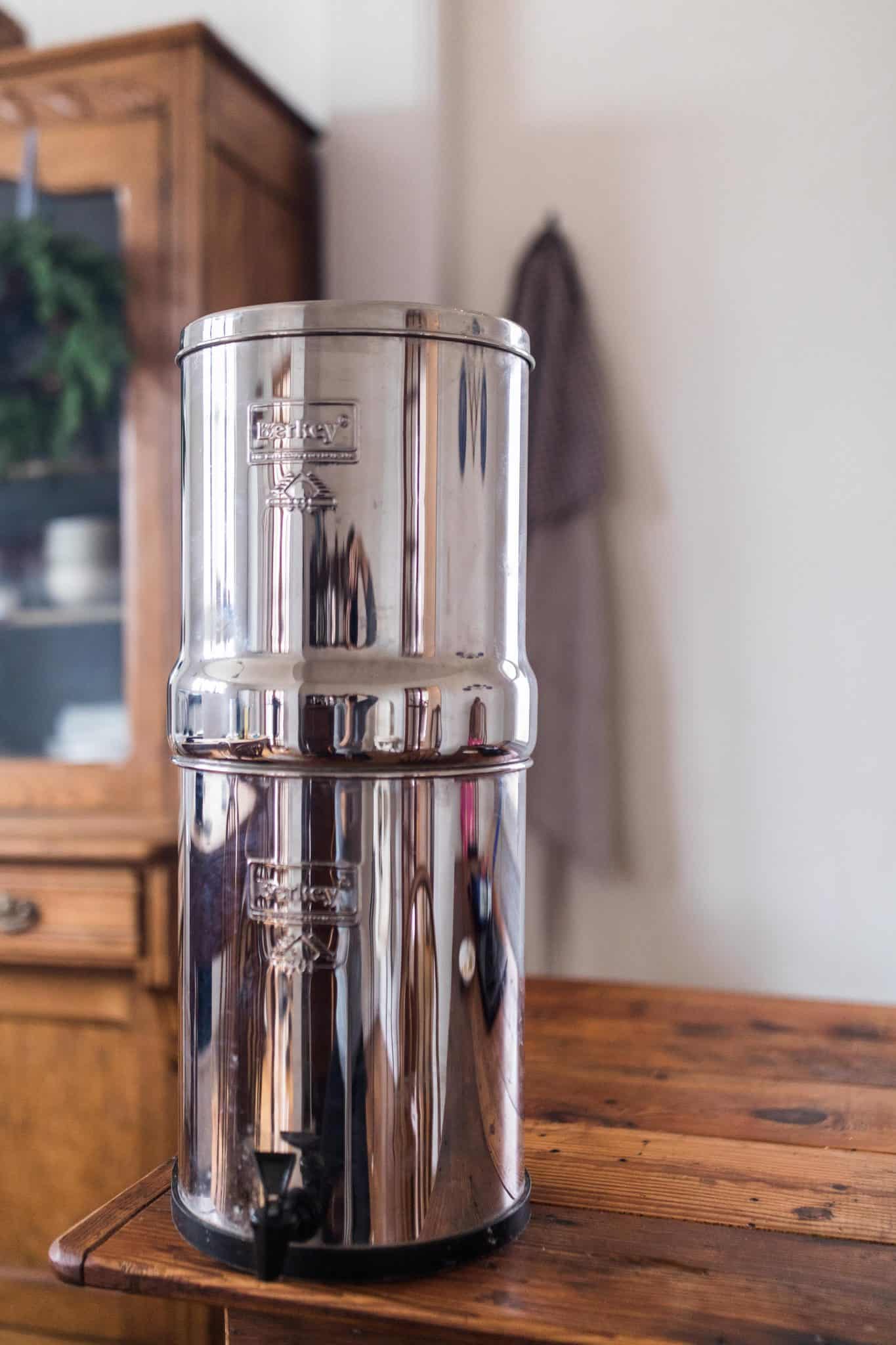
Over 15 years ago, I fell in love with the Berkey water filter system. Since then, I still use the actual stainless Berkey system, but I get my replacement filters from Boroux (pronounced bore-oh, as in borosilicate). Long story short, Berkey discontinued sales of replacement filters, and I have a full post on why I now use the Boroux filters.
Yes, Boroux is fully compatible with your old Berkey system, and I’ve found it to be an affordable and reliable water filter.
With proper care, gravity water filters like the Boroux system will last for years. They are easy to use and maintain, and cleaning is simple, making them a sensible choice for families.
Routine cleaning is one of the best ways to ensure your water filter stays in optimal condition. Proper cleaning improves the flow rate and filtration speed, resulting in a timely water supply and consistent water quality.
Boroux’s website recommends a monthly cleaning of the stainless steel chambers and stainless steel spigot, while the Boroux foundation filters (the main charcoal elements in the top chamber) should be scrubbed clean every 3-6 months, depending on the flow rate. Thankfully, these are easy targets to hit, which is good news for a large and busy family like ours.
Why We Love The Boroux System
Clean water was a priority for us, not only for quality, healthy drinking water, but also for cooking, baking, and fermenting. Recipes like water kefir, fermented onions, and fresh milled sourdough bread all benefit from clean, chlorine-free, filtered water. Nearly all water sources are prone to contamination, whether it be heavy metals, pharmaceuticals, or plastics. I love this system because it removes so many of these harmful contaminants from our drinking water. To read about everything else that our beloved Boroux filters from tap water, read about the toxins in tap water, and see the test results yourself.
While Boroux water filters remove harmful contaminants, they also keep the beneficial trace minerals our bodies need, such as calcium and magnesium. They are also one of the most affordable, trusted, and long-lasting options that I have found.
How Do I Know When My Filter Needs Cleaning?
Over time, minerals and particulates in tap water can build up in the top chamber, clogging the filters and leaving visible residue on the stainless steel surfaces. This buildup needs to be removed for the filters to work properly and the flow rate to be restored.
For this reason, the stainless steel reservoir is meant to be cleaned monthly, while the charcoal filters and fluoride filters are recommended to be cleaned every 3-6 months or when the flow rate has noticeably slowed. For a large family and a busily used water filter, you may be cleaning closer to the three-month mark. A smaller family, filtering less water, could probably get away with cleaning the filters every six months.
It’s time to clean:
- Monthly for stainless chambers
- Every 3-6 months for charcoal filters
- When you see visible residue inside stainless steel chambers
- If you see film on the charcoal filters
- If you notice a low flow rate
Tools You May Need
Scrub sponge – You’ll want an abrasive sponge for scrubbing the charcoal filters. I like Scotch Brite sponges or these walnut scrub pads.
Priming tool – Your Boroux filters will come with a blue priming tool that attaches to your faucet, and a brown priming button that is manually held in place. Either works well for priming your filters.
How to Clean a Boroux Water Filter
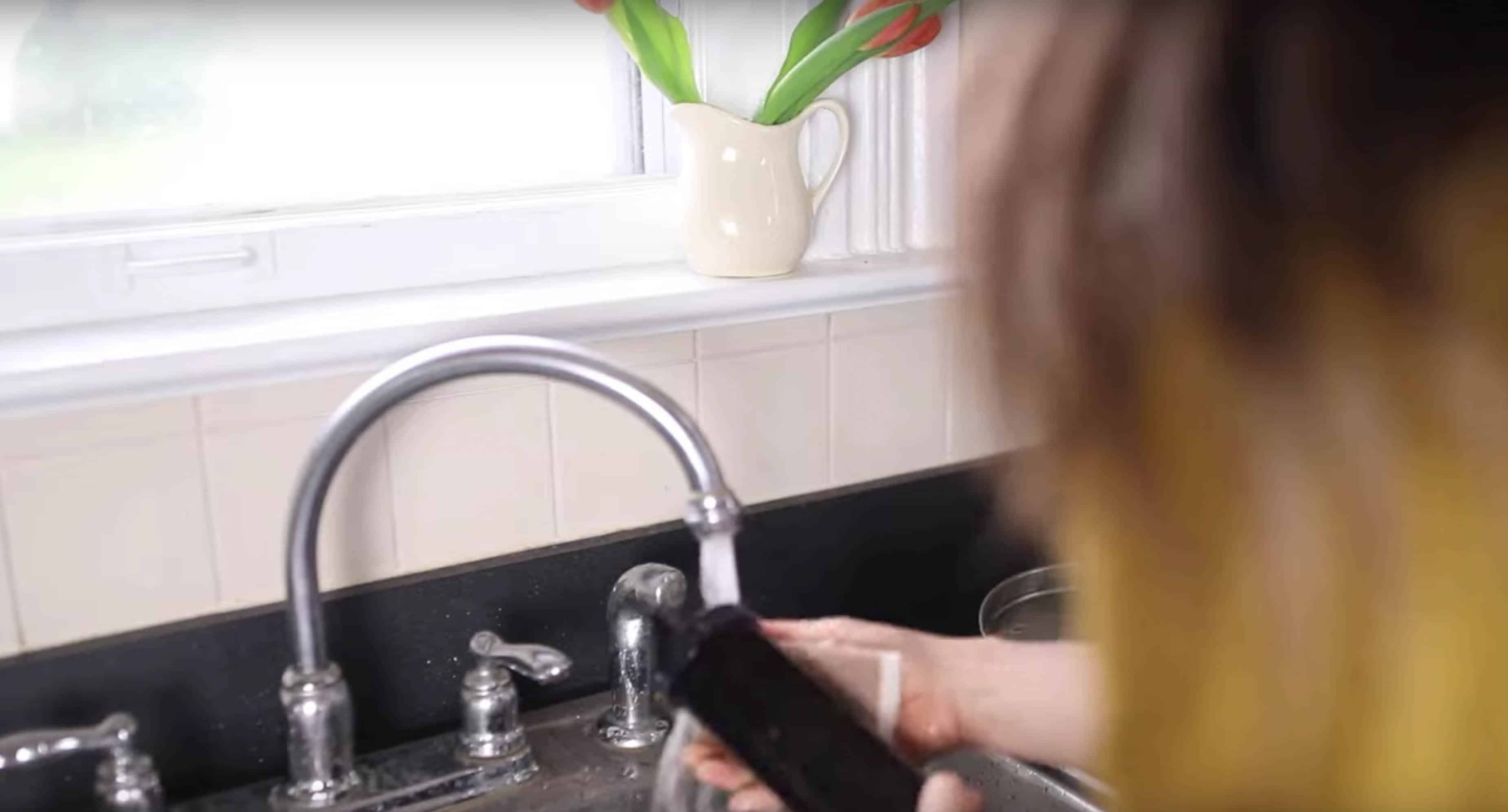
Step 1: Disassemble the filter by first emptying both chambers of water. Unthread the fluoride filters from the upper chamber charcoal filters. Loosen the wing nuts and remove the fluoride filters and/or black carbon filters, setting them safely to the side on a towel or drying mat. Note: The new fluoride filters look like the black charcoal filters but are housed in a reusable stainless steel case. They must be attached from inside the bottom chamber to an upper chamber filter.
Step 2: Use a non-abrasive cloth, warm water, and all-natural or mild dish soap, like my homemade lemon foaming soap, to wash the stainless steel upper and lower chambers. Wash all parts of the chambers, including the spigot and the stainless steel housings for the fluoride filters. Rinse all parts thoroughly, then set aside to dry.
Step 3: For the fluoride filters – Fluoride filters that have reached their lifespan (approximately 1,000 gallons of water or 6-12 months, based on household size and use) should be replaced with new filters. Fluoride filters within their lifespan should not be scrubbed. Simply rinse the filters off, then wash and rinse their stainless steel housings. Set aside.
Step 4: For the foundation filters – If it’s been 3-6 months since the last cleaning, then it’s time to clean the foundation filters. Do not use soap. Use a new, heavy-duty scrub sponge, like Scotch Brite, or these walnut scrub pads to firmly scrub the surface of the filters under cold running water. Scrub for several minutes. There will be residue visible in the running water. Wipe each black element stem with a wet cloth, but the stems should not be scrubbed with the scrubbing sponge.
Step 5: Once all parts have been cleaned, you will need to prime the black filters. With the initial installation of new filters, priming flushes out any manufacturing dust, while also saturating the filters and removing air pockets. For filters already in use, priming saturates and removes air pockets, allowing for a consistent flow. For detailed instructions, see the full post on how to prime your Boroux water filter elements.
Step 6: With primed filters and clean chambers, you are ready to reassemble. If removed for cleaning, replace the spigot onto the lower chamber. Place the fluoride filters in their stainless steel housings. Place each rubber washer on the stem of the charcoal filters, then insert the stems into the holes inside the bottom of the upper chamber. Hand-tighten the wing nut on the underside, securing each filter into place. Attach the fluoride filters to the stems of the charcoal filters in the lower chamber. Place the upper chamber onto the lower chamber and set the lid back on top. Once fully assembled, give the outside a wipe with a dry microfiber cloth to remove smudges, fingerprints, and water spots.
Tips
- Stainless components should be cleaned with a soft cloth, mild soap, and warm water.
- Black foundation filters (the main filters, located in the top chamber) should be scrubbed with an abrasive pad and cool running water. Do not use soap, chemicals, or vinegar.
- Do not prime filters with hot water.
- Fluoride filters are meant to be replaced, not cleaned. They can be wiped down, if needed, but should not be scrubbed.
- If you suspect your filters have been damaged, you can perform a red dye test to determine their functionality.
Shop the Boroux Water Filtration Systems
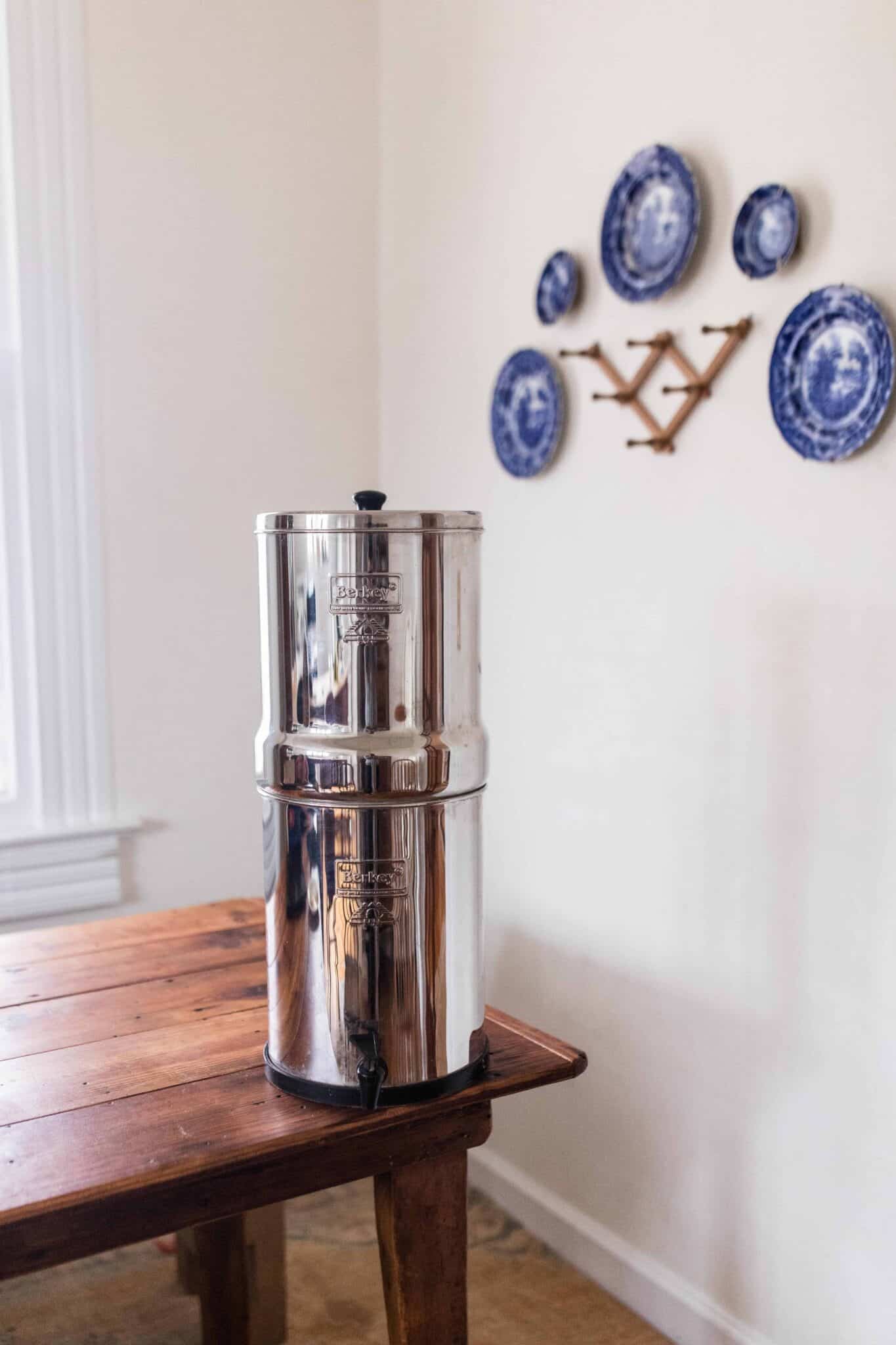
Our family uses the Royal Berkey, which is comparable to the Boroux Legacy Water Filter Systems. Both have about a 3-gallon capacity, which works well for us. You can find the 3-gallon Boroux legacy system and the 1.8-gallon compact system on their website in four different colors, along with replacement filters, fluoride filters, shower filters, and many accessories. The Boroux website also offers free shipping on purchases over $60.
FAQs
The short answer is that they are each designed very similarly with compatible design and materials. Boroux products were designed to be a fully compatible alternative to Berkey.
The usual cause is mineral buildup on the filters, which is resolved with a good cleaning. It’s also possible that your filters were not primed before installation, or they were not installed properly. If you don’t remember priming your filters, give that a try. If you are concerned that they are damaged or installed incorrectly, try the red dye test.
According to Boroux, a new filter may yield a strange but harmless taste in the water. Their solution is to prime your filters for ten full minutes before reinstalling.
According to their website, Boroux filters remove heavy metals, pharmaceuticals, pesticides, insecticides, herbicides, plastic and industrial chemicals, VOCs or volatile organic compounds, and disinfection byproducts. The fluoride filters also remove up to 99% of fluoride, according to their page Toxins in Tap Water.
It is recommended to use cool or cold water. Hot water can damage your elements.








I have seen a procedure where you mount the black filters upside down to backwash them. If you still have the filter flushers, you can do this with a kitchen sink more quickly.
I ignored my empty Berkey for several months, and they grew a mold or fungus of some kind. Word to the wise… Use it or loose it.
The link to the bundle sale is broken. 🙁
Here’s a new link for the filters!
I’m getting a lot of very fine black gravel like partials in the upper chamber, do I need to clean it.
I just got my berkey for Christmas.
That is very strange. I would contact the company. I’ve never had that happen.
Very helpful, thank you. We use Waterdrop for years, and very cost-effective with good value. Use advanced activated carbon for high-efficiency filtration and maximum removal of impurities. It also makes my coffee tested better:)
Hi Lisa,
I was wondering if you know and could share with me the difference between a reverse osmosis system and the Berkey.
Your will get pure water from both. Reverse osmosis removes all of the healthy minerals along with the bad stuff. These minerals also help with the taste of water. I prefer Berkey water.