

Learn how to perform the Boroux red dye test, a helpful visual for determining the functionality and proper placement of your black charcoal filters.
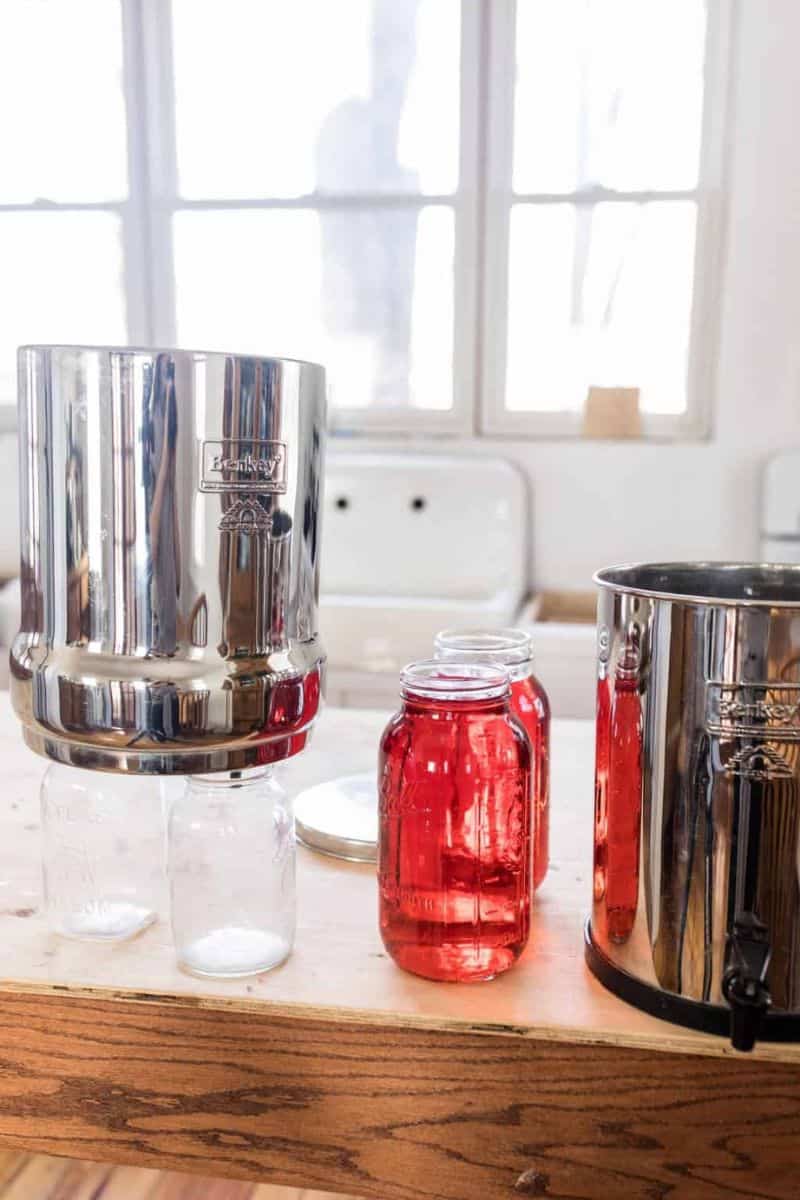
Clean water ranks high on our list of priorities, which is why I like to spread the word and provide information on our favorite water filtration system.
I’ve used the Berkey water filter system (now Boroux) for 15 years now to remove heavy metals, pharmaceuticals, plastics, and other contaminants from our water. It’s not only good for our health, but it’s good for my sourdough starter, as well! To see the full list of contaminants removed by the Boroux filter, head to the Boroux website!
In a recent post, I provided an update on our switch from Berkey to Boroux (pronounced bore-oh, as in borosilicate). I tried to give a thorough review of the system, as well as explaining the reasons behind the change.
We’ve been more than happy with the switch, leading me to provide updates and further resources on the ins and outs. From setting up, cleaning the system, and maintaining the filters, there are a handful of helpful things to know to keep your water filter in great working order. The red dye test is one of them, and I’ve found it to be a helpful tool!
What is the Red Dye Test?
The Boroux red dye test uses red-dyed water in the upper chamber to test the function and proper positioning of the charcoal water filters. Water should appear clear after traveling through the stem of the filter, indicating that the filters are doing their job. By positioning each charcoal filter stem into its own jar, you can even pinpoint the problematic filter. This can be useful if you suspect that your filters have been damaged or installed improperly.
Why Boroux No Longer Recommends the Red Dye Test
While the red dye test is a great visual to determine damaged filters or installation issues, Boroux no longer recommends this test as part of the priming process.
Initially a required step in the setup, the red dye test was discontinued because its objective is to determine correct installation, not to test the effectiveness of the filters. Boroux insists that their installation instructions are improved, reducing the possibility of incorrect installation.
Boroux also already guarantees the effectiveness of the filters via third-party testing, with full test reports available on their website.
Additionally, Boroux stated their discontinuation paralleled new US policy to phase out petroleum-based food dyes. “Policy is moving towards the elimination of red dye 40 by the end of 2026. The U.S. Department of Health and Human Services and the Food and Drug Administration plans to phase out petroleum-based food dyes, including Red Dye 40. Red Dye 3 has already been banned. We’re committed to staying up to date with industry regulations and be an early adopter for health-conscious policies.” (The Removal of the Red Dye Test)
Benefits of the Red Dye Test
If this test is no longer recommended by the company, then you might wonder what the point of using it is.
One time, one of my children knocked the stainless steel chambers over. The impact led me to believe there may have been damage done to the filters, though there was no damage that I could see. I used the red dye test as a diagnostic tool for my own peace of mind.
I found a significant amount of red dye in the filtered water, which confirmed that the impact had cracked one of the filters. The crack itself was invisible, and I would have been completely unaware that my filters weren’t working as they should. This test not only pointed out the damage but also narrowed it down to the specific filter, saving me from replacing both.
Tools You Will Need
Red dye – Use artificial red dye, such as McCormick’s red food color.
Mason jars – I used two half-gallon mason jars for the red dye and two quart-size mason jars.
How to Perform a Boroux Red Dye Test
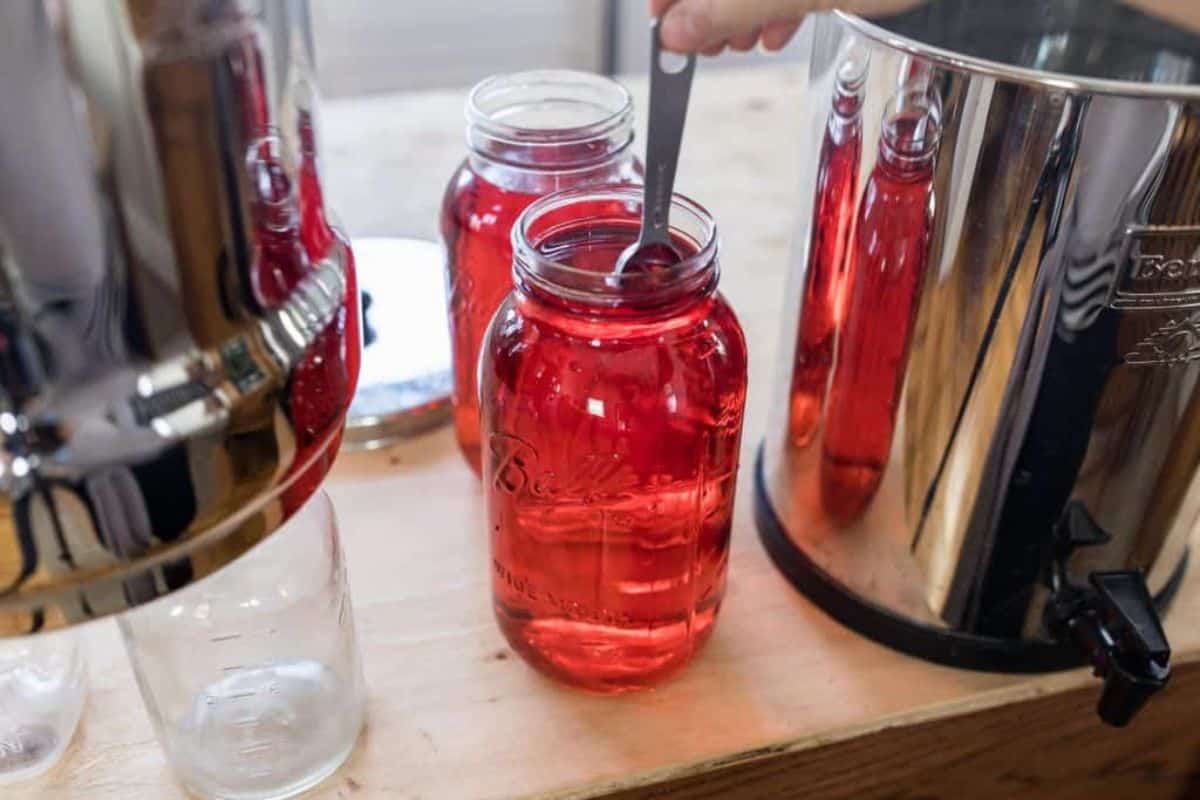
Step 1: Start by emptying all the water from the top chamber of your filter system. This will help ensure you get the right amount of dye per gallon of water.
Step 2: Take two quart-size mason jars and set them on your counter. Position the top chamber of your water filter with each of the black filters going into the jars. You’re essentially replacing the lower chamber with two equal-sized clear glass jars. The chamber should sit comfortably on top of the jars. This will let you see the results of the filters individually.
Step 3: Make sure all the filters and hole plugs are secured so water won’t leak out or bypass the filters. Also, avoid over-tightening each wing nut, as they can strip out. We use two black charcoal filters; however, you can also use four charcoal filters or a combination of two charcoal and two white fluoride filters. This is why there are extra plugs and openings at the bottom of the inside of the upper chamber.
Step 4: In a separate container, stir 1/8 teaspoon of dye into one gallon of cold water. Do this before adding it to the Boroux.
Step 5: Pour the red dye water into the upper container, monitoring as the water flows through to the jars below.
Step 6: If any red-tinted water comes through the filters, double-check the positioning of the filters. Ensure they are aligned correctly and that all wing nuts are hand-tightened securely. Repeat the test. If the water continues to have a red tint, it is time to order new filters and replace them.
Tips
- The red dye test does not reflect on the performance of the filters, but is a good indicator of correct/incorrect filter placement.
- It is a good idea to perform this test yearly to make sure the filters are still functioning properly and/or haven’t been damaged.
- Use artificial food dye, such as McCormick’s. Natural food dyes contain more minerals and particles that may pass through the filter and impact the test results.
- Remove fluoride filters to avoid damaging them. Perform this test with the charcoal filters only.
- Filter into mason jars or another clear container so you can see the results of each filter.
- Be sure that your filters are properly positioned, washers in place, and wing-nuts hand-tightened sufficiently. The filtered water should come directly through the stem of the black filter, not leaking around the seal.
- Replace only the filter that isn’t working. If only one isn’t working well, you don’t need to replace them both.
- If you suspect that your filters are not working effectively, Boroux recommends using the website My Tap Score to test the quality of your water against tap water.

Ordering Replacement Filters
Whether replacing old filters or damaged filters, you can easily get them on the Boroux website.
Plus, they offer Free shipping on orders over $60.
For reference, we have a Royal Berkey, which is comparable to the Boroux Legacy Water Filter System. Both hold around three gallons of water.
FAQs
Yes, Boroux filters are designed to work with your current Berkey system, as well as with other systems, such as ProOne, Patriot Pure Ultimate, and Alexapure Pro.
If your filters have failed the red dye test, first check your filter installation and ensure there are no gaps or cross-threaded elements or wing nuts. Check that there is a good seal on the blocking plugs for any extra filtering holes in the upper chamber. If you are confident that installation is not the issue, it may be that your filters have been damaged. You can easily order replacement filters at Boroux’s website.
It is recommended to change the filters every 12 months or every 1,000 gallons of water.
We’ve decided so! The thorough testing, affordability of the filters, and ease of the system won us over to Boroux.






Hello! I just called into Berkey because my brand new filters failed the test (the water was just a little pink). The customer service representative let me know that they’ve recently updated their policy to 1/8 tsp in a gallon of water, just wanted to let you know 🙂
That’s great to know!
Only had my Berkey and do use it sparingly I dud the red dye test and both filter were not filtering out the dye. I sure have not used 6000 gallons of water alone and it did TD in one spot all the time so I wonder if the life span they say us in fact true.
having a difficult time setting things up,help please. for the dye test I put the 2 little dye bottles in 2 gallons of water and place them on mason jars, was this correct? they are still draining clear water, tried calling the distributor but of course no response.
2. once finished then I am good to go?
I have asked 2 questions, would really appreciate 2 responses and I thank you in advance alladin302@yahoo.com dee
Hello, I just purchased the Royal Berkey. I purchased 4 elements, and the tops of two look a little different than the other two. The two that I’m concerned about have tiny chips around the rounded edges. I thought I saw a bit of black sediment in the bottom of a glass of filtered water. Could that be carbon dust? I believe I prepped them properly since filtered water is only exiting from the proper places. I have not performed the red dye test yet. Also, I only saw that dust only once. I do see little chips of black in the bottom of the unfiltered cylinder. Your thoughts please. Love your site and your video on assembly. Thanks
I did the dye test and left my fluoride filters out on the counter overnight. They are brand new and only filtered one tank of water before I unscrewed them to do the dye test. Are they still usable if I didn’t put them in the fridge?