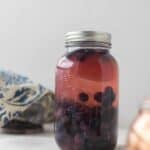
How to Make Fermented Fruit
Learn how to make fermented fruit for results that are not only delicious, but full of probiotics. These fermented blueberries are a great way to eat get beneficial bacteria into your diet.
Servings: 1 Quart Size Mason Jar
Equipment
Ingredients
- 2 cups fresh blueberries
- 6 tablespoons liquid whey
- ¾ teaspoon good quality salt
- 6 tablespoons organic cane sugar
- 9 tablespoons filtered water
Instructions
- To collect whey from yogurt, line a fine mesh strainer with a few layers of cheesecloth and set it over a bowl. Spoon in plain yogurt and let it drain in the fridge for several hours, or until you’ve collected about 6 tablespoons of whey.
- Warm the water in a saucepan to help dissolve the salt and sugar.
- In a clean jar, combine the sugar and salt.
- Pour in the warm water. Stir or shake until fully dissolved. Let the mixture cool to room temperature.
- Once cooled, add the whey and blueberries to the jar.
- Use a fermentation weight to keep the blueberries fully submerged in the liquid. If you don’t have a weight, you can use a small glass jar or pinch bowl that fits inside the jar opening to press the fruit down. Another option is to fill a small zip-top bag with water and place it on top to weigh everything down.
- Make sure all the fruit stays below the brine. If needed, add a little extra water, one tablespoon at a time, until everything is covered.
- Cover the top of the jar with a loose lid to allow carbon dioxide to escape.
- Let the blueberries ferment at room temperature. After 24 hours, begin tasting daily until they reach your desired level of tanginess, usually 2 to 3 days.
Notes
- For quality of ingredients, you will want to choose non-iodized salt, filtered water, and organic fruit when fermenting.
- You can also use frozen blueberries, but the blueberries melt down into a more mashed up/syrupy consistency.
- Fruit ferments quicker than vegetables. Make sure to test it every day after 24-48 hours, because it can cross the threshold into alcohol quickly.
- With fruit fermentations, it is best if they have a jump starter culture like the whey, water kefir, or kombucha, so they will ferment quickly and not turn into alcohol.
- Make these recipes in small batches, because they will not last more than a few weeks in the fridge.
- Keep your fermentation mixture in a dark place like a cupboard or pantry, or out of direct sunlight during the fermentation process.
- In this post, I’m going to show you how to ferment blueberries, but you could also try cherries, pineapple, and raspberries.
Nutrition
Serving: 1Jar | Calories: 446kcal | Carbohydrates: 115g | Protein: 2g | Fat: 1g | Saturated Fat: 0.1g | Polyunsaturated Fat: 0.4g | Monounsaturated Fat: 0.1g | Sodium: 1755mg | Potassium: 230mg | Fiber: 7g | Sugar: 101g | Vitamin A: 160IU | Vitamin C: 29mg | Calcium: 24mg | Iron: 1mg