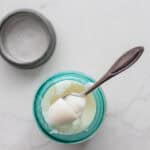
How to Make Lard
Learn how to make lard for smooth, creamy, and neutral-flavored fat perfect for cooking, baking, and roasting. Lard is not only versatile, but shelf-stable, budget-friendly, and simple to make.
Servings: 1 lb
Ingredients
- Pork Fat I used 1 1/2 pounds to make around 1 pound of lard
Instructions
- With a sharp knife, cut pork fat into small pieces, about 1-2 inches long.
- Place the pieces into a cast-iron Dutch oven or heavy pot, cover with a lid, and place over low heat for about 1-3 hours. The longer and lower you cook, the more neutral the lard will turn out. Stir occasionally so nothing is sticking to the bottom.
- When all the fat has separated from the meat, you will know that it is done. While it is still hot, carefully pour the liquid fat through a fine mesh strainer into a bowl or container. This filters out any bits. Filter a second time, if desired.
- Pour into glass jars and allow to cool at room temperature or in the refrigerator. It is now ready to use. Keep it in the fridge or freezer for up to a year, or leave it at room temperature for 4-6 months.
- For the slow cooker or Instant Pot method, see instructions in the blog post above.
Notes
For easier cutting, freeze the fat pieces for about an hour before you plan to use them.
This is best cooked low and slow for a few hours. High temperatures may burn the raw fat and produce a stronger flavor, less suitable for baking.
Grind the fat pieces to speed up the rendering process.
When cooking down the fat, some pieces will not render out. These leftover bits are known as cracklings, which become crunchy when cooled and are full of salty, delicious flavor.
I prefer to cool lard at room temperature to avoid steam being released while cooling in the fridge. This steam can get trapped on the lid and go back into the lard, potentially contributing to mold growth.
If you are able, use pastured-raised over conventional grocery store pork fat.
Making beef tallow from beef fat is similar to rendering lard.
Check with your local butcher for pork fat to render.
Nutrition
Serving: 1lb | Calories: 6137kcal | Fat: 680g | Saturated Fat: 267g | Polyunsaturated Fat: 76g | Monounsaturated Fat: 307g | Cholesterol: 646mg