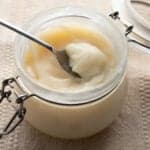
How To Render Beef Fat To Make Tallow
Learn how to render beef fat to make a nutritious, multi-purpose cooking oil. This process is quick and simple, requiring only a few minutes of prep and some leftover beef fat.
Servings: 1 jar
Equipment
- 1 Dutch Oven any stock pot would work
- 1-2 Mason jars
Ingredients
- 2-5 pounds beef fat you can use more or less depending on how much tallow you want to make.
Instructions
- Remove excess fat from your beef using a sharp knife and cutting board.
- Cut fat into small pieces, about 1-2 inch portions.
- Place into a large saucepan or pot and place over low heat for a few hours, stirring occasionally. You want the temperature to hold around 130-140 degrees. The fat should be a yellow color. If it is starting to turn brown, then the heat may be too high.
- After the beef has rendered, while it is still hot, carefully pour the tallow through a fine mesh strainer into a container. Not everything will completely melt. There will be some bits of meat and other bits that don’t render.
- Strain the tallow a second time through a piece of cheesecloth, coffee filter, or paper towel to remove some of the finer impurities.
- Allow to cool in the refrigerator. Now your tallow is ready to cook with.
Notes
- 3 pounds of beef fat will typically yield around 2 full pint jars. The amount you end up with will vary due to many factors.
- You want the cooking temperature to be around 130-140. Too hot and it will burn.
- Using a meat grinder to cut pieces of fat smaller, will help the fat to render quicker.
- This is best cooked low and slow for a few hours. If your temperature is too high, you can expect it to burn during the rendering process.
- When you are cooking down the fat, there will be some meat that will not render out. Don’t expect the pot to be completely melted. The slower the fat is cooked, the whiter and more neutral-smelling it will be. You can cook it low for two hours, or even at a slightly lower temperature for 6-8 hours.
- It is best to use the whiter, more neutral tallow for baking and pastries, as there is less beef flavor to interrupt the flavor of your baked good. Less white tallow, that may have been rendered more quickly, works really well for most other cooking, as it offers a hearty beef flavor to complement your dish.
- Straining the tallow a second time will leave you with a more pure end result and longer shelf life, so don't skip this step!
- Store in the refrigerator in an air-tight container (I like using wide mouth mason jars for this) for 2-3 months.
- Beef suet- a harder fat around the kidneys will give you the longest lasting, most neutral tasting tallow, while fat trimmings will have a stronger flavor.
Nutrition
Serving: 1tablespoon | Calories: 113kcal | Fat: 13g | Saturated Fat: 3g | Polyunsaturated Fat: 4g | Monounsaturated Fat: 5g | Trans Fat: 2g | Sodium: 1mg | Calcium: 0.1mg | Iron: 0.01mg