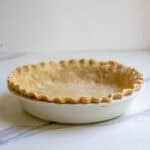
Whole Wheat Pie Crust with Butter
Learn how to make an all-butter whole wheat pie crust – they're tastier and healthier than store-bought, super easy to make, and perfect for your favorite sweet or savory pies.
Servings: 2 crusts
Equipment
- 1 Food Processor optional, but very helpful
Ingredients
- 2 ½ cups whole wheat flour 350 grams
- 1 teaspoon salt 5 grams
- 1 cup butter cold and cubed, 227 grams
- ½ cup ice water 118 grams
Instructions
- Begin by milling 2½ cups of flour (or 350 grams on a digital scale). Add the flour and salt to a large bowl and stir.
- Cube the cold butter and add it to the flour mixture. Cut the butter into the flour using a pastry cutter or fork until the texture resembles coarse sand.
- Slowly add the cold water, stirring the dough until it forms a single ball. Divide in half using a bench scraper or knife, then press them into round discs. Wrap well with plastic and refrigerate for 2 to 3 hours.
- Roll the discs out with a rolling pin to fit your pie plate – about 12 inches in diameter. Use the rolling pin to transfer the bottom crust to your pie plate, gently pressing it down into the bottom and sides of the dish. Trim the excess pie dough.
- Add your prepared pie filling, then place the second crust on top. Press the edges together to secure, then crimp them with your fingers or a fork.
- Bake in a preheated oven according to the directions specific to that pie recipe and filling.
Notes
This recipe yields two pie crusts for a standard, double-crust pie.
Make sure to use ice-cold water and very cold butter. You can pop the butter in the freezer for 15 minutes before adding it to the dry ingredients.
Don't skip the refrigeration time. Those 2-3 hours let the dough rest, which better softens and hydrates the grains.
Keep the dough cold until ready to roll out. Using your hands to work the dough can warm it up significantly, so work quickly and minimally.
For blind baking, try using parchment paper and pie weights or dry beans to hold your crust in place as it bakes.
If you are using freshly milled grains for this recipe, I recommend weighing the flour instead of using volume measurements. Grain mills vary greatly - some create very fine and fluffy flour, while others are a little more coarse. This makes volume measurements unpredictable. Using a kitchen scale and calculating the grams is much more reliable, ensuring you end up with a delicious end product.
Nutrition
Serving: 1crust | Calories: 1324kcal | Carbohydrates: 108g | Protein: 21g | Fat: 96g | Saturated Fat: 59g | Polyunsaturated Fat: 5g | Monounsaturated Fat: 24g | Trans Fat: 4g | Cholesterol: 244mg | Sodium: 1899mg | Potassium: 572mg | Fiber: 16g | Sugar: 1g | Vitamin A: 2850IU | Calcium: 81mg | Iron: 5mg