

Learn how to mill your own flour at home. Milling whole grains adds a ton of nutritional value to whatever you bake, and you can do it in a few simple steps!
About 8 years ago, I bought my first countertop flour mill. I became interested in milling my own grains after I heard that over even a couple of days, milled whole grain flour from the grocery store looses a ton of its nutritional value as it sits in the cupboard.
Ever since then, I have been supplying my family with super nutritious breads and homemade baked goods made with whole grain, fresh-milled flour. From 100% fresh milled sourdough bread and whole wheat biscuits, to whole wheat cinnamon rolls, whole wheat brownies and chocolate chip cookies with freshly milled flour. There are a number of delicious recipes to enjoy once you learn this skill.
If you are interested in milling your own flour at home, this overview is the perfect place to start.
Today, I want to share all about how to mill your own flour at home, so you can start enjoying freshly milled creations as well.
Why You’ll Love Milling Your Own Grains
Health Benefits – Commercial flour has little to no nutrients compared to fresh flour. Regular flour from the store is the result of commercial milling which removes the bran and germ, the most nutrient dense part of the grain. When milled at home, your flour will contain vitamins (vitamin E and vitamin B), minerals, fiber and enzymes. Freshly milled flour contains 40 of 44 essential nutrients that we need daily. It is also easier to digest!
Quality – Even if you are buying flour from your local store that says it is freshly ground, it still probably wasn’t ground that hour, that day or even that week. Milling at home allows you to control the quality of the grains that you use and leaves you with fresh, high-quality flour every time.
Shelf life – Wheat berries can last 20+ years which makes it a great option for long-term food storage However, freshly milled flour only lasts a few days at room temperature, so milling as you need it for recipes is the best way to go.
Budget-friendly – Buying wheat berries in bulk can help save money in the long run, especially if you like to purchase specialty or organic flours.
Superior flavor – Freshly milled flour has a slightly nutty flavor and overall a much fuller and complex flavor than store-bought flour.
Greater variety of grains – Not only can you grind your typical hard wheat berries or soft white wheat, but you can also grind other grains like brown rice, quinoa, oat flour and more. I love the fact that I can mill harder to find ancient grains like einkorn or kamut, that can be quite expensive when purchased as pre-ground flours.
Great for sourdough – It is really great for making your own sourdough starter. The hard red or white wheat is what I use to feed my sourdough starter and keep it healthy and active.
Types of Mills
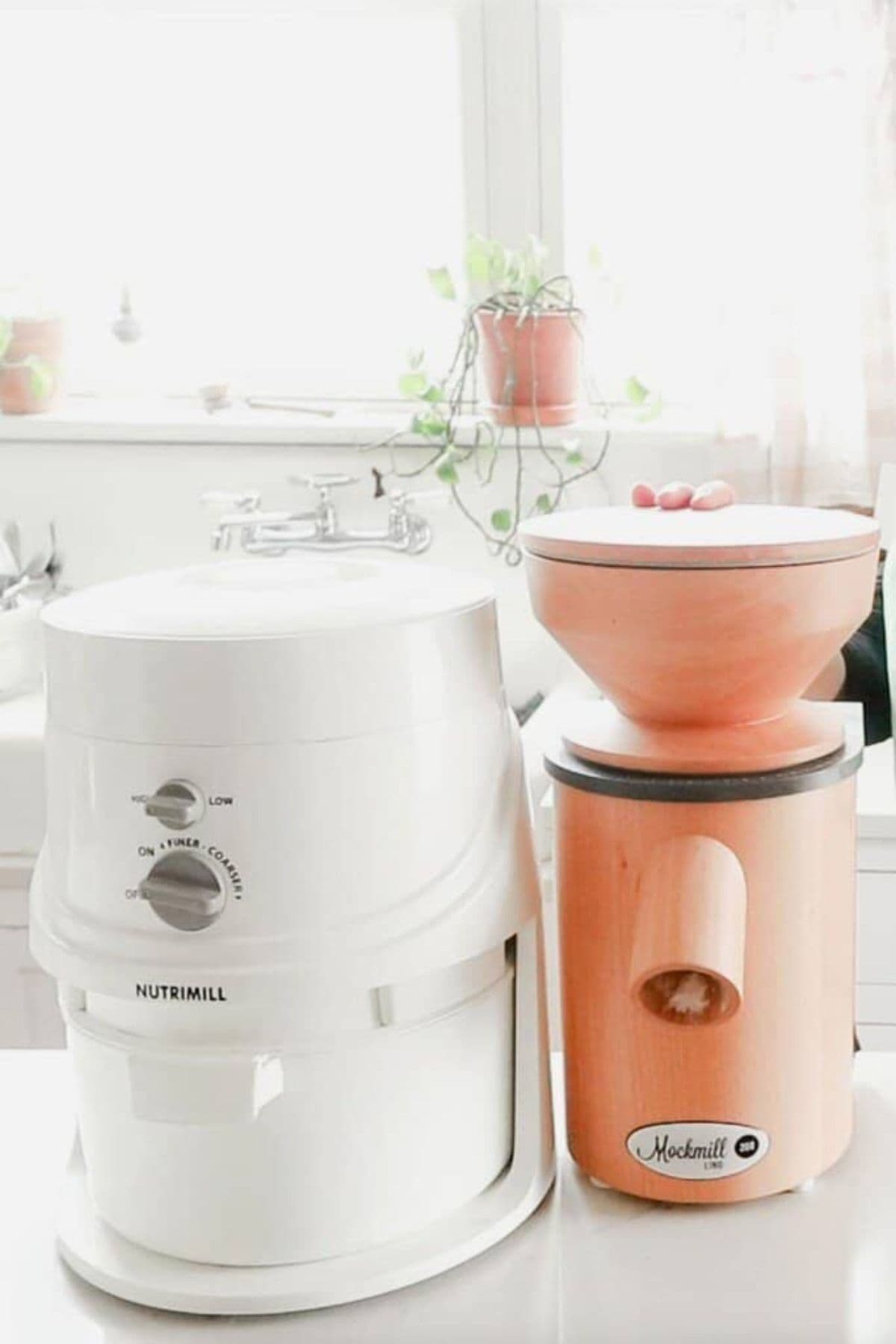
Electric mills – Such as the Nutrimill, Mockmill, or even mill attachments for stand mixers.
Hand mills – Hand crank manual grain mills are a fun option today. No electricity is needed, and it comes with an arm workout.
Other – This would include options like coffee grinders, high-powered blenders, or food processors.
How to Mill Your Own Flour at Home: Three Ways
There are multiple types of electric grain mills on the market today, and buying your own mill is a big decision. I have personally used the NutriMill and the Mockmill. You can read my in depth comparison of the NutriMill and Mockmill in this post.
How to Use a Nutrimill
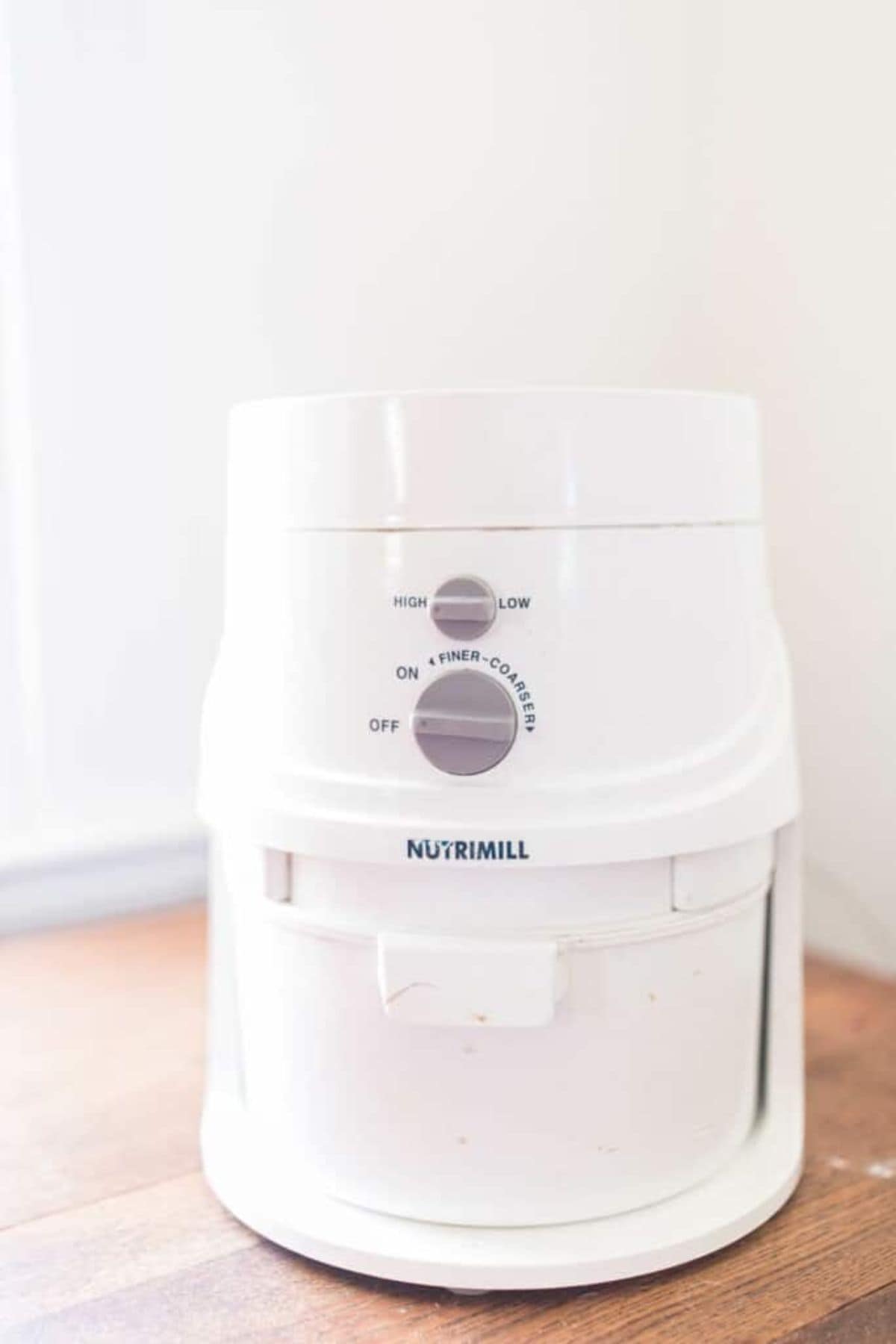
On the NutriMill, there is a lid that goes on the very top that you can take off. Inside is a place where you pour in the grains. They will flow down through two holes and into a bowl at the bottom of the NutriMill.
Simply use the handle to pull the bowl out from under the NutriMill, twist the lid, and there will be flour inside.
The two knobs on the front allow you to choose the coarseness of the flour, and also how fast the grains will be ground.
The bottom knob controls the coarseness and the top knob controls the speed.
How to Use the Mockmill
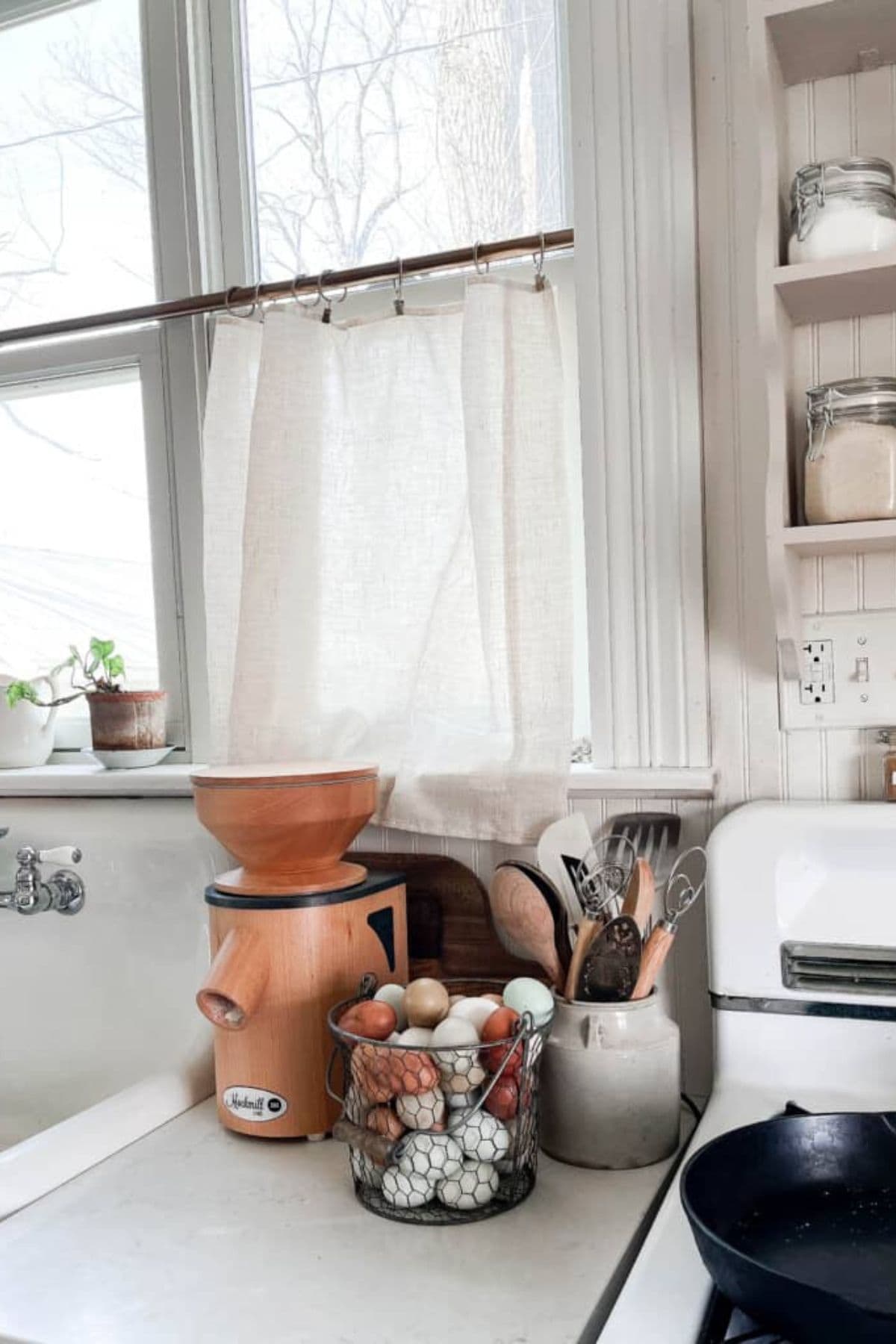
Grasp the hopper and adjust to the desired coarseness (if using the original Mockmill, you would simply adjust the lever). The lower the number, the finer the flour.
Place a bowl under the dispenser.
Turn on the electric mill.
Add wheat berries to the hopper and watch it work its magic.
If the flour is too coarse for your liking, adjust the level and re-mill to your preferred texture. I prefer a finer flour for baking as it gives the best texture and end result in my baking.
How to Make Flour with a Blender and Other Options
If you have a high-powered blender like a Vitamix, you can also grind your own whole-grain flour at home. Add whatever variety of wheat berries you have to the blender.
Start the blender on low speed, then quickly move to high speed. Grind for 60 seconds. Keep blending until the desired consistency is achieved. The longer you grind the grains, the finer the flour.
This could also work with a high-powered food processor or coffee grinder, but I would not try this with a regular blender or food processor. It could easily burn out the motor – an expensive mistake.
Determining the Coarseness of the Grains
For my sourdough recipes, I use the medium-coarse setting to grind my whole-grain wheat. I use this setting for almost everything.
When I am making cornbread, I will use the coarsest setting to make cornmeal.
Using the finest setting is great if you are using the flour to make pastries, cakes, cookies, or pies. A finer flour will give you a lighter result and often yield a better texture in your bakes.
The finer you want the grain to be, the longer it will take to mill.
How to Store Homemade Flour and Bulk Grains
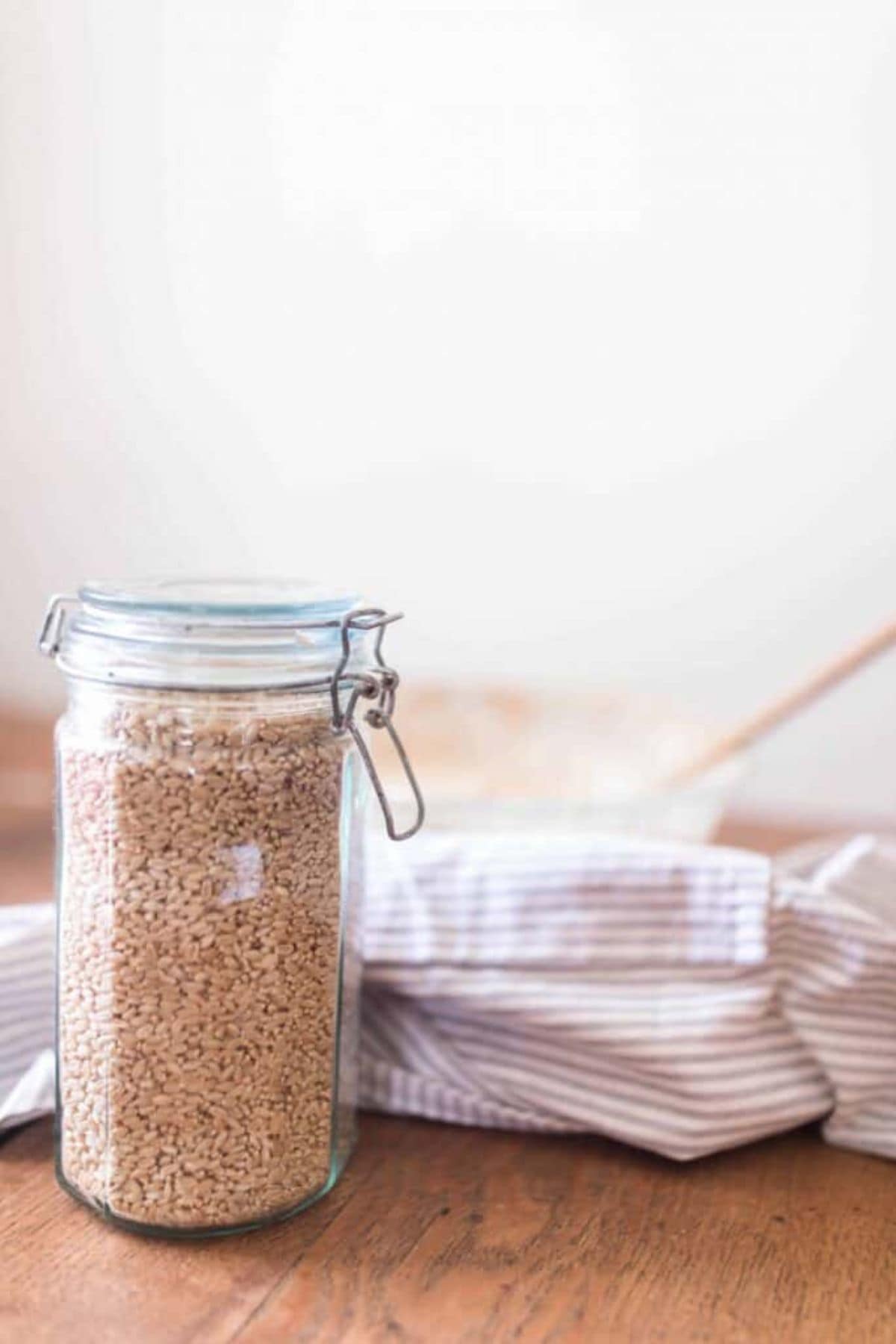
Freshly milled flours only stay fresh for a few days at room temperature, so I recommend only milling what you need. If you do have extra, you can store it in the fridge for up to a week in an airtight container or in the freezer for up to six months. Freezing does remove some of the moisture and can give the grains an off flavor.
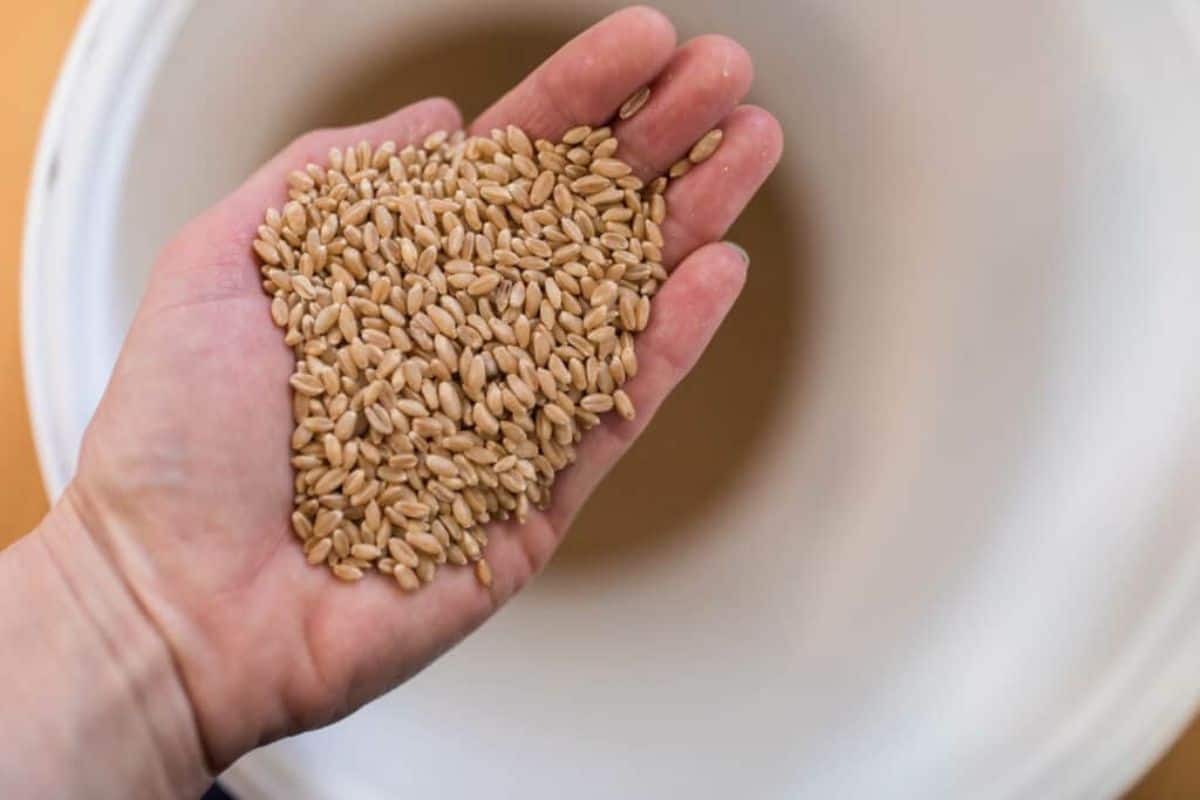
When I buy bulk whole grains, I simply transfer them from the bag they came in into a 5 gallon bucket with a twist-top lid. All I have to do is twist off the lid to get to the whole grains and twist the lid back on to keep the grains airtight and safe from mice and other small animals. Ask me how many flour bugs I found in my wheat when I thought just rolling up the bag was sufficient. Trust me – the bags are not sufficient, especially for long-term storage!
Types of Whole Grains
The different grains that can be milled at home are endless. Here are a few of my go-to’s.
- Hard White Spring Wheat – The most common grain I mill is Hard White Spring Wheat. You can buy Soft White Spring Wheat and even Soft Red Spring Wheat. Soft wheat is great for pastries, such as cakes and biscuits. It has a lower gluten content, so the flour is not suited for bread.
- Einkorn – I also really love to mill whole grain einkorn. Einkorn is an ancient wheat grain that is easier to digest and healthier than modern wheat. It is a good source of protein, iron, fiber, and B vitamins. Modern wheat has been genetically altered for higher yields and more gluten. Most people can’t digest modern wheat very well but can digest ancient grains like einkorn much easier.
- Popcorn – The other grain that I mill is popcorn. I know it is a little unusual, but years ago I read you can mill popcorn. Now, I am hooked. I love to mill popcorn into cornmeal to use for homemade cornbread.
There are many places to purchase bulk grains. Check out my post on where to buy wheat berries and other bulk grains for more information.
How to Use Fresh Milled Flour

Freshly milled flour is a little different than regular whole wheat or all-purpose flour. It absorbs less liquid than all-purpose and it takes longer to absorb that liquid, so you will want to decrease the amount of flour added into a recipe by 2-3 tablespoons per cup of flour.
I also recommend always weighing your flour if using freshly milled. Grain mills vary greatly – some create very fine and fluffy flour, while others are a little more coarse. This makes volume measurements unpredictable. Using a kitchen scale and calculating the grams is much more reliable, ensuring you end up with a delicious end product.
It can take time to adjust to freshly milled flour. I started out by slowly introducing it and using half freshly milled and half store-bought all purpose.
For an in-depth tutorial on all things freshly milled flour, check out my self-paced online course, Freshly Milled Grains.
In four modules, I walk you through every detail you need to know to be successful with milling your own flour and baking with it. Learn more and enroll in the course here.
FAQs
Flour should just be made from wheat. Because commercial flour loses its natural nutrients, many are typically added back in a synthetic form, such as folic acid.
First, grind your wheat berries. Work the fresh flour through a fine mesh sifter into a bowl. Place what is left in the sifter to the side.
Place the sifted flour back into the sifter and run it through one more time. There are machines for this, too. You can also find recipes for adding cornstarch to freshly ground flour to make all-purpose flour.






Wow this is amazing
That’s what I was thinking too 😉
Hi Lisa! I have been journeying into the world of slow, simple, and intentional living for the last 8 years. I have appreciated your content so much. My sister has been trying to get me to buy a grain mill, and I’m super interested, but I have a question I just can’t wrap my brain around to see if it’s really worth it to me. If the nutritional content of flour begins degrading within hours of milling, and also degrades even further upon baking with it, then by the time a 2 day fermenting and baking process is complete, will there still be much of a nutritional advantage over using store-bought flour? Any thoughts or input you have would be much appreciated!
Hi Lisa! So grateful for all your work here on the blog. You’re a wonderful resource! I recently got a Mockmill, and have been enjoying milling my own flour! However, when I used my freshly milled flour in my sourdough starter, my starter that had been going strong for 5 years plus several moves went moldy! I had never had that problem before milling my own flour. You say you use freshly milled flour in your sourdough starter – have you ever experienced it molding? It’s summer here, so warmer temps, but I never thought it would grow green mold. Do you have any insight to what I may have done wrong? Thanks!
I’ve not experienced it molding from freshly milled flour. That is interesting. Did you put a lid on too tight that would cause it to create condensation?
Do you have any bread recipes with the fresh milled flour? It is very different to work with it can make bread very dense
I am hoping for the same!
We are wanting to buy wheat berries and rice in bulk. Do you store your rice the same way as well? I bought a 25 pound bag of rice and got bugs in it 😭 So I’m trying to figure out the best way to store it.
Yes. It works best to store it in food safe container buckets!
Thank you!:)
Lisa, I love all of your recipes and your blogs. I mill my own wheat berries and I have sourdough (I learned from your tutorial as well as a local class). I am struggling with your recipes on how to incorporate the wheat berries. When I use freshly milled grain, the bread is hard and dense and I’m not sure how to get from all-purpose flour recipes to convert to milling the flour. Can you give some instruction on that? I would LOVE to see more bread recipes with freshly milled flour as opposed to using all-purpose flour. You had mentioned in another post that you had some recipes for wheat berries on your blog-but I couldn’t find them. Thanks for all you do. I have learned so much from you! God Bless.
I am working on more recipes with freshly milled bread. There’s definitely a learning curve and it causes the bread to be more dense!
Yes I have been trying to sub 1:1 with freshly milled but I am not seeing the rise and the doughs are reallllllly wet compared to when I was using AP
I would try adding a bit more flour then.
I came on here for the same questions. Just made my first fresh milled loaf and it failed. I used your regular recipe as it’s always worked great but got a sticky dough (even dough, lol, I added flour along the process when I felt it) and insanely overproofed in the fridge overnight so obviously a flat loaf when baked. Please 🙏🏼 do you have the fresh milled recipes ready? 😊
I have a few whole wheat recipes that you can use freshly milled flour with.
Are you able to mill some grains mixed that would equal an all purpose flour ?
For nutrition this seems like a wonderful thing so I clicked a link and saw 25 lbs of wheat berries is about $58. That’s at least 3 times more than what flour costs at the grocery store (I’m in a suburb or a large city). If you live in a very rural area is it less expensive to buy it local rather than on Amazon? I make all our breads and am wondering if there is a more budget-friendly option.
Azure standard is currently half to a quarter of that price for a 25 pound bag
First of all thanks for all your hard work and great content. I have a mockmill 100 and when I grind I move the lever until it starts making a ticking noise and then grind the grain. I noticed last time after grinding 1050 grams of hard red wheat it wasn’t ticking anymore when it finished. I’m wondering if I should do smaller quantities at a time and re-adjust the lever between batches. Have you had this experience?
In the article you indicate to sift the flour with a fine mesh – what mesh level do you recommend? Would this then allow for creating shelf stable mixes i.e. for cookies or brownies or would it still go rancid?
I try to use a really fine mesh. I’m not sure what level I have!