






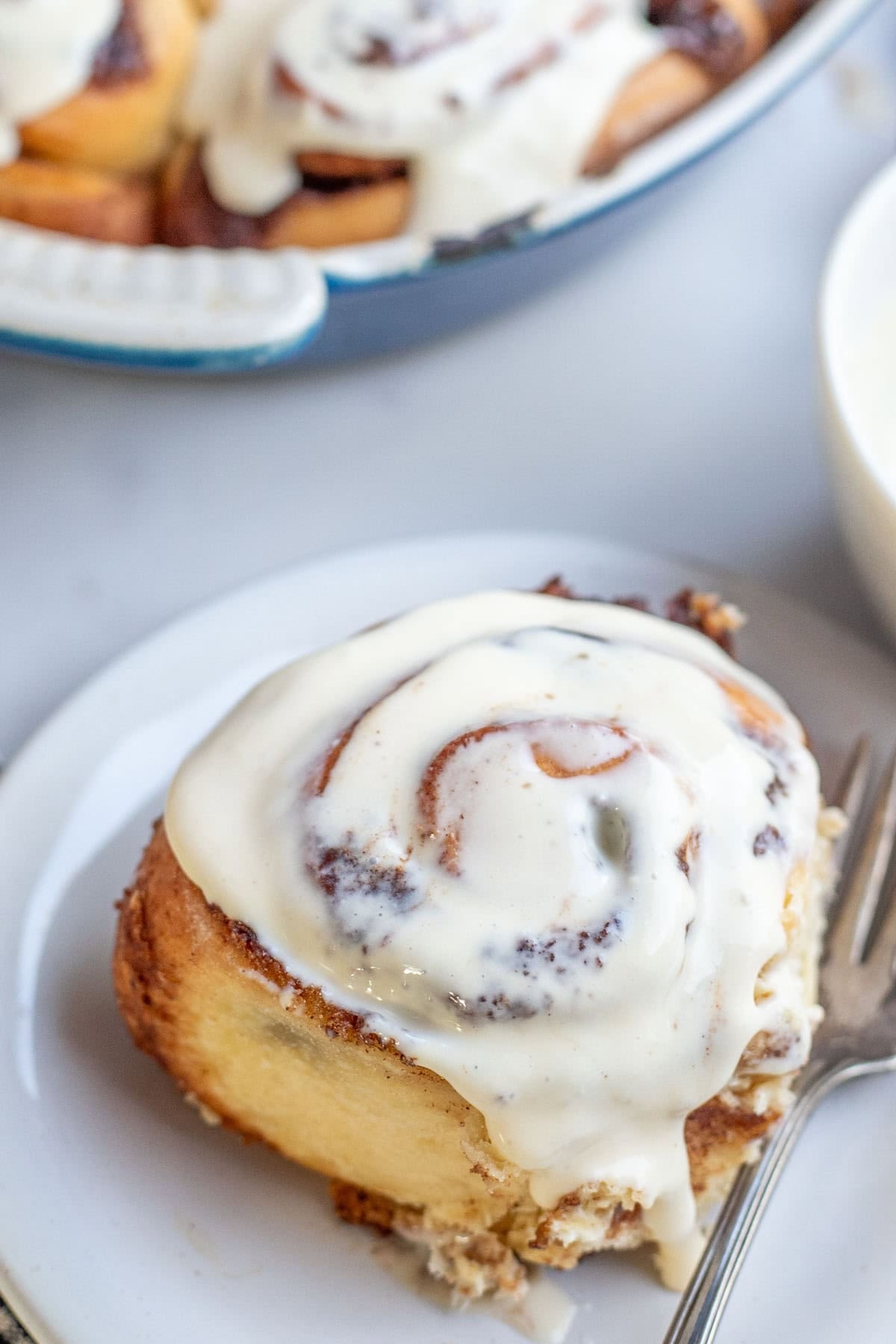
With rich cream cheese icing and a cinnamon-sugar filling, these fluffy sourdough cinnamon rolls deliver tangy flavor, a tender texture, and warm, gooey sweetness.
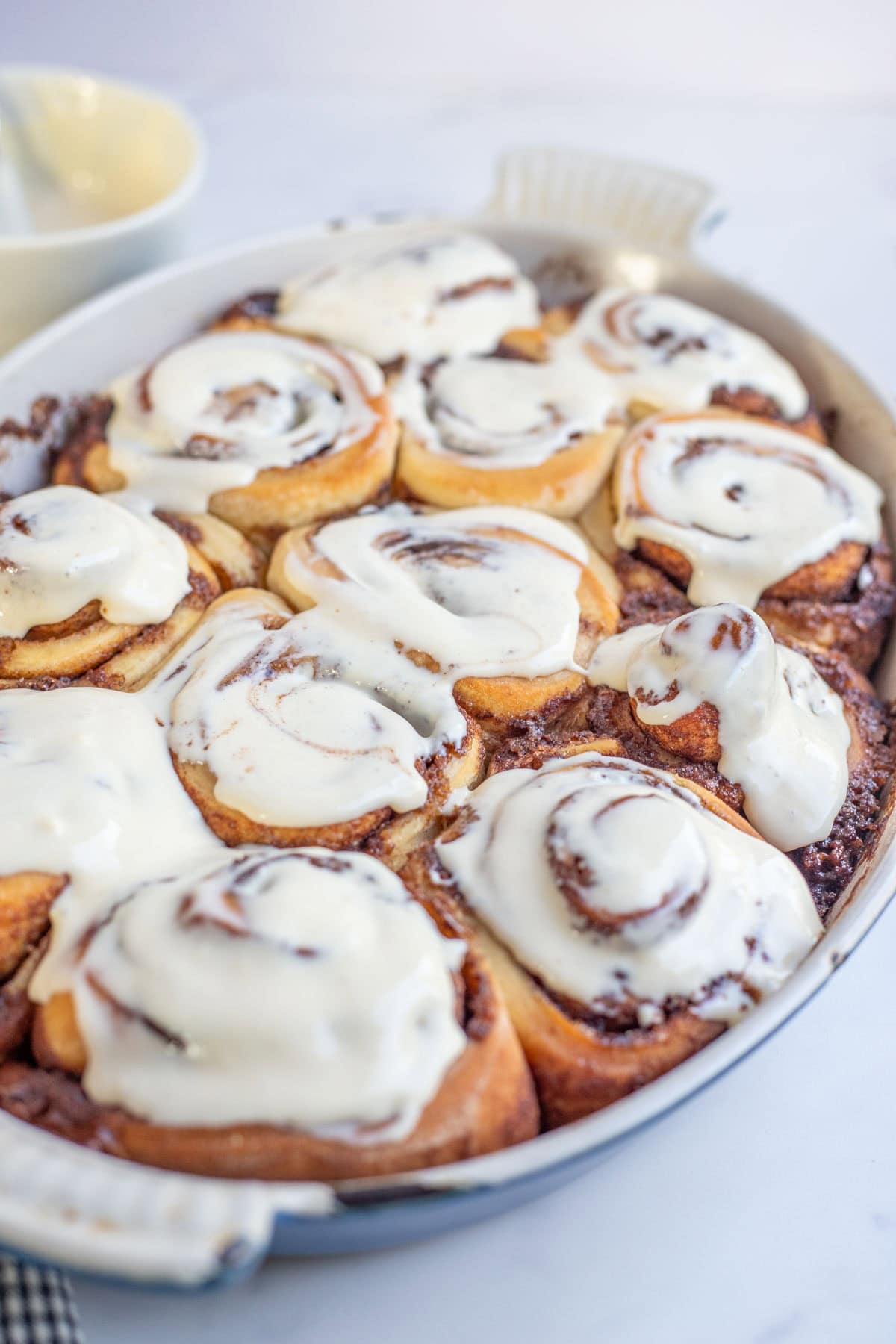
These sourdough cinnamon rolls start with healthy, fermented grains for increased digestibility, incredible texture, and extra flavor. Lightly sweetened sourdough wraps up ribbons of cinnamon sugar filling, adding the warmly spiced flavors to each bite. Baked until golden, each roll is topped with cream cheese icing, which is technically optional but highly encouraged. We enjoy this silky frosting over other sourdough recipes, like sourdough coffee cake, sourdough bread pudding, or sourdough lemon pound cake.
By mixing and fermenting most of the ingredients overnight, this recipe comes together quickly the following morning with basic pantry staples.
These easy sourdough cinnamon rolls serve well for a slow Saturday breakfast or a busy Christmas morning. Make these ahead of time, if needed! Ferment and assemble, then pop them in the refrigerator (up to 12 hours) or freezer (they’ll last months this way) to bake when you need them. Simply thaw, rise, and bake for perfectly fresh rolls!
If you are new to sourdough but enjoy the health benefits and tangy taste, make sure to check out all my sourdough recipes, including how to make your own starter.
Why You’ll Love This Recipe
Tender and sweet – These sourdough cinnamon rolls are soft and fluffy, with layers of brown sugar and cinnamon butter generously spread between the dough.
Long-fermented goodness – The overnight fermentation makes these rolls more digestible and nutritious, not to mention tender and tangy.
Perfect for special occasions – Warm, gooey cinnamon rolls with a decadent cinnamon roll icing elevate any occasion! Plus, they can be started the day before, then baked the day of.
Ingredients
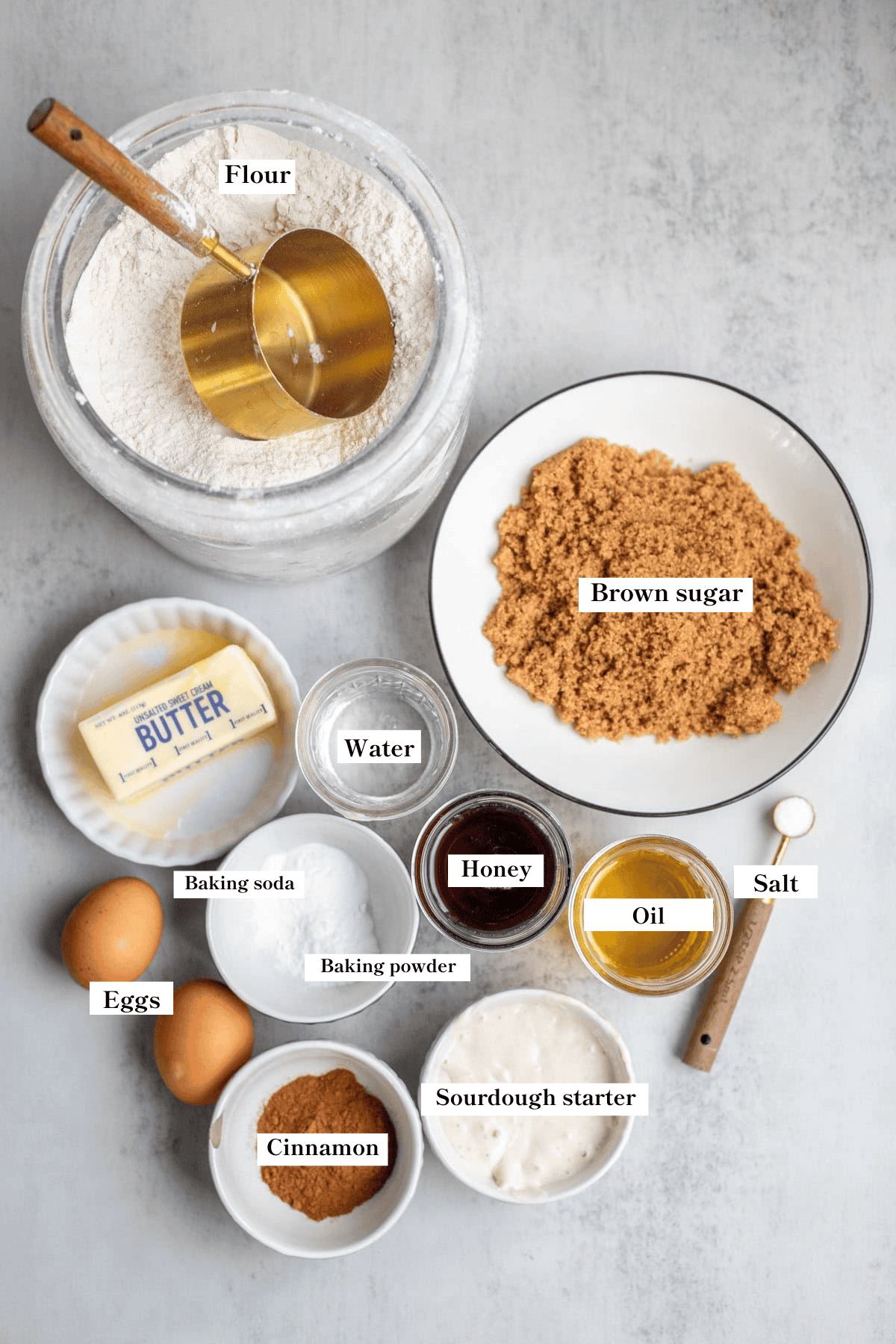
Active sourdough starter – This is a sourdough starter that has been fed 4-12 hours before starting the recipe and is nice and bubbly.
All-purpose flour – I use freshly-milled hard wheat or unbleached all-purpose flour. If you’re interested in working with whole grains, I have lots of information on the blog on milling your own flour at home.
Butter – Use very soft butter for the filling. If it’s too firm, it won’t spread well; if it’s melted, it will seep into the dough.
Oil – Use a neutral oil like avocado oil or melted coconut oil.
A full ingredient list with exact amounts can be found in the recipe card below.
Tools You May Need
Stand mixer with dough hook attachment
How to Make Sourdough Cinnamon Rolls
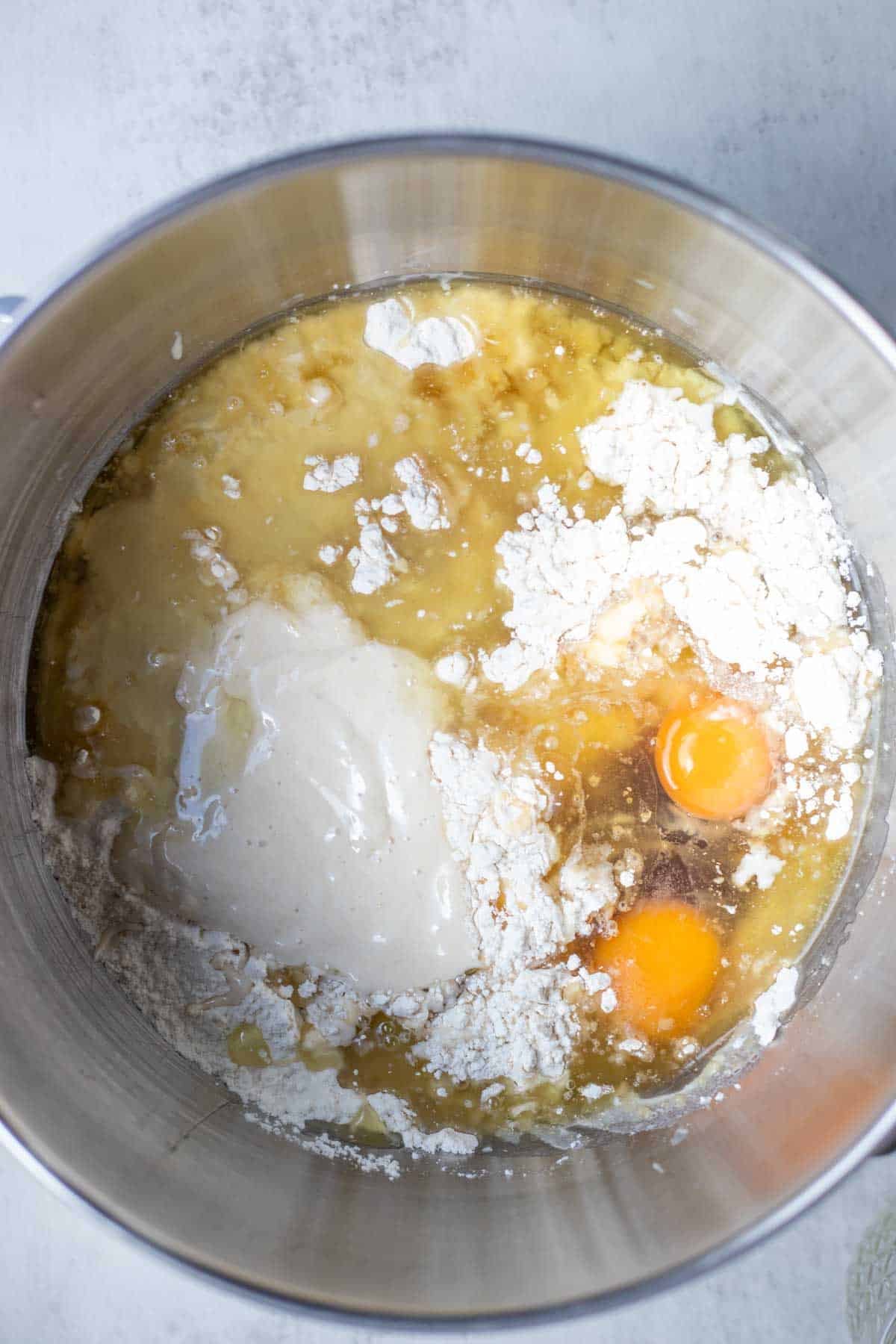
Step 1: Add active sourdough starter, water, flour, oil, honey, and eggs into the bowl of a stand mixer with a dough hook attachment. Mix until the dough forms a ball, then knead for a few minutes on medium speed until smooth and glossy. A pinch of the dough should pass the windowpane test.
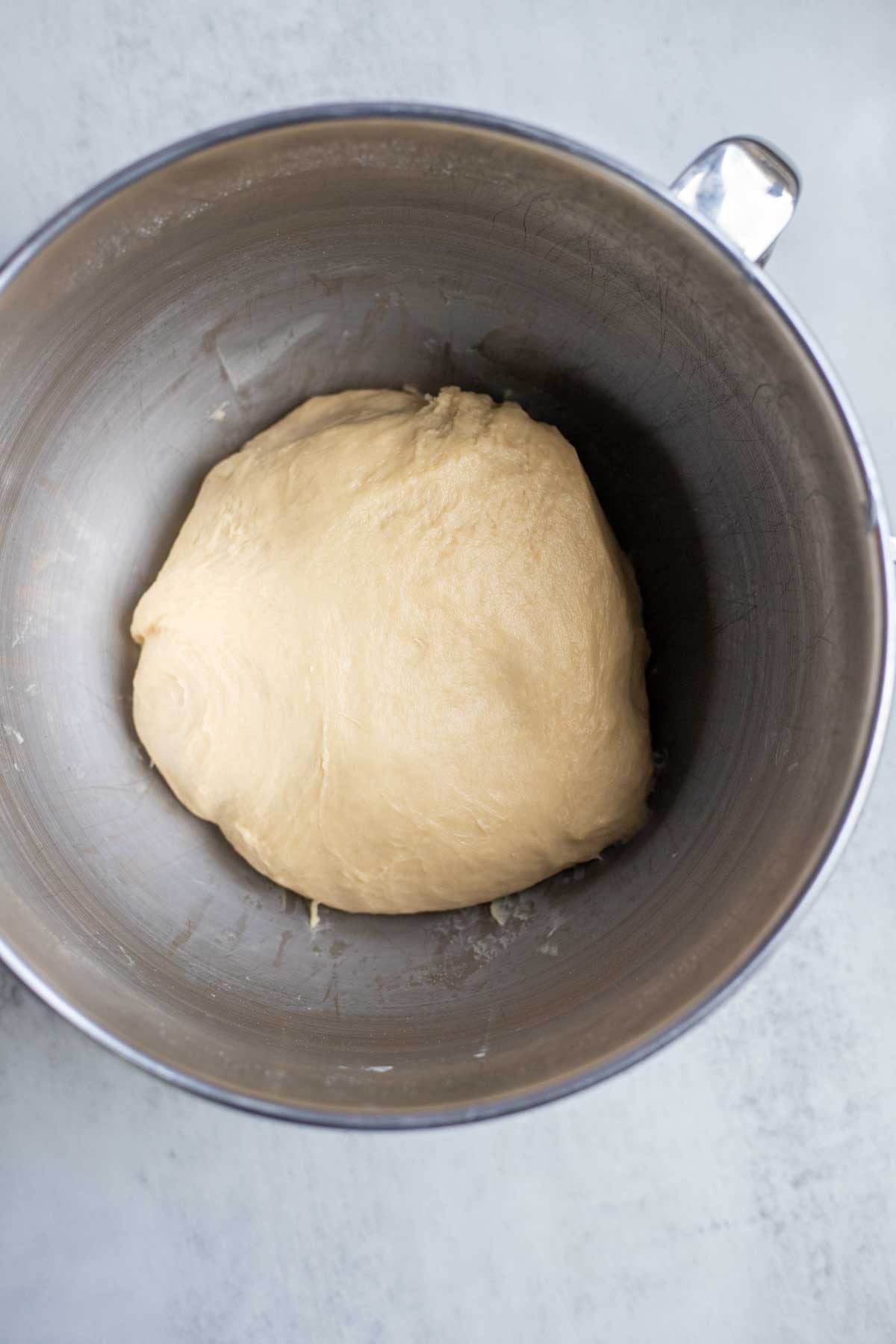
Step 2: Place the dough into a lightly oiled bowl and cover tightly. Ferment in a warm place for 8-12 hours or overnight. Note: I ferment dough with raw eggs for my sourdough brioche all the time without an issue. If this makes you uncomfortable, you can ferment the dough for four hours at room temperature and then refrigerate it overnight.
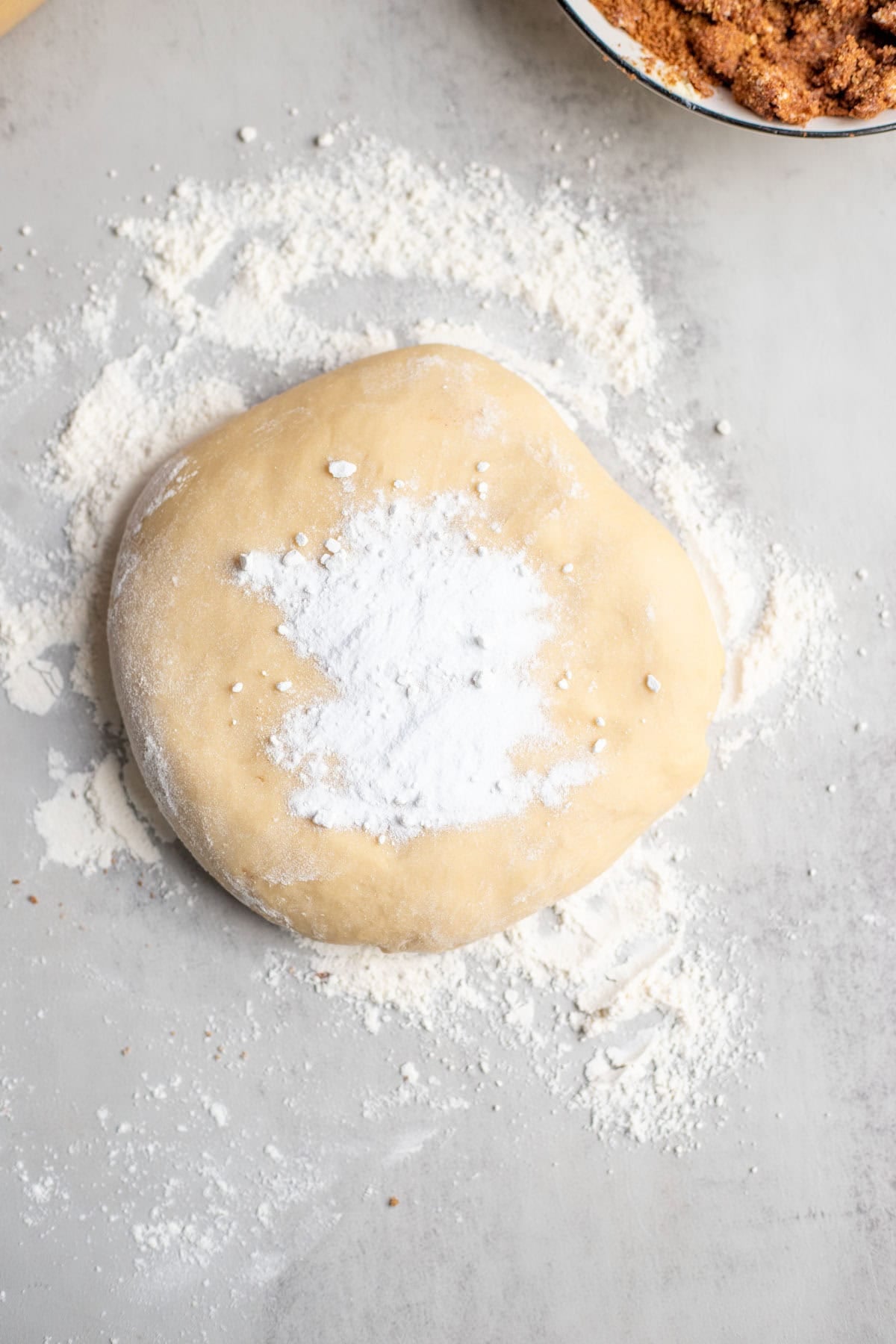
Step 3: The next day, preheat the oven to 375 degrees Fahrenheit. Add baking soda, baking powder, and salt to the dough. Knead in the stand mixer or on a floured work surface for approximately five minutes until all the ingredients are well incorporated.

Step 4: Place the dough on a lightly floured work surface and use a rolling pin to roll it into a roughly 12×15-inch rectangle. It should be about 1/4-inch thick. You want the dough to be rolled evenly so that it bakes evenly.
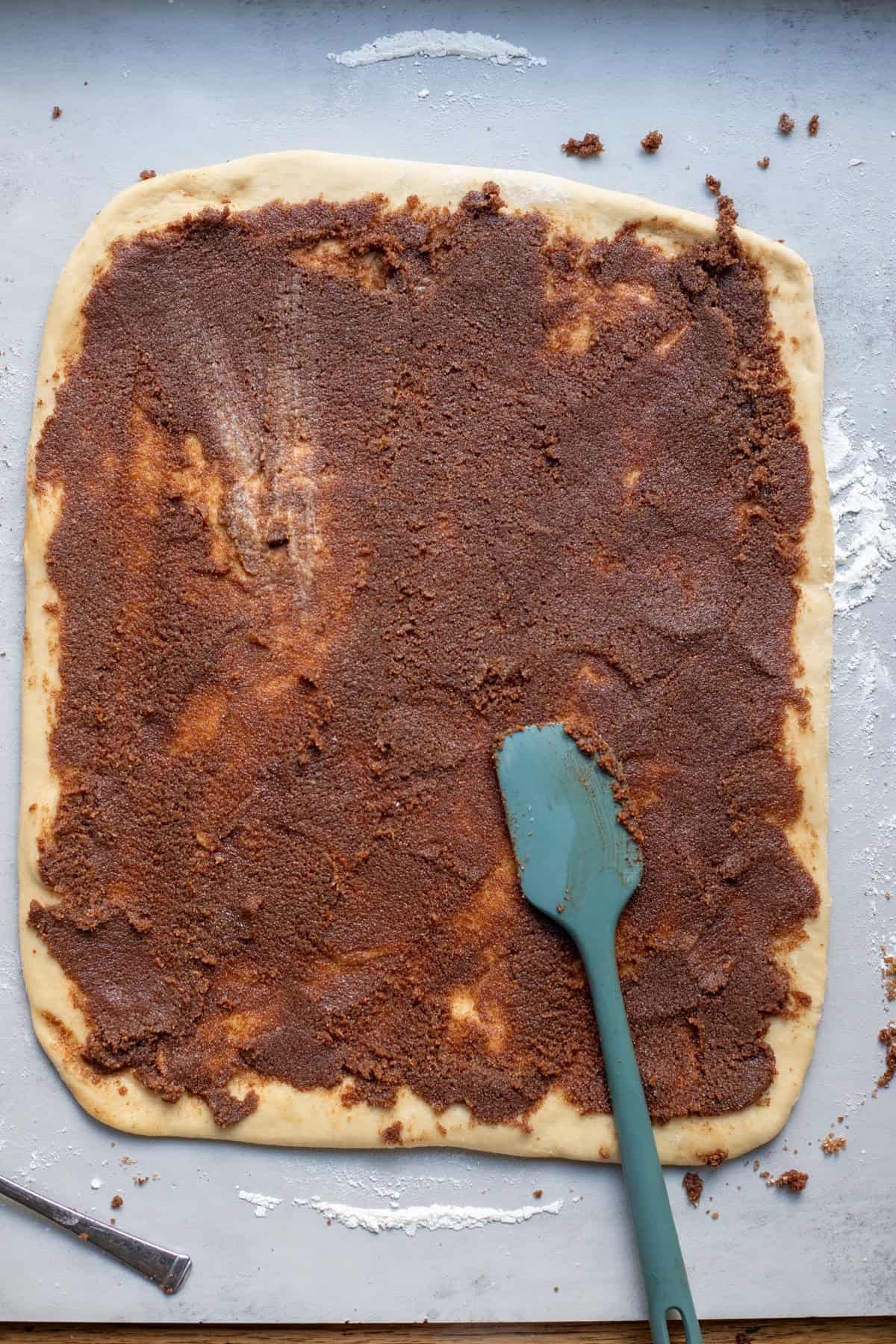
Step 5: In a separate bowl, combine softened butter, brown sugar, and cinnamon. Stir until smooth. Spread the softened butter mixture evenly over the dough.
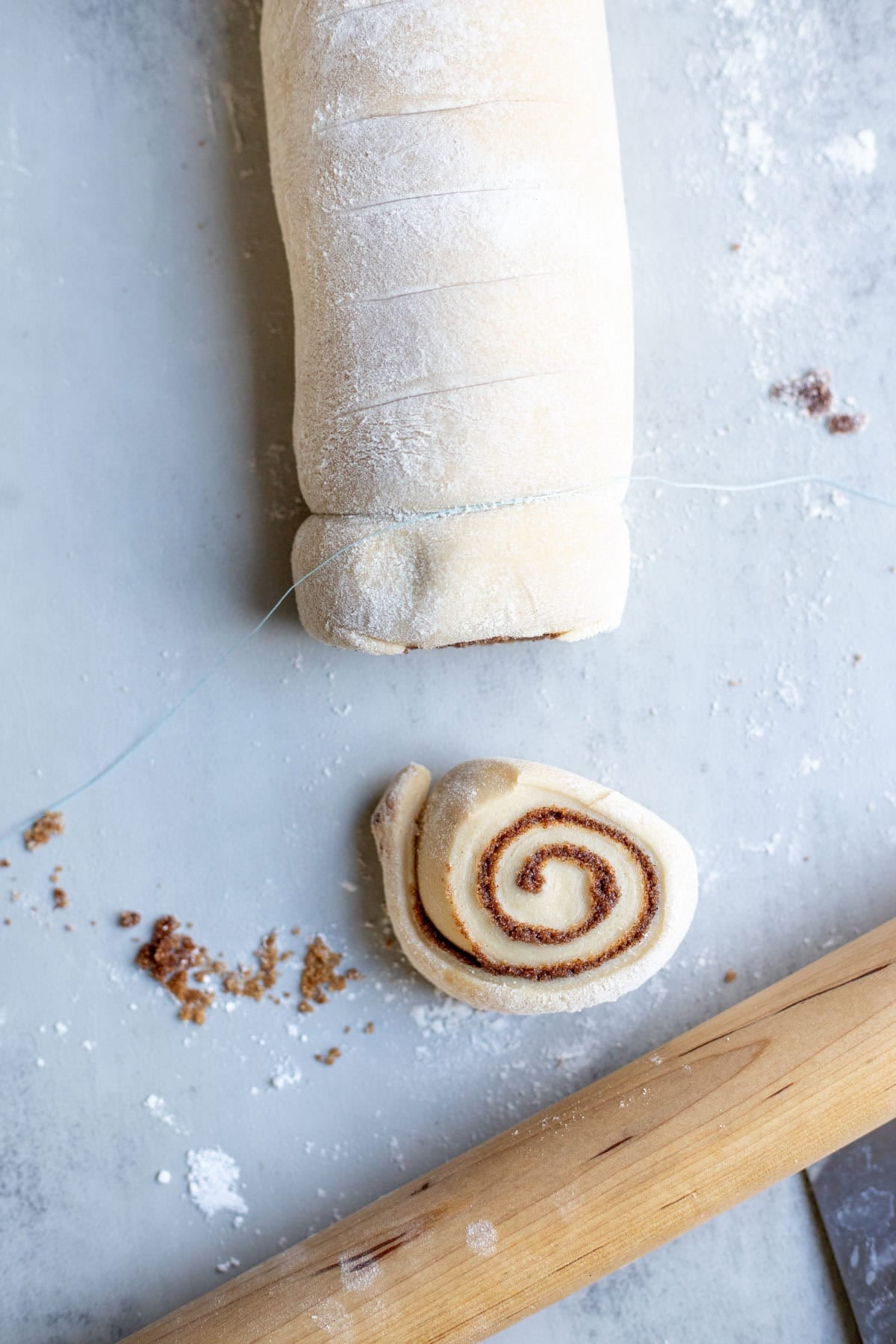
Step 6: Roll the dough up as tightly as you can, starting at the long end. When you get to the end, pinch the edge into the main roll to prevent leaking. Slice the rolls with a sharp knife, bench scraper, or thread. Alternatively, you can slice the rectangle of dough into 12 equal strips, then roll them up individually.
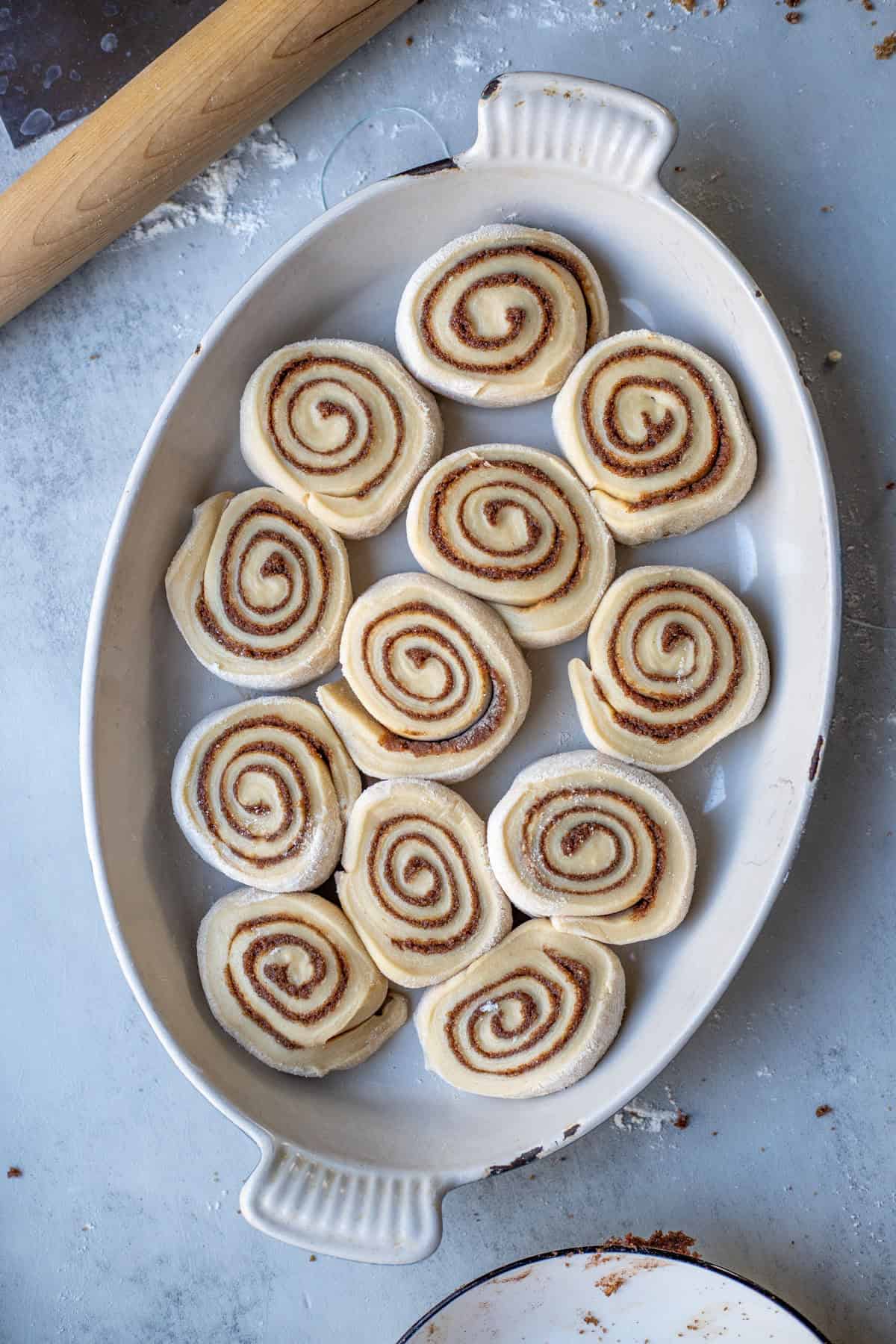
Step 7: Place the unbaked rolls into a greased 9×13 baking dish. Bake for 20-25 minutes or until the rolls are lightly browned and the dough is cooked through. Allow them to cool a bit before applying the icing.

Step 8: While the rolls bake, prepare the cream cheese icing. In a small saucepan over medium-low heat, add 6 ounces of cream cheese, 1/2 cup of heavy cream, 1/2 cup of maple syrup or honey, and 2 teaspoons of vanilla extract. Stir well. I use an immersion blender to get the icing really smooth. Pour over the warm cinnamon rolls and enjoy!
Tips
- Start the night (or up to 24 hours ahead) before you want to bake these sourdough cinnamon rolls, so the dough has a chance to ferment and build more flavor.
- The temperature of your kitchen will affect the fermentation. Find a warm place, such as inside the oven with the light on (heat off), on top of your fridge, or near some mild heat source.
- If you’re avoiding unfermented grains, use einkorn flour to dust the surface of the counter when rolling out the dough.
- I find that string or unflavored dental floss works best for slicing the cinnamon roll dough. A sharp knife also works, but is more likely to smush the rolls and lose some of the shape.
- Grease your baking dish generously or use parchment paper for no sticking.
- Keep the rolls spaced a bit apart so they have room to expand.
- This recipe has been edited to reflect changes made over the years of making this recipe. Some people had issues incorporating the eggs on the second day, so I changed this and started mixing them into the dough the night before. This works very well.
Recipe FAQs
Unfrosted cinnamon rolls can be covered and kept at room temperature for 2-3 days or frozen for several months. Store frosted cinnamon rolls in the refrigerator for up to four days. Let frozen rolls thaw and rise before baking.
Yes. Prepare the dough according to the directions. Form the rolls and place in a baking dish, wrap with plastic wrap, and place in the fridge for up to 12 hours or in the freezer for several months. You don’t want to leave the rolls in the fridge too long, or they may overproof. Allow to rest on the counter for two hours before baking if refrigerated, and overnight if baking them from frozen. Bake according to directions.
If you want to skip the long fermentation process, just use sourdough discard that has been fed recently in place of the active starter. Add all the dough ingredients and knead the dough until it becomes smooth, glossy, and passes the windowpane test. Follow the recipe from Step 4 on.
Yes. If allowed to rise too long, they will overproof and won’t hold their shape.
When making cinnamon rolls, avoid adding too much flour, overproofing the dough, using melted butter for the filling, overfilling the dough, and overbaking the rolls.
Baker’s Timeline:
You can make these or start them at any time. I like to start doughs at night time so they can rise all night. In the morning, they are ready to shape, boil, and bake.
Feed sourdough starter with flour and water.
Add all the ingredients to a stand mixer (minus the baking soda, baking powder, and salt) and knead until smooth and glossy. Cover tightly and ferment overnight.
Add baking soda, baking powder, and salt. Knead well until the dough is no longer sticky. Roll out the dough, prepare the filling, and spread. Form rolls, then bake for 20-25 minutes. Prepare and apply icing.
More Sourdough Recipes from the Farmhouse
- Long Fermented Biscuits
- Sourdough Peach Cobbler Recipe
- How To Make Sourdough Waffles
- Sourdough Chocolate Rolls
- Cinnamon Raisin Sourdough Bread
If you try this recipe and love it, I would love it if you could come back and give it 5 stars! Tag me on Instagram @farmhouseonboone.

Sourdough Cinnamon Rolls

Video
Equipment
Ingredients
- 1/2 cup sourdough starter, bubbly and active 113 grams
- 1/2 cup water, 118 grams
- 4 cups all-purpose flour, 560 grams
- 1/2 cup neutral oil, 113 grams
- 1/2 cup honey, 168 grams
- 2 eggs
- 1 teaspoon baking soda
- 1 teaspoon baking powder
- 1/2 teaspoon salt
Cinnamon Sugar Filling
- 1/2 cup softened butter, 114 grams
- 1 cup brown sugar, 200 grams
- 2 tablespoons cinnamon, 16 grams
Cream Cheese Topping:
- 6 ounces cream cheese
- 1/2 cup heavy cream, 120 grams
- 1/2 cup maple syrup or honey, 168 grams
- 2 teaspoons vanilla extract, 10 grams
Instructions
- Add active sourdough starter, water, flour, oil, honey, and eggs into the bowl of a stand mixer with a dough hook attachment. Mix until the dough forms a ball, then knead for a few minutes on medium-low speed until smooth and glossy.
- Place the dough into a lightly oiled bowl and cover tightly. Ferment in a warm place for 8-12 hours or overnight.
- The next day, preheat the oven to 375 degrees Fahrenheit. Add baking soda, baking powder, and salt to the dough. Knead in the stand mixer or on a floured work surface for approximately five minutes until all the ingredients are well incorporated.
- Place the dough on a lightly floured work surface and roll it into a roughly 12×15-inch rectangle. It should be about 1/4-inch thick.
- In a separate bowl, combine softened butter, brown sugar, and cinnamon. Stir until smooth. Spread the softened butter mixture evenly over the dough.
- Roll the dough up as tightly as you can. When you get to the end, pinch the edge into the main roll to prevent leaking. Slice the rolls with a sharp knife, bench scraper, or thread. Alternatively, you can slice the dough into 12 equal strips, then roll them up individually.
- Place the unbaked rolls into a greased 9×13 baking dish. Bake for 20-25 minutes or until the rolls are lightly browned and the dough is cooked through. Allow them to cool a bit before frosting.
- While the rolls bake, prepare the cream cheese icing. In a small saucepan over medium-low heat, add cream cheese, heavy cream, maple syrup or honey, and vanilla extract. Stir well. Pour over the cinnamon rolls and enjoy!
Notes
- The temperature of your kitchen will affect the fermentation. Colder is slower; warmer speeds things up. Find a warm place, such as inside the oven with the light on (heat off), on top of your fridge, or near some mild heat source.
- If you’re avoiding unfermented grains, use einkorn flour to dust the surface of the counter when rolling out the dough.
- I find that string or unflavored dental floss works best for slicing the cinnamon roll dough. A sharp knife also works, but is more likely to smush the rolls and lose some of the shape.
- Grease your baking dish generously or use parchment paper for no sticking.
- Keep the rolls spaced a bit apart so they have room to expand.
- This recipe has been edited to reflect changes made over the years of making this recipe. Some people had issues incorporating the eggs on the second day, so I changed this and started mixing them into the dough the night before. This works very well.
Nutrition
Nutrition information is automatically calculated, so should only be used as an approximation.








Hello , your sourdough recipes are easy to follow. Makes baking very easy.
Can I change up the sourdough cinnamon bun recipe to pumpkin spice buns?
I have a recipe for pumpkin cinnamon rolls…https://www.farmhouseonboone.com/sourdough-pumpkin-cinnamon-rolls/
Can I make these, cut them and put them in the fridge overnight to bake in the AM? Or if I bake tonight, can I heat them back up in the AM without drying them out? Thank you!
** Make these ahead of time, if needed! Ferment and assemble, then pop them in the refrigerator (up to 12 hours) or freezer (they’ll last months this way) to bake when you need them. Simply thaw, rise, and bake for perfectly fresh rolls!
Hi!! I love your recipes!!! I’ve been making sourdough for one year!! These cinnamon rolls are PERFECT!!! I like to make two batches and put them in the freezer. My only question is – i’ve seen a lot of your answers to comments to simply thaw rise and bake. What do you suggest on thawing time, how long to rise, and is it just the normal amount of time to bake? Thank you so much!!!
• Thawing (10–12 Hours): Place the frozen pan in the refrigerator overnight to thaw completely and evenly to the center.
• Rising (2–4 Hours): Move the thawed rolls to the counter. Let them sit until they look puffy, soft, and expand to fill the pan gaps. (Tip: Use a turned-off oven with the light on if your kitchen is cold).
• Baking (20–25 Minutes): Bake at the normal recipe temperature (375°F). If the tops brown too quickly before the center sets, tent with foil and bake for an extra 3–5 minutes.
So I didnt time properly. The dough would have been done at midnight. Not a good scenario. Lol. So I put dough in fridge over night instead of letting it ferment 8 to 12 hours. Did I ruin the dough?
In sourdough baking consider the refrigerator as a pause button…that way sourdough works for you instead of you working for it and feeling like you have to bake at odd times etc.
I didnt read recipe and added baking powder, soda. And salt right away. I know it will be okay just denser, but should i let dough rise for 12 hours before shaping and filling? Or rise for a few hours, shape and fill, and rise again for a few hours?
I would just go ahead and proceed. The baking soda starts to wear off if you leave it in there.
Hi, I’m going through your cookbook and making your recipes. I’ve got 7 kids so I’m often quadrupling a recipe. Today, I made these cinnamon rolls and I’m realizing that I can’t put them in the frig until the morning because of bp and bs. What would you suggest? Can I just stick the whole bowl if dough in, or will it overproof?
Your book has become a friend to me like my fanny farmer. Thanks for all the work you put into making recipes friendly and delicious.
Yes, you can put the dough in the refrigerator, but because the baking powder and baking soda are already mixed in, a large quadrupled batch will continue to react and overproof in the center as it slowly cools.
To save the batch, use one of these two quick options right now:
Option 1: Roll, Cut, and Freeze (Best Results)
Pausing the chemical leaveners completely in the freezer prevents them from losing their rising power overnight.
• Shape and cut the cinnamon rolls right now.
• Flash freeze them on a baking sheet for 1 to 2 hours until solid, then transfer to a freezer bag.
• Bake from frozen in the morning, adding an extra 5 to 10 minutes to the normal baking time.
Option 2: Divide and Chill
If you cannot shape them tonight, you must split the dough so it cools down instantly.
• Divide the mass into 4 separate gallon-sized freezer bags or shallow containers and flatten them out.
• Refrigerate overnight immediately.
• Assemble and bake first thing in the morning without letting the dough sit out to rise a second time.
I didn’t read the recipe and added the salt soda and baking powder before bulk ferment. Is my dough ruined?
No, your dough is not ruined. It will just be a bit denser and less tangy. The Rise: The baking soda neutralizes the starter’s acid. The bulk ferment will take longer, so wait until the dough looks visibly puffy. The Texture: The chemical leaveners activated early. The final rolls will be slightly denser and more bread-like, but still delicious.The Action Plan: Let the dough finish fermenting, then roll, fill, shape, and bake as normal. Do not try to add more baking soda or powder later as it tends to create a metallic flavor
Love this recipe. I use the dough as a base for a bunch of different scroll flavours like biscoff & cinnamon and pistachio & white chocolate. It’s turned out fantastic every time.
if even started not adding the baking soda and powder and just let them do a 2nd rise after forming the scrolls and they are absolutely beautiful. currently have a batch of cinnamon pecan ones in the oven and the house smells divine.
I find it’s a pretty forgiving recipe. I didn’t have room temp starter last night so just used some out of the fridge (had been recently fed the day before) and it’s puffed up really well. I make some type of scroll for my family at least each fortnight and just rotate through flavours or use up leftovers where I can (e.g. I had a half jar of biscoff in the pantry so warmed it up and spread it on the rolled out dough instead of butter and just sprinkled the sugar/cinnamon mix on top).
Sounds like some delicious flavors, thanks for sharing.
These were delicious. I doubled the batch and made one set and then froze a second set. I love being able to mix it up the nogtt by before and popping oven next morning – as a busy homeschool momma easy breakfasts are always a win!
I’ve made these numerous times and they are delicious! I have tried a few times to mix them early in the morning, let the dough rise all day, then roll them out and add the filling, cut and place them in the pan and into the fridge they go for the night. Bake them the next morning. But they don’t seem to rise as well this way. I even let them sit on the counter an hour before baking. Any tips? Do they need to sit longer in the morning before baking?
Instead of one hour, plan to let the shaped rolls rest on your counter for at least 2 hours before baking.
You want the rolls to lose their refrigerator chill entirely, puff up, and become visibly soft and slightly jiggly before they go into the oven. If your kitchen is cool in the morning, place the pan in a naturally warm spot—like inside an unheated oven with the oven light turned on—to help wake the yeast up faster…or you can make the dough and refrigerate over night and roll them out in the morning….