






This sourdough croissant bread offers the buttery layers of a flaky croissant with long-fermented sourdough flavor, all wrapped up in one delicious loaf.

Traditional croissants are known for their flaky crust and airy layers. Butter works through the dough so that it simply flakes apart when pulled, providing a heavenly little foundation for all kinds of treats, sandwiches, and snacks.
What I love about this tasty sourdough croissant bread is the buttery, flaky texture without all of the fussing over forming a dozen individual croissants. It’s sliceable, making it perfect for decadent breakfast sandwiches, toasting with butter, or layering with homemade peach jelly or strawberry jam.
You could even use them for hot ham and Swiss sliders or egg salad sandwiches, or switch gears and try an indulgent French toast casserole with maple syrup, a custardy bread pudding, or strawberry shortcake with sliced croissant bread instead of biscuits.
When you see the recipe time, you might be intimidated by how long it takes. Keep in mind that, while the recipe calls for long fermentation times, it’s pretty hands-off. Aside from the initial stretch and folds, there are two fermentations, one at room temperature and one in the refrigerator. The biggest factor is planning. If you know when you’d like to serve this bread, whether a special occasion or a typical weekday, get started a couple of days before to allow for the fermentation time. Otherwise, the recipe is quite simple.
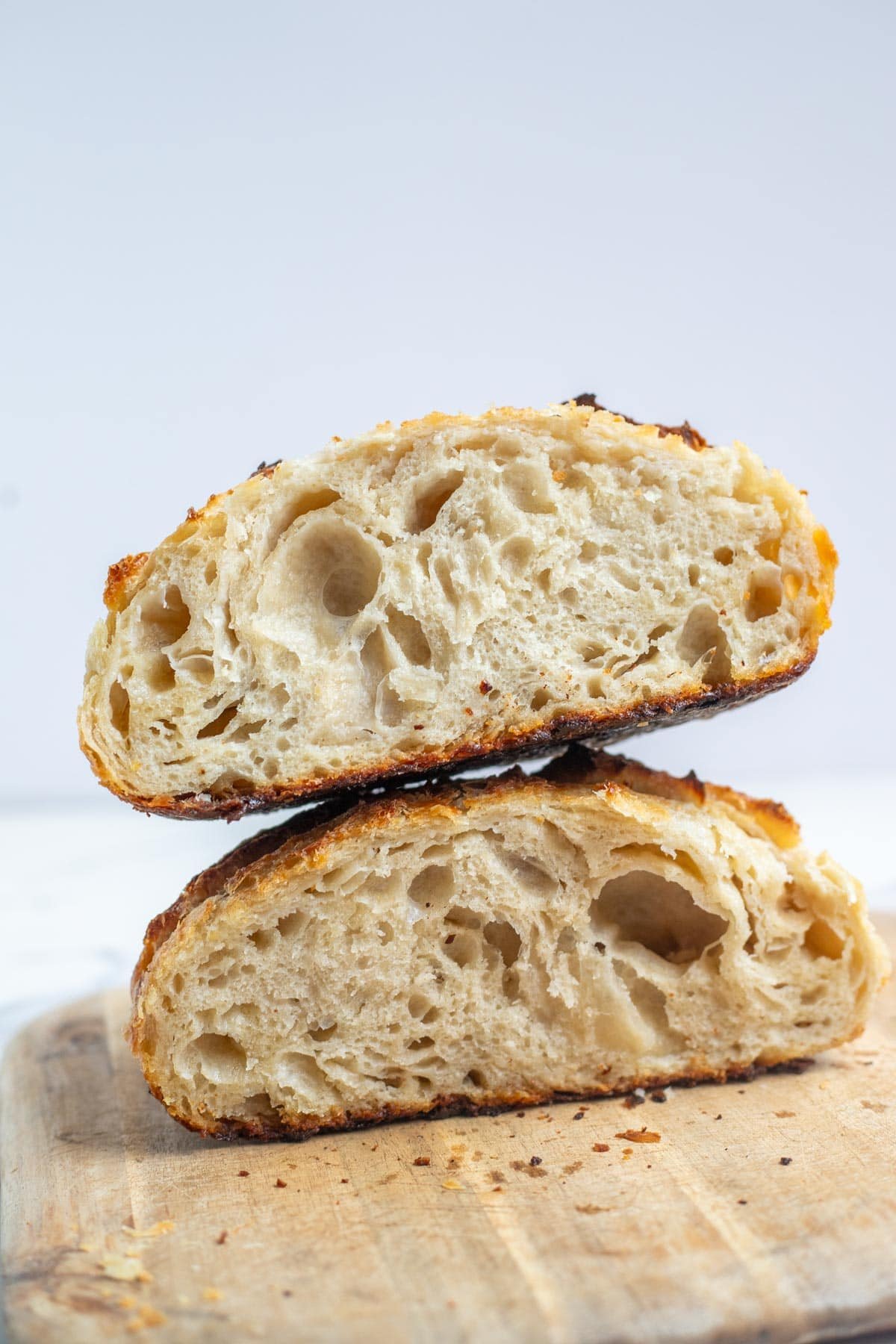
This bread is delightfully tasty. It makes a gorgeous, golden, crusty boule. It’s soft, yet structured enough to slice, and the long fermentation periods allow for a building complexity of sourdough flavor.
Why You’ll Love This Recipe
Tangy sourdough and basic ingredients – I love the natural leavening of active sourdough starter, plus the long fermentation times develop a stronger sourdough flavor. You’ll find some of the simplest ingredients in this recipe, too. Nothing fancy or complicated…just delicious.
Buttery, soft bread – This sourdough recipe has all the elements of a soft and airy loaf. Folding in butter creates a steaming effect during baking that puffs the dough into crisp layers and yields that toasty, rich aroma of buttery croissants.
Sourdough croissants in an easy loaf – Everyone enjoys a flaky croissant, but sometimes you just need the easier assembly of one loaf.
Ingredients
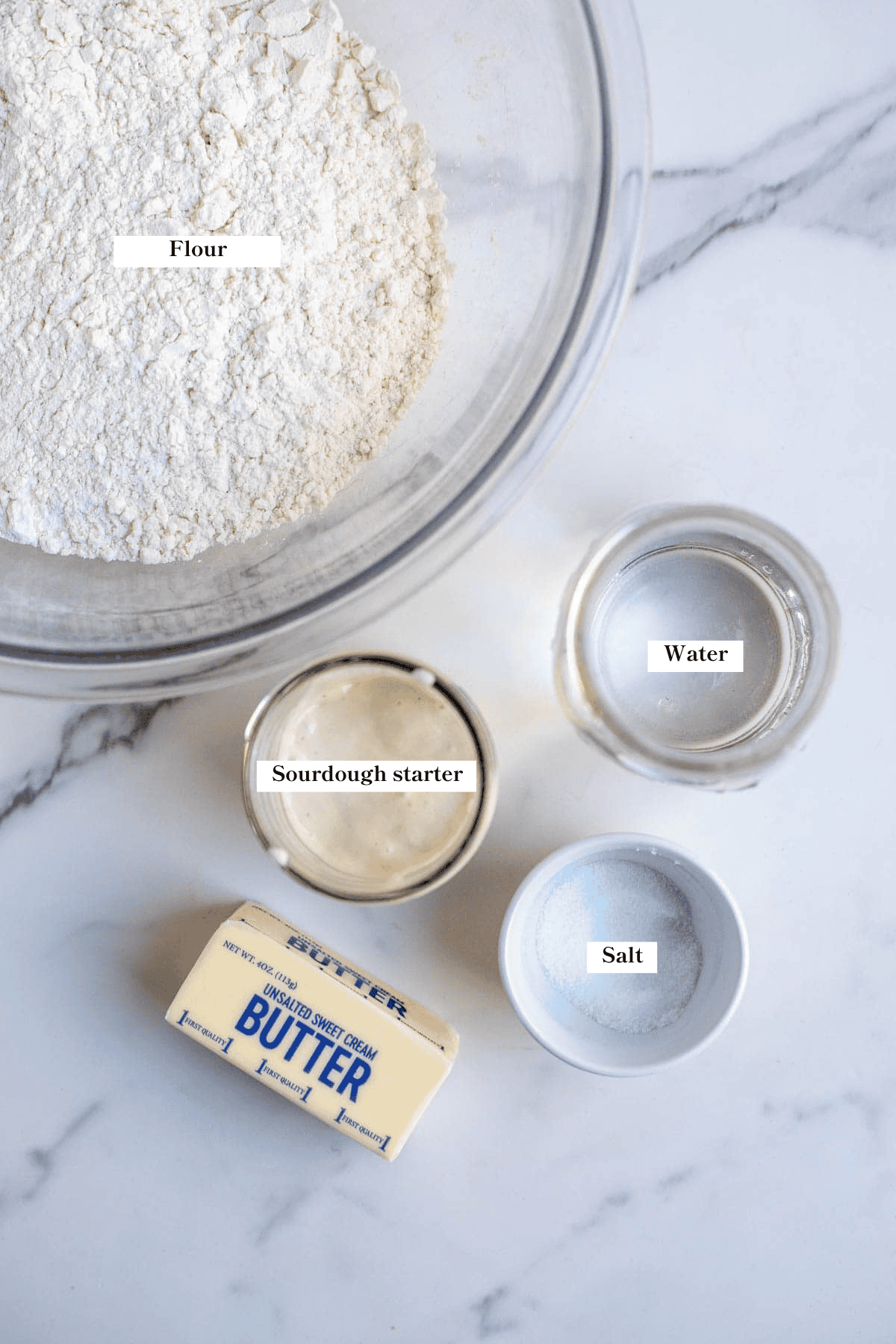
Sourdough starter – Make sure it’s active and bubbly for a good rise. You can use the float test to determine if your starter is active enough.
Butter – Keep your butter cold. Pop it in the freezer for 10 minutes before grating, then keep it in the refrigerator until you’re ready to add it to the dough.
A full ingredient list with exact amounts can be found in the recipe card below.
Tools You May Need
Dutch oven – A Dutch oven gives the loaf its crusty exterior.
How to Make Sourdough Croissant Bread
Starting
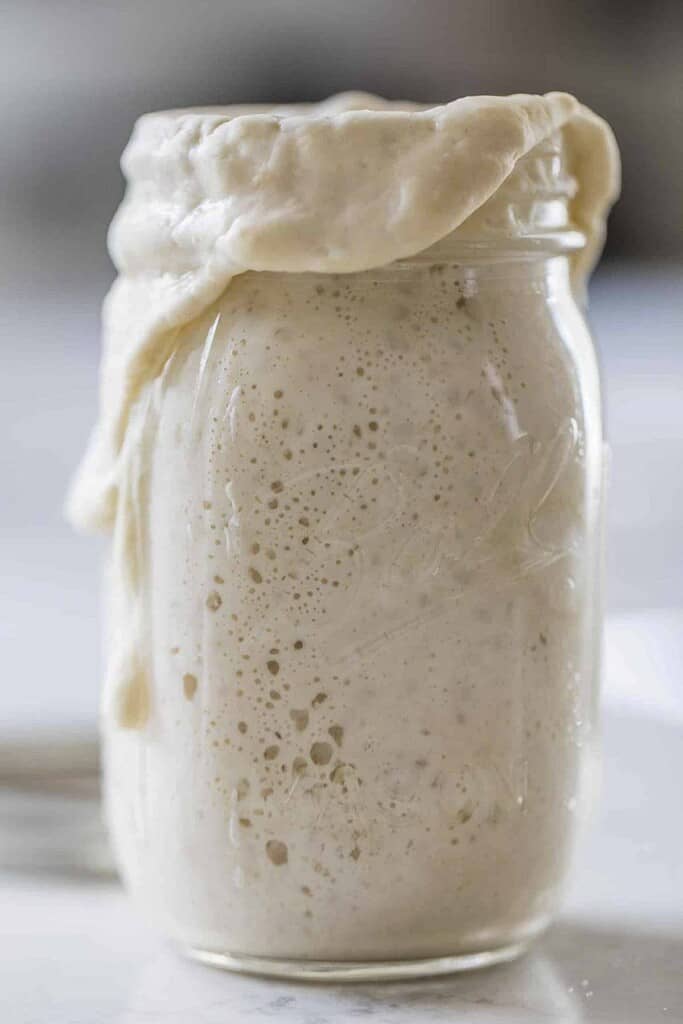
Step 1: Feed your sourdough starter 4-12 hours before starting the dough, giving it time to be active and bubbly. The strength of your starter can be a determining factor in how well your dough rises during fermentation.
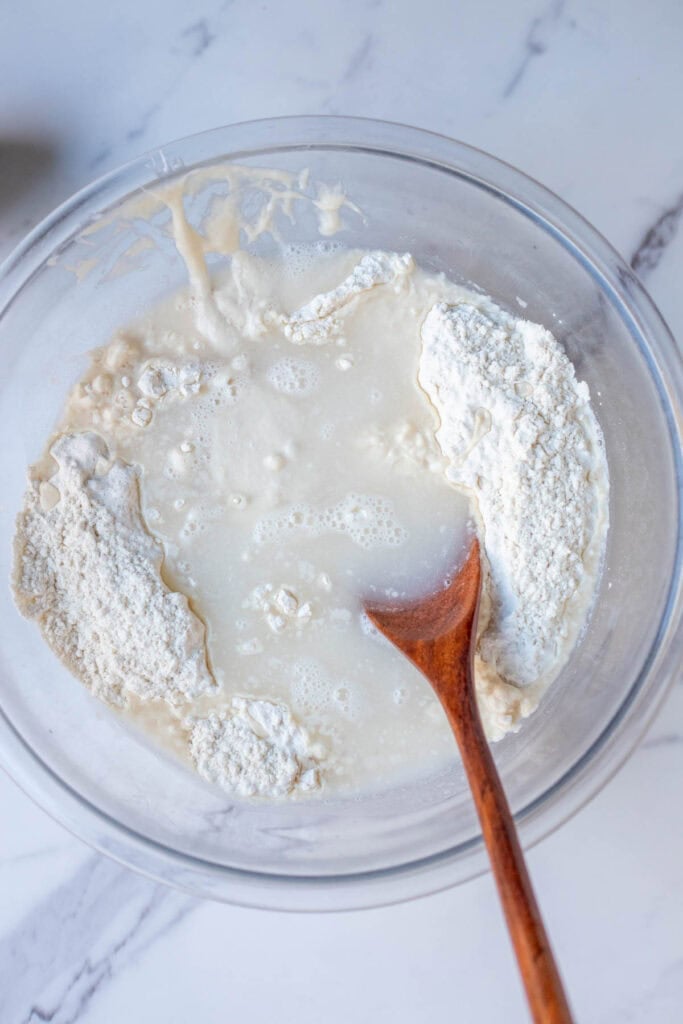
Step 2: Combine the warm water, active starter, flour, and salt in a large bowl using a wooden spoon or mixing by hand to form a shaggy dough.
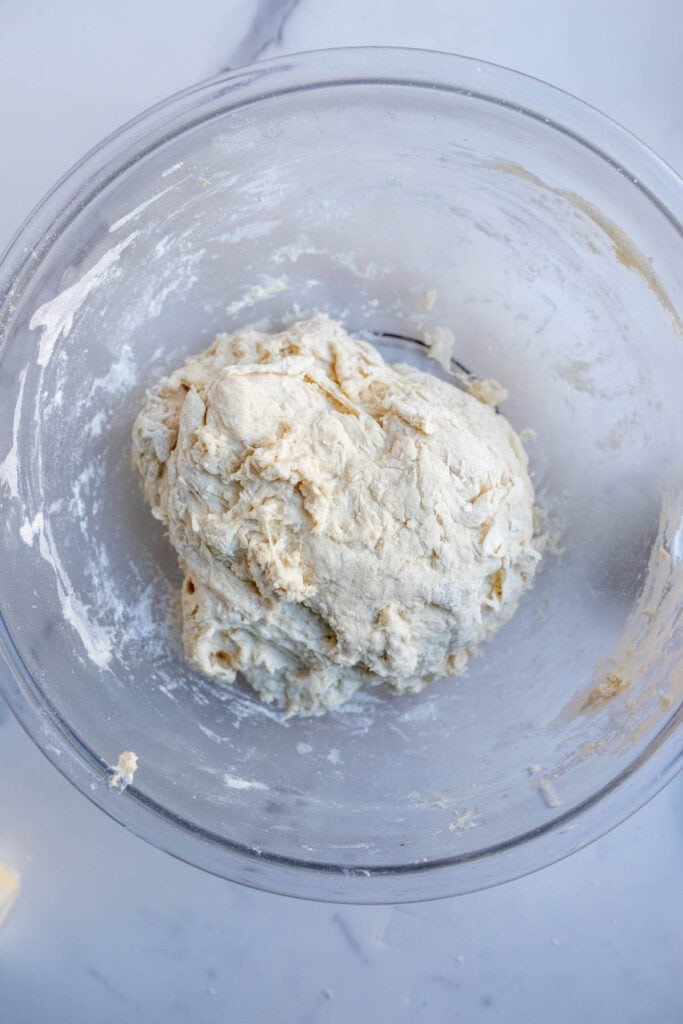
Step 3: Cover with plastic wrap and let the dough rest for 30 minutes for the water to hydrate the flour.
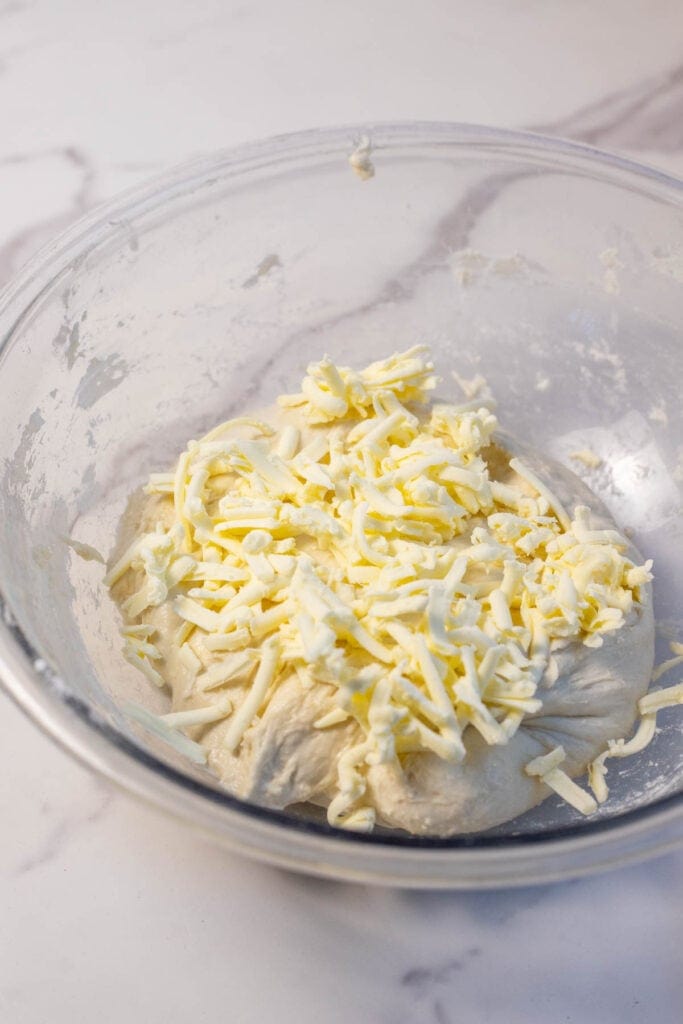
Step 4: Place the stick of butter into the freezer for about 10 minutes, then grate it with a box grater. Keep the grated butter in the refrigerator to keep it chilled when not in use.
Stretch and folds
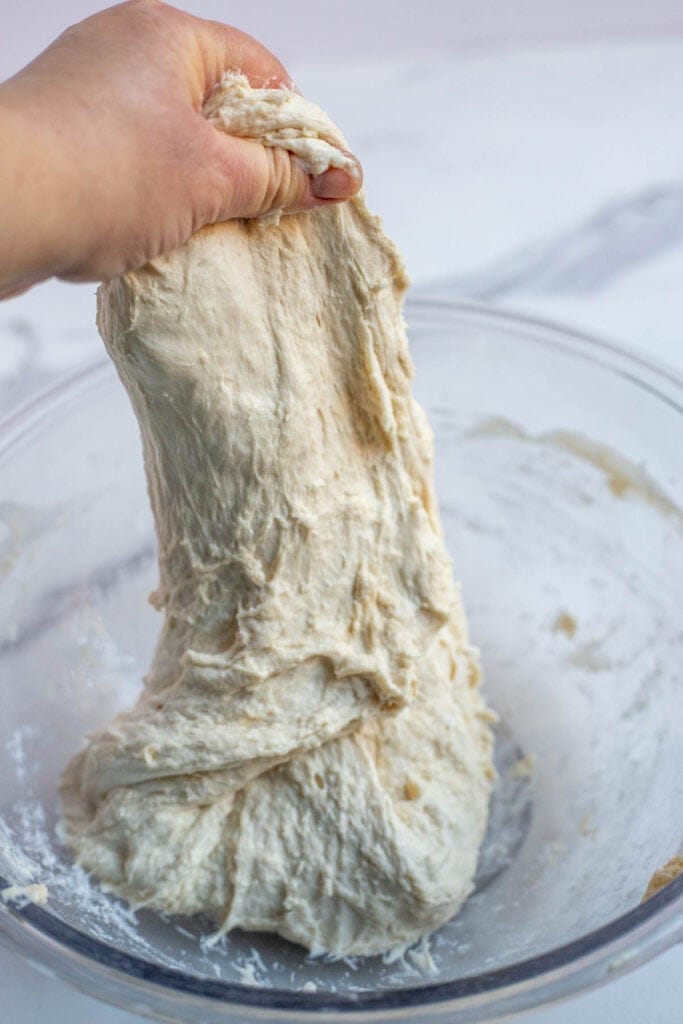
Step 5: Perform your first round of stretch and folds. Grab the edge of the dough with your hands and stretch it upward. After a good pull, press that edge back down into the center of the dough, turn the bowl a quarter turn, and repeat the process at least two more times. This is considered one round. Cover the bowl and set aside.
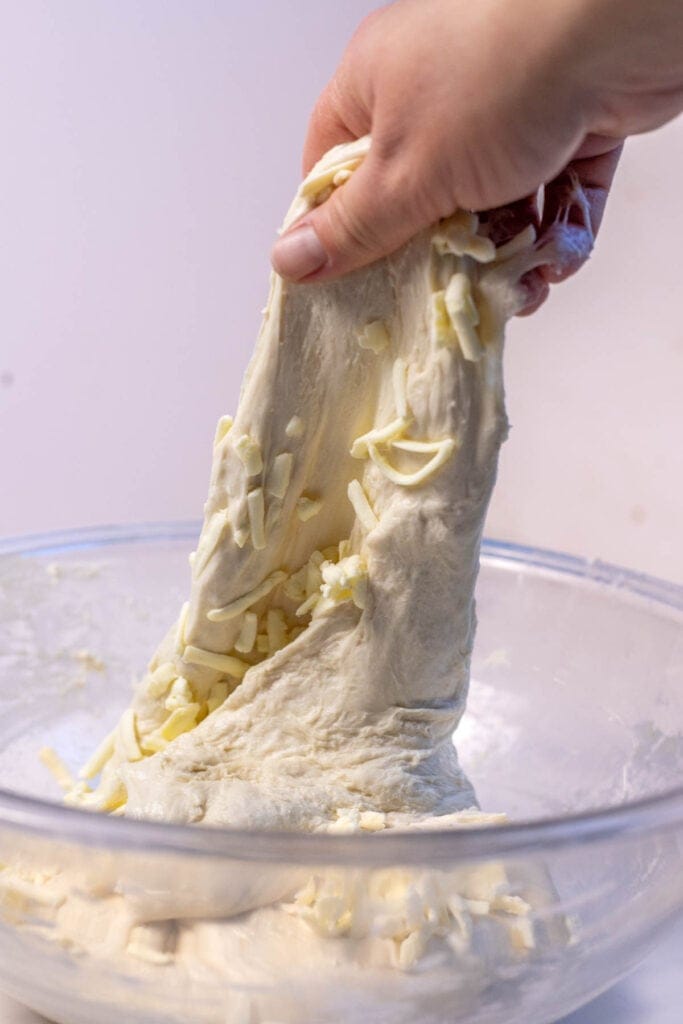
Step 6: After 30 minutes, uncover your dough for the second round of stretch and folds. Add half of the butter at this time, keeping the rest of the butter in the fridge. Perform the stretch and folds as before, incorporating the grated butter, then cover and set aside.
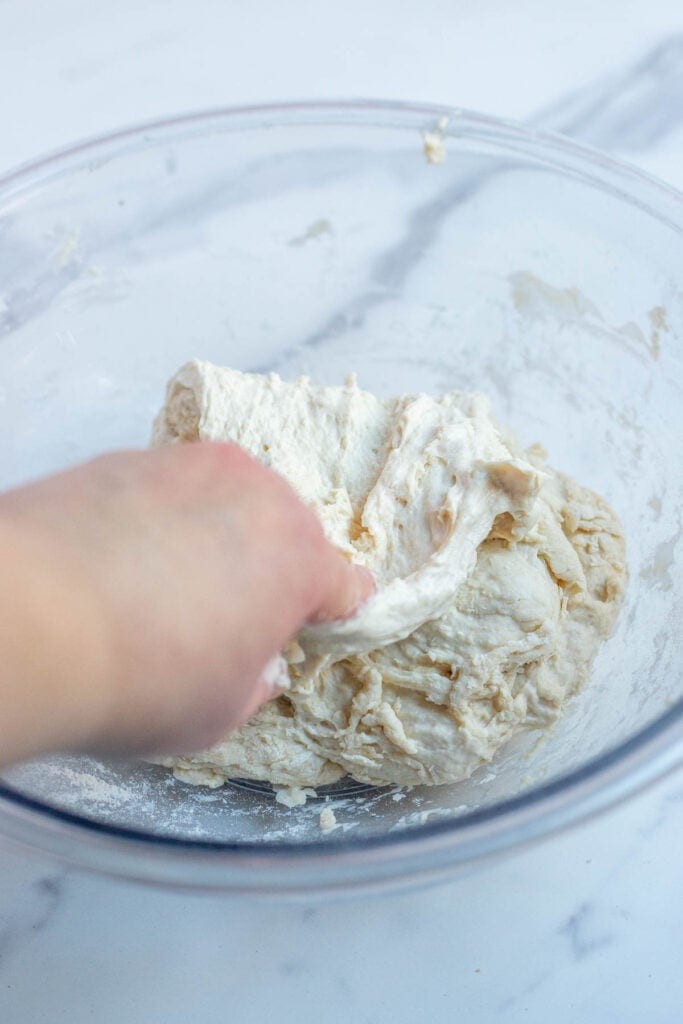
Step 7: After 30 minutes, add the rest of the butter to the dough and complete the third set of stretch and folds.
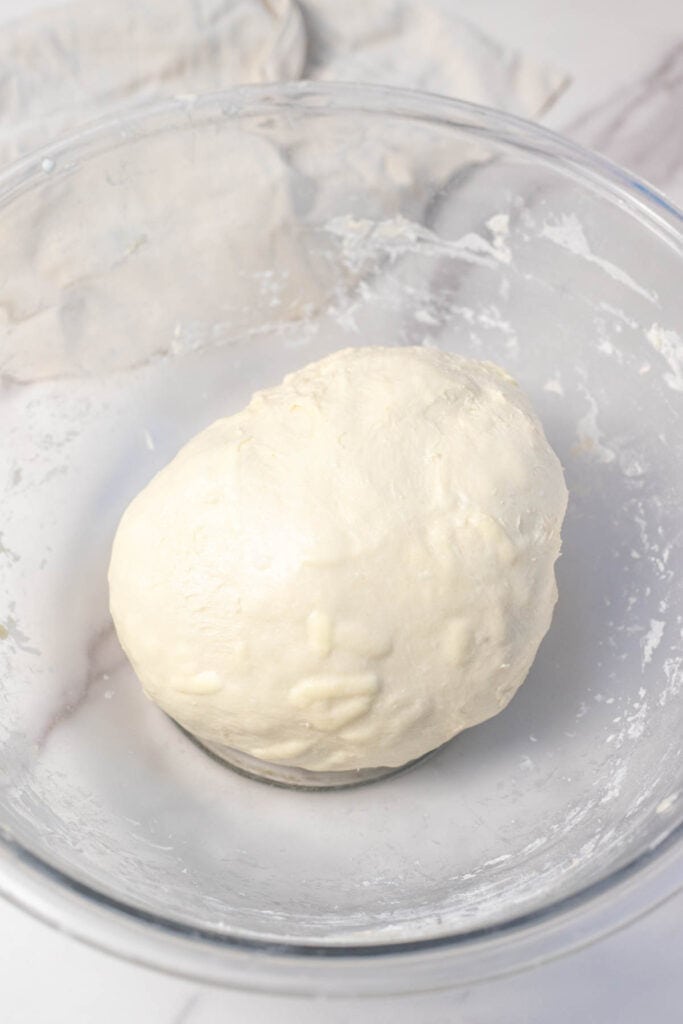
Step 8: Cover and start the bulk fermentation at room temperature for 8 to 12 hours or until nearly doubled, keeping the dough in a cool location. Since you’re aiming to keep the dough cool during the first fermentation, it’s possible that it may take longer than 12 hours. I like to use my pantry, as it stays cool in the fall and winter months.
Shaping
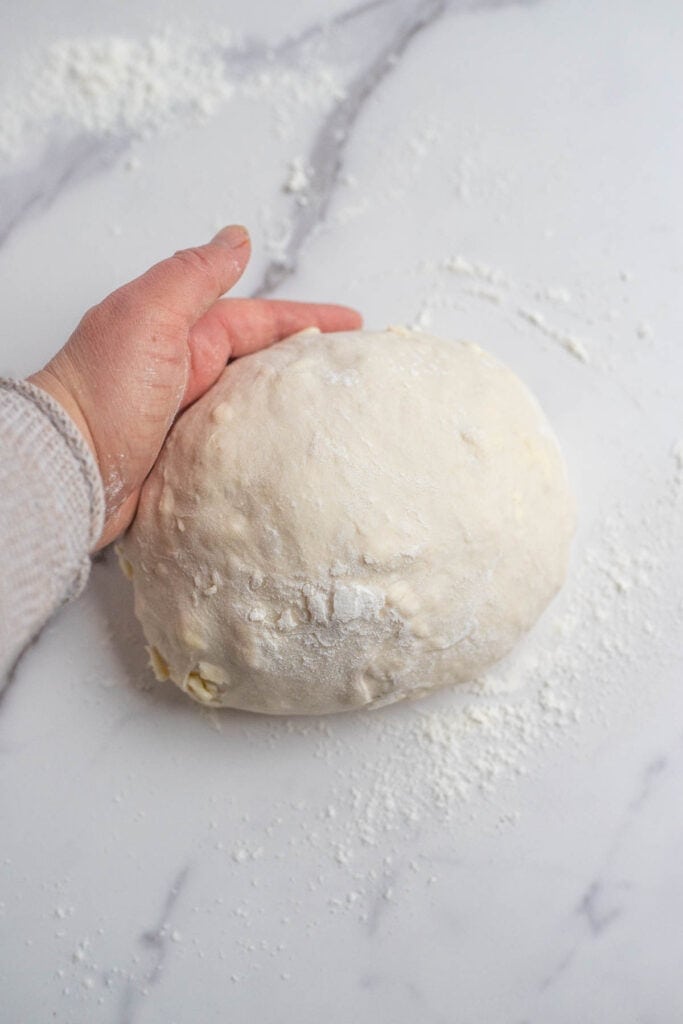
Step 9: Turn your fermented dough out onto a lightly floured work surface and shape into a boule. You can fold it or roll it up – a bench scraper can be very helpful – then gently but firmly spin the dough towards you on the counter surface, creating tension on the loaf. This helps achieve a good rise.
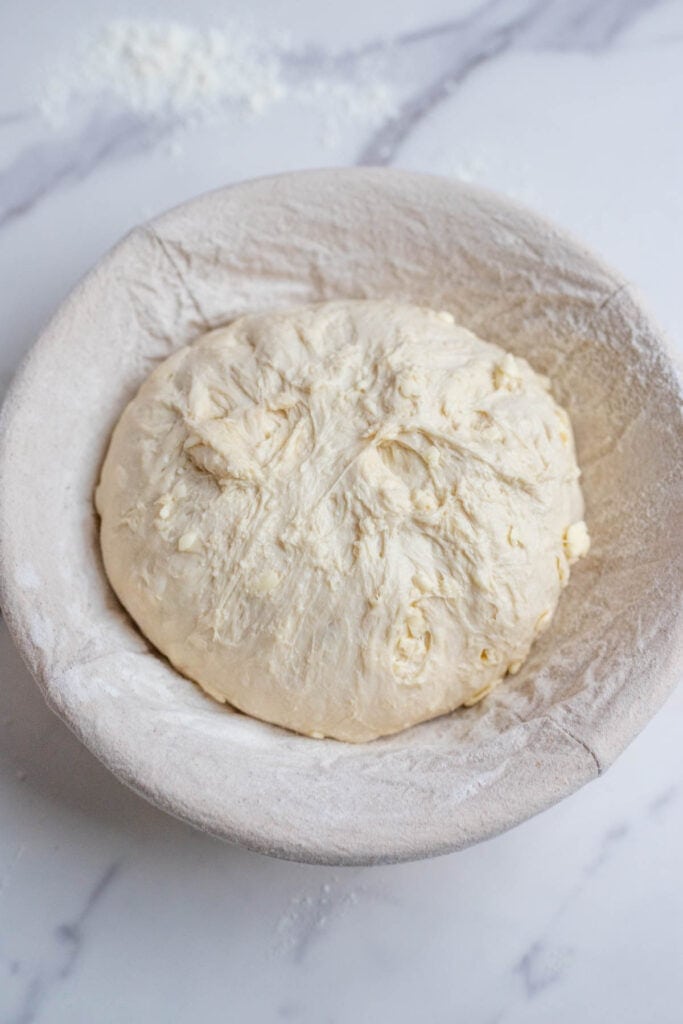
Step 10: After shaping, place the boule in a floured banneton or a bowl lined with a floured tea towel. Cover and place in the refrigerator to ferment for 12-15 hours. The fridge time provides a slow ferment and keeps the butter firm, plus the cold dough is easier to score and loses less butter to melting while in the oven.
Baking
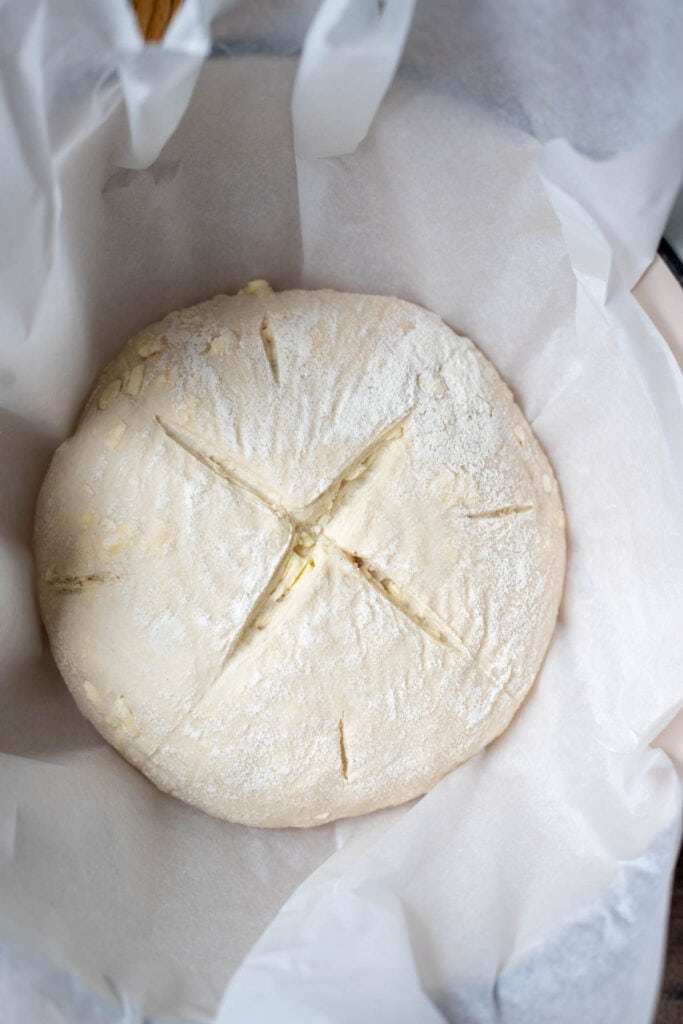
Step 11: Set the oven temperature to 425 degrees Fahrenheit. Place your Dutch oven inside to preheat for one hour before baking. Right before baking, remove the chilled dough from the refrigerator and place it on a piece of parchment paper, seam side down. Dust with flour, if you’d like, and score the top of the loaf with a lame.

Step 10: Carefully transfer the parchment paper with the dough to the hot Dutch oven. Place the lid back (don’t forget it’s hot!) on and return to the oven. Bake with the lid on for 30 minutes, then remove the lid and bake for an additional 20-25 minutes until golden brown. Let the loaf cool on a wire rack before slicing.
Tips
- Since the dough and butter need to be kept cool for the first fermentation, this tends to be a better recipe for the cooler months.
- Keep your butter cold! Don’t skip the 10 minutes in the freezer before beginning the recipe. It helps with grating and also keeps the butter from melting during the stretch and folds.
- The key is to keep your dough temperature low while it ferments at room temperature. Place the dough in a cool area of your home. This is more easily done during the cooler months, while summer poses a challenge for a cool room temperature rise.
- Use parchment paper to easily transfer the boule into the Dutch oven and avoid the bread sticking to the bottom of the dish when the butter leaks out during the bake.
- Butter will leak out during baking. This is normal and adds to the delightful, crisp crust. The boule will reabsorb the butter during baking.
- Bake time will vary with your oven, so keep an eye on the color and crust on your loaf.
- Let the bread cool before slicing.
Recipe FAQs
I call it croissant bread because of the added butter that is worked into the layers through the stretch and folds. The cold butter creates flaky layers typical of croissants.
Once cool, store the bread in an airtight container at room temperature for several days, in the refrigerator for up to a week, or wrapped well in the freezer for 2-3 months. When frozen, gently reheat in the oven at about 325 degrees Fahrenheit until the crispness is restored and the loaf is heated through.
I find all-purpose flour gives the best structure and airiest texture for this sourdough loaf.
It may be under-proofed. The amount of butter in the dough, as well as the second cold fermentation, sets up for a slow proof. Even though it takes a longer time, be sure to give your dough all the time it needs to proof, or it will be dense when baked.
Sure! During the last stretch and fold, add roughly one cup of chocolate chips, dried fruit, or chopped nuts. Perform stretch and folds as usual, ending when the additions have been thoroughly incorporated.
Baker’s Timeline:
This can be started or made at any time. I like to start doughs at night time so they can rise all night. In the morning, they are ready to shape, boil, and bake.
Feed sourdough starter with flour and water.
Combine ingredients. Cover the bowl and let the dough rest for 30 minutes.
Perform three sets of stretch and folds, adding the butter, over 30-minute intervals. Cover the dough and bulk ferment 8-12 hours.
Shape dough. Cover and place in the refrigerator for 12-15 hours.
Preheat the Dutch oven at 425 degrees for one hour.
Take the dough out of the fridge, dust with flour, and score. Bake with the lid on for 30 minutes, then with the lid off for 20-25 minutes.
More Sourdough Recipes from the Farmhouse
- Sourdough Irish Soda Bread
- Easy Sourdough Italian Bread
- Sourdough Pretzel Buns
- Sourdough Sandwich Bread
- Easy Buttermilk Sourdough Bread
If you try this recipe and love it, I would love it if you could come back and give it 5 stars! Tag me on Instagram @farmhouseonboone.

Sourdough Croissant Bread

Equipment
Ingredients
- 1 1/3 cups water
- 1/2 cup starter, active and bubbly
- 3 1/2 cups all-purpose flour
- 2 teaspoons salt
- ½ cup unsalted butter
Instructions
Starting
- Feed your sourdough starter 4-12 hours before starting the dough, giving it time to be active and bubbly.
- Combine the warm water, active starter, flour, and salt in a large bowl using a wooden spoon or mixing by hand to form a shaggy dough. Cover with plastic wrap and let the dough rest for 30 minutes for the water to hydrate the flour.
- Place the stick of butter into the freezer for about 10 minutes, then grate it with a box grater. Keep the butter in the refrigerator when not in use.
Stretch and Folds
- Perform your first round of stretch and folds. Grab the edge of the dough with your hands and stretch it upward. After a good pull, press that edge back down into the center of the dough, turn the bowl a quarter turn, and repeat the process two more times. This is considered one round. Cover the bowl and set aside.
- After 30 minutes, uncover your dough for the second round of stretch and folds. Add half of the grated butter at this time, keeping the unused butter in the fridge. Perform the stretch and folds as before, incorporating the grated butter, then cover and set aside.
- After 30 minutes, add the rest of the butter to the dough and complete the final round of stretch and folds. Cover and bulk ferment at room temperature for 8 to 12 hours, keeping the dough in a cool location. I like to use my pantry, as it stays cool in the fall and winter months.
Shaping
- Turn your fermented dough out onto a lightly floured work surface and shape into a boule. You can fold it or roll it up, then gently but firmly spin the dough towards you on the counter surface, creating tension on the loaf. This helps achieve a good rise.
- After shaping, place the boule in a floured banneton or a bowl lined with a floured tea towel. Cover and place in the refrigerator to ferment for 12-15 hours.
Baking
- Set the oven temperature to 425 degrees Fahrenheit. Place your Dutch oven inside to preheat for one hour before baking. Right before baking, remove the dough from the refrigerator and place it on a sheet of parchment paper, seam side down. Dust with flour, if you’d like, and score with a lame.
- Carefully transfer the parchment paper with the dough to the hot Dutch oven. Place the lid back on and return to the oven. Bake with the lid on for 30 minutes, then remove the lid and bake for an additional 20-25 minutes until golden brown. Let the loaf cool on a wire rack before slicing.
Notes
Nutrition
Nutrition information is automatically calculated, so should only be used as an approximation.










I ABSOLUTELY love this bread!!!
Question, how can I make it whole wheat?
Thanks
I’m fairly new to sourdough (about 2 years) and my results have been spotty. Someone good sometimes not. It’s been so inconsistent. I’ve made this loaf twice and it came out okay the first time (my mistake… I forget to put it in the fridge for final fermentation and I over proofed it. Second time, I set reminder alarms and it came out perfection. I’m so happy with the results I bought your book. I can’t wait to bake more things. I went to a professional sourdough baking class and in my recipe it never told me to proof on the counter for 6-12 hours before the fridge fermentation. I just put it straight in the fridge after my final stretch and fold. Your method of explanation made a lightbulb go off. Thank you Lisa for giving me the confidence I have not had since I started. Excited for my baking future.
If I’d like to put this recipe into loaf pans for more sandwich style slices …..would this volume of dough be for two 9 x 5 loaf pans or will it work in one
Has anyone tried making this recipe in a loaf pan? Thanks!
Thank you for sharing your recipe. This is my 4th loaf of sourdough bread & it was the easiest & most delicious loaf yet. If I could post pictures I would. 😊
Looks amazing! Have you made this with fresh milled flour?
Yes, you can! I like to do 2/3 FMF and 1/3 all purpose.
My husband loves this bread! I am a new comer to sourdough bread making but this is my 3rd time making this recipe. I had to to double it becauseit goes so fast! It takes a lot of time but it is so worth it.
Thank you and I will be trying more of your recipes.
Our favorite boule recipe! I am about to mix it up for the 4th time and every time it comes out delicious!
Third time making this and it is a good recipe even for a new sourdough bread maker. Husband does not want any other bread!