
Learn all about where to buy wheat berries and other bulk grains so you can mill your own flour right at home.
I absolutely love purchasing grains in bulk and have been milling my own flour for over 12 years now. If you are new to freshly milled flour you can learn all about how to mill your own flour at home in this post.
The first question I get from people who want to start milling their own flour is which grain mill to buy. For more information on that, check out my Mockmill vs. Nutrimill comparison.
The second question is where do you buy wheat berries.
So, let’s dive in to where to buy wheat berries and other bulk grains. Plus, I’ll go over the best ways to store the wheat berries once you have them.
Benefits Of Buying Wheat Berries
Store for a long time – It is best to use wheat berries within 3 years, but with the right storage conditions, wheat can last decades.
Healthier – Grains lose their nutritional value pretty quickly after milling. Since flour at the store needs to be able to sit on the shelves for long periods of time, the healthy parts of the grain are removed during processing. By milling them yourself, you are not only get super fresh flour, but also more nutrients.
Can be cheaper than flour – I find this especially true for organic grains and more specialty grains.
Preparedness – Since grains can store for a long time, you can easily store a lot of grains for your food storage. It is a great way to build up a pantry.
Variety – You may be able to find a greater variety of wheat berries like spelt, einkorn, and other ancient grains, than you may be able to find in pre-ground flour.
My Favorite Grains To Purchase
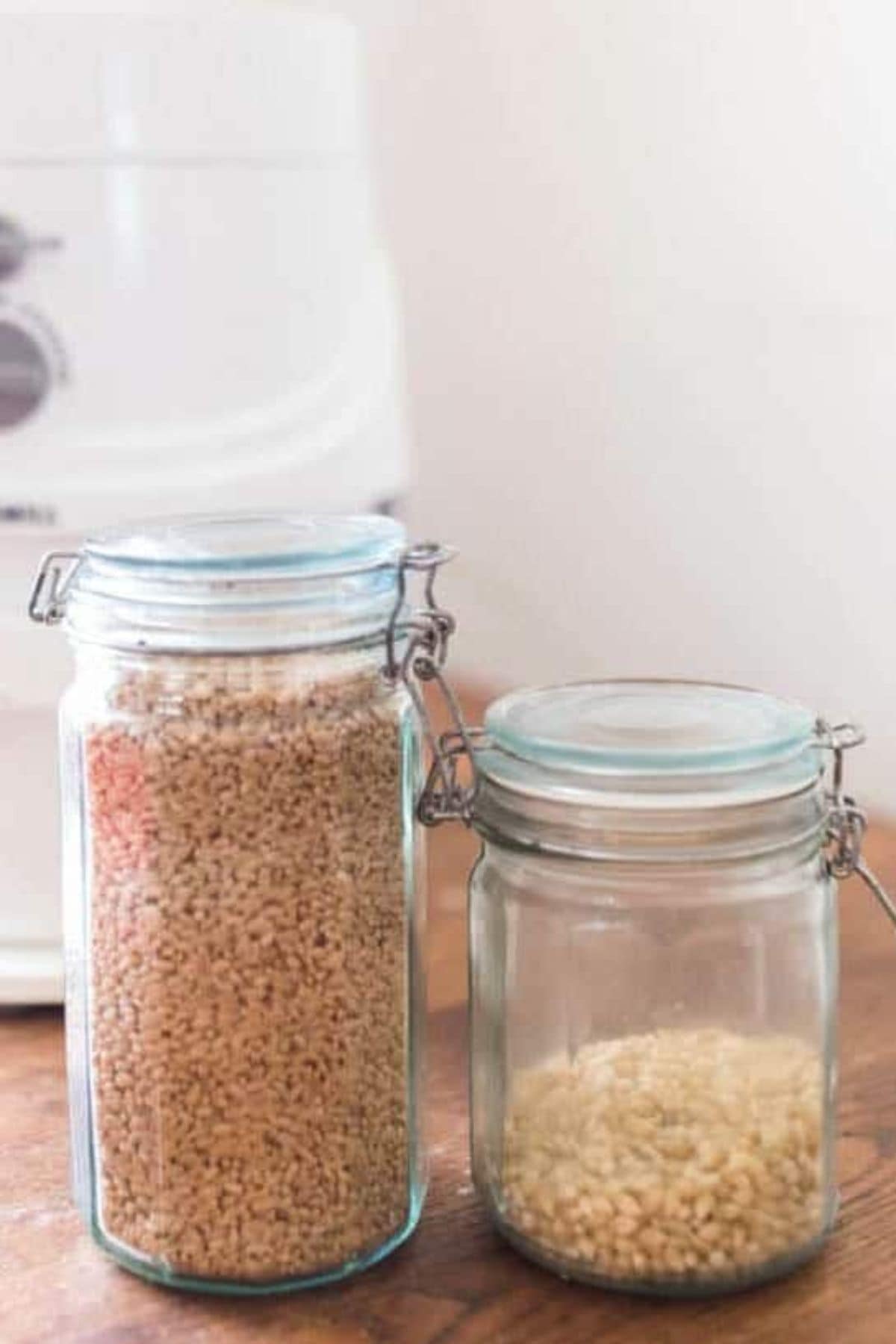
Soft White Wheat Berries – Good for cookies, cakes, muffins, and quick breads. It is a little softer and has less gluten than hard wheat.
Hard White Wheat Berries – This type of wheat is good for breads. It is due to a greater amount of gluten, which gives bread more structure.
Einkorn – This is my go to for a recipe that I’m not going to ferment. Einkorn flour is one of the oldest heirloom varieties of wheat and it contains less gluten than a more modern wheat. This makes it much easier to digest. Find some of my favorite einkorn recipes here.
Spelt – Another heirloom wheat that I’ve been loving lately. It is absolutely delicious in this spelt sourdough bread recipe.
Kamut – Is a non-hybridized, non-GMO flour that is grown organically and full of vitamins, minerals, and antioxidants. I love kamut bread.
Oats – A breakfast staple that I also love to buy in bulk. It can be very inexpensive when purchasing in bulk. The cheapest I’ve found is at Azure standard. A 50 pound bag of organic rolled oats comes out to $1.06 per pound.
Popcorn – Not only do we use this to make popcorn, but I have also mill it to make cornmeal to make homemade sourdough cornbread.
Rye – Rich in fiber, lower on the glycemic index, and less gluten than regular flour, rye is a great choice for bread making, I love this sourdough rye bread recipe.
Where To Buy Wheat Berries

There are multiple places online and locally that you can find wheat berries to purchase.
Mockmill
Great variety of grains and specialty wheat berries, however, shipping isn’t free and can be quite expensive.
Azure Standard
Probably one of my favorite places to shop all things bulk food! Wheat berries are no exception. Not only do they offer a great variety of grains, but they have the cheapest price and free shipping.
You can read more about other items I like to buy in bulk from Azure in this post.
Country Life Natural Foods
I’ve purchased through Country Life Organics many times. You can get free shipping on all orders over $99. Currently, hard white wheat is about $2.19 per pound for a 25 pound bag.
Jovial
Jovial currently only sells einkorn wheat berries for $44.49 for a 10 pound bag. Free shipping for all orders over $99. This comes out to be slightly cheaper than purchasing flour.
Amazon
Amazon offers wheat berries in bulk. Their prices are slightly more expensive than some other places, but most of the brands do offer free shipping, especially if you are a prime member.
Local Natural Grocery Stores
While ordering online can be a great and convenient option, I love shopping locally whenever possible. Sometimes local grocery stores offer a great bulk section where you can buy bulk grains from a bin. They may even be able to order larger quantities at a great price if you ask.
Amish Stores
Another place I’ve had success has been from local Amish stores. We used to have one about 30 minutes away, and twice a year I would head over to purchase many bulk items such as raw honey, grains, and raw butter.
How To Store Bulk Grains
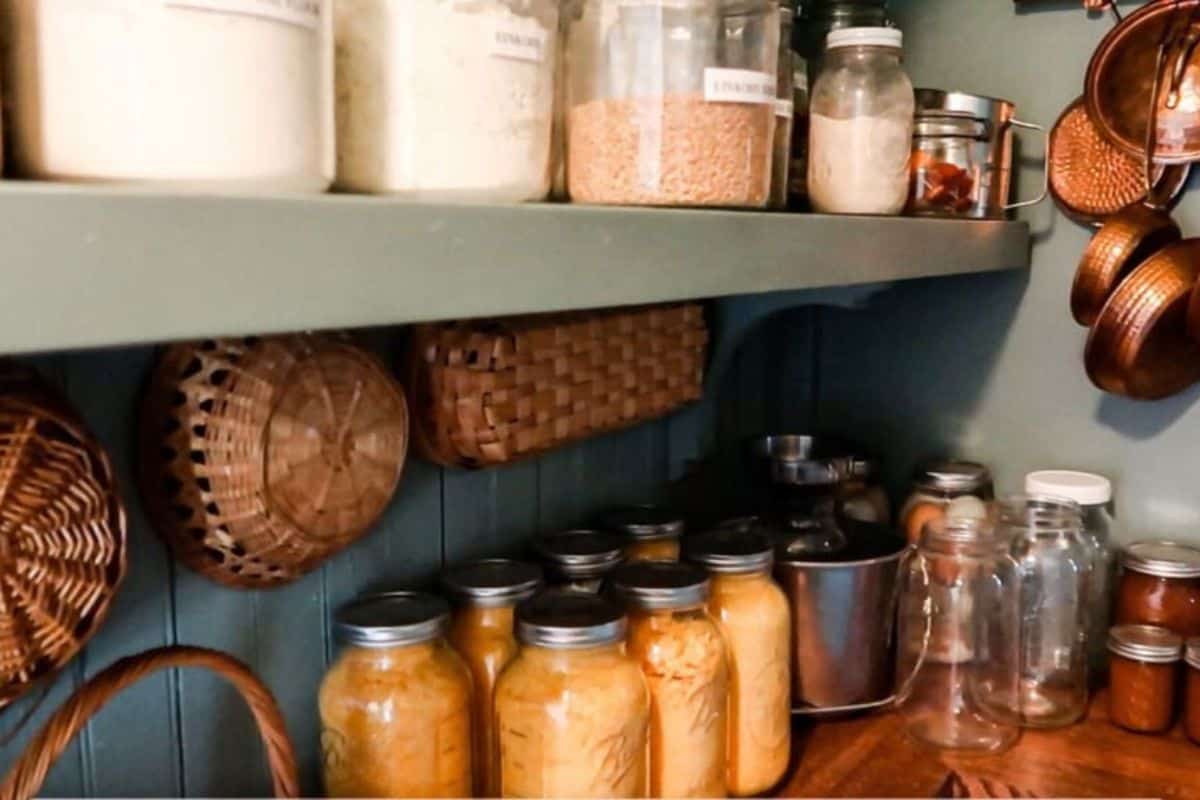
How you store your grains depends on how long it will take you to go through the grains.
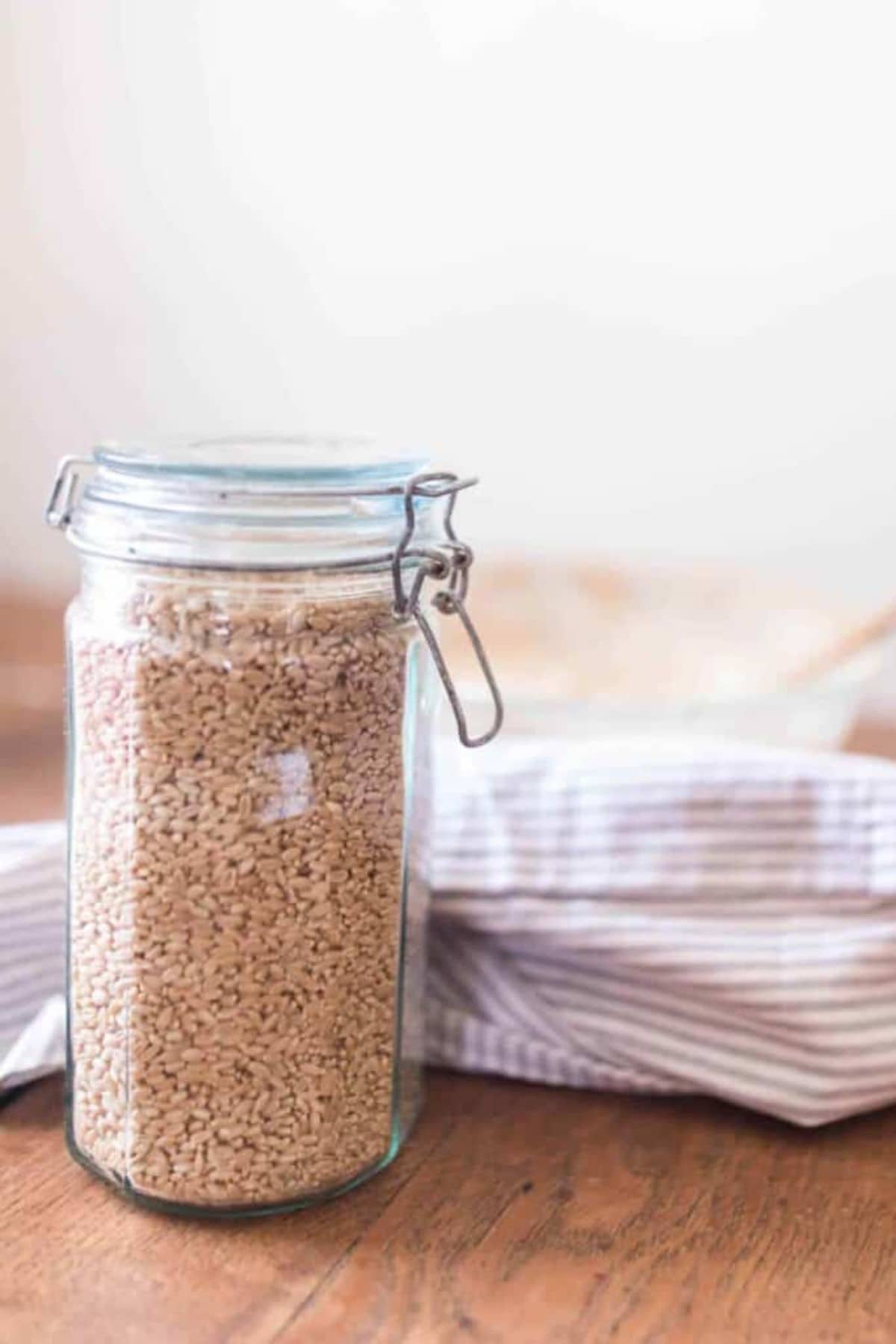
Short term storage – If storing for up to 6 months, wheat berries can just be stored in a glass container, or plastic bucket with a tight lid preferably in a cool (40 to 60 degrees F) dark, dry place out of direct sunlight.
I like to keep them in 5 gallon buckets with a gamma lid (these lids are much easier to open than the lids that 5 gallon buckets come with). This is airtight and will keep them fresh for a long time.
Long term storage – If you are wanting to keep them fresh for a long period of time, think 30 years, then I would suggest adding five 300cc oxygen absorbers to your 5 gallon bucket. They can also be stored in mylar bags. Add one 300 cc oxygen absorber per gallon mylar bag.
Oxygen absorbers help keep the environment in an unfavorable condition for any bugs. You can also freeze the grain for a 3-5 days and then thaw to kill bugs. Some suggest doing this another time 30 days later to kill any bugs in a later cycle.
Storing Freshly Milled Flour
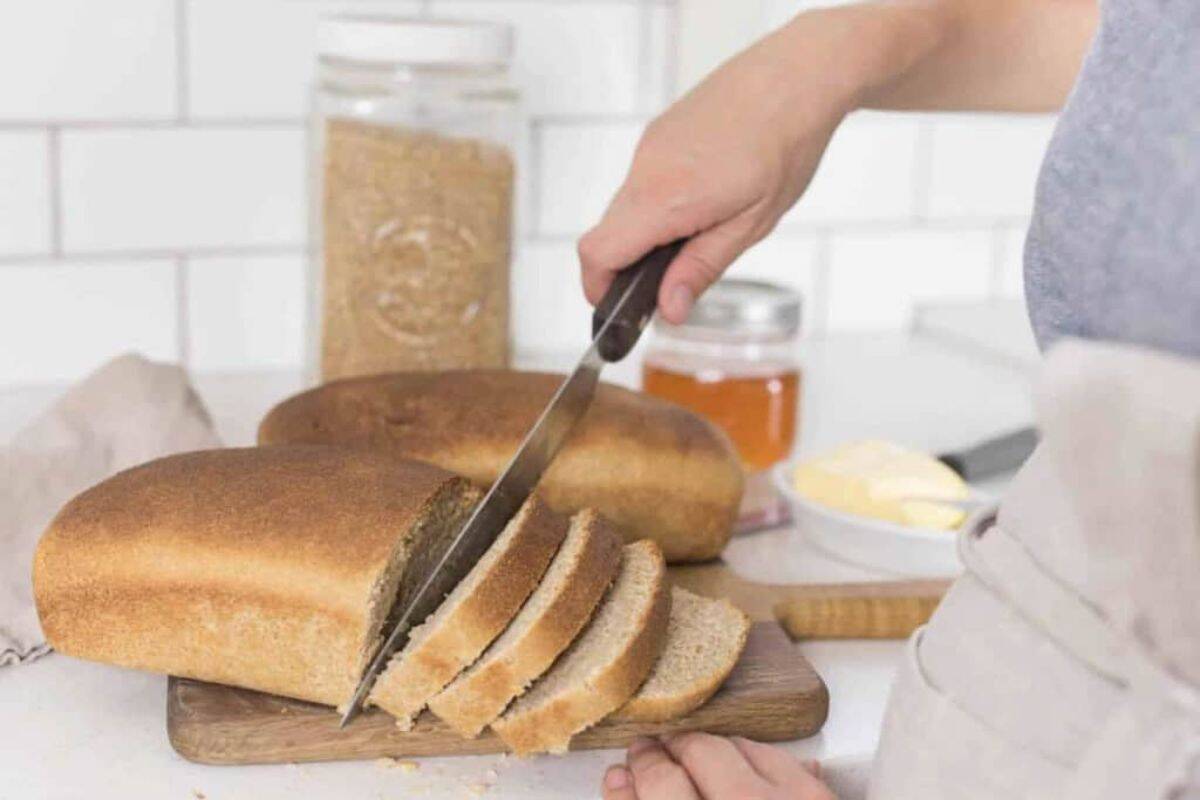
Once wheat berries have been milled into flour, the flour only stays fresh for up to a week. This is because when milling at home the bran, germ, and endosperm are still intact and contain oils which will go rancid fairly quickly.
Keep fresh flour in a container (preferably glass or plastic) at room temperature for about 3 days, in the refrigerator for up to a week, or in the freezer for up to 6 months.
A good indicator if the flour is still good is by smell. If it smells off, then toss it.
FAQs
Currently Costco doesn’t sell wheat berries (this also may be local Costco specific). However, some stores do offer a really great deal on organic flour.
Buying wheat berries in bulk can be cheaper than flour. I find this particularly true with organic grains.
I started with a Nutrimill flour mill and then recently switched over to the Mockmill. You can see a comparison between the Mockmill and Nutrimill here.






Lisa, I really like your explanations on sourdough.
I do have a question concerning storing wheat berries. My mother always kept bay leaves in her wheat flour to keep out the bugs. I also do this. So, would using bay leaves in the wheat berries work to keep out bugs?
I have never heard of that!
I have used bay leaf not only in my flour but also rice, oats, beans and even sugar. It doesn’t leave any taste whatsoever. I have done this for 5o+ years.
In fact, we had an ant infestation when we bought our house. I put bay leaf all around the house. Behind and under furniture. Within no time the ants were all gone. I have yet to see any bugs in the last five years.
I hope this information is helpful to you and all everyone else.
Nancy
Thank you for the info!!!
I was wondering if the grains you buy are of the heirloom variety where they haven’t been genetically modified? Have you looked at the Grand Teton Einkorn wheat berries? Are they more expensive than other sources you’ve used? I’m not allergic to gluten but am slightly sensitive to alot of it so am interested in the einkorn more than the others. I also was wondering if the mockmill flour you mill gets sifted to make a type of cake flour for lighter baking. Just getting my feet wet and purchased a $179. mill (from China) and find I have to sift to get a finer grind.I have a container 4-5 cups of the bran now in the freezer that I need to figure out what to do with. Thanks for any advice you might have. ..Kim
Wheat is actually not a GMO. Although it has been changed through breeding. I have not tried the Grand Teton brand, but do use other types of heirloom wheat and usually use Jovial for einkorn. I also don’t sift my flour, but do know of others who do to make more of an all-purpose flour. Soft I can’t be more help.
Thanks Lisa for this valuable information. I just bought a grain mill from Bread Becker’s and started making my own freshly milled bread. Yummy! I have been listening to “Sue’s Healthy Minutes” podcast where she shares all about the health benefits of using whole grains to make bread. She (Sue Becker) is someone you should consider having on your podcast. Her “real” bread stories are amazing and I think you and your listeners would enjoy her too.
Thanks for your blog and podcasts. I enjoy them both. I use your sourdough pizza dough and pancake recipes all the time.
I don’t have a food mill. Ban I use a blender? If so what type?
I have always used my mill. I believe you can use a blender, though. I’d recommend finding some specific articles online that address how to do so and the best blender to use.
Hi there! With these options mentioned above, do you have to wash these berries? Any chance you could do a post on your process to prepare these berries for grinding? Thank you!
I do not wash my berries. I usually just use them straight from the bag. I may transfer them into 5 gallon buckets with gamma lids.
I’m new to milling my own flour and am in the process of reading up on it. I’m curious about what grain I would use for recipes that call for bread flour vs all purpose? Also, I use 00 flour to make pasta and pizza dough, would I be able to mill that type of flour?
Thanks so much for all the information you share, it is so very helpful.
Your best bet will be hard white wheat berries, but it will definitely be denser than all purpose and 00 because of the bran and germ.
Hi! So I’m a few days into milling our own flour, made my first loaf using my go-to all purpose flour recipe subbing hard red and all purpose 1:1, got a total flop! Do you have fresh milled flour specific recipes? I see a lot of recipes on the blog use unbleached all purpose; are you using fresh milled in place of that or actual store bought unbleached all purpose flour?
Whatever is listed in the recipe is what I use. I do not always use freshly milled flour, and will use all purpose quite a bit. Many of my whole wheat recipes, like this one https://www.farmhouseonboone.com/how-to-make-whole-wheat-sourdough-bread, use freshly milled. Hope that helps!
Hello there! I have a question, if you are wanting to store wheat berries for 30 years and you use oxygen absorbers, do you ever have to replace the absorbers? I’ve seen on multiple websites they only last 6 months. If that is the case do you replace them every 6 months in your sealed wheat berries? Thanks!
I haven’t seen anything about replacing the oxygen absorbers every 6 months. I looked at multiple sites (including university extensions) and am not seeing that. That would be helpful to know though.
As long as there are no air leaks in your bucket, you should only have to replace the oxygen absorbers after opening the bucket. You will definitely need to replace them then. To learn more about using them, check out Freeze Drying sites or Facebook pages for freeze drying (Retire at 40 has a lot of info). They usually have a ton of info about using them. From what I’ve read there, if the absorber is hard, it is used up and needs to be replaced. If it is flexible, it is still good.
Thank you for your helpful and well written information for home millers. My family grows hard red Redeemer wheat berries with the 2022 specifications at whitesfielsfarm.com, The cost is $1.25 per pound with no minimum order. We can ship up to 40 lbs by UPS ground service. Pick up is available in Hardwick, Massachusetts.
Hey Abbie, could you share a link to your website?
OK, I did it! Ordered my Mockmill and got your discount, thank you!
Made your sourdough pancakes this am. Delish