







Fermented overnight for the softest, fluffiest texture, these irresistible sourdough donuts are fried in coconut oil until perfectly crispy and dipped in a sweet, vanilla glaze.

Homemade donuts win breakfast every time. Growing up, these delightful treats were generally saved for special occasions. They always left our fingers covered in powdered sugar and wishing there were just a few more. Perhaps we all savor our memories of homemade donuts, whether cut out of canned biscuits or made from scratch.
This recipe introduces sourdough fermentation for the best sourdough donuts. If you didn’t think donuts got better, prepare for a new favorite recipe.
Fermenting the donut dough results in a tender, airy crumb, as well as a rich sourdough tanginess. Frying them in a cast-iron skillet until golden brown enriches that flavor even more, and dipping in glaze or dusting with powdered sugar takes them over the top.
While donuts never claimed to be healthy, we might argue that these sourdough donuts come as close as possible. With fermented grains, healthy fats, and zero additives, I don’t feel bad at all about feeding these pillowy little treats to my family.
As you can see, sourdough isn’t only for bread recipes. From these sourdough donuts to sourdough croissants, an easy lemon sourdough cake, and even sourdough peanut butter cookies, we love working sourdough into our favorite things. If this piques your interest, head to my blog to learn how to make your own sourdough starter, how to use sourdough starter, and how to keep it going for years to come.
Why You’ll Love This Recipe
Flavorful and delicious – The rich ingredients and slight sourdough tang work harmoniously to create the best donuts – lightly sweetened, lightly tangy, and absolutely nostalgic.
Pillowy and crisp – Fried until golden brown, these donuts develop a mouthwateringly crisp exterior that, once broken into, reveals a light, fluffy crumb.
Simple and fully fermented – Only simple ingredients in this recipe. The batter is fermented for up to 24 hours for a more digestible and nutritious treat.
Ingredients
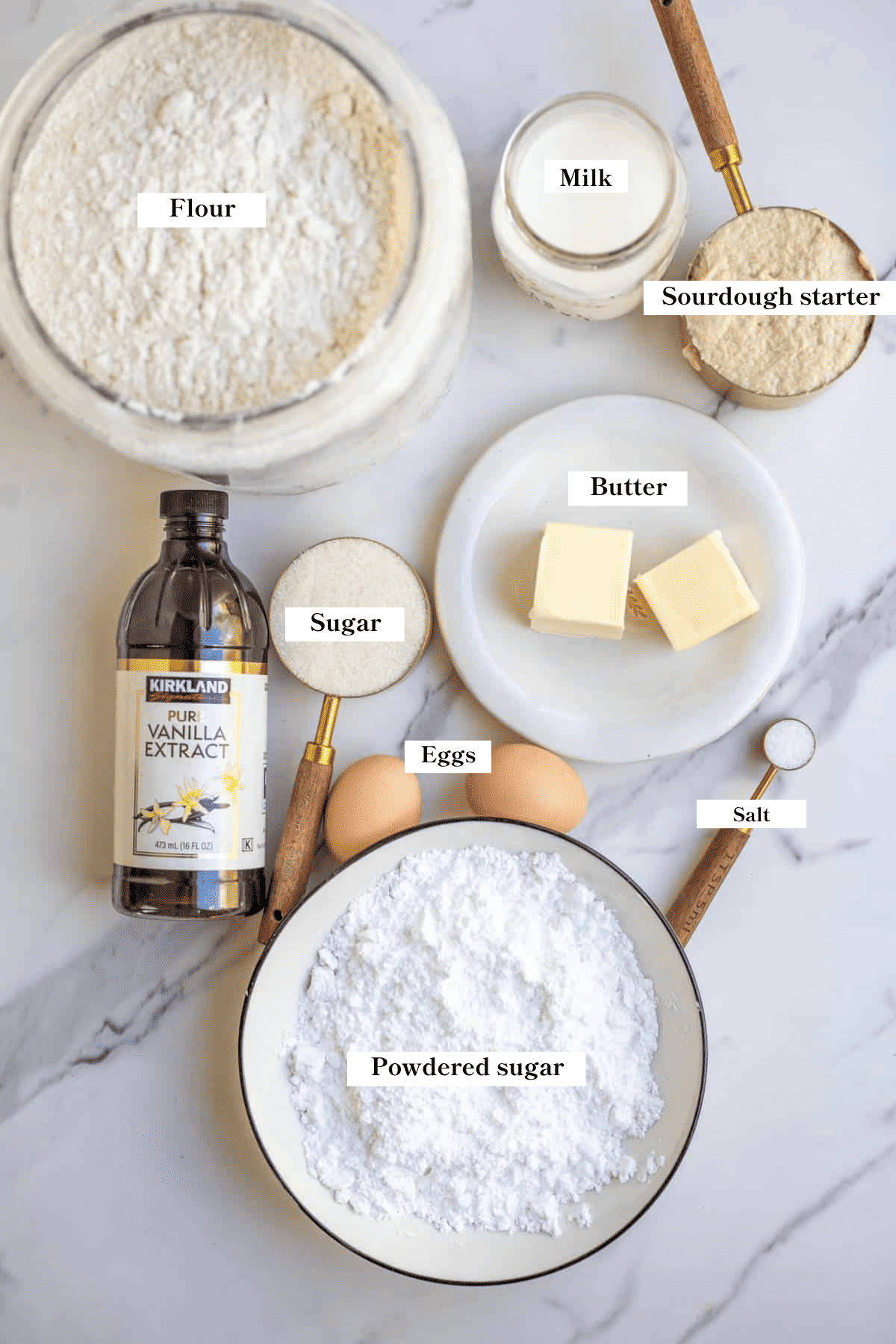
Milk – Preferably whole milk, as it achieves a better texture for the donuts and a good consistency for the glaze.
Sugar – Organic, unrefined.
Flour – I like to use all-purpose flour for this recipe. You could also use freshly milled whole grain, though the texture will be a little different and not as fluffy.
Sourdough starter – This should be a fed and active sourdough starter that is nice and bubbly.
Oil – For frying donuts, I suggest tallow, lard, avocado oil, or coconut oil. These are healthy, unrefined oils with higher smoke points.
A full ingredient list with exact amounts can be found in the recipe card below.
How to Make Sourdough Donuts

Step 1: Feed your sourdough starter 4-12 hours before starting the dough. Warm the milk, sugar, and butter in a saucepan over low heat, whisking to dissolve the sugar.
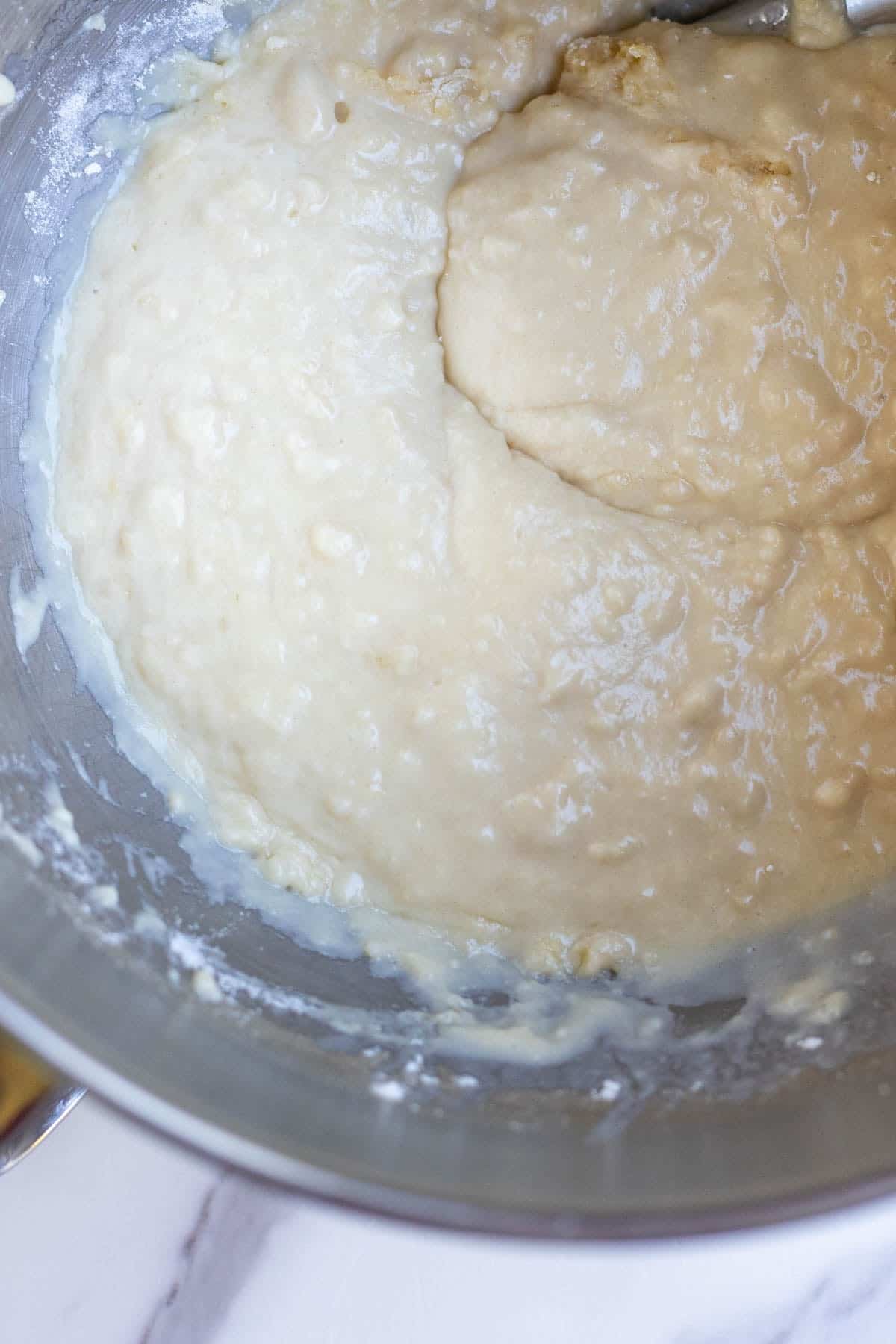
Step 2: Add the melted butter mixture to the bowl of a stand mixer with a dough hook attachment. Add two cups of flour to the mixer bowl and combine on low. I like to do this to make sure the milk mixture has cooled down enough before adding my starter.
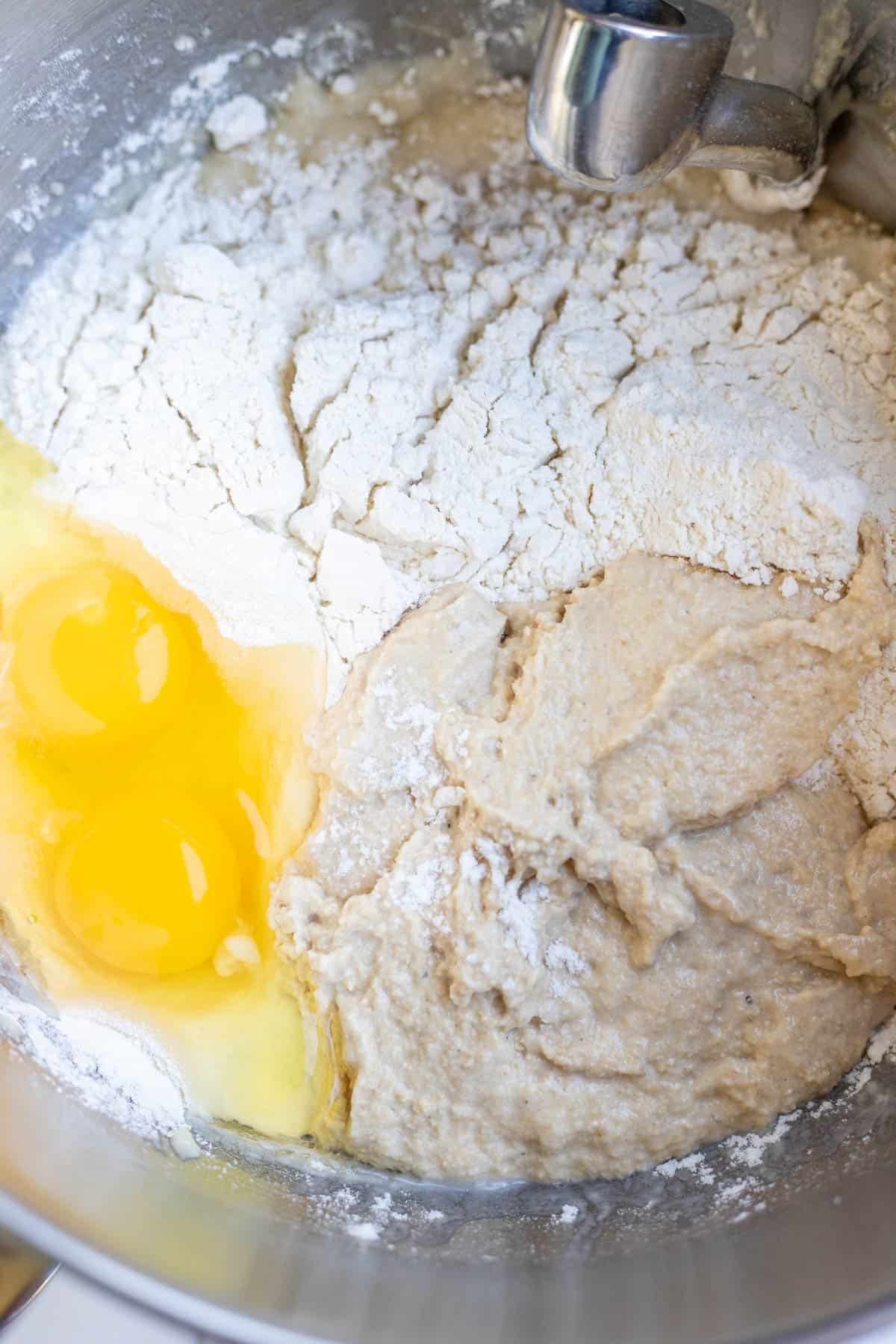
Step 3: Add starter, eggs, the remaining flour, and salt. Knead on low until smooth and elastic. This took about 10 minutes for my dough to finally come together and pull away from the sides of the bowl.
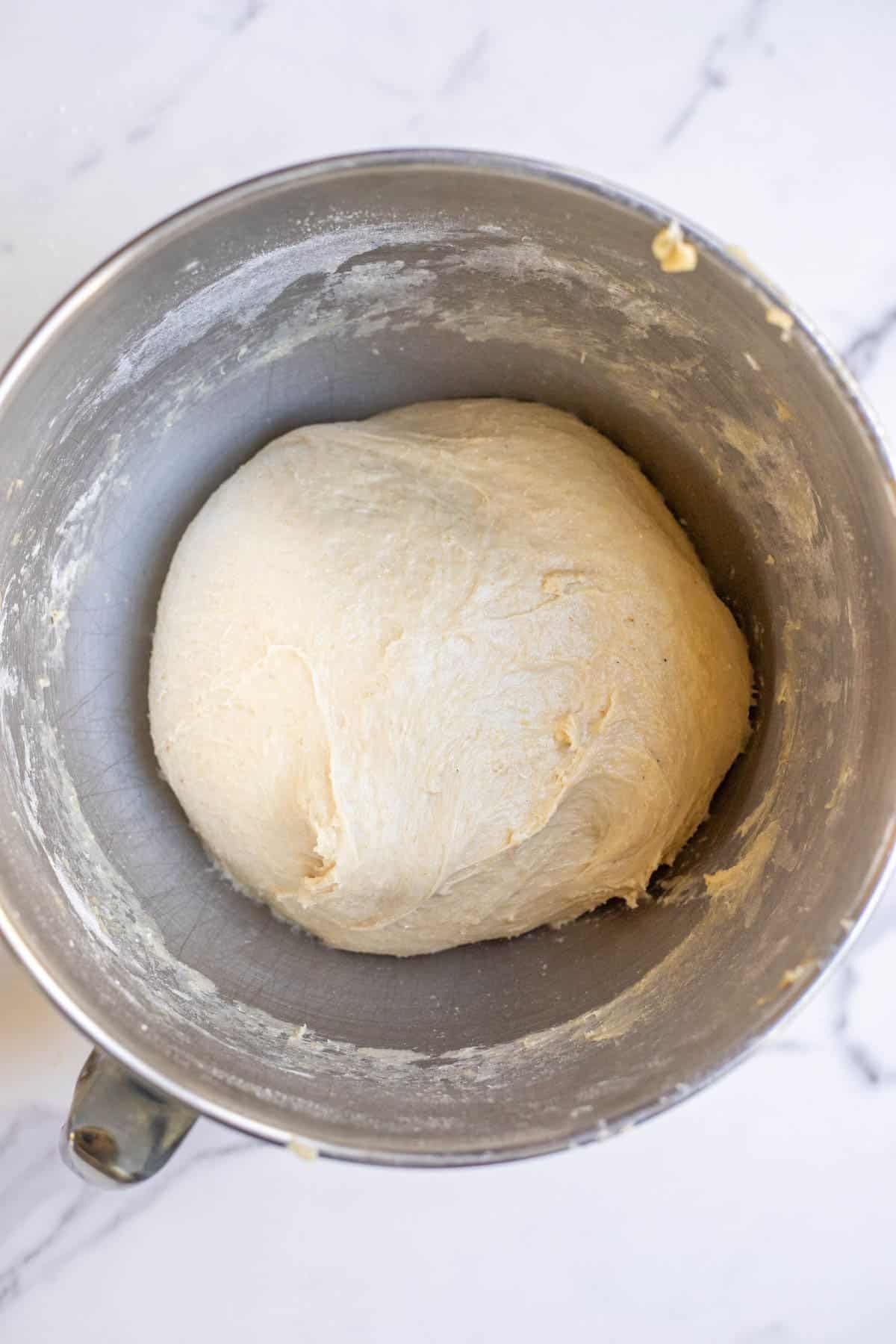
Step 4: Cover the dough with plastic wrap or beeswax wrap and leave it in a warm place to rise for 5-6 hours. After rising, place the dough in the fridge overnight.
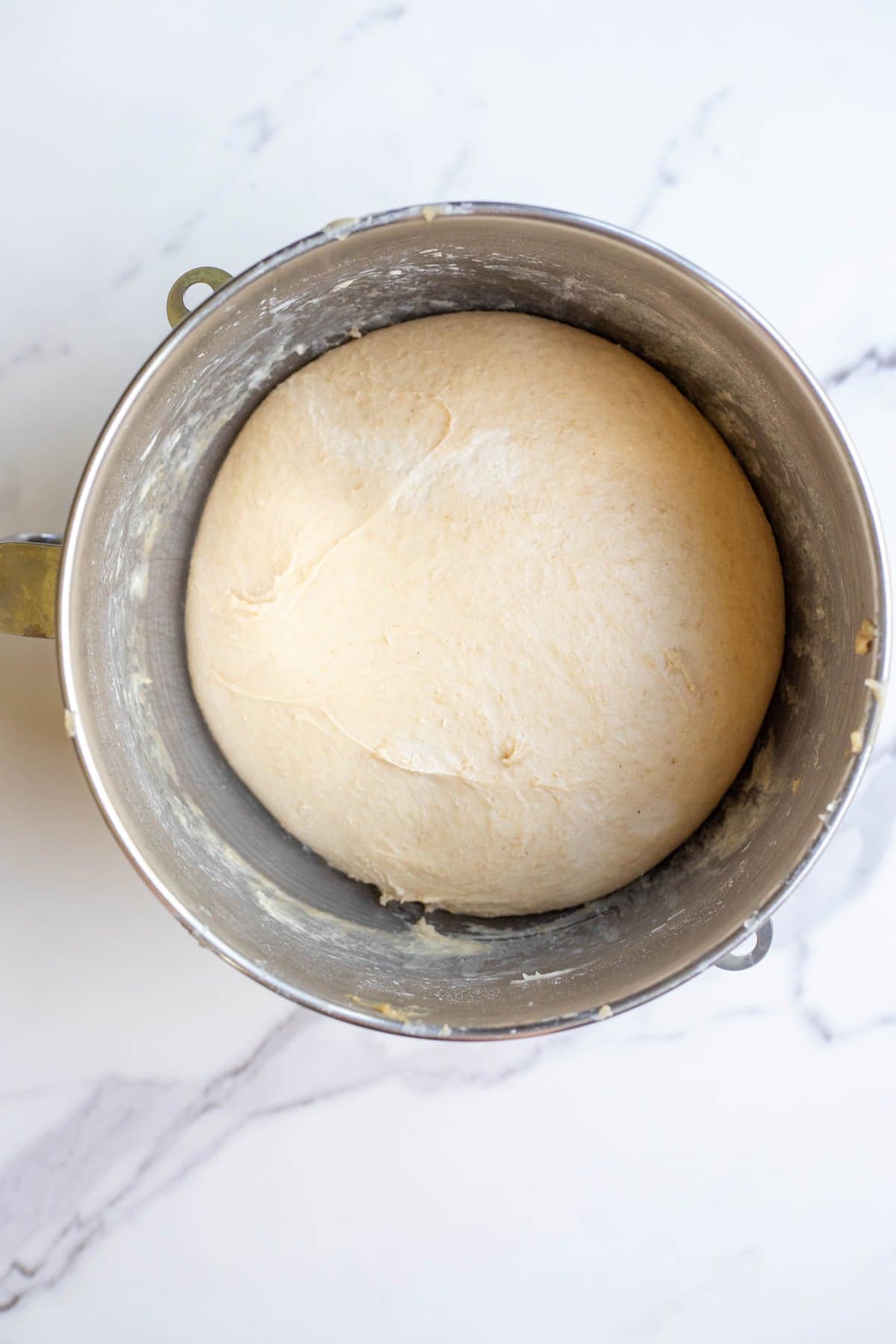
Step 5: The next day, take the risen dough out of the fridge and roll the dough out on a lightly floured surface with a rolling pin to 1/4-inch to 1/2-inch thickness. Only use as much flour as necessary. Too much flour can cause the donuts to become dense and bready.
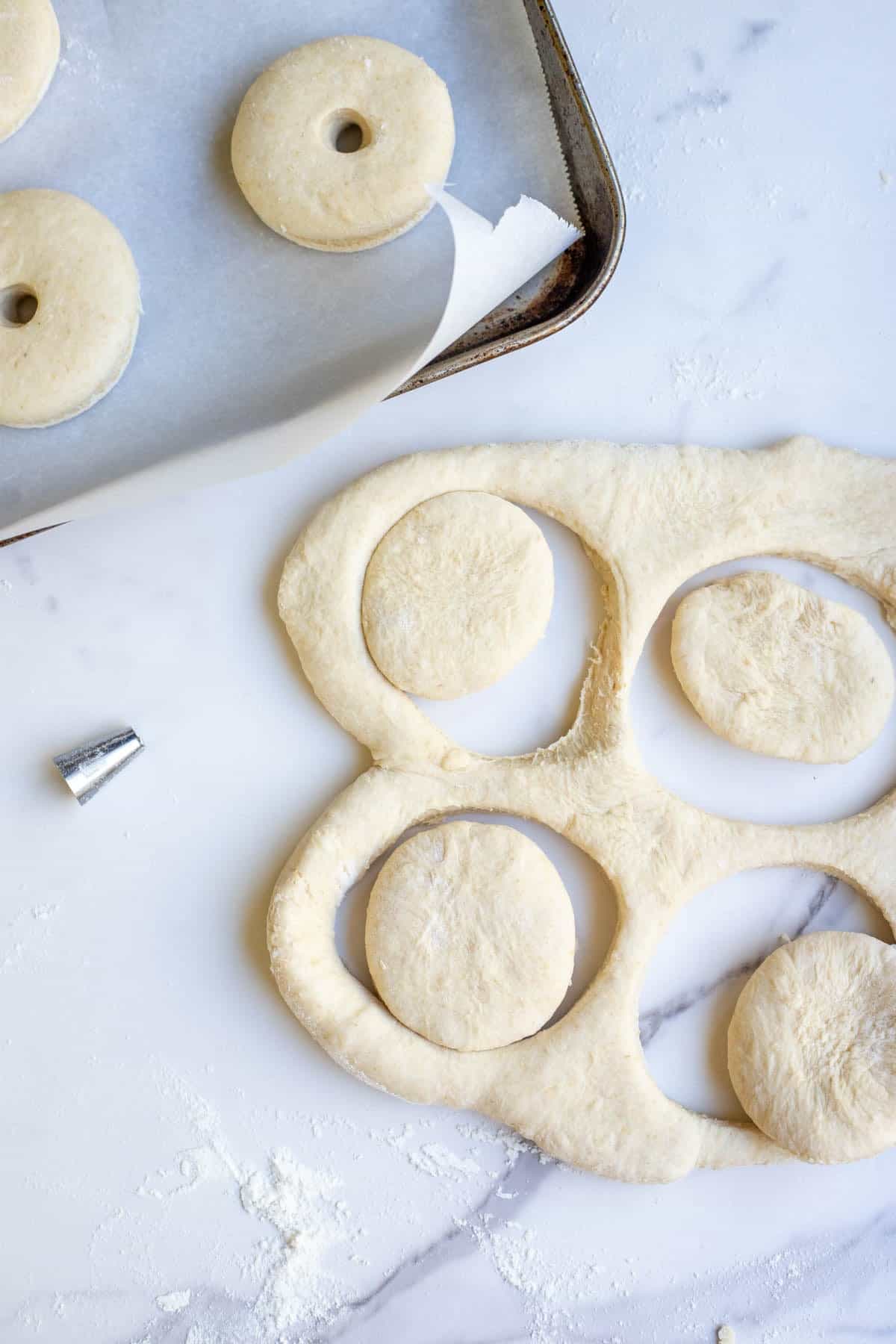
Step 6: Cut the donuts out. I usually use a cup or a large biscuit cutter and a smaller bottle-type cap to cut the center, since we don’t have a donut cutter.
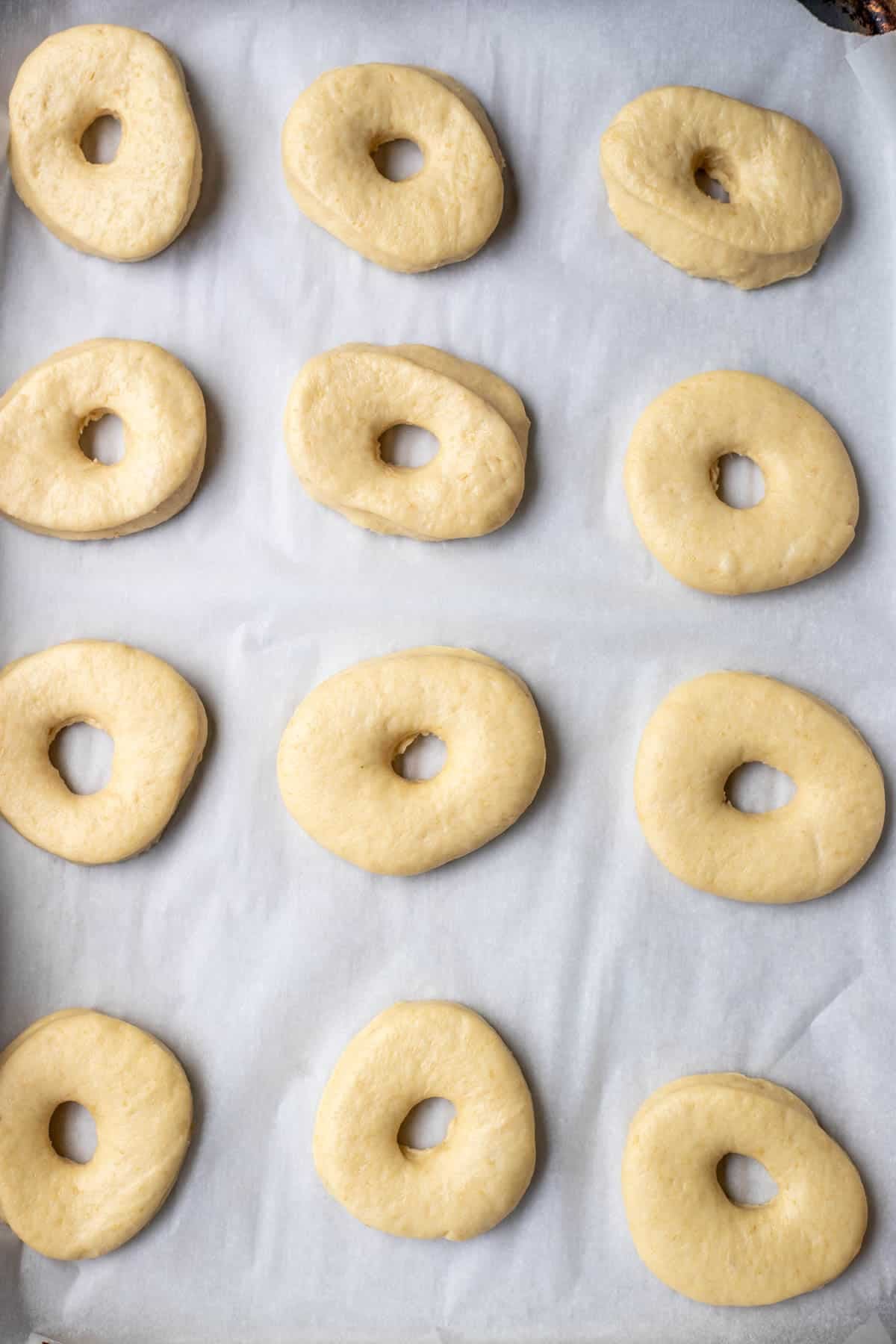
Step 7: Place the cut donuts on a baking sheet and cover with a damp tea towel or plastic wrap. Let them rise for 1½ to 2 hours at room temperature. A warmer or cooler location will determine how long the rise takes.
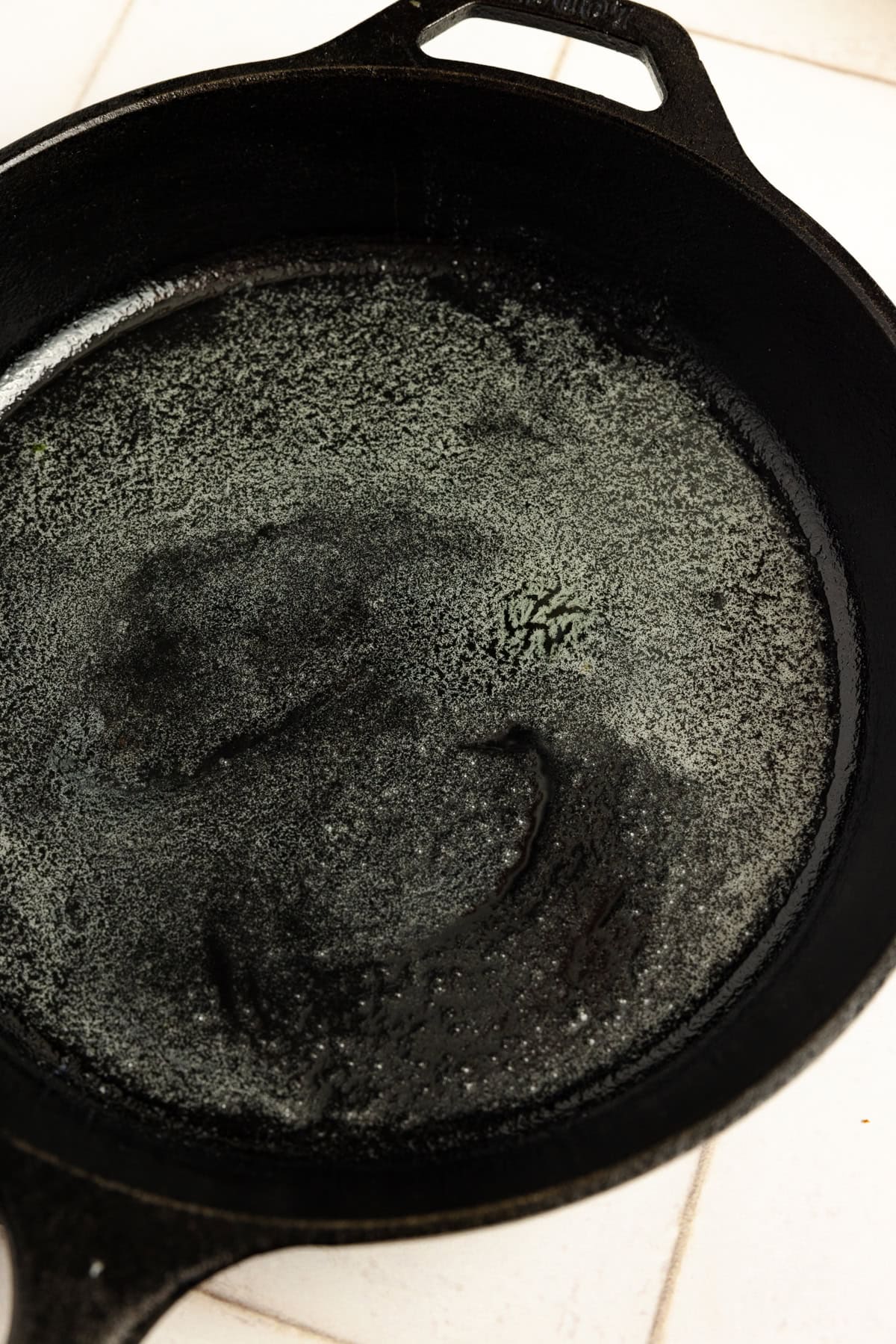
Step 8: Add about 1/2 inch of frying oil to a cast-iron skillet. Heat the oil over medium heat until it sizzles when something is added.

Step 9: Fry each donut for 2 to 3 minutes, then flip them and fry another 2 to 3 minutes on the other side until puffy and golden. Be careful not to overcrowd the pan. Place the donuts on a wire rack over parchment paper to cool for a bit before glazing.
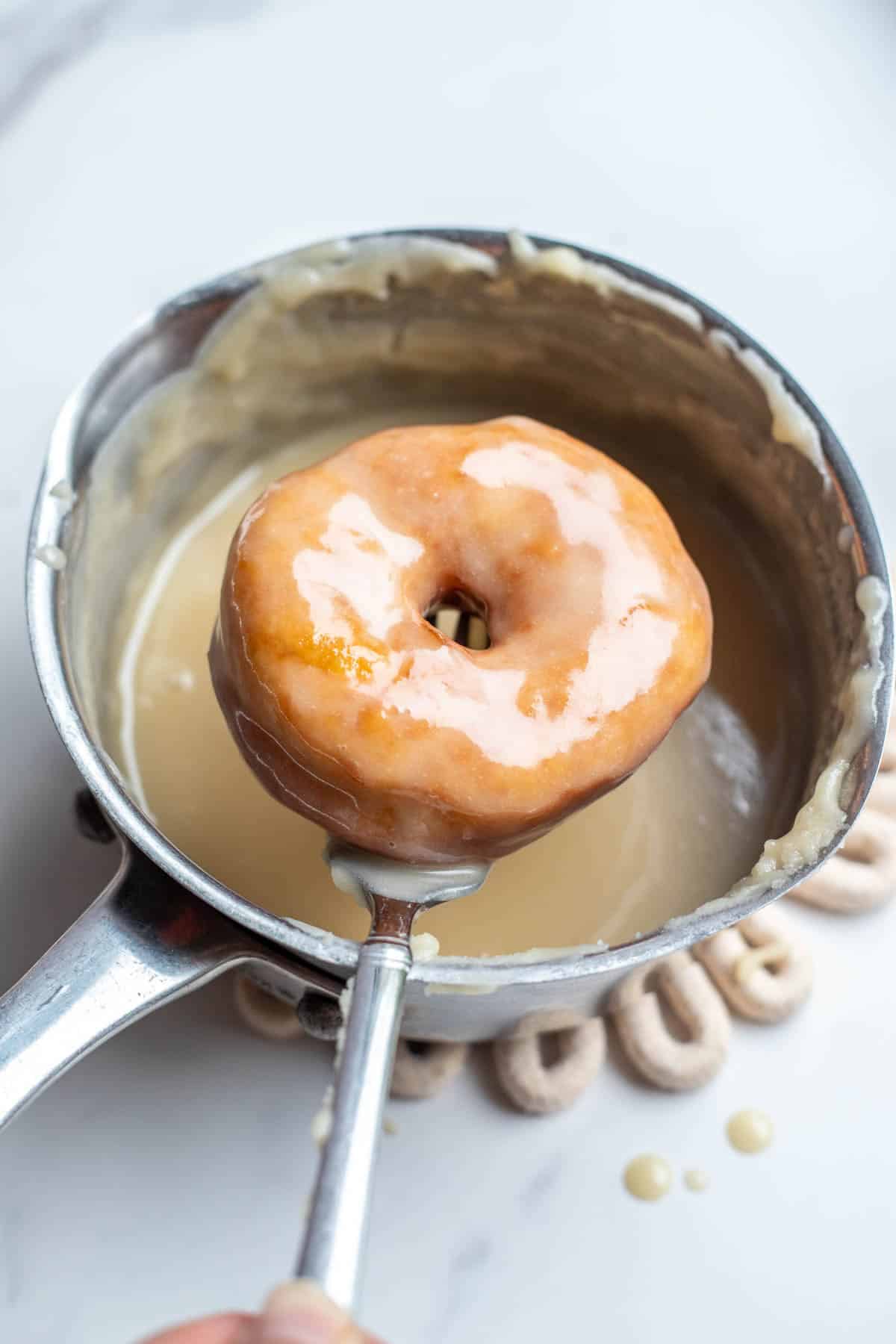
Step 10: Add butter, milk, vanilla, and powdered sugar to a small saucepan over low heat. Stir occasionally until fully melted and combined. Dip each donut in the glaze and return to the cooling rack to set. Serve fresh!

Tips
- If you are sensitive to wheat, try fermenting the dough for up to 24 hours. This can really help make those grains easier to digest.
- Placing the dough in the refrigerator overnight is essential. This helps develop the flavors while slowing down the fermentation process so it doesn’t over-ferment.
- When deep frying, test one in the hot oil before frying the whole batch. The temperature may need adjustment.
- You don’t need fancy equipment to cut out the donuts. I usually just find whatever objects we have on hand. A wide-mouth mason jar and a bottle cap for the holes will work perfectly fine.
- For this recipe, I dunked the donuts in a simple glaze, but you could also top them with powdered sugar or a cinnamon sugar topping.
- Want to add some fun flavors to the glaze? Add a spoonful of your favorite jam to give it a fruity flavor.
- Fry up the donut holes, as well!
Recipe FAQs
The longer the grains ferment with the active sourdough starter, the more easily digestible they become. People sensitive to wheat or gluten often tolerate sourdough products better when the grain has been fermented for 24 hours. The flavor also deepens during fermentation, resulting in a tangy, sour taste that complements the deep-fried coconut oil flavor and sweet glaze.
If somehow you have a few leftovers, you can store them in an airtight container (or bag), or wrap them in a napkin and place them in a paper bag – fold over the top. I like to add a napkin to help absorb any extra oil and keep them fresh longer.
I like to pop them in the oven for a few minutes to warm them up without drying them out.
In this case, yes. This recipe uses simple ingredients, employs the benefits of sourdough fermentation, and contains zero additives or preservatives.
These donuts can be fermented for 8-24 hours, so how long they take depends on your schedule and preferences. With prep time running around 15 minutes, you could start the shaping and frying anywhere from 8 to 24 hours after assembling the ingredients.
More Breakfast Recipes from the Farmhouse
- Waffles with Freshly Milled Flour
- Homemade Sourdough Pop Tarts
- Easy Sourdough Crumpets
- Freshly Milled Dutch Baby Pancake
- Sourdough Coffee Cake
If you try this recipe and love it, I would love it if you could come back and give it 5 stars! Tag me on Instagram @farmhouseonboone.

Sourdough Donuts

Video
Equipment
Ingredients
- 1 1/4 cups milk, 305 grams
- 1/2 cup sugar, 96 grams
- 1/4 cup butter, 57 grams
- 4 cups flour, 560 grams
- 1 cup active starter, 200 grams
- 2 eggs
- 1 teaspoon salt, 5 grams
- Oil for frying, such as coconut, avocado, or lard
Glaze
- 1/4 cup butter, 57 grams
- 2-3 tablespoons milk
- 2 teaspoons vanilla extract, 10 grams
- 2 cups powdered sugar, 240 grams
Instructions
- Feed your sourdough starter 4-12 hours before starting the dough. Warm the milk, sugar, and butter in a saucepan over low heat, whisking to dissolve the sugar.
- Add the melted butter mixture to a stand mixer with a dough hook attachment. Add two cups of flour to the mixer bowl and combine on low. I like to do this to make sure the milk mixture has cooled down enough before adding my starter.
- Add starter, eggs, the remaining flour, and salt. Knead on low until smooth and elastic. This took about 10 minutes for my dough to finally come together and pull away from the sides.
- Cover the dough with plastic wrap or beeswax wrap and leave it in a warm place to rise for 5-6 hours. After rising, place the dough in the fridge overnight.
- The next day, roll the dough out on a lightly floured surface to 1/4-inch to 1/2-inch thickness. Only use as much flour as necessary. Too much flour can cause the donuts to become dense and bready.
- Cut the donuts out. I usually use a cup or a large biscuit cutter and a smaller bottle-type cap to cut the center, since we don’t have a donut cutter.
- Place donuts on a baking sheet and cover with a damp tea towel or plastic wrap. Let them rise for 1½ to 2 hours at room temperature. A warmer or cooler location will determine how long the rise takes.
- Add about 1/2 inch of coconut oil to a cast-iron skillet. Heat the frying oil over medium heat until it sizzles when something is added.
- Fry each donut for 2 to 3 minutes, then flip them and fry another 2 to 3 minutes on the other side until puffy and golden. Be careful not to overcrowd the pan. Place the donuts on a wire rack over parchment paper to cool for a bit before glazing.
- Add butter, milk, vanilla, and powdered sugar to a saucepan over low heat. Stir occasionally until fully melted and combined. Dip each donut in the glaze and return to the cooling rack to set. Serve fresh!
Notes
Nutrition
Nutrition information is automatically calculated, so should only be used as an approximation.









If you plan to make these freshly milled, don’t make my mistake! I used soft white but I guess hard white is the better option. After my dough was a total flop I realized this after looking it up that hard white wheat is good for those fried airy donuts and soft white is good for baked donuts. Currently hoping to salvage my dough by baking donut holes with the dough instead!
First time making! They turned out great. When the dough was in the stand mixer it still looked very sticky so I let it go 5 more minutes. Still looking sticky, I trusted the process and transfered to a large oiled bowl to rise. I let it rise 2 hours longer than suggested because I keep the house at 68°F. I followed the rest of the recipe as stated and they were so fluffy and yummy.
This looks great! I would like to make but substitute the sugar with honey. Of course, this disrupts the liquid to dry. How would you substitute?
Love these donuts and they turned out great. How could I adjust it to use fresh milled flour?
No adjustments needed! I recommend using a 1-1 ratio, but make sure to measure out the flour using grams for precise measurements.
This recipe looks delicious! I’m thinking of making them for an early brunch event and don’t want to get up crazy early for the cutting and last room temp rise. Do you think it would work to have them cut and ready and risen the night before then refrigerate them to fry in the morning? Or will they hold up well if I make them the day before?
I so badly want these to work. My dough was extremely wet. Did it exactly to the recipe. I mixed everything with the dough hook for 20 minutes and still sticky and wet.
Can you freeze the dough and cook another day?
Yes.
My dough was way too sticky and I couldn’t get my donuts off of the parchment paper
Oh no! That’s a sign they could have over fermented.
Delicious. First time making them and texture is great. I did re-roll out excess dough, which I do not recommend as it developed bread-like texture. Next time the excess dough will be will be cut apart and fried as is. We’re going to try different frosted toppings as well. Maybe chocolate and some raspberry.