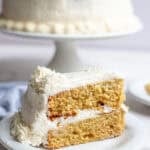
Whole Wheat Cake with Freshly Milled Flour
This whole wheat cake with freshly milled flour delivers the deliciously soft crumb and warm vanilla sweetness of your classic cake, plus the added flavor, texture, and nutrition of healthy whole wheat.
Servings: 12 servings
Equipment
- 2 8 inch round cake pans a 9x13 cake pan will also work
Ingredients
Cake
- ½ cup butter 114 grams
- 1 ¼ cups milk 305 grams
- 4 eggs
- 1 ⅔ cups sugar 320 grams
- 2 cups whole wheat soft white flour 280 grams
- ½ teaspoon baking soda
- 2 teaspoons baking powder
- ½ teaspoon salt 3 grams
- 1 tablespoon vanilla 15 grams
- 2 tablespoons oil 28 grams (avocado or other neutral oil)
Buttercream
- 1 cup unsalted butter room temperature, 227 grams
- 4 cups powdered sugar 480 grams
- ¼ cup heavy cream 60 grams
- 1 tablespoon vanilla extract 15 grams
- ½ teaspoon salt 3 grams
Instructions
- Preheat the oven to 350 degrees F and prepare the cake pan. Add butter and milk to a saucepan and heat until the butter is melted. Set aside to cool.
- Crack the eggs into the bowl of a stand mixer with a whisk attachment. Start mixing at a low speed, then increase to high speed and whip the eggs for one minute. Slowly add the sugar and whip until light and fluffy – about 5 minutes. It will be pale in color. Add vanilla extract and oil and mix well.
- In a separate mixing bowl, add the wheat flour, baking soda, baking powder, and salt. Stir to combine.
- Turn the mixer on low, then alternate adding the milk and butter mixture and flour mixture. Mix only until just combined, then let the batter sit for about 5 to 10 minutes. Gently fold the batter with a spatula a few times before pouring.
- Pour the batter evenly into the prepared pan. Bake for 25 to 30 minutes for 8-inch cake pans or 35 to 40 minutes for a 9x13, or until golden on top. The center should not wobble when the pan is moved, and a cake tester inserted in the center of the cake should come out clean. Place the cake on a cooling rack while you prepare your frosting of choice.
- For the vanilla buttercream, add softened butter to the cleaned stand mixer bowl. Beat until smooth. Add powdered sugar, then mix on low speed until combined. Increase to high speed and whip until fluffy. Add heavy cream, salt, and vanilla, and whip for 1-2 more minutes.
- Frost the cake once fully cooled. Enjoy!
Notes
Let the batter sit for 5 to10 minutes before baking so the grains absorb the liquid and soften.
Avoid over mixing the cake batter. It will still have a few lumps after combining.
Freshly milled flour should be used within the first day or two of milling. After this period, it begins to lose nutritional value and flavor.
If you are using freshly milled grains for this recipe, I recommend weighing the flour instead of using volume measurements. Grain mills vary greatly - some create very fine and fluffy flour, while others are a little more coarse. This makes volume measurements unpredictable. Using a kitchen scale and calculating the grams is much more reliable, ensuring you end up with a delicious end product.
Nutrition
Serving: 1serving | Calories: 614kcal | Carbohydrates: 84g | Protein: 6g | Fat: 30g | Saturated Fat: 17g | Polyunsaturated Fat: 2g | Monounsaturated Fat: 9g | Trans Fat: 1g | Cholesterol: 124mg | Sodium: 406mg | Potassium: 147mg | Fiber: 2g | Sugar: 69g | Vitamin A: 904IU | Vitamin C: 0.03mg | Calcium: 97mg | Iron: 1mg