







Can you freeze sourdough starter? Yes! Let me explain why this technique works so well for preserving sourdough starter.
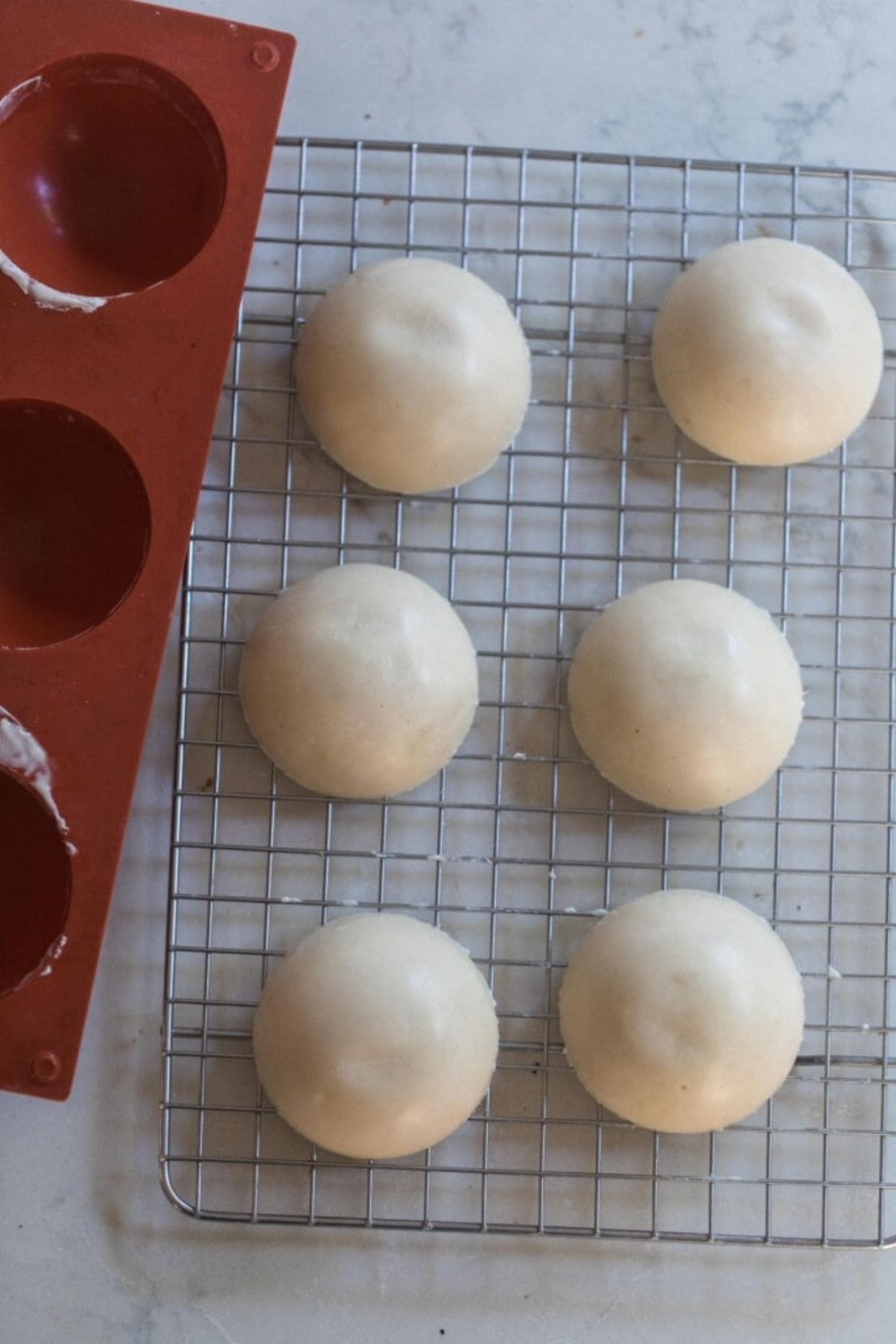
Key Takeaways: Can You Freeze Sourdough Starter?
- Prep Time: 12 hours
- Freeze Time: 4 hours
- Total Time: 16 hours
- Difficulty: Easy. A quick and straightforward process.
- Why this Recipe? Freezing sourdough starter is a simple way to store starter long-term if needed without worrying about it going bad.
My sourdough starter lives in a large glass jar either on my counter or in my refrigerator. I use it constantly to prepare homemade sourdough staples like sourdough bagels, sourdough pizza dough, sourdough sandwich bread, and even sourdough cinnamon rolls.
And while a sourdough starter keeps well on the counter or in the fridge while in use, sometimes one needs long-term storage for taking a break.
Freezing some of your mature sourdough starter is a great way to preserve it for future use. Reactivating a frozen starter is easier and quicker than making a sourdough starter from scratch, and your efforts yield a mature starter rather than a brand new batch. The simple process of freezing sourdough starter offers peace of mind, lasts all year, and requires very little effort.
If you’re just getting started with sourdough, check out my posts on how to use sourdough starter or how to maintain sourdough starter.
Table of Contents
- Key Takeaways: Can You Freeze Sourdough Starter?
- Benefits of Freezing Sourdough Starter
- How to Freeze Sourdough Starter
- How to Thaw and Reactivate a Frozen Sourdough Starter
- Lisa’s Expert Tips
- Can You Freeze Sourdough Starter FAQs
- More Sourdough Basics from the Farmhouse
- How To Freeze Sourdough Starter Recipe
Benefits of Freezing Sourdough Starter
Simplicity – With an easy prep and freezing process, this method requires very little hands-on time or tools.
Convenience – A frozen starter fits in a single bag that takes up next to no freezer space. Within a couple of days of regular feedings, your reactivated starter will be back to baking sourdough dinner rolls and fluffy sourdough biscuits.
Emergency backups – This method provides multiple sourdough starter backups in the freezer, guaranteeing you’re never left without one or forced to start over.
How to Freeze Sourdough Starter
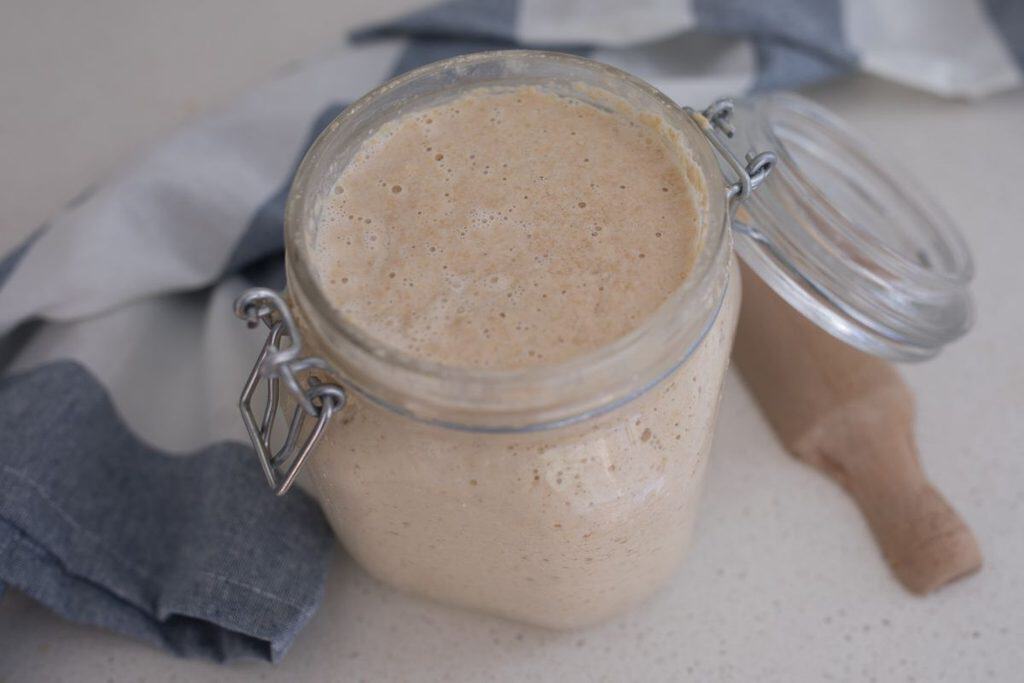
Step 1: Feed your current sourdough starter equal parts fresh flour and filtered water. It’s important to begin the process with a well-fed and healthy starter. Keep it in a warm spot for 4-12 hours or until active and bubbly. If you’re unsure about your starter’s health, see my post on moldy sourdough starter.
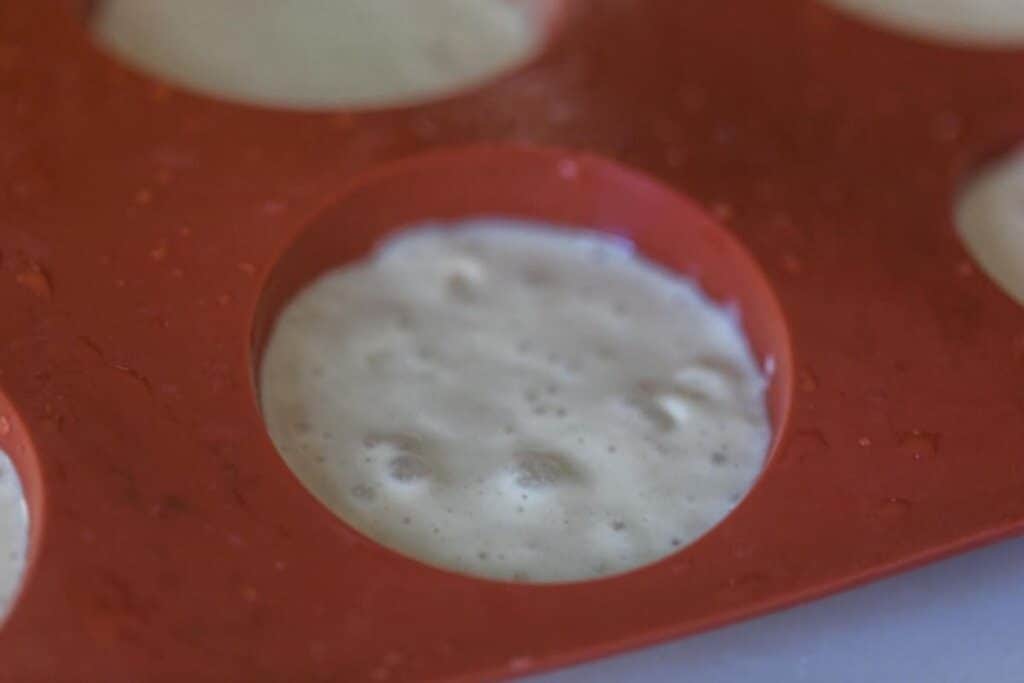
Step 2: Spoon several tablespoons of active starter into silicone muffin cups, silicone molds, a silicone ice cube tray, or even a muffin pan lined with regular muffin liners or plastic wrap. These smaller portions work well with thawing and reactivating, plus they provide just enough to begin a new starter.
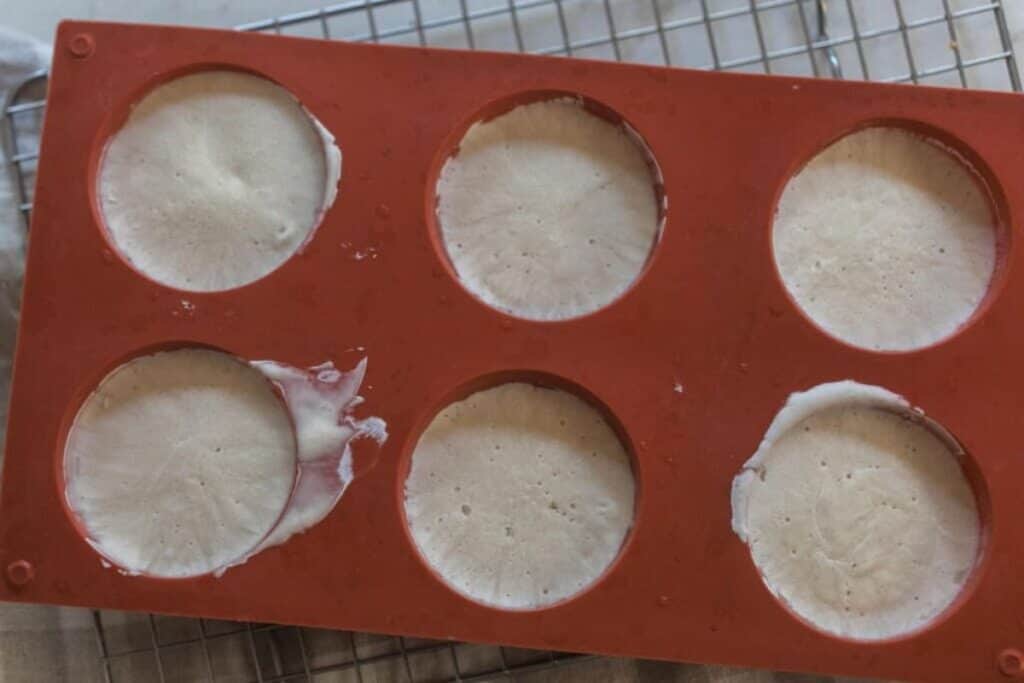
Step 3: Place in the freezer for three to four hours until completely frozen.
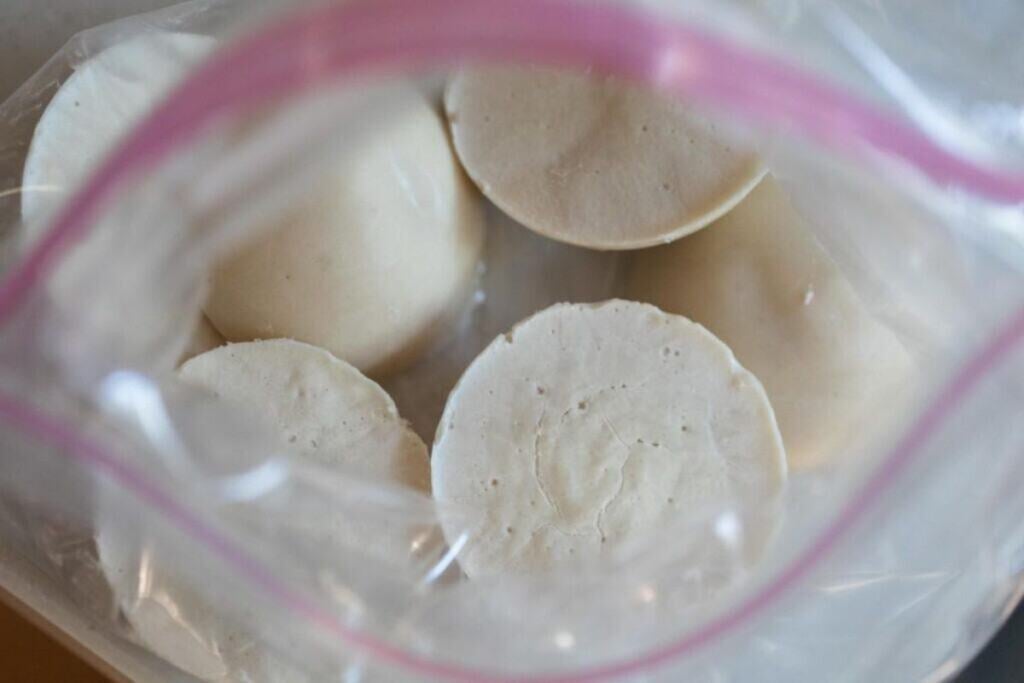
Step 4: Remove the frozen sourdough portions from the molds and quickly place them in a freezer bag or airtight container and straight into the freezer. Keep frozen until ready to use, preferably within 12 months. It’s a good idea to restock your frozen stash each year to ensure fresh, healthy backup starter.
How to Thaw and Reactivate a Frozen Sourdough Starter
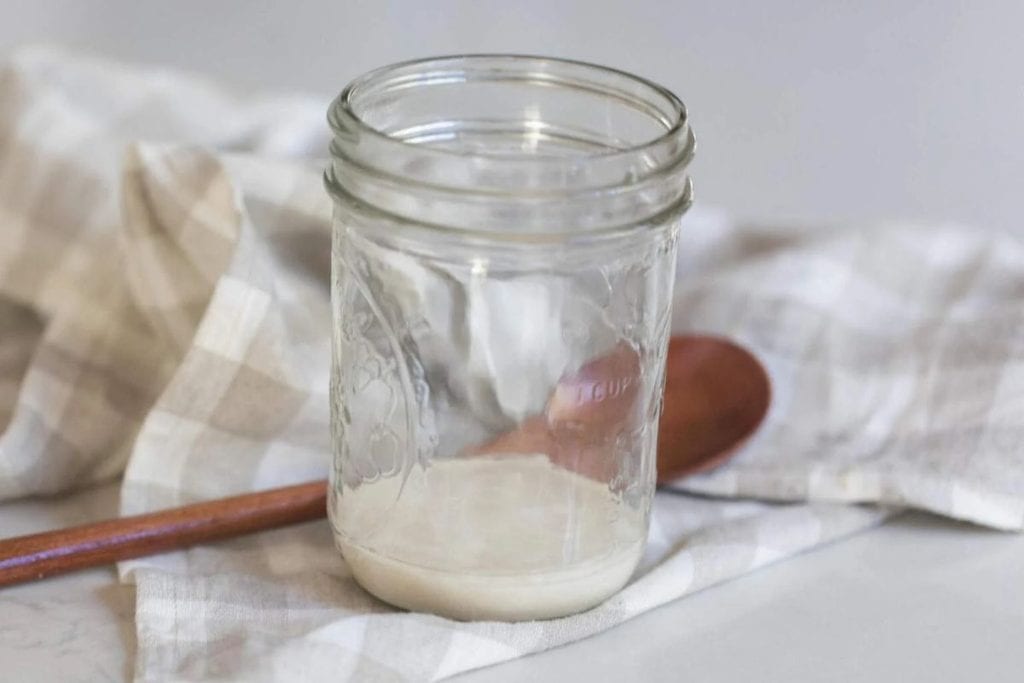
Step 1: Place one frozen starter portion in a clean jar, cover with a tea towel or coffee filter secured with a rubber band, and let it sit at room temperature to thaw for about 12 hours.
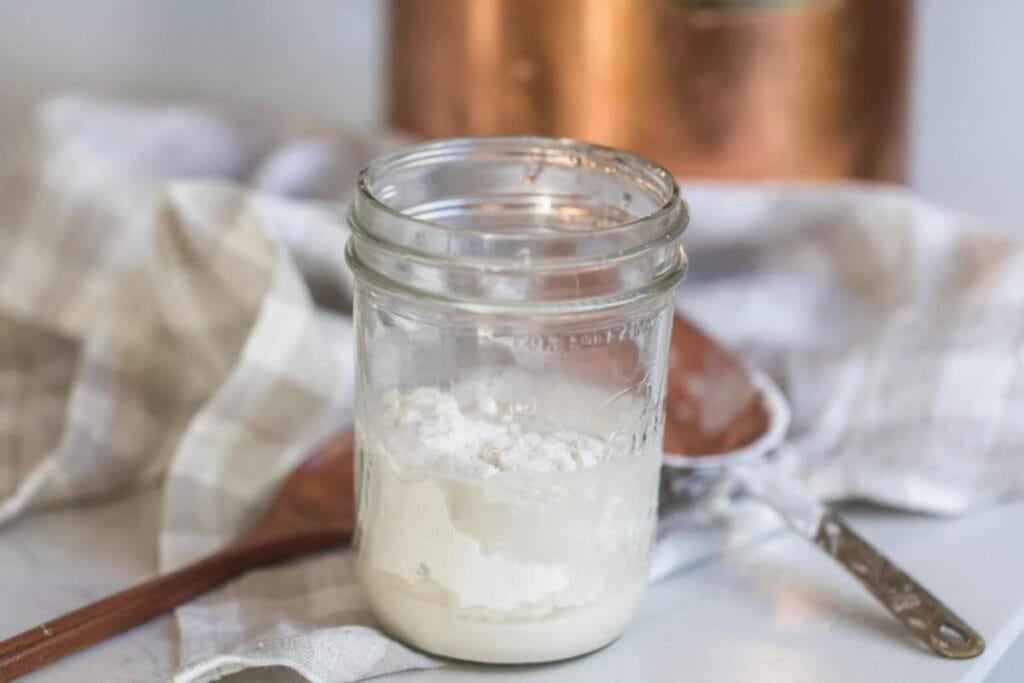
Step 2: Feed your thawed starter equal parts flour and water. If you froze 75 grams of starter, feed it 75 grams of water and 75 grams of flour. Stir, replace the cover, and leave at room temperature or in a warm place for 12 hours.
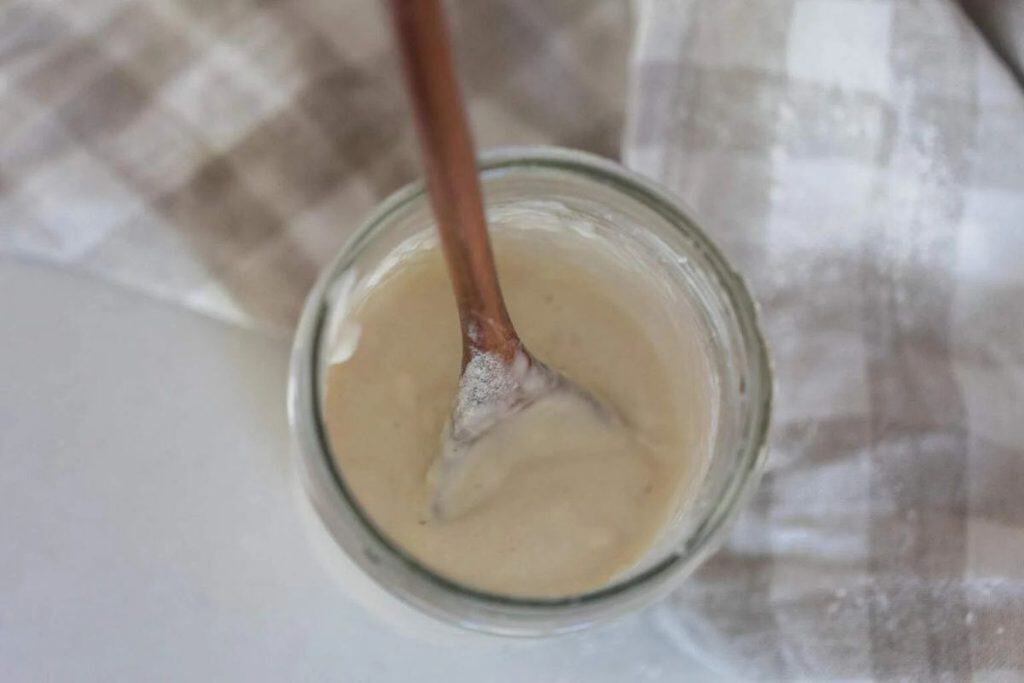
Step 3: Discard half of the starter and feed equal portions of flour and water. If you have about 1/4 cup after discarding, feed it 1/4 cup of water and 1/4 cup of all-purpose flour. Stir, replace the cover, and leave at room temperature until doubled. You can place a rubber band at the starting level to determine when the starter has doubled.
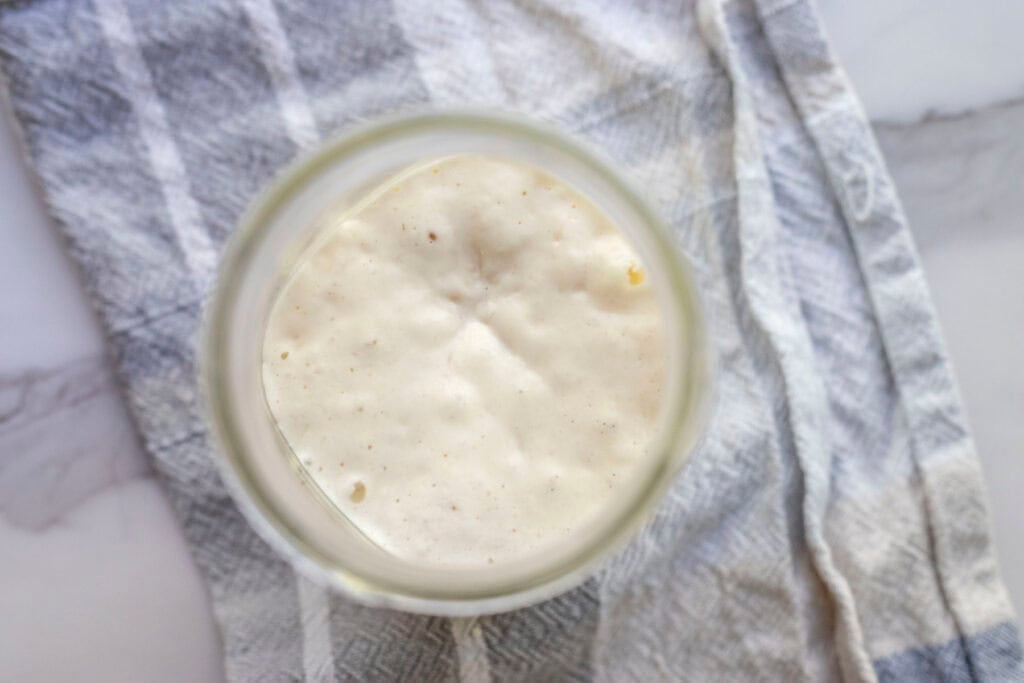
Step 4: Your sourdough starter will be ready to use once it consistently doubles about 4 to 12 hours after a feeding. Other indications that your sourdough starter is ready to use include a pleasant smell, air bubbles visible throughout the starter, and bubbles on top. It is common for a frozen starter to need several regular feedings before becoming nice and active.
Lisa’s Expert Tips
- I like using silicone muffin cups because they are easy to pop out. You could also use regular muffin liners or even line a muffin pan with plastic wrap.
- Once frozen, sourdough starter enters a dormant state and needs to be awakened. After thawing, it will need to be fed a few times before it is ready for baking.
- While you can freeze sourdough discard, an active starter that has been recently fed will yield the best results.
- If freezing sourdough discard, only freeze the discard of a mature starter. A new or young starter will not have enough established lactic acid bacteria and live yeast to make it healthy enough for freezing.
- If you’re questioning the smell or look of your starter, see my reference on moldy sourdough starter to confirm whether your starter is okay or needs to be tossed.
Can You Freeze Sourdough Starter FAQs
This depends on your needs. Properly dehydrated sourdough starter offers the longest shelf life, lasting for years. Frozen sourdough starter lasts about 12 months. A frozen sourdough starter typically revives more quickly than a dried one.
No, it doesn’t cause harm. While some of the wild yeast dies off, most remain in a dormant state and will reactivate just fine into a healthy, active starter.
While freezing an active starter works best, freezing sourdough discard can be done successfully. I suggest freezing a mature discard that has been more recently fed, keeping in mind that it may take longer for the discard to activate after thawing compared to frozen active starter. For more uses for sourdough discard, try these 15+ healthy sourdough discard recipes.
While freezing temperatures place sourdough starter on pause, wild yeasts weaken at temperatures of 120 degrees Fahrenheit and are killed altogether at temperatures of 140 degrees and beyond.
More Sourdough Basics from the Farmhouse
If you try this recipe and love it, I would love it if you could come back and give it 5 stars! Tag me on Instagram @farmhouseonboone.

How To Freeze Sourdough Starter
Equipment
Ingredients
- Active sourdough starter
Instructions
- Feed your sourdough starter.
- Place in a warm spot for 4-12 hours or until active and bubbly.
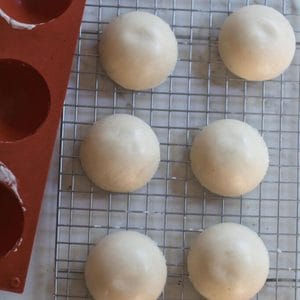
- Take your active sourdough starter and spoon into a silicone muffin cups, ice cube tray, or even just a muffin pan lined with regular muffin liners or plastic wrap.
- Freeze until completely frozen for about 3-4 hours.
- Remove the frozen sourdough starter from the mold and place in a freezer safe ziploc bag.
How To Thaw And Reactivate A Frozen Sourdough Starter
- Place the frozen starter in a jar and let sit at room temperature on a counter covered with a tea towel or paper towel with a rubber band.
- Allow to thaw for around 12 hours.
- Feed equal parts flour and water. So if you froze 75 g starter: Feed it 75 g of water and 75 g of flour.
- Leave it at room temperature for 12 hours.
- Discard half of the starter and feed equal portions of flour and water. So if the amount of starter you have is about 1/4 cup after discarding, feed 2 tablespoons water and 2 tablespoons all-purpose flour.
- Your sourdough starter will be ready to use once it doubles 4-12 hours after feeding.
- It may need a few feedings before it is really nice and active.
Notes
- I like using silicone muffin cups because they are easy to pop out. You could also use regular muffin liners or even line a muffin pan with plastic wrap.
- Once frozen, sourdough starter enters a dormant state and needs to be awakened. After thawing, it will need to be fed a few times before it is ready for baking.
- While you can freeze sourdough discard, an active starter that has been recently fed will yield the best results.
- If freezing sourdough discard, only freeze the discard of a mature starter. A new or young starter will not have enough established lactic acid bacteria and live yeast to make it healthy enough for freezing.
- If you’re questioning the smell or look of your starter, see my reference on moldy sourdough starter to confirm whether your starter is okay or needs to be tossed.
Nutrition information is automatically calculated, so should only be used as an approximation.









Hello. Love your site and have tried so many recipes. Everything is yummy.
Re: gluten free sour dough starter- can that be refrigerated and revived like regular starter?
Can gf starter be dried and revived like regular starter?
Thanks for your help and knowledge!
Yes, it can!