


This easy homemade sourdough pasta couldn’t be easier. You only need 3 ingredients and can use an active sourdough starter or discard. Whip up a quick version or long ferment for more health benefits and better digestibility.

Pasta is one of the easiest recipes to make and takes only 3 simple ingredients and a little time.
You can make this recipe with or without a pasta cutter, which makes it very easy and achievable for anyone to make.
The flavor that you get from fresh sourdough pasta is so much better and more complex than store-bought pasta. Making it homemade definitely takes any pasta dish to the next level .
Some of our favorite ways to serve this recipe are with pumpkin pasta sauce with crispy sage leaves, butternut squash pasta sauce, or to use in my creamy lemon chicken pasta.
No matter how you choose to serve your pasta, I promise you’ll never want to buy it from the store again!
Why You’ll Love This Recipe
Flavor – This sourdough version packs tons of flavor especially compared to regular, store-bought, dried pasta. Want even more flavor? Long ferment the dough to bring out more of that sourdough tang.
Healthy – The best part about making food from scratch is control of the ingredients used. For instance, pasture raised eggs are incredibly nutritious. Also, I love using freshly ground wheat, which contains more nutrients compared to flour that has been sitting on a shelf for months.
Easier to digest – One of the main benefits of sourdough, besides more nutrients and better nutrient absorption, is that it is much easier to digest, particularly for those that may be sensitive to gluten. If you are sensitive to gluten, I suggest allowing the dough to ferment for 24 hours. See directions below.
Ingredients

Sourdough starter – Discard or fed starter will work for this recipe. This is a great way to use up discard that would usually just be tossed out. Don’t have a sourdough starter? Learn how to make your own sourdough starter in this post.
Flour – All-purpose, spelt, or freshly ground wheat will work in this recipe. No time to grind your own? Use unbleached flour without synthetic vitamins added.
Eggs – Preferably pastured raised, but any egg will do.
A full ingredient list with exact amounts can be found in the recipe card below.
Tools You May Need
Stand mixer (optional)
Pasta maker/cutter (optional)
Pasta drying rack (optional)
How To Make Sourdough Pasta
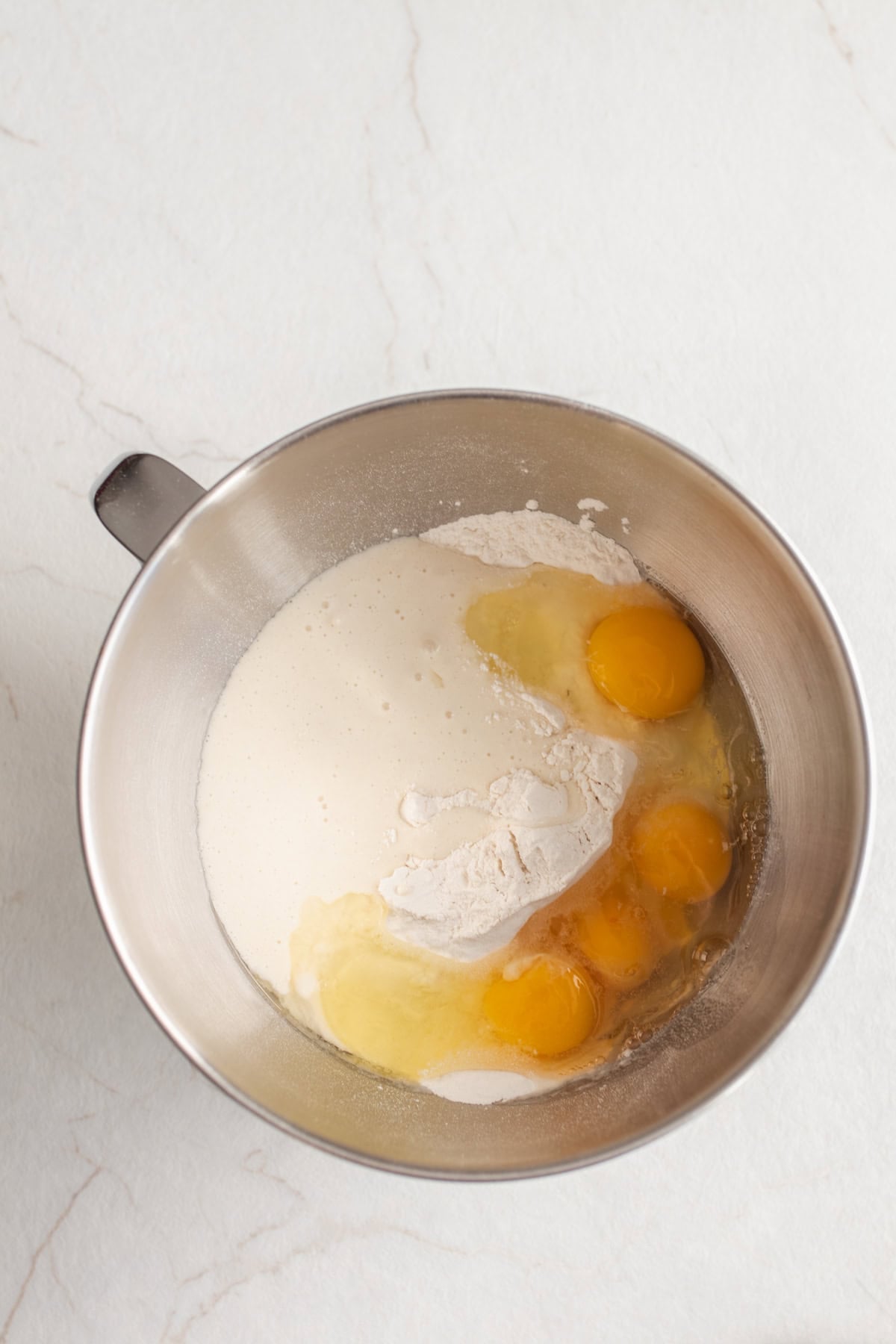
Step 1: Place the ingredients in a stand mixer with a dough hook.
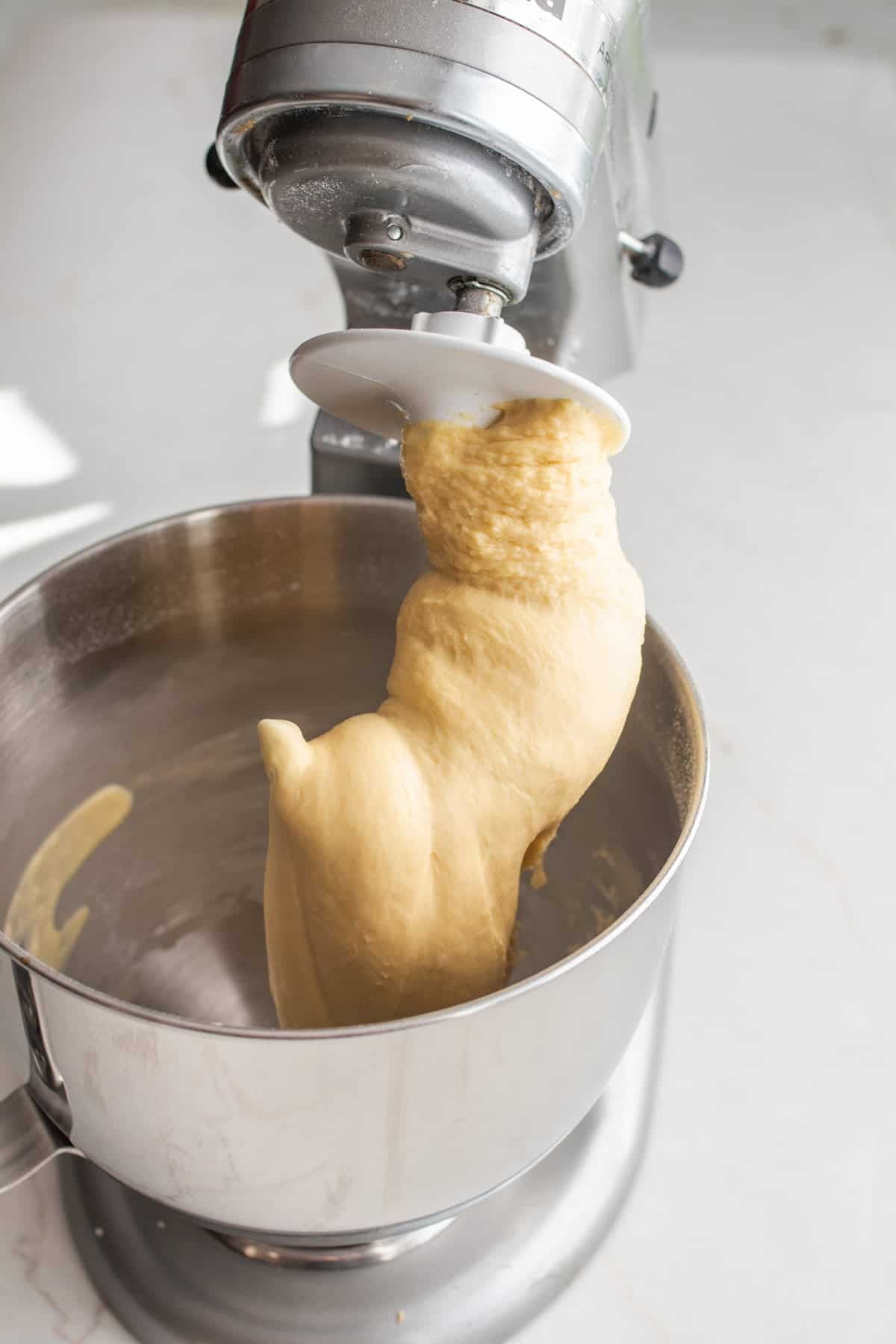
Step 2: Mix on low/medium until the dough is smooth and stretchy, about 10 minutes.
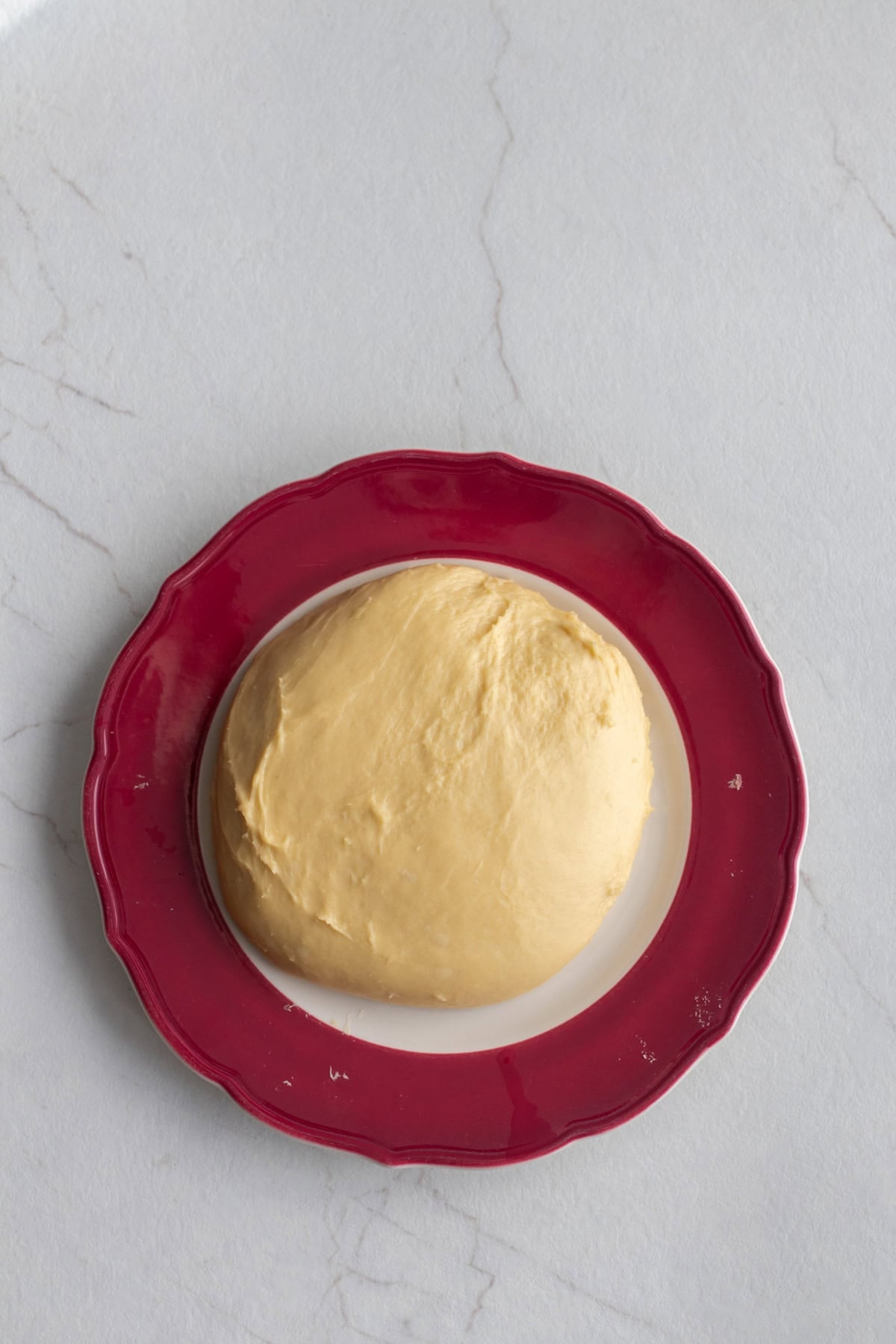
Step 3: Allow the dough to rest for 30 minutes.
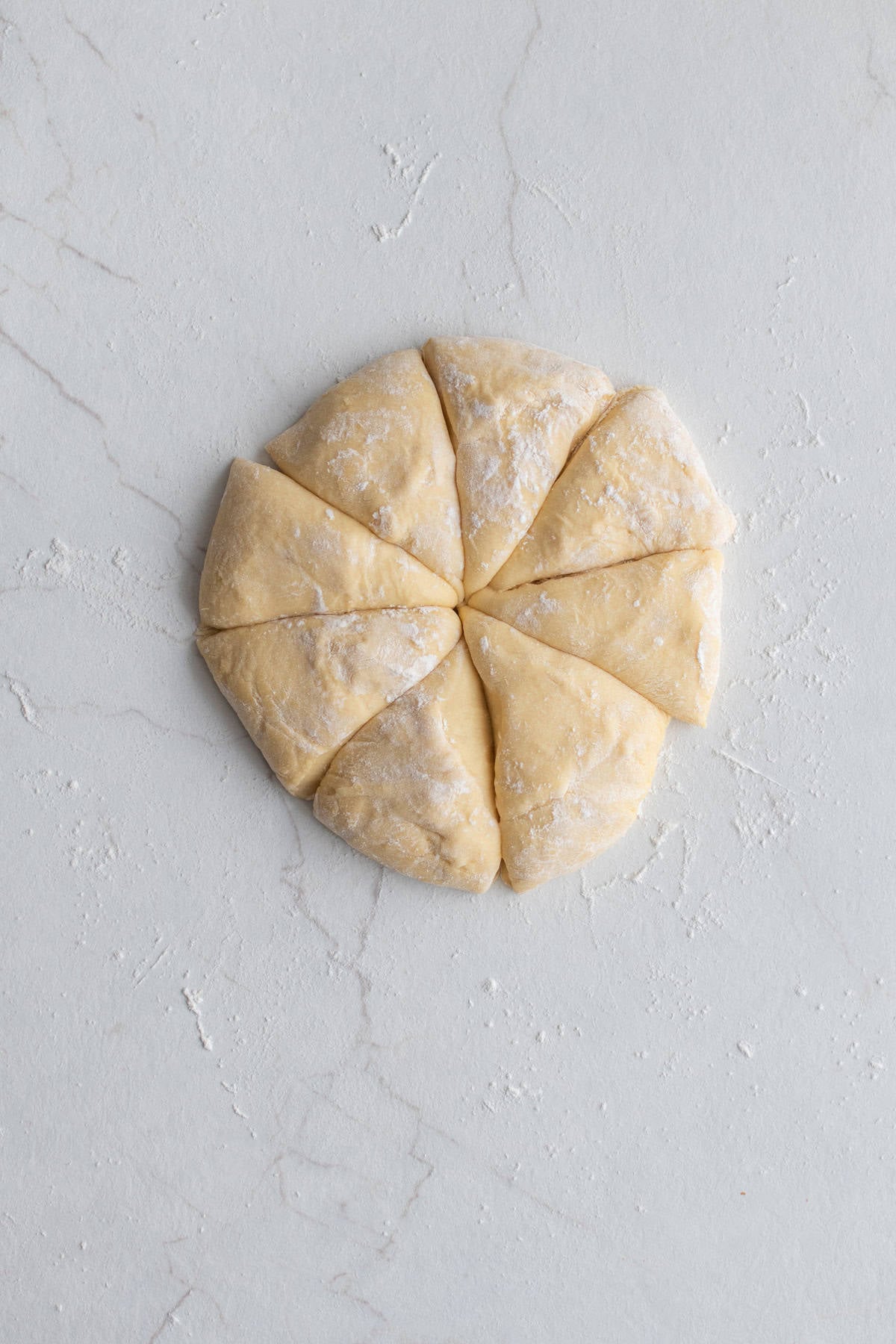
Step 4: Divide dough into 8 equal parts.
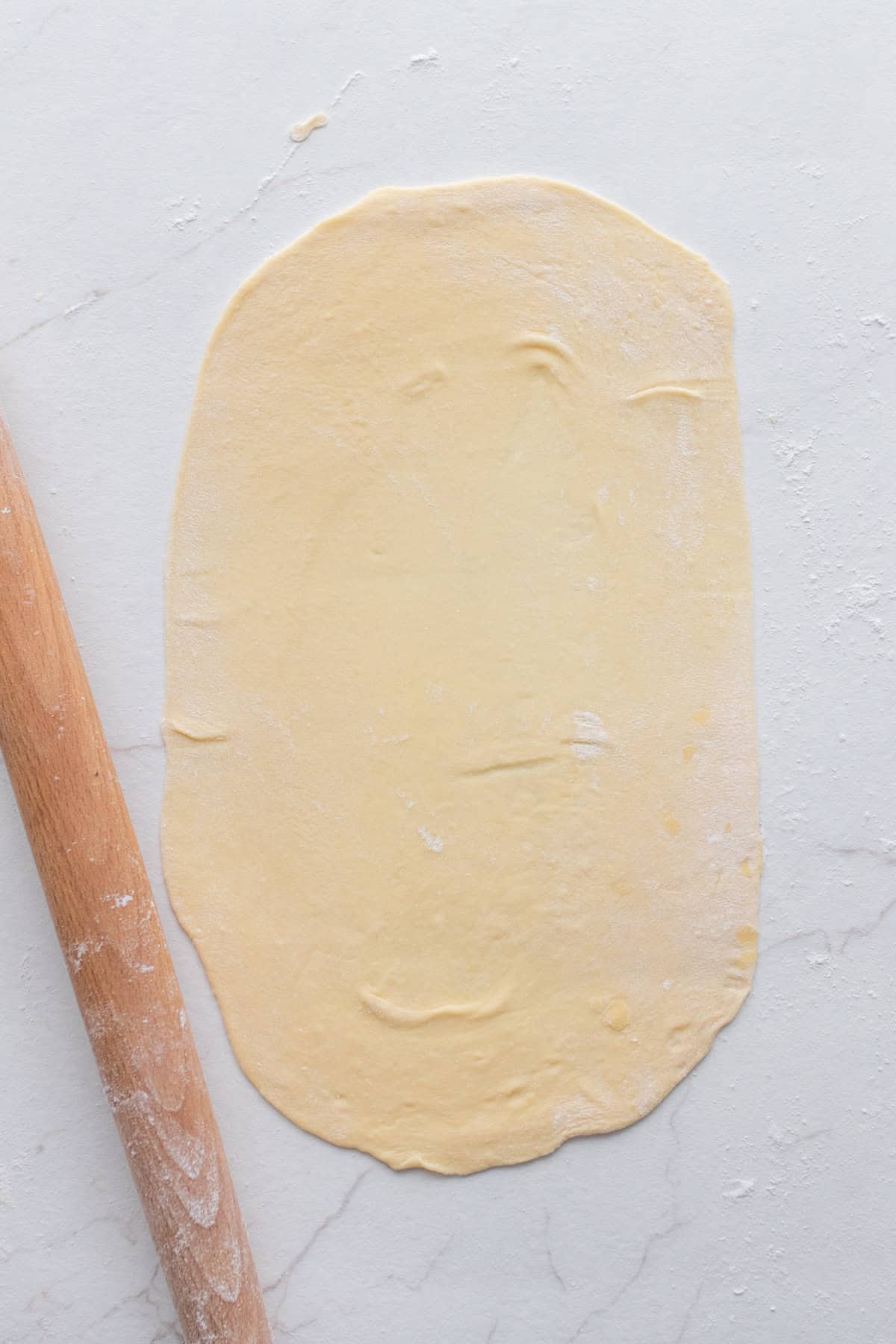
Step 5: Lightly dust a clean surface with flour. Roll the dough out as thin as possible with a rolling pin.
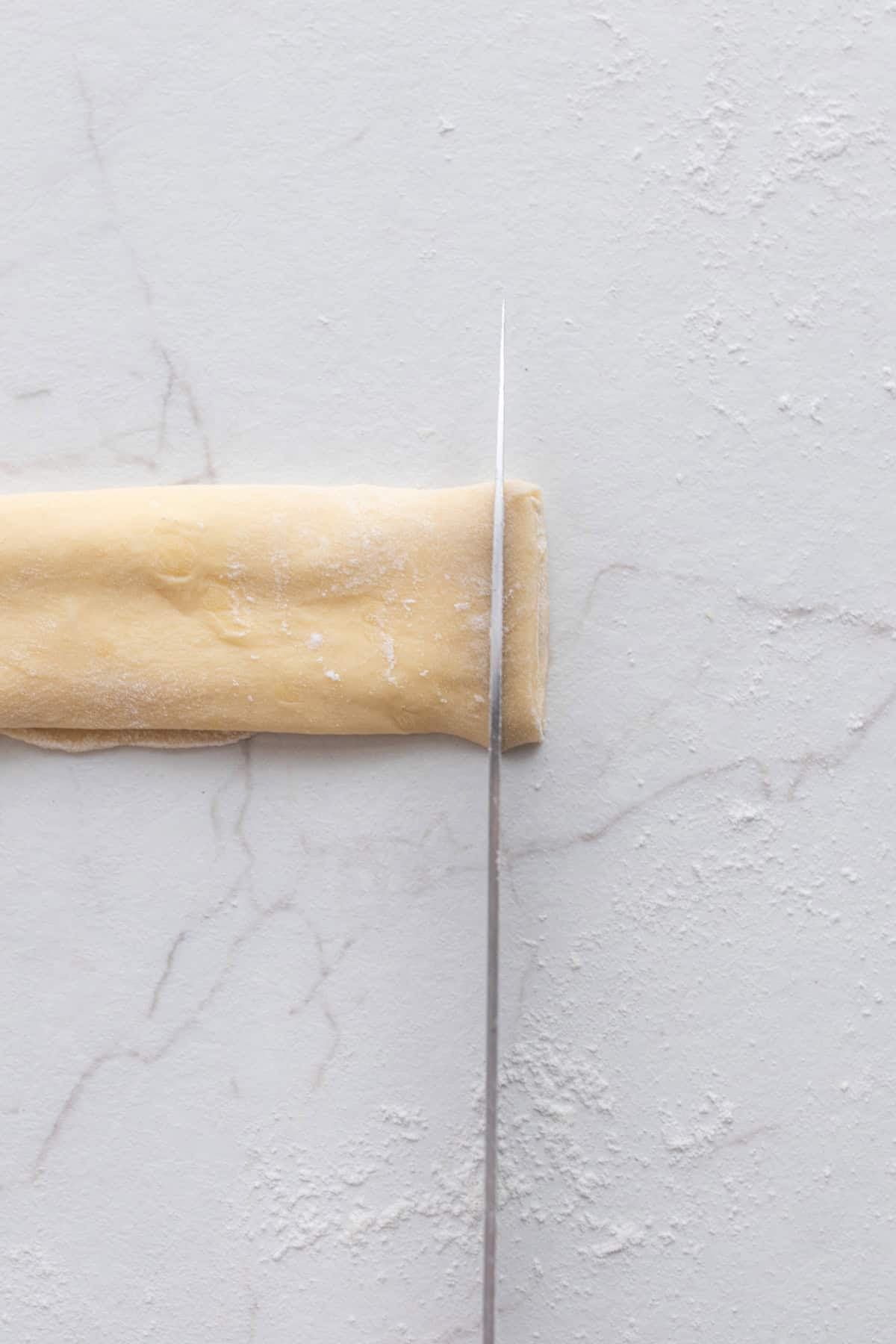
Step 6: Cut with a sharp knife or pizza cutter. I like to roll the dough up before cutting to make it easier.
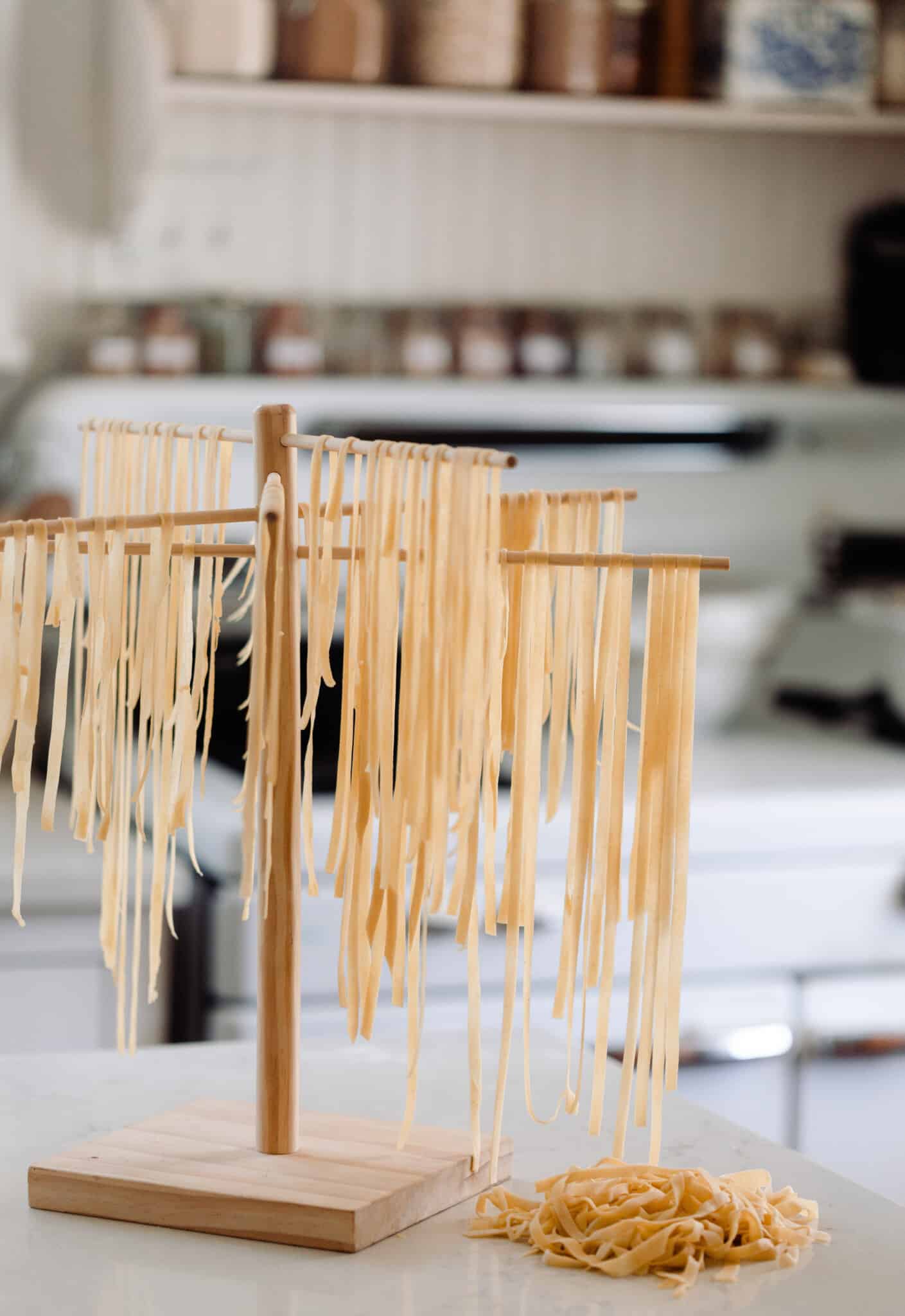
Step 7: Move the pasta to a towel and lay flat to dry, or hang on a pasta drying rack and allow to dry for at least 30 minutes (and up to 2 hours). See instructions below for how to long ferment this dough.
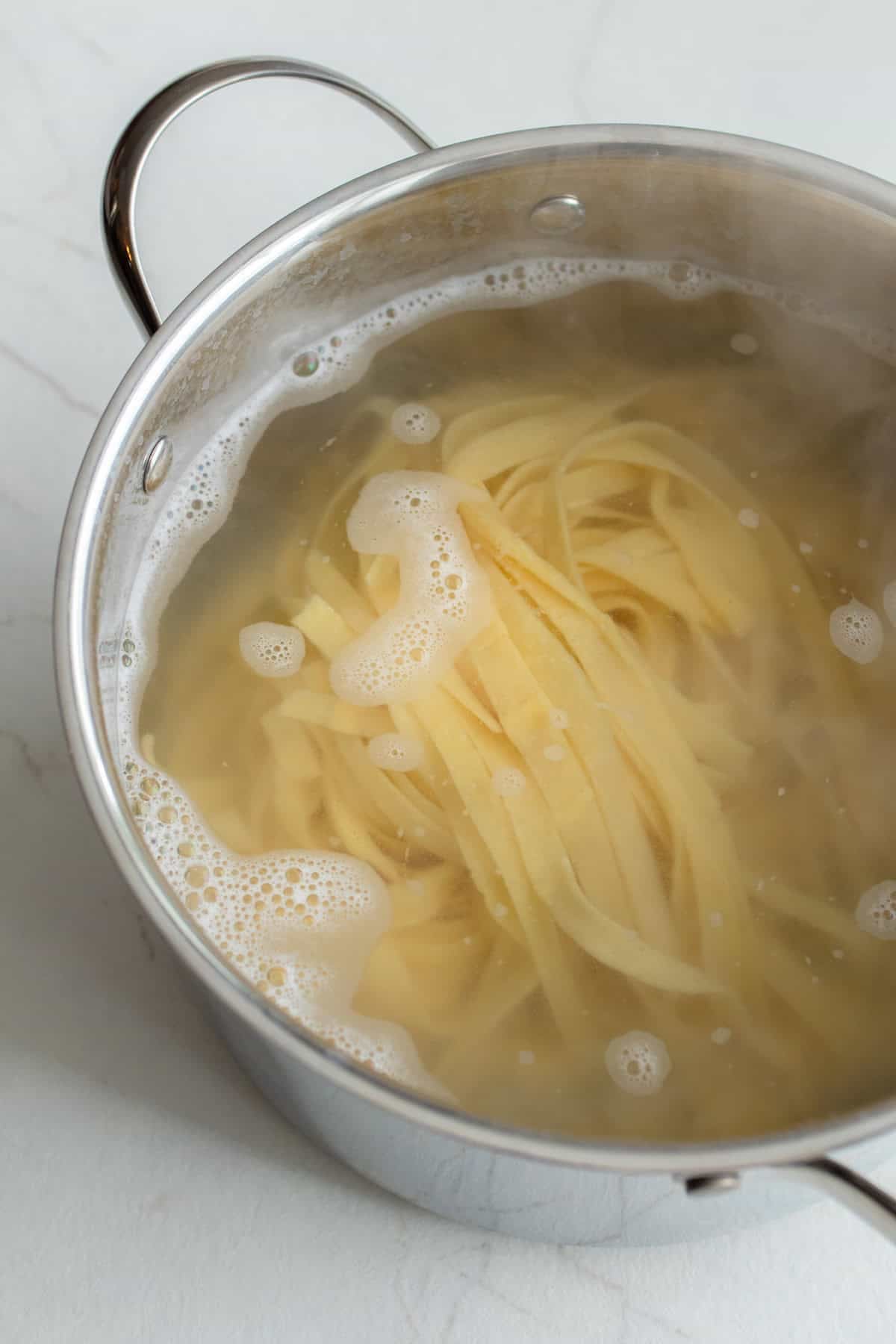
Step 8: Fill a large pot with water, season well with salt, and bring to a boil. Add the fresh pasta to boiling water and boil for 4-5 minutes stirring with a fork to loosen up the noodles.

Step 9: When the noodles have reached ‘al dente’ texture and are cooked through, strain and add your favorite sauce.
To Shape Pasta with a Pasta Cutter
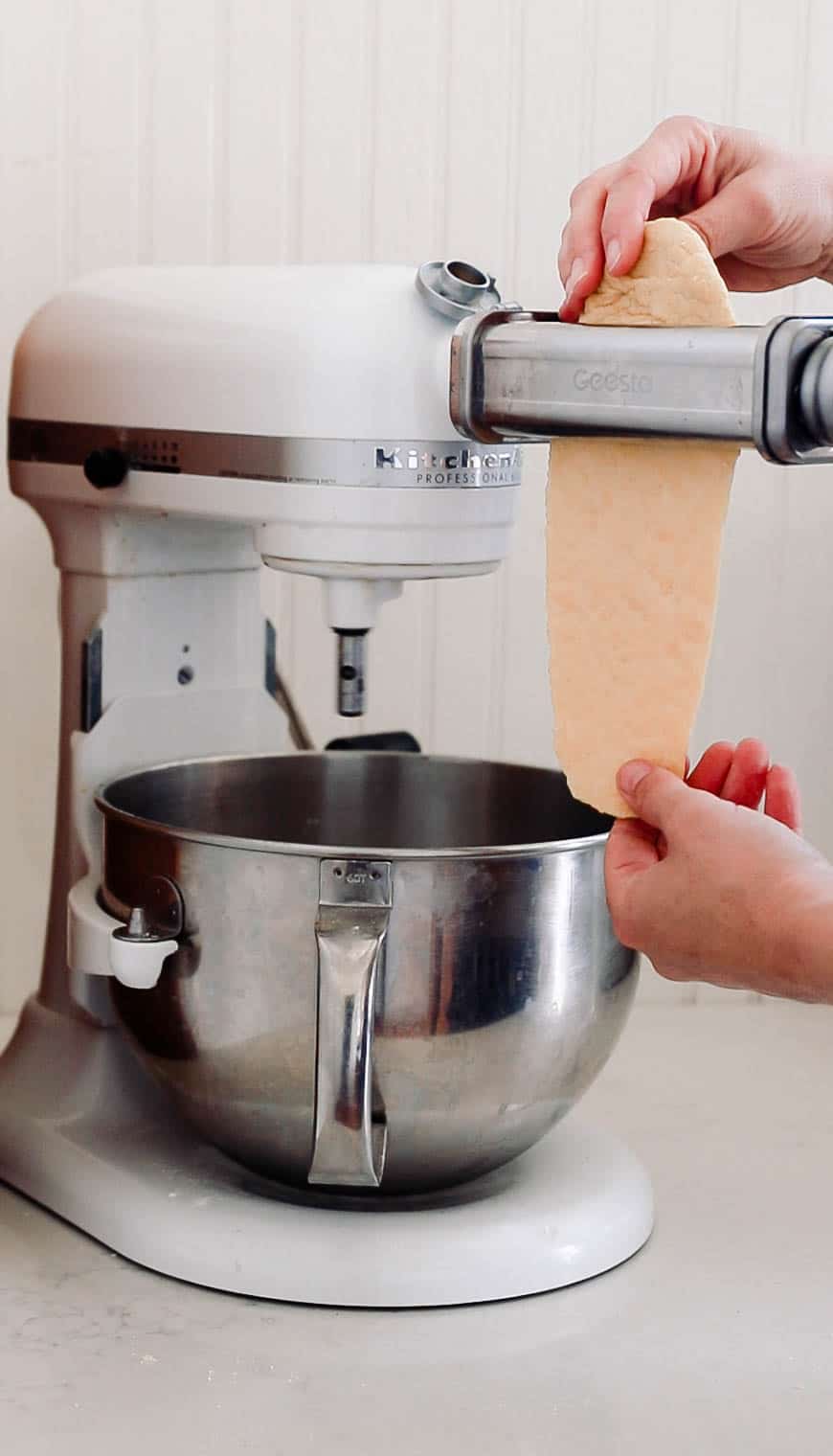
Step 1: Follow steps 1 through 4 above. Flour a clean work surface and pat out dough balls until it forms a 4″ by 4″ square.
Place the pasta through the pasta maker on the thickest setting (which is an 8 on my machine), catching it as it goes through.

Step 2: Fold into thirds, lengthwise, then run through the thickest setting again.
Continue running the dough through the pasta maker, changing the setting lower and lower each time.

Step 3: Once the dough has passed through the thinnest setting, change out the attachment to the pasta cutter.
Run dough one last time though the cutter, guiding it and catching the pasta strands as they come out.
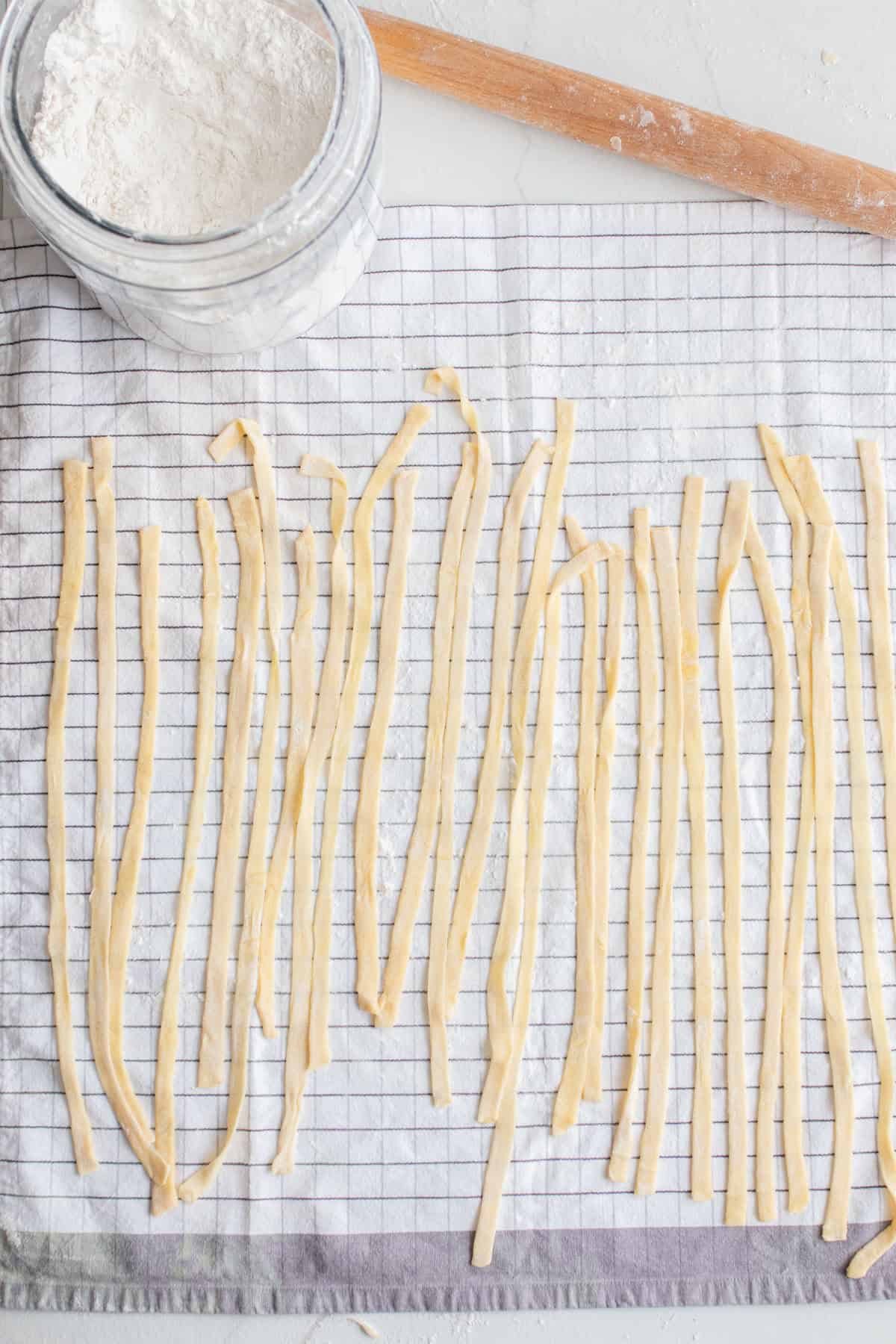
Step 4: Lay flat to dry on a towel, or hang on a pasta drying rack and allow to dry for at least 30 minutes (up to 2 hours).
Proceed to cook pasta according to directions in the recipe card.
How To Make Long Fermented Sourdough Pasta
Make the pasta as directed above in the quick version.
Instead of only allowing the dough to rest for 30 minutes, allow it to ferment covered for 2-6 hours and then refrigerate up to 24 hours. You want to cover it so it doesn’t dry out.
Tips
- If at any point the dough starts to get too sticky, place it on a floured surface and pat the flour over the entire surface of the dough.
- If you do not have a stand mixer, you can create the dough by hand. Add flour to a clean surface, make a well. Add eggs and sourdough starter to the well and whisk together the wet ingredients. Incorporate the rest of the flour and knead by hand for 10 minutes or so.
- You can make a quick version of this recipe or long ferment for better digestibility.
Recipe FAQs
Yes! Thanks to the fermentation process of the flour from the sourdough starter, the grains become more digestible and the phytic acid is broken down making the nutrients available in the flour easier for your body to absorb.
As long as the dough is fermented, it will be easier to digest. This is because the fermentation process helps break down some of the gluten making it more tolerable to those that have gluten sensitivities.
Fresh homemade pasta needs to dry 12-24 hours or longer before storage. For fresh cooking, allow to dry for at least 30 minutes to 2 hours.
Yes! You are not obligated to just make fettuccine or spaghetti with this recipe. You could also use it to make different shapes, such as ravioli, penne, bow tie (farfalle), orecchiette, and more.
Store pasta in an airtight container in the refrigerator for 2-3 days, or in the freezer for up to 8 months. Thaw in the refrigerator before cooking from frozen.
For longer term storage without freezing: Allow your pasta to dry out for 24 hours in a cool dry place. Turn your pasta every few hours so there aren’t any moist spots.
Once the pasta is completely dry, transfer to an airtight container like a mason jar or Ziploc bag for up to a year.
Find More Sourdough Dinner Ideas
- Beef Carnitas – Instant Pot, Slow Cooker Or Oven
- Best Biscuit Chicken Pot Pie Recipe
- Sourdough Fried Chicken
- The Ultimate Homemade Meatball Sub Recipe
- Sourdough Stromboli
If you try this recipe and love it, I would love it if you could come back and give it 5 stars! Tag me on Instagram @farmhouseonboone.

Sourdough Pasta

Ingredients
- 1 cup sourdough starter, discard or fed
- 3 cups all-purpose flour
- 4 large eggs
Instructions
Create The Dough
- Place the ingredients in a stand mixer with a dough hook.
- Mix on low/medium until the dough is smooth and stretchy, about 10 minutes.
- Allow the dough to rest for 30 minutes.
To Shape Without A Pasta Maker
- Divide dough into 8 equal parts.
- Lightly dust a clean surface with flour.
- Roll the dough out as thin as possible with a rolling pin and cut with a sharp knife or pizza cutter. I like to roll the dough up before cutting to make it easier.
- Move the pasta to a towel and lay flat to dry, or hang on a pasta drying rack and allow to dry for at least 30 minutes (and up to 2 hours).
Shaping With A Pasta Maker
- Flour a clean surface and pat out dough balls until it forms a 4″ by 4″ square.
- Place the pasta through the pasta maker on the thickest setting, catching it as it goes through.
- Fold into thirds, lengthwise, then run through the thickest setting again.
- Continue running the dough through the pasta maker, changing the setting lower and lower each time.
- Once the dough has passed through the thinnest setting, change out the attachment to the pasta cutter.
- Run dough one last time though the cutter, guiding it and catching the pasta strands as they come out.
- Lay flat to dry on a towel, or hang on a pasta drying rack and allow to dry for at least 30 minutes (up to 2 hours).
Cooking
- Fill a large pot with water, season well with salt, and bring to a boil.
- Add the fresh pasta to boiling water and boil for 4-5 minutes stirring with a fork to loosen up the noodles.
- When the noodles have reached ‘al dente’ texture and are cooked through, strain and add your favorite sauce.
Notes
- You can also create the dough by hand. Add flour to a clean surface, make a well. Add eggs and sourdough starter to the well and whisk together the wet ingredients. Incorporate the rest of the flour and knead by hand for 10 minutes or so.
- If at any point the dough starts to get too sticky, place it on a floured surface and pat the flour over the entire surface of the dough.
- For a long fermented version: Instead of only allowing the dough to rest for 30 minutes, allow it to ferment covered for 2-6 hours and then refrigerate up to 24 hours. You want to cover it so it doesn’t dry out.
Nutrition
Nutrition information is automatically calculated, so should only be used as an approximation.








Turned out beautifully! (I did use a pasta maker)
I was just looking to see if I could make it in my pasta machine. Would you mind sharing how you did it.
Lisa, all your sourdough cookie recipes are the best❤️
This was SO easy to make (although, the cutting process took forever lol) and my family LOVED it! I doubled the recipe so I would have plenty to make on hand since my boys love noodles so much! I don’t have a pasta press thing, so I had to roll and cut all of mine by hand. They turned out more like egg noodles than pasta, but that’s OK because my family would rather have egg noodles than spaghetti or fettuccine any day. I like to put some butter, garlic salt, plus or minus some Worcestershire sauce in mine! SOOOOOO yum!
Can I let this dry out completely to save as dried pasta?
Are you able to dry this pasta in a dehydrator?
I’ve not personally tried that, but it may work!
I did this since I doubled the recipe to keep a lot on hand and it worked 🙂 I also froze some of the dough and that worked as well. I haven’t tried freezing the “semi” dried noodles I had, since they were gone before I could try. LOL
I wish you’d use metric for measurements, especially with using sourdough discard.
Here’s my conversion chart.
Anyone tried this with a mix of all purpose and whole wheat flour?
Can you freeze these if making a bulk amount?
Yes, you can.
After converting the measurements to grams, I’m super disappointed with how sticky my dough is. I was hopefull it would become less sticky after I let it rest in the fridge for an hour and a half but no luck. Not sure if this is a recipe for all sourdough starters.
The pasta turned out great. If you leave it on the counter too long though it will expand, I had wrapped mine in plastic wrap and it burst out of it. It was funny to see. My discard is still young so I can’t wait to try it when it’s older to see if there is a taste difference.
Thank you for the recipe. When you hang your pasta to dry, does it break and fall? And does it break apart when they have finished drying? Maybe I have too much flour in it? Dough was really sticky tho.
That is a sign your dough is too dry and has too much flour. I’d reduce the flour a little bit next time.