
Fresh milled sourdough starter merges freshly milled whole grains with sourdough fermentation, resulting in incredible flavor, nutrition, and quick, robust activity for your sourdough culture.
When you begin the journey of milling your own flour at home, the natural response is to look for ways to incorporate the fresh flour. Fresh flours behave differently from store-bought flour, namely in their quicker fermentation, because of their freshness and whole-grain composition. But they contribute excellent flavor, texture, and nutrition. Bringing freshly milled flour into your baking, such as freshly milled sandwich bread, pizza dough, cinnamon rolls, waffles, chocolate chip cookies, and more, offers opportunities for more nutritious and robustly flavored recipes.
When you combine this highly nutritious, fresh flour with sourdough fermentation, you receive depth of flavor, a tender texture, and better digestibility of the grains. Recipes like freshly milled sourdough bread and sourdough dinner rolls are crafted to provide the benefits of both fermentation and nutrient-rich flour, resulting in wholesome, fresh, and delicious bakes.
Whether you’re a sourdough enthusiast or completely new to sourdough fermentation, freshly milled flour offers several perks.
What is Freshly Milled Flour?
Freshly milled flour refers to whole grains milled into flour at home. These whole grains arrive as wheat berries, with varieties like soft wheat, hard wheat, red wheat, white wheat, kamut, einkorn, rye flour, and more. Mills offer different grinding consistencies, from a fine ground flour to a coarser grind. The result is a fresher, more nutritious flour with an earthy, striking flavor and rustic texture. While a learning curve presents itself with freshly milled flours, it is possible to convert any recipe to freshly milled flours with a few adjustments.
What is Sourdough Starter?
The sourdough journey begins with a simple mixture of flour and water, kept loosely covered at room temperature, and fed repeatedly with equal parts of flour and water while discarding a bit each day. (Bakers call this sourdough discard, although I never actually throw mine away. Instead, I use it in discard recipes like these 35+ quick sourdough discard recipes.)
This simple process sparks natural fermentation via wild yeast and beneficial bacteria present in the flour, water, and environment. While sourdough starters often begin with an all-purpose flour, you’ll find other varieties, like spelt sourdough starters, rye sourdough starters, and even gluten-free sourdough starters.
Sourdough starter works in place of commercial yeast. As the natural yeast and bacteria consume the sugars in the grain, they produce carbon dioxide bubbles that give the dough its rise. The fermentation process also breaks down phytic acid, an anti-nutrient in whole grains that makes digestion and nutrient absorption difficult.
The result is simpler digestion, higher nutrient bioavailability, and overall lower gluten content. Additionally, these processes create flavor and texture. Sourdough recipes develop a pleasantly tangy flavor, chewy bite, and tender texture that vary depending on the flour you use in your starter.
Why Choose Freshly Milled Flour for Your Starter?
The primary benefits of using freshly milled flour center on nutrition, flavor, fermentation, and simplicity. Freshly milled whole grains keep all of their components: the bran, germ, and endosperm. Conventional flour processes out the bran and germ so that the endosperm remains, making the flour neutrally flavored, light, more shelf-stable, but nutritionally lacking.
Freshly milled flour provides more vitamins and minerals, healthy fats, antioxidants, and fiber because it contains the complete grain. The presence of the bran and germ results in deeper and fresher flavor and aroma, and these added components work to fuel more rapid yeast and beneficial bacteria growth. Choosing a fresh milled flour is also choosing simplicity; a less processed, pure form without additives or preservatives.
Considerations
- Exclusively feeding your starter with freshly milled flour shortens the fermentation time significantly. This means you’ll need to be feeding and discarding more often. If you don’t bake often, this may turn into an extra cost, as you’ll be going through more flour to keep up with feeding your hungry starter.
- Rapid fermentation runs the risk of over-fermentation, which is missing your window of peak sourdough starter activity and ending up with a flat, runny starter that is ready to be fed again.
- Such hearty activity in a sourdough starter can indicate a higher acidity and a more sour flavor. Depending on personal preference and how sour the starter becomes, some people may or may not view this as a benefit.
- Bakers sometimes use freshly milled flour to strengthen a new or sluggish starter before switching back to all-purpose flour to slow fermentation and maintain an easier pace.
Helpful Sourdough Resources
How to Convert Any Recipe to Sourdough
How to Make a Sourdough Starter
Maintaining and Feeding a Sourdough Starter
Why You’ll Love This Recipe
Nutrient-rich – Whole grain flour milled at home offers fiber, antioxidants, vitamins, minerals, and healthy fats – health benefits that commercial flours cannot claim.
Flavorful – Freshly milled grains provide a rich, nutty flavor and a mild, natural sweetness. When fermented, the flavors build even further.
Faster fermentation – Because freshly milled flour preserves all parts of the wheat berry, it spurs more vigorous activity in the starter. This means rapid fermentation and more frequent feedings. This is great for boosting a healthy starter and preparing recipes even quicker.
Ingredients
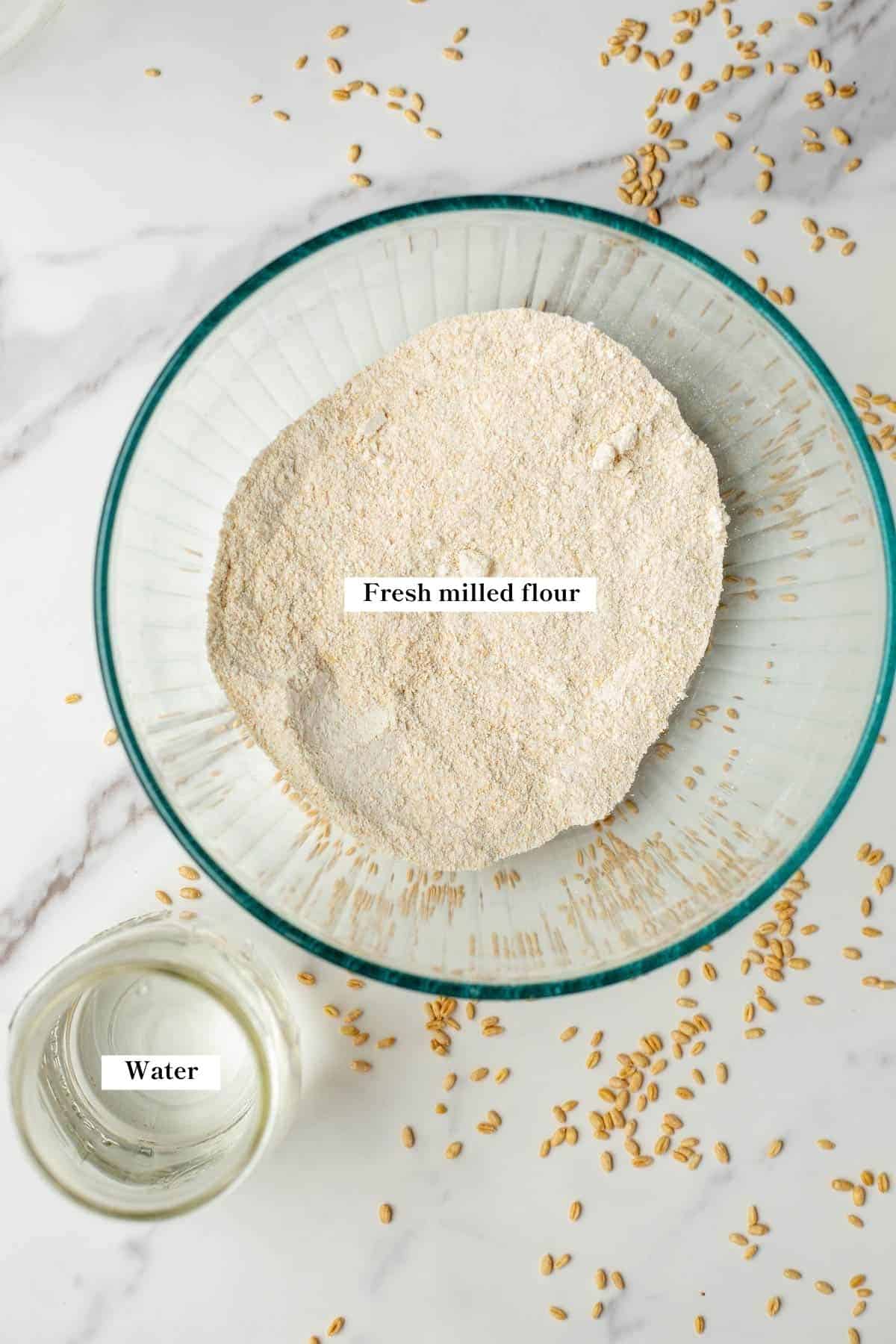
Fresh milled flour – I prefer hard white wheat. If you prefer a more robust flavor, choose hard red wheat or rye.
Water – Filtered water is important. I use Boroux water filters for chlorine-free, contaminant-free water.
A full ingredient list with exact amounts can be found in the recipe card below.
Tools You May Need
Grain mill – I use a Mockmill. Read more about why I think the Mockmill is the best choice.
How to Make a Fresh Milled Sourdough Starter
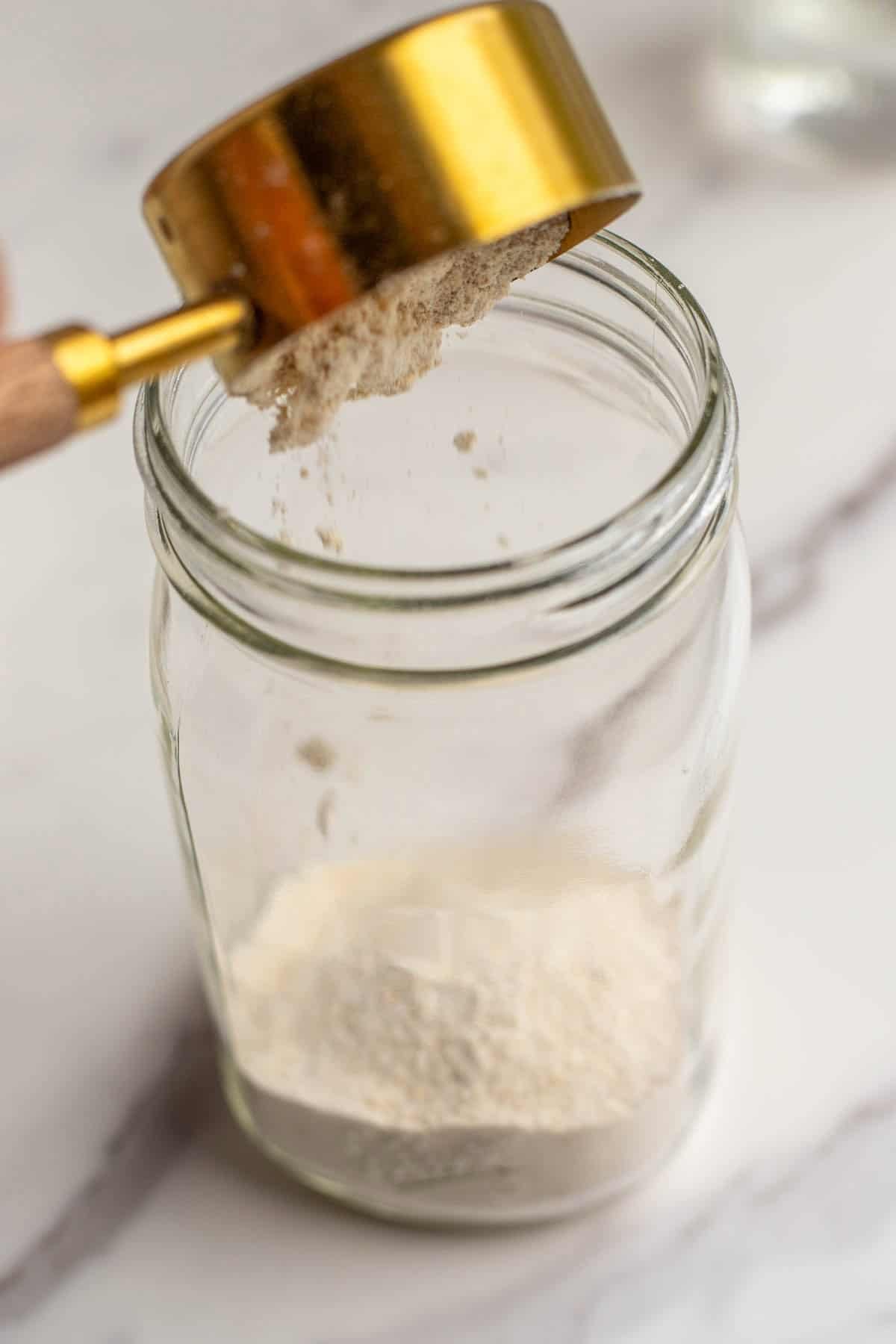
Day 1: Add 1/2 cup of freshly milled flour and 1/2 cup of filtered water to a glass bowl or jar. Stir the flour and water well, scraping down the sides. Cover loosely with a clean towel and let it sit at room temperature for 24 hours.
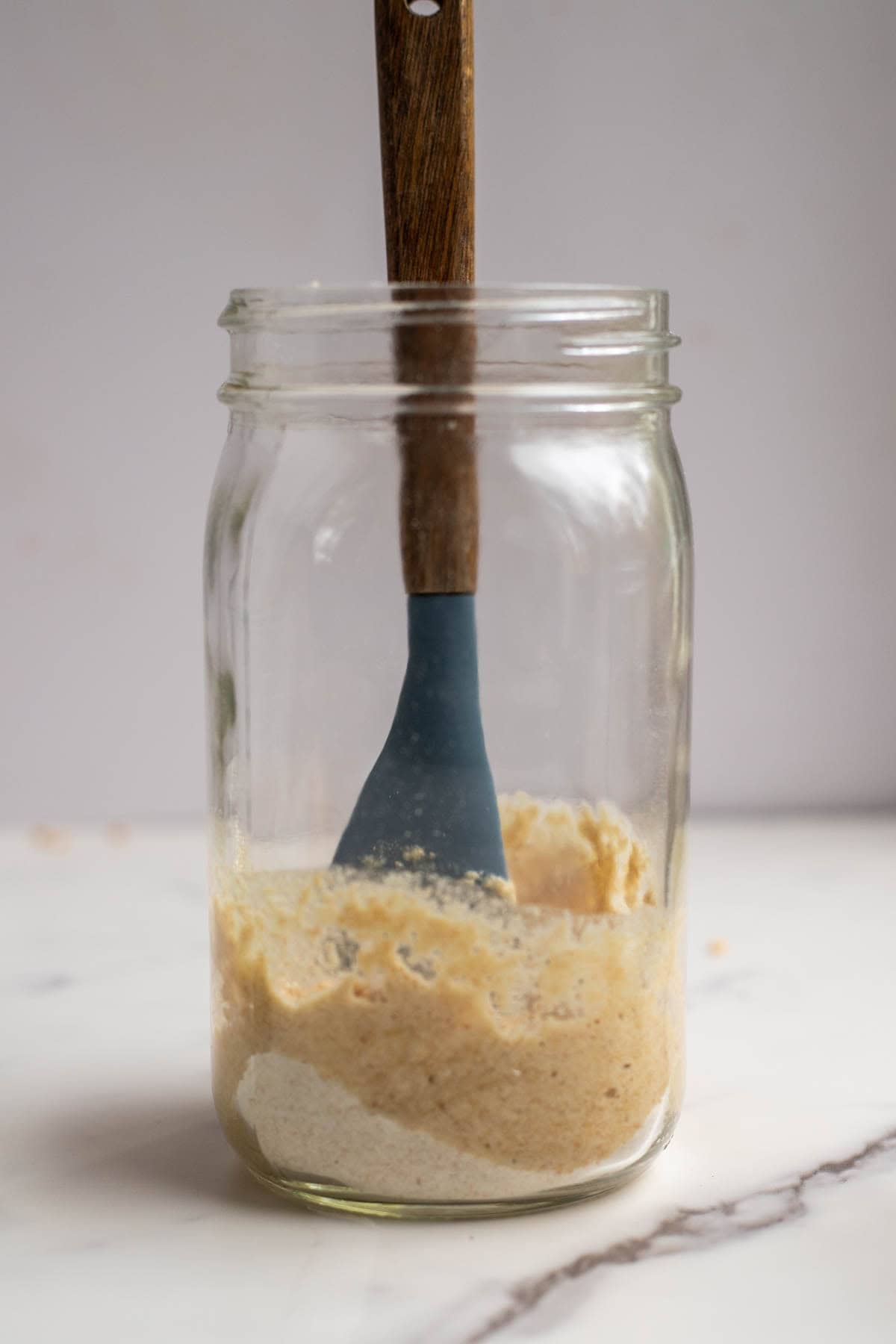
Day 2: The next day, discard half of the flour and water mixture. Add 1/2 cup of freshly milled flour and 1/2 cup of water to the mix, stir well, cover, and leave at room temperature for 24 hours.
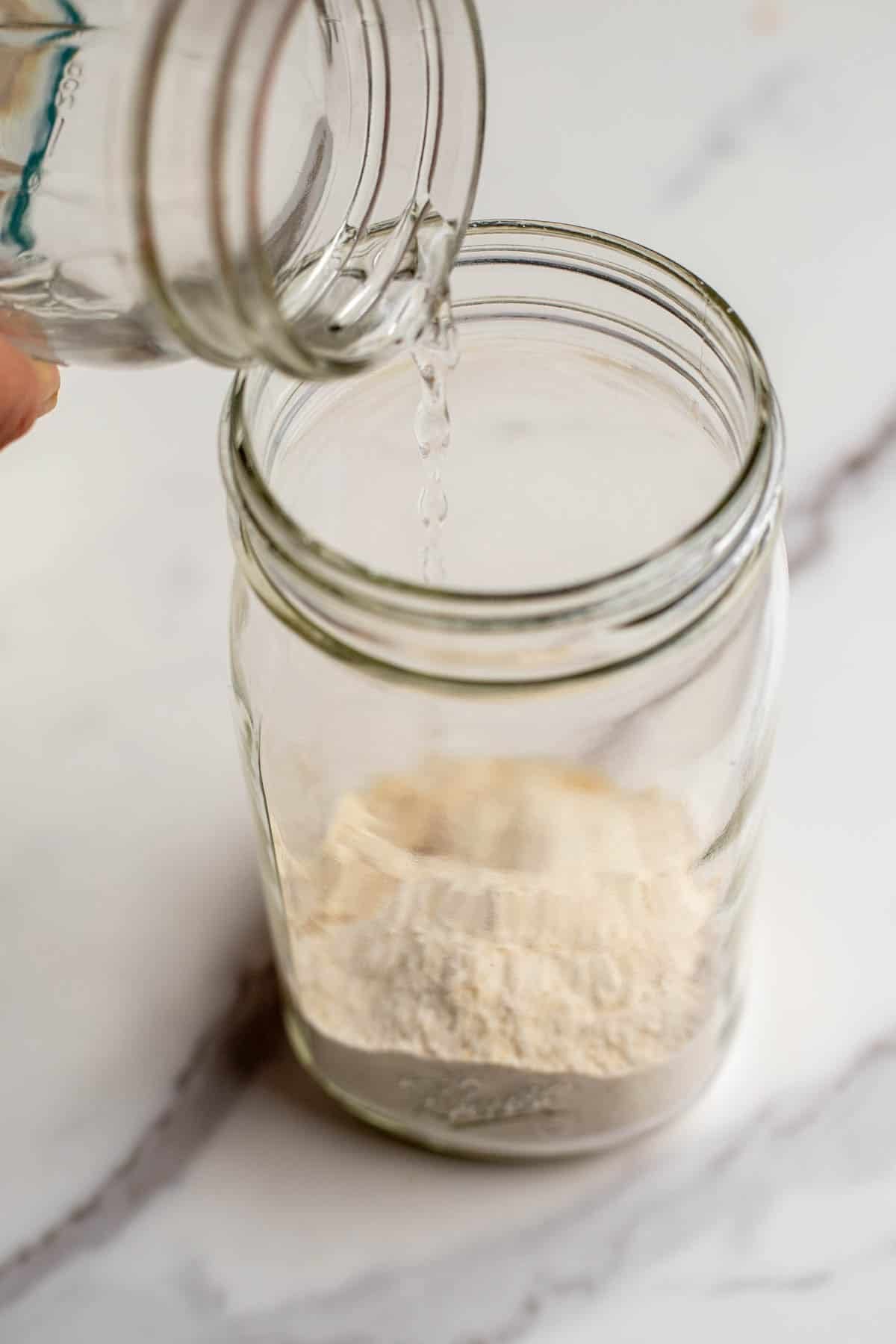
Day 3-5: Repeat the instructions from Day 2. Discard half, feed equal parts fresh flour and filtered water, stir well, cover loosely, and keep at room temperature for 24 hours.
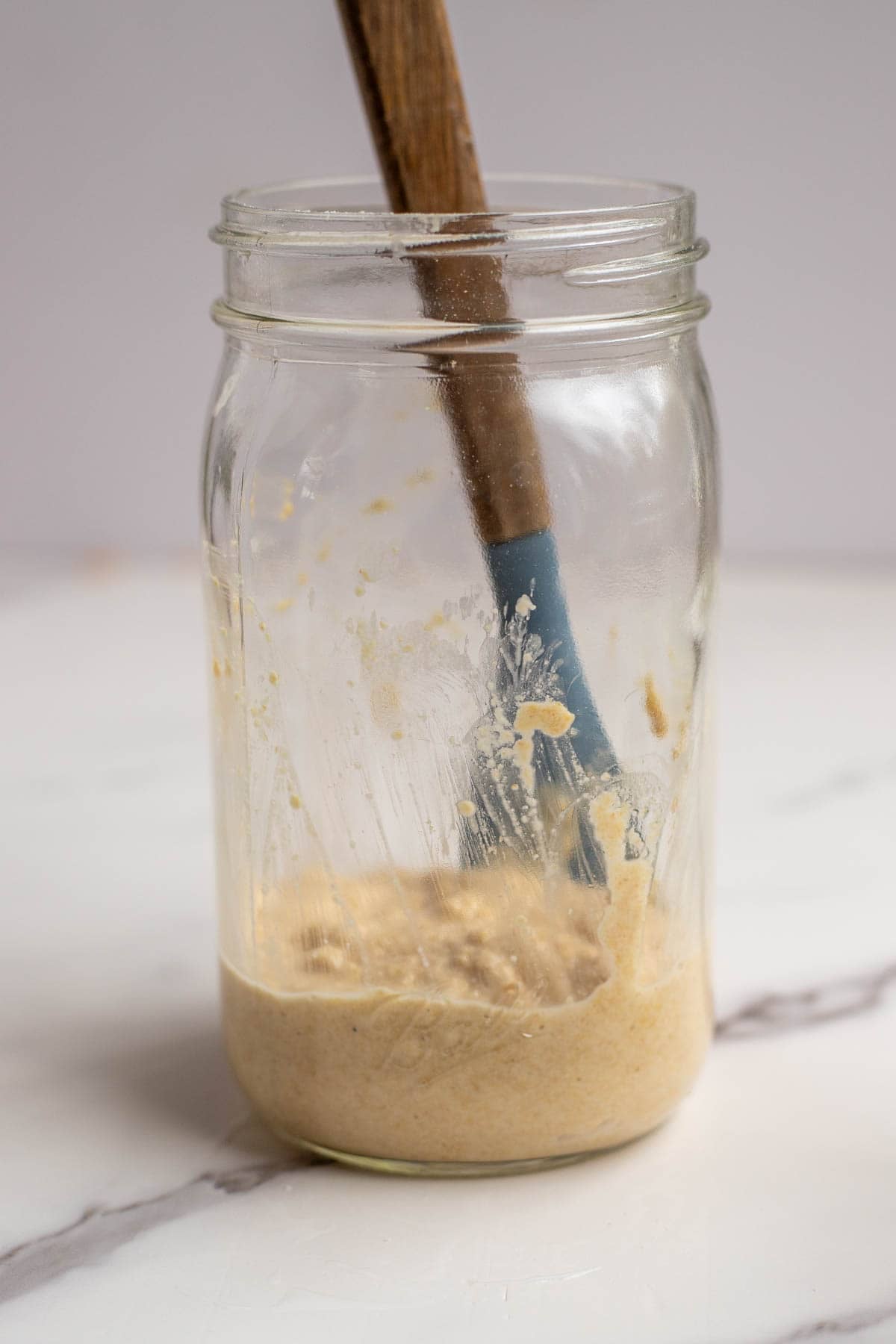
Day 6-7: Continue the steps from Days 2-5, but begin feeding every 12 hours now, rather than every 24 hours.
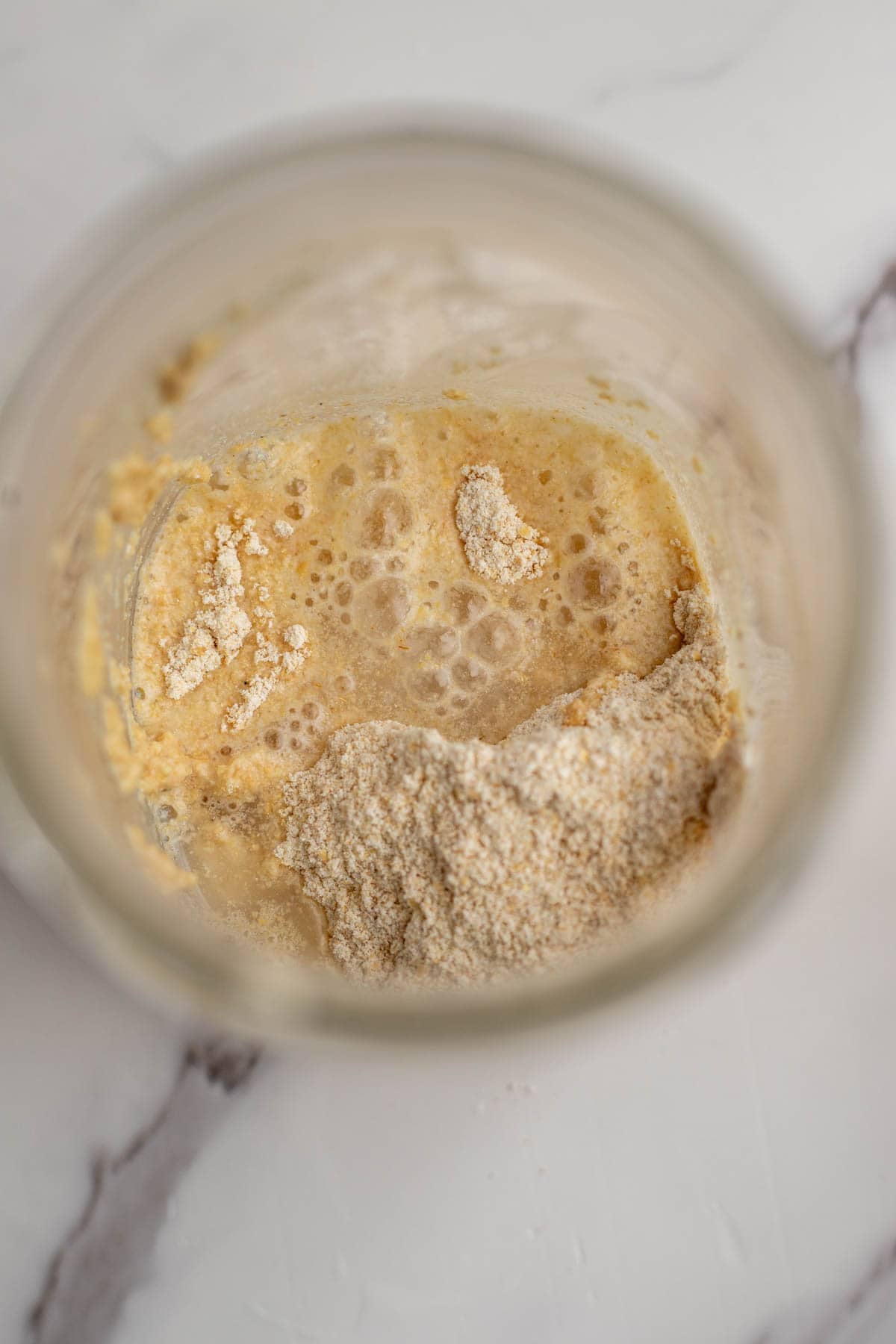
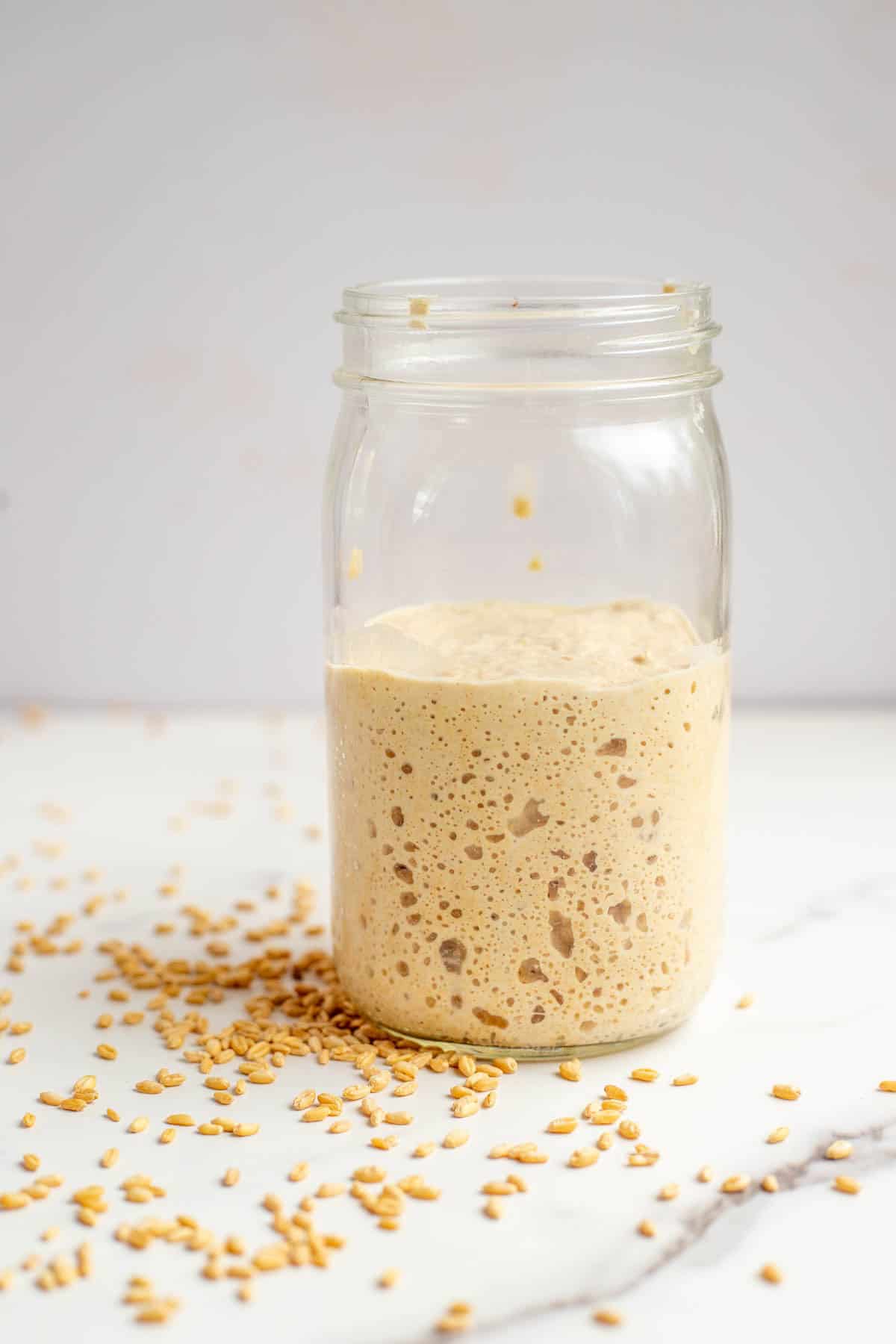
After Day 7: After one week, you should be seeing signs that your starter is very active. Signs include bubbly foam on top of your starter, bubbles throughout, doubling in size, and a pleasant yeasty aroma. With these signs, your starter should be ready for baking.
Maintenance: For frequent bakers (daily or near-daily baking), keep your starter at room temperature, discarding and feeding daily. If not using daily, store it in the fridge and feed it once a week.
Note: If your starter smells rancid, has a strong chemical smell, shows signs of mold inside the jar, or contains pink or orange tinges, streaks, or spots, throw it away and begin again.
Tips
- Mill only what you need and use it right away to preserve the grains’ nutrients. Place leftover flour in an airtight container or bag, then keep it at room temperature for a few days at most, in the refrigerator for a few weeks, or in the freezer for several months. Freezing is the most effective way to preserve the nutrients in the flour.
- Don’t forget to let your starter breathe. Use a loose lid to keep out contaminants and debris while allowing air in and out.
- The temperature of your home will affect the activity of your starter. A warm place will speed up fermentation drastically, while a cool location (like a fridge or even a cool pantry) will significantly slow activity.
- If your starter develops a clear or dark liquid on top, you have hooch, which is safe. Simply pour it off or stir it in. This is a sign that your starter needs to be fed.
- If your starter seems to stay flat and unresponsive, try keeping it at a warmer temperature, feeding it more frequently, or switching to a freshly milled rye flour temporarily.
Recipe FAQs
When converting a recipe to freshly milled flour, there are several considerations. Fresh milled flour requires higher hydration, the right grain for the recipe, an autolyse to soften the bran, and gentle handling.
Yes, a freshly milled grain contains the bran and germ, which feed the natural yeast and bacteria, increasing the speed of fermentation.
Yes, freshly milled flour spoils quickly due to the natural oils from the grain’s germ oxidizing upon exposure to oxygen. Avoid this by only milling the amount of flour that you need at the time, or storing extra flour in the freezer until needed
Absolutely. By mixing flour and water, waiting patiently, then discarding and feeding your starter routinely, you can build your active starter from scratch within a week or so.
Yes, you can convert your starter to whichever flour you prefer once it becomes established.
You can make this change gradually with daily feedings of equal amounts of new flour and filtered water, leaving this starter at room temperature. Discard and feed for several days. By day 3 or 4, your starter has fully converted.
More Sourdough Recipes from the Farmhouse
- Sourdough Strawberry Quick Bread
- Sourdough English Muffin Loaf
- Sourdough Oatmeal Bread
- Sourdough Garlic Knots
- Sourdough Hawaiian Rolls
If you try this recipe and love it, I would love it if you could come back and give it 5 stars! Tag me on Instagram @farmhouseonboone.

Fresh Milled Flour Sourdough Starter
Equipment
Ingredients
- 6 cups fresh milled flour, hard white wheat
- 6 cups water, filtered
Instructions
- Day 1: Add 1/2 cup of freshly milled flour and 1/2 cup of filtered water to a glass bowl or jar. Stir the flour and water well, scraping down the sides. Cover loosely with a clean towel and let it sit at room temperature for 24 hours.
- Day 2: The next day, discard half of the flour and water mixture. Add 1/2 cup of freshly milled flour and 1/2 cup of water to the mix, stir well, cover, and leave at room temperature for 24 hours.
- Day 3-5: Repeat the instructions from Day 2. Discard half, feed equal parts fresh flour and filtered water, stir well, cover loosely, and keep at room temperature for 24 hours.
- Day 6-7: Continue the steps from Days 2-5, but begin feeding every 12 hours now, rather than every 24 hours.
- After Day 7: After one week, you should be seeing signs that your starter is very active. Signs include bubbly foam on top of your starter, bubbles throughout, doubling in size, and a pleasant yeasty aroma. With these signs, your starter should be ready for baking.
Notes
Nutrition
Nutrition information is automatically calculated, so should only be used as an approximation.








My starter rose nearly double day 2-4 but now on day 5 it has hardly risen at all. Is this normal?
this is a normal part of the transition phase…keep following the directions.
Will FMF discard go rancid or can it be stored in the fridge as well?
Yes, fresh milled flour (FMF) sourdough discard can be stored safely in the fridge, and doing so is highly recommended to keep it from spoiling or getting overly sour
Could you grind 6 cups of flour ahead of time, store it in the fridge, and use it to feed the starter? Or should it be freshly milled each day?
It should be freshly milled each day. If it’s an absolute must to store it, the freezer is better.
Can I use fresh milled rye for my starter and use that starter with other grains FMF like making a spelt bread with the rye starter? Or do I only use it with the same type of grain?
You can change it around!
Lisa, I love all your recipes!! Every recipe I’ve tried turns out amazing thank for sharing them.
I’ve been wondering you have a sourdough FMF scones recipe as well as a waffle ice cream cones recipe!! Please share if you do!!!
Can you use einkorn berries instead of hard white wheat?
Yes, that’s fine. I also have a recipe for an einkorn starter. Here it is: Einkorn Sourdough Starter
Can we cook anything with the discard?
Yes, any recipe on my website that uses discard can be used with this FMF discard.