





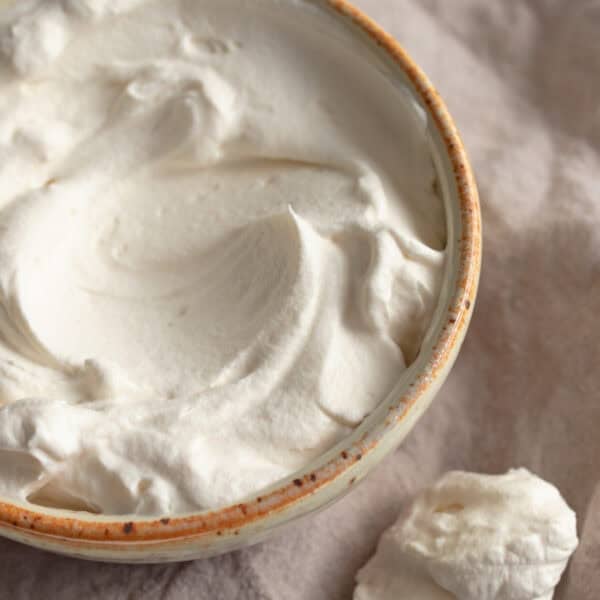
Learn how to make cottage cheese with minimal ingredients with this step-by-step guide. It’s delicious served with fresh fruit, a rich and savory addition to main dishes, and the perfect base for creamy dips.
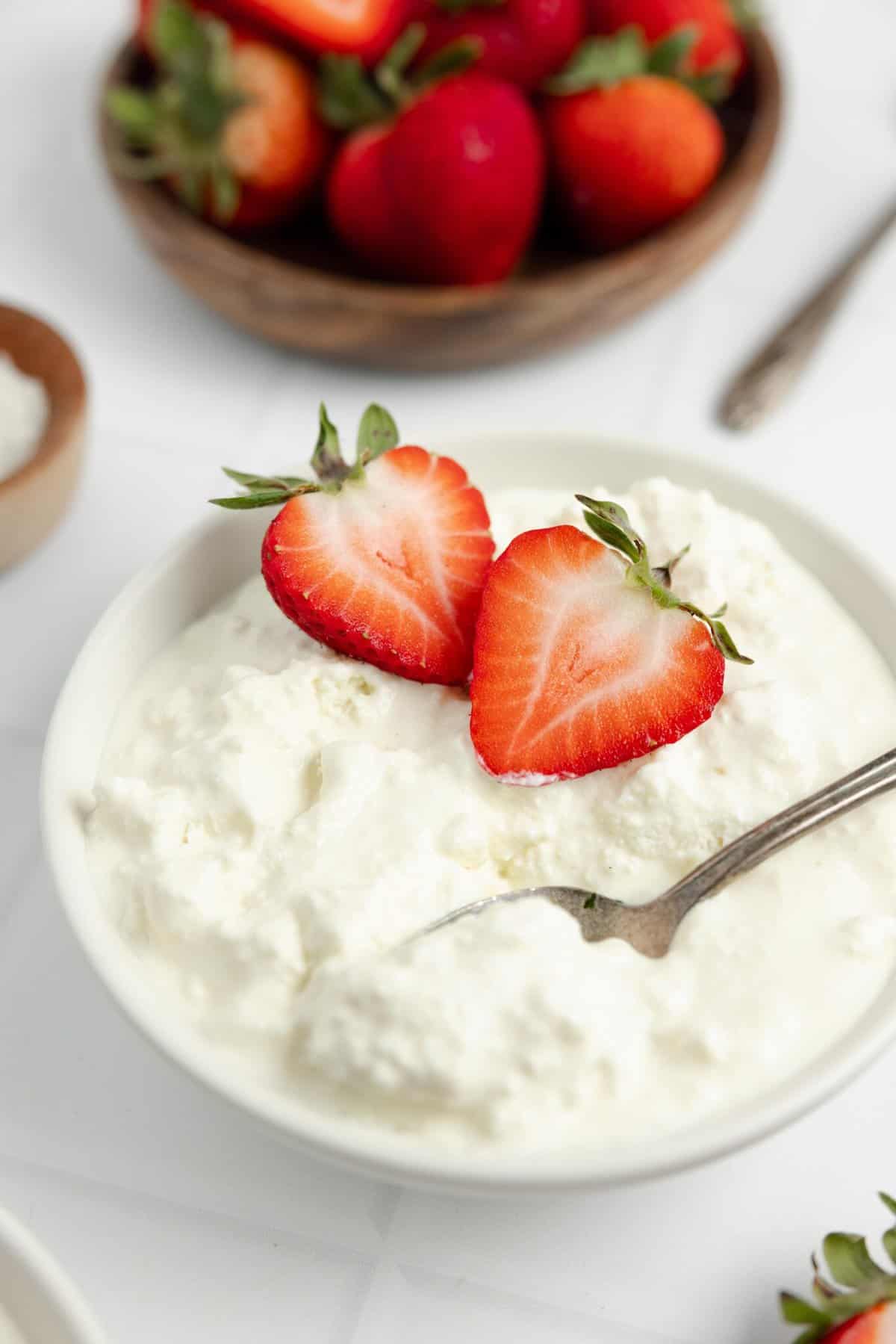
This homemade cottage cheese recipe involves curdling milk with an acid, letting it rest, then straining the curds and adding cream.
It’s easily enjoyed on its own, but it can be served so many different ways whether sweet or savory. Add sliced tomato, salt, and black pepper for a savory dish, or enjoy it sweet with a swirl of homemade peach preserves. It’s perfect for using in zucchini lasagna, and also adds a creamy protein boost to scrambled eggs.
With roughly 14 grams of protein per half-cup serving, cottage cheese is a great option for a low-fat, tasty snack that keeps you feeling full longer.
Why You’ll Love This Creamy Cottage Cheese
Delicious and nutritious – Cottage cheese is rich and creamy with a fun texture. It’s also an easy way to get more protein in your family’s diet.
Healthier than store-bought – You’ll notice that cottage cheese purchased from the grocery store typically has a whole host of additives for extended shelf life and preserved consistency. Homemade cottage cheese contains only four simple whole ingredients for a far fresher and healthier product.
Simple to make – This recipe uses basic ingredients that you probably already have in your own kitchen. It also makes good use of extra milk or milk that is beginning to sour.
Ingredients
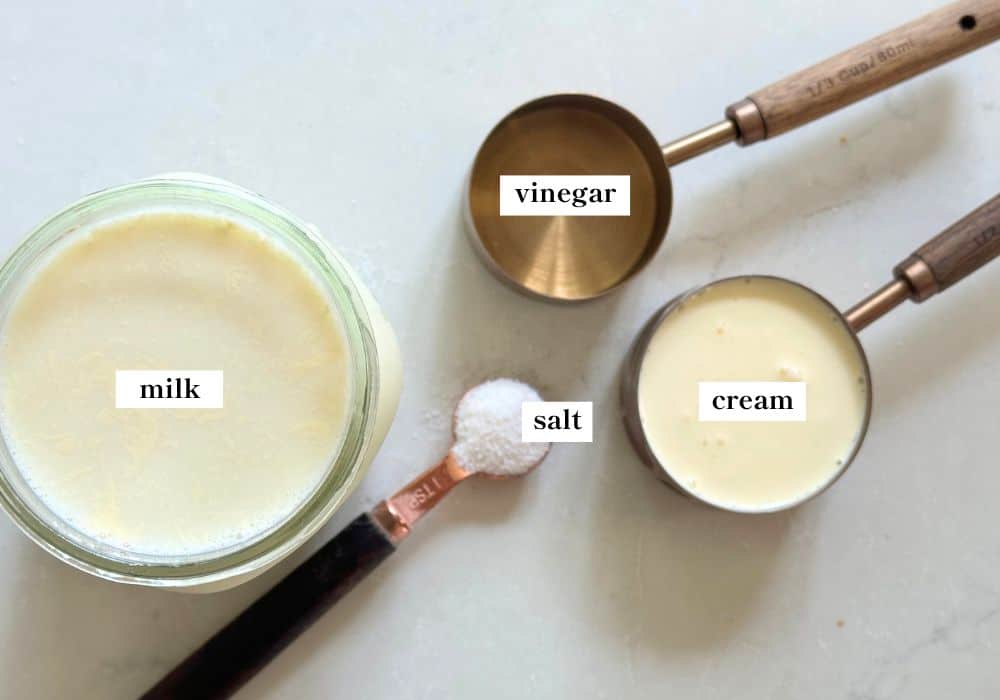
Milk – You can use almost any kind of cow milk, raw or pasteurized, whole or low-fat. However, don’t use ultra-heat pasteurized, as the milk proteins are altered and it will not form curds properly. I prefer whole milk for its rich flavor and creamier consistency.
Vinegar – If you don’t have white vinegar, you can substitute apple cider vinegar or lemon juice.
A full ingredient list with exact amounts can be found in the recipe card below.
How to Make Cottage Cheese
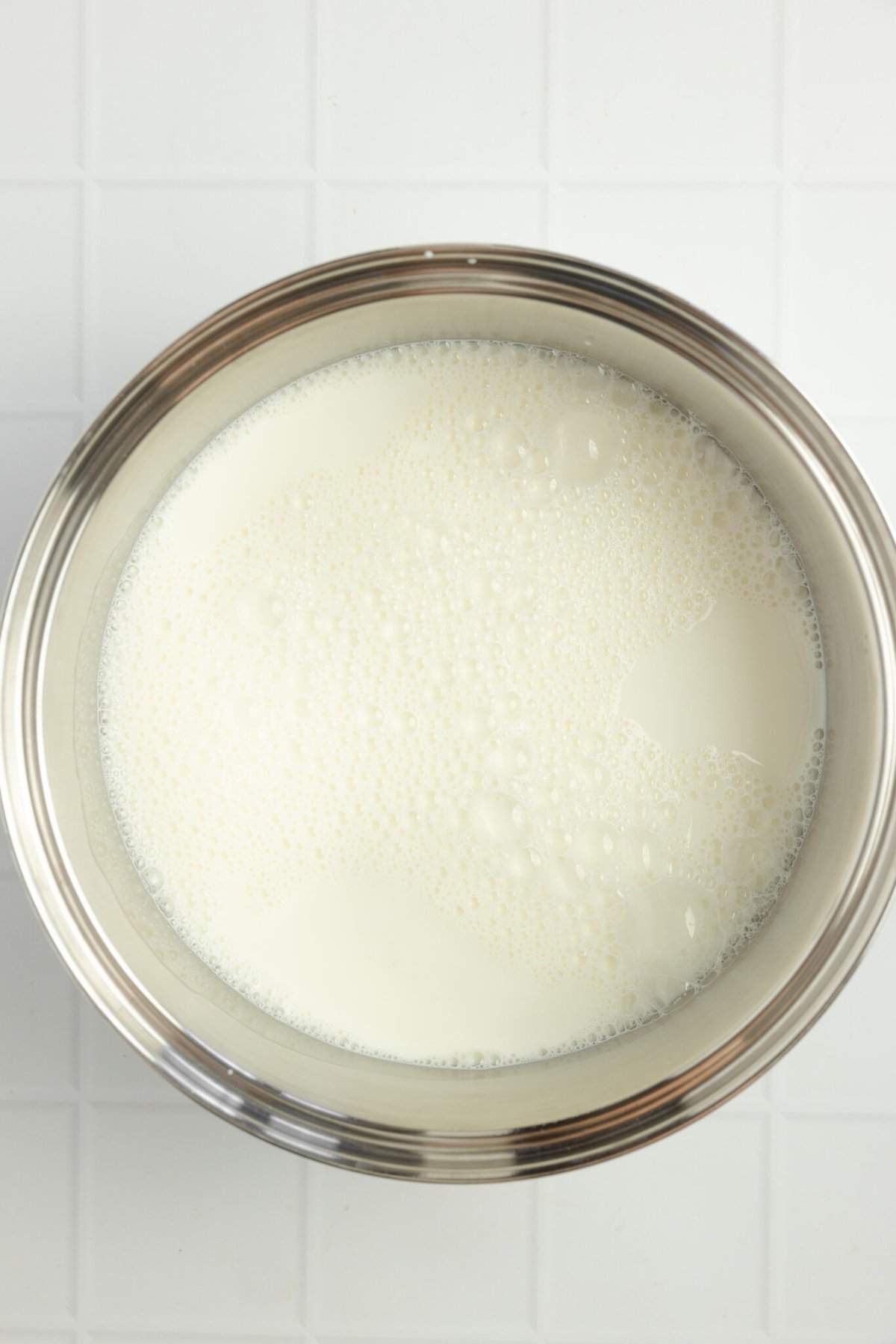
Step 1: Pour the milk into a large pot over medium heat. Stir often so the bottom doesn’t scald and the heat is dispersed. Heat slowly until it begins to simmer or reaches 185 degrees Fahrenheit. It will be frothy but should not boil.
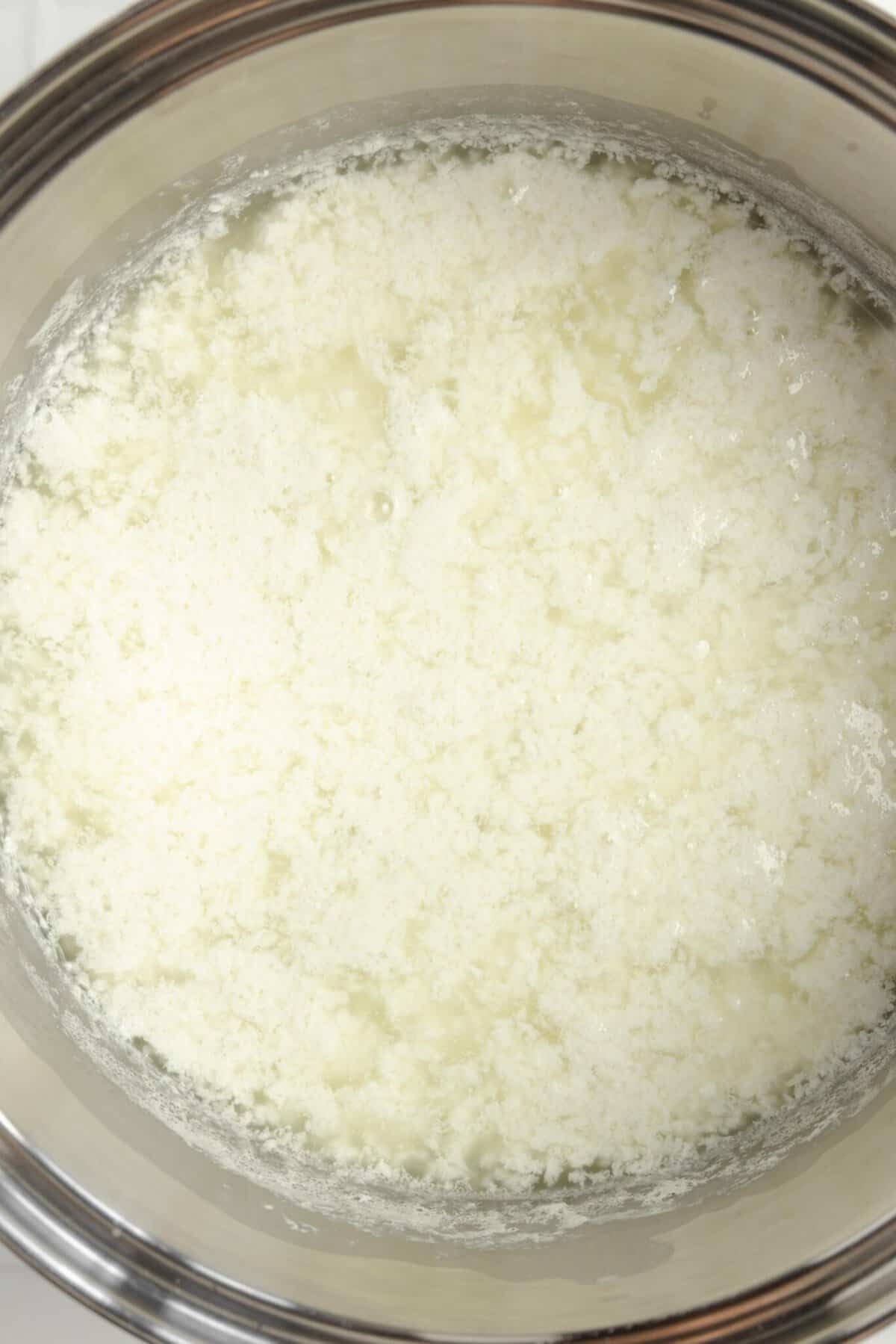
Step 2: Add the vinegar and salt to the milk. Stir, then remove from the heat and let sit for 45 minutes. You will see the milk curdling.
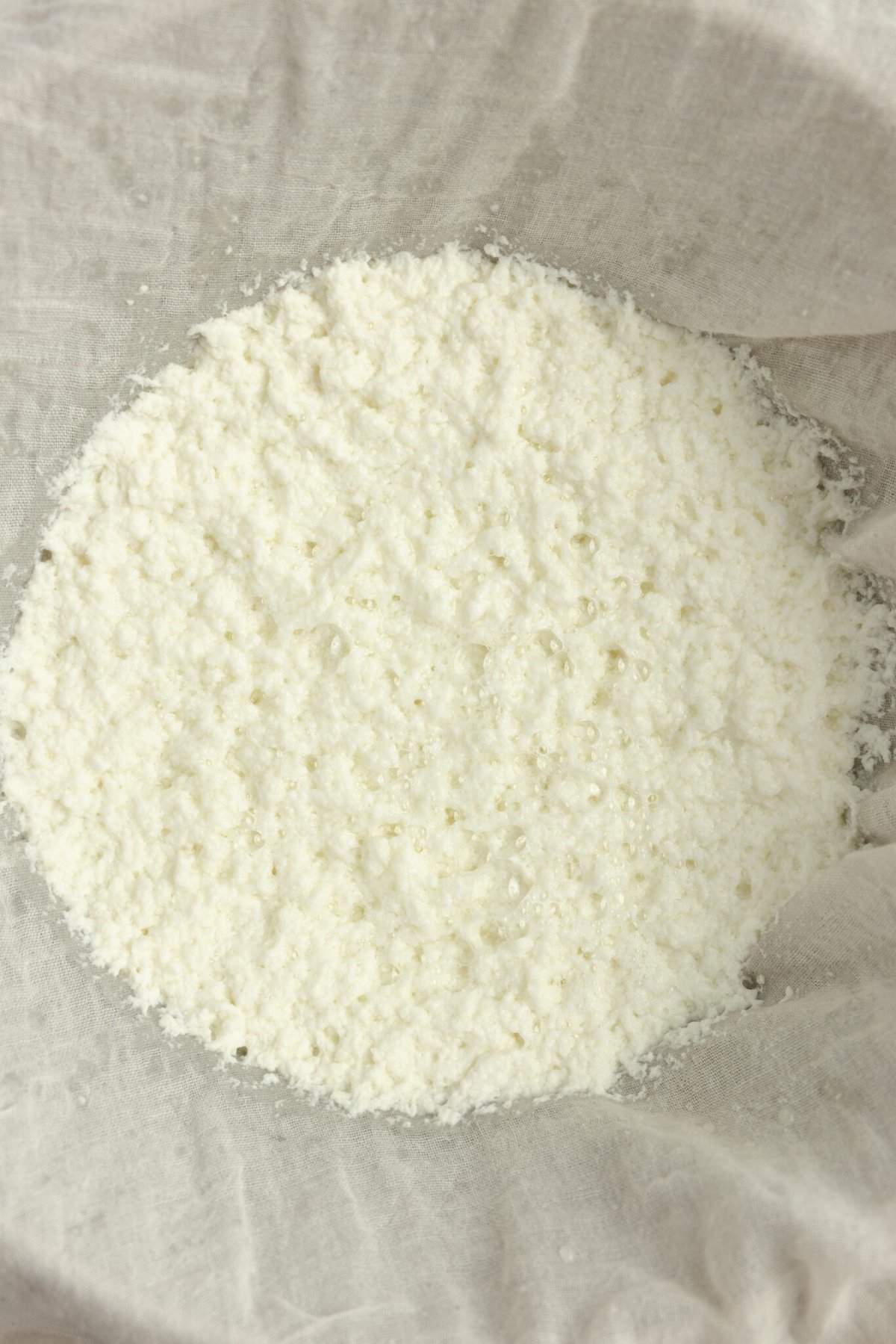
Step 3: Strain the curds through some cheesecloth or a tea towel positioned over a large bowl to catch the whey. Place the curds into a bowl with a lid or plastic wrap and refrigerate for 2 hours. Store the whey in the fridge for use in other recipes!
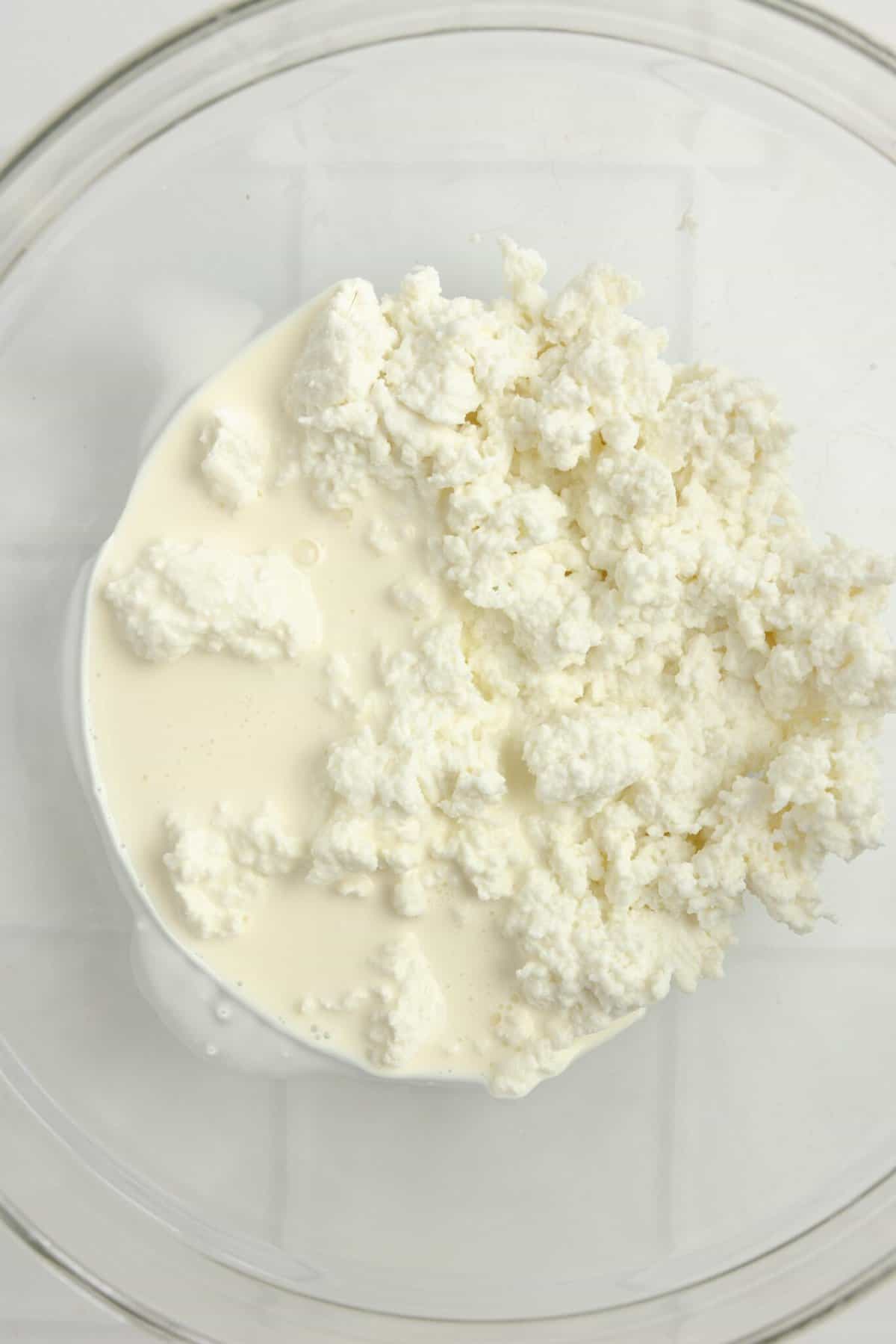
Step 4: Once chilled, gently break up the curds and mix with ¼ cup of heavy cream. For a smaller curd, break it up a little more, and for a creamier consistency, add another ¼ cup of cream. Serve cold.
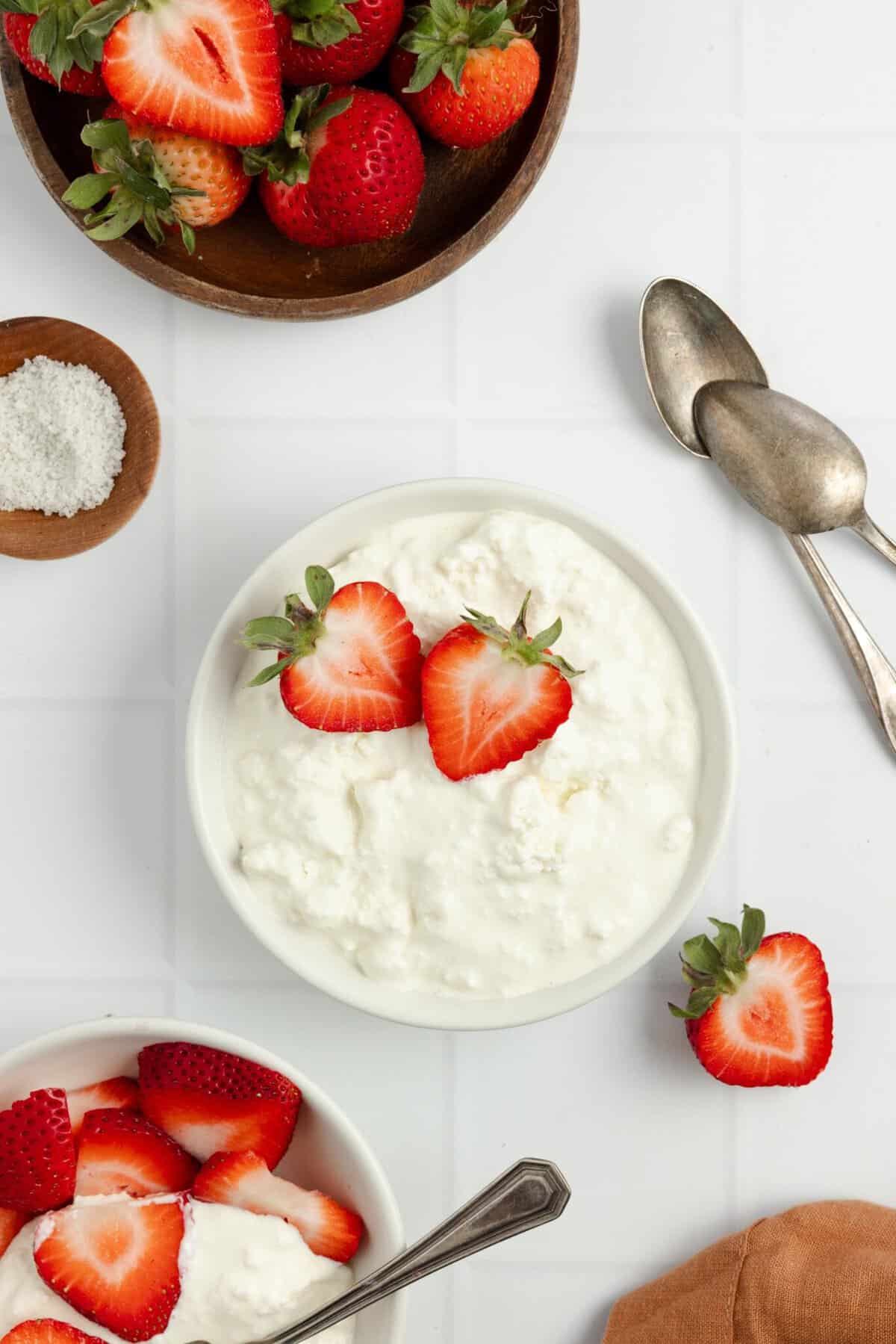
How To Serve Cottage Cheese
- Cottage cheese is a great protein-packed snack that can be served with fresh fruit, fermented blueberries, strawberry jam, honey, nuts, or seeds.
- Make it savory and top it with chopped veggies like avocado, sweet peppers, or cucumber, or add crumbled bacon, fermented salsa, pico de gallo, or fermented hot sauce.
- Use cottage cheese in place of ricotta in lasagna, or add it to other pasta dishes for added creaminess, texture, and richness.
- Add fresh herbs and spices to make a healthy veggie dip.
How to Use Up Leftover Whey
When making cottage cheese, you’ll inevitably end up with quite a bit of liquid whey. If you’re wondering what on earth to do with all the excess liquid, here are some suggestions!
- Replace the water with whey in sourdough discard English muffins, beginner’s sourdough bread or Pullman bread.
- Add it to soups like this homestyle chicken noodle soup.
- Use it in smoothies like this very berry kefir smoothie.
Tips
- Bring the milk to temperature, but be careful not to boil or heat it too quickly as this can impact the strength of the curds.
- Don’t use ultra-heat processed milk.
- As an added step, you can gently rinse the strained curds with cold water to make them less sour before adding the cream.
- Strain well to end up with firm curds. You can squeeze the cottage cheese inside the cheesecloth or tea towel to remove even more liquid.
- When storing the cottage cheese in the refrigerator, you can place the airtight container upside down, creating an air pocket that serves as a vacuum seal to extend the freshness.
Recipe FAQs
You be the judge, but the result is fresh and delicious, and it’s not an intensive process. It’s a great way to use up extra milk or milk that is about to sour.
One gallon of milk will yield approximately 3 cups of cottage cheese.
Cow’s milk of varying fat content.
Ricotta is typically made from whey, which provides a soft but gritty texture with very small curds. Cottage cheese is made from milk, and it has more noticeable curds, giving it a looser texture.
Store cottage cheese in an airtight container in the fridge for up to a week. Monitor for any developing sour smells or discoloration to determine the freshness. Cottage cheese does not freeze well, so that is not recommended. It develops a less pleasant, gritty texture.
More Sourdough Recipes from the Farmhouse
- Homemade Ricotta Cheese
- How to Make Kefir Cheese
- How to Make Sour Cream from Raw Milk
- The Best Homemade Cream Cheese
- How to Make Yogurt in the Instant Pot
- Farmer’s Cheese
If you try this recipe and love it, I would love it if you could come back and give it 5 stars! Tag me on Instagram @farmhouseonboone.

Cottage Cheese
Equipment
Ingredients
- 6 cups whole milk
- ⅓ cup white vinegar
- 1 tsp salt
- ¼-½ cup heavy cream
Instructions
- Pour the milk into a large pot over medium heat. Stir often so the bottom doesn’t scald and the heat is dispersed. Heat slowly until it begins to simmer or reaches 185 degrees Fahrenheit. It will be frothy but should not boil.
- Add the vinegar and salt to the milk. Stir, then remove from the heat and let sit for 45 minutes. You will see the milk curdling.
- Strain the curds through some cheesecloth or a tea towel positioned over a large bowl to catch the whey. Place the curds into a bowl with a lid or plastic wrap and refrigerate for 2 hours.
- Once chilled, gently break up the curds and mix with ¼ cup of heavy cream. For a smaller curd, break it up a little more, and for a creamier consistency, add another ¼ cup of cream. Serve cold.
Notes
- This recipe makes approximately 1 to 1½ cups of cottage cheese.
- Bring the milk to temperature, but be careful not to boil or heat it too quickly as this can impact the strength of the curds.
- Don’t use ultra-heat processed milk.
- As an added step, you can gently rinse the strained curds with cold water to make them less sour before adding the cream.
- Strain well to end up with firm curds. You can squeeze the cottage cheese inside the cheesecloth or tea towel to remove even more liquid.
- When storing the cottage cheese in the refrigerator, you can place the airtight container upside down, creating an air pocket that serves as a vacuum seal to extend the freshness.
Nutrition
Nutrition information is automatically calculated, so should only be used as an approximation.








Will this work using a low-fat milk?
Yes, you can!
I love making things my grannies used to make… I can almost feel them with me in the kitchen. Thanks for the easy recipe.
Great recipe! s there any use for all the whey collected?
Yes! I like to use it in my fermented lemonade probiotic drink.
Can i just use a toaster oven on reheat at 185 degrees, and stir about every 10 min?
I’m curious, what is the purpose of heating the milk up? Will it effect the recipe if it’s not heated up? I will be using our raw milk and would love to be able to keep all the goodness from it but will the recipe still work?
It helps the milk proteins to coagulate and form the cottage cheese curds.
If I use the whey in other recipes like pancakes, will the vinegar taste be overpowering?
It could give them a more tart flavor!
Hi, I just love what you are doing with and for your family; keep it up, and God will surely bless you all. I do have a question, though, in step #3 of the cottage cheese recipe, you don’t mention how long you drain the milk curds, and it was not clear to me if you do it on the counter and then into the refrigerator or the whole process of draining in the refrigerator? I hope this is clearer than mud, but I just needed to ask.
Thank you,
Brenda
It’s wonderfully rich and creamy but I’m getting a smell of vinegar at the beginning of each bite. Did I do something wrong? Would a less acidic vinegar work without leaving the smell? Lemon juice?
Did you leave quite a bit of whey? If so, that can make it taste more sour.
Can I use rice vinegar? I was about to make it and then I realized I don’t have white vinegar
That should be fine.
Can you make this recipe using raw goat milk?
Yes.
This is, hands down, one of the easiest and most delicious recipes ever. My family loves that the cottage cheese is so wholesome without nasty additives. Thanks so much Lisa!