

Learn how to season cast iron, cook with it, plus tips for cleaning. This is my favorite kitchen tool and with proper care, it will be yours as well for years of use.
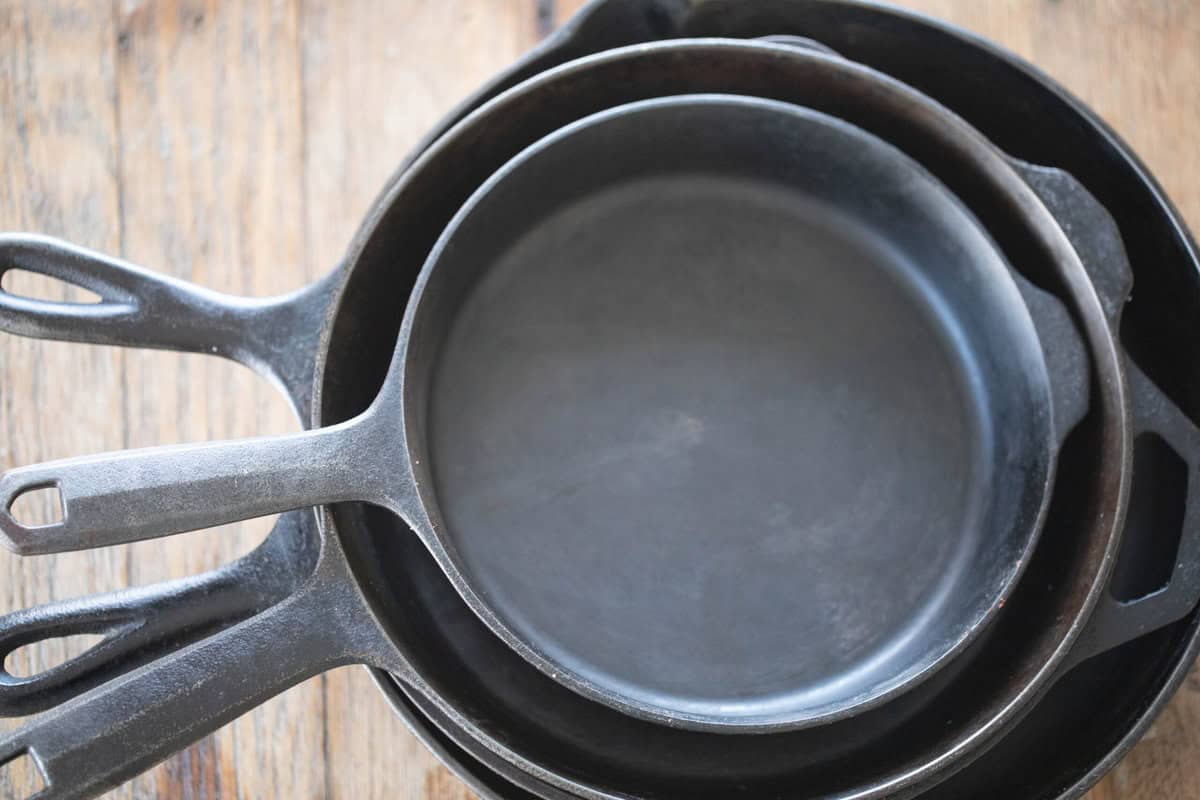
Cast iron has been my skillet of choice for many years now. I seasoned my skillets when I first bought them years ago and haven’t had to repeat the initial seasoning process since. With proper care, a well-seasoned pan will last for forever. It is a kitchen essential and so worth learning how to use.
Getting your first new cast iron pan and learning how to season cast iron cookware can be intimidating, but the good news is, it is so simple! Follow these steps below, and before you know it you will be making delicious dishes that are definitely elevated when cooked in cast iron. You’ll also be able to enjoy the benefits of an easy-release cooking surface that is non toxic to use.
From making sourdough discard cinnamon rolls for breakfast, smothered pork steaks for dinner, and sourdough cherry cobbler for dessert, the recipes you can make with cast iron are endless!
There is a bit of a learning curve with cast-iron cookware, but once you get the hang of it you’ll never go back! I promise.
Why You’ll Love Cast Iron
Healthier – Reason #1, of course, is it doesn’t have all the bad stuff. Nonstick pans are coated with a carcinogenic chemical called perfluorooctanoic acid.
Not only does it leech into the food when cooked at high temperatures, but also produces toxic fumes in the air. Although the health concerns with nonstick were what drew me to using cast iron in the first place, the ease and beauty with which they cook kept me coming back for more.
Non-Stick – Well seasoned cast iron pans are wonderfully non-stick and with proper care they will stay that way. Even if you make something a little sticky, it usually doesn’t take too much work to get them non-stick again.
Long lasting – It is nearly impossible to break a cast iron skillet. Sure it may need to be re-seasoned, but otherwise they will last nearly forever and can even be passed down from generation to generation.
How to Season Cast Iron
Step 1: Scrub cast iron with hot soapy water (making sure to use a gentle dish soap) to get off any rust, if there is any. A stainless steel scrubber is very handy for this.
Step 2: Dry well with a towel.
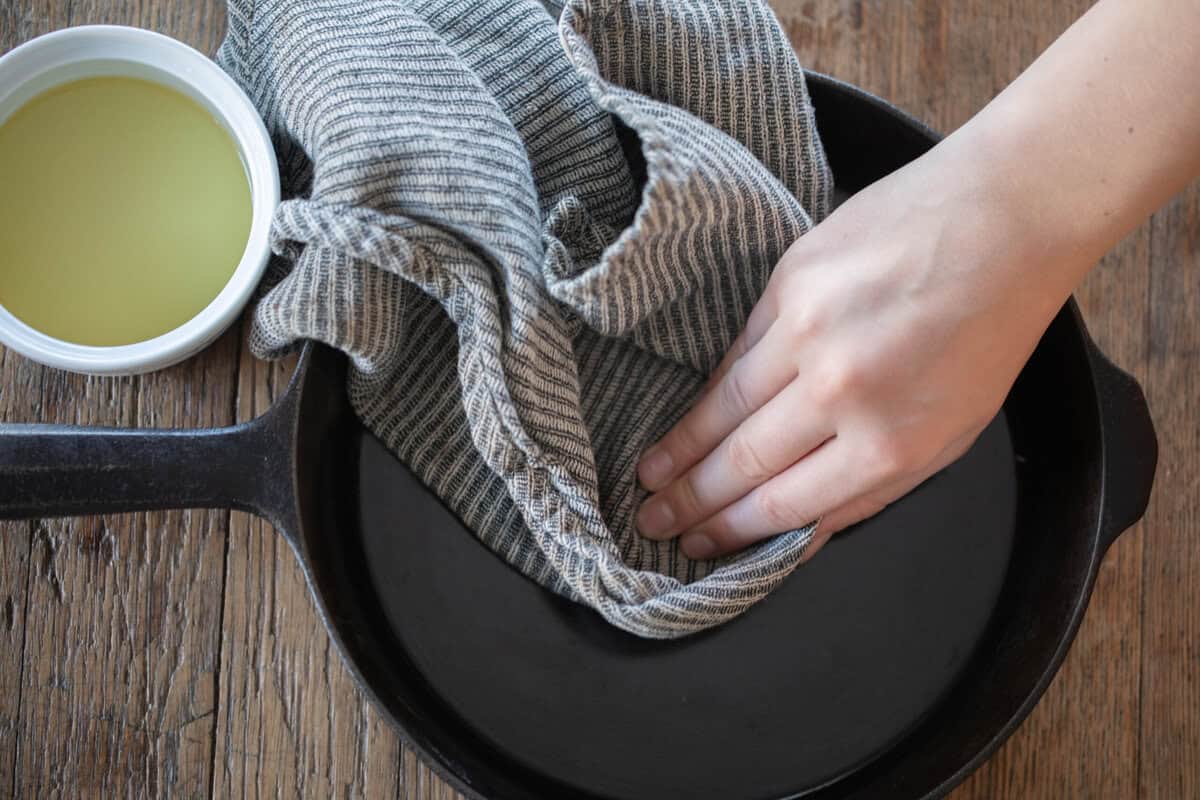
Step 3: Lightly coat the cast iron with a thin layer of oil, making sure to use a high smoke point oil. High smoke point oils can withstand very high temperatures without burning. I like to use avocado oil, coconut oil, or lard. Some other cooking oil options that will work are canola oil, grapeseed oil, and sunflower oil. You can also make and use some of my DIY cast iron seasoning oil.
Step 4: Cover the bottom, top, handle, and every part of the skillet with the oil.
Step 5: Wipe off the excess oil with a dry rag.
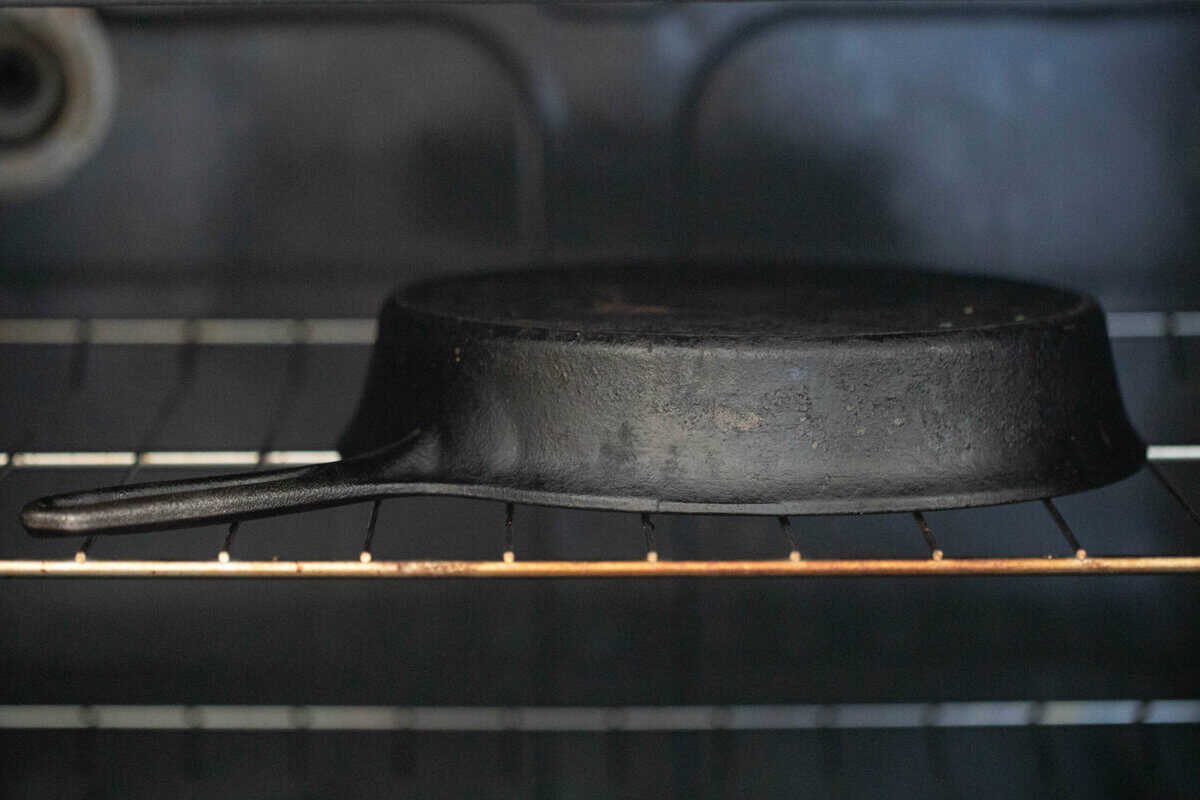
Step 6: Place the pan upside down in a 450 degree oven for an hour.
Step 7: Repeat until it has a black shiny luster, if necessary.
How to Cook with Cast Iron
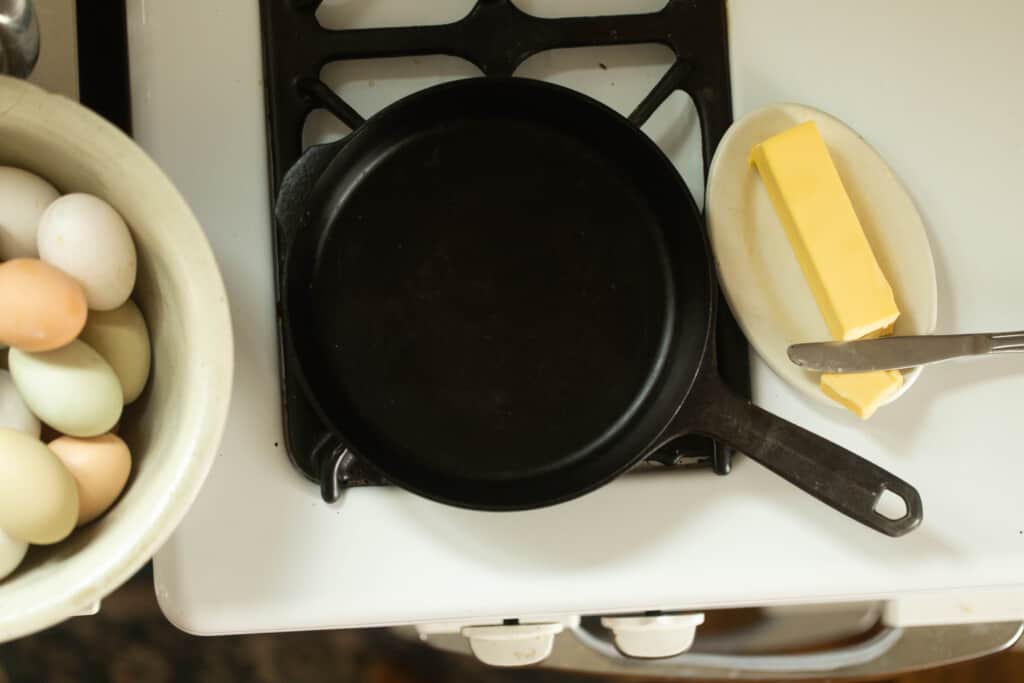
Step 1: Preheat skillet. The biggest key to successful cast iron cooking is preheating. Never drop food into a cold cast iron skillet or you will end up with stuck-on foods to clean off.
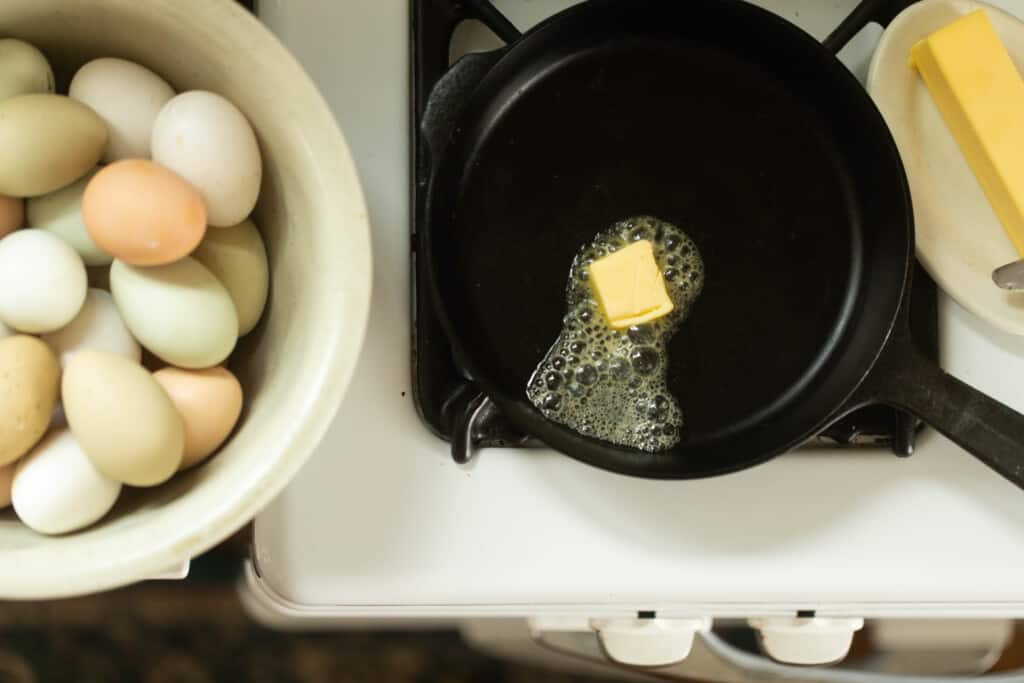
Step 2: Add a little bit of fat whether it be butter, oil, lard or tallow, etc.
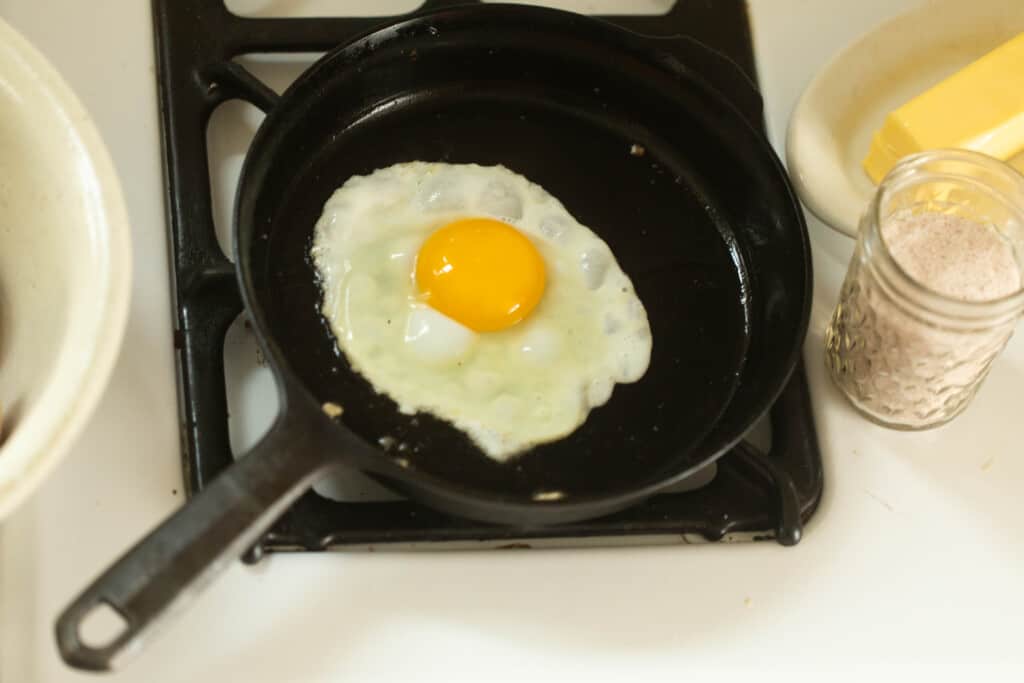
Step 3: Add your food and cook. That simple. Flip and stir as little as possible, allowing the food to release from the bottom of the pan when it is cooked fully.
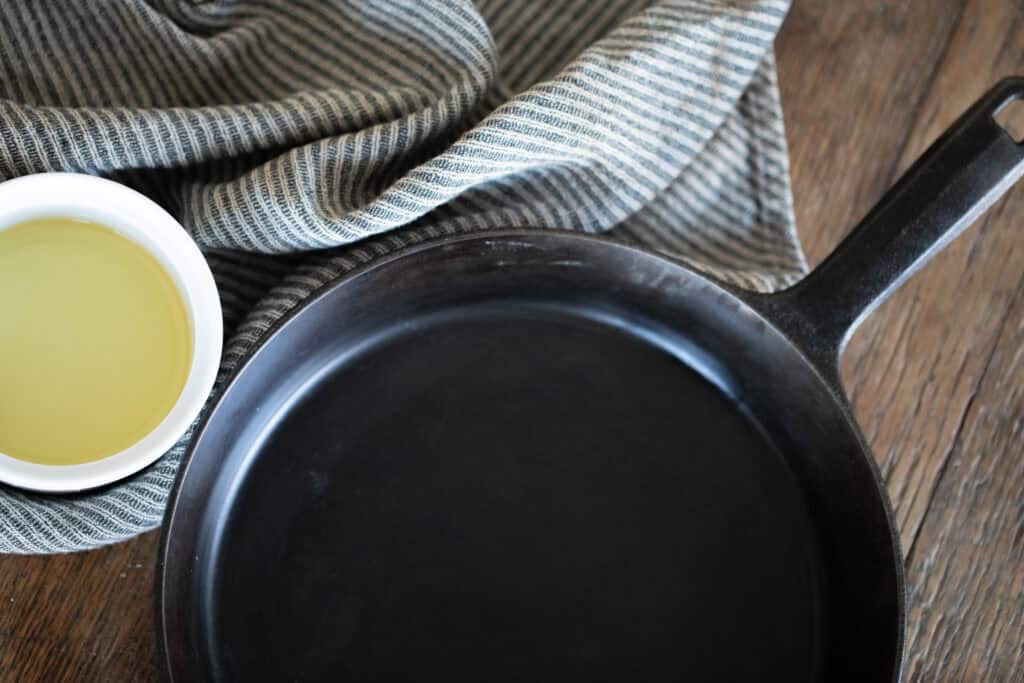
Step 4: After cooking, follow the how to clean cast iron directions below.
Watch me cook over-easy eggs in the video below to see how cast iron can truly be a non-stick surface.
How to Clean Cast Iron
Cast iron is naturally nonstick when seasoned properly. If nothing is sticking to the pan, you can simply wipe it out with a paper towel until the next use.
If something gets really stuck on, remove it with a little warm water and a stainless steel scrubber.
Avoid using soap if possible, however using a gentle dish soap if you need to is ok and should not harm your seasoning.
Use a tea towel to wipe off any excess water. The pan should be completely dry before putting it away. Make sure every part of the pan is dried thoroughly and store them in a dry place.
Things to Make With Cast Iron
Foods that need to be steamed or boiled are not the best choice to cook with cast iron. I still like to make steamed carrots, broccoli, and green beans in my stainless steel pots with a lid. Also, I prefer stainless steel for soups and stews.
Foods that are cooked in fat, or have a decent fat content in them, are excellent for cast iron cooking.
- Bread items: such as sourdough pancakes, sourdough English muffins, pizza, sourdough donuts
- Meats: like this creamy chicken and mushroom pasta, garlic butter pork chops, and round steak with caramelized onions and mushrooms
- Sautéed veggies
- Stir fry
- Sunny side up eggs
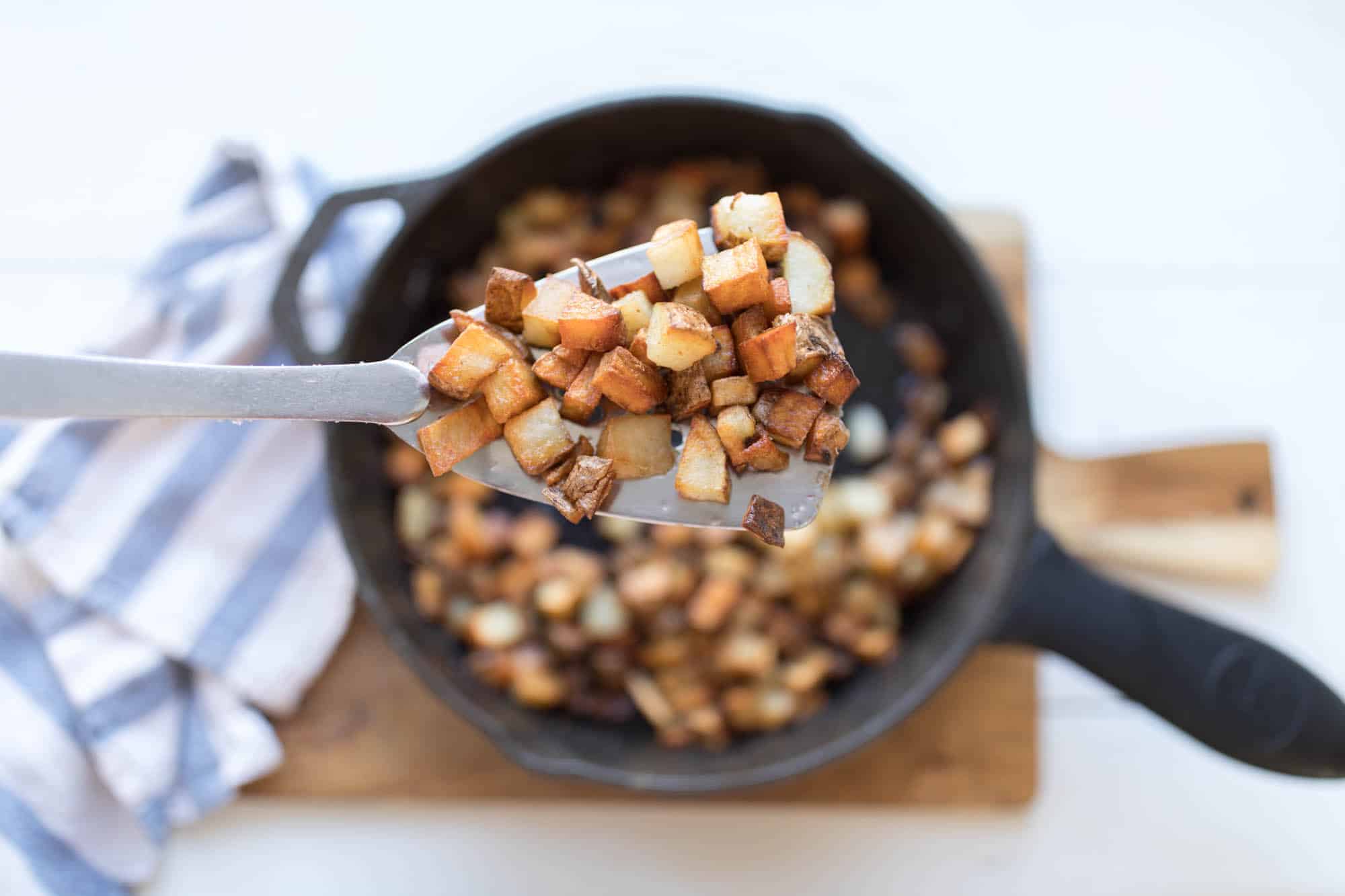
- Fried potatoes
- Roasts
- Desserts: cobblers like blueberry, cherry, pumpkin, and so much more.
- French toast casserole
- Skillets: chicken pot pie, shepherd’s pie, sourdough skillets, etc.
Cast Iron FAQs
Cast iron can scratch a glass-top stove.
There is also concern that a hot cast iron pan could cause the cold glass top to shatter, because the skillet holds so much heat. Cast iron is extremely heavy, so if it is dropped on the glass-top it might break.
All that aside, I used to cook with cast iron on a glass stove top daily in our old house, and did for many years. I never had a problem.
I put the question out on my Facebook and Instagram page, and it seems all my die hard cast iron fans pay no mind to such suggestions.
No one reported a problem. So, although technically cast iron on a glass cook top is a no-no, you will likely suffer no consequence, should you decide to be a rebel like me.
You want to choose an oil that has a high smoke point. Coconut, avocado, and lard (if using frequently) are the healthiest options, but almost any cooking oil will work. See post above in the how to season cast iron section for more oil options that are good choices.
What happens if you don’t season cast iron?
If you do not season cast iron you will be left with a porous surface that is not non-stick. This will make the pan hard to clean and may make the pan rust. It is very important to season new cast iron skillets and continue to build up its seasoning over time.
A little bit of rust on cast iron is ok and can usually be scrubbed and cleaned off of the surface and then re-seasoned. Make sure to avoid practices like leaving your cast iron wet and letting it soak to avoid more serious rust issues. Always dry cast iron immediately and store it in a dry area free from moisture.







My cast iron skillets sometimes look dull and don’t have that shine. That’s why I re-coat it with coconut oil. Maybe following your guidelines will change the surface. Thanks for a great video!!
Hi Lisa, Somehow I missed you naming your new baby and hope you will share his name with me. I also what to tell you how much I admire you and your family. It has brought many good memories back to me growing up in a large family. Watching your Christmas video I was thinking about your extention cord. Would it be possible to attach it over the woodwork of the door frame? Just an idea for next year…..
Thank you! Our new baby’s name is Theo. 🙂
This is such great info!! Thank you! Question. How do you know if you need to re-season it? Just if food is sticking to it?
Yes! That is the only reason I would re-season.
Love how this tutorial went I am always concerned that if I leave my cast iron out it will not be clean.
..so you have put this to rest for me! Thank you so much
I really enjoy your videos & FB posts. I wish I was younger & information like yours was available to me as a new wife & homemaker. Keep posting!!
both of my pans did not come out with that satin shimmer that i see on your pans, more dull
one was rusty,I stored it wrong. I scrubbed with soapy water and steelwool a few times
then coco oil , wiped off and 1 hour at 450
it looks okay, but a bit dull, not like yours
the other one, a grill pan, had no rust, I washed it quickly, dried it, oiled it all over, but it came out with rusty film, after seasoning for 1 hour at 450
Also my kitchen was smoky
cant do this with family around
What do you do about cleaning if the flavor of something you’re making clashes with the flavor of the last thing you cooked? Like, cooking fish one meal and pancakes the next? Do you still let it be and only scrape off remainders in between cooking each meal?
Love this! So helpful! What do you use for cooking scrambled eggs?
Love this! So helpful! What do you use for cooking scrambled eggs?
I have since gotten better at making scrambled eggs with cast iron, so that’s what I use!
Hi,
Great post. Thank you. What if… my CIS already has rust on it? I did use soap and water to clean it… Can the rust be removed before seasoning?