



These fluffy, buttery sourdough biscuits are made with leftover sourdough discard, giving them a hearty flavor and tender texture. They can be made quickly for an easy breakfast, or long-fermented for added flavor and sourdough benefits.
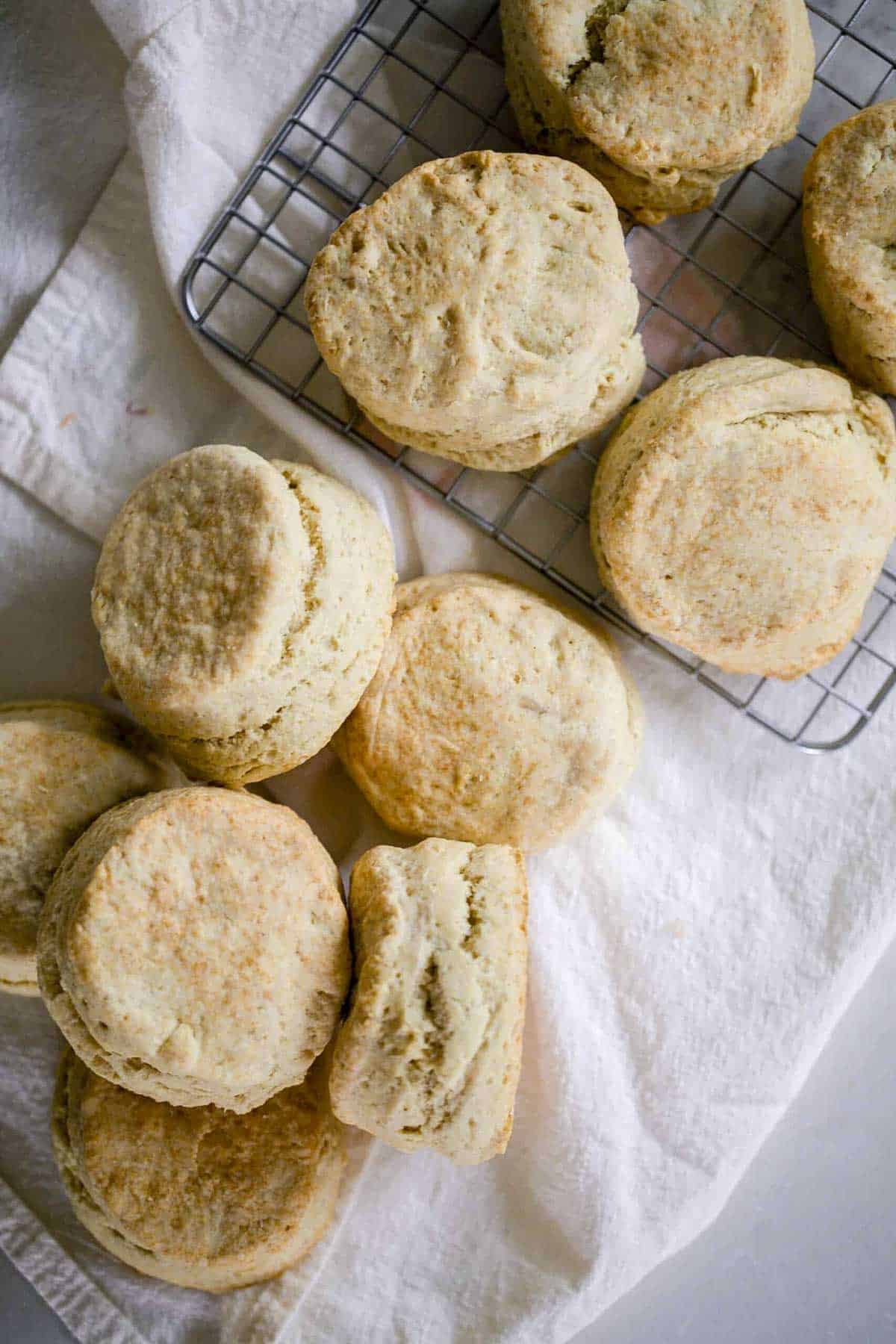
Homemade sourdough biscuits effortlessly pair with any meal. Served with sausage gravy, they are a popular main dish for breakfast; sliced in half, they make the best egg and bacon breakfast sandwiches. Spread them with butter and homemade strawberry jam for a versatile side dish. They can even be topped with sweetened whipped cream and fresh fruit for dessert, just like this sourdough peach cobbler.
When made with sourdough discard and baked right away, these biscuits are quick and easy, while still offering great taste, texture, and nutrition from the addition of the fermented sourdough.
The long-fermented version follows a very similar process but ferments overnight before adding the leaveners. This fermentation time improves the digestion of the grains and makes the nutrients more bioavailable, yielding tender biscuits with deep flavor and lots of sourdough tang.
There’s nothing better than rustic, golden biscuits in a cast-iron skillet, which just happens to be one of my favorite sourdough baking tools.
Why You’ll Love This Recipe
Flavor and texture – You’ll enjoy the distinct tangy flavor of sourdough alongside the buttery and tender texture of these soft, flaky sourdough biscuits.
Better nutrition – The fermentation time provides benefits to your gut health with prebiotics, which feed your probiotics, facilitating a healthier gut microbiome. The process also frees up nutrients in the grains by breaking down phytic acid, resulting in more nutritious biscuits.
Simple and quick – An easy recipe made with simple ingredients, these fluffy biscuits have the best flavor and can be ready in about half an hour. They are also a great way to use up extra sourdough discard!
Ingredients
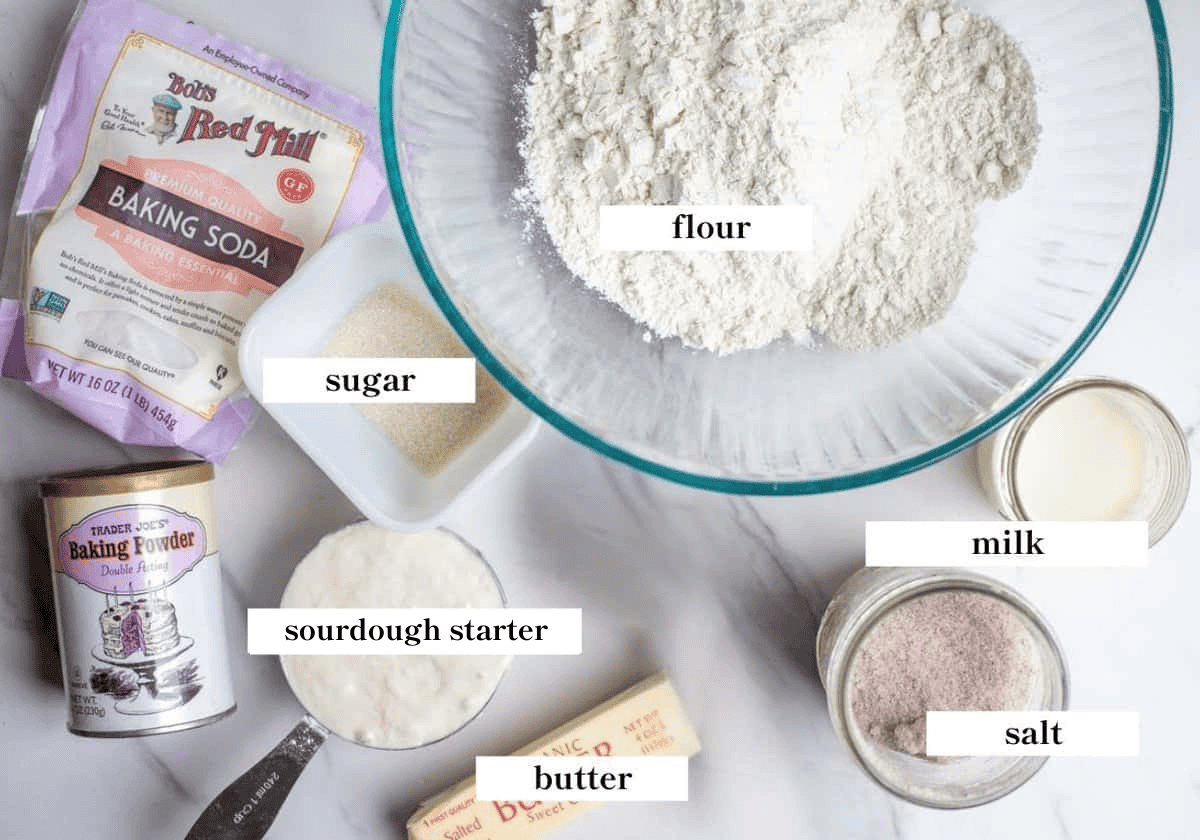
Flour – I use freshly milled whole wheat white flour, but you can use all-purpose flour.
Cold butter – Cold butter is much easier to work with.
Sourdough discard – For this recipe, you can use an active sourdough starter or discard. Discard will add more sourdough flavor than fed starter.
Baking powder and baking soda – Even though these are sourdough biscuits, there is no kneading like bread, so there is less gluten formation, and in return, less natural rise. The rise comes from these added leavening agents.
Milk or buttermilk – Buttermilk adds another depth of tanginess, but milk also works great.
A full ingredient list with exact amounts can be found in the recipe card below.
How to Make Sourdough Biscuits
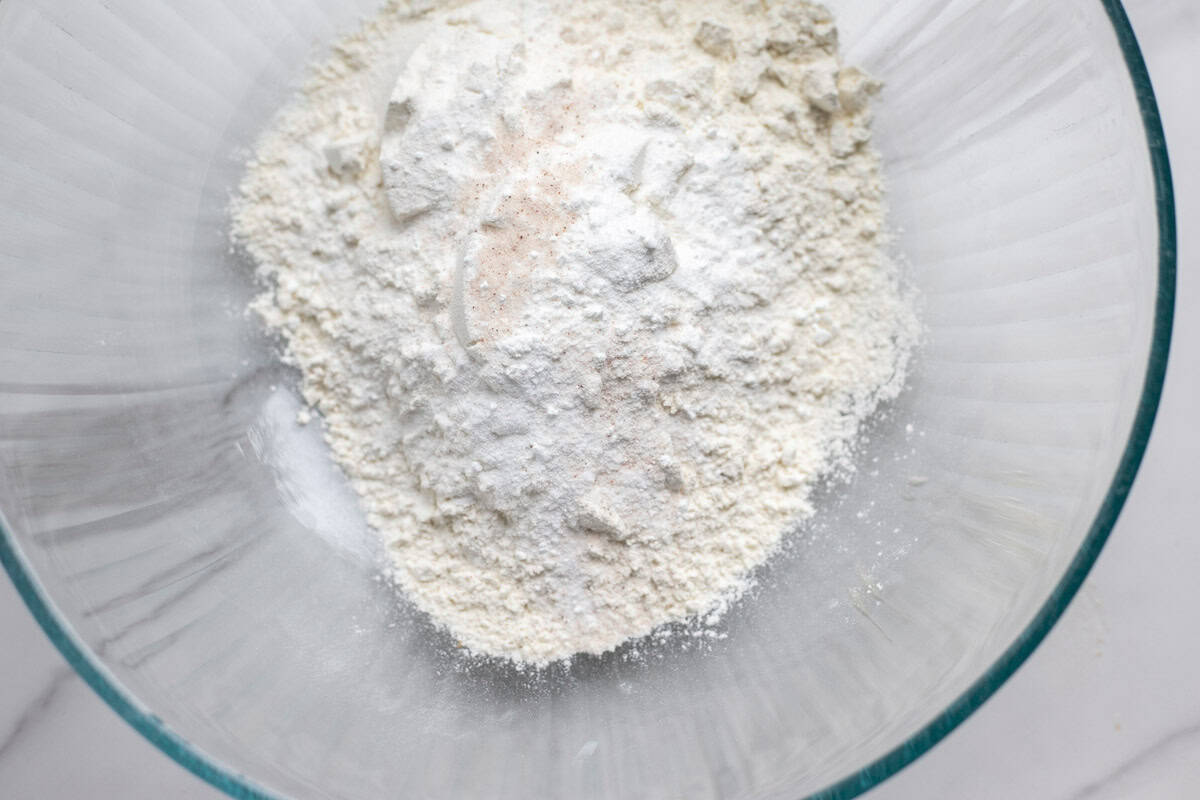
Step 1: Preheat the oven to 400° Fahrenheit. Add flour, baking powder, baking soda, sugar, and salt to a large mixing bowl and combine.
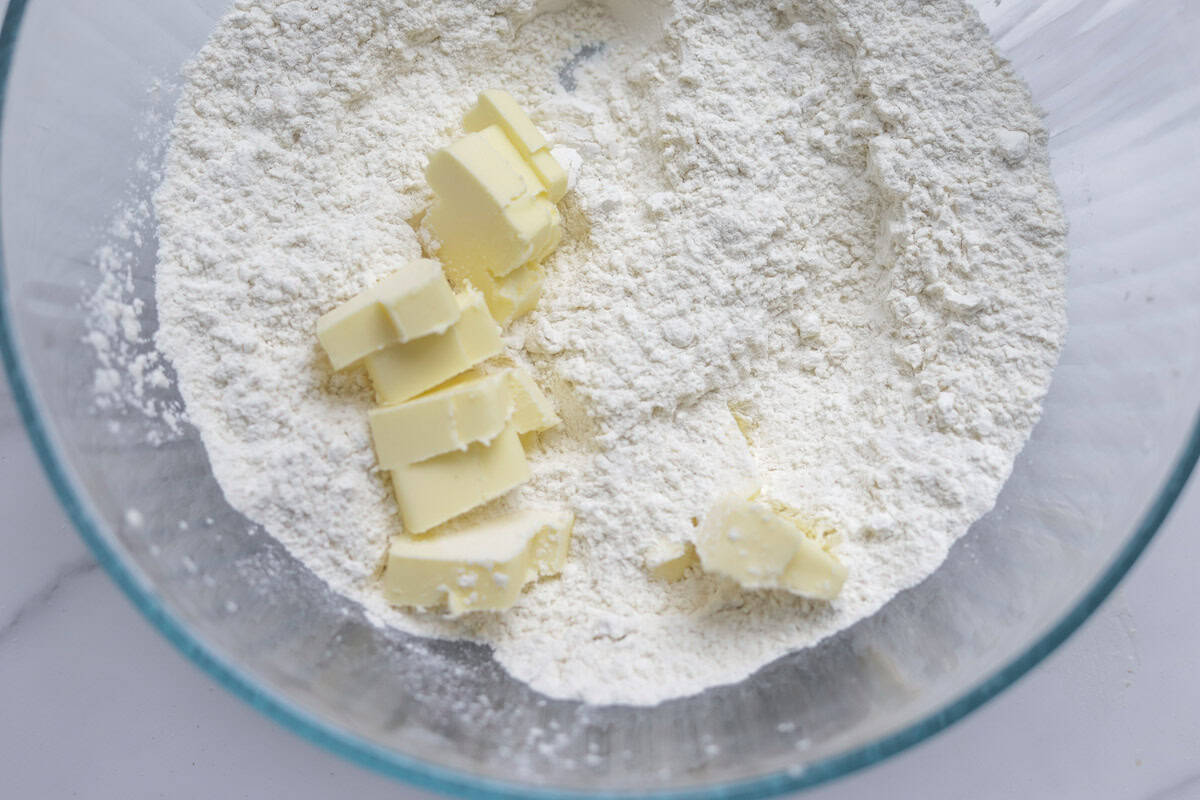
Step 2: Chop the cold butter into chunks and add it to the flour mixture. Cut with a pastry cutter until the butter resembles coarse crumbs.
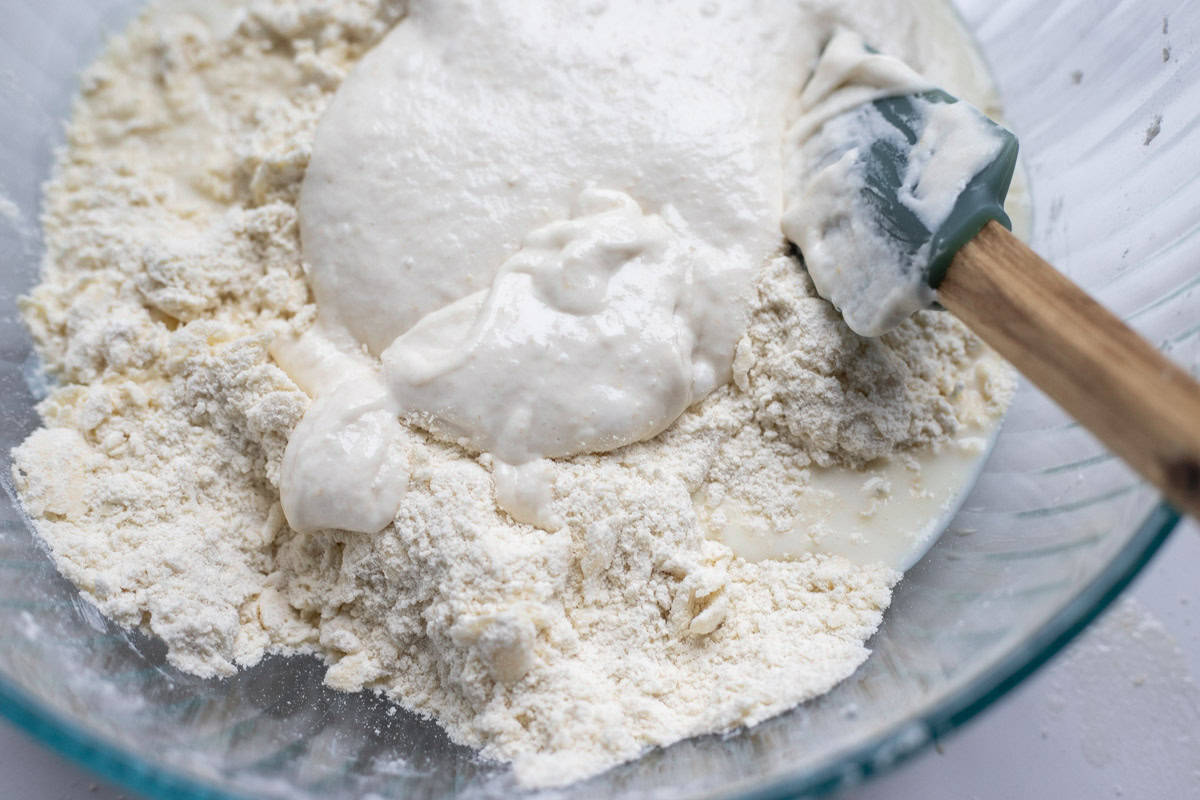
Step 3: Add sourdough discard and buttermilk, stirring until the ingredients are incorporated.
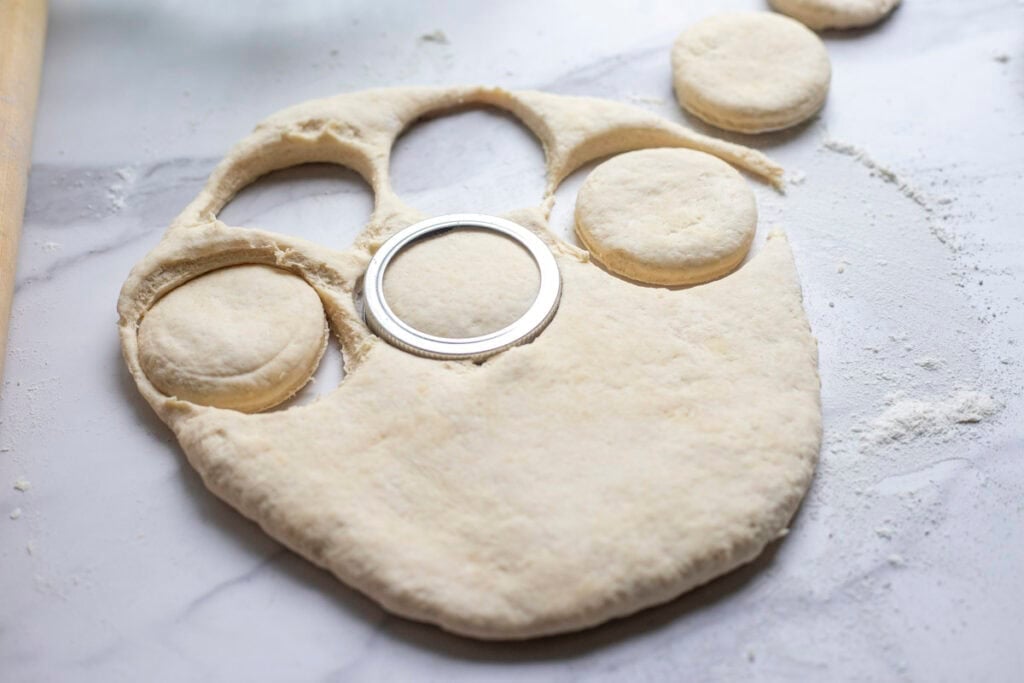
Step 4: Transfer the dough to a lightly floured surface, rolling it out to about 3/4 to 1 inch thick. Cut out the biscuits using a biscuit cutter or even the rim of a glass. Gather biscuit dough scraps together and roll out again, continuing until all the dough is cut into biscuits.
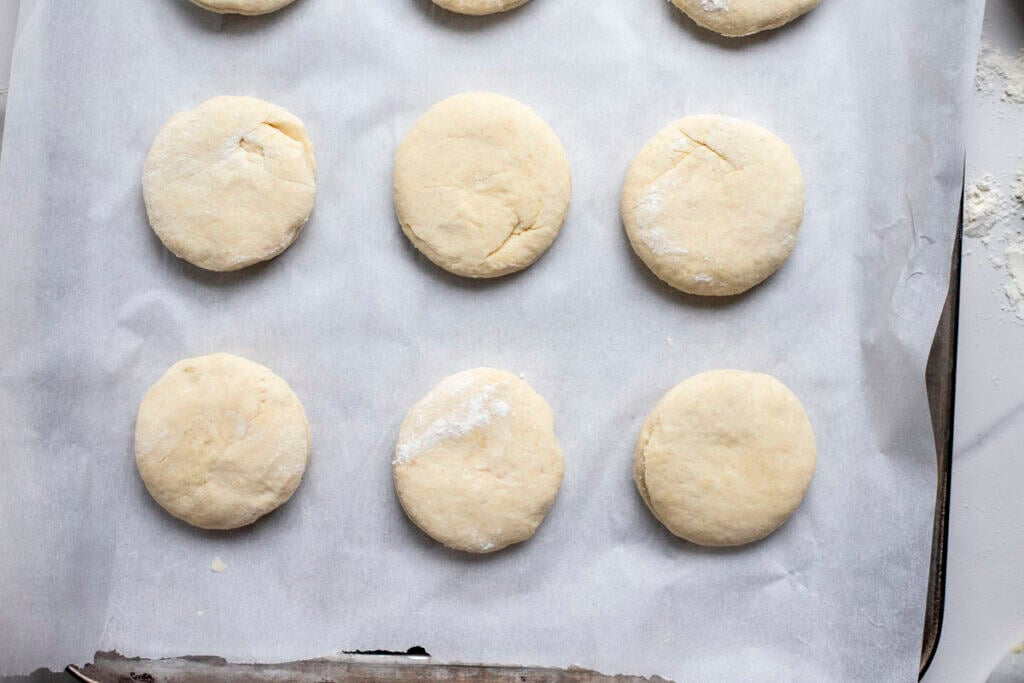
Step 5: Place the cut biscuits onto a well-seasoned cast-iron skillet, a baking sheet lined with parchment paper, or a greased glass baking dish.
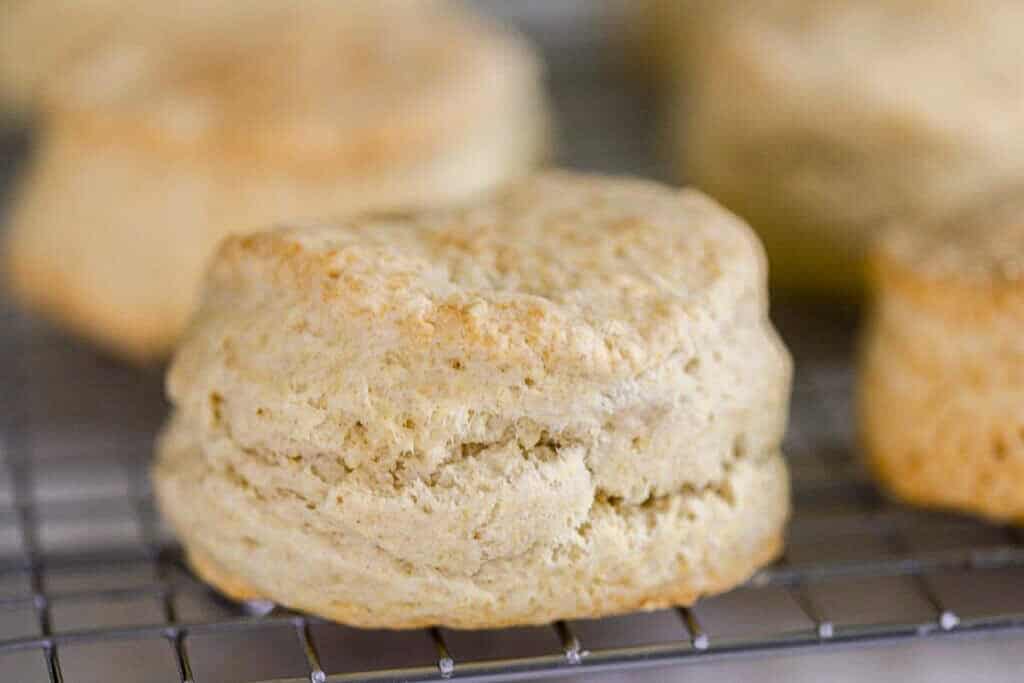
Step 6: Bake for 14 to 20 minutes until the edges start to turn golden brown.
Long-fermented Sourdough Biscuits
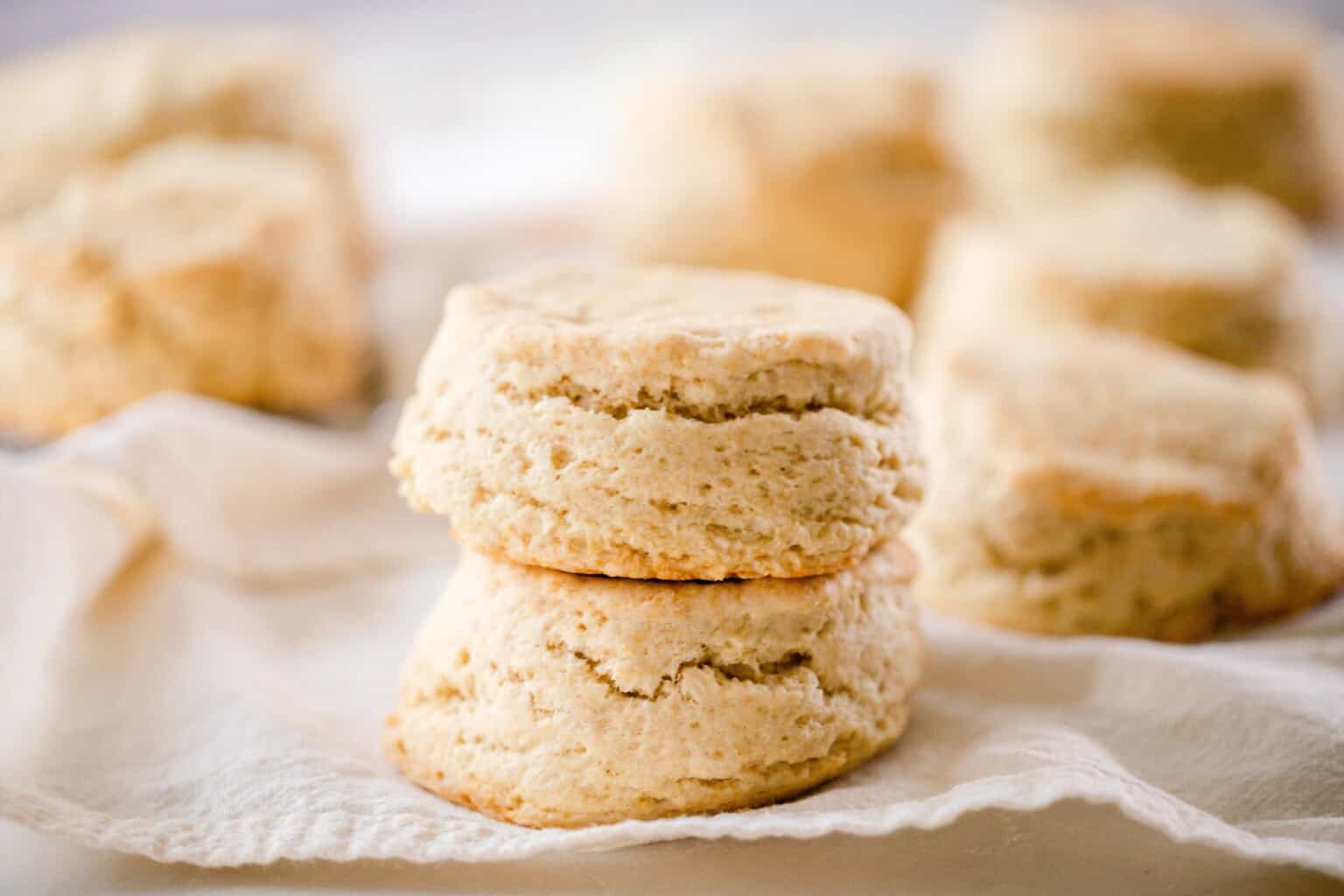
Step 1: Add flour and sugar to a large mixing bowl and stir. Chop cold butter into cubes and add to the flour, cutting with a pastry blender until the butter resembles coarse crumbs.
Step 2: Add the sourdough discard and buttermilk, stirring until just combined.
Step 3: Cover the bowl with a tight lid (i.e. plastic wrap, lid, beeswax wrap) and place it into the fridge for 24 hours. For best digestion, I recommend three days.
Step 4: The next day, sprinkle baking powder, baking soda, and salt over the top of the fermented dough. Incorporate well.
Step 5: On a lightly floured work surface, roll the dough out to about 3/4 to 1 inch thick and cut out the biscuits. Cut out as many as you can, then gather the scraps and roll them out again. Continue this process until all the dough has been cut into biscuits.
Step 6: Place the biscuits into the prepared cast-iron skillet or baking sheet. Space them out if you’d like to keep them separated, as they will expand while baking. You can also keep them close together, and they can just be pulled apart after baking, which will keep the sides softer.
Step 7: Preheat the oven to 400° Fahrenheit.
Step 8: Bake biscuits for 14 to 20 minutes or until golden.
Tips
- If you have a gluten sensitivity, aim to ferment these biscuits for 24 hours.
- Incorporate cold butter with a pastry cutter, cheese grater, a couple of forks, or even your hands.
- This recipe can use an active starter or discard, and fermentation is optional.
- Cut your biscuits using a biscuit cutter, mason jar, cookie cutter, or anything round. You could also cut them into squares.
- A bench scraper is helpful for transferring the cut biscuits to the baking sheet if they are sticking.
- Add a cup of shredded cheese and some garlic powder to the dough and brush the tops of the biscuits with garlic butter for a savory, cheddar biscuit.
Recipe FAQs
Cooled biscuits can be stored in an airtight container at room temperature for a couple of days, or refrigerated for about a week. Biscuits can also be frozen in a freezer-safe bag or container for up to 3 months. Thaw at room temperature or gently reheat in the oven.
Flat biscuits are often the result of old baking powder and/or baking soda. If these ingredients are not fresh, then they may not provide a good rise. Biscuits can also be flat if the dough is overworked or the oven is not hot enough.
To add more of that delicious sourdough tang, ferment the dough longer. Making a quick biscuit will only give you a slightly sour flavor, while long fermenting the grains (12-24 hours) in a warm spot gives the wild yeast time to ferment the flour and develop that flavor.
Discard can be kept in the fridge for anywhere from one week to several months. Discard still needs to be fed occasionally to keep it from spoiling. If there are signs of mold in your discard, throw it out. For more information, I have a post all about sourdough discard.
Sourdough is so special because not only does it make the grains easier to digest, but it is also more nutritious than non-fermented grains. This is due to grains containing phytic acid, which prevents nutrient absorption. During the fermentation process, phytic acid breaks down, making the nutrients more bioavailable.
More Sourdough Recipes from the Farmhouse
- Sourdough Beignets
- Sourdough English Muffins
- Quick Sourdough Discard Cinnamon Rolls
- Sourdough Coffee Cake
- Sourdough Granola
If you try this recipe and love it, I would love it if you could come back and give it 5 stars! Tag me on Instagram @farmhouseonboone.

Sourdough Biscuits
Ingredients
- 2 cups all purpose flour, 280 grams
- 2 teaspoons baking powder, 8 grams
- 1 teaspoon baking soda, 4 grams
- 1 tablespoon sugar, 12 grams
- 3/4 teaspoon salt, 4 grams
- 8 tablespoons cold butter, 113 grams, cut into chunks
- 1 cup sourdough discard, 250 grams
- 1/2 cup milk or buttermilk*, 122 grams, You can also use water
Instructions
QUICK
- Preheat the oven to 400° Fahrenheit. Add flour, baking powder, baking soda, sugar, and salt to a large mixing bowl and combine.
- Chop the cold butter into chunks and add it to the flour mixture. Cut the butter in with a pastry blender.
- Add sourdough discard and buttermilk, stirring until the ingredients are incorporated.
- Transfer the dough to a lightly floured surface, rolling it out to about 3/4 to 1 inch thick. Cut out the biscuits using a biscuit cutter or even the rim of a glass.
- Place the cut biscuits onto a well-seasoned cast-iron skillet or a baking sheet lined with parchment paper.
- Bake for 14 to 20 minutes until the edges start to turn golden brown.
LONG-FERMENTED
- Add flour and sugar to a large mixing bowl and stir. Chop cold butter into cubes and add to the flour, cutting with a pastry blender.
- Add the sourdough discard and buttermilk, stirring until just combined. Place a clean tea towel or sheet of plastic wrap over the bowl and allow it to sit at room temperature for at least 8 hours and up to 24 hours.
- The next day, sprinkle baking powder, baking soda, and salt over the top of the fermented dough. Stir well.
- On a lightly floured surface, roll the dough out to about 3/4 to 1 inch thick and cut out the biscuits. Cut out as many as you can, then gather the scraps and roll them out again.
- Place the biscuits into the prepared cast-iron skillet or baking sheet. Preheat oven to 400° Fahrenheit.
- Bake biscuits for 14 to 20 minutes or until golden.
Notes
Nutrition
Nutrition information is automatically calculated, so should only be used as an approximation.







Could these biscuits be frozen after they have been rolled and cut?
Should I use a different ratio if I’m using einkorn flour?
Yes, here’s a recipe.
Would love to make with einkorn discard, but I don’t see any in the einkorn biscuit recipe that you linked to. Do you have a recipe for einkorn biscuits that uses discard as well? Many thanks!
🤩😍 Ohhh my, these biscuits were so easy to make and utterly delicious!! I made a batch for the freezer but had to try one before freezing. So perfect and tender. Thank you, Lisa!
Is it food safe to do the countertop ferment is using raw milk? How long would you let them sit out?
Yes, I usually let them sit out for about 12-24 hours.
Hi! What kind of wheat did you mill for this recipe? Is soft white wheat good?
Soft White Wheat is good!
I make these biscuits quite often. They are very good.
Delicious biscuits and easy to make. Can even eat them cold.
I did the long ferment with these… I’ve made these biscuits for her pot pie recipe and for the biscuits and gravy. They’re tasty! But I’m wondering why mine don’t look like hers… mine always come out with random dark spots all over. I’d love any input anyone might have as to why mine aren’t pretty! I’d love to have pretty biscuits!!
Hi Lydia, I have experienced the same thing, I’ve tried lowering the oven temp to 375°F and watching for when they just start to turn golden, if you wait too long they will get those dark “burnt” spots. I’m not sure why it happens, maybe it’s the sourdough? Regardless every time I make this recipe the biscuits get devoured by my family in no time 😂 they don’t seem to care about the spots at all.
Hope this helps! I’m a huge Lisa fan!
My guess is that those spots are from the butter. I get the spots too and that is what has come to me.
Wow! All I can say is wow! I have no idea how this worked the way it did… I did the long fermented version for about 20 hours with only about 15 to 20 minutes rising after incorporating the baking powder baking soda and salt. I ended up almost kneading them in and I think that process caused some beautiful lamination that I was not expecting to get. The whole concept of this recipe is so different from any biscuits I’ve ever made before, But wow, I will be making them from now on! I was also worried they would be a little bit too sour for my liking with being fermented for so long, but this is not the case at all, they were buttery, flaky, and delicious. This may be my new favorite sourdough recipe!
Good biscuits!! Makes me think of little House on the Prairie, and Ma made her biscuits this way especially during a seven month with they had to endure I one of the books
Winter I meant to put in my sentence