






With rich cream cheese icing and a cinnamon-sugar filling, these fluffy sourdough cinnamon rolls deliver tangy flavor, a tender texture, and warm, gooey sweetness.
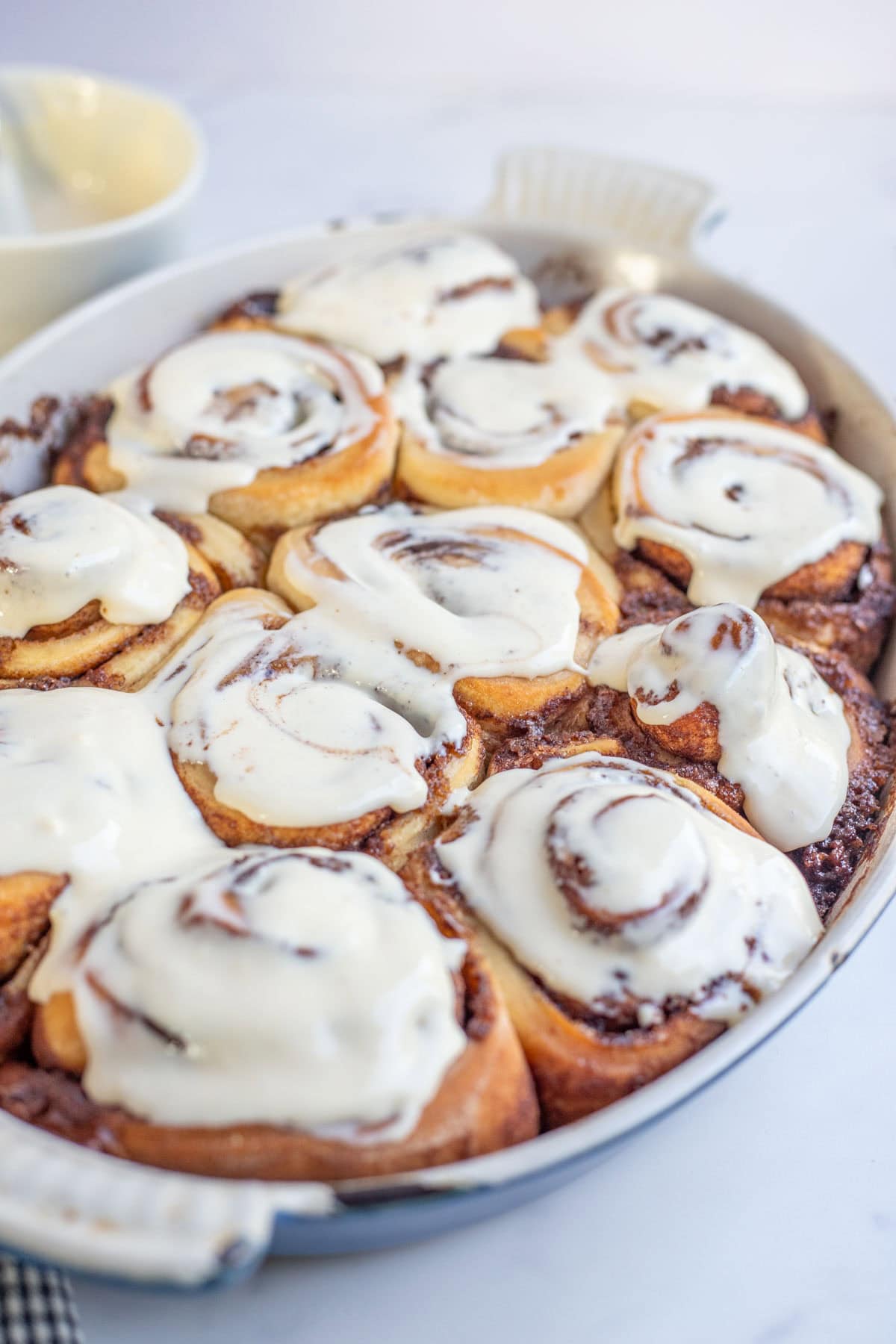
These sourdough cinnamon rolls start with healthy, fermented grains for increased digestibility, incredible texture, and extra flavor. Lightly sweetened sourdough wraps up ribbons of cinnamon sugar filling, adding the warmly spiced flavors to each bite. Baked until golden, each roll is topped with cream cheese icing, which is technically optional but highly encouraged. We enjoy this silky frosting over other sourdough recipes, like sourdough coffee cake, sourdough bread pudding, or sourdough lemon pound cake.
By mixing and fermenting most of the ingredients overnight, this recipe comes together quickly the following morning with basic pantry staples.
These easy sourdough cinnamon rolls serve well for a slow Saturday breakfast or a busy Christmas morning. Make these ahead of time, if needed! Ferment and assemble, then pop them in the refrigerator (up to 12 hours) or freezer (they’ll last months this way) to bake when you need them. Simply thaw, rise, and bake for perfectly fresh rolls!
If you are new to sourdough but enjoy the health benefits and tangy taste, make sure to check out all my sourdough recipes, including how to make your own starter.
Why You’ll Love This Recipe
Tender and sweet – These sourdough cinnamon rolls are soft and fluffy, with layers of brown sugar and cinnamon butter generously spread between the dough.
Long-fermented goodness – The overnight fermentation makes these rolls more digestible and nutritious, not to mention tender and tangy.
Perfect for special occasions – Warm, gooey cinnamon rolls with a decadent cinnamon roll icing elevate any occasion! Plus, they can be started the day before, then baked the day of.
Ingredients
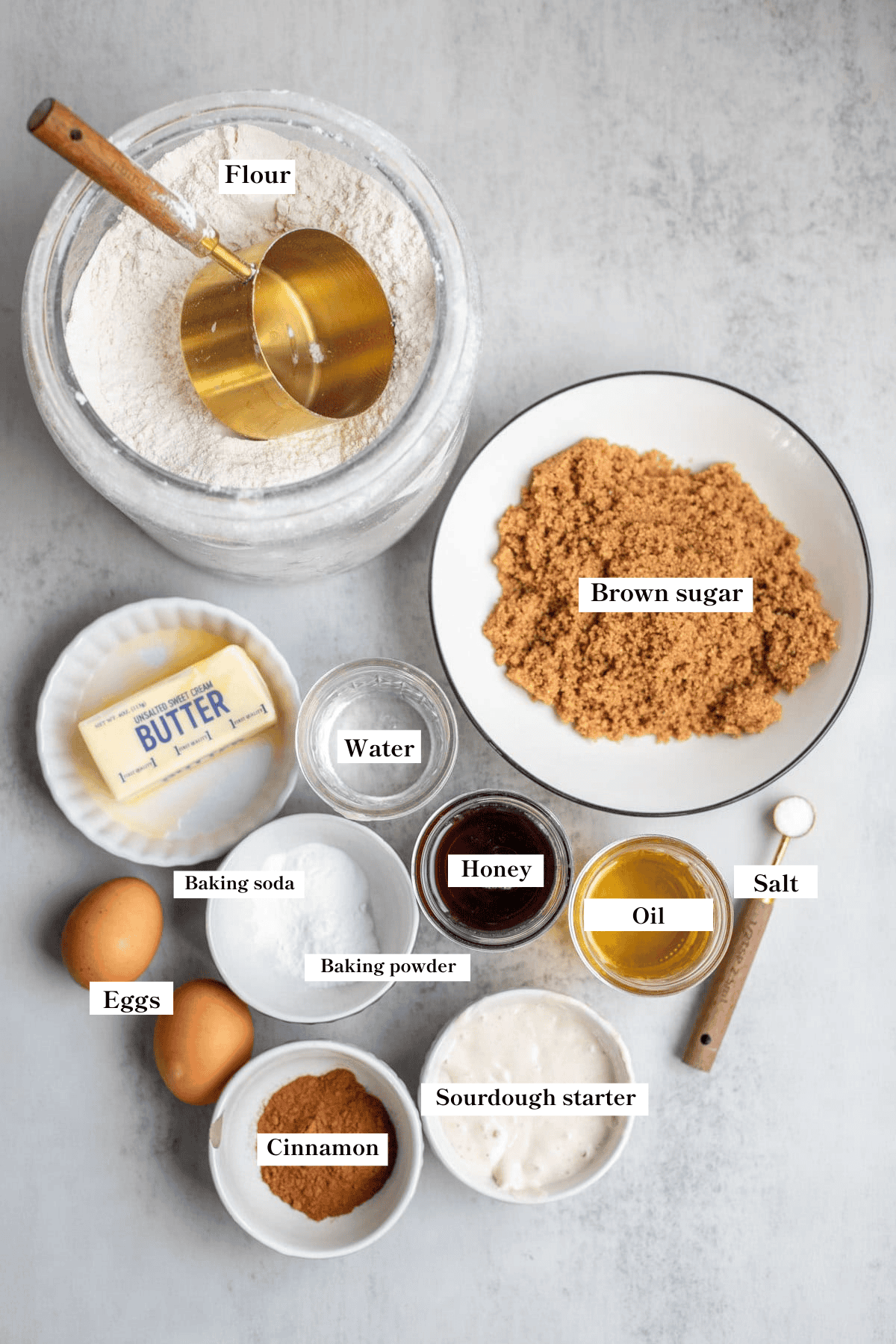
Active sourdough starter – This is a sourdough starter that has been fed 4-12 hours before starting the recipe and is nice and bubbly.
All-purpose flour – I use freshly-milled hard wheat or unbleached all-purpose flour. If you’re interested in working with whole grains, I have lots of information on the blog on milling your own flour at home.
Butter – Use very soft butter for the filling. If it’s too firm, it won’t spread well; if it’s melted, it will seep into the dough.
Oil – Use a neutral oil like avocado oil or melted coconut oil.
A full ingredient list with exact amounts can be found in the recipe card below.
Tools You May Need
Stand mixer with dough hook attachment
How to Make Sourdough Cinnamon Rolls
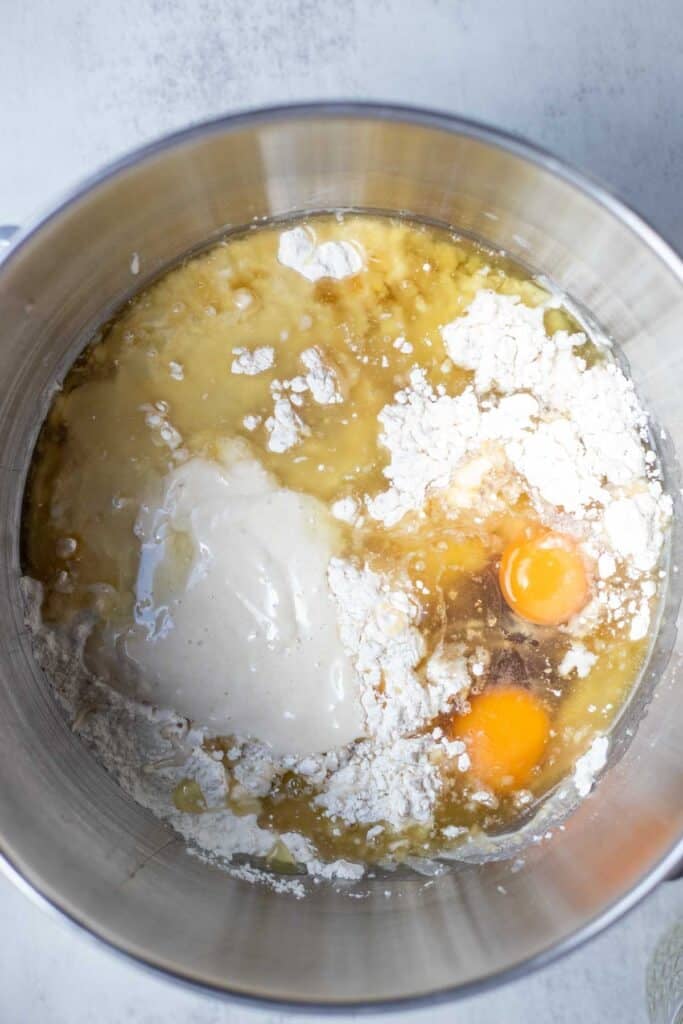
Step 1: Add active sourdough starter, water, flour, oil, honey, and eggs into the bowl of a stand mixer with a dough hook attachment. Mix until the dough forms a ball, then knead for a few minutes on medium speed until smooth and glossy. A pinch of the dough should pass the windowpane test.
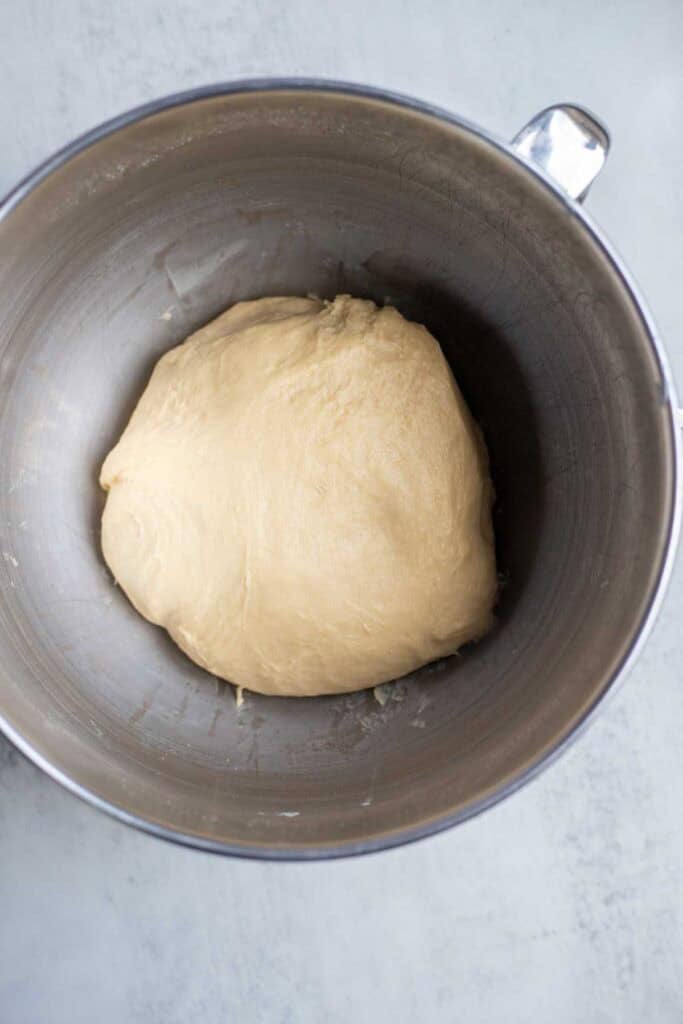
Step 2: Place the dough into a lightly oiled bowl and cover tightly. Ferment in a warm place for 8-12 hours or overnight. Note: I ferment dough with raw eggs for my sourdough brioche all the time without an issue. If this makes you uncomfortable, you can ferment the dough for four hours at room temperature and then refrigerate it overnight.
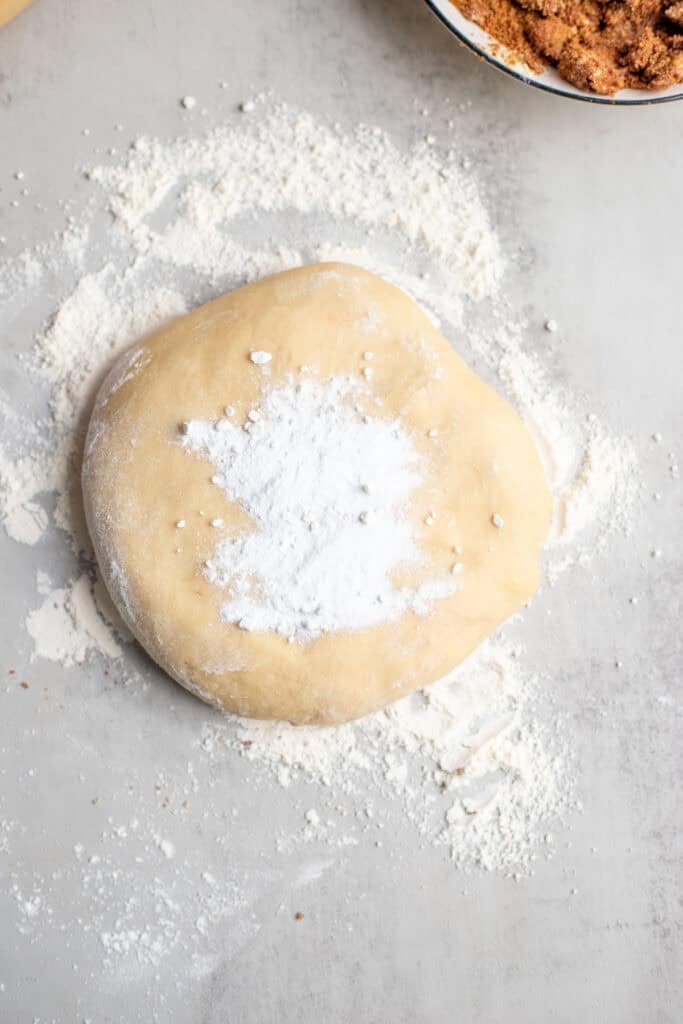
Step 3: The next day, preheat the oven to 375 degrees Fahrenheit. Add baking soda, baking powder, and salt to the dough. Knead in the stand mixer or on a floured work surface for approximately five minutes until all the ingredients are well incorporated.
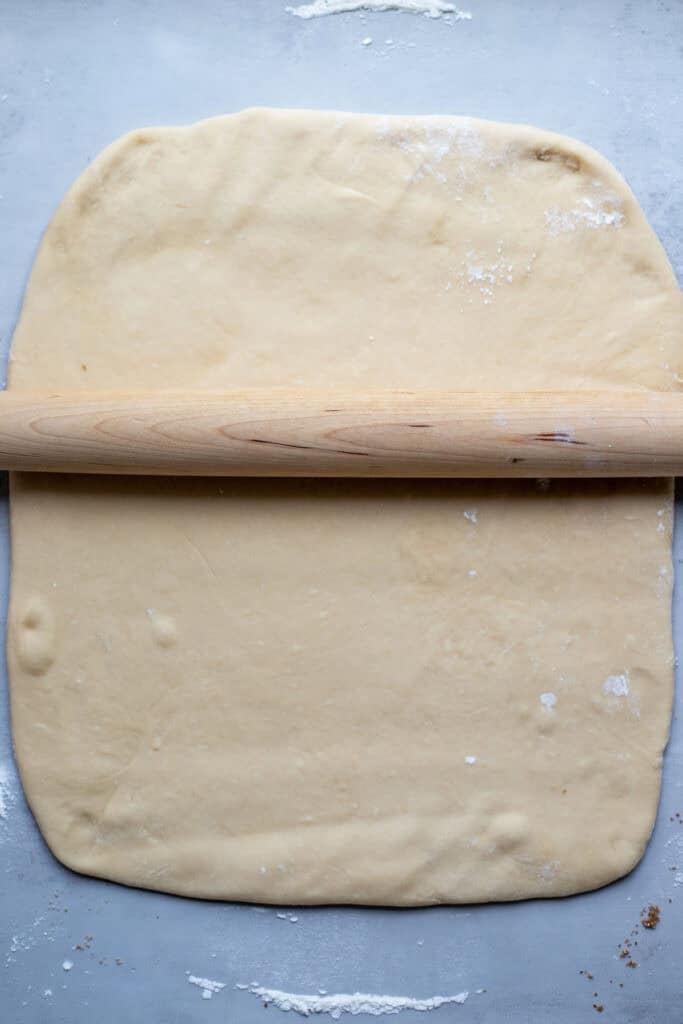
Step 4: Place the dough on a lightly floured work surface and use a rolling pin to roll it into a roughly 12×15-inch rectangle. It should be about 1/4-inch thick. You want the dough to be rolled evenly so that it bakes evenly.
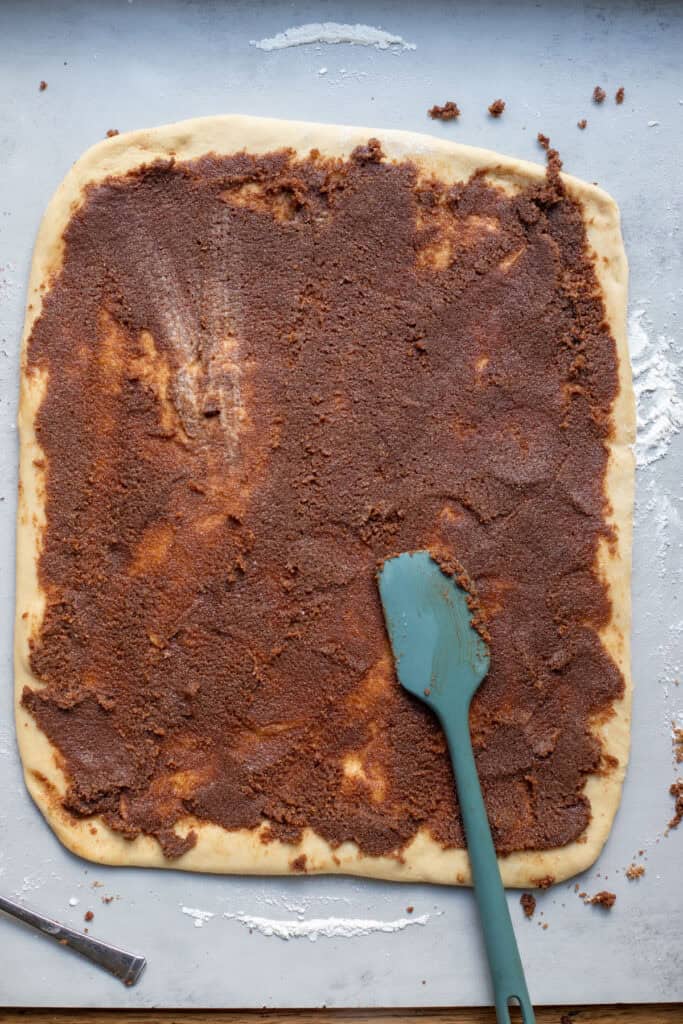
Step 5: In a separate bowl, combine softened butter, brown sugar, and cinnamon. Stir until smooth. Spread the softened butter mixture evenly over the dough.
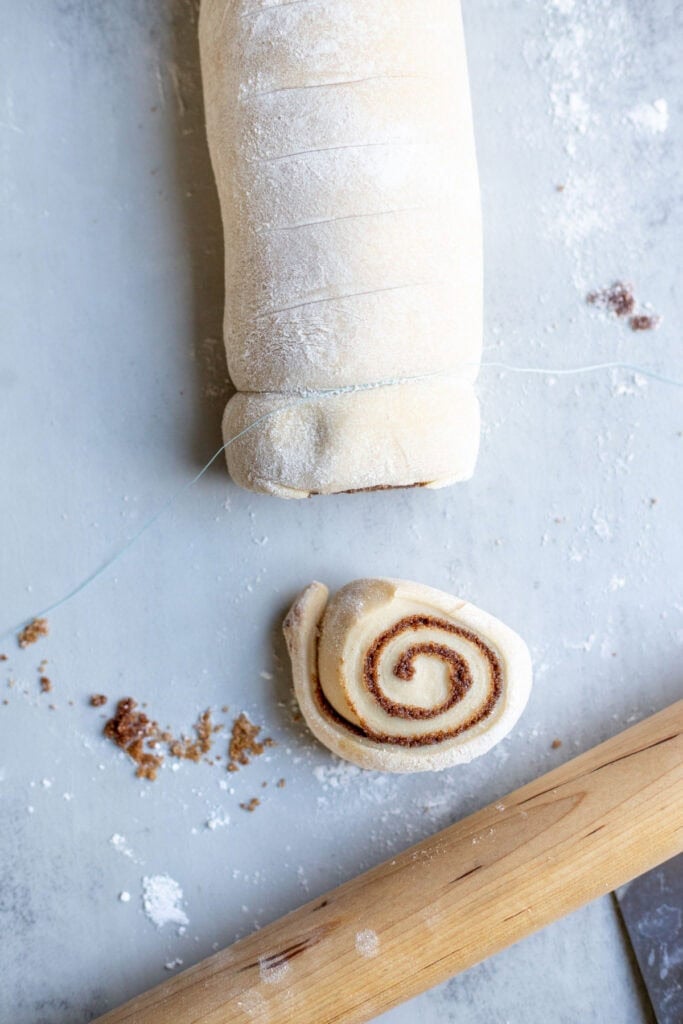
Step 6: Roll the dough up as tightly as you can, starting at the long end. When you get to the end, pinch the edge into the main roll to prevent leaking. Slice the rolls with a sharp knife, bench scraper, or thread. Alternatively, you can slice the rectangle of dough into 12 equal strips, then roll them up individually.
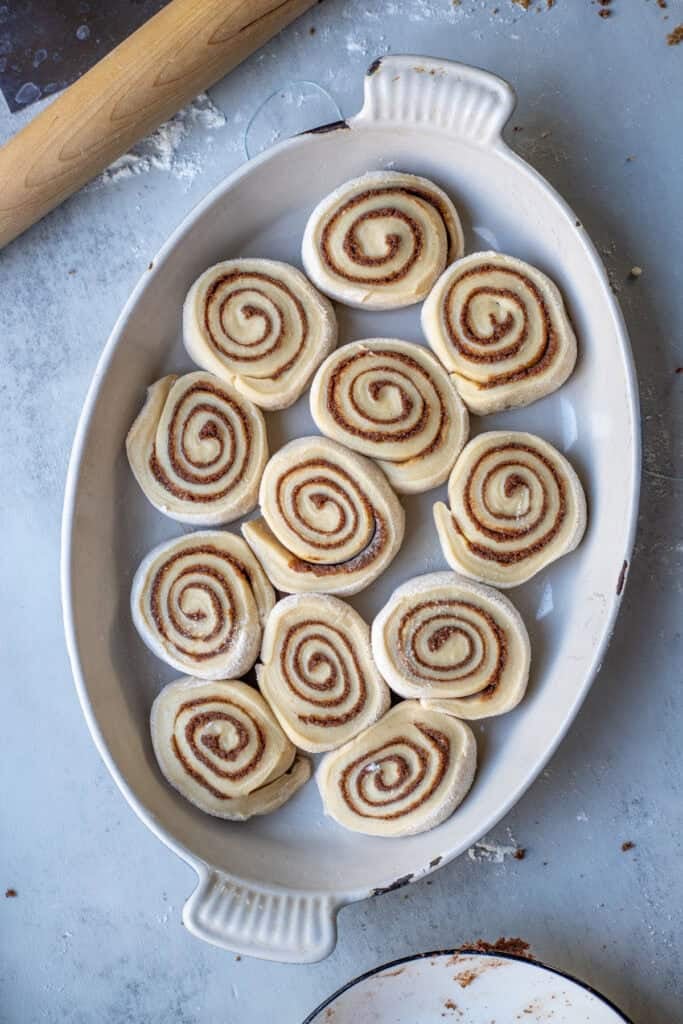
Step 7: Place the unbaked rolls into a greased 9×13 baking dish. Bake for 20-25 minutes or until the rolls are lightly browned and the dough is cooked through. Allow them to cool a bit before applying the icing.
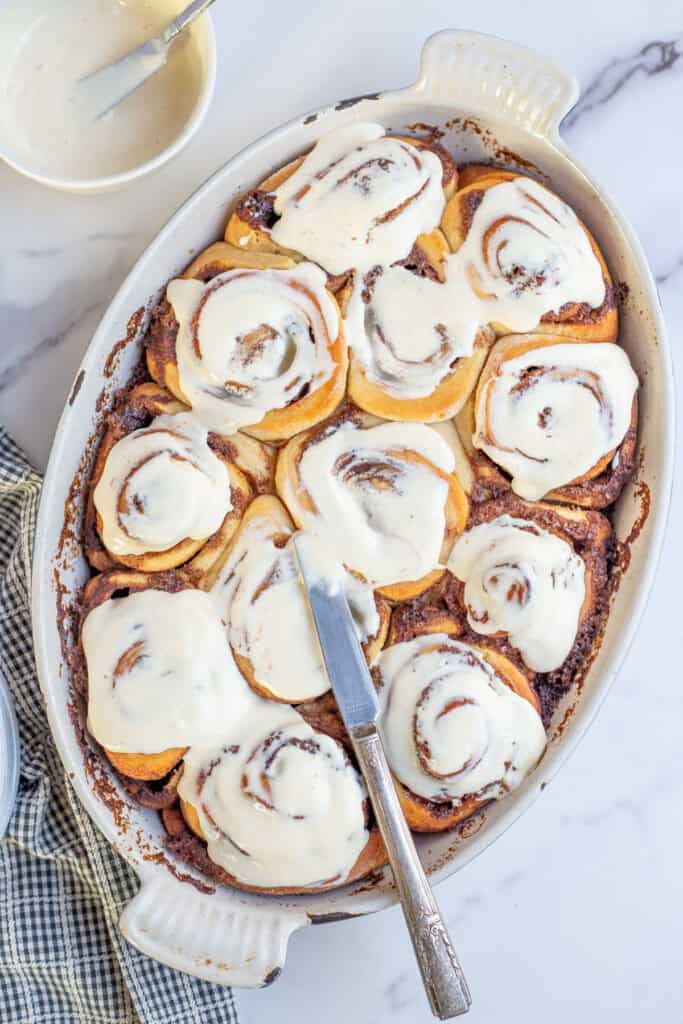
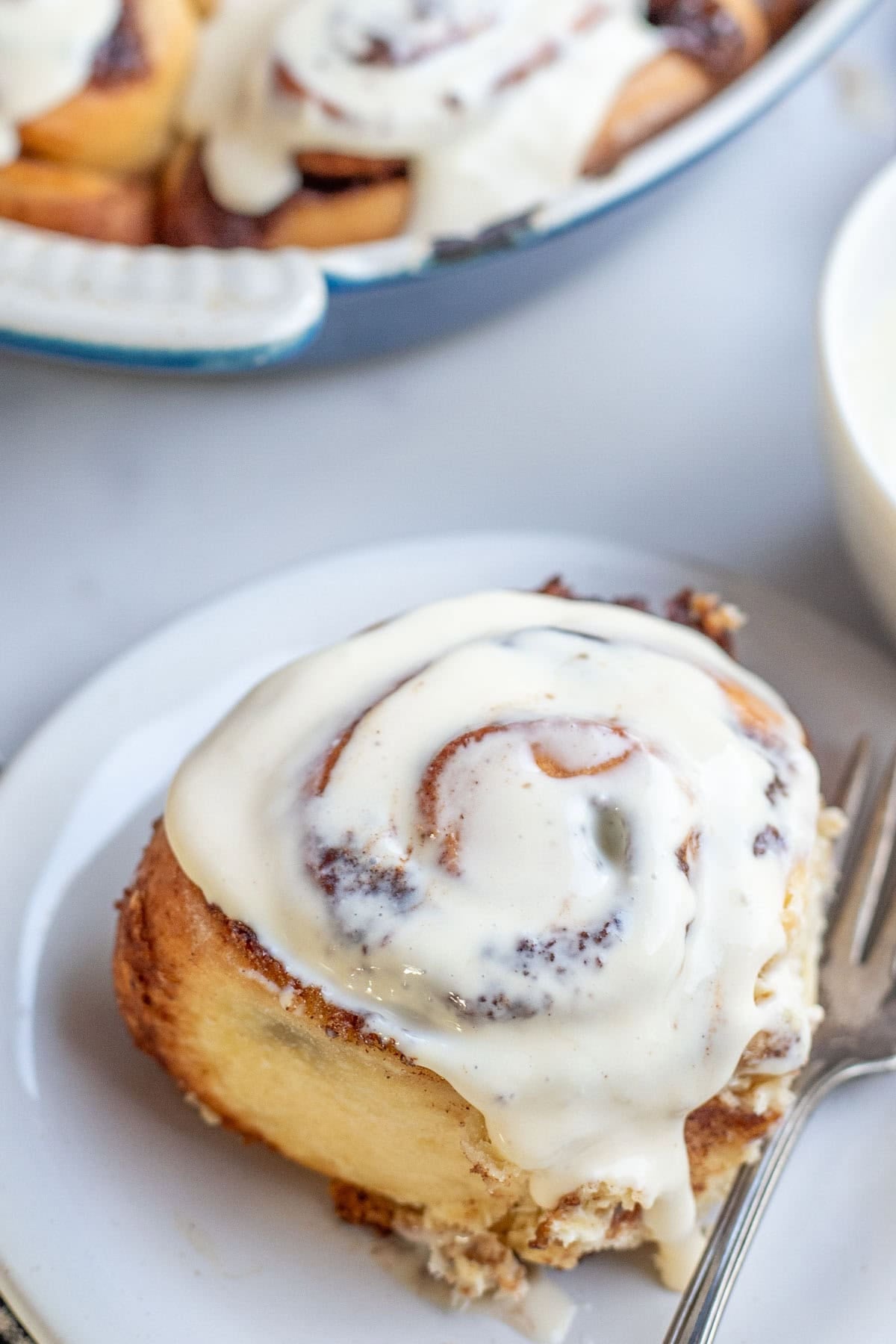
Step 8: While the rolls bake, prepare the cream cheese icing. In a small saucepan over medium-low heat, add 6 ounces of cream cheese, 1/2 cup of heavy cream, 1/2 cup of maple syrup or honey, and 2 teaspoons of vanilla extract. Stir well. I use an immersion blender to get the icing really smooth. Pour over the warm cinnamon rolls and enjoy!
Tips
- Start the night (or up to 24 hours ahead) before you want to bake these sourdough cinnamon rolls, so the dough has a chance to ferment and build more flavor.
- The temperature of your kitchen will affect the fermentation. Find a warm place, such as inside the oven with the light on (heat off), on top of your fridge, or near some mild heat source.
- If you’re avoiding unfermented grains, use einkorn flour to dust the surface of the counter when rolling out the dough.
- I find that string or unflavored dental floss works best for slicing the cinnamon roll dough. A sharp knife also works, but is more likely to smush the rolls and lose some of the shape.
- Grease your baking dish generously or use parchment paper for no sticking.
- Keep the rolls spaced a bit apart so they have room to expand.
- This recipe has been edited to reflect changes made over the years of making this recipe. Some people had issues incorporating the eggs on the second day, so I changed this and started mixing them into the dough the night before. This works very well.
Recipe FAQs
Unfrosted cinnamon rolls can be covered and kept at room temperature for 2-3 days or frozen for several months. Store frosted cinnamon rolls in the refrigerator for up to four days. Let frozen rolls thaw and rise before baking.
Yes. Prepare the dough according to the directions. Form the rolls and place in a baking dish, wrap with plastic wrap, and place in the fridge for up to 12 hours or in the freezer for several months. You don’t want to leave the rolls in the fridge too long, or they may overproof. Allow to rest on the counter for two hours before baking if refrigerated, and overnight if baking them from frozen. Bake according to directions.
If you want to skip the long fermentation process, just use sourdough discard that has been fed recently in place of the active starter. Add all the dough ingredients and knead the dough until it becomes smooth, glossy, and passes the windowpane test. Follow the recipe from Step 4 on.
Yes. If allowed to rise too long, they will overproof and won’t hold their shape.
When making cinnamon rolls, avoid adding too much flour, overproofing the dough, using melted butter for the filling, overfilling the dough, and overbaking the rolls.
Baker’s Timeline:
You can make these or start them at any time. I like to start doughs at night time so they can rise all night. In the morning, they are ready to shape, boil, and bake.
Feed sourdough starter with flour and water.
Add all the ingredients to a stand mixer (minus the baking soda, baking powder, and salt) and knead until smooth and glossy. Cover tightly and ferment overnight.
Add baking soda, baking powder, and salt. Knead well until the dough is no longer sticky. Roll out the dough, prepare the filling, and spread. Form rolls, then bake for 20-25 minutes. Prepare and apply icing.
More Sourdough Recipes from the Farmhouse
- Long Fermented Biscuits
- Sourdough Peach Cobbler Recipe
- How To Make Sourdough Waffles
- Sourdough Chocolate Rolls
- Cinnamon Raisin Sourdough Bread
If you try this recipe and love it, I would love it if you could come back and give it 5 stars! Tag me on Instagram @farmhouseonboone.

Sourdough Cinnamon Rolls

Equipment
Ingredients
- 1/2 cup sourdough starter, bubbly and active 113 grams
- 1/2 cup water, 118 grams
- 4 cups all-purpose flour, 560 grams
- 1/2 cup neutral oil, 113 grams
- 1/2 cup honey, 168 grams
- 2 eggs
- 1 teaspoon baking soda
- 1 teaspoon baking powder
- 1/2 teaspoon salt
Cinnamon Sugar Filling
- 1/2 cup softened butter, 114 grams
- 1 cup brown sugar, 200 grams
- 2 tablespoons cinnamon, 16 grams
Cream Cheese Topping:
- 6 ounces cream cheese
- 1/2 cup heavy cream, 120 grams
- 1/2 cup maple syrup or honey, 168 grams
- 2 teaspoons vanilla extract, 10 grams
Instructions
- Add active sourdough starter, water, flour, oil, honey, and eggs into the bowl of a stand mixer with a dough hook attachment. Mix until the dough forms a ball, then knead for a few minutes on medium-low speed until smooth and glossy.
- Place the dough into a lightly oiled bowl and cover tightly. Ferment in a warm place for 8-12 hours or overnight.
- The next day, preheat the oven to 375 degrees Fahrenheit. Add baking soda, baking powder, and salt to the dough. Knead in the stand mixer or on a floured work surface for approximately five minutes until all the ingredients are well incorporated.
- Place the dough on a lightly floured work surface and roll it into a roughly 12×15-inch rectangle. It should be about 1/4-inch thick.
- In a separate bowl, combine softened butter, brown sugar, and cinnamon. Stir until smooth. Spread the softened butter mixture evenly over the dough.
- Roll the dough up as tightly as you can. When you get to the end, pinch the edge into the main roll to prevent leaking. Slice the rolls with a sharp knife, bench scraper, or thread. Alternatively, you can slice the dough into 12 equal strips, then roll them up individually.
- Place the unbaked rolls into a greased 9×13 baking dish. Bake for 20-25 minutes or until the rolls are lightly browned and the dough is cooked through. Allow them to cool a bit before frosting.
- While the rolls bake, prepare the cream cheese icing. In a small saucepan over medium-low heat, add cream cheese, heavy cream, maple syrup or honey, and vanilla extract. Stir well. Pour over the cinnamon rolls and enjoy!
Notes
- The temperature of your kitchen will affect the fermentation. Colder is slower; warmer speeds things up. Find a warm place, such as inside the oven with the light on (heat off), on top of your fridge, or near some mild heat source.
- If you’re avoiding unfermented grains, use einkorn flour to dust the surface of the counter when rolling out the dough.
- I find that string or unflavored dental floss works best for slicing the cinnamon roll dough. A sharp knife also works, but is more likely to smush the rolls and lose some of the shape.
- Grease your baking dish generously or use parchment paper for no sticking.
- Keep the rolls spaced a bit apart so they have room to expand.
- This recipe has been edited to reflect changes made over the years of making this recipe. Some people had issues incorporating the eggs on the second day, so I changed this and started mixing them into the dough the night before. This works very well.
Nutrition
Nutrition information is automatically calculated, so should only be used as an approximation.









Can’t wait to try these, but I’m A little confused. You don’t have to let them raise after you roll and slice the log? Just trying to work out my timing.
So she must have updated this recipe because it used to say to let it rise/ double for 30 minutes to an hour before baking. That’s how I’ve done it in the past.
Can these tolerate a longer ferment in the fridge after allowing 8-12 hrs on the counter? If so what would be the maximum amount of time in the fridge after?
I would make the dough according to the directions. Then rather than baking, cover them with plastic wrap and place them in the fridge for up to 24 hours. Then bake.
Hi! I want to make this recipe for Christmas morning, but we will be traveling all day on Christmas Eve (8 hours), and I’m not sure I’ll have access to a mixer with dough hook once we get to where we are going. If I mix the dough before we leave town, let it rise while we ride, and place it in the fridge until the next morning, will it overproof?
I think that should totally be ok.
In the dough, can I sub maple syrup for the honey? Also, would liquid coconut oil work or melted butter work in the dough instead of the melted coconut oil?
Ok it’s Tuesday I’ve made my dough ahead of time for Christmas, I plan to freeze it. My question is how long should I set it out before baking or do I bake directly from the freezer?
I made these a few weeks ago & had rave reviews from my kids so instead of our traditional canned cinnamon rolls, I’m actually baking these. 😱
Let it come to room temp before baking.
Wondering why not to mix in the baking soda, baking powder, salt until the next day?
can sugar be substituted for the honey? wanting to make this for the whole family and hoping to make it without honey so a baby under 1 could eat it!
I always have used honey, but I am sure you could! You would likely need to adjust the amount, though.
i want to make this for chistmas morning so can i make them in advance then leave them in the fridge overnight to bake first thing in the morning?
You could refrigerate the dough. Just make sure you let them warm up in your kitchen before baking them.
I have been following you for a long time and I have tried lots of your recipes 😉 When I made your cinnamon roll recipe I loved them and my oldest daughter said they were the best cinnamon rolls shes ever had! Thank you so much for sharing and all you do to teach and inspire! You are appreciated
So glad you enjoyed them! Have a great day!
I made these using a potato flake starter. They turn out super delicious. My dough is sticky and doesn’t get to the windowpane stage, but still turns out fine in the end. My question is, do you have any experience with the potato flake starter? Does potato starter have to be kneaded as much? Thanks for replying, your suggestions are very helpful.
That’s awesome! I don’t think using the potato starter would make too much of a difference with kneading. I haven’t tried using it with this particular recipe, though.