




Sourdough French bread is a simple and classic recipe with a fluffy texture and crusty exterior. Knead the night before and allow it to ferment overnight, then shape, rise, and bake the next day. It’s wonderfully simple.
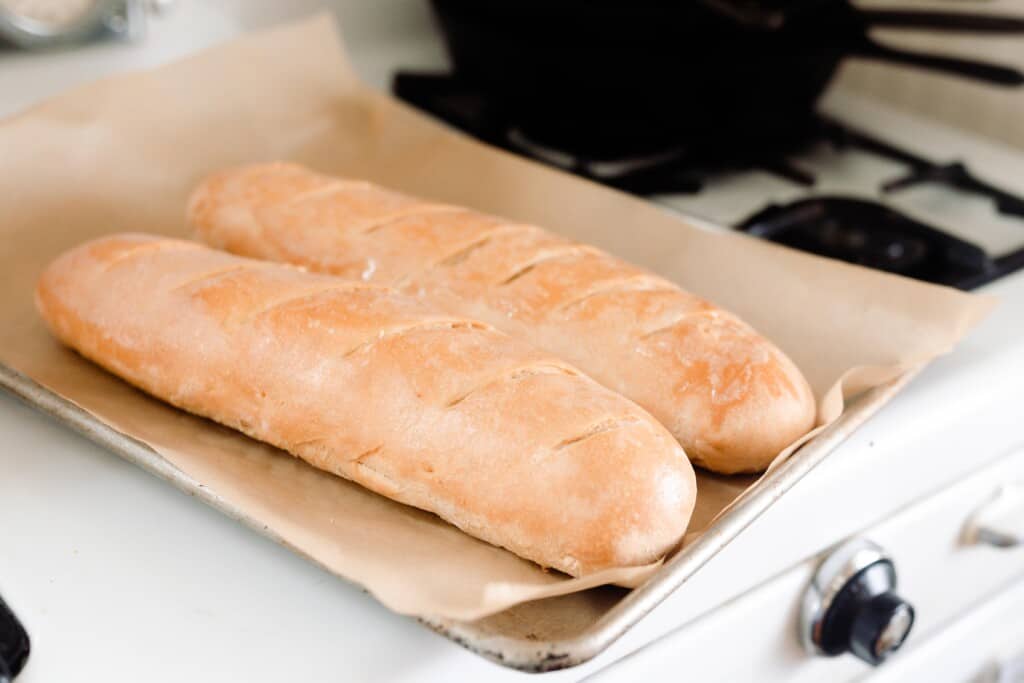
There is nothing better than a crusty loaf of bread. Slice it thick and spread with homemade butter, and now you are speaking my language.
Most French bread recipes call for instant yeast, which I almost never keep in my pantry, except for that rare occasion I want to make this einkorn sandwich bread.
Once you switch to fermenting grains and using wild yeast to leaven bread, it’s hard to go back to the conventional fast-rising breads. It lacks the flavor that develops during that slow rise.
But it is a delicate balance, because that fluffy center can sometimes be a challenge to perfect with sourdough.
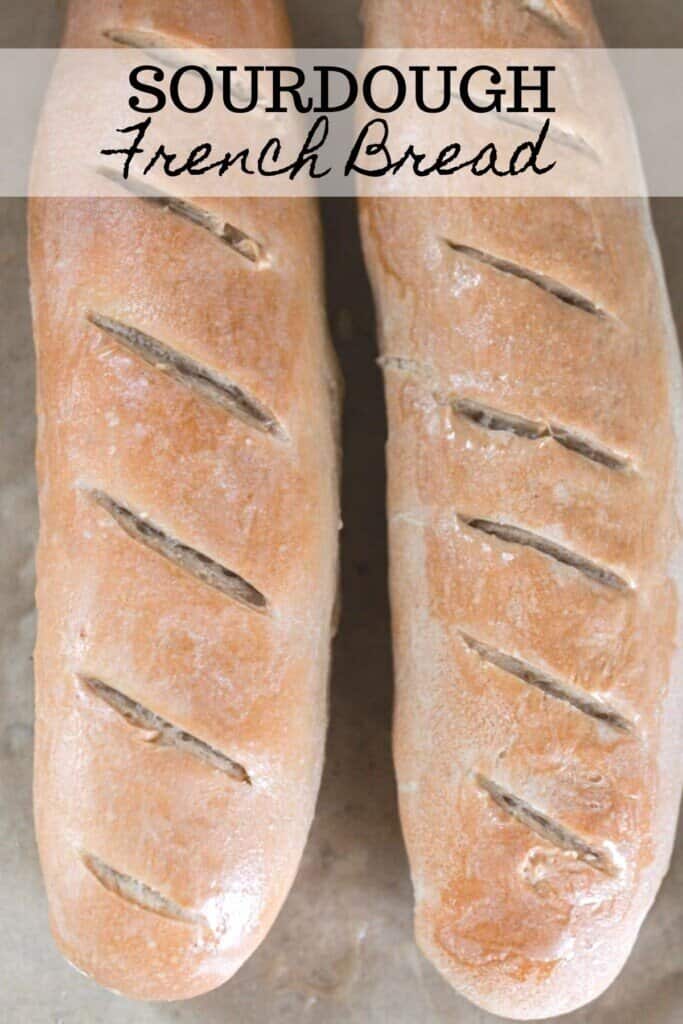
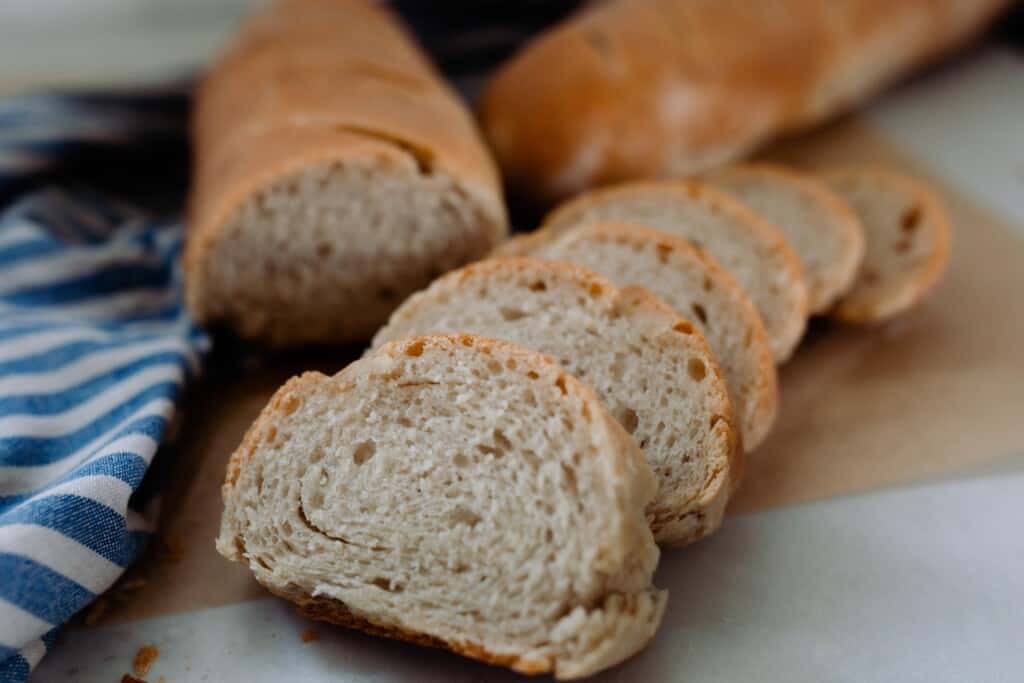
These sourdough French baguettes have all the good qualities one can hope for. Crusty outside with a fluffy, tender texture inside. It’s perfect to serve as garlic bread, or with a bowl of soup.
Why you will love this recipe:
- Super simple. Start the night before and allow to ferment and rise overnight. The next day, all you have to do is shape, allow to rise, and bake. It’s a perfect almost-make-ahead side.
- Fermented grains for easier and better digestion. There is no doubt we love sourdough in our house. Not only is it tasty, but the fermentation process helps break down phytic acid, making it more nutritious, and helps break down the gluten, making it easier to digest.
- Delicious. This recipe is everything you love and hope for in a French bread: crusty exterior with a soft and fluffy inside. Use it as a side, garlic bread, or slice it in half to cover with sauce, cheese, and pizza toppings and now you have a pizza bread. This last particular idea was one my mom made us for a quick dinner growing up.
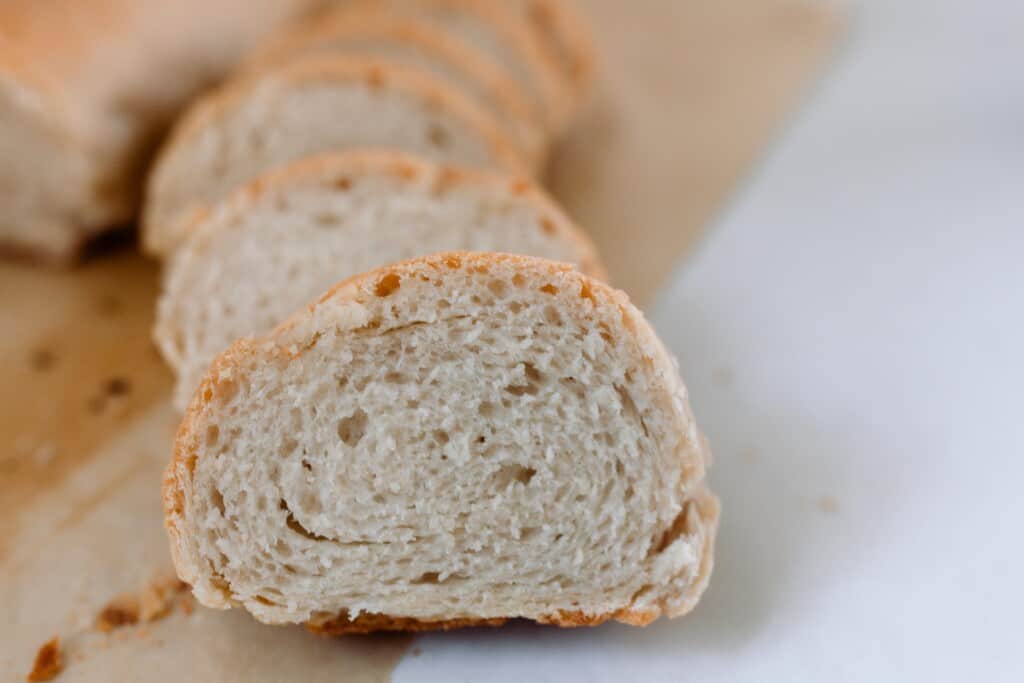
Is French bread the same as sourdough?
No. While they are similar, most French breads are not made with sourdough, but rather with conventional rapid yeast. You can easily make it into sourdough French bread by using this recipe. Just know that most French breads you buy from the store will use yeast.
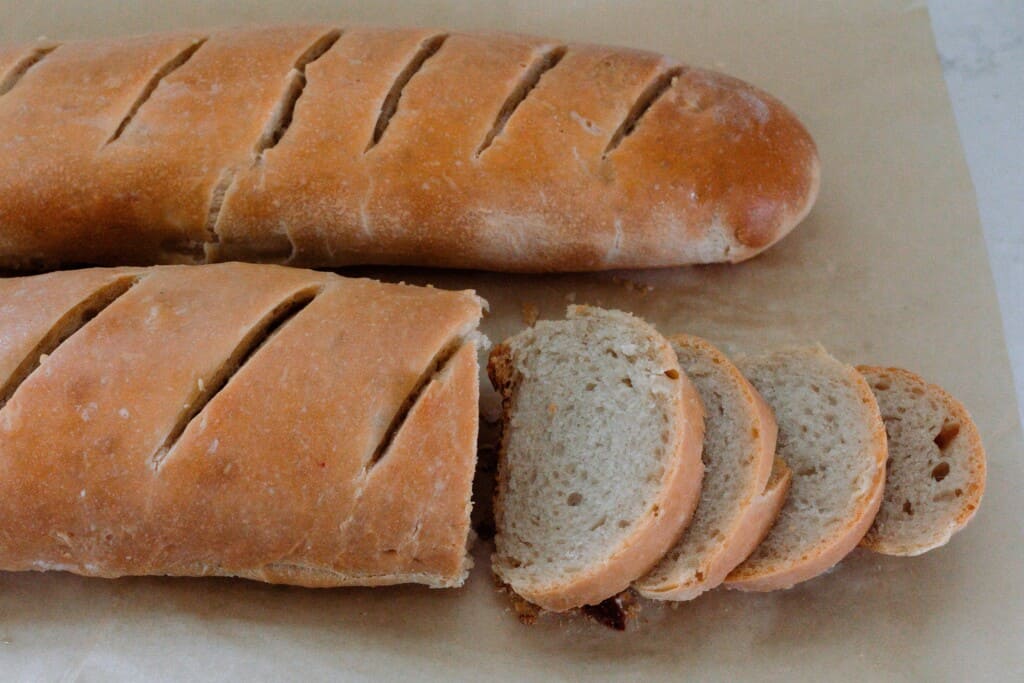
Sourdough French Bread Tips:
- For a soft, fluffy, sourdough bread baguette, your dough should be on the wetter side. A dry dough will leave you with a drier loaf.
- To make those perfect long loaves, I like to roll it out into a rectangle and then roll it up and pinch the ends. This allows for a more even loaf for a better shape and more even baking time.
- To give the baguettes a crustier outside, place a few ice cubes in the oven. This will release steam and achieve that beautiful, golden crust.
- New to sourdough? Learn how to make a starter and care for it. Once you get the hang of it, I promise it is really easy. You can even make a ton of recipes from sourdough discard.
This post contains affiliate links, which means I make a small commission at no extra cost to you. See my full disclosure here.
Tools you may need:
Stand mixer with dough hook.
Measuring cups and spoons
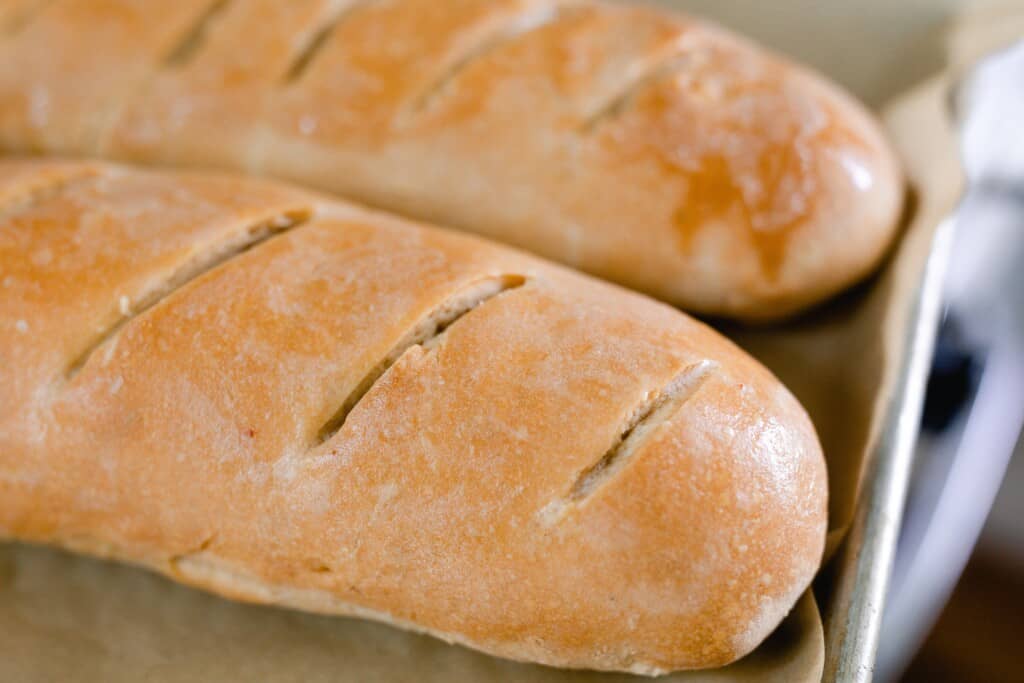
How To Make Sourdough French Bread
Feed your starter 4-12 hours before starting this recipe. It should be very active and bubbly.
To your mixing bowl, add all of the ingredients.
Knead in a stand mixer using the dough hook until stretchy and pulling away from the sides of the bowl. This should take about 5-10 minutes. It should pass the ‘windowpane’ test, which is when you take a small piece of the dough and try to stretch it into a square-like shape. If you can stretch it thin enough where you can “see through it”, then the gluten formation is adequate.
If it doesn’t pass this test and is breaking apart, then place it back into the stand mixer and knead for a few more minutes.
Place in a large, oiled bowl and cover with plastic wrap, beeswax wrap, or something that is airtight. This will keep the dough moist, preventing it from developing a hard skin.
Allow to ferment for 8 to 24 hours in a warm place.
The next day, it should have at least doubled in size.
Punch down the dough. Divide into two equal parts.
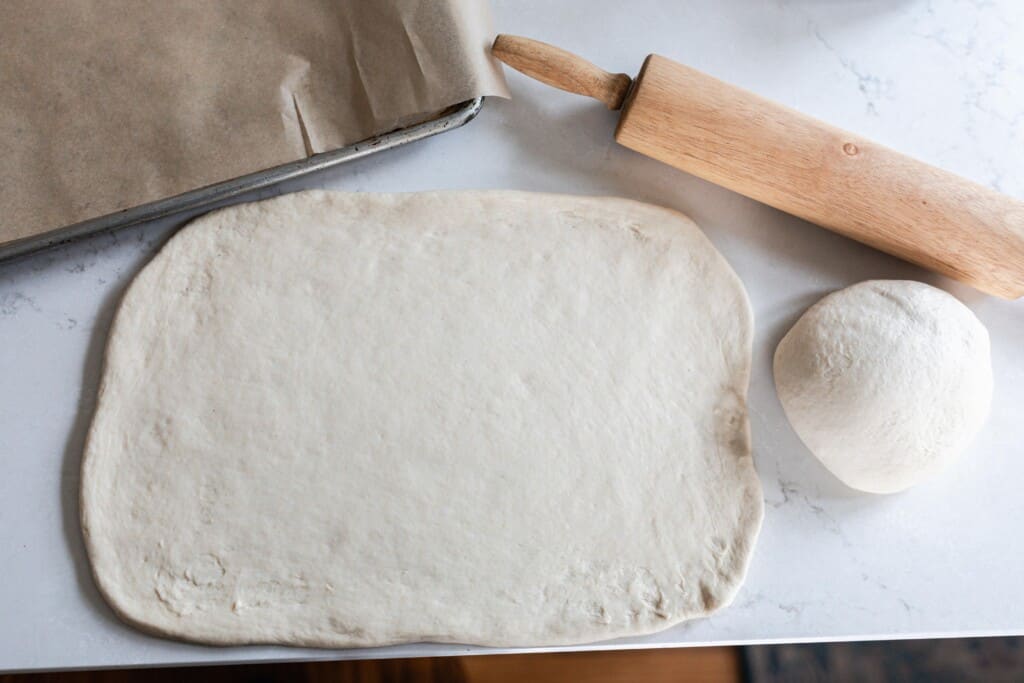
Shape it by rolling the dough into a flat rectangle (about 1/4 – 1/2 inch thickness) and roll up. Pinch the seam.
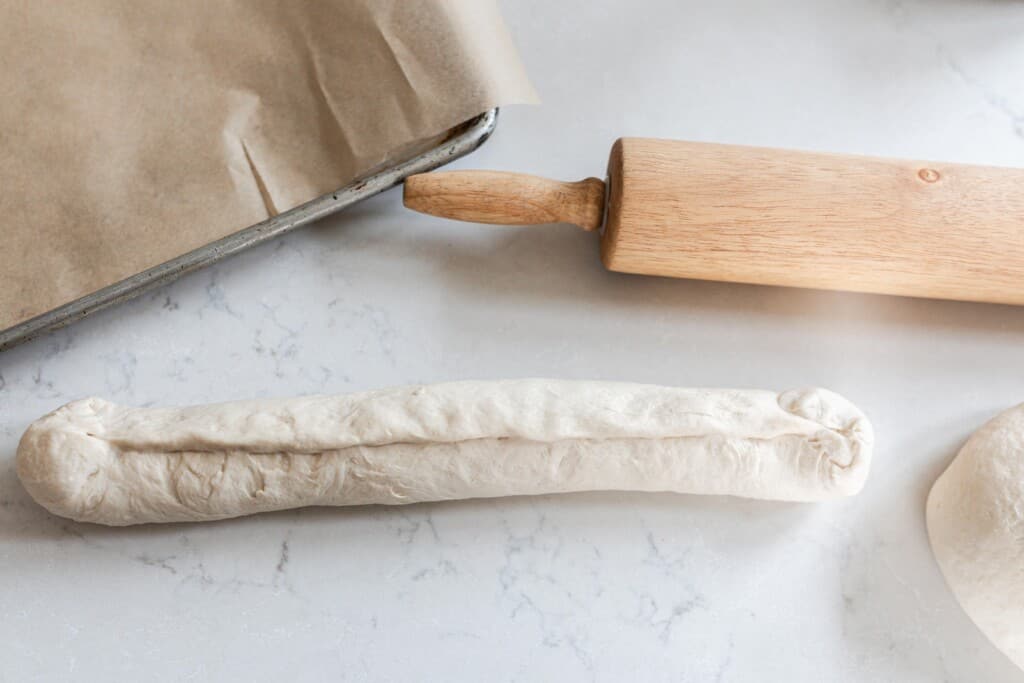
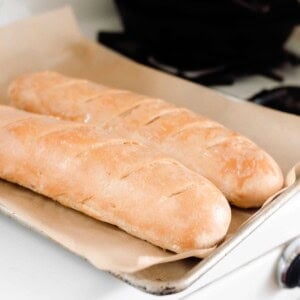
Place French bread dough onto a parchment-lined baking sheet.
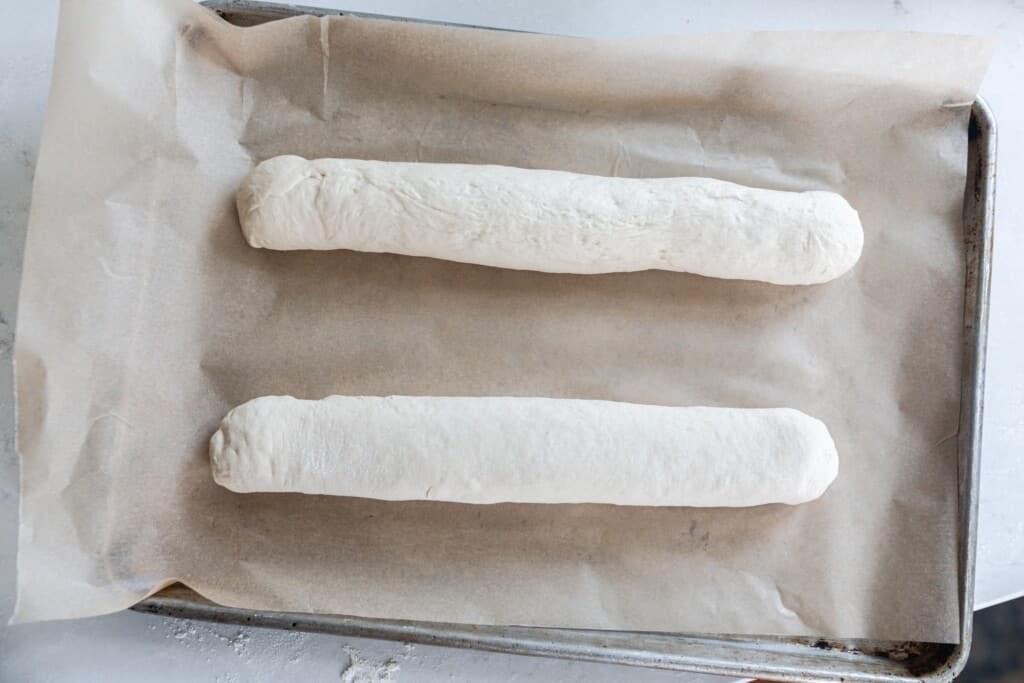
Cover with a towel and allow to rise until doubled again. This could take a few hours depending on how warm your kitchen is.
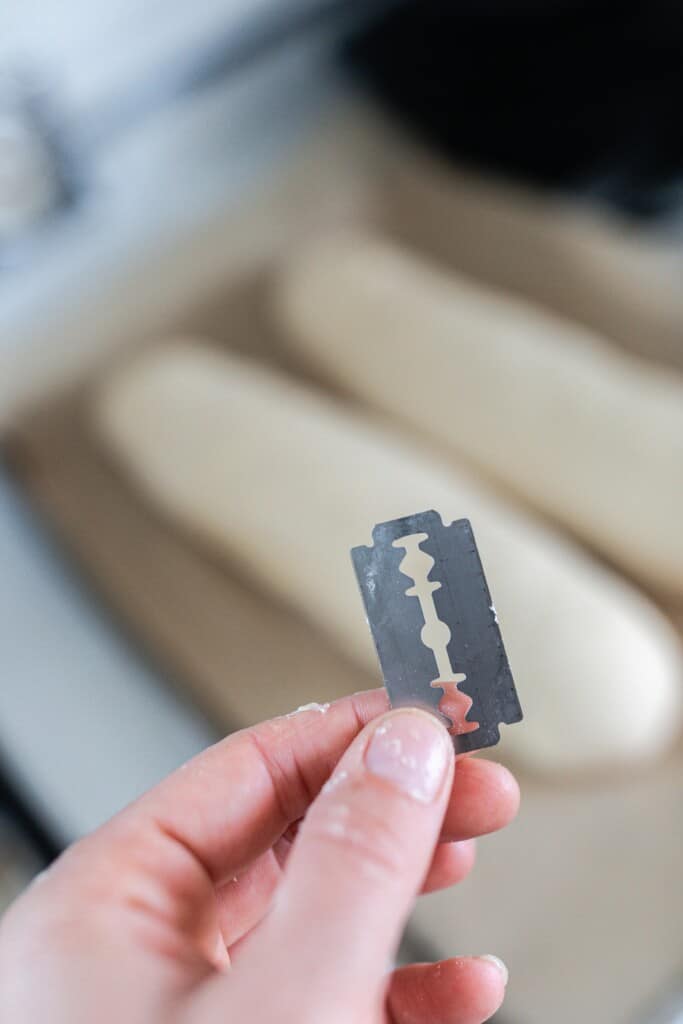
Slash with lame.
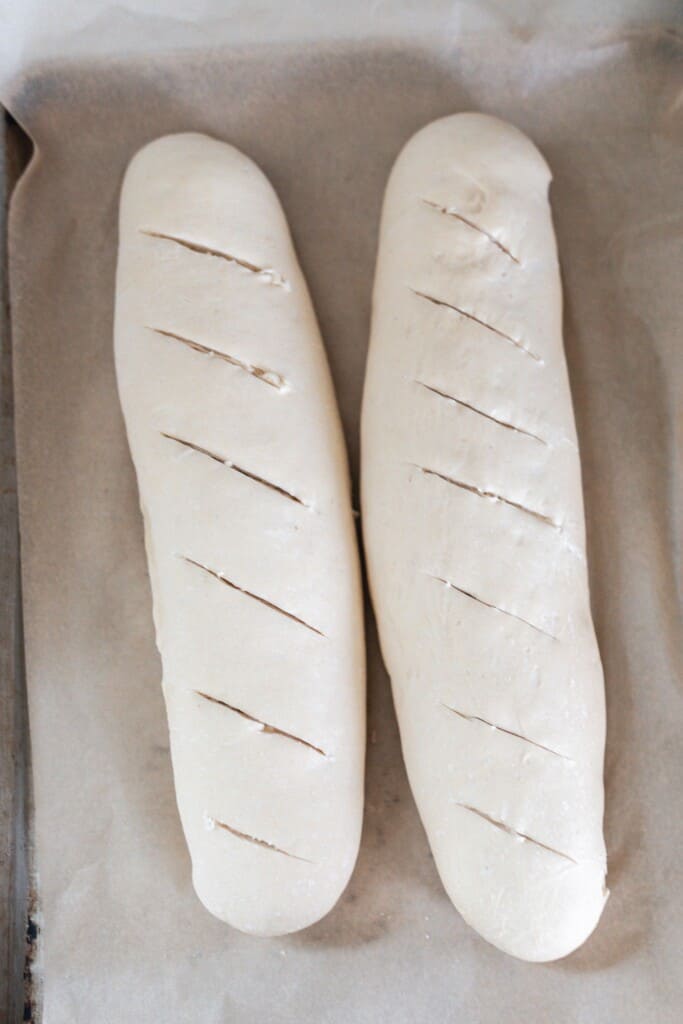
Preheat to 400. Bake for 25 minutes.
For a more golden crust, add ice cubes in the oven. This helps add moisture and steam to make that golden, crustier crust.
Once it is done baking, pull it out of the oven and allow to cool completely before slicing.
Find More Delicious Sourdough Recipes:
- Sourdough Chocolate Cupcakes
- Sourdough Sandwich Rolls
- No-Knead Sourdough Bread
- Sourdough Blueberry Muffins
- Homemade Sourdough Bagels
If you try this recipe and love it, I would love if you could come back and give it 5 stars! Tag me on Instagram @farmhouseonboone

Sourdough French Bread
Ingredients
- 1 cup sourdough starter, 200 grams
- 1 1/4 cups water, 295 grams
- 2 teaspoons salt , 10 grams
- 4 cups all-purpose flour, 560 grams
- 1 tablespoon honey, 21 grams
- 2 tablespoons olive oil, 28 grams
Instructions
- Feed your starter 4-12 hours before starting this recipe. It should be very active and bubbly.
- To your mixing bowl, add all of the ingredients.
- Knead in a stand mixer using the dough hook until stretchy and pulling away from the sides of the bowl. This should take about 5-10 minutes. It should pass the ‘windowpane’ test, which is when you take a small piece of the dough and try to stretch it into a square-like shape. If you can stretch it thin enough where you can “see through it”, then the gluten formation is adequate.
- Place in a large, oiled bowl and cover with plastic wrap, beeswax wrap, or something that is airtight. This will keep the dough moist, preventing it from developing a hard skin.
- Allow to ferment for 8 to 24 hours in a warm place. The next day, it should have at least doubled in size.
- Punch down the dough. Divide into two equal parts.
- Shape it by rolling the dough into a flat rectangle (about 1/4 – 1/2 inch thickness) and roll up. Pinch the seam.
- Place French bread dough onto a parchment-lined baking sheet.
- Cover with a towel and allow to rise until doubled again. This could take a few hours depending on how warm your kitchen is.
- Slash with lame.
- Preheat to 400. Bake for 25 minutes. (For a more golden crust, add ice cubes in the oven. This helps add moisture and steam to make that golden, crustier crust.)
- Once it is done baking, pull it out of the oven and allow to cool completely before slicing.
Notes
- For a more golden crust, add ice cubes in the oven for a crustier crust.
- The windowpane test is when you take a small piece of the dough and try to stretch it into a square-like shape. If you can stretch it thin enough where you can “see through it”, then the gluten formation is adequate. If, after kneading, your dough just breaks apart, then knead it longer until it can pass this test.
Nutrition
Nutrition information is automatically calculated, so should only be used as an approximation.









FYI when I double or triple this recipe, the is us units double but the metric grams do not…
Thank you for letting me know. I will fix it.
Also my kids love this recipe. We’ve made it 2.5 times (rising now!) and the 4 leaves we make never last more than 24 hours! It is indeed easy and very good!
I am preparing the sourdough french bread recipe. What is the purpose of the the “honey” ingredient? Is that in lieu sugar? Thank you.
Yes, it’s a sugar replacement.
My bread didn’t rise overnight in the fridge!! What could I have done wrong? Precise measurements and dough was bubbly and ready to go. About to bake so we’ll see how it goes.
Next time try leaving on the counter to rise! The warm air helps.
I’m still a bread baking novice and I couldn’t be happier with this recipe. Turns out great every time.
Made this today and it came out perfectly. I substituted honey for maple syrup as i don’t like to heat honey. I also don’t like crusty bread so I didn’t add ice, but I did add egg wash to get it more golden. Have made several of your breads and your recipes are by far the best. Hope to see some sourdough with fresh milled flour recipes as that is mainly the flour I use.
It works great and was terrific for garlic bread! I added chopped rosemary to the dough and then used Lisa’s garlic bread recipe on top – SO good! I think the other commenters who had issues may not know how to manipulate sourdough. The recipe took me a LOT longer to make than listed in the recipe, but it was due to:
1.) It’s winter, and my house is cold. Just leave the dough in your oven with the light on (oven off), and it will rise faster. If it’s rising too fast for you, it may be that your house is too warm (find somewhere cooler, like under an A/C vent) or that you have a strong starter (use less starter).
2.) I only had 165g of sourdough starter. This wasn’t a problem; it just meant the dough would rise slower.
3.) It took 15-20 minutes on level 2 in the KitchenAid for the dough to pass the windowpane test. Again, it’s not a problem; you just need patience and to know what it should look like.
So good! I made one loaf regular, and put garlic in the other one. Delicious! I used the ice and the crust was perfect.
Oh no! When you choose the 2x or 3x recipe option, the gram measurements do not change. I don’t know if this is going to turn out!
Yummy
Can you place it in the fridge after the bulk fermentation incase you can’t do the next steps right away?
Yes!