


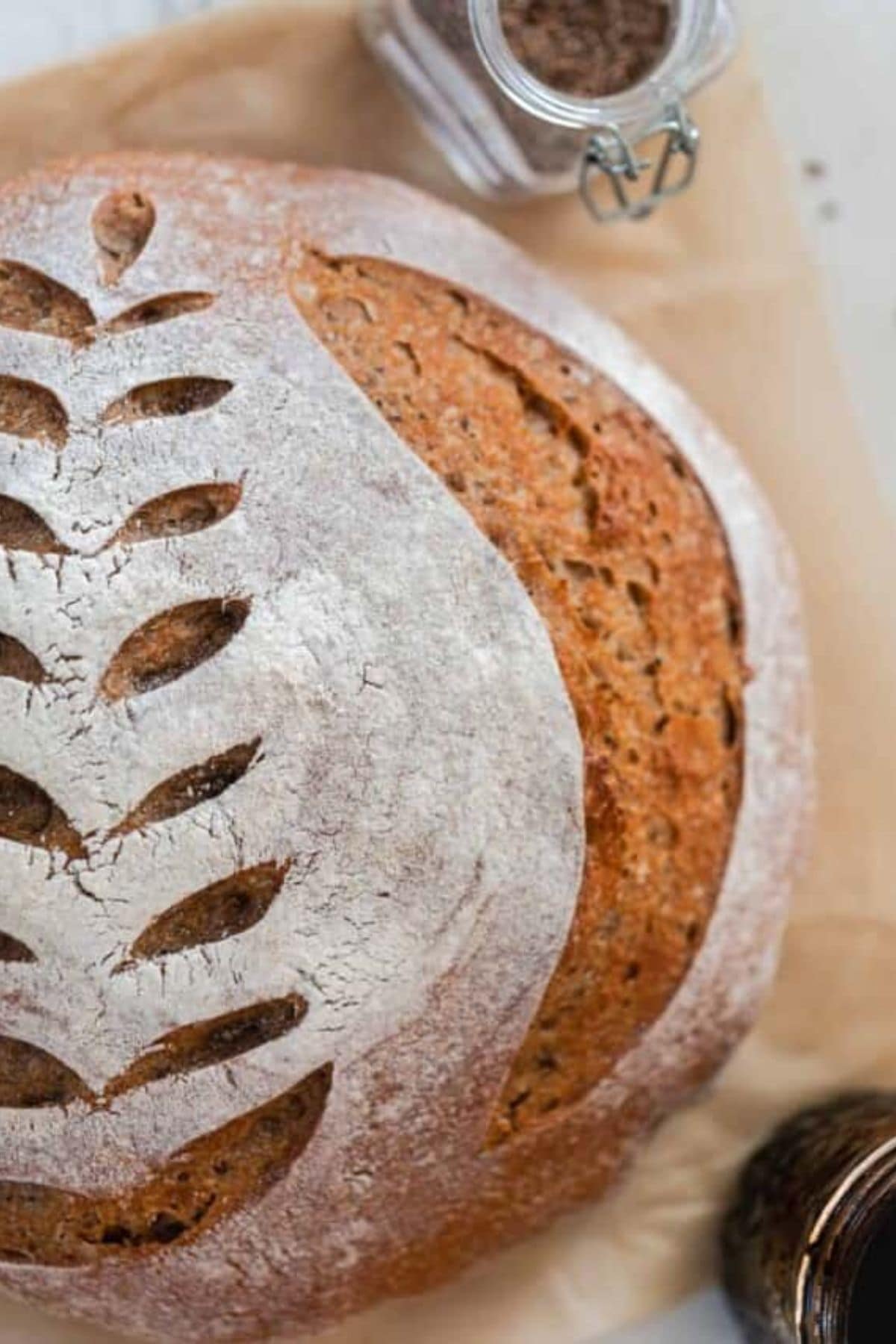
Sourdough rye bread offers deep color and robust whole-grain flavor. The hearty grain and long fermentation produce a beautiful, rustic boule, delicious when spread with creamy butter, layered as a sandwich, or thick-sliced with a bowl of nourishing soup.
Key Takeaways: Sourdough Rye Bread
- Prep Time: 3 hours, 20 minutes
- Bake Time: 40 minutes
- Additional time: 25 hours
- Total Time: 29 hours
- Servings: 12 slices
- Cook Method: Baked in a Dutch oven until crusty and browned.
- Flavor & Texture: This loaf is tangy, earthy, and mildly sweet, with a chewy, sturdy crumb and crusty exterior.
- Difficulty: Moderate. Rye makes this dough sticky and somewhat challenging to work with, but the stretch and folds, fermentation, and baking are pretty standard and offer consistent success.
- Why this Recipe? Sourdough rye bread offers deep whole-grain flavor and sourdough zest, easier digestibility, lovely color, and a satisfying, chewy texture.
Combining the earthy, robust flavors of rye flour and the tang of long fermentation, sourdough rye bread boasts complex flavor, a delightfully chewy texture, and a hearty, nutritious composition.
I used to think rye was a flavor on its own, but actually the grain itself is pretty mild and lends itself to so many baked goods in the kitchen. I have a five-gallon bucket of rye berries on hand to make this bread, but also muffins, waffles, and even cookies. Rye is actually incredibly versatile and offers a nice change of pace to use a grain other than hard white wheat.
We love making this bread to serve all fall and winter with soups such as creamy carrot ginger soup, easy cabbage roll soup, slow cooker French onion soup, or a creamy chicken kale soup.
Leftovers can be cubed and made into a sourdough strata, sourdough stuffing, or homemade sourdough croutons.
Why You’ll Love This Recipe
Robust flavor – Rye adds a malty, nutty flavor that’s slightly sweet and pairs well with the tangy sourness of sourdough fermentation. Adding a touch of molasses and caraway seeds boosts the flavor.
Long-fermented – The long fermentation develops the flavor, increases the digestibility of the grains, and improves the texture.
Wholesome ingredients – Whole grains and simple pantry staples work together to create a delicious, nourishing loaf.
Ingredients
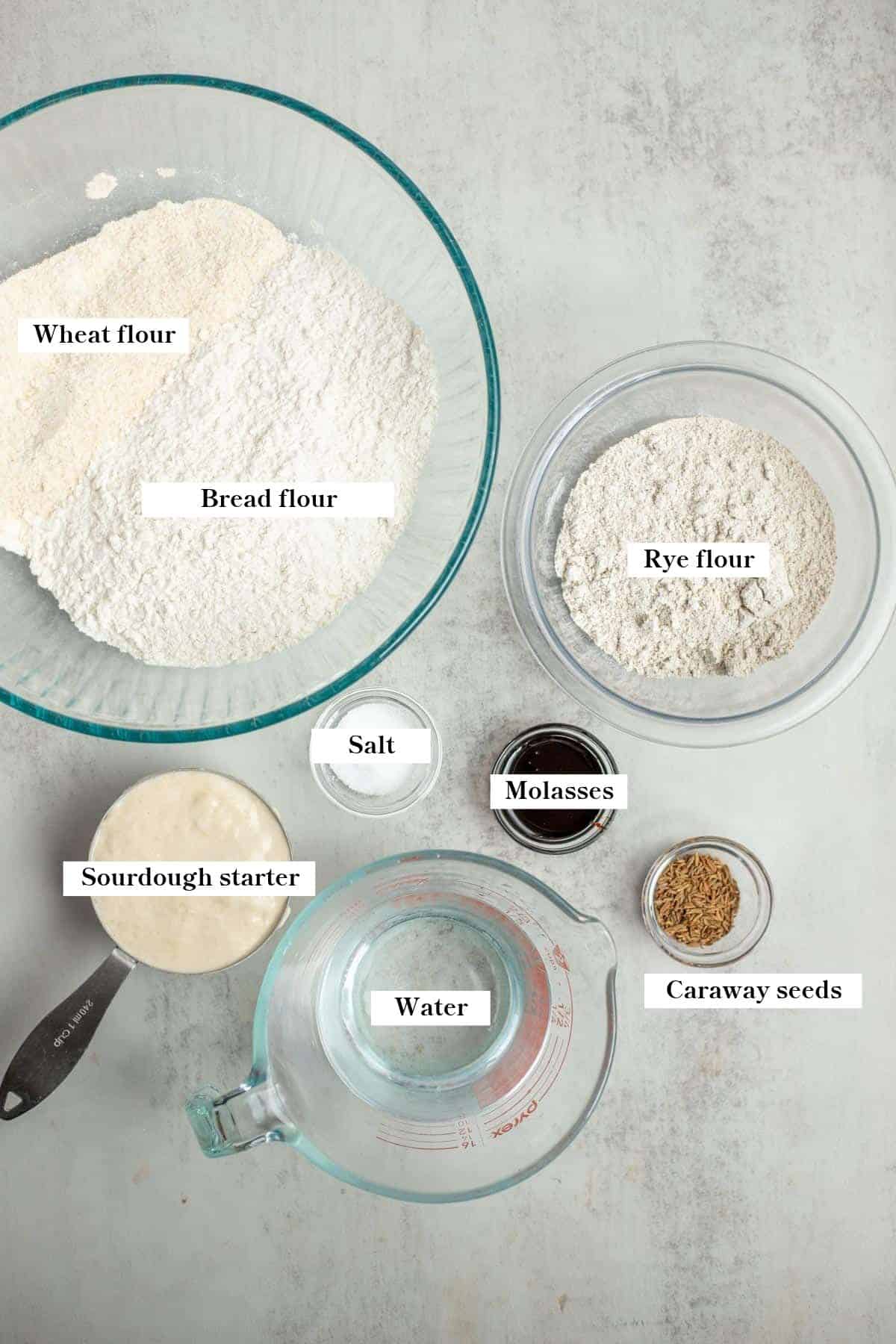
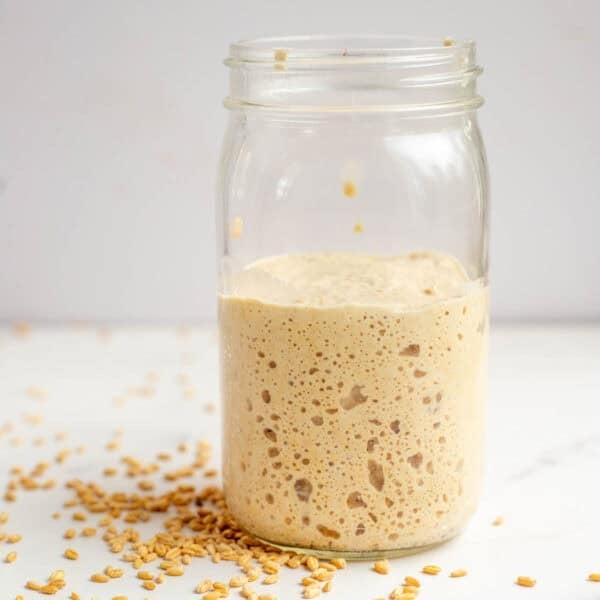
Sourdough starter – Make sure you have an active sourdough starter – one that is nice and bubbly and passes the sourdough float test. You can use a rye sourdough starter if you have one.
Rye flour – I mill rye wheat berries fresh for each use. You can also use a pre-ground rye flour.
Caraway seeds – Caraway seeds give rye bread a pungent flavor, often mistaken for rye flour itself. For less of a rye bread flavor, leave them out. This is typically how my kids prefer it.
A full ingredient list with exact amounts can be found in the recipe card below.
How to Make Sourdough Rye Bread

Step 1: Feed your sourdough starter 4-12 hours before starting the bread, ensuring it is active and bubbly.
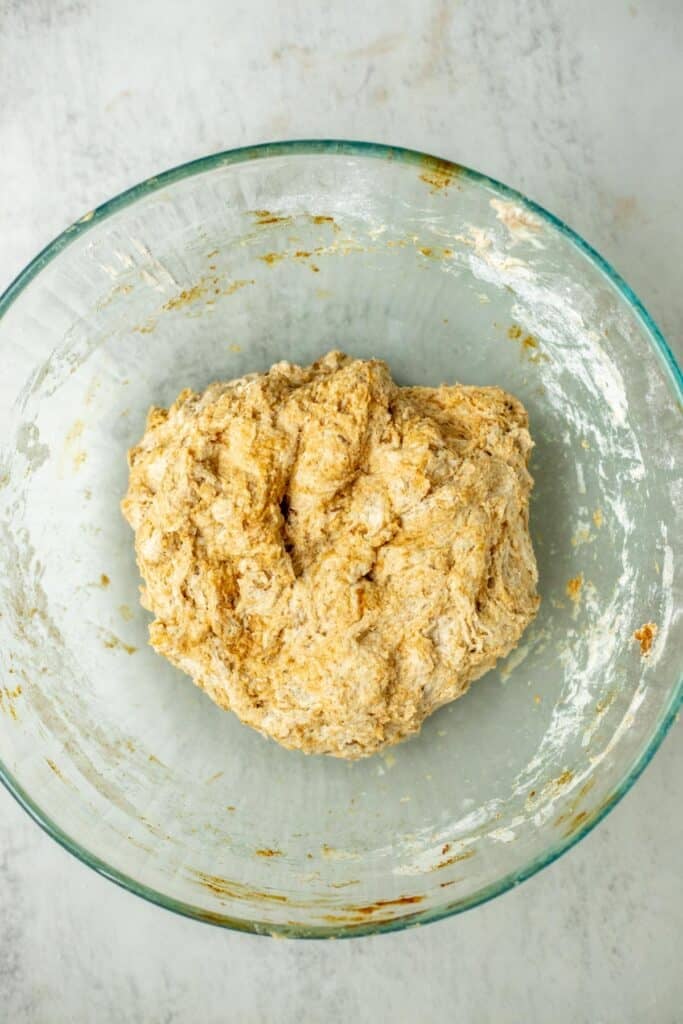
Step 2: Add water, sourdough starter, flours, salt, molasses, and caraway seeds into a large bowl. Stir well to incorporate all the flour. Cover the bowl with a damp towel, lid, or plastic wrap and let the dough rest for 30 minutes to autolyse. This allows the water to hydrate the flour.
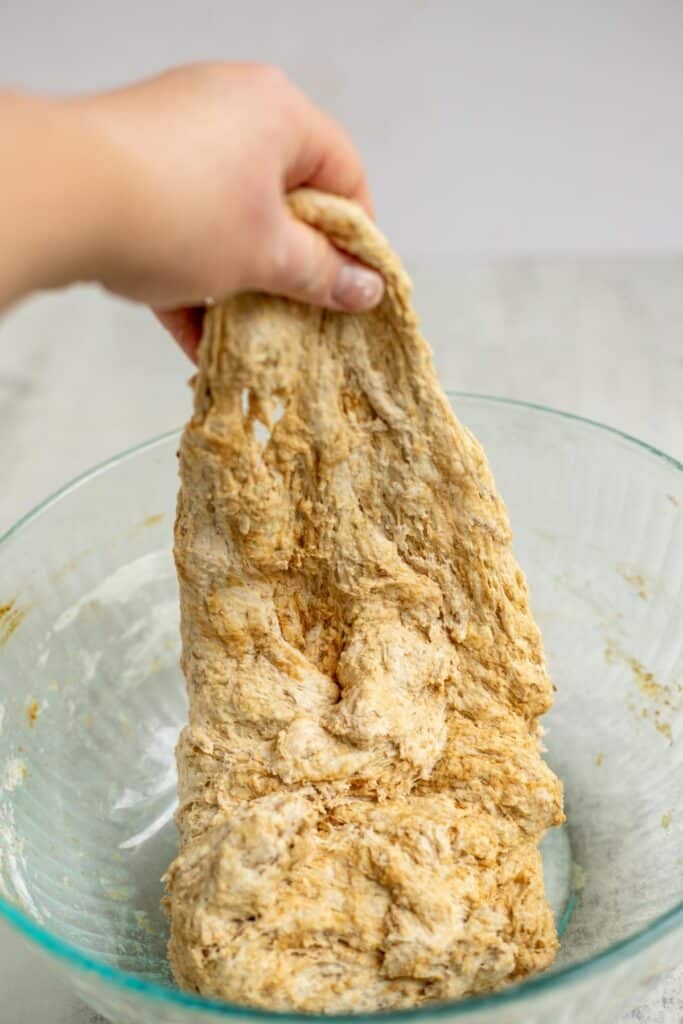
Step 3: To develop the gluten and obtain a nice rise, you will want to do 6 rounds of stretching and folding. I find this doesn’t need to be precisely timed. I just perform the stretch and folds every so often, and the loaf always comes out beautifully.
If you prefer more precise timing, follow the schedule below.
- First 3 stretch and folds every 15 minutes.
- Last 3 stretch and folds every 30 minutes.
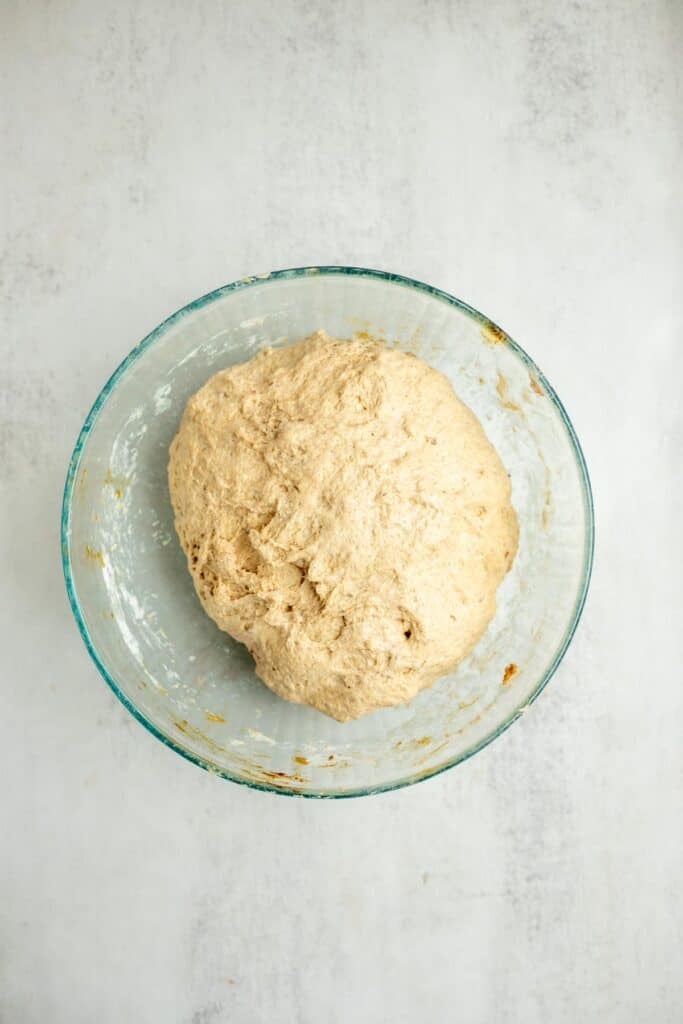
Step 4: Cover the dough and let it bulk-ferment at room temperature until doubled in size. This can take up to 12 hours depending on the temperature of the home and the maturity of your sourdough starter. Be careful not to let the dough over-ferment.
How to Perform Stretch and Folds
- With the dough in the bowl, grab the edge of the dough and pull upwards. After a good stretch, push the dough back into the center. Turn the bowl a quarter turn and repeat this stretch and fold 2 to 3 more times. This is considered one round of stretch and folds. Repeat 5 more times according to the schedule above. If the dough is too sticky, dip your fingers in water instead of adding more flour. Check out my sourdough glossary of terms for more information.
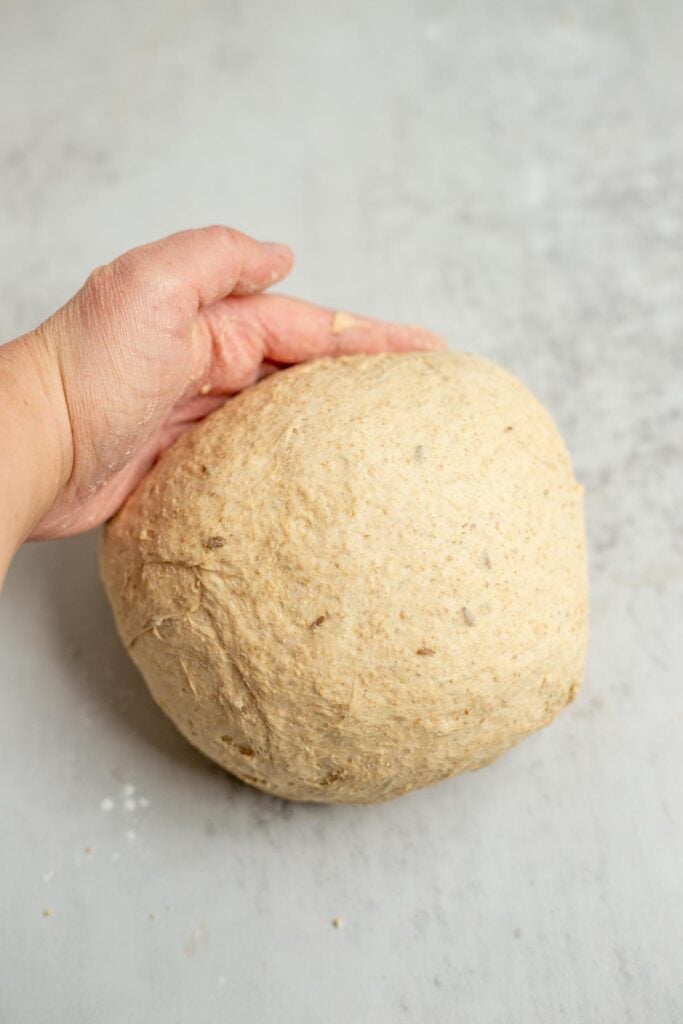
Step 5: Shape the dough into a ball by gently spinning it toward you on the countertop. Let the dough sit on the countertop uncovered for 15-20 minutes to develop a light skin. This helps with handling and keeps the dough from sticking to the bowl later.
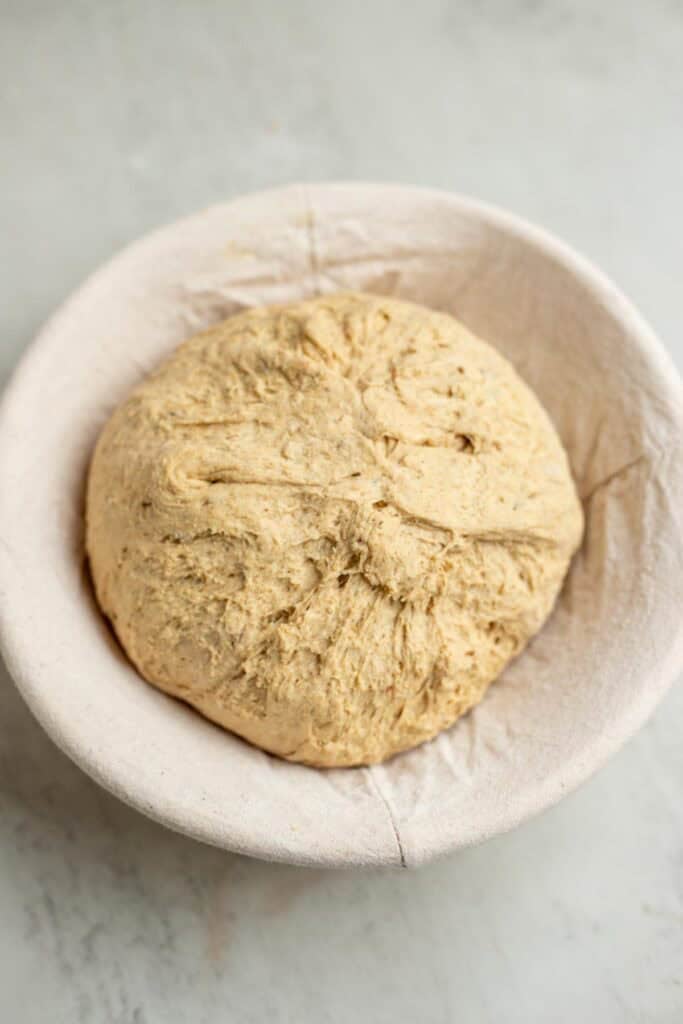
Step 6: Turn the boule over and shape. I like to fold the two sides in to meet in the middle, then I fold the ends to meet in the middle as well, pinching the ends and any seams shut. Transfer to a floured banneton or bowl lined with a tea towel, seam side up. Cover with plastic wrap or stick it in a plastic grocery bag and proof for 12-15 hours in the refrigerator.
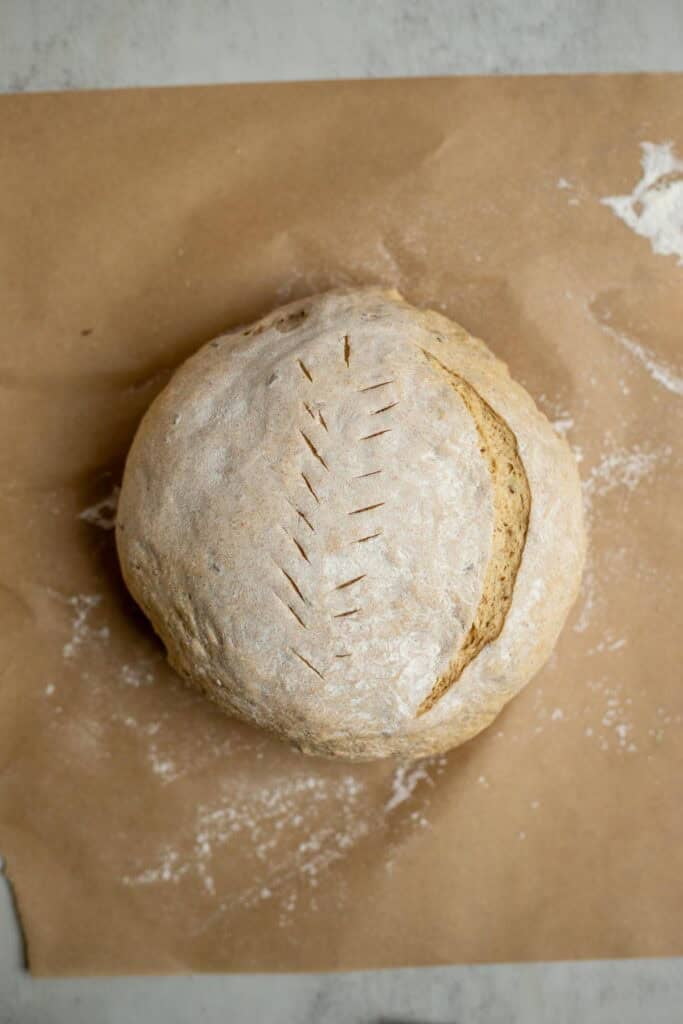
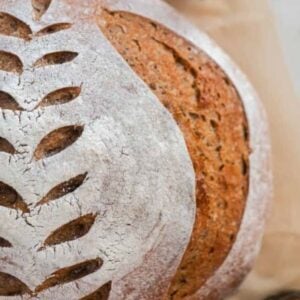
Step 7: Preheat your Dutch oven to 475 degrees Fahrenheit for 1 hour. Remove the dough from the fridge immediately before scoring and baking. Set it seam-side down on parchment paper. Score with a razor or lame. Scoring your sourdough bread adds so much beauty to these rustic loaves.
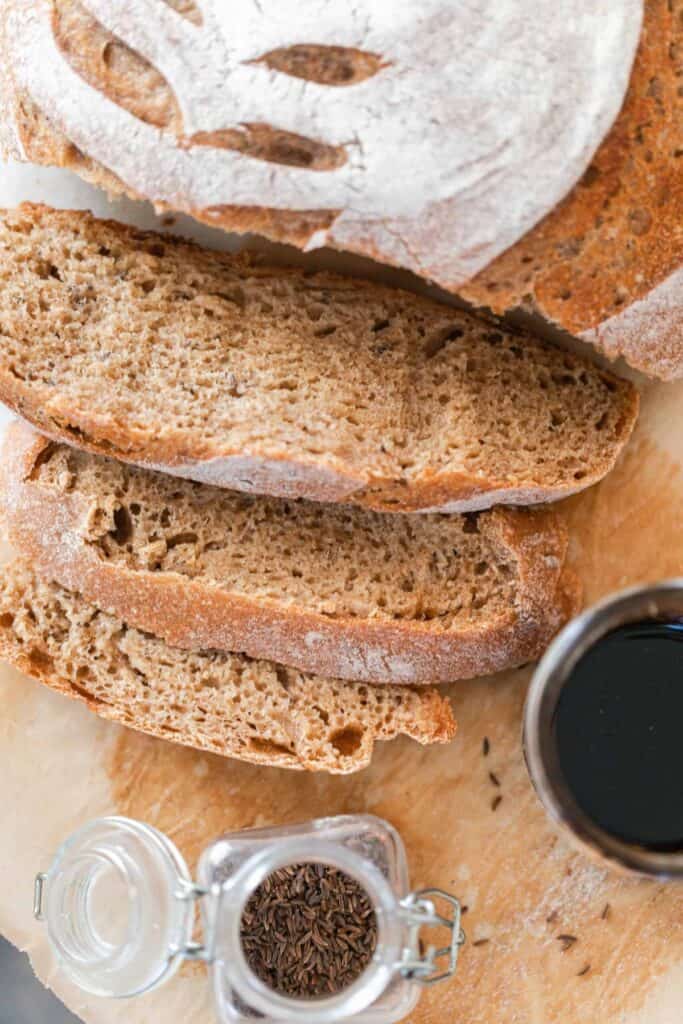
Step 8: Transfer the boule on the parchment paper to your preheated Dutch oven. Bake for 20 minutes with the lid on, then remove the lid and bake for another 20 minutes or until browned. Allow to cool for one hour before slicing to prevent a gummy, dense crumb.
Lisa’s Expert Tips
- This is a lighter loaf because it uses a combination of all-purpose wheat flour, bread flour, and rye flour.
- Rye flour has less gluten than regular wheat flour, so it won’t get very stretchy compared to wheat bread, and it requires less kneading.
- Rye flour ferments more quickly than regular wheat, so watch for over-fermentation. If fermented too long, the dough loses elasticity and appears sticky, limp, and wet.
- I have the best success when using a higher percentage of whole grain by doing a longer autolyse. This helps the flour to really soak up all the liquid and develop the gluten.
- When I make this recipe, I typically like to make it with more whole grain to make it more nutritious. Yes, it makes it denser, but I love knowing we’re eating something that is minimally processed. To make this half whole grain, I typically use 235 grams of bread flour, 100 grams of freshly milled rye, and 135 grams of freshly milled hard white wheat. After putting the rye and whole wheat through my mill, I proceed with the recipe as usual.
- If you are using freshly milled grains for this recipe, I recommend weighing the flour instead of using volume measurements. Grain mills vary greatly – some create very fine and fluffy flour, while others are a little more coarse. This makes volume measurements unpredictable. Using a kitchen scale and calculating the grams is much more reliable, ensuring you end up with a delicious end product.
Sourdough Rye Bread FAQs
Store sourdough rye bread at room temperature in an airtight container for 5 days or so. Refrigerating can dry out the bread. You can also freeze sourdough bread. Thaw at room temperature and warm or toast the bread in the oven before serving.
Rye flour is a delicious, nourishing grain that adds a nutty, earthy flavor to sourdough. It is a moist grain as well, which increases the stickiness of the dough and the density of the crumb when baked.
Yes, you can make a 100% rye loaf. The process changes a bit, and since the dough is very soft and unstructured, it needs to be baked in a loaf pan rather than as a boule. For a completely rye bread, use a rye sourdough starter.
Rye flour adds a deep, earthy flavor to sourdough, with nutty and malty notes that pair nicely with the molasses.
Baker’s Timeline:
This can be started or made at any time.
Feed sourdough starter with flour and water.
If the sourdough starter is ready, proceed to create the dough, autolyse, and then move on to the stretch and folds. Bulk ferment overnight at room temperature.
Shape dough, cover, and place in the refrigerator for 12-15 hours or longer.
Preheat the oven. Score and bake.
The bread could also be left in the fridge until the next day when you are ready to bake.
More Crusty Loaf Recipes from the Farmhouse
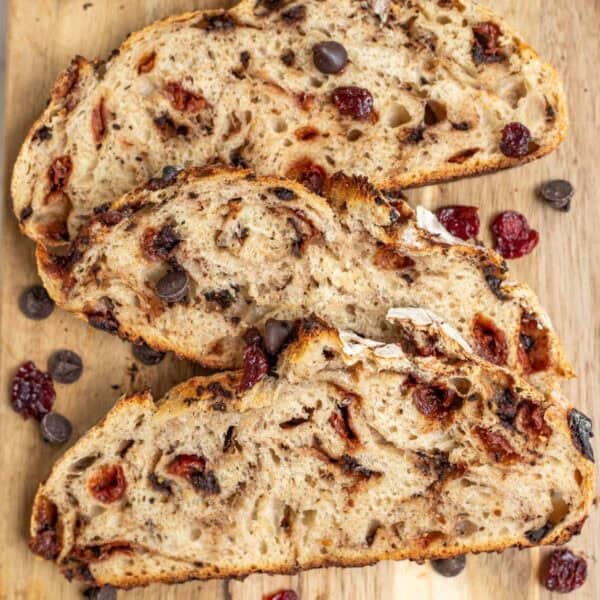
- Chocolate Cherry Sourdough
- Sourdough Croissant Bread
- Honey Sourdough Bread
- No-Knead Sourdough Discard Bread
- Sourdough Fruit Bread
If you try this recipe and love it, I would love it if you could come back and give it 5 stars! Tag me on Instagram @farmhouseonboone.

Sourdough Rye Bread
Video
Equipment
- 1 Grain mill optional
Ingredients
- 300 grams water, 1¼ cups
- 100 grams active sourdough starter, ½ cup
- 100 grams medium rye flour, ¾ cup
- 300 grams bread flour, 2 cups + 2 tablespoons
- 70 grams whole wheat flour, ½ cup
- 10 grams salt, 2 teaspoons
- 17 grams molasses, 1 tablespoon
- 4 grams caraway seeds, 2 teaspoons, optional
Instructions
- Feed your sourdough starter 4-12 hours before starting the bread, ensuring it is active and bubbly.
- Add water, sourdough starter, flours, salt, molasses, and caraway seeds into a large bowl. Stir well to incorporate all the flour. Cover the bowl with a damp towel, lid, or plastic wrap and let the dough rest for 30 minutes to autolyse.
- To develop the gluten and obtain a nice rise, you will want to do 6 rounds of stretching and folding. I just perform the stretch and folds every so often, and the loaf always comes out beautifully. If you prefer more precise timing, follow the schedule below:First 3 stretch and folds every 15 minutes.Last 3 stretch and folds every 30 minutes.
- Cover the dough and allow it to bulk-ferment at room temperature until nearly doubled in size. This can take up to 12 hours depending on the temperature of the home and the maturity of your sourdough starter. Be careful not to let the dough over-ferment.
- Shape the dough into a ball by gently spinning it toward you on the countertop. Let the dough sit on the countertop uncovered for 15-20 minutes to develop a light skin. This helps with handling and keeps the dough from sticking to the bowl later.
- Turn the boule over and shape. Transfer to a floured banneton or bowl lined with a tea towel, seam side up. Cover with plastic wrap or stick it in a plastic grocery bag and proof for 12-15 hours in the refrigerator.
- Preheat your Dutch oven to 475 degrees Fahrenheit for 1 hour. Remove the dough from the fridge immediately before scoring and baking. Set it seam-side down on parchment paper. Score with a razor or lame.
- Transfer the boule on the parchment paper to your preheated Dutch oven. Bake for 20 minutes with the lid on, then remove the lid and bake for another 20 minutes or until browned. Allow to cool for one hour before slicing to prevent a gummy, dense crumb.
Notes
Nutrition
Nutrition information is automatically calculated, so should only be used as an approximation.







My husband wants me to try a 100% rye loaf. Could I use your sandwich loaf recipe and just use all milled rye? Thanks!
I haven’t tried that recipe with 100 percent rye so I can’t vouch for how it will turn out….
Is this a large loaf or two small ones
This is for one loaf of rye bread