
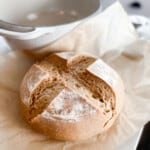
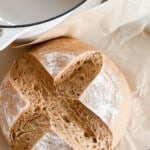
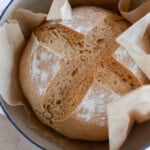
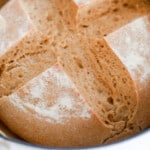
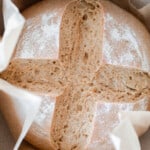
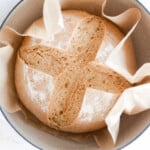
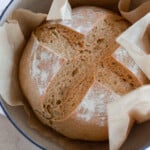
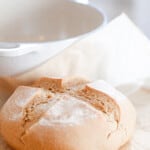
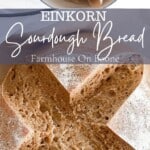
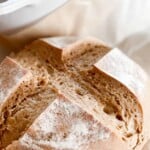
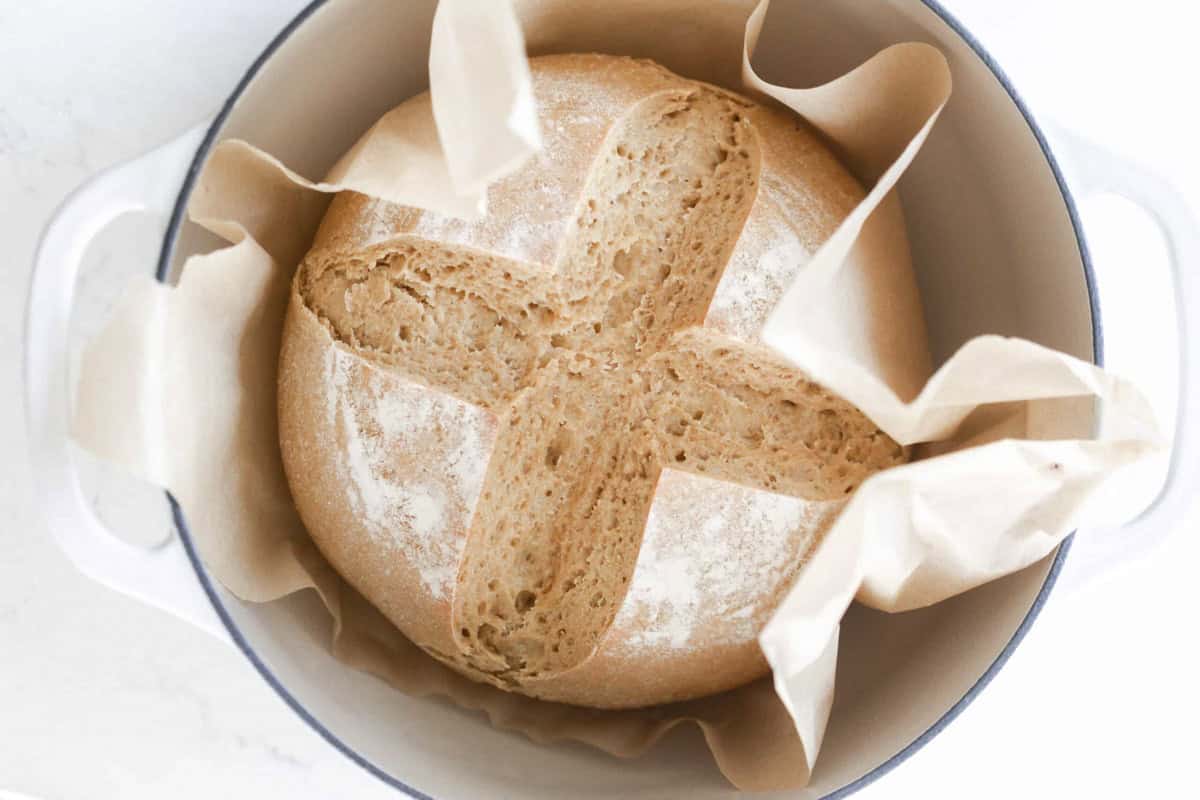
Nutrient-dense and simple to make, this einkorn sourdough bread offers a fluffy, chewy interior, a golden, rustic crust, and plenty of robust flavors from the grain and the fermentation.
Einkorn is the world’s oldest heirloom wheat that hasn’t been hybridized. While not gluten-free, this ancient grain is higher in protein and lower in gluten than modern wheat, making it more easily tolerated by those with gluten sensitivities.
When long-fermented, the gluten is minimized further, and the phytic acid is broken down, making nutrients like folate, iron, zinc, and vitamin B more bio-available.
While this recipe is made with sourdough and utilizes fermentation time, there are times that I don’t ferment my baked goods. When I don’t ferment, I like to use einkorn for its many health benefits.
These einkorn chocolate chip cookies are a great example of that. They are delicious, quick to make, and more nutritious when made with einkorn.
We have also loved einkorn cinnamon rolls, einkorn pie crust, einkorn pancakes, einkorn tortillas, einkorn flatbread, and many other recipes!
My no-knead sourdough bread recipe was such a success that I applied some of those techniques to this einkorn bread recipe and have been thrilled with the results.
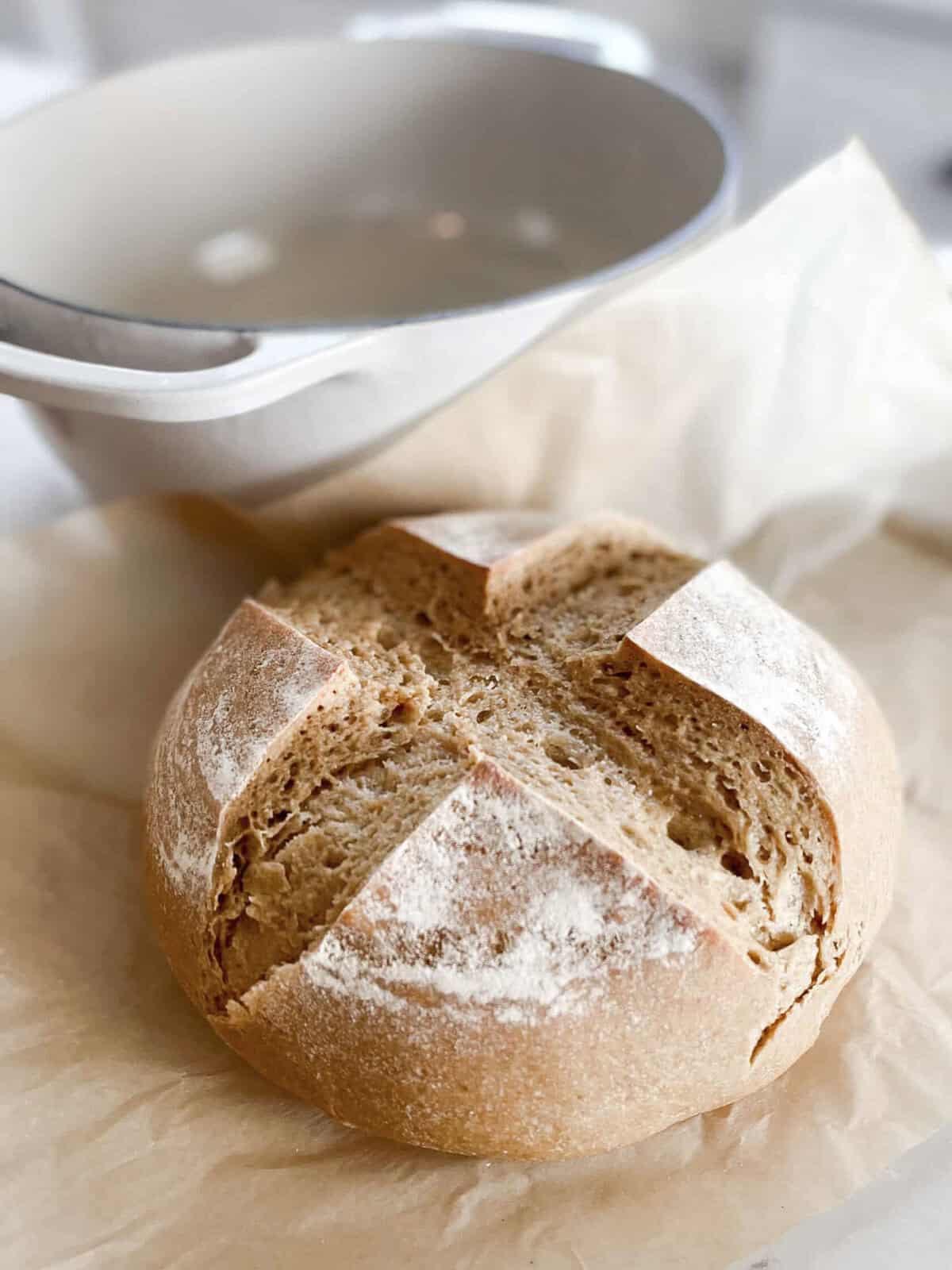
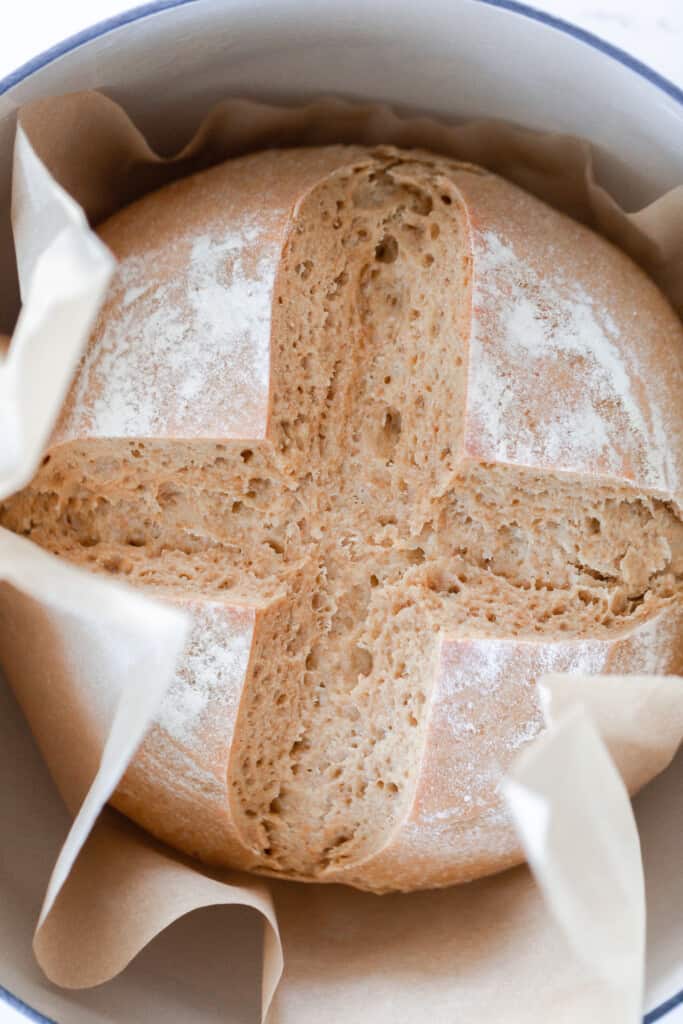
This einkorn loaf is everything you want in homemade bread – excellent texture inside and out, mouthwatering flavor, and a lovely, rustic appearance.
Pair this crusty loaf with our favorite easy cheeseburger soup, a hearty zuppa toscana, or roasted red pepper and tomato soup for a delicious and comforting meal.
It’s also an amazing addition to breakfast, toasted and spread with fresh butter and strawberry jam, or for lunch, layered with homemade ricotta cheese and garden-fresh sliced tomato.
If you are new to sourdough, check out my post on how to make a sourdough starter from scratch.
Why You’ll Love This Recipe
Delicious flavor and texture – Einkorn wheat gives this loaf an earthy, nutty flavor. Coupled with the sourdough tanginess, it’s a deeply flavorful loaf with a moist, airy, tender crumb.
Easier digestion – Einkorn has a lower gluten content and a simpler gluten structure than modern wheat, making this ancient wheat easier on the digestive system and more accommodating for those with gluten sensitivities.
Nutritious – Einkorn offers higher values of minerals, protein, and fiber, and is often free from modern fertilizers and sprays.
Ingredients
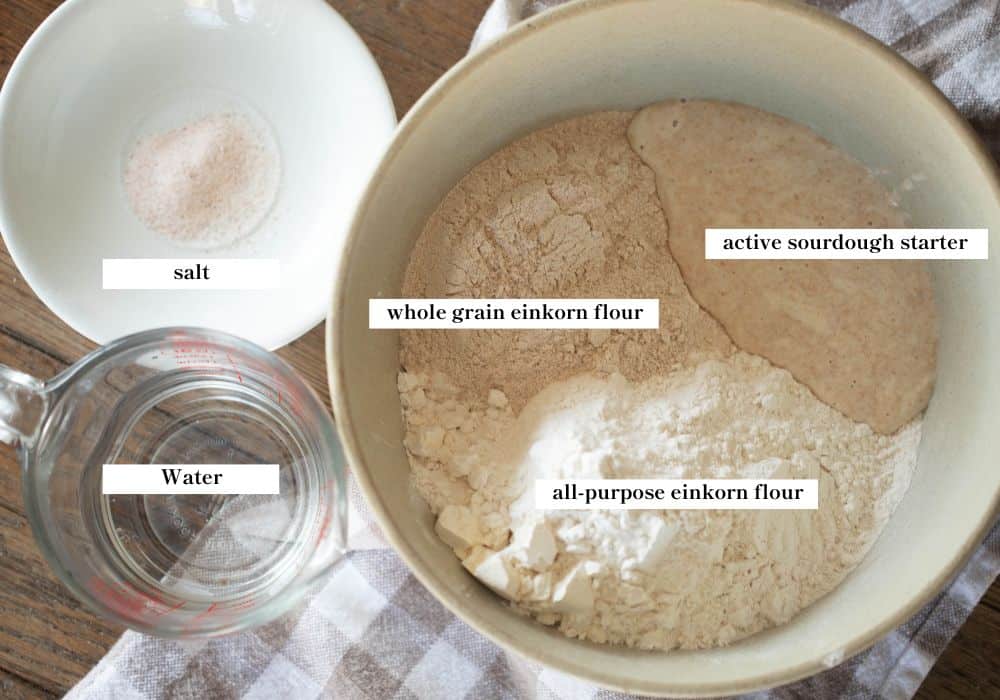
Einkorn whole wheat flour – You can also substitute for einkorn all-purpose flour.
Einkorn all-purpose flour – Adding all-purpose produces a lighter texture than a fully whole wheat loaf.
Tools You May Need
Grain mill (optional) – This is if you plan on grinding your own einkorn berries. I have a Mockmill that I love.
How to Make Einkorn Sourdough Bread
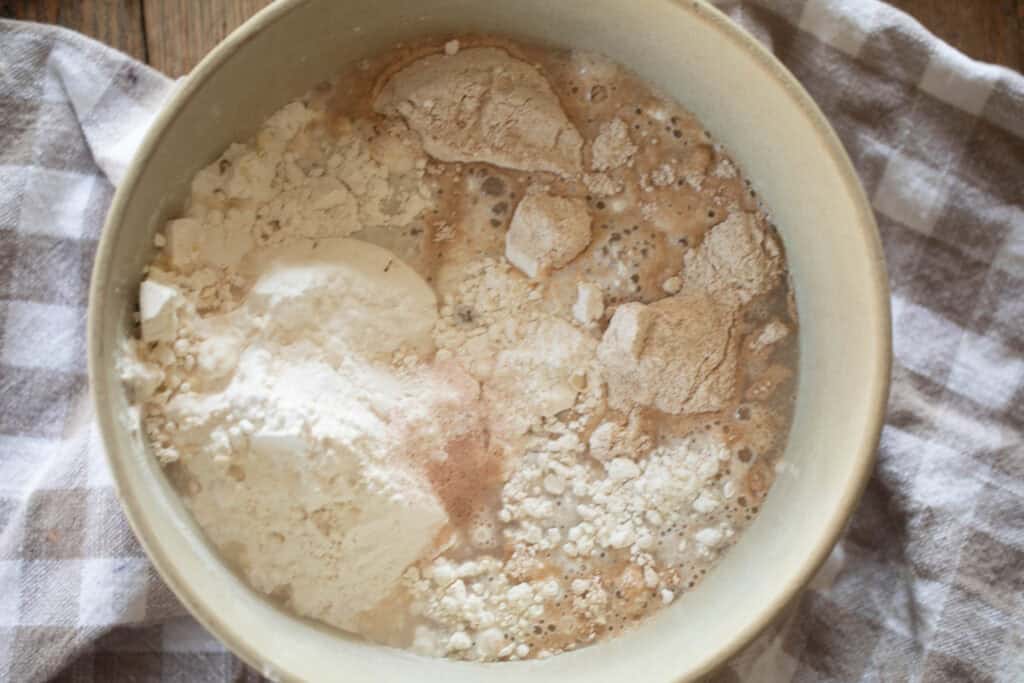
Step 1: Feed your sourdough starter 4-12 hours before starting your dough. You want a bubbly and active starter for this recipe. Grind einkorn berries, if needed. Skip this step if you have pre-ground flour. Add flour, salt, water, and sourdough starter to a large mixing bowl.
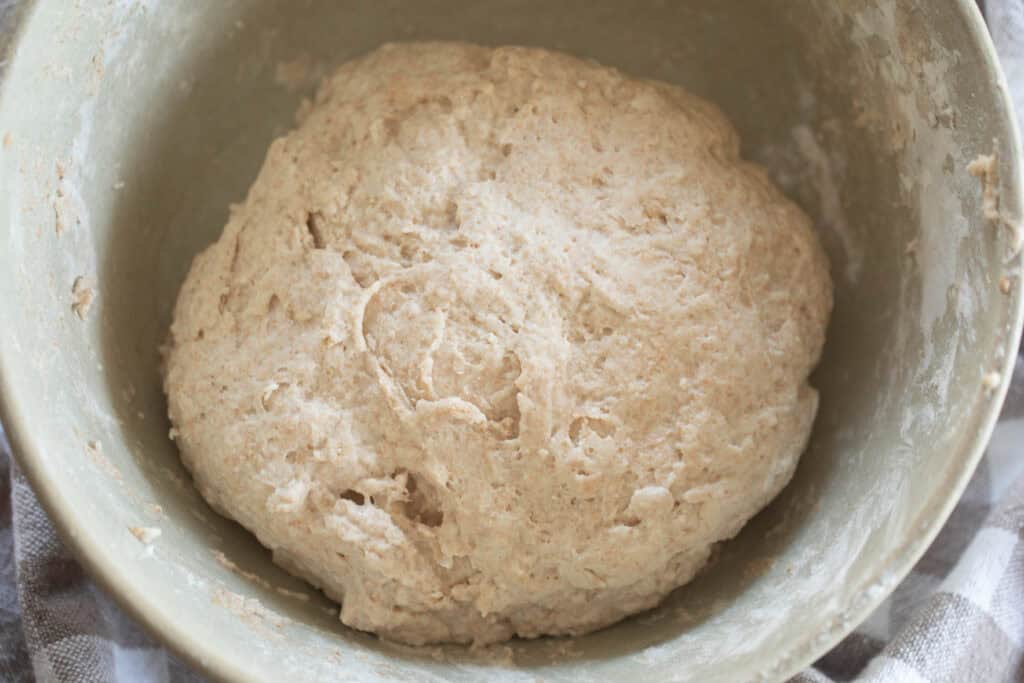
Step 2: Combine with your hands until it comes together. Let the dough rest for 15 minutes.
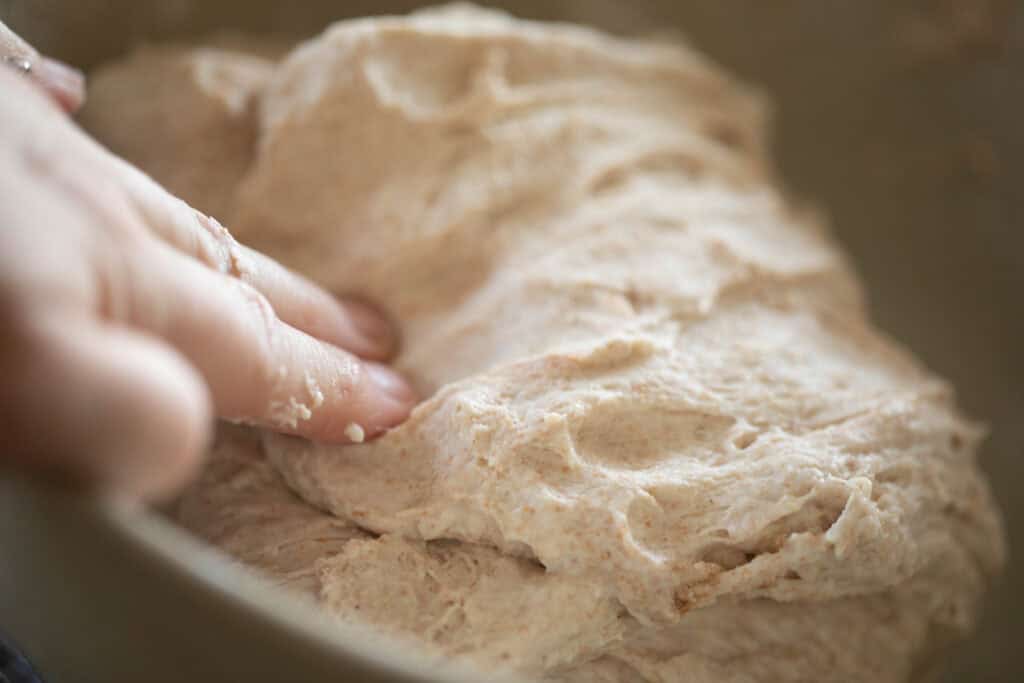
Step 3: Flatten out the dough, then stretch out each edge and fold them back in on all sides. Roll into a ball. Place dough in a greased bowl and cover with plastic wrap or beeswax wrap. If the dough is sticky, dampen your hands before working with it rather than adding more flour. Allow to rest again for 20 minutes.
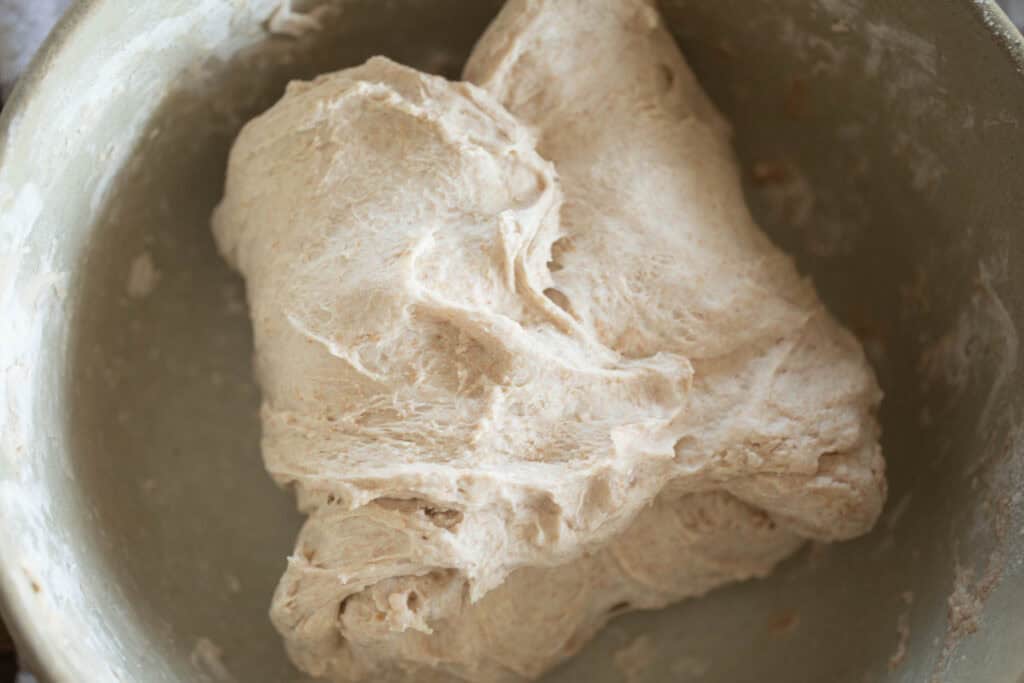
Step 4: Repeat the flattening and folding process. Allow to rest again for 20 minutes.
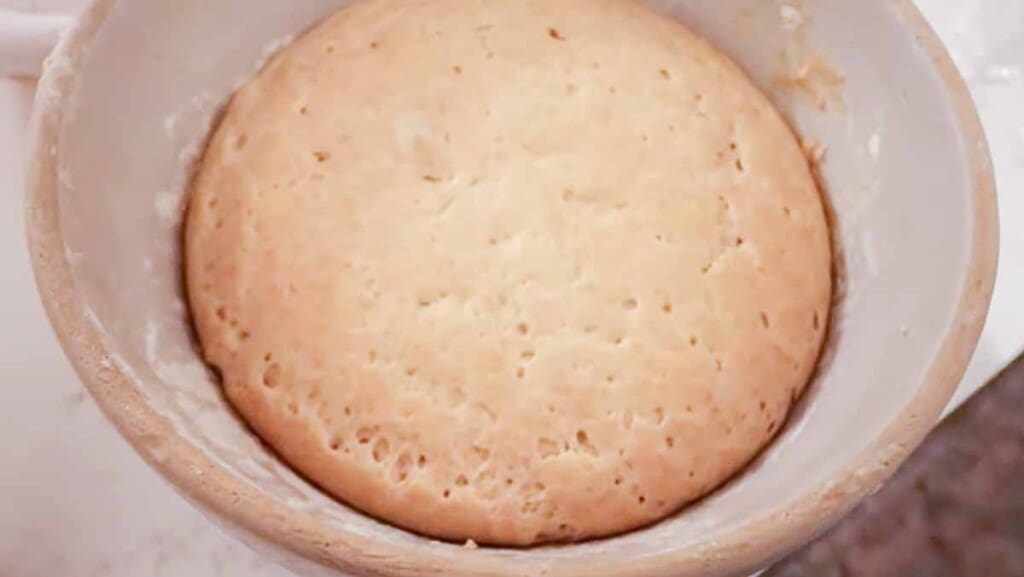
Step 5: Repeat the process another time, then shape and cover with plastic wrap or a tea towel. Allow to rise until doubled in size, about 3-12 hours, depending on the temperature of your home.
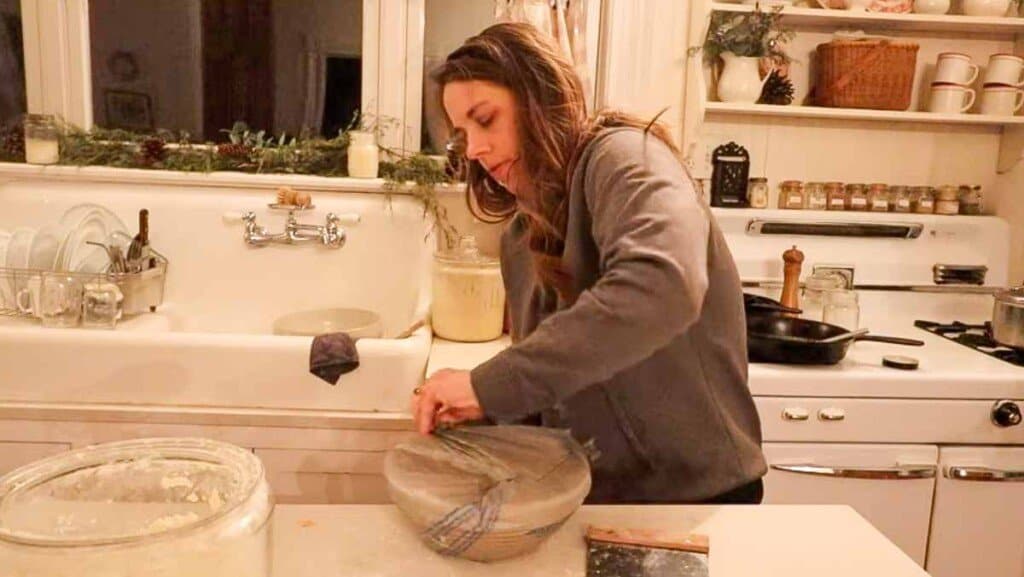
Step 8: After doubling, shape the loaf with your hands. Place it in a floured banneton basket. Cover with plastic and place in the fridge overnight. I usually place the proofing basket into a plastic grocery bag and tie it shut to help keep it more air-tight.
The Next Day
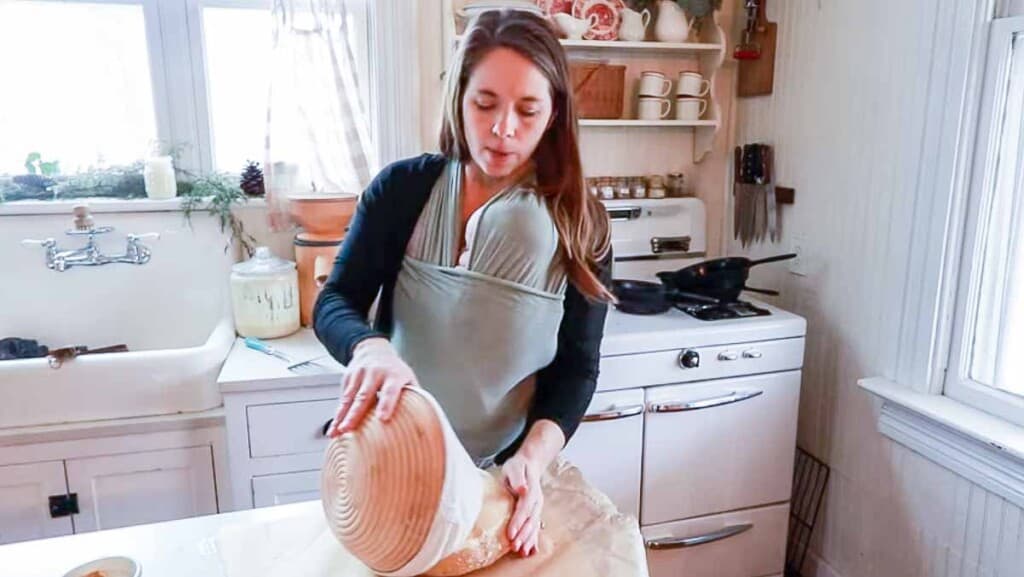
Step 1: Preheat the oven to 450 degrees, allowing the Dutch oven to preheat for 30 minutes to an hour. Once the Dutch oven has preheated, take the dough out of the fridge and place it onto a sheet of parchment paper.
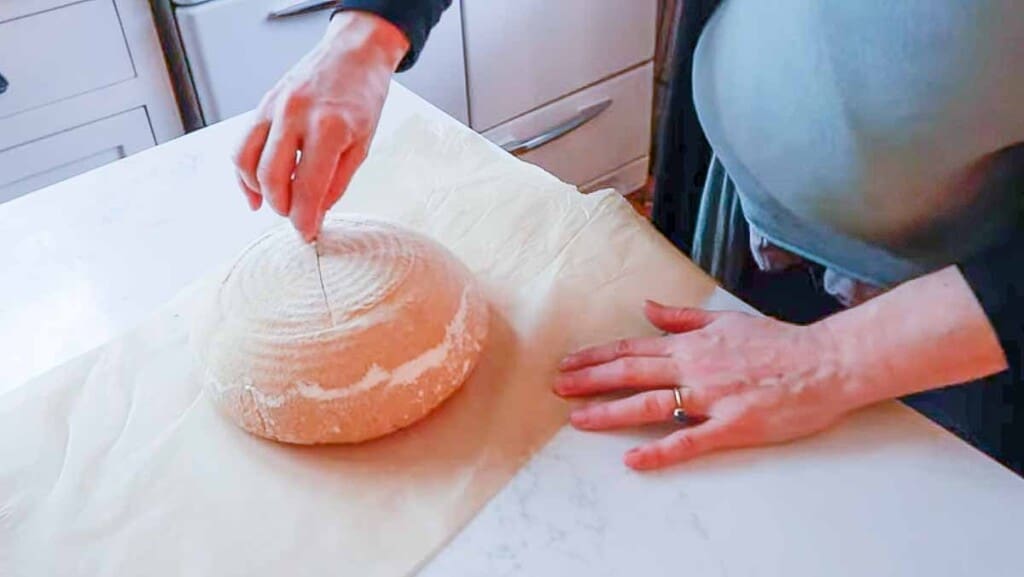
Step 2: Score the top of the dough and gently place the parchment paper and dough into the Dutch oven, cover with a lid, and place in the hot oven.
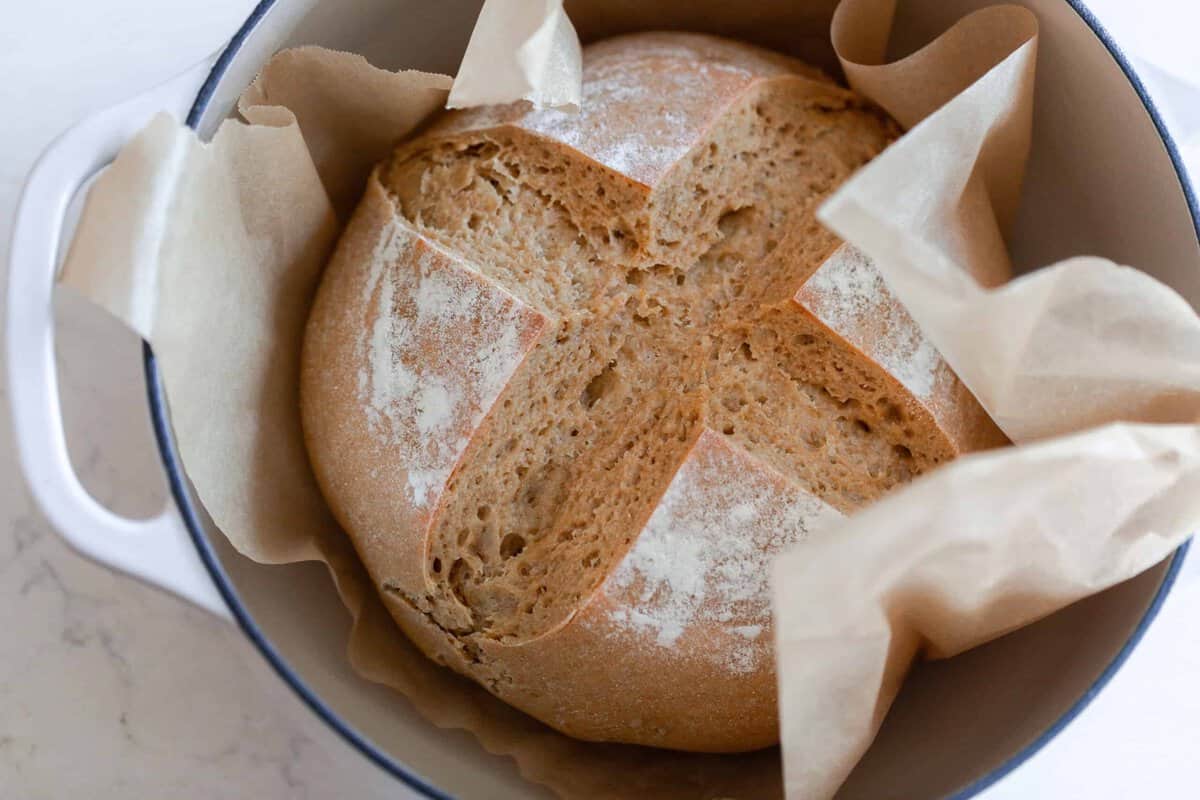
Step 3: Bake for 30 minutes with the lid, then remove the lid and bake for another 15 minutes until golden brown. Place on a wire rack and cool completely before slicing.
Tips
- If you want to ensure your bread is 100% einkorn, start your sourdough starter with einkorn flour, or convert your current starter to einkorn flour. More information is in the FAQs below.
- Einkorn dough tends to be much stickier than regular bread dough. I like to use dampened hands and a bench scraper to combat this without having to add extra flour.
- When using a sourdough starter, it is recommended to use filtered water. Some water may contain too much chlorine, which can kill the beneficial bacteria and yeast in your starter.
- For the best rise and the perfect texture, I incorporated a modified stretch and fold process like with my other no-knead sourdough bread recipe. Since einkorn doesn’t have the same type of gluten structure, the process looks a little different but still yields a wonderful result that is light and airy.
- If you do not have a banneton basket, you could use a piece of parchment paper. Place the dough on the parchment paper, place in a bowl, and cover to rise.
- Set the dough in a warm place to facilitate a speedier rise.
- I like to use both whole-grain einkorn flour and all-purpose einkorn flour. I found this combination to be best for a soft and structured crumb. You can substitute the whole grain einkorn for more all-purpose flour if that is what you have on hand.
Recipe FAQs
Wrap with beeswax wrap or place in a bread box or airtight container for 3-4 days. You can also place in a Ziplock bag (sliced or whole) and freeze for an extended period of time.
Yes, you can use a regular wheat sourdough starter without issue.
If you want to make this bread 100% einkorn, convert your starter to an einkorn starter by feeding it with einkorn flour for a few days. By the fifth feeding, your starter will be around 96% einkorn flour.
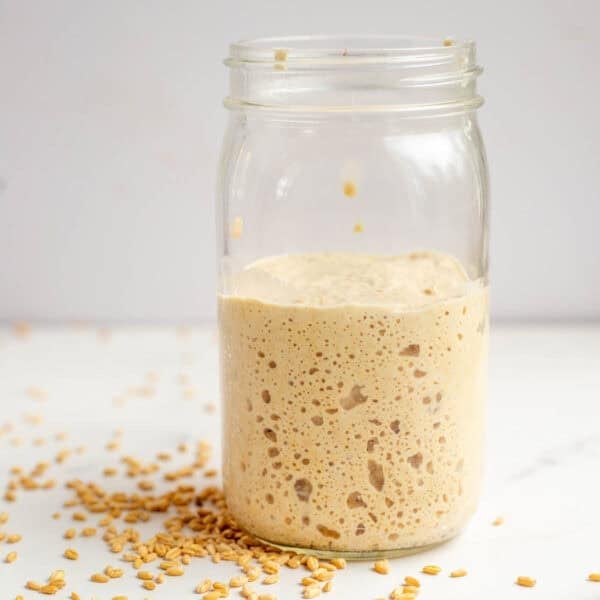
For this recipe, you need to use a nice, active starter. Feed your starter 4-12 hours before creating the dough. The starter is usually ready when it has doubled or tripled in size. Take a spoonful of your active starter and drop it into a cup of water. If it floats, then it is ready to use for bread.
Yes. While you cannot just use your favorite sourdough bread recipe (or any other sourdough recipe) and convert it to an einkorn version one-for-one, you can easily use einkorn flour for sourdough with a few tweaks. This is because einkorn flour requires less liquid than other flour.
Baker’s Timeline
The night before – Feed sourdough starter.
NEXT DAY
8:00 AM: Mix flour, salt, active starter, and water. Allow to rest for 15 minutes.
8:20 AM: Flatten and fold dough. Shape into a ball. Place into a bowl, cover, and let rest for 20 minutes.
8:45 AM: Repeat the same folding process, then allow the dough to rest, covered, for 20 minutes.
9:10 AM: Repeat that same process a third time, then allow the dough to rest, covered, for 20 minutes.
9:35 AM: Shape and cover with plastic wrap. Allow to rise until doubled in size, about 3-12 hours, depending on the temperature of your home.
7:00 PM: (This time is dependent on when the dough doubles in size.) Punch down the dough and shape into a ball. Place in a floured banneton basket. Cover with plastic wrap or place in a plastic bag, then refrigerate overnight.
NEXT DAY
8:00 AM: Preheat oven to 450 degrees, allowing Dutch oven to preheat for 30 minutes to an hour.
9:00 AM: Remove the dough from the fridge and place onto parchment paper. Score. Place into Dutch oven and bake.
More Sourdough Recipes from the Farmhouse
- Sourdough Oatmeal Bread
- Sourdough Garlic Knots
- Easy Kamut Bread
- Sourdough Irish Soda Bread
- Homemade Sourdough Calzone Recipe
- Sourdough Buttermilk Pancakes
If you try this recipe and love it, I would love it if you could come back and give it 5 stars! Tag me on Instagram @farmhouseonboone.

Einkorn Sourdough Bread
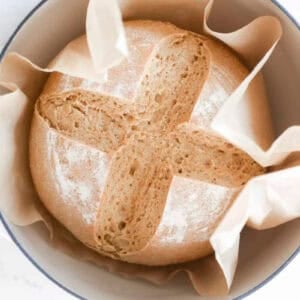
Ingredients
- 3 cups all-purpose einkorn flour
- 1 cups whole grain einkorn flour, or more all-purpose einkorn
- 1 1/4 cups water
- 1 cup sourdough starter
- 1 1/2 teaspoons salt
Instructions
- Feed your sourdough starter 4-12 hours before starting your dough. You want your starter bubbly and active for this recipe.
- Grind einkorn berries, if needed. Skip this step if you have pre-ground flour.
- Add flour and salt to a large bowl and mix.
- Add sourdough starter and water to the flour mixture and combine with your hands until it comes together. Let rest for 15 minutes.
- Flatten out the dough, then stretch out each edge and fold them back in on all sides. Roll into a ball. Place in a greased bowl and cover with plastic wrap or beeswax wrap. If the dough is sticky, dampen your hands before working with it rather than adding more flour. Allow to rest again for 20 minutes.
- Repeat the flattening and folding process. Allow to rest again for 20 minutes.
- Repeat the process another time, then shape and cover with plastic wrap. Allow to rise until doubled in size, about 3-12 hours, depending on the temperature of your home.
- Shape the loaf with your hands. Place it in a floured banneton basket. Cover with plastic and place in the fridge overnight. I usually use a plastic grocery bag and tie it shut to help keep it more air-tight.
The Next Day
- Preheat the oven to 450 degrees, allowing the Dutch oven to preheat for 30 minutes to an hour.
- Once the Dutch oven has preheated, take the dough out of the fridge and place it onto a sheet of parchment paper.
- Score the top of the dough and gently place the parchment paper and dough into the Dutch oven, cover with a lid, and place in the hot oven.
- Bake for 30 minutes with the lid, then remove the lid and bake for another 15 minutes until golden brown. Allow to cool before slicing.
Notes
- If you want to ensure your bread is 100% einkorn, start your sourdough starter with einkorn flour, or convert your current starter to einkorn flour. More information is in the FAQs in the blog post.
- Einkorn dough tends to be much stickier than regular bread dough. I like to use dampened hands and a bench scraper to combat this without having to add extra flour.
- When using a sourdough starter, it is recommended to use filtered water. Some water may contain too much chlorine, which can kill the beneficial bacteria and yeast in your starter.
- For the best rise and the perfect texture, I incorporated a modified stretch and fold process like with my other no-knead sourdough bread recipe. Since einkorn doesn’t have the same type of gluten structure, the process looks a little different but still yields a wonderful result that is light and airy.
- If you do not have a banneton basket, you could use a piece of parchment paper. Place the dough on the parchment paper, place in a bowl, and cover to rise.
- Set the dough in a warm place to facilitate a speedier rise.
- I like to use both whole-grain einkorn flour and all-purpose einkorn flour. I found this combination to be best for a soft and structured crumb. You can substitute the whole grain einkorn for more all-purpose flour if that is what you have on hand.
Nutrition
Nutrition information is automatically calculated, so should only be used as an approximation.
Pin It For Later







More of a question really–I’ve taken to grinding my own berries. I get how to grind my own einkorn whole wheat, but you list 3 cups of all purpose einkorn–do I need to buy this or how do I create this from my einkorn berries?
Appreciate ALL your info–you’ve inspired by sourdough journey!!
You can just use your freshly milled einkorn!
Love it All
My ??????,,,,,
Do we sift the Freshly Milled Einkorn
& if so,,,, how many times do we sift &
How do we know the bran is removed????
Please Explain 🙏❤️
You do not have to sift the flour before using it.
I used this recipe and baked my first einkorn loaf today. It turned out perfect and delicious! However, for future loaves, I was just curious if would be able to use my einkorn starter but use a different all purpose flour for this recipe? If so, do the amounts stay the same? I’m new to this. I love using einkorn flour across the board, but it’s a little pricey and I really need to make a bunch of loaves. Any insight on this would be so helpful!
I don’t know if it’s a new thing you are doing or if I’ve just missed it, but I love the bakers timeline you have. I find that super helpful so I’m not at some critical stage when I want to be in bed!
Have you tried baking this in an oval or loaf pan? Just wondered if those would work.
Thank you! Do you have an einkorn sourdough sandwich bread recipe? Or could I use einkorn in place of hard white FMF in your 100 % FMF sandwich bread recipe?