








Soft, airy, and cooked on the stove top, these delicious sourdough English muffins begin with simple ingredients, an active starter, and a bit of fermentation time. With a crisp, structured exterior and a bubbly crumb full of sourdough flavor, use these muffins to build the perfect cheesy breakfast sandwiches or slather them with butter and jam for a filling snack.
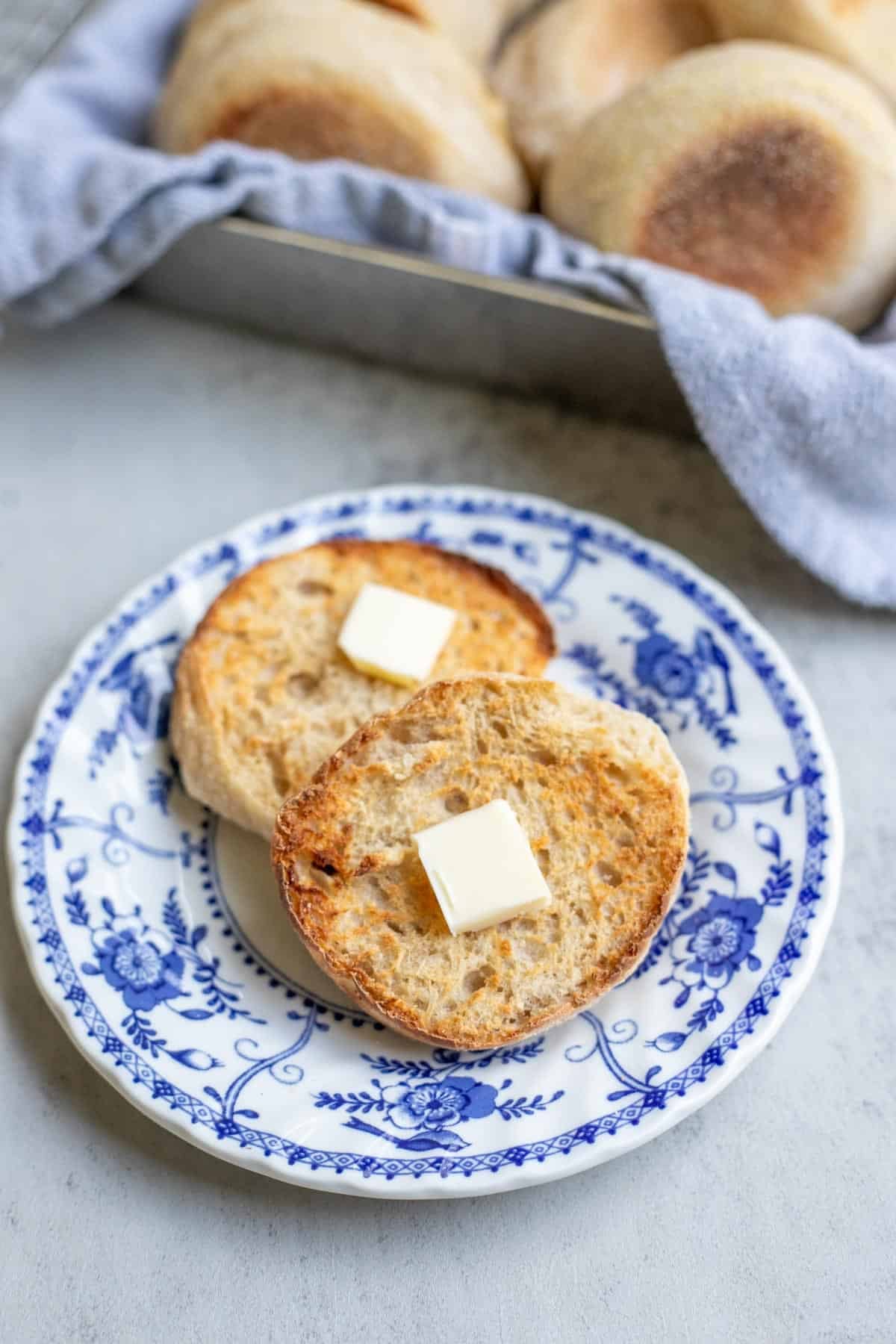
Homemade sourdough English muffins change the game with their simplicity and versatility. Long-fermented and perfectly tangy, this easy recipe requires only pantry staples and an active starter with an overnight rise. The fermentation time not only adds better flavor, but also better digestion and a delicate, chewy crumb full of bubbly pockets that trap butter and homemade strawberry jam.
The flavor and structure of these muffins lend themselves perfectly to many different uses, such as savory sourdough breakfast sandwiches or even English muffin pizzas with homemade marinara and fresh mozzarella.
For more sourdough favorites, try these soft sourdough pancakes or waffles, sweet sourdough cinnamon rolls or coffee cake, or make a batch of sourdough biscuits or beignets. Making your own sourdough starter requires minimal ingredients and some patience, but the recipe opportunities are endless.
Why You’ll Love This Recipe
Sourdough flavor – Homemade English muffins have a savory, yeasty flavor, and sourdough fermentation adds a delicious tang that complements sweet or savory toppings.
Airy texture – Fermentation creates carbon dioxide, which builds up in the dough as bubbles. These bubbles cook in place, creating a crumb delicately arranged with the characteristic nooks and crannies that hold anything from jams and butters to melty cheeses and mashed avocado.
Versatile use – Use these for cheesy egg sandwiches, like eggs Benedict, or spread with soft butter and peach jelly, drizzle with honey and peanut butter, or pile them high with homemade chicken salad.
Ingredients
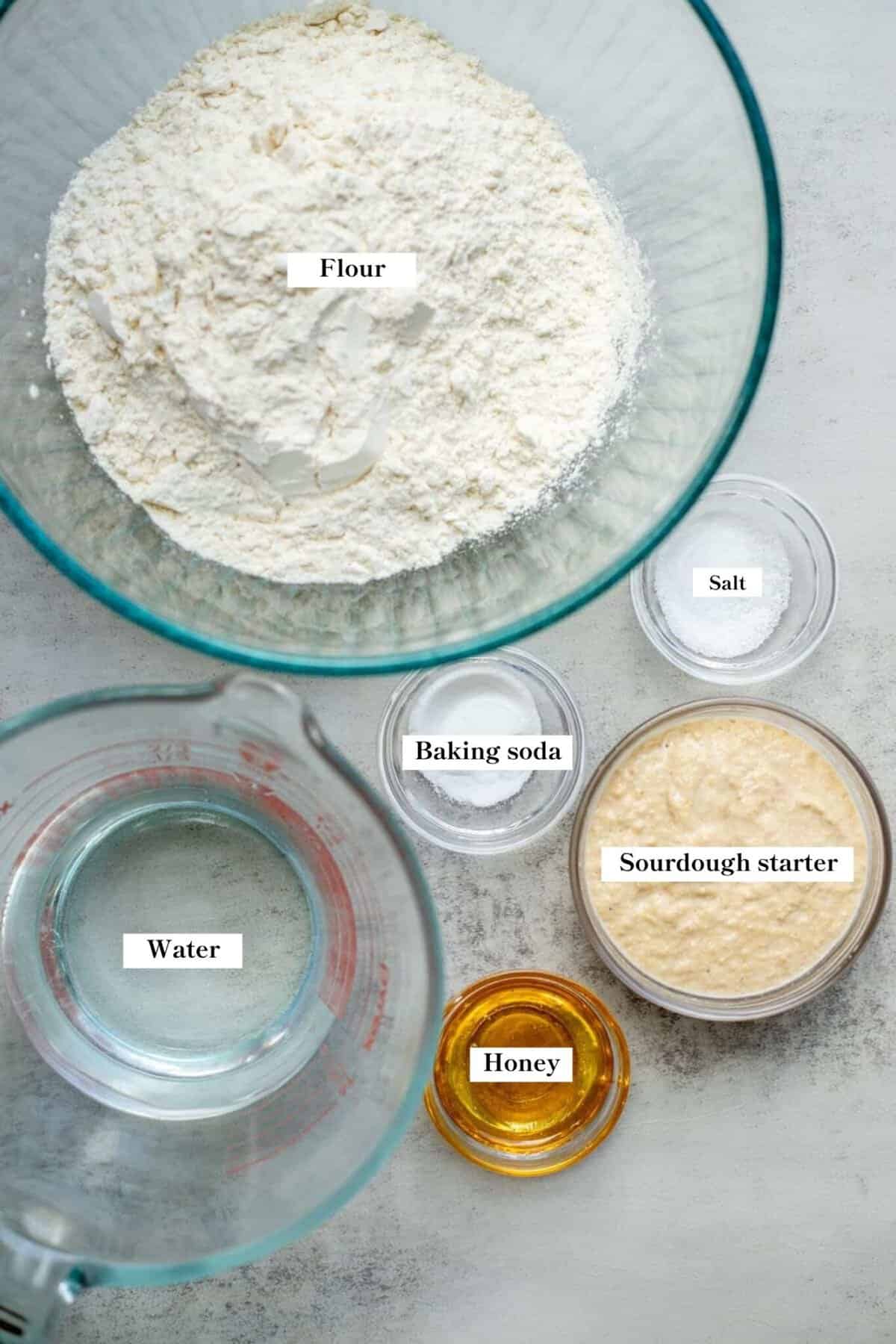
Flour – I use unbleached all-purpose flour for this recipe. Fresh-milled wheat also works, but the liquids need to be adjusted to account for the high absorbency of fresh-milled flour.
Sourdough starter – Use a recently fed, active, and bubbly starter.
Water – You can use milk in place of the water, if desired.
A full ingredient list with exact amounts can be found in the recipe card below.
Tools You May Need
How to Make Sourdough English Muffins (with baking soda)
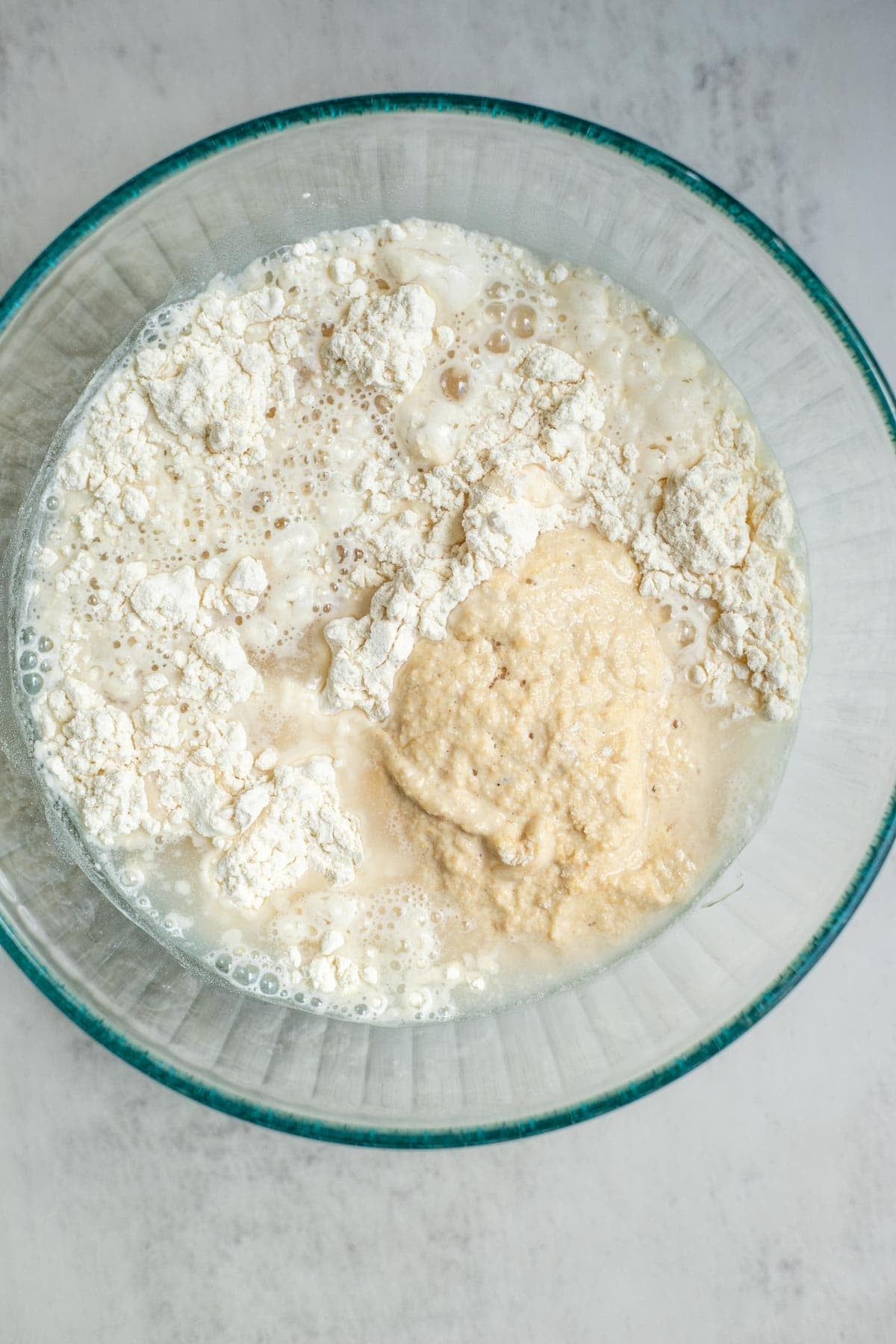
Step 1: The day before you plan to cook the muffins, start with fermenting the grains. Add flour, water, and sourdough starter to a large mixing bowl or the bowl of a stand mixer and mix well. Use an active sourdough starter that has been recently fed.
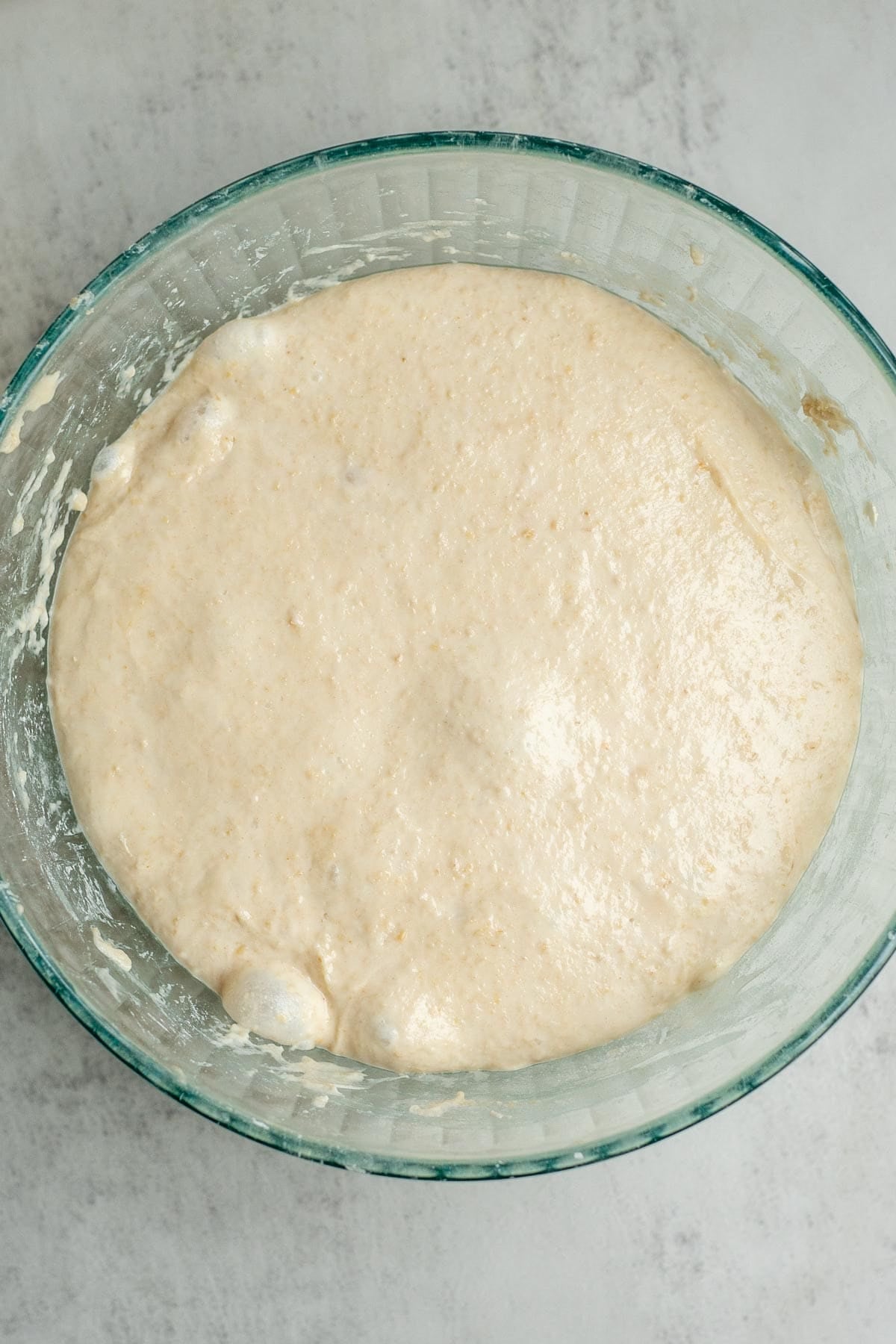
Step 2: Cover the bowl with a towel and let it sit at room temperature for 12-24 hours. The fermentation process speeds up with warmer temperatures and slows with cooler temperatures. Where you place the bowl affects the timing.
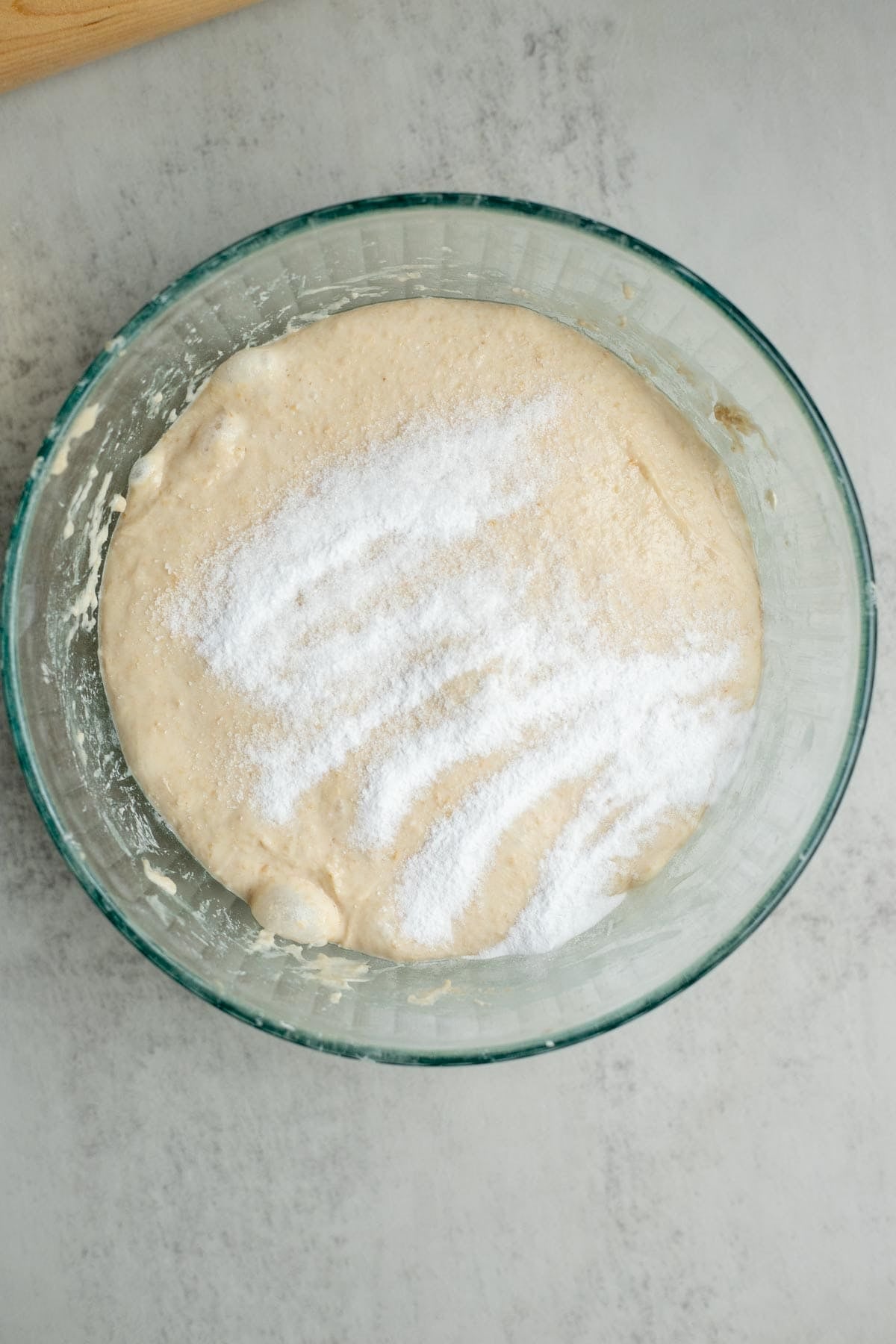
Step 3: After the bulk fermentation, add honey, salt, and baking soda, stirring well.
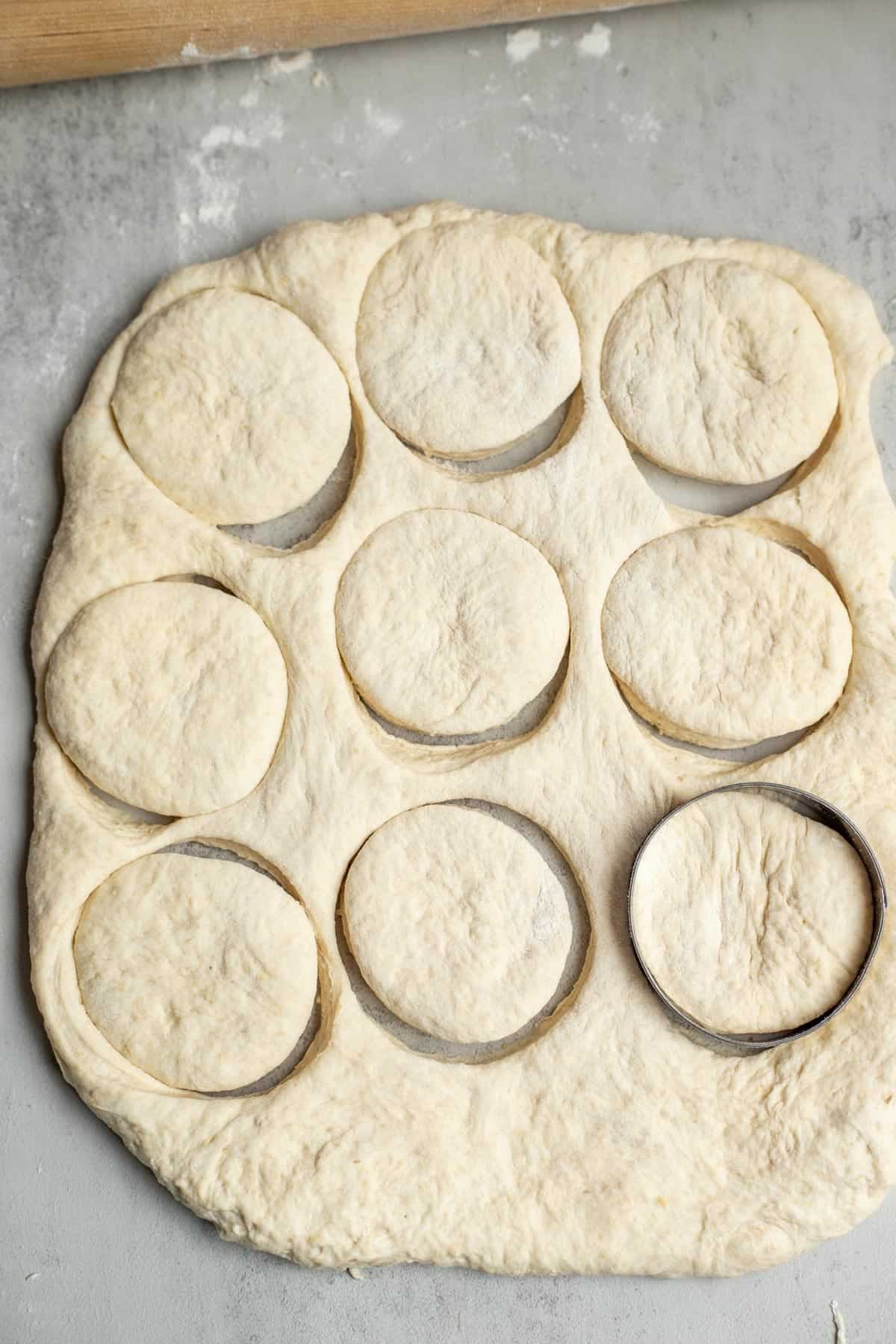
Step 4: Transfer the dough to a lightly floured work surface and roll out to a 1/2 inch thick rectangle. Cut out circles using a biscuit cutter or a wide-mouth mason jar. Sprinkle the biscuits with cornmeal to prevent them from sticking while cooking (optional).
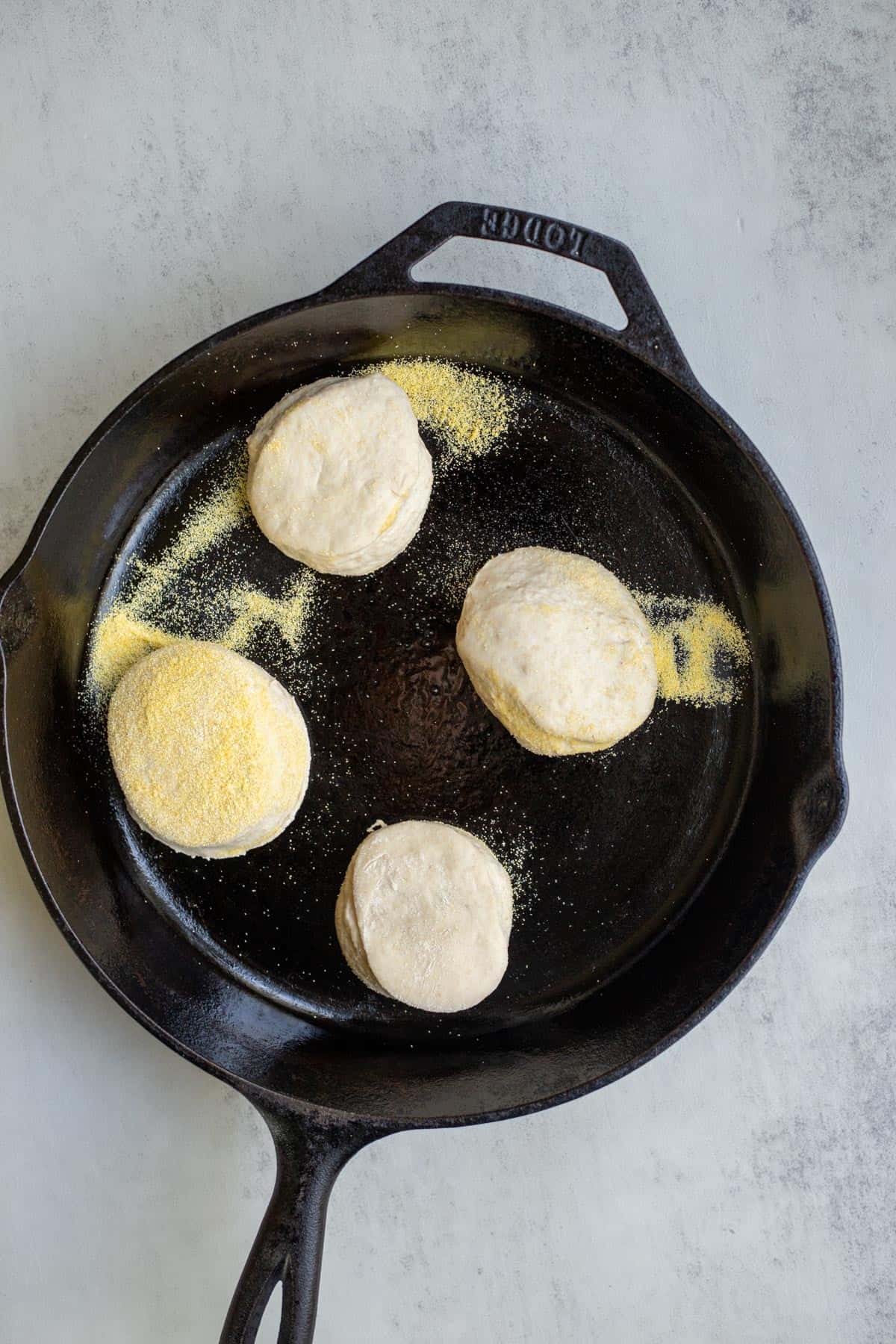
Step 5: Preheat your cast iron pan on medium heat until hot. Add some oil, then place the English muffins into the pan. Immediately reduce the heat to low so the dough has a chance to rise without the exterior burning.
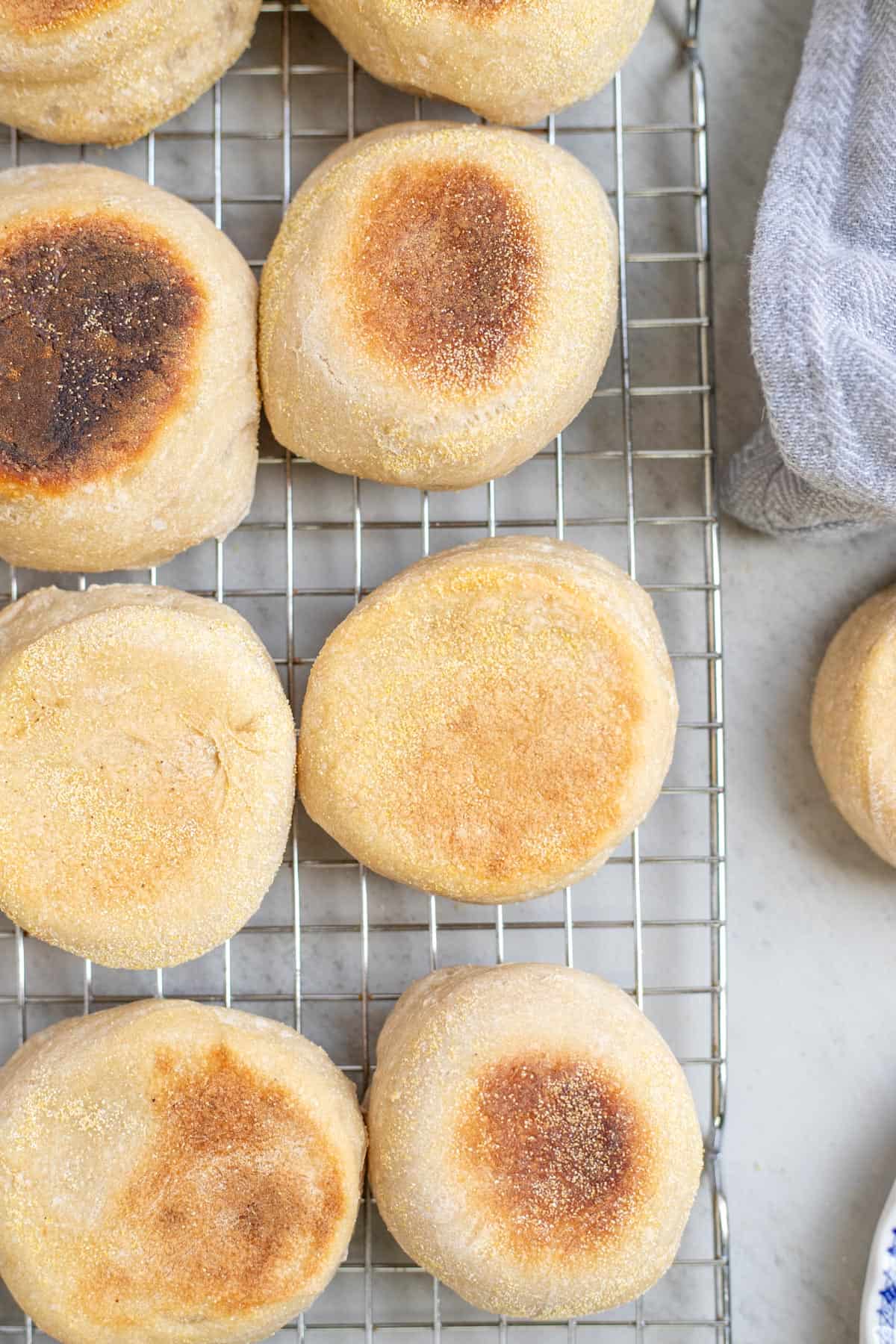
Step 6: Cook until doubled in size, flipping only when the first side is golden. After flipping, increase the temperature a little so that the second side of the muffin cooks until golden brown. Let them cool for a few minutes, then slice and enjoy!
How to Make Sourdough English Muffins (without baking soda)
Step 1: Add all ingredients to a bowl (minus baking soda) and mix well. Let the dough rest for 30 minutes; this is called autolyse. This is the process of allowing the dough to rest so the flour has a chance to hydrate. Also, during this time, the gluten starts to develop, and the dough becomes stretchier.
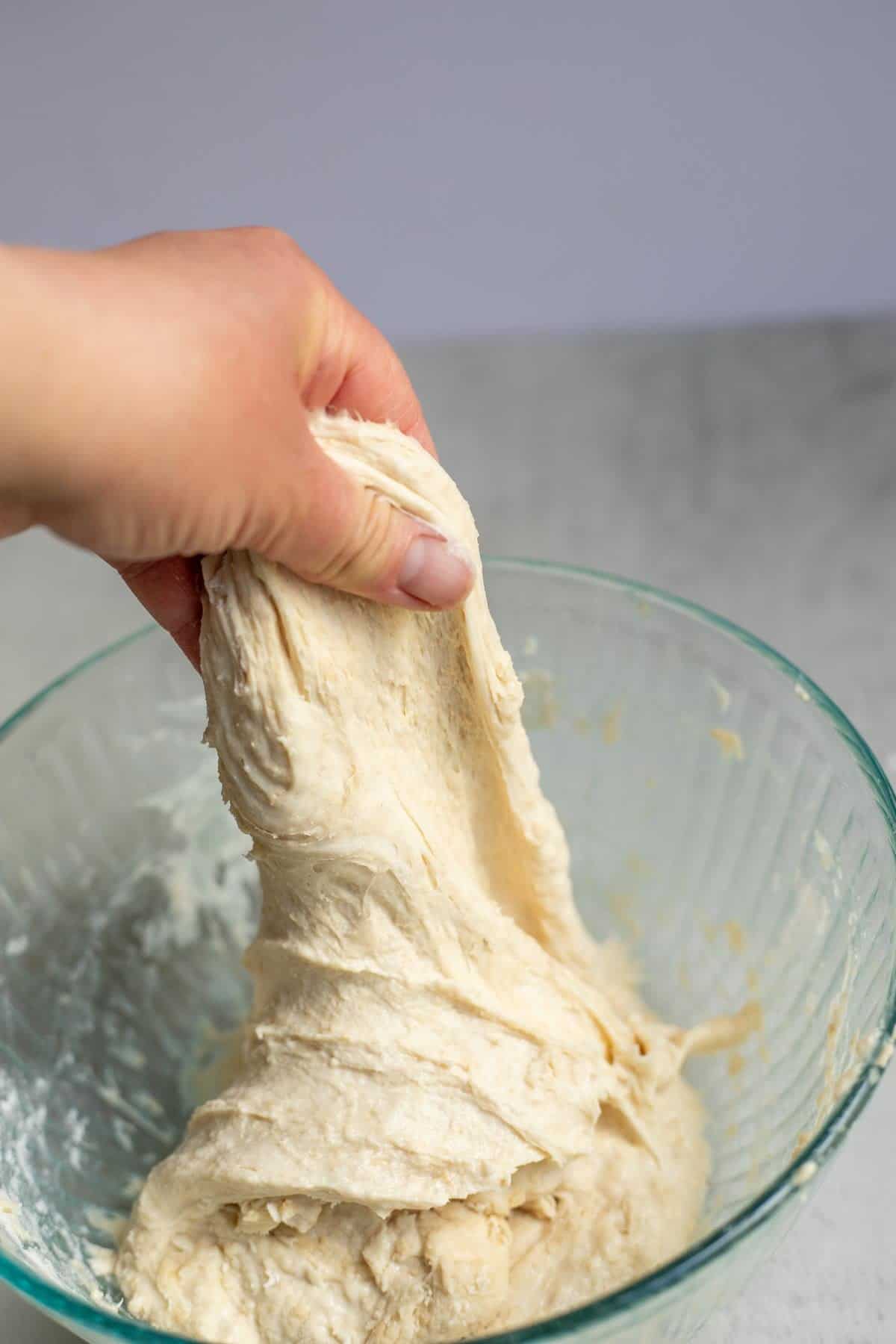
Step 2: With the dough in the bowl, do one round of stretch and folds by grabbing one side of the ball of dough, stretching it upward, and then pressing it back into the center. Repeat with each side of the dough, for one complete round. Repeat the stretch and folds after 30 minutes, then set the bowl in a warm place and let it rise for 5-8 hours. The dough should double in size.
Step 3: After the fermentation, shape the muffins by rolling the dough into a 1/2 inch thick rectangle. Cut out circles using a biscuit cutter or a wide-mouth mason jar.
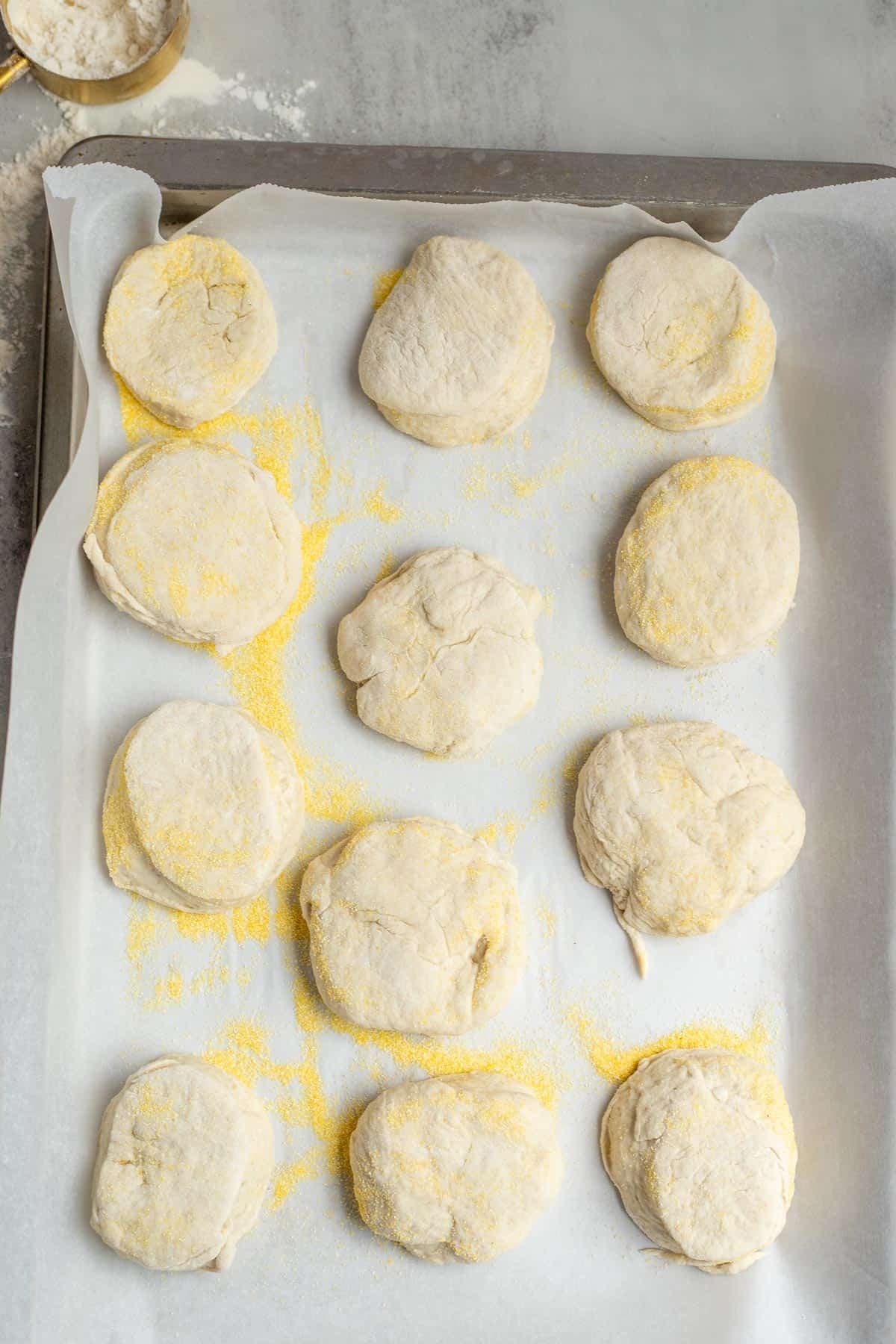
Step 4: Place on a baking sheet lined with parchment paper with a little cornmeal sprinkled on the bottom (optional). Cover and rise again for about an hour in a warm place until doubled in size.
Step 5: Preheat your cast iron pan on medium heat. When the skillet is hot, oil the pan and add the English muffins. Immediately reduce the heat to low so the dough has a chance to rise without the exterior burning. Cover with a lid and allow to cook for about 5 minutes.
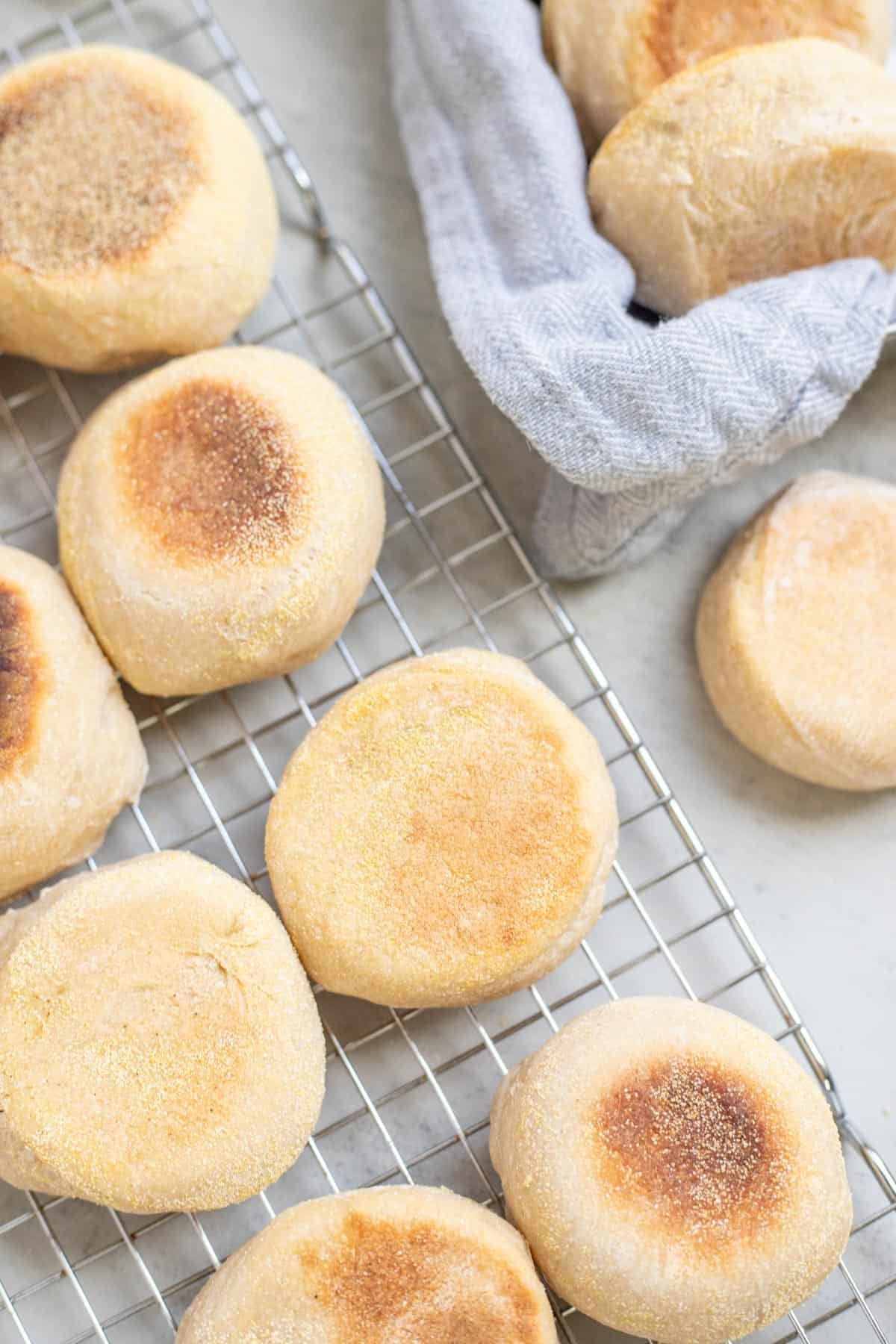
Step 6: Flip once they are golden brown on the first side, then cook through until completely done – this usually takes another 5 minutes or so. Place on a cooling rack for a few minutes before slicing.
Tips
- Make sure the sourdough starter you are using is nice and active. This will give the dough those beautiful bubbles. Sourdough discard can be used if it was recently fed, but the rise time may need to be lengthened.
- The type of flour you use, as well as the humidity and quality of the starter, will cause each batch to need slightly different amounts of flour. If the dough seems too runny, add a bit more flour.
- Fermentation time will depend on the temperature of your home. The cooler your home, the longer it will take for the dough to double. Placing the dough in a warm place will speed up the process significantly.
- You can skip the second rise as long as you use baking soda. Without baking soda, allow the shaped muffins to rise for about an hour, or until doubled, before baking.
- The skillet needs to be hot before adding the English muffin dough so it doesn’t stick, but then it needs to be quickly reduced so the dough has a chance to rise and cook through without burning. Monitor the color of the muffins closely so they don’t burn.
- Cook four at a time so they have space to expand, or they will stick together.
- Don’t try to flip the muffins until they come up easily from the pan. The goal is to only flip them one time.
- If they are browned on the outside, but still not done on the inside, put them in a 250 to 300 degree oven for 10 minutes or so.
Recipe FAQs
Keep extra muffins in an airtight container or bag at room temperature for 4-5 days. Freeze them for longer storage.
Yes! Fermentation breaks down phytic acid, an anti-nutrient that hinders absorption, making sourdough English muffins easier to digest, as well as a great source of fiber and B vitamins. Also, homemade English muffins have zero artificial ingredients or preservatives.
You can expect the characteristic yeasty, salty flavor and bubbly, chewy texture of traditional English muffins, with the main difference being a long-fermented sourdough tang.
During fermentation, the natural yeasts in sourdough produce carbon dioxide, which is trapped in the wet dough as bubbles. When handled carefully and cooked on the stovetop, these bubbles cook in place, producing that characteristic “nooks and crannies” crumb.
While sourdough discard can have great results, use a discard that has been fed in the last week or so, and be prepared to adjust the liquid and fermentation times. See my recipe created specifically for sourdough discard English muffins for further instructions.
More Sourdough Recipes from the Farmhouse
- Sourdough Pizza Crust
- Sourdough Tortillas
- Sourdough Irish Soda Bread
- Easy Sourdough Flatbread
- Sourdough Cheddar Biscuits
If you try this recipe and love it, I would love it if you could come back and give it 5 stars! Tag me on Instagram @farmhouseonboone.

Sourdough English Muffins

Video
Ingredients
- 2 1/2 cups flour, 350 grams
- 1 cup water, 236 grams
- 1/2 cup active sourdough starter, 100 grams
- 1 tablespoon honey, 21 grams
- 1 teaspoon salt, 5 grams
- 1 teaspoon baking soda, 5 grams, (optional, see notes)
- Cornmeal, optional
- Oil for cooking
Instructions
How to Make Sourdough English Muffins (with baking soda)
- The day before you plan to cook the muffins, start with fermenting the grains. Add flour, water, and sourdough starter to a large bowl and mix well. Use an active sourdough starter that has been recently fed.
- Cover the bowl with a towel and let it sit at room temperature for 12-24 hours. The fermentation process speeds up with warmer temperatures and slows with cooler temperatures. Where you place the bowl affects the timing.
- After the bulk fermentation, add honey, salt, and baking soda, stirring well.
- Transfer the dough to a lightly floured work surface and roll out to a 1/2 inch thick rectangle. Cut out circles using a biscuit cutter or a wide-mouth mason jar. Sprinkle the muffins with cornmeal to prevent them from sticking while cooking (optional).
- Preheat your cast-iron skillet on medium heat until hot. Add some oil, then place the English muffins into the pan. Immediately reduce the heat to low so the dough has a chance to rise without the exterior burning.
- Cook until doubled in size, flipping only when the first side is golden. After flipping, increase the temperature a little so that the second side of the muffin cooks until golden brown. Let them cool for a few minutes, then slice and enjoy!
How to Make Sourdough English Muffins (without baking soda)
- Add all ingredients to a bowl (minus baking soda) and mix well. Let the dough rest for 30 minutes; this is called autolyse. This is the process of allowing the dough to rest so the flour has a chance to hydrate. Also, during this time, the gluten starts to develop, and the dough becomes stretchier.
- With the dough in the bowl, do one round of stretch and folds by grabbing one side of the ball of dough, stretching it upward, and then pressing it back into the center. Repeat with each side of the dough, for one complete round. Repeat the stretch and folds after 30 minutes, then set the bowl in a warm place and let it rise for 5-8 hours. The dough should double in size.
- After the fermentation, shape the muffins by rolling the dough into a 1/2 inch thick rectangle. Cut out circles using a biscuit cutter or a wide-mouth mason jar.
- Place on a baking sheet lined with parchment paper with a little cornmeal sprinkled on the bottom (optional). Cover and rise again for about an hour in a warm place until doubled in size.
- Preheat your cast-iron skillet on medium heat. When the skillet is hot, oil the pan and add the English muffins. Immediately reduce the heat to low so the dough has a chance to rise without the exterior burning. Cover with a lid and allow to cook for about 5 minutes.
- Flip once they are golden brown on the first side, then cook through until completely done – this usually takes another 5 minutes or so. Place on a cooling rack for a few minutes before slicing.
Notes
- Make sure the sourdough starter you are using is nice and active. This will give the dough those beautiful bubbles. Sourdough discard can be used if it was recently fed, but the rise time may need to be lengthened.
- The type of flour you use, as well as the humidity and quality of the starter, will cause each batch to need slightly different amounts of flour. If the dough seems too runny, add a bit more flour.
- Fermentation time will depend on the temperature of your home. The cooler your home, the longer it will take for the dough to double. Placing the dough in a warm place will speed up the process significantly.
- If using baking soda, you can skip the second rise. Without baking soda, allow the shaped muffins to rise for about an hour, or until doubled, before baking.
- The skillet needs to be hot before adding the English muffin dough so it doesn’t stick, but then it needs to be quickly reduced so the dough has a chance to rise and cook through without burning. Monitor the color of the muffins closely so they don’t burn.
- Cook four at a time so they have space to expand, otherwise they may stick together.
- Don’t try to flip the muffins until they come up easily from the pan. The goal is to only flip them one time.
- If the muffins are browned on the outside, but still not done on the inside, put them in a 250 to 300 degree oven for 10 minutes or so.
Nutrition
Nutrition information is automatically calculated, so should only be used as an approximation.







Nearly 50% of these instructions are missing in the cookbook. After a total fail I came here to see what I’m missing, and apparently I missed a lot…
Even with additional information now that I definitely needed, I don’t see it possible that these turn out with 2.5 cups of flour involved, it is wildly dense.
The dough was almost batter after fermenting overnight. I added flour and more flour, but it was still insanely sticky. No shaping was really possible. I did cook one to test and it did rise fine, but the recipe says high heat for the cast iron skillet. I did medium because high seemed crazy. It still burned almost immediately. The texture when cooled was gummy. Tester and dough went on the trash unfortunately. I’ll stick to King Arthur recipes.
Oh no! Sounds like the dough over fermented. When that happens, it loses its rise and becomes a sticky, unworkable mess. Try fermenting for less time.
Added the amount of flour stated in the recipe (2 1/2 cups) and they turned out like biscuits
Hi! Do you recommend bread or all purpose flour? Thanks so much I love your recipes!
I’m struggling to understand between the sections of this recipe…
Am I correct in understanding that if I do not want to use baking soda – do I essentially not follow the recipe card at all?
Do I mix everything from the start (minus the baking soda), do an autolyse, knead, and then bulk rise 8-12 hours (in the refrigerator for the same length of time)?
Then shape and rise again for an hour before cooking them?
These English muffins turned out absolutely delicious! I let them long ferment on my counter overnight. Very satisfying to know that I didn’t have to spend 10$ on organic ones at the store 🙃 Thank you for this recipe!
The recipe and description don’t match. You have to read the whole blog then apply what you learned to the recipe
Agreed—the recipe updates also left with me some loaded, heavy muffins. I agree that these require precise cooking but the recipe needs more tweaking. Had to toss them out (again).
Hi! Would a cast iron griddle work if I do not have a cast iron pan?
That should work! You can also use a regular skillet.
I tried it with a skillet and it took FOREVER to brown. I’m struggling getting it to cook all the way through even in the oven.
Hands down the best Sourdough English Muffin Recipe ever! My will literally only eat these English Muffins! This is another super easy recipe from Lisa, you will not be disappointed! I opt for the baling soda free option, so everything gets mixed in, except the baking soda, then I do stretch and folds like in her No Knead Sourdough Recipe. Then I let it set out on my counter over night and pat out the dough and cut into muffins. What also works for me is to brown the tops and bottoms and then place in a 300° oven for 5 1/2 minutes. For me they all come out perfect!
I see that the ingredients for the sourdough english muffins and the sourdough discard muffins are the same, but the process is different. Why is this?