
Learn how to make a sourdough starter recipe from scratch with just flour and water. This versatile ingredient can be used to make breads, cakes, cookies, and so much more.
If you hang around the traditional foods community, chances are you have heard of making homemade sourdough starter from scratch.
I have had my homemade starter for over six years now. It is vital in my traditional food kitchen.
What Is A Sourdough Starter?
A sourdough starter is a live active culture made of fermented flour and water that is full of beneficial bacteria and yeasts.
It is used as a way to ferment recipes and naturally rise bread.
Why You Will Love Sourdough:
If you are unfamiliar, let me fill you in on all the reasons why crazy folks, like me, go through the effort of handcrafting, and maintaining, a beneficial colony of yeasts and bacteria in their kitchens.
Before yeast was isolated and sold in little packets, sourdough starter was a valuable commodity in homes and families, passed down for generations.
Health Benefits
Have you ever heard of phytic acid? Basically, it’s an antinutrient found in grains, beans, and nuts that interferes with the absorption of certain nutrients. They are present on grains to keep them from spoiling.
There is a reason they are there, but there is also good evidence that our bodies weren’t meant to handle them. Proper preparation of grains eliminates most, if not all, of the phytic acid in offending foods.
This is the very reason traditional cultures soaked and fermented their grains, seeds, and beans. These days, we’ve lost that art. And what have we found? People can’t handle grains anymore.
Instead of using instant yeast packets, people in traditional cultures leavened their bread with a fermented starter that captured all the yeasts in the environment.
AKA Sourdough starter
How on earth do we capture native yeasts? Read on, because I explain how to make your very own starter.
Because I love good food
I already confessed my foodie tendencies with you all. I reckon it’s the same inclination that led me into the world of homemade sourdough.
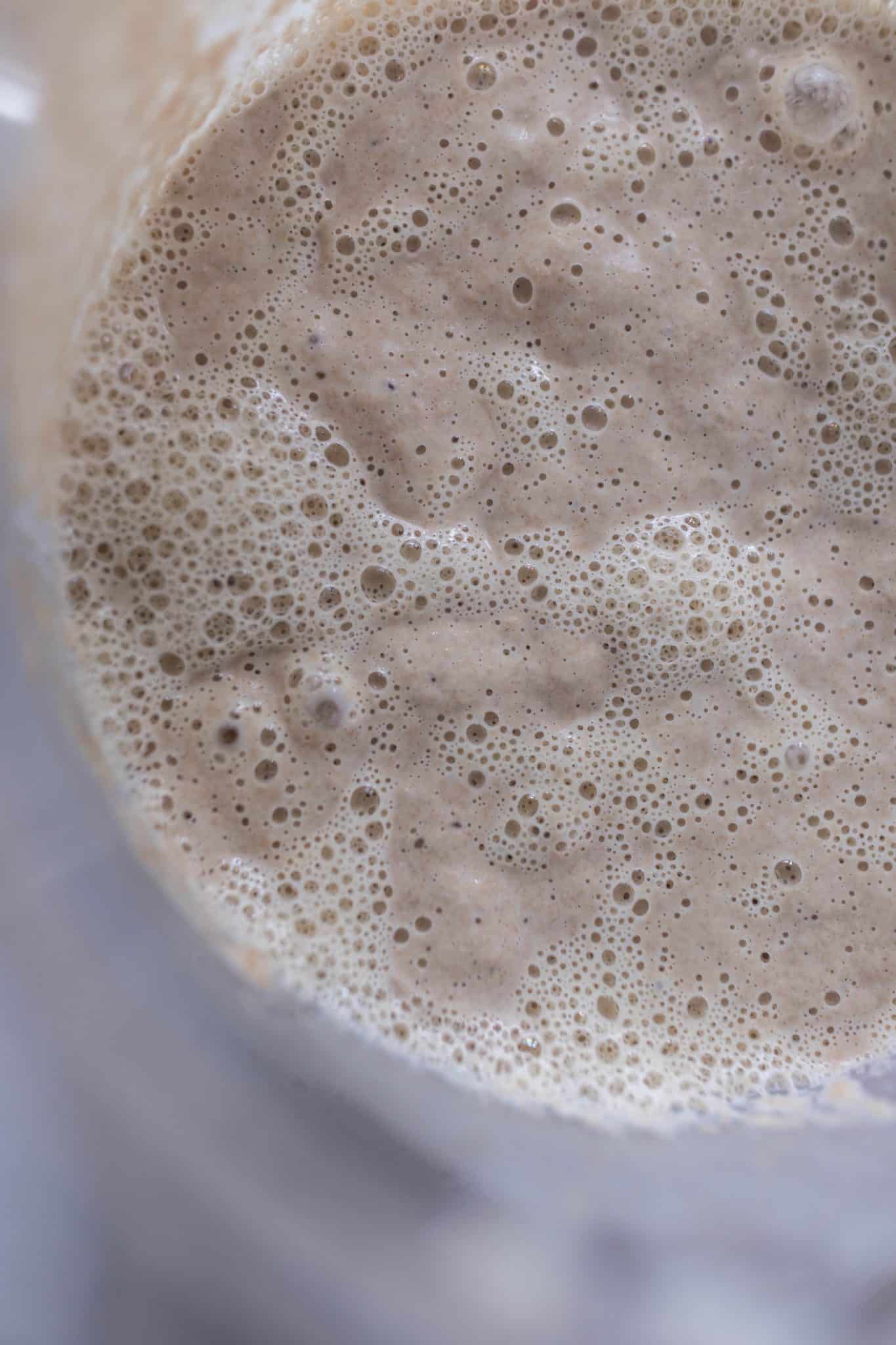
Locally made sourdough starter, with the native yeasts of the area present, is certainly the thing a foodie’s dreams are made of. A jar of healthy, productive starter is teaming with life, as evidenced by all the bubbles you will see rising to the surface.
Once you’ve experienced homemade sourdough baked goods, store-bought breads and pancakes simply don’t cut it. Sourdough has a depth of flavor that just can’t be found in something made quickly with a packet of instant yeast.
This post contains affiliate links, which means I make a small commission at no extra cost to you. See my full disclosure here.
FAQ:
How long does it take to make sourdough starter?
It takes about a week to create an active sourdough starter, but sometimes it can take about two weeks to make a starter ready to bake bread.
Do you have to discard sourdough starter every time you feed it?
When you are first creating your sourdough starter, yes. If you don’t discard you will have so much starter that it will be hard to keep healthy. This is because the more starter you have the more flour and water you will need to add for the yeasts and bacteria to feed on.
After having a starter for a while rather than discarding you can just use it in discard recipes. This is a much more useful way of removing some of the starter rather than throwing it in the trash.
How do you know your sourdough starter is ready to use?
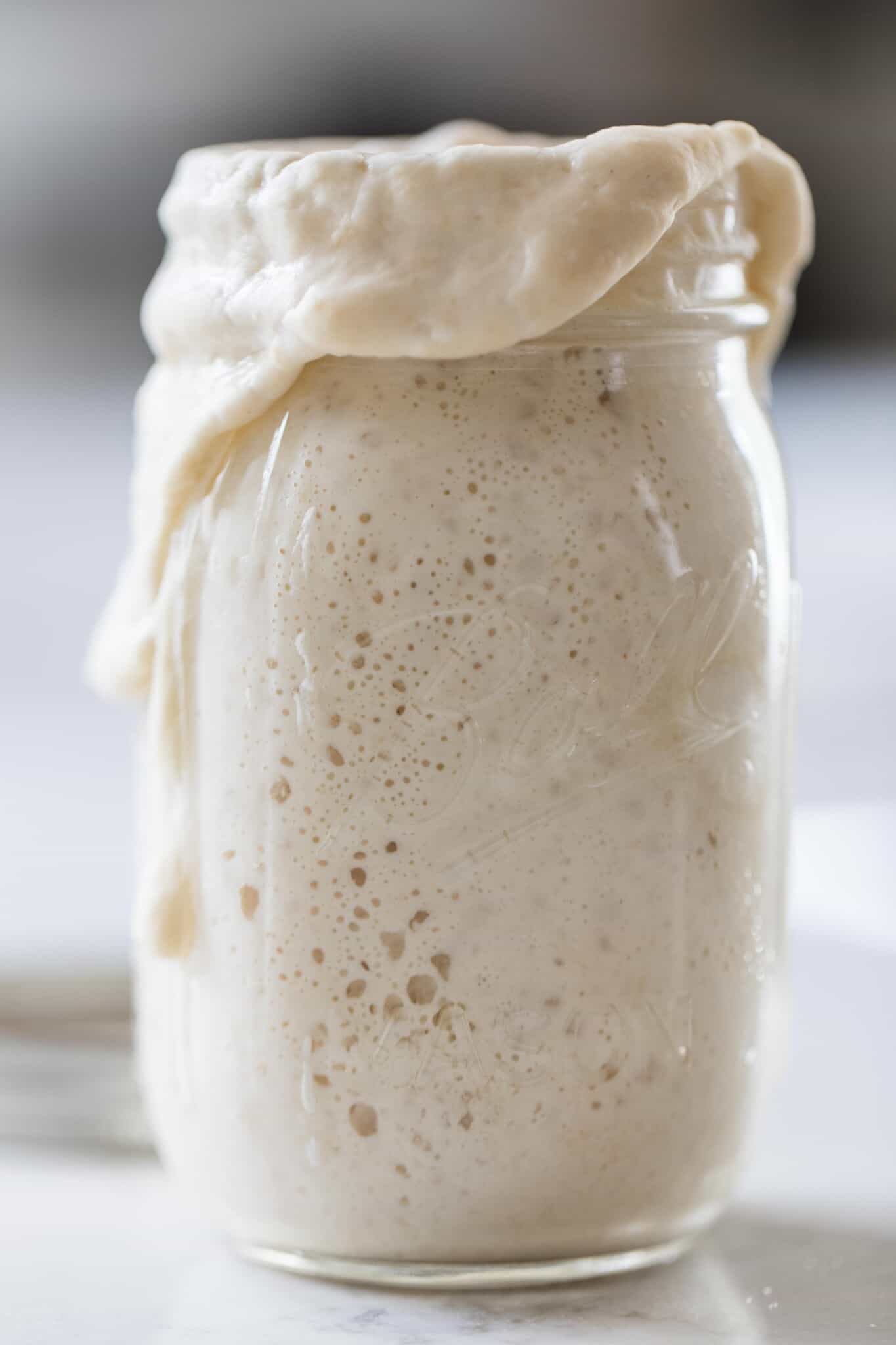
You will know your sourdough starter is read to use when you feed it and after 4-12 hours it doubles in size and is super bubbly. A good way to be able to determine this, is to place a rubber band where the top of the starter is after you feed it. Then after a few hours have passed you can see just how high it has grown.
Another way is to perform the float test. Take a small glass of room temperature water. Add a quarter sized dollop of active starter. If it floats, it is ready to bake with. If it doesn’t it is not active enough.
Sourdough Starter Recipe:
By now, you know why you want to have a bowl of sourdough starter bubbling away in your kitchen, but how the heck do you make one?
Ingredients
Flour (Whole grain wheat, unbleached all-purpose, and einkorn are all great choices.)
Filtered water (I use a Berkey water filter. We have the Royal size for our family of 7. You can find my full Berkey review HERE.)
Tools
Glass bowl (Metal can react with beneficial bacteria and yeasts.)
Tea towel
How To Make Sourdough Starter
Day 1:
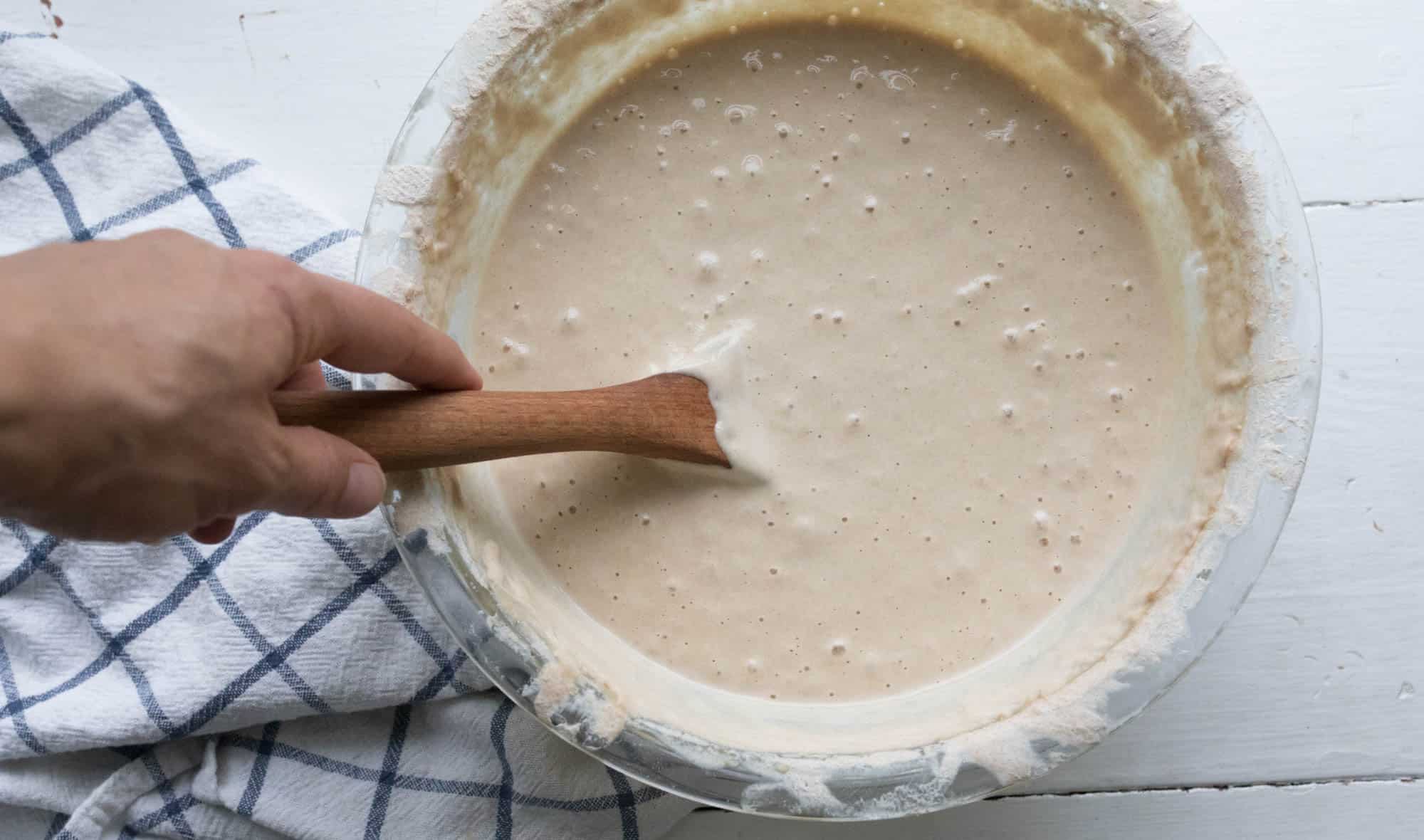
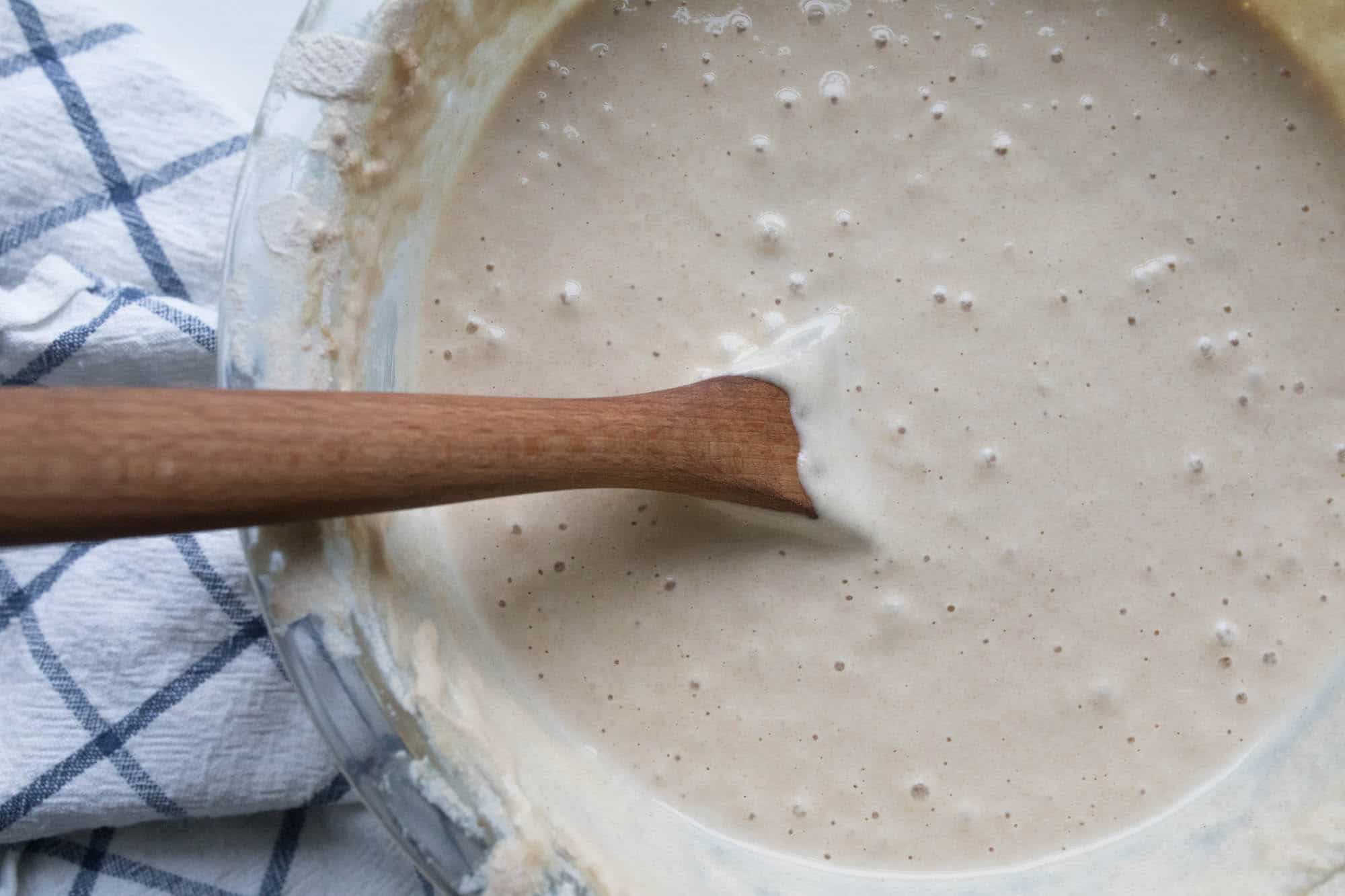
On day one, mix one cup of flour and one cup filtered water. Stir vigorously, making sure to scrape down the sides and incorporate everything. Place a clean tea towel over the bowl and set aside. Allow it to sit for 24 hours.
Day 2:
On day two, discard half of the mixture and repeat the process. Add one cup flour, one cup water, stir vigorously, and cover.
Why do you have to remove half the mixture? By day four, you would have sourdough starter overflowing from your bowl. Also, removing half ensures that the right amount of flour and water is feeding the growing colony of beneficial yeast. If you weren’t discarding half, the cup of flour wouldn’t be enough to feed them on days three and four. Basically, you would end up with a lot of extra starter by the end of the process, and none of it would be mature.
Day 3-5
Repeat the day two instructions for days three, four, and five.
Day 6-7
On days six and seven, do the same but feed it every 12 hours, instead of every 24.
By day seven, there should be enough beneficial bacteria and yeast present to bake sourdough bread and other fermented sourdough goodies, like pancakes and english muffins.
You will know it’s working if it bubbles, and doubles in size.
Sourdough Starter Maintenance
Once your sourdough starter is alive and active, there will be some maintenance to keep it going for years and years.
In the refrigerator for occasional use
Storing it in the refrigerator slows down the fermentation process, so one feeding per week, or every other week, is sufficient.
I usually use my starter a couple times per week. If I plan to make pancakes Saturday morning, for example, I will pull my starter out of the fridge Friday morning and add flour and water. By Saturday morning it is bubbly and ready to go.
I remove the two cups of starter needed for my pancake recipe, and put the “master starter” back in the fridge. Since it was fed the day before, it is good to go for another week, or whenever I need it next.
On the counter for daily use
Since the “little guys”, as my kids like to call the bacteria in the starter, are active at room temperature, they will have to be fed more often if keep it in this state.
If you leave your starter out on the counter, you will need to add flour and water every day. You will also have to be baking every day to use up all that starter.
Most people probably won’t use the starter quite so much, unless you own and operate a bakery. I would recommend storing it in the refrigerator between uses.
Helpful Resources
Every day I get loads of questions about sourdough starter, so I devoted a whole post called, How to Care for Sourdough Starter filled with your questions and my answers. You can use this post a reference guide.
Thank you so much for stopping by the farmhouse! I hope this is just the beginning of our sourdough journey.
Check out my other sourdough recipes and posts
- Sourdough English Muffins
- Sourdough Pizza Crust
- Healthy One Pot Meal- Sourdough Skillet
- Sourdough Tortillas
- Easy Sourdough Focaccia
- Dry Sourdough Starter
If you try this recipe and love it, I would love if you gave it 5 stars! Also, tag me on Instagram @farmhouseonboone.

Sourdough Starter
Video
Ingredients
- Flour, Whole grain wheat, unbleached all purpose, and einkorn are all great choices.
- Filtered water
Instructions
- On day one, mix one cup of flour and one cup filtered water. Stir vigorously, making sure to scrape down the sides and incorporate everything. Place a clean tea towel over the bowl and set aside. Allow it to sit for 24 hours.
- On day two, discard half of the mixture and repeat the process. Add one cup flour, one cup water, stir vigorously, and cover.
- Repeat the day two instructions for days three, four, and five.
- On days six and seven, do the same but feed it every 12 hours, instead of every 24.
- By day seven, there should be enough beneficial bacteria and yeast present to bake sourdough bread and other fermented sourdough goodies, like pancakes and english muffins. You will know it’s working if it bubbles, and doubles in size.
Notes
Sourdough Starter Maintenance
- Once your sourdough starter is alive and active, there will be some maintenance to keep it going for years and years.
In The Refrigerator For Occasional Use
- Storing it in the refrigerator slows down the fermentation process, so one feeding every week, or every other week, is sufficient.
- I usually use my starter a couple times per week. If I plan to make pancakes Saturday morning, for example, I pull my starter out of the fridge Friday morning and add flour and water. By Saturday morning it is bubbly and ready to go. I remove the two cups of starter needed for my pancake recipe and put the “master starter” back in the fridge. Since it was fed the day before, it is good to go for another week, or whenever I need it next.
On The Counter For Daily Use
- Since the “little guys”, as my kids like to call the bacteria in the starter, are active at room temperature, they will have to be fed more often if kept in this state.
- If you leave your starter out on the counter, you will need to add flour and water every day. You will also have to be baking daily to use up all that starter.
- Most people probably won’t use the starter quite so much, unless you own and operate a bakery. I would recommend storing it in the refrigerator between uses.
Nutrition information is automatically calculated, so should only be used as an approximation.









Do I feed the starter before I store it in the fridge? I understand we discard and feed when I take it out Friday night.
No, you can wait to feed it when you are ready to use it again.
Okay so first time trying a starter. Day 3&4 it’s definitely bubbling and has grown. When I came to feed her she had a lot of the water on top. Is that normal? Am I not feeding her enough with the 1:1? Also is it supposed to be a little stinky? Lol Thank you so much in advance!
Yes, it’s just a sign that your starter is hungry again and wants to be fed.
Hi Lisa.. I am also new to the sourdough making world, but am so excited! This is day 2 for me.. do you pour the watery liquid off the top before discarding half and feeding? Or just mix the liquid in?
Either is fine!
Can I feed it bread flour?
Yes.
My starter is on day 6 as well. It gets a little bubbly with water on top. I feed it every 12 hours now. It seems like since I fed it this morning 1:1:1 ratio it’s not bubbling now. Any suggestions?
Are you keeping it in a warm area? It could be colder and taking longer to get active.
I do not have a water filtration system of any kind. Will it work to use the Spring water or Distilled water I can purchase at the store? Which or what do you recommend?
Yes, it will. I would use distilled!
My starter is on day 6. It has a lot of water on top each day is that normal
Yes, that’s just a sign that it is hungry and wants to be fed again.
I’m on day 7. There dowsnt appear to be any grown. Most of the liquid is raising to the top. Should I just be patient or am I doing something wrong?
Are you discarding each day?
Can I use gluten free flour for sourdough bread?
Pat
Yes, you can!
I think I forgot to discard half on day 6 & just fed. I’m really hoping I haven’t just ruined 6 days of work.
Just go ahead and discard half now and then feed again.
If Im storing my starter in the fridge, how much flour & water do I feed the starter when I take it out of the fridge the day before I use it? Do you always feed 1 cup of flour & 1 cup of water?
Yes, I do.
My starter never really doubles in volume but is always bubbly. Does it need to actually double?
No, that’s probably fine.