










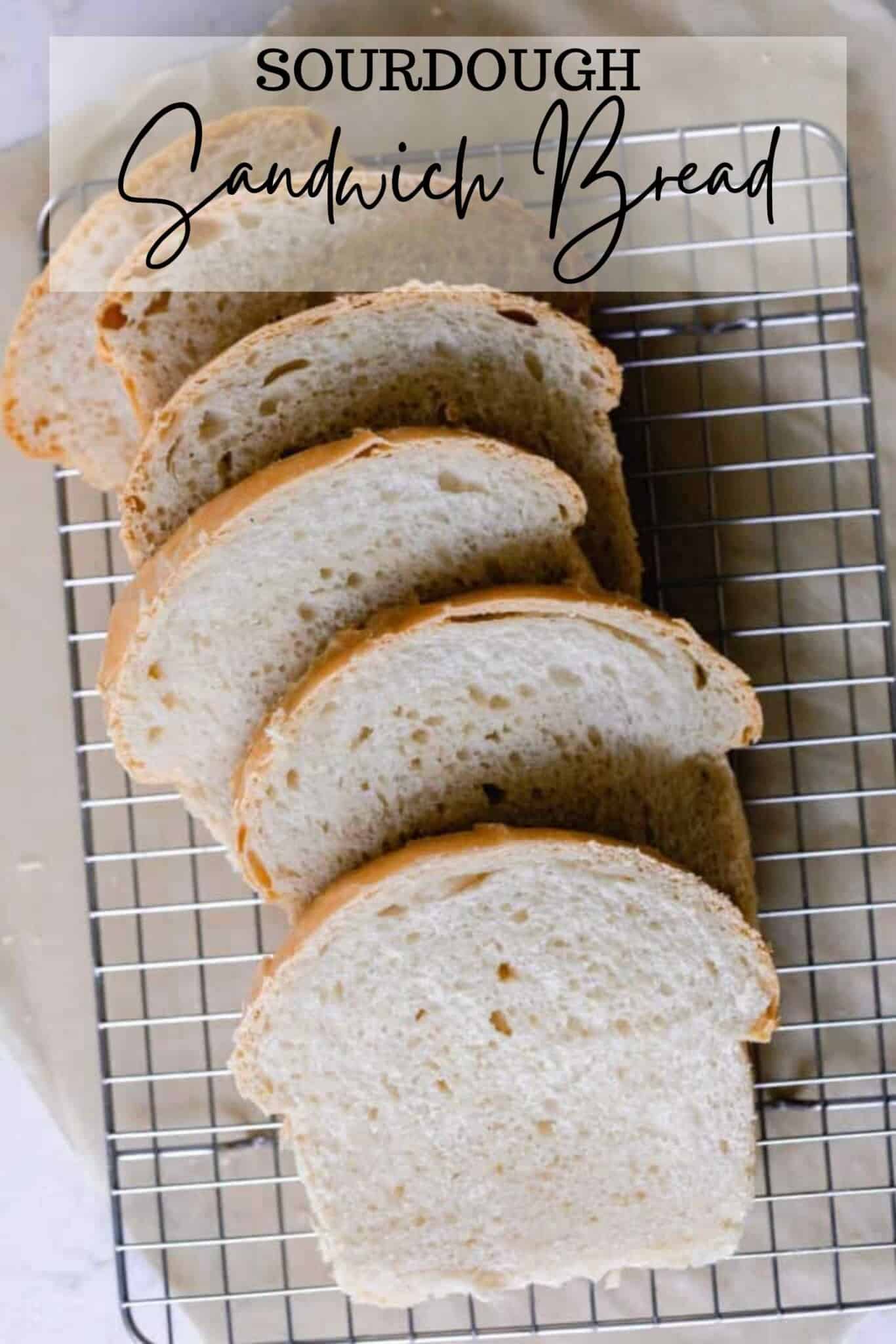
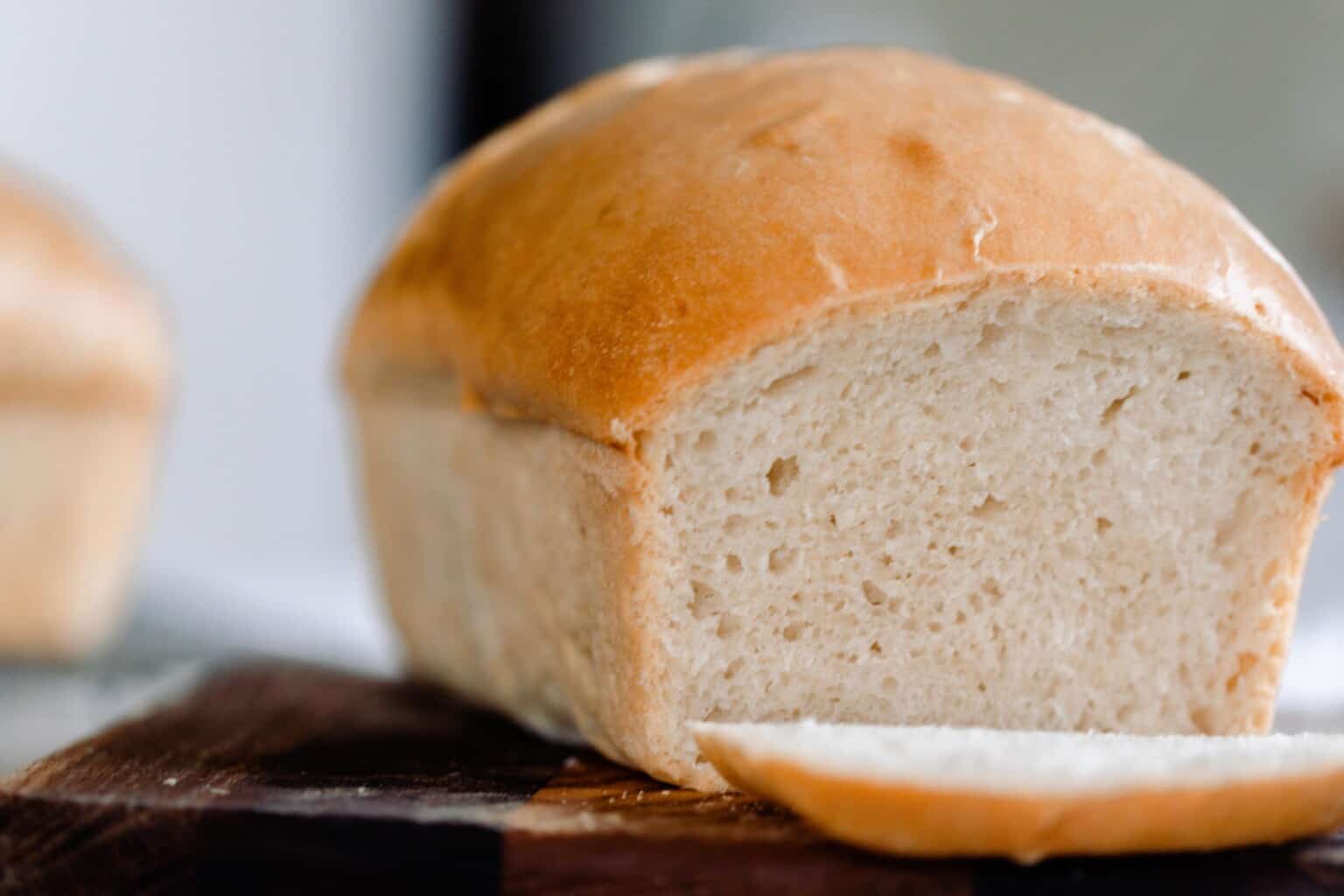
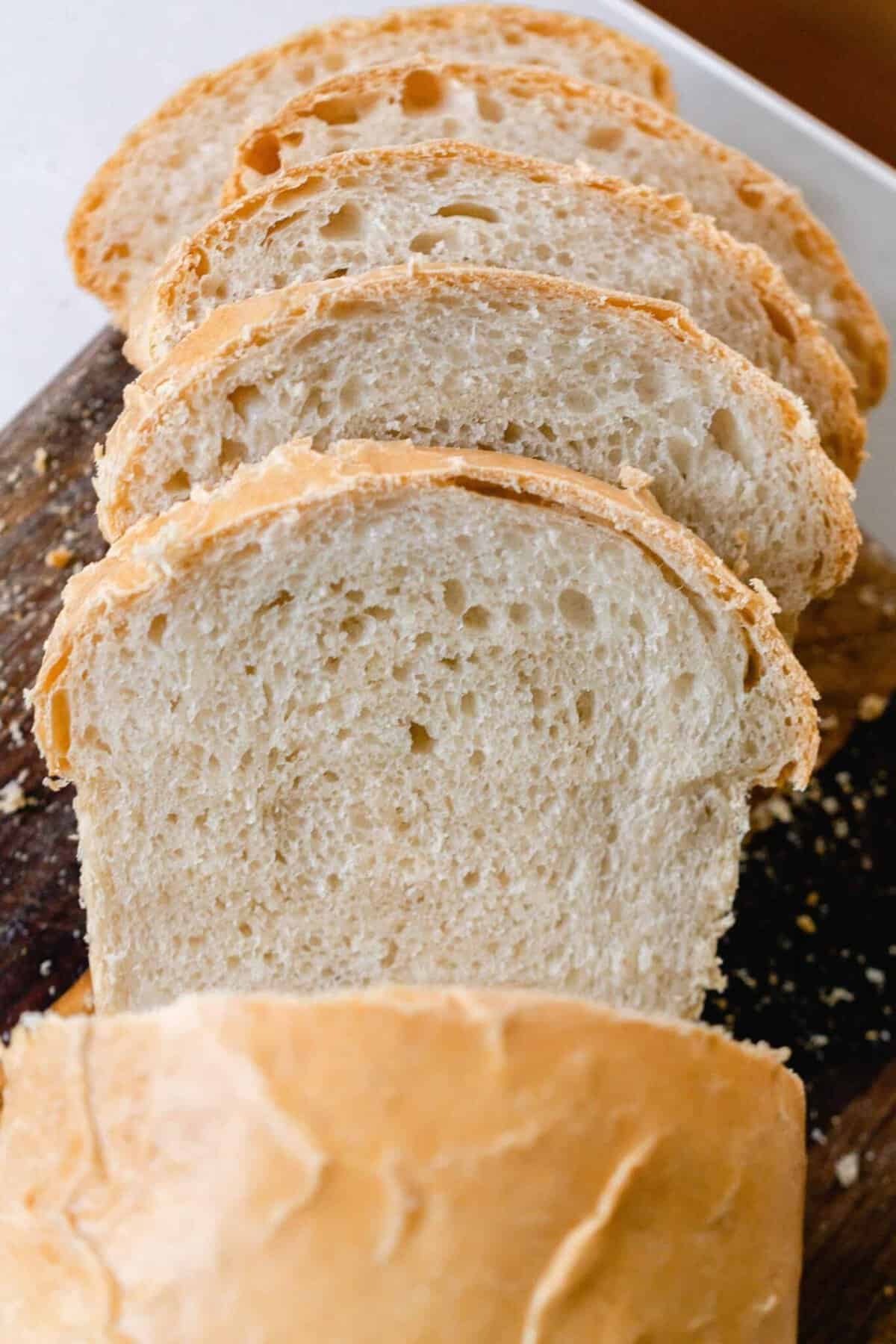
Soft and fluffy sourdough sandwich bread is the perfect bread to have on hand. Made with all purpose flour, sourdough starter, butter and a little honey, this fermented bread has a lighter texture and tangy flavor.
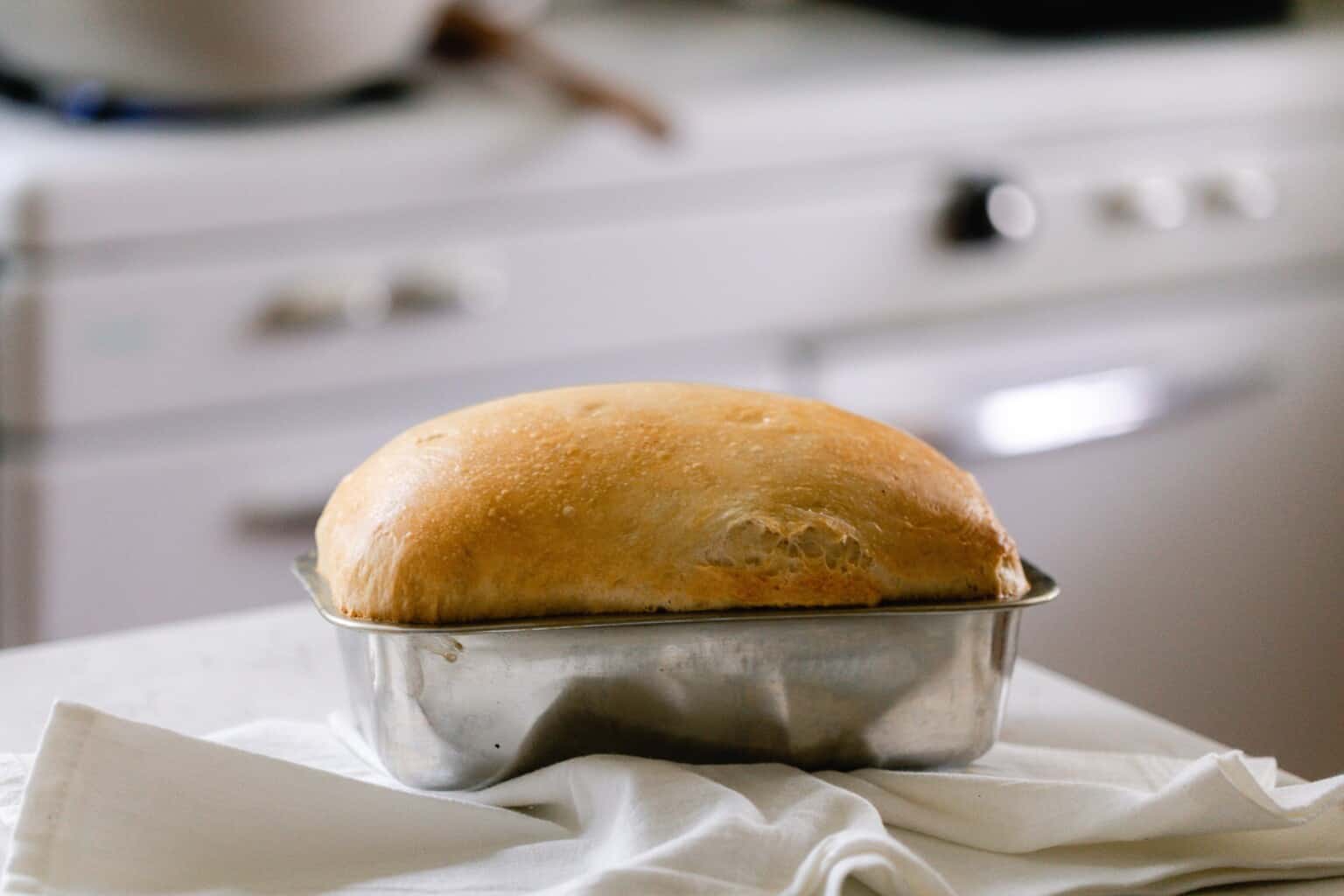
One of the main complaints I hear about making crusty sourdough from readers is that they miss the soft sandwich loaf style of bread.
Not only is this recipe absolutely delicious (making it really hard to ever go back to store-bought bread), but it is also super simple. No strange ingredients, no stretching and folding every 30 minutes… Just mix, rise, shape, rise again, and bake.
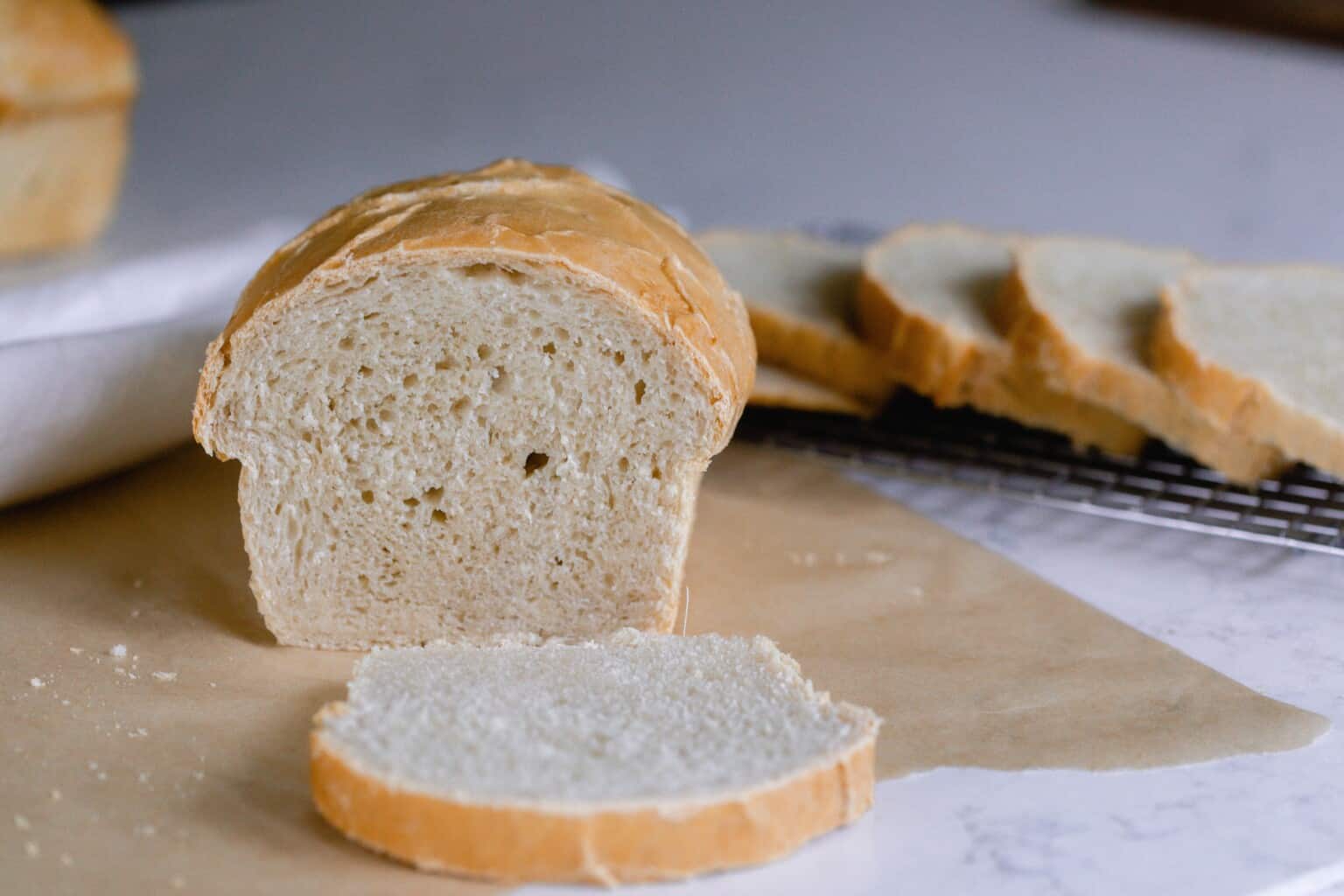
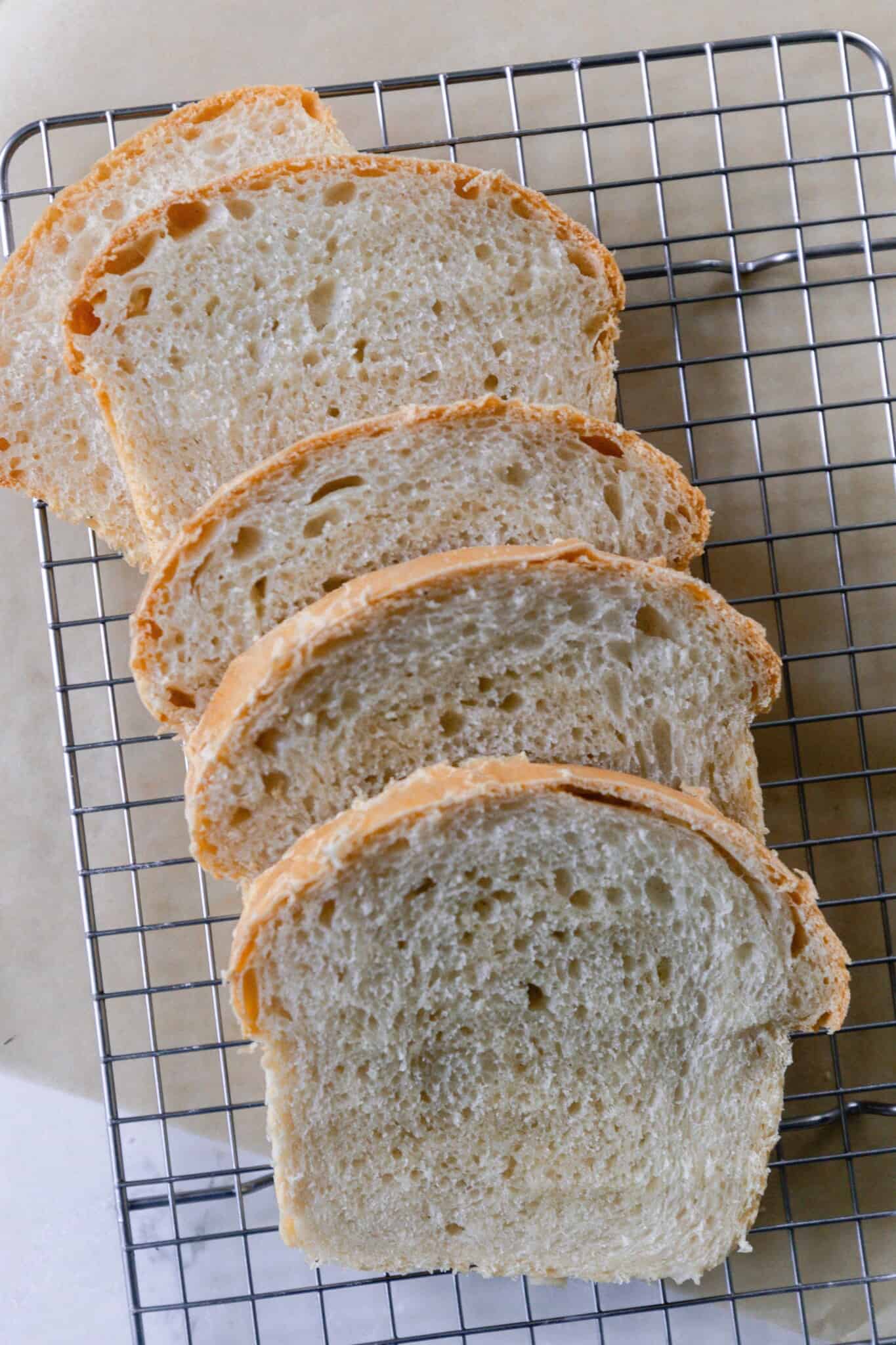
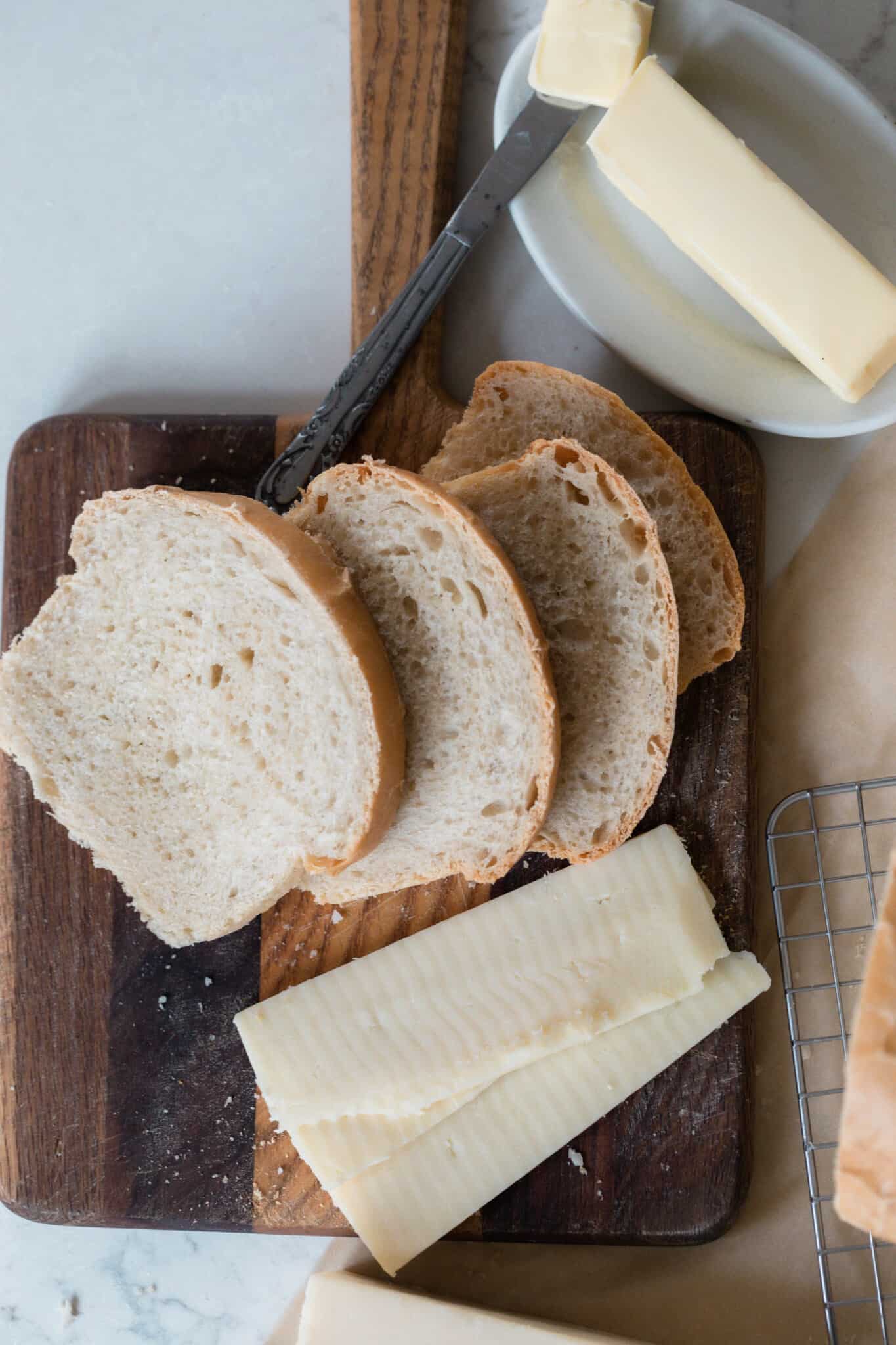
Let it cool, slice and slather it with butter. It’s so yummy and it reminds me of a bread you would get on a breadboard from a restaurant.
Let’s be honest, though, it’s way better since it’s made from scratch and has that wonderful sourdough tang.
Make sure to save this sourdough loaf bread recipe for the future. It will be a go to for sure.
Tips:
- Use really soft butter and cube it up so it blends easier.
- Don’t over ferment the dough. It will turn into a wet sloppy disaster that won’t rise well. Still edible. Maybe. It could also be turned into sourdough croutons.
- When making the dough, using a stand mixer makes the process much easier and hands off. You can also do this with your hands.
- If you are new to sourdough, you can check out how to make a sourdough starter here, find my sourdough conversion chart, and baking glossary of terms.
This post contains affiliate links, which means I make a small commission at no extra cost to you. See my full disclosure here.
Tools you may need:
Measuring cups and spoons. You could also use a kitchen scale
FAQ:
Does sourdough bread make good sandwiches?
Yes. The delightful tanginess adds to the flavor profile of the sandwich, making it a wonderful addition. You can use crusty sourdough bread or this soft sourdough sandwich loaf.
Why is my sourdough sandwich bread not rising?
There could be a few reasons for this. The most likely one is that your sourdough starter may not be active enough or is weak.
Another contributor could be the temperature of the room where you are placing your dough to rise. The cooler the temperature the longer it will take for bread to rise.
Lastly, the water you use in your dough mixture could be a factor. If the water used was too hot, it may have killed the starter. Additionally, if you are using city water the chlorine could potentially kill the yeasts in the starter.

Are sourdough sandwiches healthy?
Sourdough is one of the healthiest breads since the grains are fermented, which makes it more digestible and the nutrients more available for your body to absorb.
Top with your favorite healthy toppings and you can have a wholesome and filling meal in one sandwich.
Ingredients:
Butter (softened) or coconut oil – I prefer using butter for that savory buttery flavor. If you are wanting to make a vegan version, you can use softened (not melted) coconut oil.
Honey or sugar – I like to use honey since it is a natural sweetener.
Salt – This gives the bread so much flavor and skipping it will leave you with a tasteless loaf.
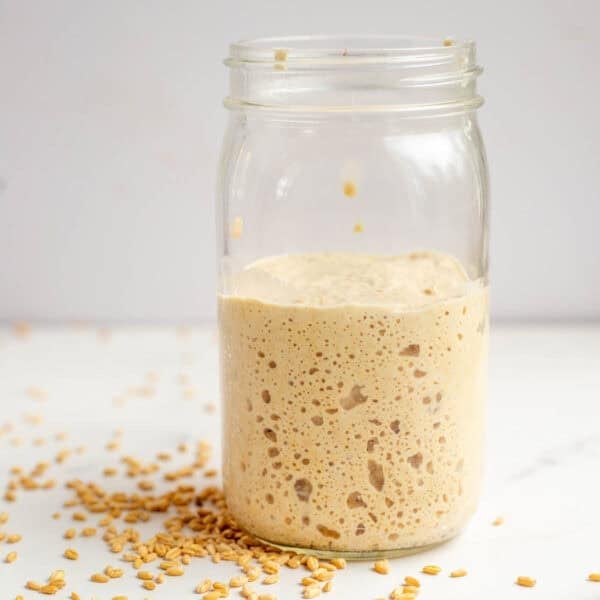
Sourdough starter – You want a nice active and bubbly starter to make bread. Starter that isn’t ripe won’t produce nice fluffy bread.
Water – Room temperature.
All-purpose flour – The best part of this recipe is that it uses good ol’ plain all-purpose flour. Nothing fancy.
How To Make Sourdough Sandwich Bread
To a stand mixer, add all of the ingredients. I like to add the flour last, so I can add a bit less or more depending on my starter’s hydration.
Knead until dough is stretchy and smooth. You want it to pull away from the sides of the mixing bowl and be smooth and elastic – about 10 minutes. It should pass the windowpane test. Grab a small ball of the dough and stretch it into a square. It should stretch thin enough to see through without breaking.
Tip: This isn’t a super hydrated dough and won’t be very wet like other doughs.
Allow to bulk rise for 10-12 hours in a warm place like on top of a stove or refrigerator. You can go longer if you want the benefit of the fermentation, but if it gets over-proofed the dough will turn into a sloppy mess!
In the summer, I ferment mine more like 8 hours but can get away with longer in the colder months.

Shape The Loaves And Rise

Grease two loaf pans or add parchment paper.
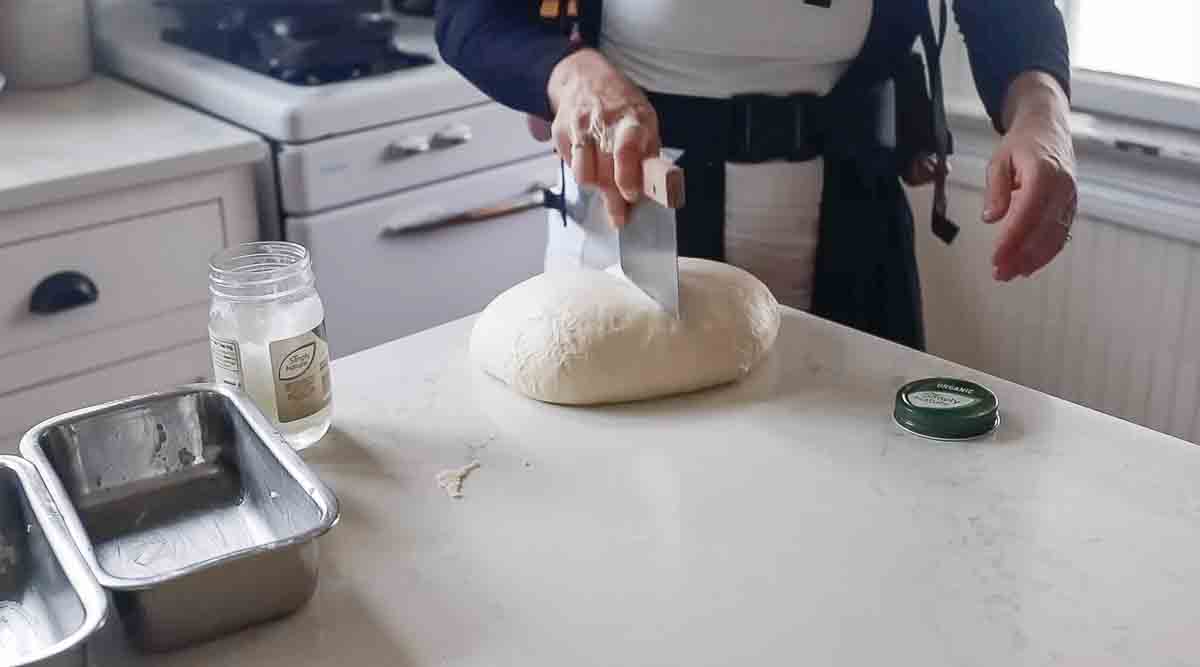
Divide in two equal parts.

Shape by rolling the dough flat into a rectangle and rolling it up.
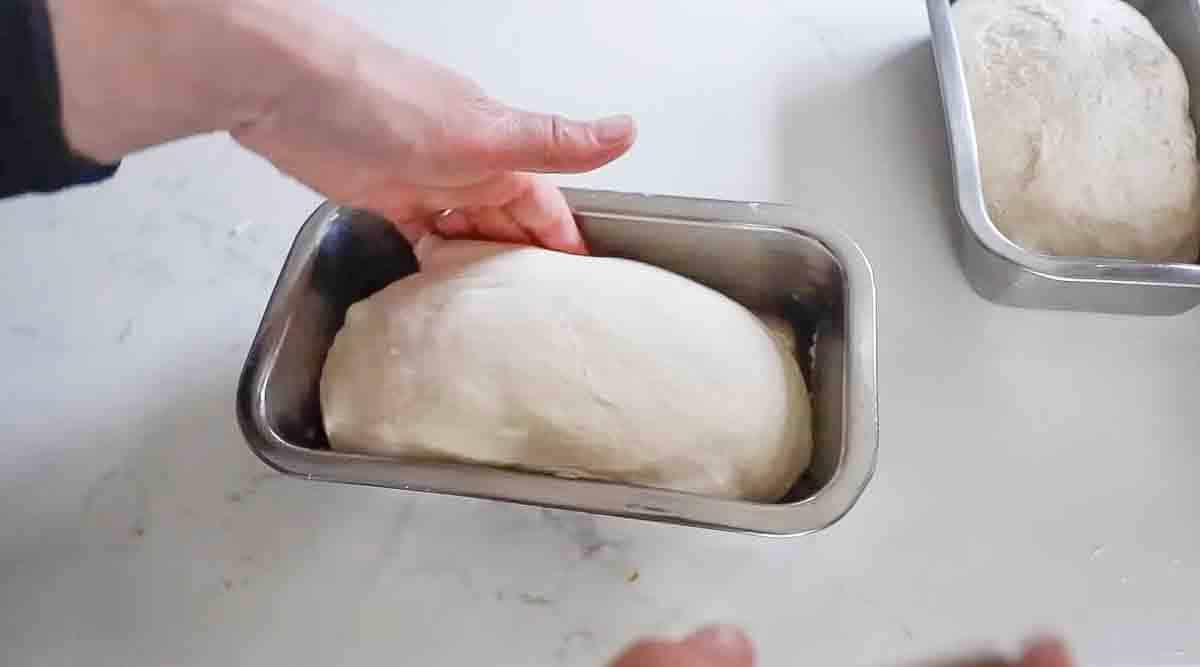
Add to parchment lined or buttered loaf pans.
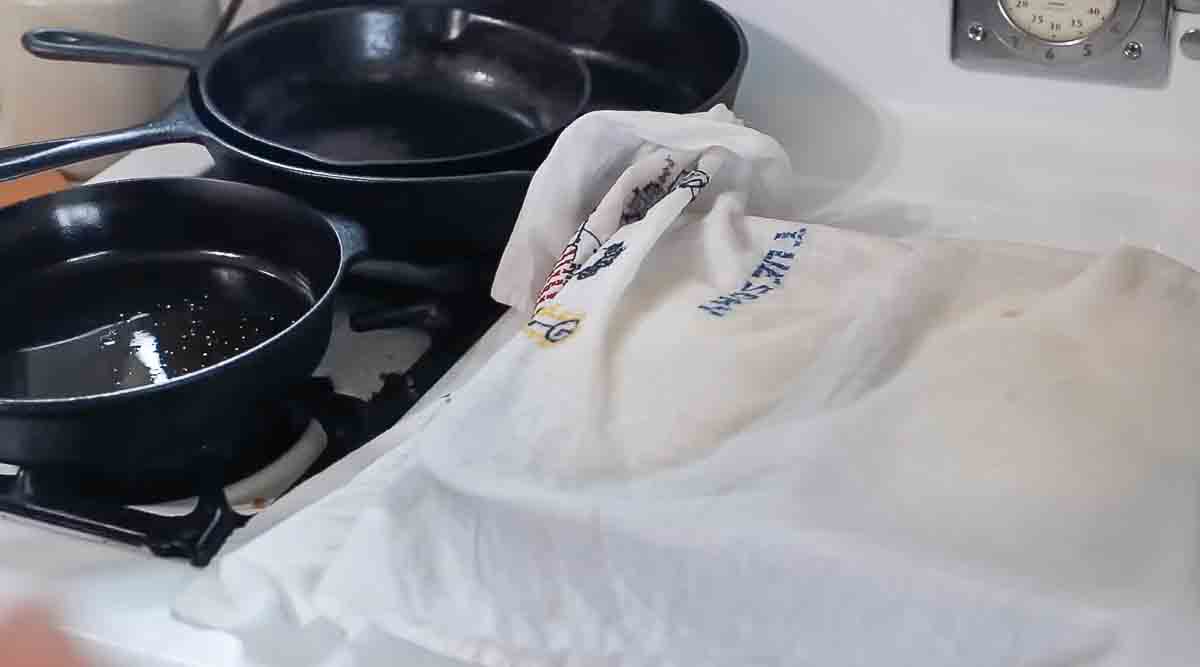
Second rise for 2-4 hours at room temperature, or until doubled. Again this depends on the temp! It could be as little as 1 hour if the house is warm and the starter active. Do not skip this step.It adds volume and strength to the dough.
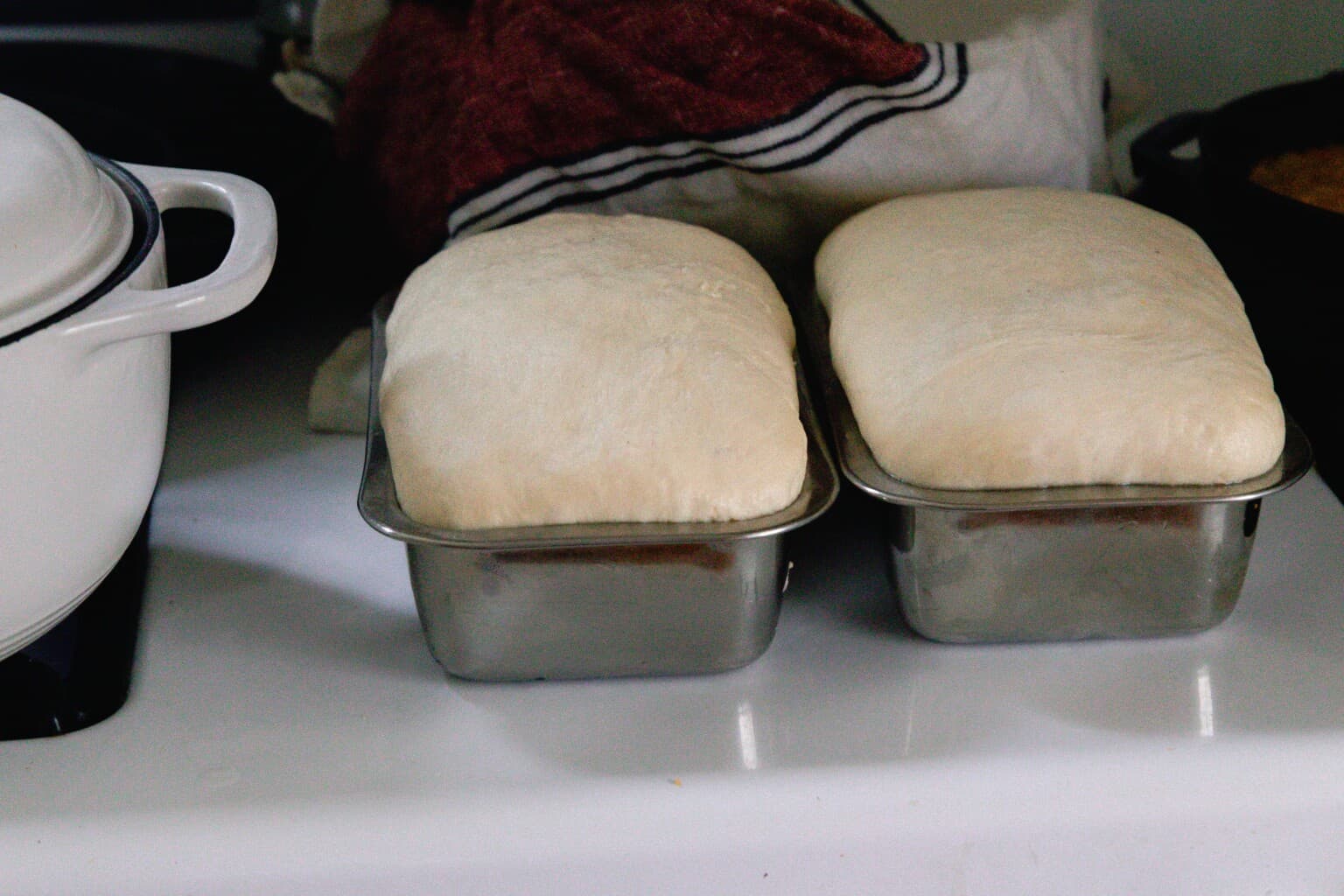
Bake
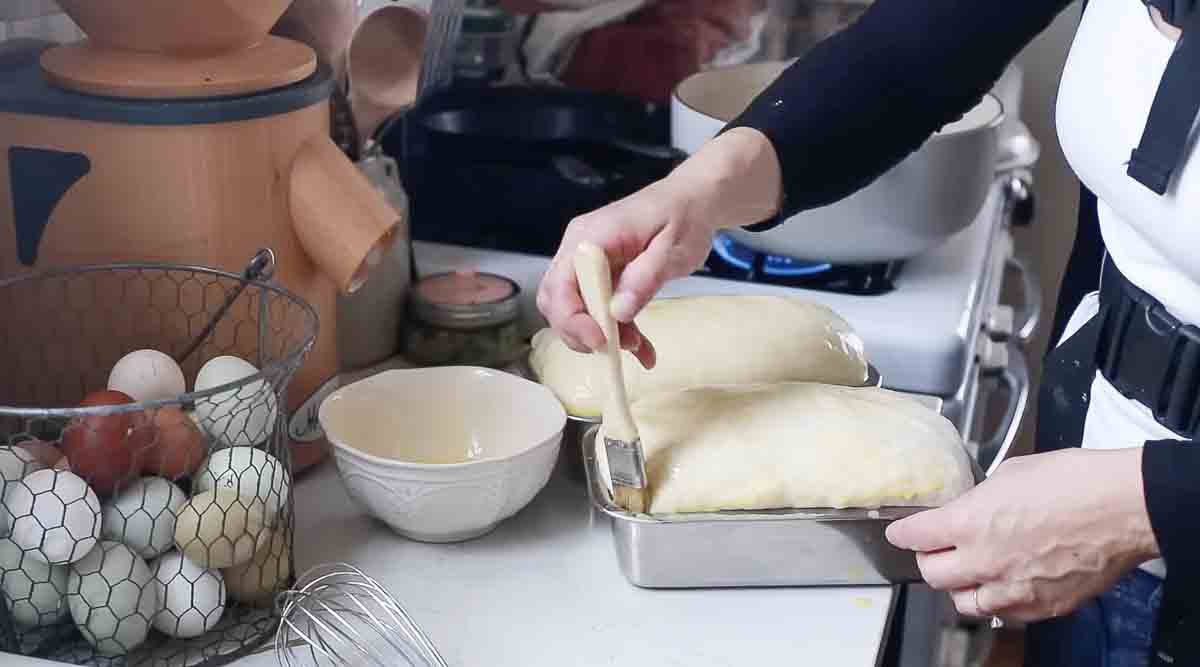
You can add an optional egg wash for more browning.
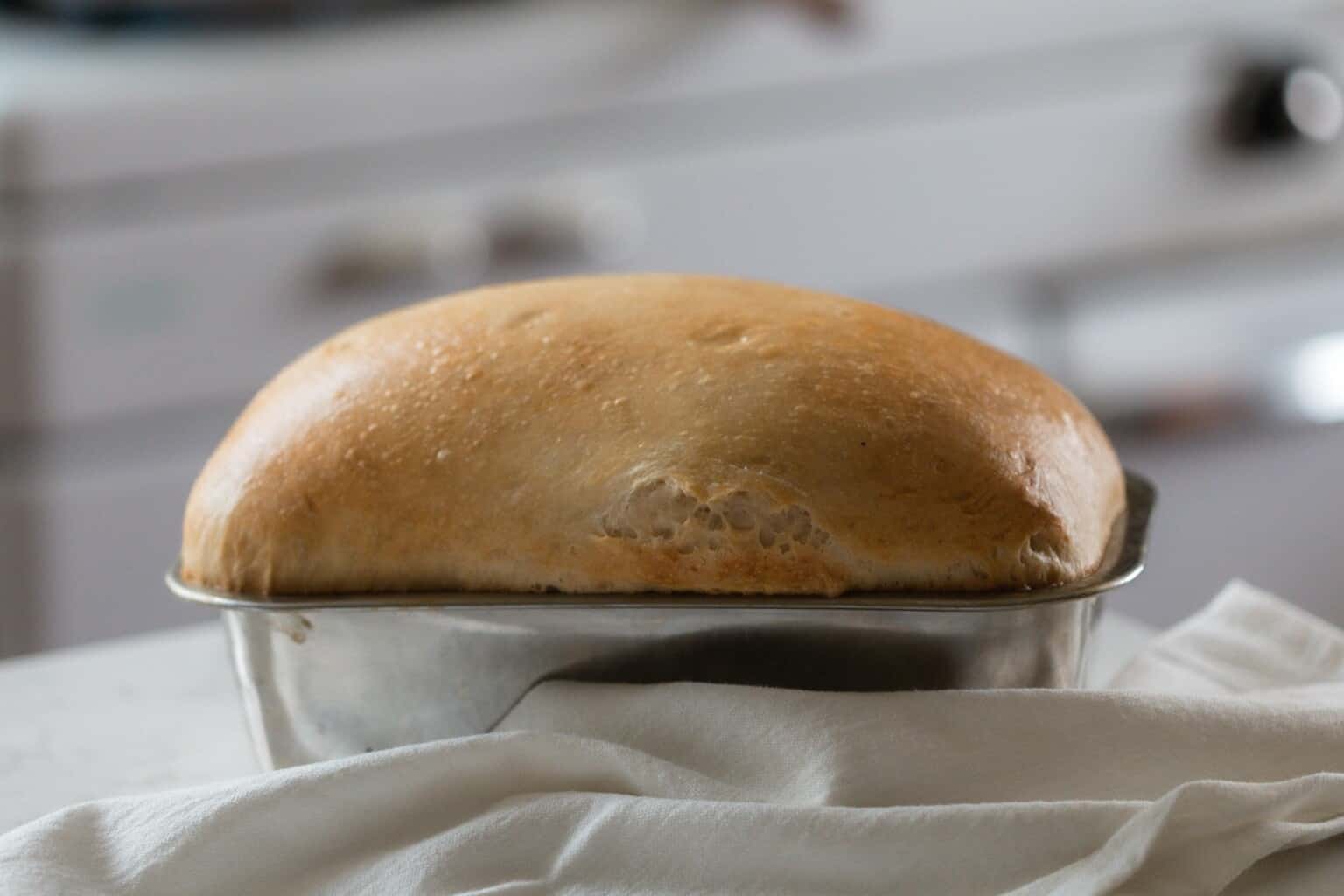
Bake at 375 for 45 minutes, or until golden on top.
Allow to cool completely before slicing.
Storage:
Store in an air-tight container for up to five days for best results.
You can also freeze loaves in freezer safe plastic bags for 3-6 months.
Find More Of My Sourdough Recipes:
- Sourdough Zucchini Bread
- Easy Homemade Sourdough Pasta Recipe
- Sourdough Coffee Cake
- The Best Soft Sourdough Pretzels
- Sourdough Brioche
If you try this recipe and love it, I would love if you could come back and give it 5 stars! Tag me on Instagram @farmhouseonboone .

Sourdough Sandwich Bread

Ingredients
- 1/2 cup butter, 113 grams, softened or coconut oil
- 2 tablespoons honey or sugar, 42 grams for honey, If using sugar, 24 g
- 1 tablespoon salt, 15 grams
- 1 cup starter, 200 grams, active and bubbly
- 2 1/2 cups water, 590 grams
- 8 cups all purpose flour*, 1120 grams
Instructions
- To a stand mixer, add all of the ingredients. I like to add the flour last, so I can add a bit less or more depending on my starter's hydration.
- Knead until dough is stretchy and smooth. You want it to pull away from the sides of the mixing bowl and be smooth and elastic – about 10 minutes. It should pass the windowpane test.
- Allow to bulk rise for 10-12 hours in a warm place like on top of a stove or refrigerator.
- Divide in two equal parts.
- Shape by rolling the dough flat into a rectangle and rolling it up.
- Add to parchment lined or buttered loaf pans.
- Second rise for 2-4 hours at room temperature, or until doubled.
- Bake at 375 for 45 minutes, or until golden on top. You can add an optional egg wash for more browning.
- Allow to cool completely before slicing.
Notes
- *Some people have said making two loaves is too much for their stand mixer to handle. This depends on the type of stand mixer you have. If you have a standard KitchenAid mixer, you may want to halve the recipe and make one loaf.
- Use really soft butter and cube it up so it blends easier.
- Don’t over ferment the dough. It will turn into a wet sloppy disaster that won’t rise well. Still edible. Maybe. It could also be turned into sourdough croutons.
- When making the dough, using a stand mixer makes the process much easier and hands off. You can also do this with your hands.
Nutrition
Nutrition information is automatically calculated, so should only be used as an approximation.









Does it always take 10-12 hours for the first rise or would it be slightly quicker if i put it inside of my oven with the light on?
You can put it in the oven with the light on.
Should it be covered when baking?
No.
I haven’t made this yet, but had asked earlier if you could use a neutral olive oil in place of butter or coconut oil.
I didn’t get a reply. Wanted to make this weekend.
Thank you
Yes, you can.
Would i be able to bulk ferment (even longer) in the fridge?
After the first bulk on the counter, you can move it to the fridge to ferment for longer.
If you cold proof after the initial bulk (due to time restraints) would the count as the second rise in the fridge or would you bring it back up to room temp/ 2nd rise on the counter before baking ?
I still recommend letting it sit on the counter for the second rise!
Looks and tastes impressive! Very easy to make.
Our house is on the cooler side – 65-67 during the winter and I noticed it takes a long time to get a rise. Is sitting on my stove with the oven on its lowest setting doable and should I shorten the first rise time?
It may over ferment that way. I would try keeping it with just the light on.
Thank you, unfortunately my oven light is broken. I ended up turning on my oven at its lowest setting for a bit. Then turning it off and putting the dough in and it got a good rise. I’m still struggling for it to not be dense. Does over fermenting cause it to be dense?
Should the dough still be sticky after adding flour, or do I need to add more flour?
A little bit of sticky is normal until after it has been kneaded.
At what ratio do you feed your sourdough starter prior to making the dough? I have been using a 1:1:1 ratio and it has not been rising quite to my liking.
I mostly just eyeball it, but typically it is a 1:1:1. I have found some people like their starter with a bit more flour than water! It’s all personal preference.
I shaped and put in fridge for second rise as we’re currently without power & in a tornado warning⚠️ really hoping it makes it to morning.
Have you successfully done bulk ferment in fridge with this recipe?
It really benefits from bulk fermenting on the counter, but you can pause at any time and put it in the fridge.
Can I freeze a loaf after shaping prior to the 2nd rise?
Thank you!