


Homemade fermented pickles couldn’t be easier or more delicious. This is seriously the simplest recipe ever and makes the best tasting, probiotic, mildly sour pickles.
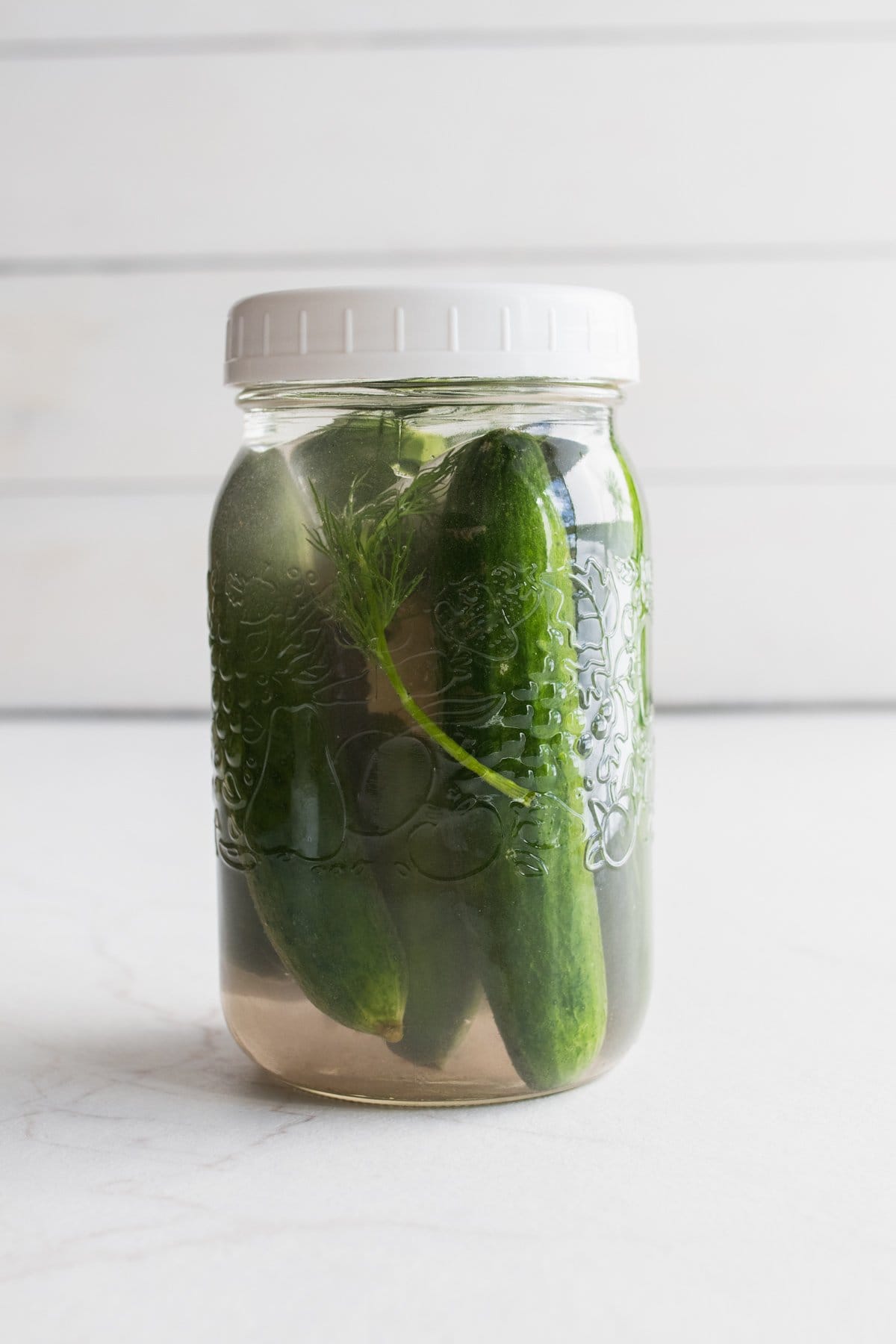
We make and enjoy a variety of fermented foods in our kitchen. Fermented beets, fermented garlic, fermented carrots, fermented jalapeños and these delicious lacto-fermented pickles that we will learn to make today, are just a handful of recipes we love. If you are new to fermenting, I wrote a post on how to make fermented vegetables that will help you get started!
There are so many different ways to make your own pickles at home, but to me, this recipe takes the cake. They are so incredibly easy to make, and without the intimidation of canning or other pickling methods. All you need are some fresh cucumbers, water, and a little salt, and you will be on your way to the best pickles that are not only crunchy and delicious, but also great for your gut health. Regular pickles from the store just won’t cut it after you’ve made this easy recipe!
Why You’ll Love This Recipe
Easy – This pickle recipe may just be the easiest batch of pickles you will ever make. The steps are so simple and the results are so tasty!
Gut healthy – Fermented foods are not only a delicious way to preserve food to enjoy for longer, they are also packed full of health benefits. When making fermented foods, beneficial bacteria turns into lactic acid which then leaves you with gut healthy probiotics. When added to your diet, this can help with things like helping the immune system, decreasing inflammation and better digestion.
Flavorful – These crunchy pickles have the perfect sour tang, and are so much better than store-bought pickles.
Ingredients
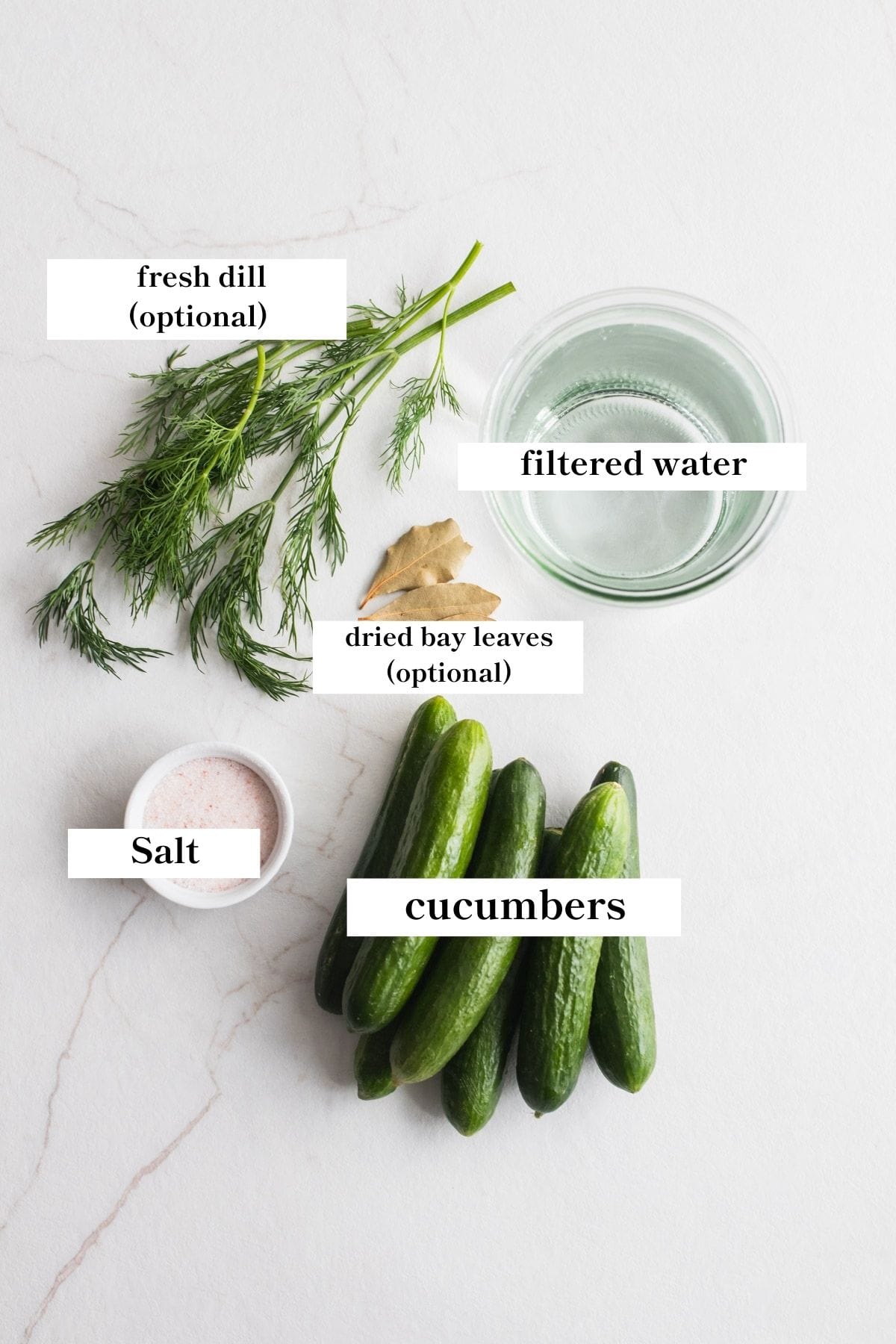
Cucumbers – Pickling varieties of cucumbers are the best cucumbers to use because they contain less water and tend to stay crunchier than other types. You can use other types of cucumbers, but they may not have a great texture after fermentation. Boston pickling cucumbers, kirby, bush pickle, national pickling cucumber, calypso, northern pickling, picklebush, Carolina, and kirby cucumbers are all good options. Choose small to medium sized cucumbers. Small cucumbers are the best.
Water – Preferably filtered water. City water can contain chlorine which can inhibit the good bacteria growth.
Salt –I like to use pink Himalayan salt. You could use sea salt or Celtic salt, but don’t use iodized table salt. Kosher salt may also be a good option, but it may contain anti-caking agents which you want to avoid.
A full ingredient list with exact amounts can be found in the recipe card below.
How to Make Fermented Pickles
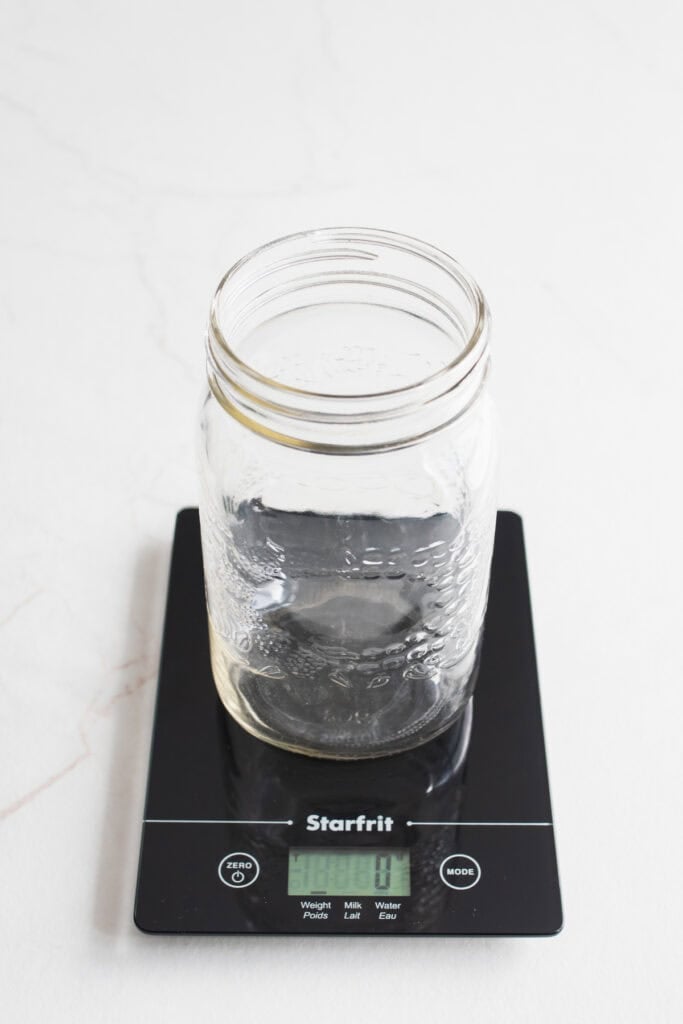
Step 1: Wash your cucumbers thoroughly, and clean your mason jar with hot, soapy water. Rinse well and set aside. Choose a mason jar that comfortably fits the cucumbers. A 32 oz (one-quart) wide-mouth mason jar works well. If using a kitchen scale, place the empty jar on the scale and press “tare” to zero out the weight.
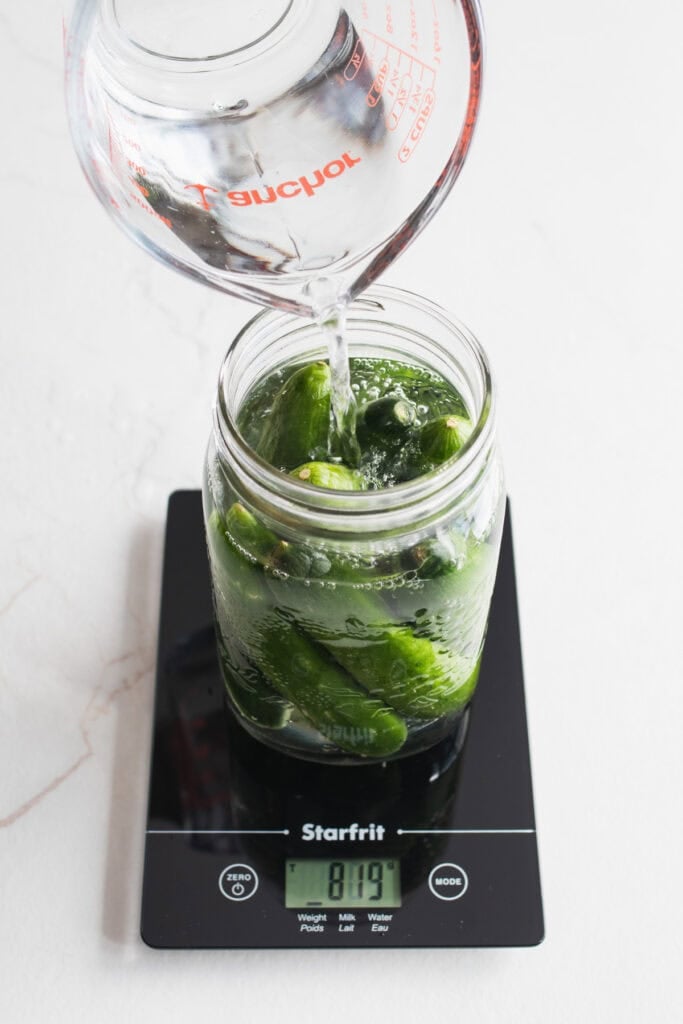
Step 2: Pack the mini cucumbers into the jar, then pour in enough water to fully cover them. In a 32 oz (one-quart) jar, this would be approximately 4 cups of water. If using a kitchen scale, take note of the total weight in grams of both the cucumbers and water.
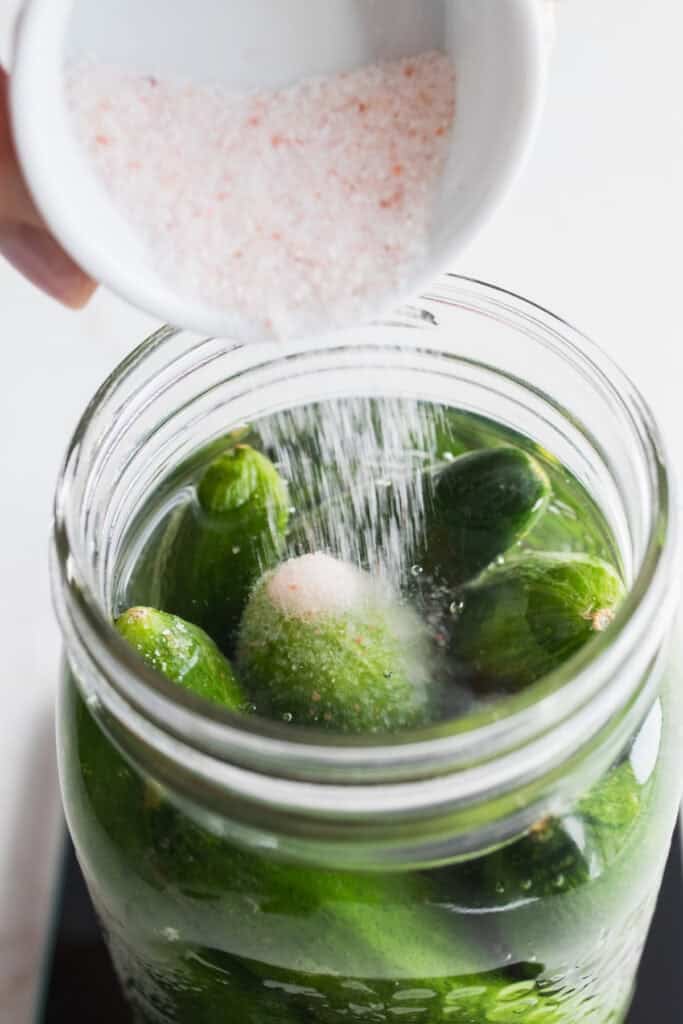
Step 3: If using volume measurements, add 2 tablespoons of salt to the jar. To determine the amount of salt needed, multiply that number by 0.035 to achieve a 3.5% brine. For example, if the combined weight is 860 grams, multiply 860 by 0.035 to get 30. You would add 30 grams of salt.
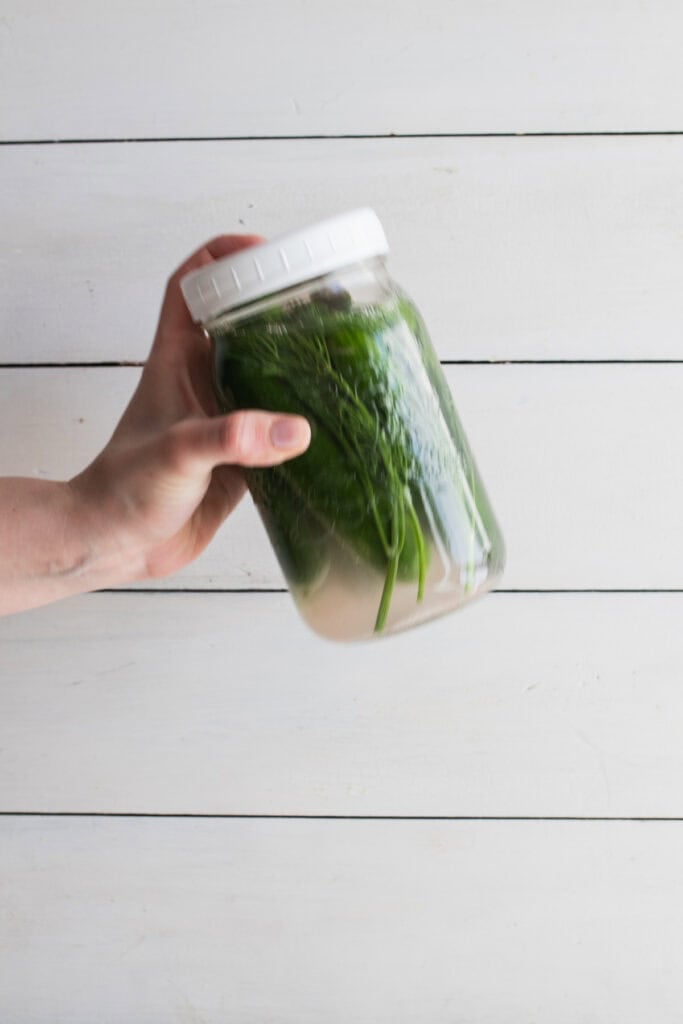
Step 4: Tare the scale again, then add the calculated amount of salt. Secure the lid and shake well to dissolve.
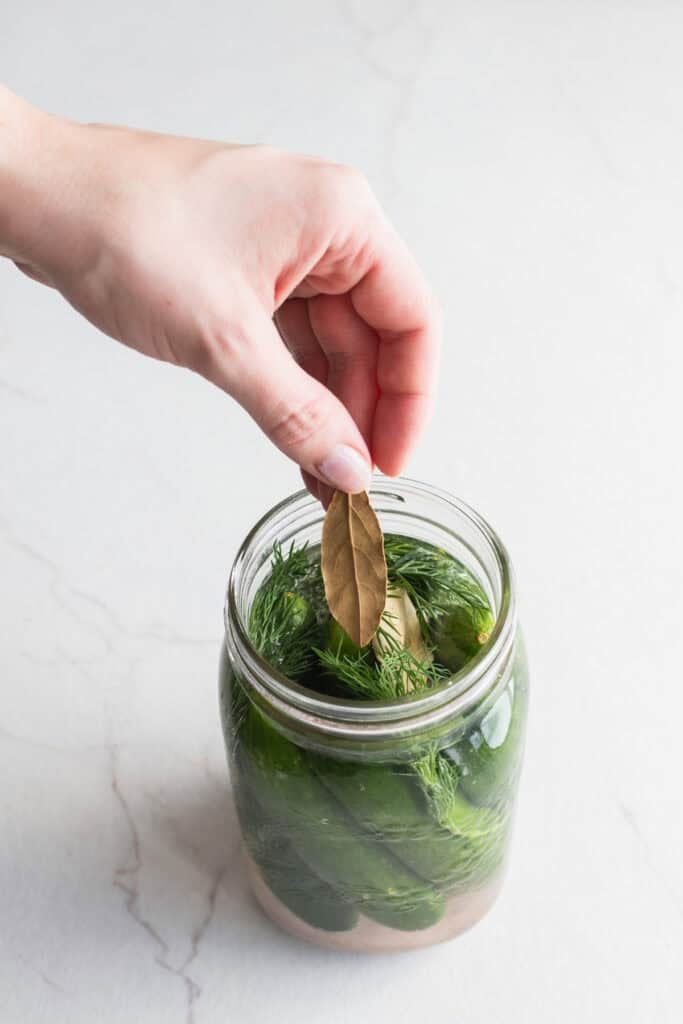
Step 5: If desired, add bay leaves and fresh dill for extra flavor.
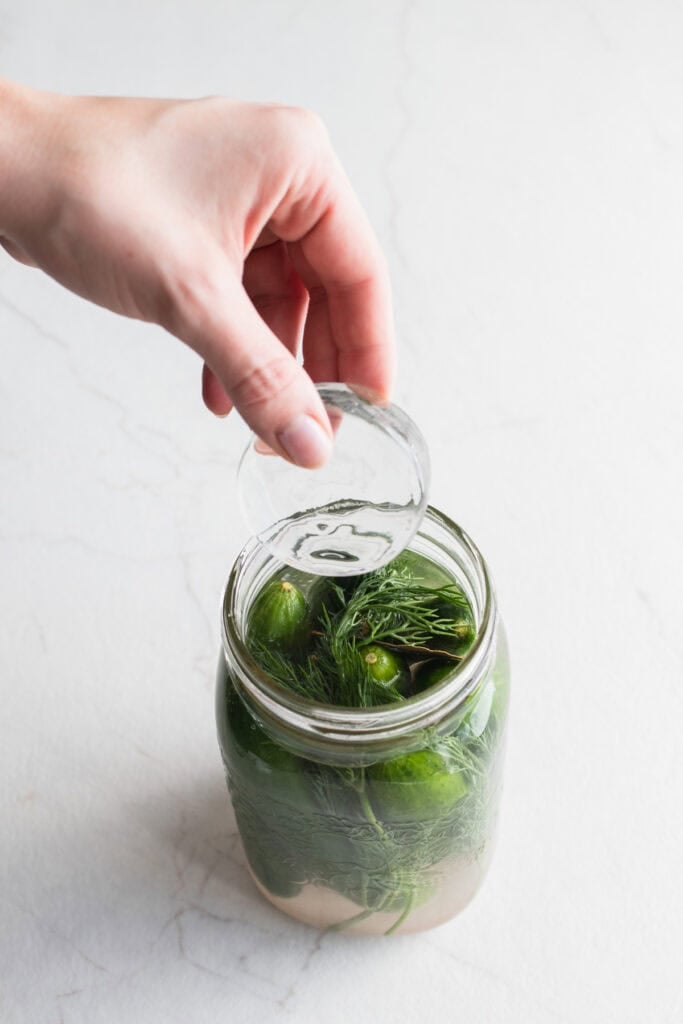
Step 6: Ensure the cucumbers stay fully submerged. You can use fermentation weights, a small pinch bowl, or another small mason jar to hold them down before sealing the lid.
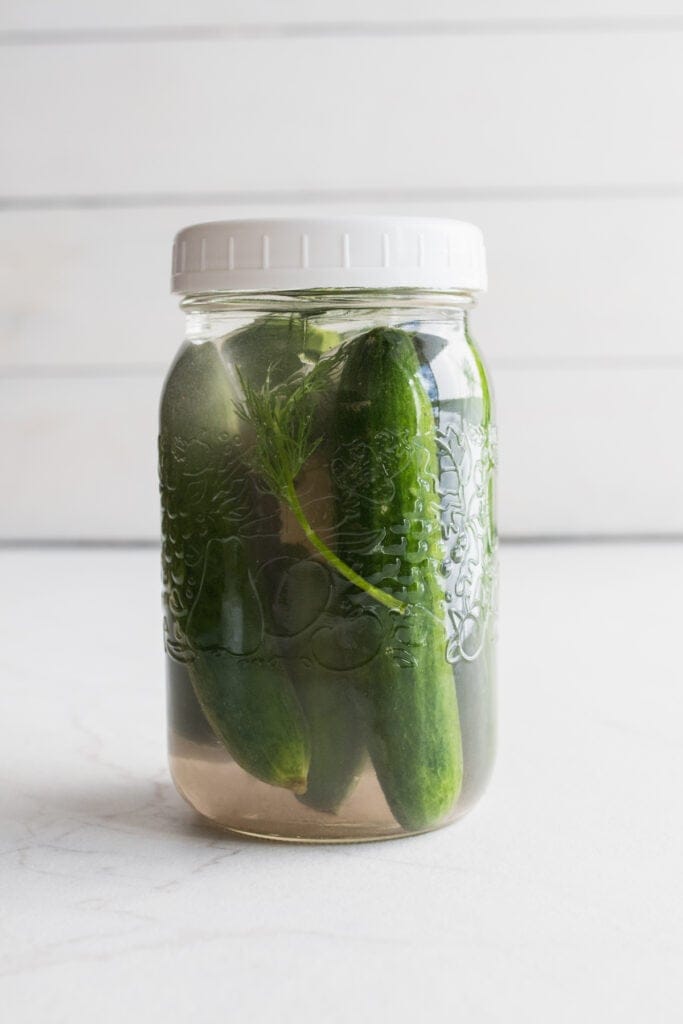
Step 7: Leave the jar at room temperature, away from direct sunlight, for about three to five days. Check daily to ensure the cucumbers remain submerged. Slightly open the lid each day to release built-up pressure, then close it again.
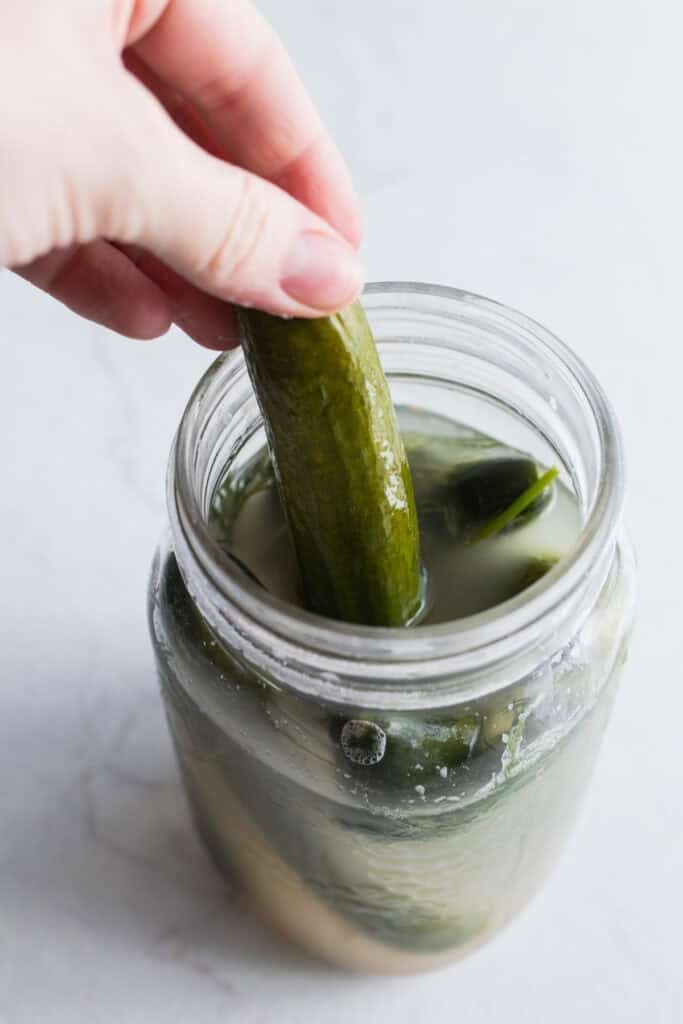
Step 8: Once the pickles reach your desired flavor, transfer the jar to the fridge to slow the fermentation process.
Tips
- It is normal for the saltwater brine to get cloudy. This is a natural byproduct of vegetable fermentation, cloudy brine does not mean mold.
- Add in optional herbs such as fresh dill, garlic, parsley, or peppercorns. If you want to make dill pickles, add about one head of fresh dill per half quart.
- Take a pickle out and try it when you feel it has had enough fermentation time. If it is sour enough for you, put the lid on tightly, and put the jar in the fridge. If you would like them to get a little more sour, leave them out at room temperature to ferment a little longer.
- After you make your first batch, you can use some of the brine to make your next batch of probiotic pickles. It already contains a plethora of good bacteria, so you’ll be giving your next batch a head start.
- You can easily double this recipe by using two quart jars or one half-gallon jar. These are great on sandwiches made with sourdough sandwich rolls and in my healthy tuna salad recipe.
Recipe FAQs
Lacto-fermentation has the presence of good bacteria that ferments and helps preserve the vegetables. Whereas, pickling is the process of soaking vegetables in a mixture of vinegar, salt, and water which gives it a sour taste.
Fermented pickles are healthier than a regular pickle because they contain probiotics to support gut health. They also have other health benefits such as reduced inflammation, immune system help, and digestion benefits.
The salt-to-water ratio is commonly between 2-5%. Somewhat depends on taste. Most recipes will call for about 2 tablespoons of salt per quart of water.
If you want your pickles to stay really crunchy you can add a grape leaf or oat leaf to them. This is totally optional, but the tannins in the grape leaf help keep that crunch.
When finished fermenting, screw on the lid of the jar and store the pickles in the fridge for up to 6 months.
More Fermented Recipes from the Farmhouse
- Homemade Fermented Ketchup
- How To Make Fermented Fruit
- Lacto Fermented Salsa Recipe
- How to Make Beet Kvass
- How To Make Sauerkraut
If you try this recipe and love it, I would love it if you could come back and give it 5 stars! Tag me on Instagram @farmhouseonboone.

Homemade Fermented Pickles
Video
Equipment
- 1 32-ounce (1 quart) mason jar
- 1 Fermentation Weight (optional)
- 1 Fermentation Lid (optional)
Ingredients
- 7 mini cucumbers, or 2 medium cucumbers, sliced
- 4 cups filtered water, if using a scale, amount to be determined
- 2 tablespoons sea salt, if using a scale, amount to be determined
- Dried bay leaves and fresh dill, optional
Instructions
- Wash your cucumbers thoroughly, and clean your mason jar with hot, soapy water. Rinse well and set aside. Choose a mason jar that comfortably fits the cucumbers. A 32 oz (one-quart) wide-mouth mason jar works well. If using a kitchen scale, place the empty jar on the scale and press “tare” to zero out the weight.
- Pack the mini cucumbers into the jar, then pour in enough water to fully cover them. In a 32 oz (one-quart) jar, this would be approximately 4 cups of water. If using a kitchen scale, take note of the total weight in grams of both the cucumbers and water.
- If using volume measurements, add 2 tablespoons of salt to the jar. To determine the amount of salt needed, multiply that number by 0.035 to achieve a 3.5% brine. For example, if the combined weight is 860 grams, multiply 860 by 0.035 to get 30. You would add 30 grams of salt.
- Tare the scale again, then add the calculated amount of salt. Secure the lid and shake well to dissolve.
- If desired, add bay leaves and fresh dill for extra flavor.
- Ensure the cucumbers stay fully submerged. You can use fermentation weights, a small pinch bowl, or another small mason jar to hold them down before sealing the lid.
- Leave the jar at room temperature, away from direct sunlight, for about three to five days. Check daily to ensure the cucumbers remain submerged. Slightly open the lid each day to release built-up pressure, then close it again.
- Once the pickles reach your desired flavor, transfer the jar to the fridge to slow the fermentation process.
Notes
- It is normal for the saltwater brine to get cloudy. This is a natural byproduct of vegetable fermentation, cloudy brine does not mean mold.
- Add in optional herbs such as fresh dill, garlic, parsley, or peppercorns. If you want to make dill pickles, add about one head of fresh dill per half quart.
- Take a pickle out and try it when you feel it has had enough fermentation time. If it is sour enough for you, put the lid on tightly, and throw the jar in the fridge. If you would like them to get a little more sour, leave them out at room temperature to ferment a little longer.
- After you make your first batch, you can use some of the brine to make your next batch of probiotic pickles. It already contains a plethora of good bacteria, so you’ll be giving your next batch a head start.
- You can easily double this recipe by using two quart jars or one half-gallon jar.
Nutrition
Nutrition information is automatically calculated, so should only be used as an approximation.






can i use pickling salt? I am on a low sodium diet due to health issues, do you have to use that much salt?
Yes you can use pickling salt. Unfortunately, you cannot use less salt because that is the required amount to keep the bad bacteria down while encouraging the good bacteria to grow.
Thank you so much. That’s kinda what I thought but wanted to ask to make sure.
Lavinia
Rinsing prior to consumption will help remove some of the salt.
Question;
I want to use Himalayan salt and mine is course.
Do I use course or ground (grinder) Himalayan salt?
Once fermented and in the refrig. do I keep the weight on top to keep veg. submerged?
I would grind it finer because a tablespoon of course salt is much less than a tablespoon of fine salt. Remove the weight and cover with an airtight lid.
Do you have any suggestions as to how to use the spices that are left in the jar after eating the pickles? I know drinking the brine is good, but I put a goodly amount spices in mine: dill seeds, coriander, crushed red pepper, mustard seeds, black peppercorns and fennel.
Thanks so much!
Thank you for your tips. They where very helpful.
Good so good 👍
So I followed the directions. But all the water won’t fit. I read a comment about that being okay, you just need to make sure the salt to water ratio is correct. So do I need four TB of salt in each half gallon jar, or can I make the brine and disperse it between jars? Thank you so much. I’m so excited to use our cucumber harvest and help our guts!
Yes. That is correct. You make the brine and then just fill up the jars until it is filled and covering the cucumbers. You may have brine left over that is ok.
I’ve done this using kefir whey and salt and it went fine, tried it again and there are white blobs that *almost* look like mold (but don’t smell moldy) that have shown up. Do you know what’s happening and if I should be concerned?
Sounds like it could be kahm yeast. If so, it is harmless, but hard to say without seeing and smelling them. Are the pickles crunchy or slimy?
Do these need to be refrigerated at any point?
Yes. After they have fermented you will want to stick them in the fridge.
I made 2 24 oz.jars today one with dill and one without.
I just made these for the first time. First time making pickles actually. The salt didn’t fully dissolve and not all the water fit in the jar. Will this still work if not all the salt ends up in the jar?
All the brine doesn’t have to fit into the jar with the cucumbers, but you do want all the salt to dissolve and a proper ratio of water to salt because the salt is what inhibits the bad bacteria from the bacteria.
Hi Lisa! These are absolutely delicious!! We are thoroughly enjoying them. 🙂 My question is about the weight – once I transfer the pickles to the fridge can I take the weight out? Is it okay if some pickles are peaking out of the top of the brine?
Glad you enjoyed them! Yes and yes. You can remove the weight once they are in the fridge. Also, replace the fermentation lid with a regular mason jar lid.