


Homemade fermented pickles couldn’t be easier or more delicious. This is seriously the simplest recipe ever and makes the best tasting, probiotic, mildly sour pickles.
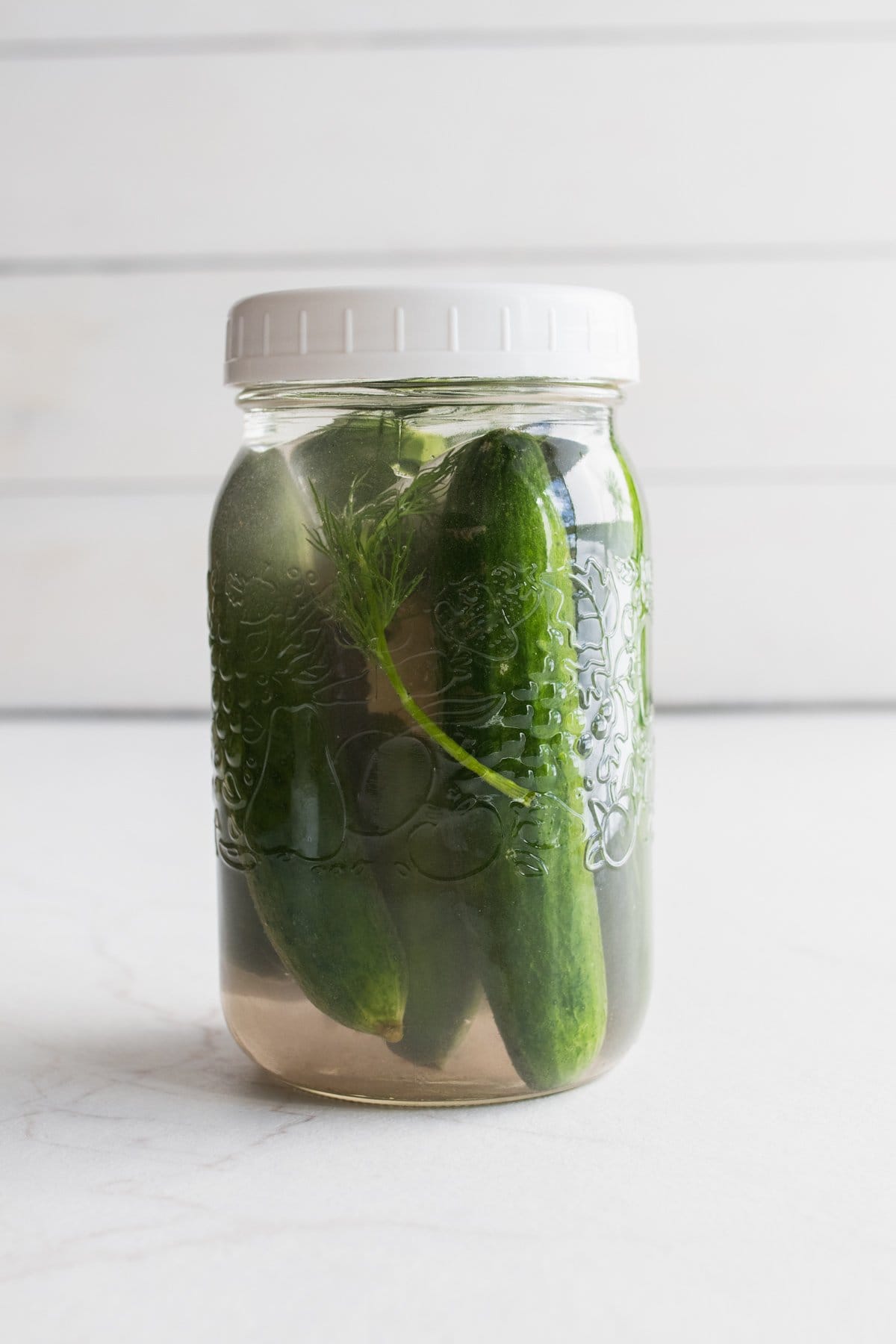
We make and enjoy a variety of fermented foods in our kitchen. Fermented beets, fermented garlic, fermented carrots, fermented jalapeños and these delicious lacto-fermented pickles that we will learn to make today, are just a handful of recipes we love. If you are new to fermenting, I wrote a post on how to make fermented vegetables that will help you get started!
There are so many different ways to make your own pickles at home, but to me, this recipe takes the cake. They are so incredibly easy to make, and without the intimidation of canning or other pickling methods. All you need are some fresh cucumbers, water, and a little salt, and you will be on your way to the best pickles that are not only crunchy and delicious, but also great for your gut health. Regular pickles from the store just won’t cut it after you’ve made this easy recipe!
Why You’ll Love This Recipe
Easy – This pickle recipe may just be the easiest batch of pickles you will ever make. The steps are so simple and the results are so tasty!
Gut healthy – Fermented foods are not only a delicious way to preserve food to enjoy for longer, they are also packed full of health benefits. When making fermented foods, beneficial bacteria turns into lactic acid which then leaves you with gut healthy probiotics. When added to your diet, this can help with things like helping the immune system, decreasing inflammation and better digestion.
Flavorful – These crunchy pickles have the perfect sour tang, and are so much better than store-bought pickles.
Ingredients
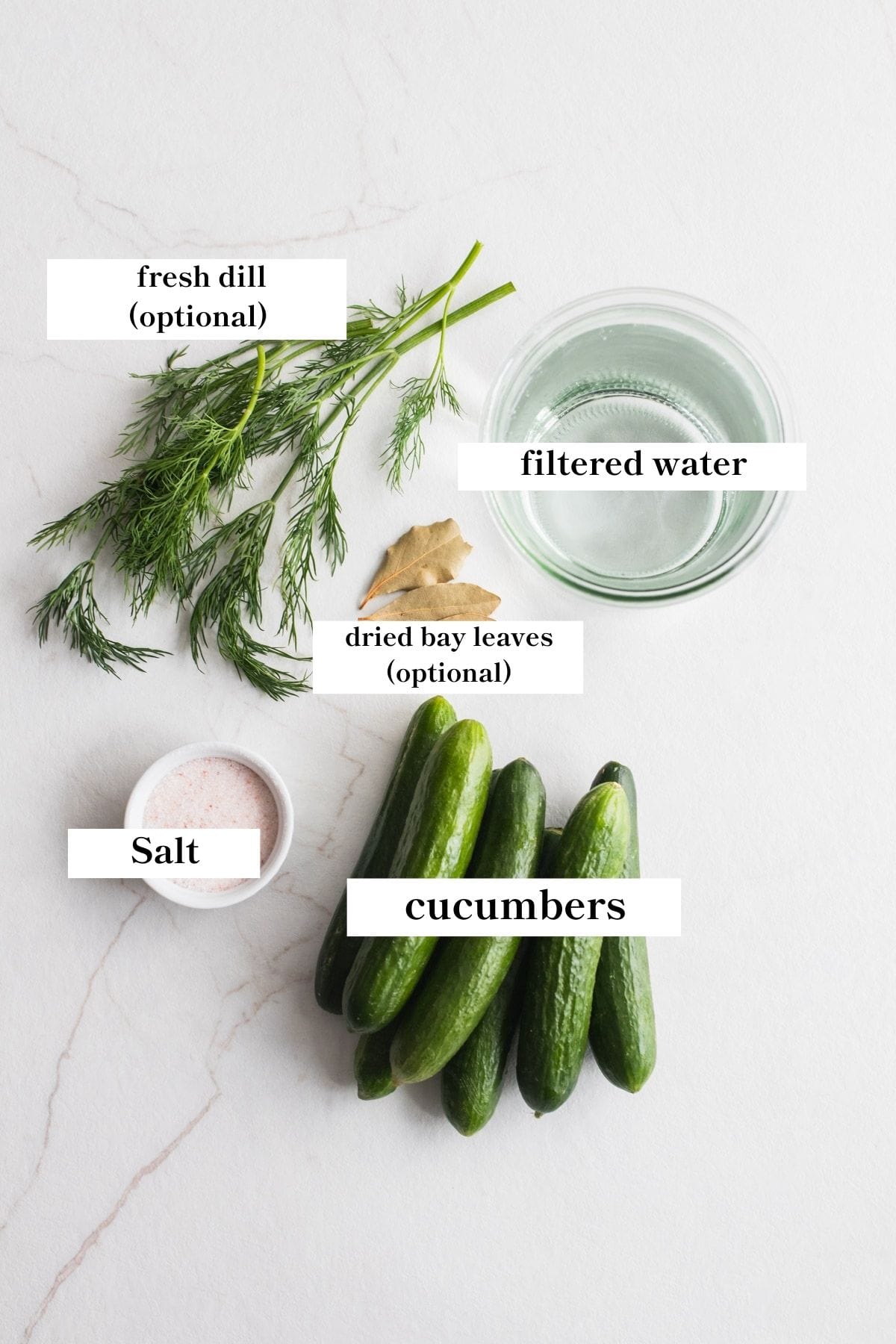
Cucumbers – Pickling varieties of cucumbers are the best cucumbers to use because they contain less water and tend to stay crunchier than other types. You can use other types of cucumbers, but they may not have a great texture after fermentation. Boston pickling cucumbers, kirby, bush pickle, national pickling cucumber, calypso, northern pickling, picklebush, Carolina, and kirby cucumbers are all good options. Choose small to medium sized cucumbers. Small cucumbers are the best.
Water – Preferably filtered water. City water can contain chlorine which can inhibit the good bacteria growth.
Salt –I like to use pink Himalayan salt. You could use sea salt or Celtic salt, but don’t use iodized table salt. Kosher salt may also be a good option, but it may contain anti-caking agents which you want to avoid.
A full ingredient list with exact amounts can be found in the recipe card below.
How to Make Fermented Pickles
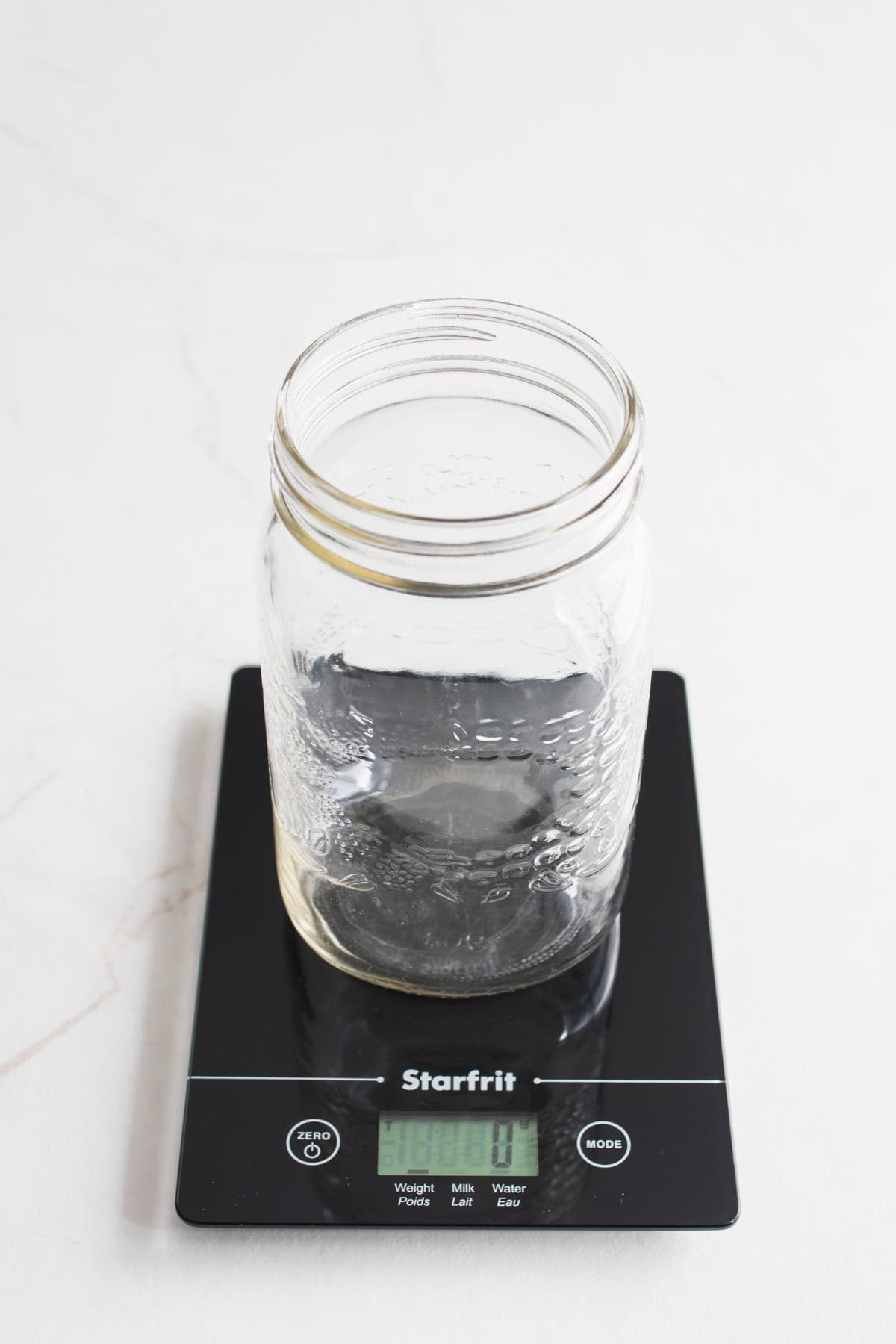
Step 1: Wash your cucumbers thoroughly, and clean your mason jar with hot, soapy water. Rinse well and set aside. Choose a mason jar that comfortably fits the cucumbers. A 32 oz (one-quart) wide-mouth mason jar works well. If using a kitchen scale, place the empty jar on the scale and press “tare” to zero out the weight.
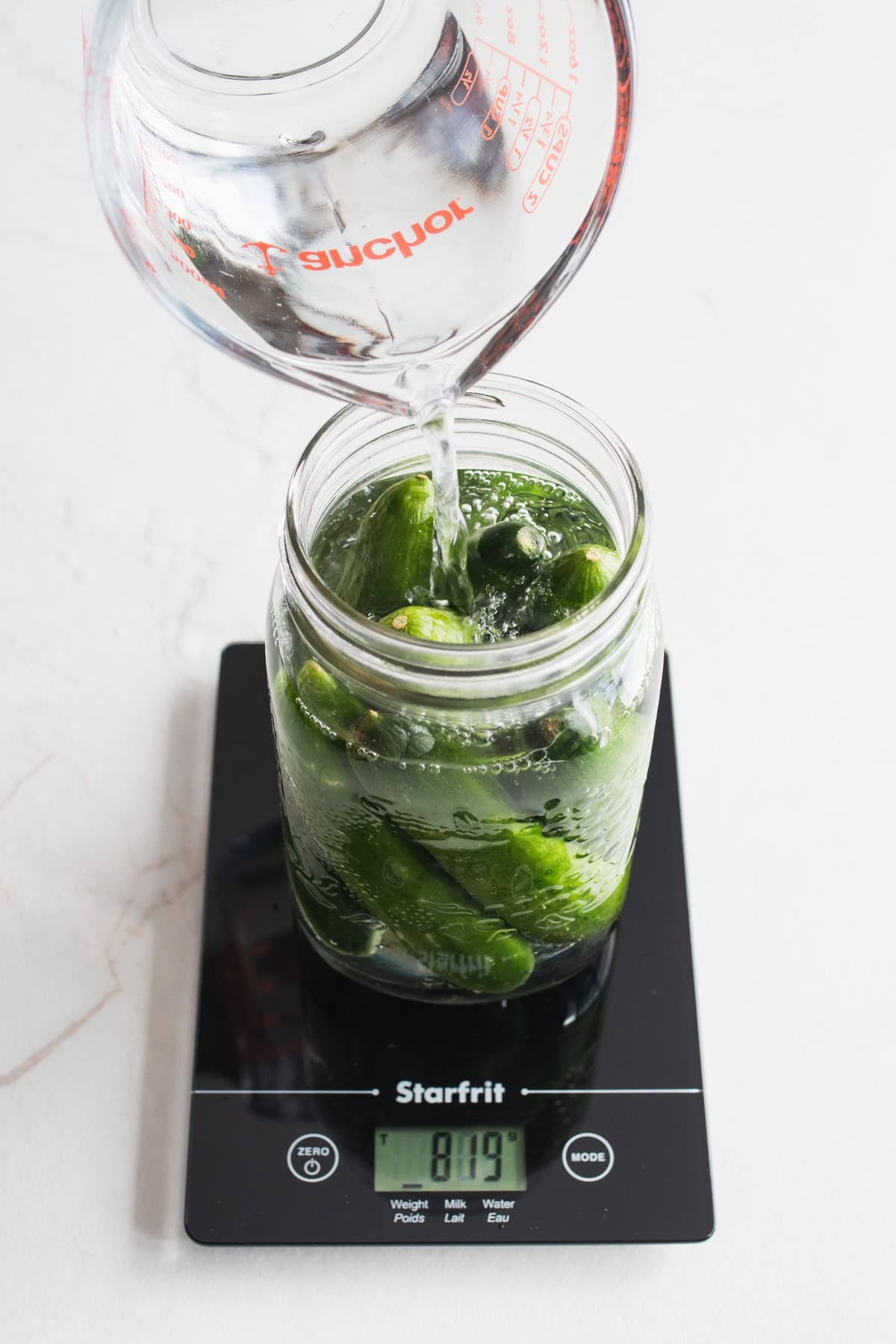
Step 2: Pack the mini cucumbers into the jar, then pour in enough water to fully cover them. In a 32 oz (one-quart) jar, this would be approximately 4 cups of water. If using a kitchen scale, take note of the total weight in grams of both the cucumbers and water.
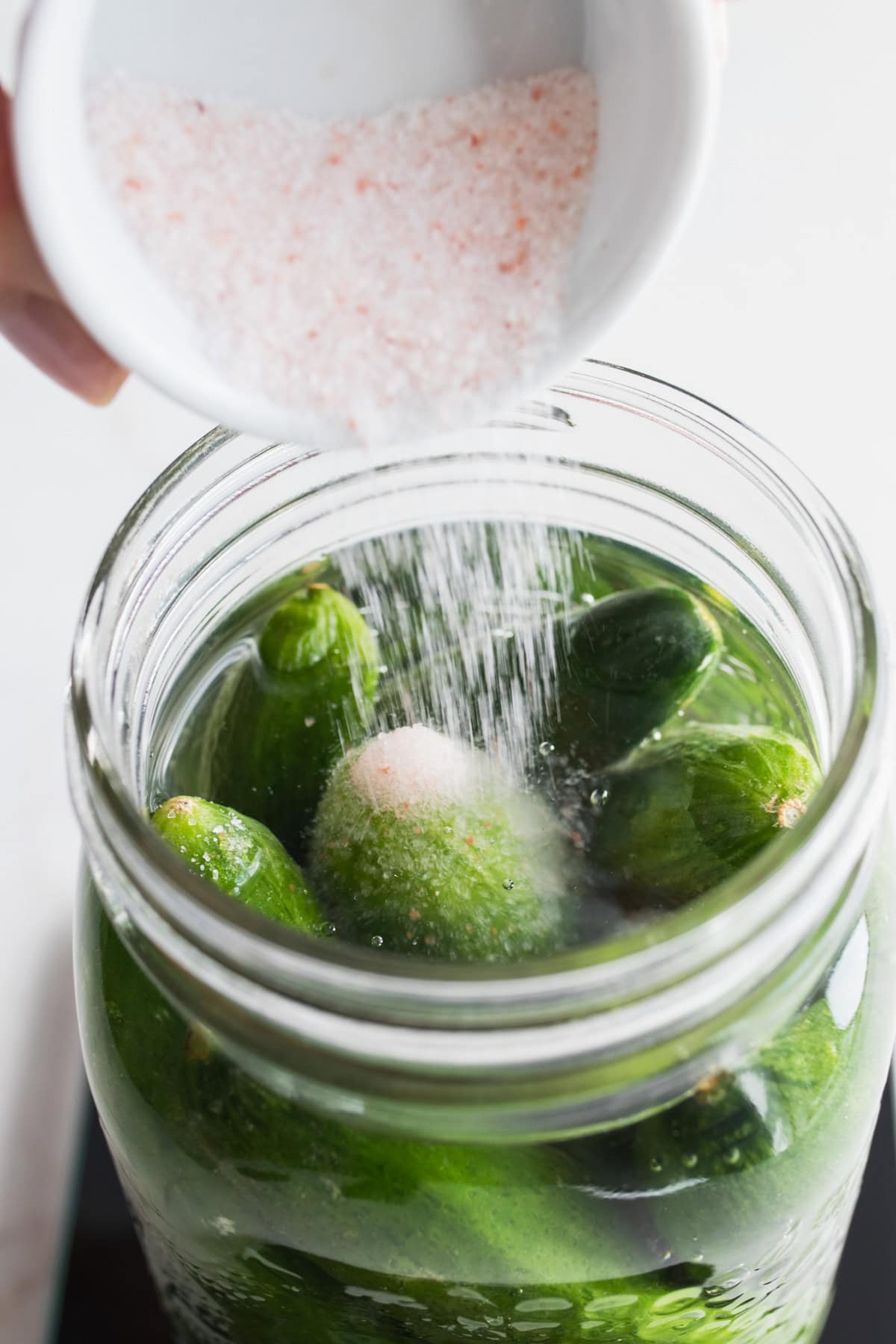
Step 3: If using volume measurements, add 2 tablespoons of salt to the jar. To determine the amount of salt needed, multiply that number by 0.035 to achieve a 3.5% brine. For example, if the combined weight is 860 grams, multiply 860 by 0.035 to get 30. You would add 30 grams of salt.
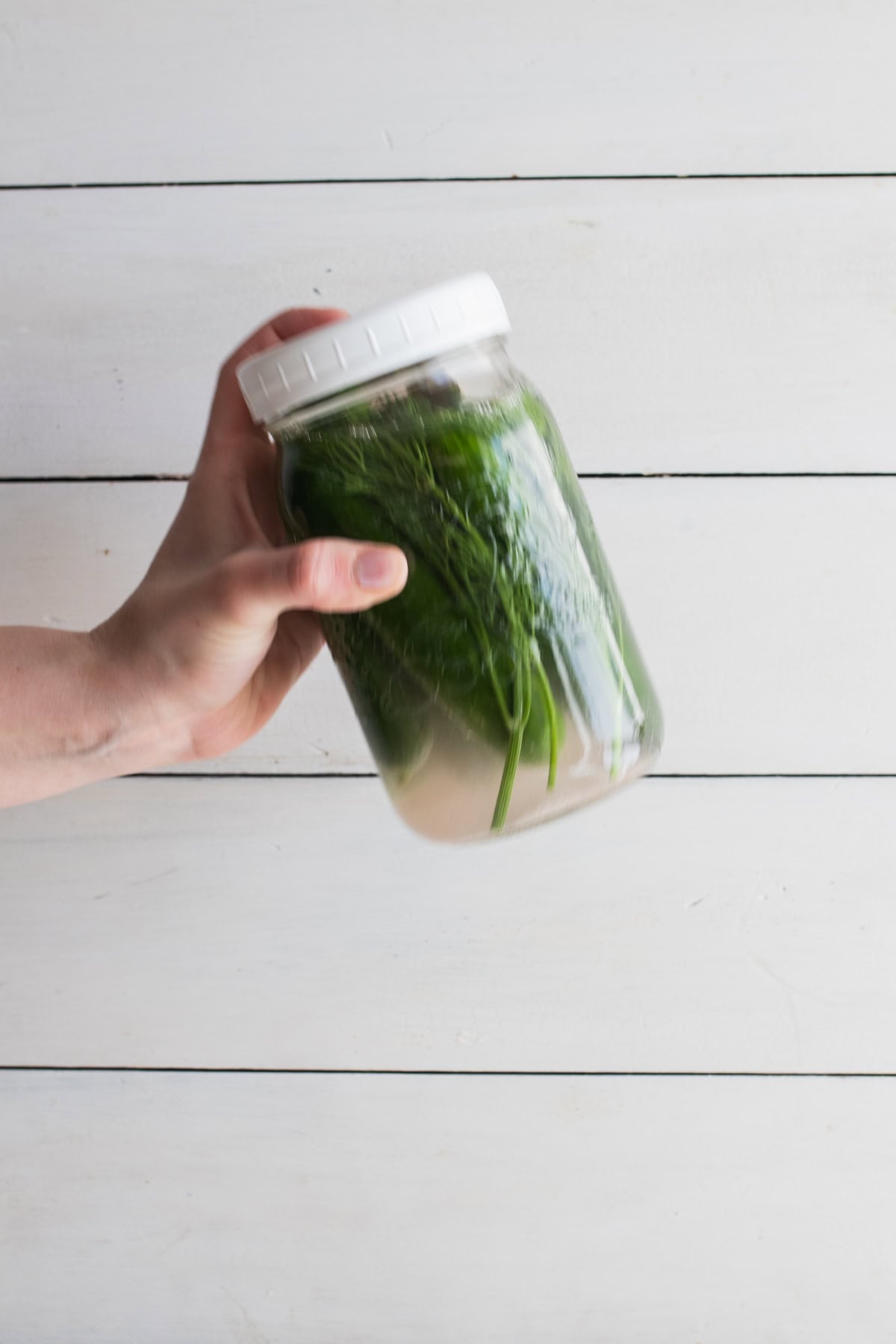
Step 4: Tare the scale again, then add the calculated amount of salt. Secure the lid and shake well to dissolve.
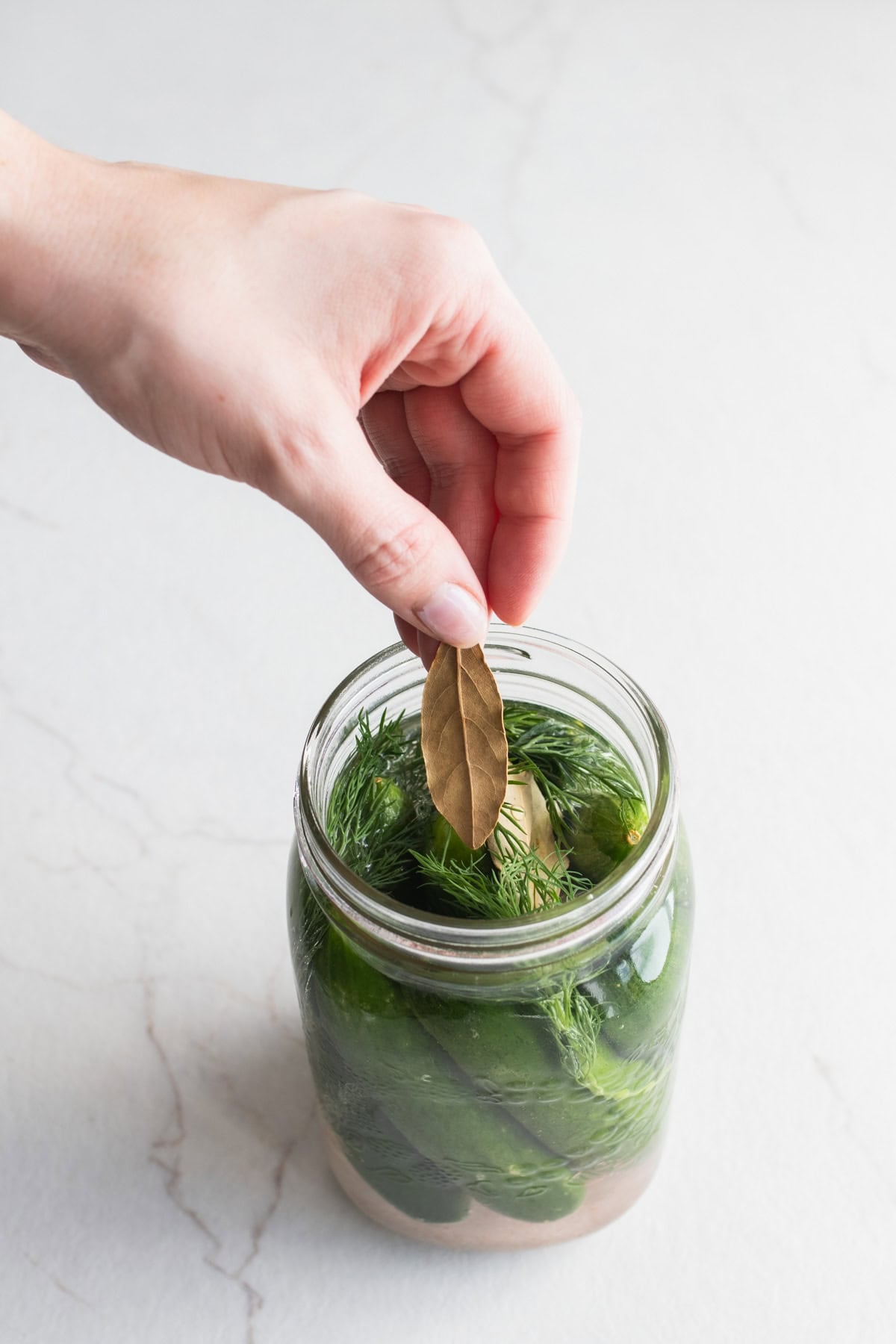
Step 5: If desired, add bay leaves and fresh dill for extra flavor.
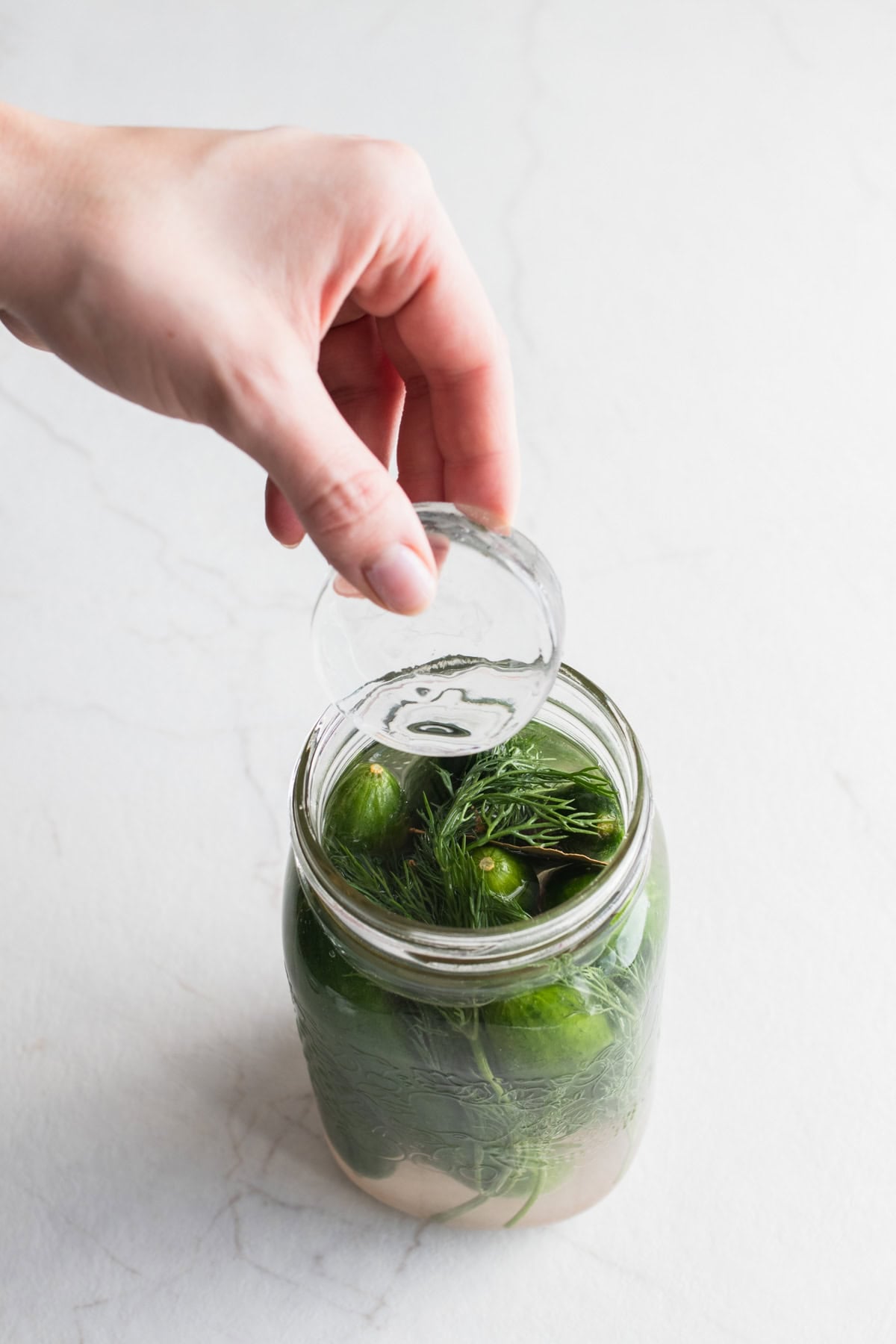
Step 6: Ensure the cucumbers stay fully submerged. You can use fermentation weights, a small pinch bowl, or another small mason jar to hold them down before sealing the lid.
Step 7: Leave the jar at room temperature, away from direct sunlight, for about three to five days. Check daily to ensure the cucumbers remain submerged. Slightly open the lid each day to release built-up pressure, then close it again.
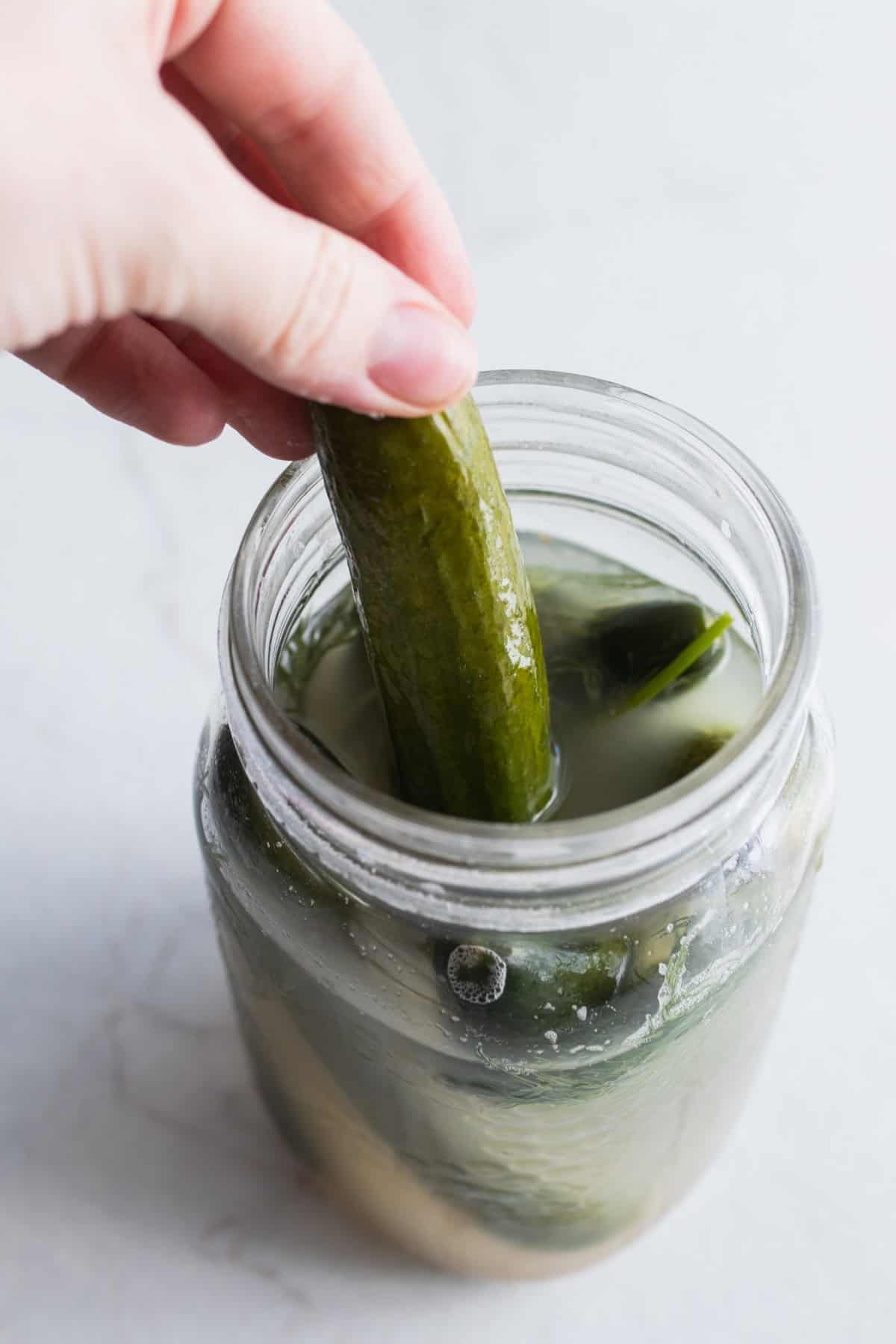
Step 8: Once the pickles reach your desired flavor, transfer the jar to the fridge to slow the fermentation process.
Tips
- It is normal for the saltwater brine to get cloudy. This is a natural byproduct of vegetable fermentation, cloudy brine does not mean mold.
- Add in optional herbs such as fresh dill, garlic, parsley, or peppercorns. If you want to make dill pickles, add about one head of fresh dill per half quart.
- Take a pickle out and try it when you feel it has had enough fermentation time. If it is sour enough for you, put the lid on tightly, and put the jar in the fridge. If you would like them to get a little more sour, leave them out at room temperature to ferment a little longer.
- After you make your first batch, you can use some of the brine to make your next batch of probiotic pickles. It already contains a plethora of good bacteria, so you’ll be giving your next batch a head start.
- You can easily double this recipe by using two quart jars or one half-gallon jar. These are great on sandwiches made with sourdough sandwich rolls and in my healthy tuna salad recipe.
Recipe FAQs
Lacto-fermentation has the presence of good bacteria that ferments and helps preserve the vegetables. Whereas, pickling is the process of soaking vegetables in a mixture of vinegar, salt, and water which gives it a sour taste.
Fermented pickles are healthier than a regular pickle because they contain probiotics to support gut health. They also have other health benefits such as reduced inflammation, immune system help, and digestion benefits.
The salt-to-water ratio is commonly between 2-5%. Somewhat depends on taste. Most recipes will call for about 2 tablespoons of salt per quart of water.
If you want your pickles to stay really crunchy you can add a grape leaf or oat leaf to them. This is totally optional, but the tannins in the grape leaf help keep that crunch.
When finished fermenting, screw on the lid of the jar and store the pickles in the fridge for up to 6 months.
More Fermented Recipes from the Farmhouse
- Homemade Fermented Ketchup
- How To Make Fermented Fruit
- Lacto Fermented Salsa Recipe
- How to Make Beet Kvass
- How To Make Sauerkraut
If you try this recipe and love it, I would love it if you could come back and give it 5 stars! Tag me on Instagram @farmhouseonboone.

Homemade Fermented Pickles
Video
Equipment
- 1 32-ounce (1 quart) mason jar
- 1 Fermentation Weight (optional)
- 1 Fermentation Lid (optional)
Ingredients
- 7 mini cucumbers, or 2 medium cucumbers, sliced
- 4 cups filtered water, if using a scale, amount to be determined
- 2 tablespoons sea salt, if using a scale, amount to be determined
- Dried bay leaves and fresh dill, optional
Instructions
- Wash your cucumbers thoroughly, and clean your mason jar with hot, soapy water. Rinse well and set aside. Choose a mason jar that comfortably fits the cucumbers. A 32 oz (one-quart) wide-mouth mason jar works well. If using a kitchen scale, place the empty jar on the scale and press “tare” to zero out the weight.
- Pack the mini cucumbers into the jar, then pour in enough water to fully cover them. In a 32 oz (one-quart) jar, this would be approximately 4 cups of water. If using a kitchen scale, take note of the total weight in grams of both the cucumbers and water.
- If using volume measurements, add 2 tablespoons of salt to the jar. To determine the amount of salt needed, multiply that number by 0.035 to achieve a 3.5% brine. For example, if the combined weight is 860 grams, multiply 860 by 0.035 to get 30. You would add 30 grams of salt.
- Tare the scale again, then add the calculated amount of salt. Secure the lid and shake well to dissolve.
- If desired, add bay leaves and fresh dill for extra flavor.
- Ensure the cucumbers stay fully submerged. You can use fermentation weights, a small pinch bowl, or another small mason jar to hold them down before sealing the lid.
- Leave the jar at room temperature, away from direct sunlight, for about three to five days. Check daily to ensure the cucumbers remain submerged. Slightly open the lid each day to release built-up pressure, then close it again.
- Once the pickles reach your desired flavor, transfer the jar to the fridge to slow the fermentation process.
Notes
- It is normal for the saltwater brine to get cloudy. This is a natural byproduct of vegetable fermentation, cloudy brine does not mean mold.
- Add in optional herbs such as fresh dill, garlic, parsley, or peppercorns. If you want to make dill pickles, add about one head of fresh dill per half quart.
- Take a pickle out and try it when you feel it has had enough fermentation time. If it is sour enough for you, put the lid on tightly, and throw the jar in the fridge. If you would like them to get a little more sour, leave them out at room temperature to ferment a little longer.
- After you make your first batch, you can use some of the brine to make your next batch of probiotic pickles. It already contains a plethora of good bacteria, so you’ll be giving your next batch a head start.
- You can easily double this recipe by using two quart jars or one half-gallon jar.
Nutrition
Nutrition information is automatically calculated, so should only be used as an approximation.






I like that you’ve tried to make sure people aren’t intimidated by the process, but I wish their were more recipes that simplified it even more with salt ratios. For example I like to do it with a 3% brine. It’s incredibly simple and easy to scale up or down the batch size. You simply add 30 grams of salt per litre of water. Tare the jar your using on some scales and add your veggies to it and add 3% of salt, ie if you have 500 grams of cucumbers, add 15 grams of salt to the jar and pour your already made 3% solution to the jar. It will dissolve pretty quickly. Another thing is most people don’t have access to grape or oat leaves, but almost everyone has black tea, which contains tannins. 1 bag of tea per litre is pretty good.
Dill seed or dill heads as well as Bay leaves contain tannins.
How and in what measurements can we use brine from our previous jar to make more? These were the best pickles we’ve ever eaten.
I usually just pour about a cup of brine from my previous ferment into a new jar. It helps give them a jumpstart on the fermenting process.
Is it necessary to heat the water to dissolve the salt, or does it dissolve it quickly and more completely with hot water?
Yes, heat the water.
Each time I’ve tried to lacto ferment cucumber slices they come out mushy and slimy after two or three days. What am I doing wrong? Any help would be appreciated.
Tiff
My guess is that your water was probably too warm. It’s important that the cucumbers stay very cold in order to preserve their crispness.
What if there is mold on the top of the jar? is it still good? and what would have caused it?
It’s caused by food particles floating to the top. Even the tiniest piece of dill could cause mold. Anything that catches the air! I would start over and then use a weighted glass to make sure everything is below the brine.
Love your content!! I’m new but will subscribe. I love fermented food so it’s nice to have a simple recipe 😋 thanks!
How long will these keep in the fridge?
Fermented foods can store for months in the fridge.
I don’t have half gallon mason jars but I do have quarts, can I divide it using this recipe accordingly?
Yes, that’s fine!
Thanks so much! This was very informative! Can I add apple cider vinegar to the pickle brine (since it is a fermented vinegar)? or does the brine need to be made strictly with only salt in order to ferment the cucumbers?
Thank you!
Supposedly. you can, haven’t personally tried it, but adding too much can be detrimental to the ferment as it can slow fermentation down. They also get tangy without it. If you want to add vinegar, you may want to go the refrigerator pickle route, or wait until after the ferment to add the vinegar. That way you can taste it to decide if it needs it.
Laziest cheapest fermenting weight ever: took a flat rock from my garden slightly smaller than the opening of my jar, scrubbed it and then put it through the dishwasher for good measure. wrapped it in cheesecloth to make a little “packet” with a “handle”.
This is a really bad idea. Rocks are porous and may contain bacteria that are microscopic and cannot be scrubbed away. Also, rocks may contain minerals that will react to the fermentation process, ruining it and/or making you sick.
My Eastern European grandmother, b.1888, made pickles regularly for decades and weighted them down on the jar with what she called “my pickle rock.” I continued the tradition with rocks from my garden. Yeah, just clean them and you’re fine.