
Lightly sweetened and refreshingly effervescent, water kefir offers gut-healthy probiotics and delicious hydration. Learn how to make water kefir in your own kitchen with this simple tutorial.
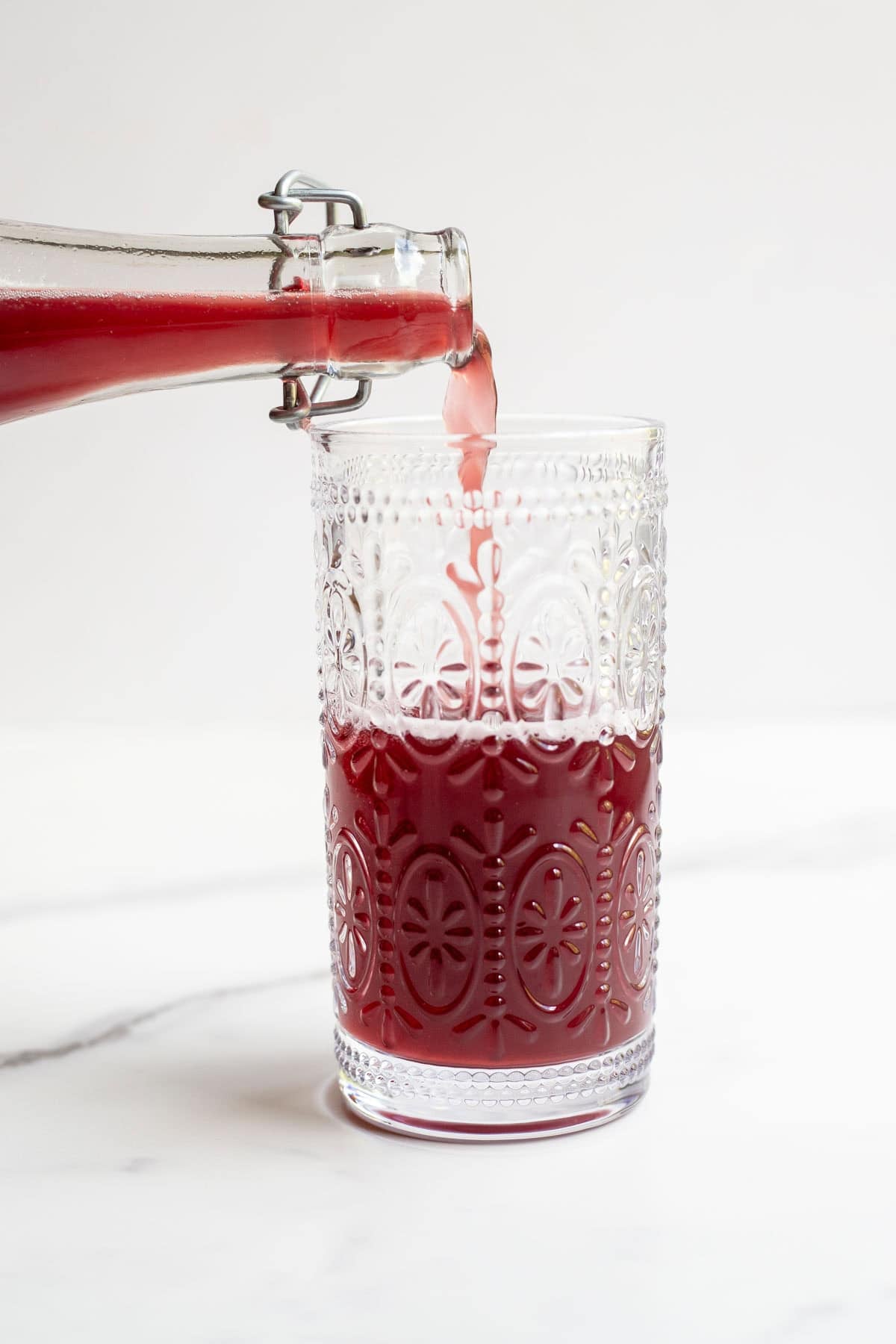
Water kefir bubbles and tastes much like your favorite soft drinks, yet contains a fraction of the sugar. Lightly sweetened and full of beneficial bacteria, these fizzy drinks pair perfectly with homemade pizza or beef gyros for a refreshing alternative to sugary, processed drinks.
Kids love water kefir because it’s fun and tasty, while adults love it for its health benefits and easy hydration. Alongside fermented lemonade and lavender lemonade, this easy water kefir recipe ensures a tasty, healthy, hydrated summer.
What is Water Kefir?
Water kefir is a naturally fermented beverage that begins with sugar water and a starter culture – known as kefir grains. Kefir grains aren’t actually grains at all, but rather little symbiotic colonies of good bacteria and yeast that feed on sugar. Much like a kombucha scoby, these little colonies are alive.
These bacteria and yeast consume sugar and minerals from the water during fermentation, producing carbonation and probiotics, reducing sugar content, and adding tangy, fermented flavor.
Water kefir grains vary in appearance. Depending on how you receive them, they may have a moist, translucent, jelly appearance, or they may arrive dried, resembling small shards of cloudy, translucent ice. Moist, jelly-like grains can begin fermenting immediately, while dehydrated water kefir grains require rehydration before use.
Benefits of Water Kefir
Gut Health
Water kefir provides a rich source of beneficial bacteria known as probiotics. Research has linked probiotics to improved immune function, a lower risk of certain cancers, and better gut health.
There are ‘good guys’ in your gut known as beneficial bacteria (lactobacillus, which is heavily present in yogurt), and there are ‘bad guys’ in your gut known as pathogenic bacteria (E. coli, staphylococcus, etc.).
The pathogenic bacteria cause harm in that they release toxins and damage tissue in order to feed off your body’s nutrients, while the beneficial bacteria build immunity, aid in digestion, and block harmful pathogens. While pathogenic bacteria are naturally present in small numbers, the modern world of stress, sugar, and processed foods throws off the balance, increasing pathogenic bacteria to the point of food allergies, depression, and even certain cancers. Increasing the beneficial bacteria is key.
While quality probiotic supplements serve a purpose, it’s important to create a diverse inner ecosystem by introducing many different strains of good bacteria. Water kefir can contain up to 56 different strains of probiotics, providing an excellent and varied source of these helpful bacteria.
Boosts Immune Health
A good portion of your immune system is located in the gut, and by increasing probiotics, you are benefiting your gut flora (or gut microbiome; the ecosystem of bacteria, viruses, and even fungi that live in your digestive tract). Some studies have shown that probiotics can reduce the risk of intestinal infection and help prevent recurring urinary tract infections (source). Probiotics can also reduce inflammation, which improves immune response, making your immune system work better and more efficiently.
Hydration
Water kefir is a refreshing, low-calorie drink. Drinking enough fluids every day is important for many bodily functions and can help improve sleep, concentration, prevent infections, lubricate joints, and much more (source). While it is best to get most of your intake from water and other unsweetened beverages, water kefir can help make water intake just a bit easier. Plus, the kefir grains digest a lot of the sugar, leaving you with a glass full of tasty probiotics.
Dairy Free
Many times when people think of fermented foods or drinks, they think of dairy – like homemade Greek yogurt and milk kefir. For those who are sensitive or allergic to dairy, dairy-based probiotics may be more challenging. Thankfully, there is a good variety of other dairy-free fermented options, like kombucha, fermented vegetables, fermented fruit, all kinds of sourdough breads, and even fermented salsa.
Inexpensive
Once you have the things you need to make authentic water kefir, it is really cheap to make. Much less expensive than purchasing at the grocery store. All you need is a little water, sugar, and time.
Water Kefir Flavors
- Substitute coconut water for regular water in the first fermentation to create coconut water kefir.
- Grape juice, apple juice, cherry juice, etc.
- Vanilla or almond extract
- Fresh blueberries, strawberries, blackberries, raspberries, etc.
- Mashed peach, pineapple, or kiwi
- Sliced lemon, lime, or orange
- Crushed pomegranate arils
- Dried figs, raisins, apricots, dates (use unsweetened dried fruits that are free of sulfur dioxide)
Why You’ll Love This Recipe
Health benefits – Water kefir contains dozens of strains of probiotics, which strengthen immunity and offer anti-inflammatory properties.
Delicious hydration – Not only does water kefir hydrate, but it makes it easy to do so. The light sweetness and fun, fizzy carbonation make this simple ferment a tasty and wholesome refreshment.
Inexpensive – Kefir grains purchased online cost more than those given by a friend, but in either case, kefir grains are very affordable.
Ingredients

Kefir grains – When purchasing kefir grains, you may receive dehydrated grains that need to be rehydrated, or they may come moist, plump, and ready to go.
Water – Chlorine in the water disrupts fermentation, so use filtered water if possible. I use Boroux water filters for chlorine-free, contaminant-free water. Distilled water offers no mineral content, so I don’t recommend it. If using tap water, let the water sit open at room temperature for 24 hours to degas. This may not remove all chlorine if your city treats the water with chloramine (chlorine + ammonia) rather than standard chlorine.
Fruit juice, fresh or dried fruit (optional) – For use during a second fermentation.
Sugar – Organic, unrefined sugars contain more minerals to feed the good bacteria and yeast.
A full ingredient list with exact amounts can be found in the recipe card below.
Water Kefir Grains Care
Purchasing: When purchasing online, the amount of grains you receive varies. I ordered from Cultures for Health and received 1/4 cup worth of dehydrated grains. Other websites vary. Adjust the recipe below to match the amount of grains you have on hand.
Activating: Dehydrated grains appear small, hard, and translucent, much like crystal or ice shards. You must rehydrate the grains before using them to start your first batch of water kefir. To rehydrate, first fill a clean quart-size jar with filtered, cold water. Stir in 1/4 cup of sugar until dissolved. Add the dried kefir grains and let the solution sit for 3 to 4 days. They are ready when the water turns slightly cloudy from carbonation and suspended probiotic cultures, and you should see small bubbles float to the top when you tap the jar.
Look for moist, jelly-like water kefir grains, as these characteristics indicate that the grains are alive and ready to use.
Storing: If you are between batches or taking a break from making water kefir, you can store your grains in two ways. 1) Refrigerate your gains in a solution of 1 cup of water and 1 tablespoon of dissolved sugar. Keep airtight, replacing the sugar-water solution weekly. 2) Dehydrate your grains by gently rinsing them with non-chlorinated water, then spreading them carefully onto parchment paper. Using a fan or dehydrator without heat, dry for several days until hard and dry to the touch. Place in a freezer-safe bag and freeze for up to 6 months.
Tools You May Need
Half-gallon jar – I like to have the extra space in a half-gallon jar, as a quart-sized jar would be filled to the brim.
Flip-top bottles (optional) – I like these Grolsch flip-tops for a second fermentation to create a bubbly water kefir soda. You can use any glass bottle with a tight, secure-fitting cap, though some lids are more prone to exploding from the pressure or leaking air and yielding a flat kefir.
How to Make Water Kefir
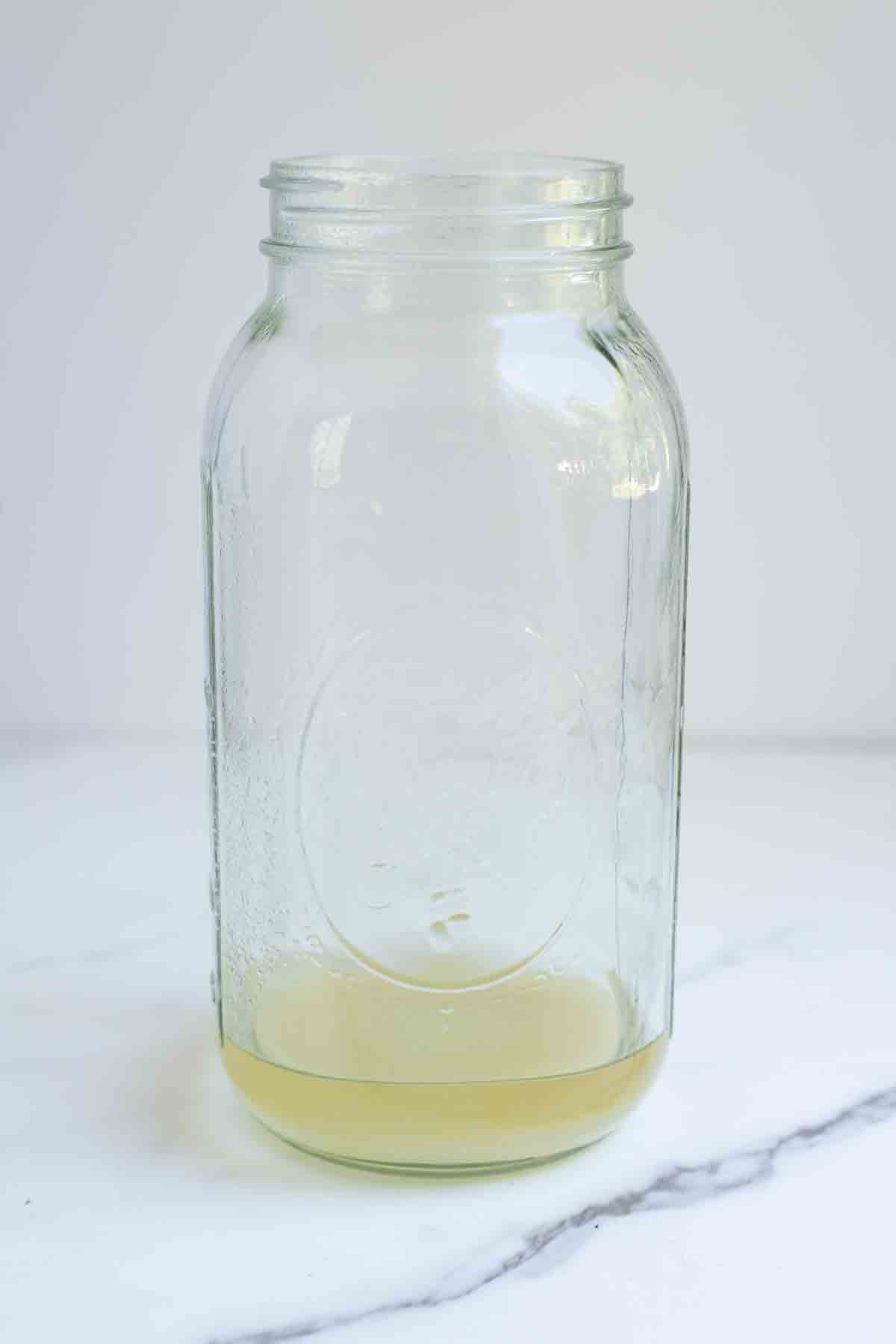
Step 1: Add 1/4 cup of organic, unrefined sugar to a half-gallon jar. In a saucepan, bring 1/2 cup of water to a boil. Slowly add the hot water to the jar of sugar and stir until dissolved.
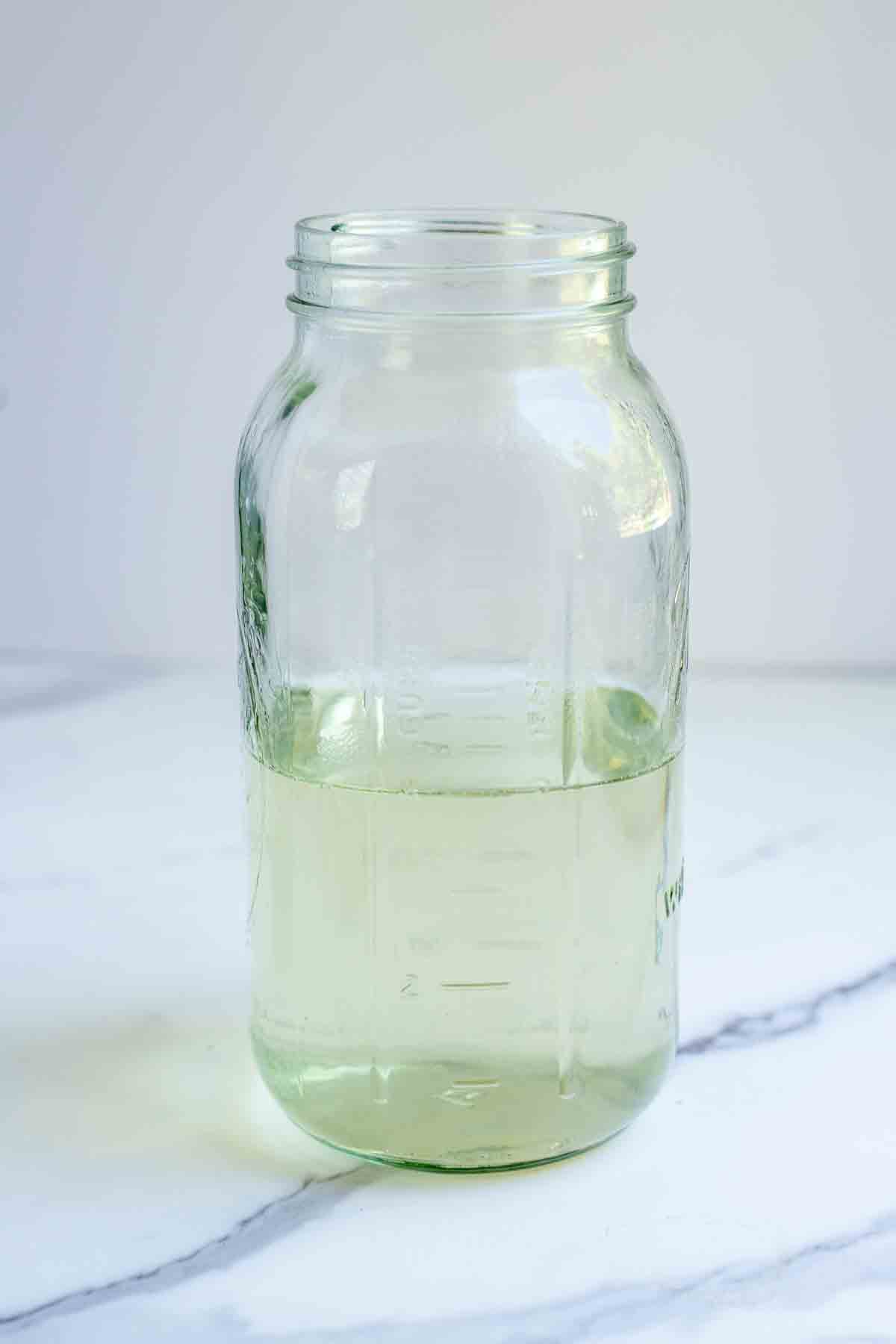
Step 2: Add the remaining cold water, stir well, and ensure the solution is cool or room temperature, but not hot.
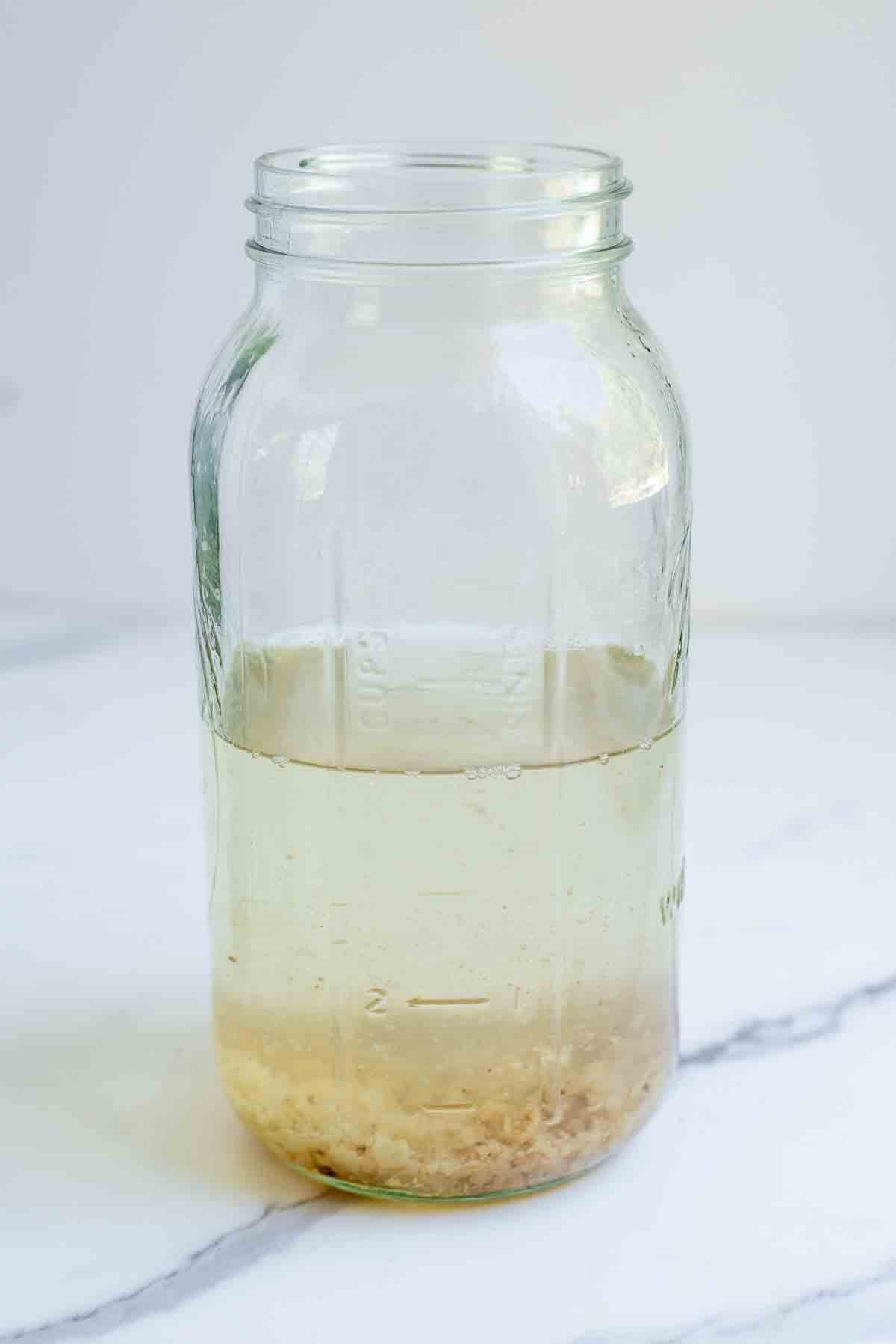
Step 3: First fermentation. Add 1/4 cup of kefir grains to the half-gallon jar. Place a loose lid on top, or cover with a towel or coffee filter secured with a rubber band. You want the kefir to breathe while also keeping out contaminants. Allow to ferment for 24 to 48 hours at room temperature.
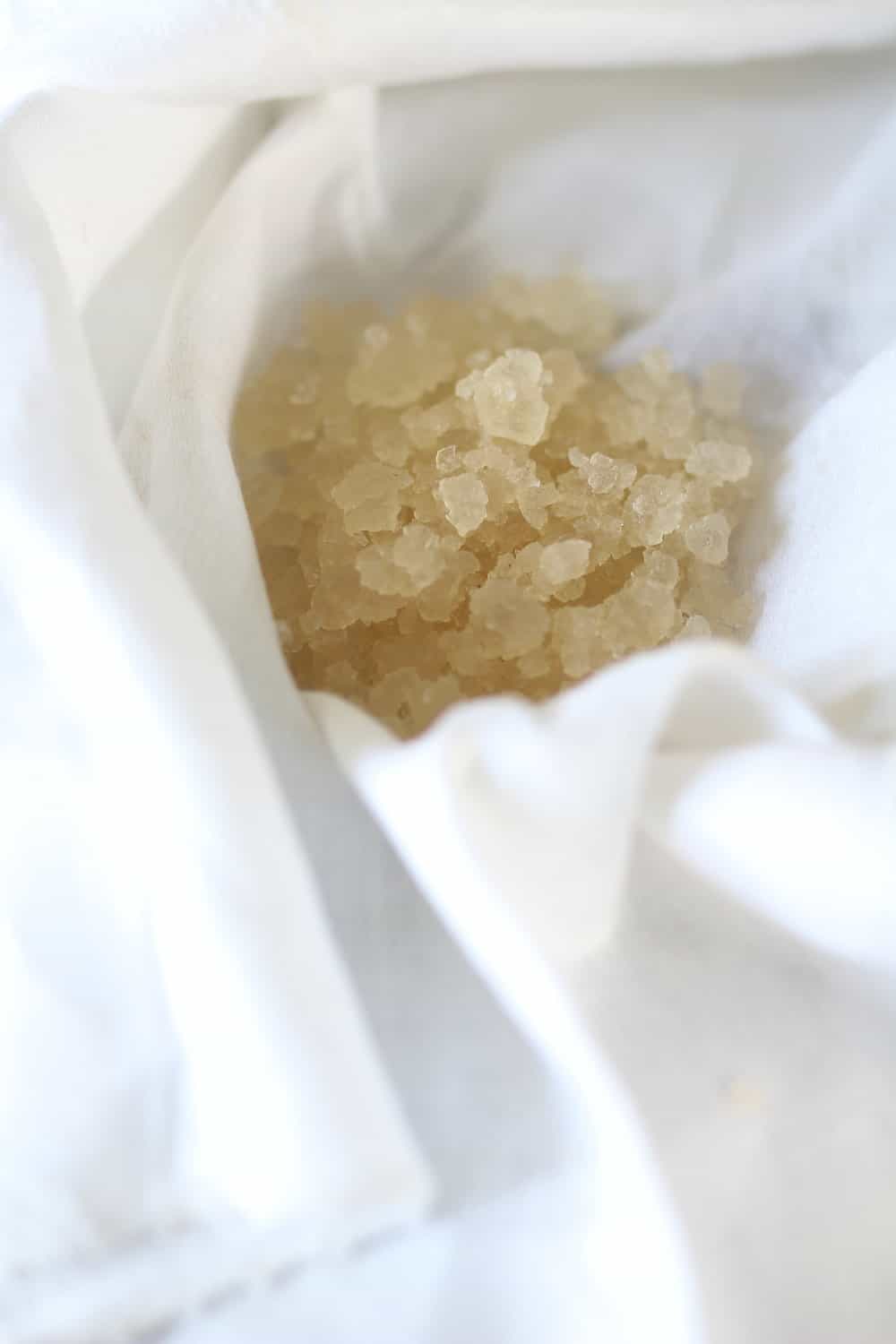
Step 4: After the first fermentation, use a small, fine-mesh strainer to strain the kefir grains from the fermented liquid. Place the kefir grains in a new batch of sugar water to start the next batch of kefir, or refrigerate them in sugar water to pause the process (instructions above, included in Water Kefir Grains Care). After this first fermentation, you have created plain water kefir. Store in the refrigerator with an airtight lid.
Second Fermentation (Optional)
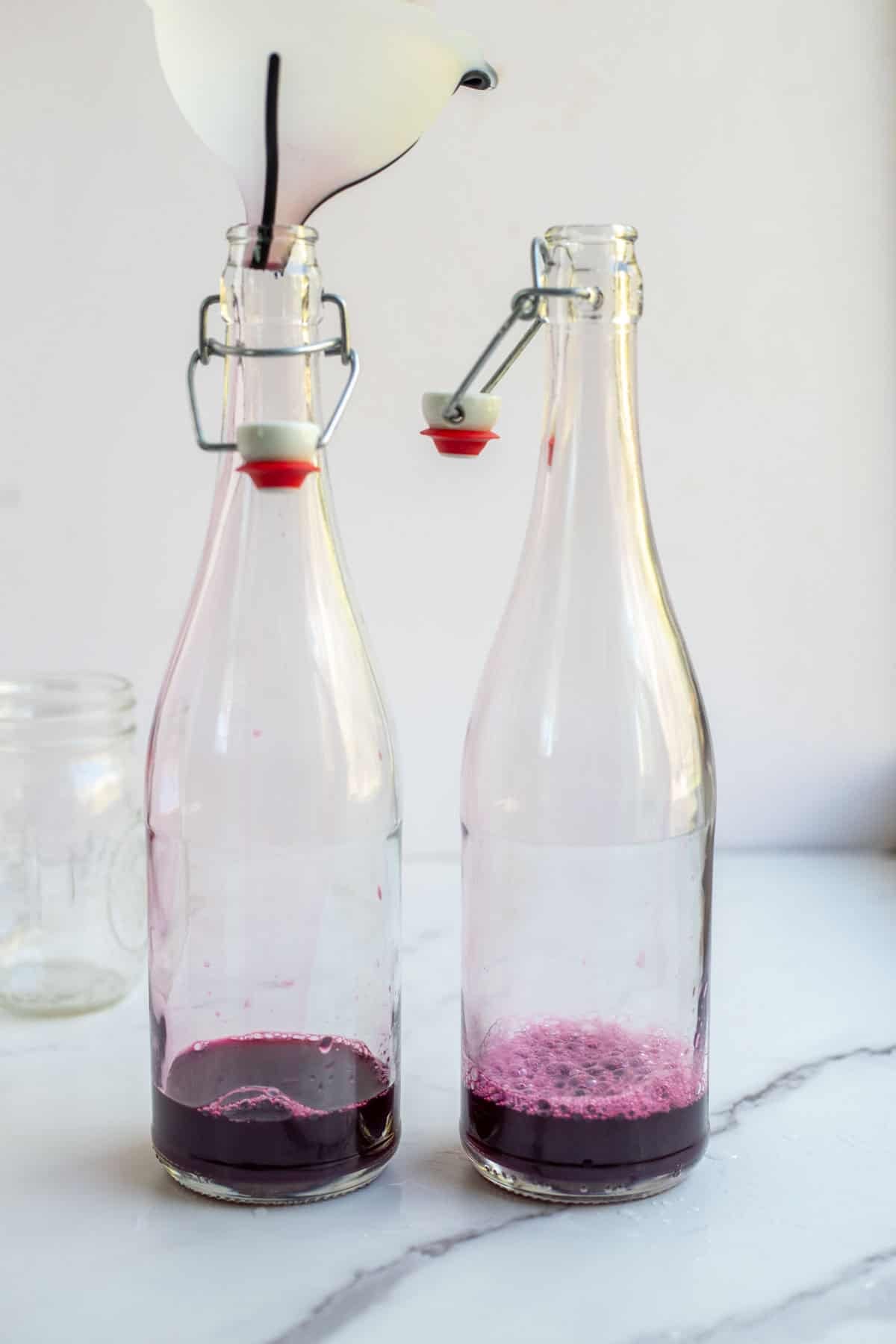
Step 7: Second fermentation. Acquire some flip-top bottles with a 14 to 16-ounce capacity. I like the Grolsch brand of bottles, which are 16 ounces. Add 1/4 cup of fruit juice or mashed/chopped fresh or dried fruit to each bottle. A juice with natural sugars is a great way to add flavor and sugar to ferment and create carbon dioxide (this is what makes fizzy water kefir).
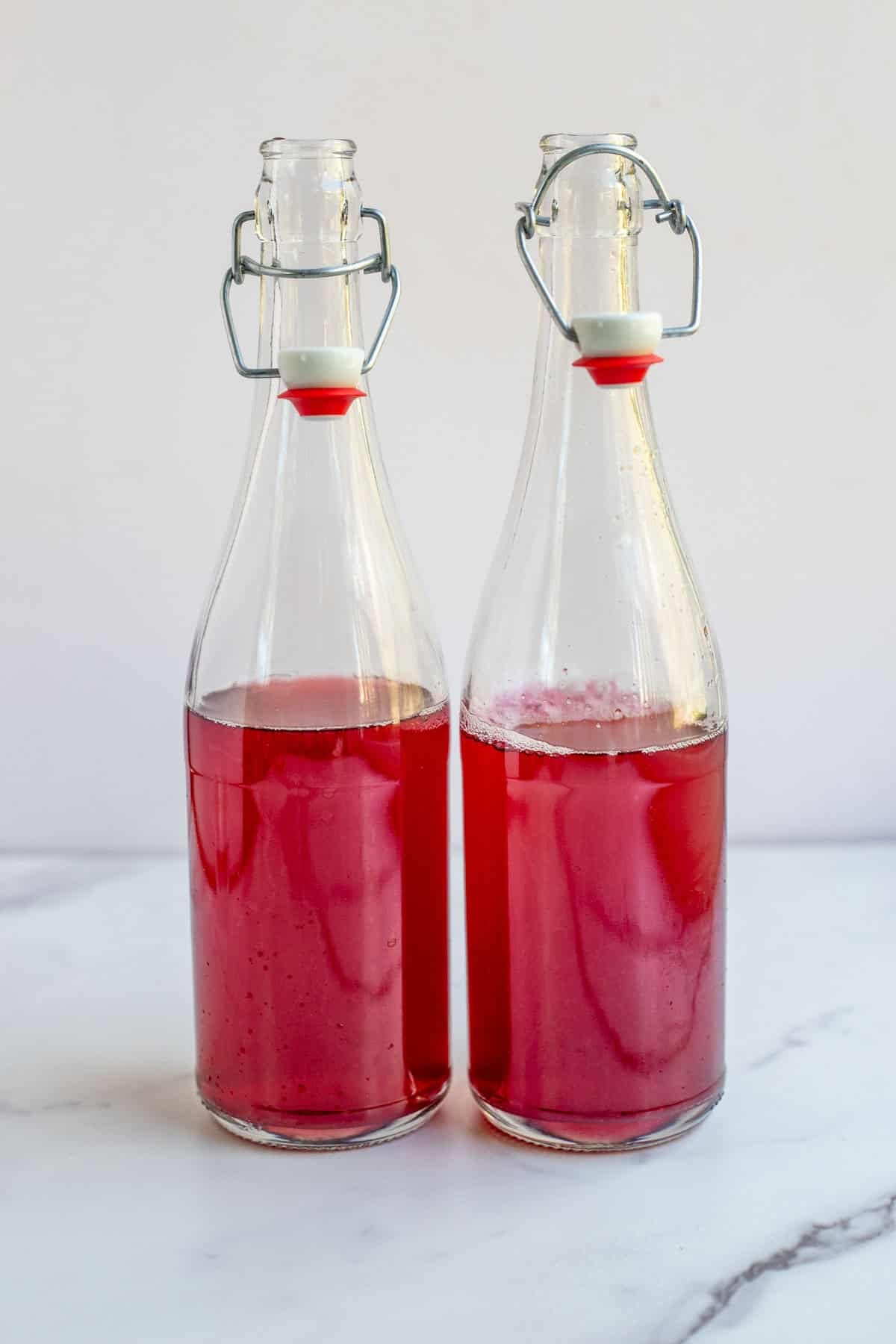
Step 8: Distribute the strained water kefir evenly into each bottle using a metal or plastic funnel. Close the flip-top lids and leave them at room temperature out of direct sunlight for 24-48 hours.
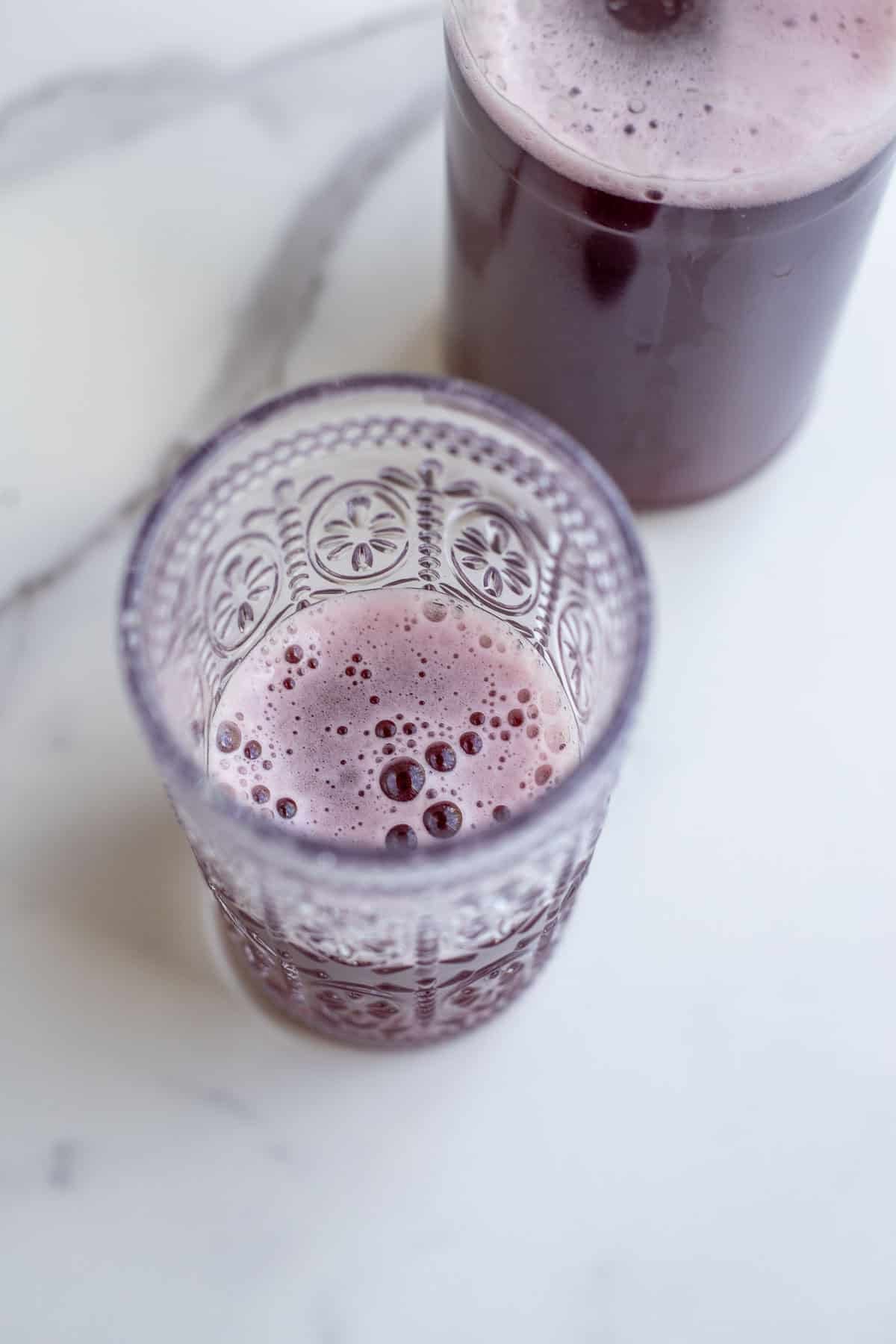
Step 9: Open the bottles slowly to listen for hissing or a “pop” which indicates building pressure. Water kefir can sometimes be quite explosive. If you hear little to no “pop” when you open the lid, your soda probably hasn’t fermented long enough. When this happens to me, I simply close the cap and set it back out on the counter for another day. I like mine to be really bubbly!
Tips
- Use a 1:16 ratio of kefir grains to water, and a 1:1 ratio of sugar to grains. For instance, I used 1/4 cup of grains for 4 cups of water (1 part kefir grains to 16 parts water) and 1/4 cup of sugar to the 1/4 cup of grains (1:1). If you have 3 tablespoons of grains, use 3 cups of water and 3 tablespoons of sugar in your solution.
- Kefir grains multiply rapidly. Keep what you need in your jar for your next batch. Extras can be fed to your chickens, composted, blended into smoothies for added probiotics, or sold or given away.
- Allow the sugar water to cool completely before adding the water kefir grains, as hot temperatures can kill the beneficial bacteria.
- Use a silicone, stainless steel, or wooden spoon to stir or transfer kefir grains. Too much exposure to certain reactive metal utensils can damage kefir grains.
- If using low-sugar fruits in the second fermentation, you may need to add 1 teaspoon of organic sugar per 16 ounces to the solution to ensure proper fermentation.
- Do not use artificial sweeteners like stevia or monk fruit to ferment water kefir. They do not have the necessary bacteria or yeasts.
- Use filtered water. Chlorine in city tap water can damage kefir grains. Distilled water will not contain the minerals needed for a robust fermentation.
- Overfermenting may result in an overly sour flavor.
Fermentation Considerations
- If it is hot outside, water kefir ferments faster. A home cooler than 68 degrees slows down the process and needs a longer fermentation time.
- Using filtered water and plain white sugar may result in slower fermentation due to a low mineral content. The beneficial bacteria and natural yeast consume sugar and minerals, of which minerals may be lacking in both filtered water and plain white sugar. Use an unrefined organic cane sugar to encourage activity.
- Kefir grains multiply significantly with use. You only need 1/4 cup per batch, so remove excess grains, keeping only what you need in the jar. You can gift extra grains, store them in the refrigerator (see storage information in the care tips below), blend them into smoothies, or add them to your compost.
- Taste test your kefir after the primary fermentation. If it still tastes like sweet sugar water, it needs more fermentation.
Recipe FAQs
Store your finished water kefir in the fridge with an airtight lid. Unopened, water kefir remains fresh for several weeks in the fridge. If opened, use a refrigerated kefir within a week or so.
Flat kefir water indicates a lack of carbon dioxide gas. The gas may have escaped, or perhaps it didn’t develop. Resolve this issue by fermenting longer, adding more sugar, keeping it in a warm spot, or using different types of more complex sugar to spark some life into the natural bacteria and yeasts.
No. The good bacteria digest the sugar, reducing the sugar content compared to typical carbonated beverages. Once fully fermented, water kefir typically contains around 5 to 10 grams of sugar per 8 ounces. This largely depends on how much sugar you add at the start, how long you ferment the kefir, and whether you choose to perform a secondary fermentation.
That is really up to you. Most people can enjoy one or two cups a day without issue. If you are totally new to drinking kefir, I would recommend starting slowly and working your way up. Some people may experience some digestive issues, which is a great reason to start slow.
Yes, water kefir is a healthy, probiotic-rich alternative to soda or other sweet beverages. As beneficial bacteria and natural yeasts metabolize the natural sugars during fermentation, they reduce the sugar content of this tasty drink while creating gut-healthy probiotics. Although water kefir still contains carbohydrates that count toward your daily limits, the probiotics in a single-fermentation water kefir may help support healthy blood sugar levels.
More Probiotic Recipes from the Farmhouse
- Fermented Fruit
- Homemade Fermented Pickles
- Fermented Hot Sauce
- Homemade Kimchi
- Traditional Homemade Sauerkraut
If you try this recipe and love it, I would love it if you could come back and give it 5 stars! Tag me on Instagram @farmhouseonboone.

Water Kefir

Video
Equipment
- 1 Half-gallon jar I like to have the extra space in a half-gallon jar, as a quart-sized jar would be filled to the brim.
- Flip-top bottles (optional) I like these Grolsch flip-tops for a second fermentation to create a bubbly water kefir soda. You can use any glass bottle with a tight, secure-fitting cap, though some lids are more prone to exploding from the pressure or leaking air and yielding a flat kefir.
Ingredients
- 1/4 cup organic, unrefined sugar
- 1/2 cup hot water
- 3 1/2 cups cold water
- 1/4 cup water kefir grains, plump and hydrated
- Juice, optional – Used to make water kefir soda with a second fermentation.
Instructions
- Add 1/4 cup of organic, unrefined sugar to a half-gallon jar. In a saucepan, bring 1/2 cup of water to a boil. Slowly add the hot water to the jar of sugar and stir until dissolved.
- Add the remaining cold water, stir well, and ensure the solution is cool or room temperature, but not hot. Add 1/4 cup of kefir grains to the half-gallon jar.
- First fermentation. Place a loose lid on top, or cover with a towel or coffee filter secured with a rubber band so the kefir can breathe. Allow to ferment for 24 to 48 hours at room temperature.
- After the first fermentation, use a small, fine-mesh strainer to strain the kefir grains from the fermented liquid. Place the kefir grains in a new batch of sugar water to start the next batch of kefir, or refrigerate them in sugar water to pause the process (instructions above, included in Water Kefir Grains Care). After this first fermentation, you have created plain water kefir. Store in the refrigerator with an airtight lid.
Second Fermentation (Optional)
- Second fermentation. Acquire some flip-top bottles with a 14 to 16-ounce capacity. Your bottles do not have to be flip-top, but should have secure, tight-fitting lids.
- Add 1/4 cup of fruit juice or mashed/chopped fresh or dried fruit to each bottle.
- Distribute the strained water kefir evenly into each bottle using a metal or plastic funnel. Close the flip-top lids and leave them at room temperature out of direct sunlight for 24-48 hours.
- Open the bottles slowly to listen for hissing or a “pop” which indicates building pressure. Water kefir can sometimes be quite explosive. If there is hardly a “pop” sound at all when opening the lid, your soda probably isn’t fermented enough. When this happens to me, I simply close the cap and set it back out on the counter for another day. I like mine to be really bubbly!
Notes
Nutrition
Nutrition information is automatically calculated, so should only be used as an approximation.







Van I use electrolyte water for the water portion? I figured it would give it more of the good stuff.
I would not as it could react with the water kefir!
Is there alcohol that develops in this? I’m new to anything fermented
A very slight amount.
How long can I keep the kefir water in the fridge after 2nd fermentation? Thank you!
Around 2 weeks.
We have been attempting to make water kefir for the last month or so. Our first successful batch was great, so we were super excited and then we tried to do a second batch this time around, and our first fermentation resulted in slimy water towards the top of the container and smelled similar to our 10 mo old’s poop. Within rinsed our water keyer grains and tried again from scratch with the first fermentation, and it resulted in the same thing. We hadn’t changed anything in our process. Should we throw our grains out and start over? Or have you encountered this problem before?
I read on cultured for health website not to rinse your grains, but that was for milk kefir. I would for sure throw em out if it smells like poop. How did you store the grains? I’m about to make my first batch and hopefully I didn’t kill em by leaving em in the fridge for a month! My kombucha survives neglect fairly well 😅
I have been drinking this kefir water all summer and love it. You were right about the possibility of the bottles breaking. At 1:00 this morning I heard an explosion. There was kefir and glass all over the kitchen. I immediately got the other bottle, released the pressure and put it in the fridge. Next time I’ll keep it in an ice chest with the lid closed for the second fermentation. I still love it, but not so much the clean up.
where do you buy the water kefir grains?
Cultures for Health!
Can’t wait to try this!!! What if I don’t have 1/2 cup of grains? I have a little under 1/4 cup. Do I “grow” more grains using the same process? Or just let it ferment longer?
You can try and let it ferment longer or grow more grains! It may just take a bit longer to ferment.
Can you use honey instead of brown sugar?
How much Vanilla Extract would you add to 1 bottle for the second fermentation?
A few drops.
Can you use the water kefir as a starter in other ferments, like onion?
Thank you!
Not for other ferments. You can use it to make more water kefir though!