
Learn how to render beef fat to make a nutritious, multi-purpose cooking oil. This process is quick and simple, requiring only a few minutes of prep and some leftover beef fat.
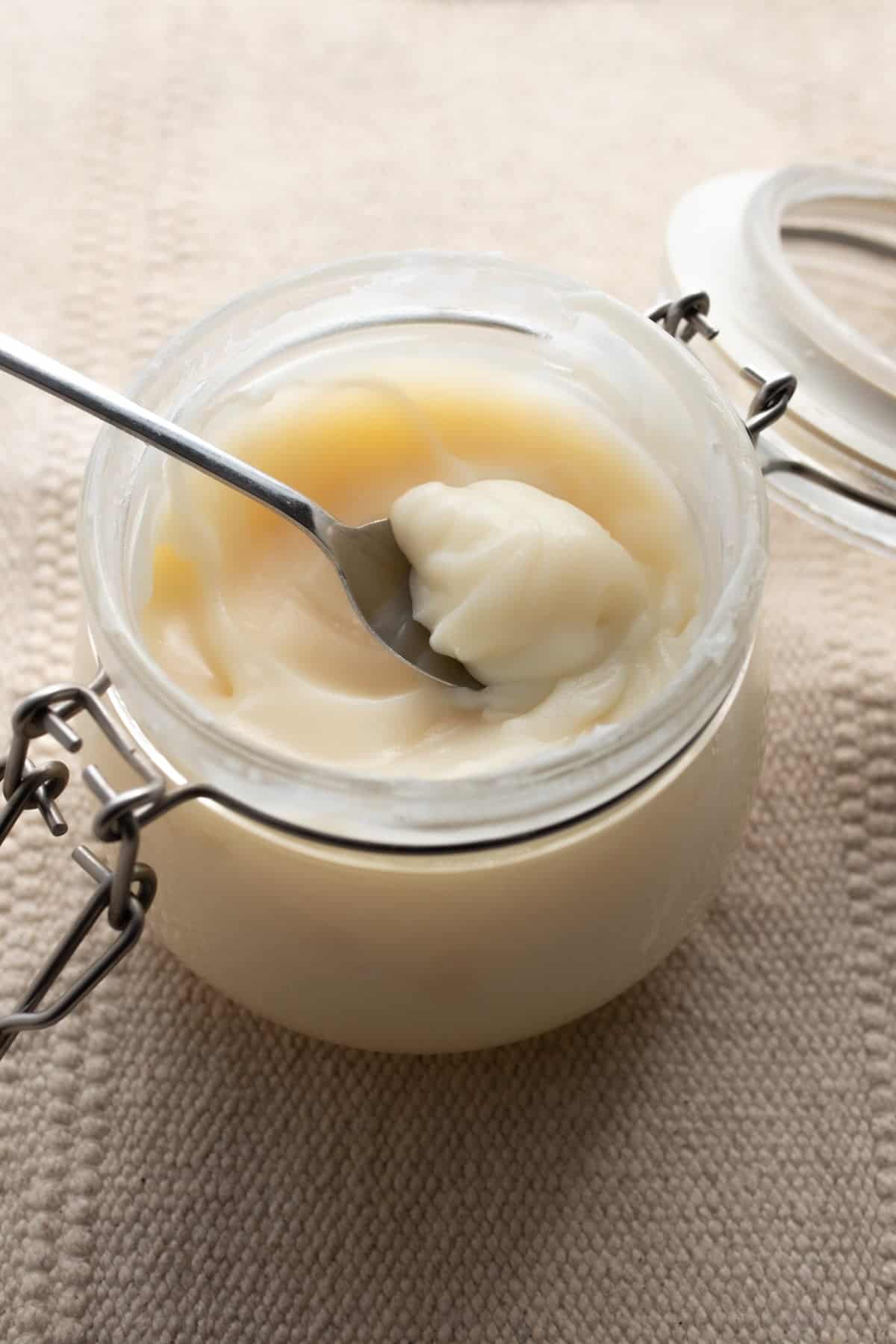
Having a collection of homemade pantry staples is essential to cooking in a from scratch kitchen.
Rendered beef fat, or tallow, is an amazing cooking oil that is a delicious, sustainable and economical cooking necessity. It also has some incredible health benefits such as minerals and fat-soluble vitamins like A, D, E, and K.
It has a high smoke point compared to vegetable oils, and it’s a great way to use something that normally would just be tossed away.
With a little prep work and some slow cooking, you can make a delicious and healthy oil for cooking or baking. It makes for deliciously crispy potatoes, and takes sourdough fried chicken, and chicken fried steak to the next level!
Why You’ll Love This Recipe
Budget friendly – Store bought tallow can be pricey, especially for a high quality product. Making your own is an easy way to save money on a cooking staple and be in control of the results.
A variety of uses – Tallow is not only great for cooking, but for making luxurious lotions and balms.
Added flavor in cooking – Beef tallow has a rich flavor that makes anything you cook with it taste even better!
Ingredients
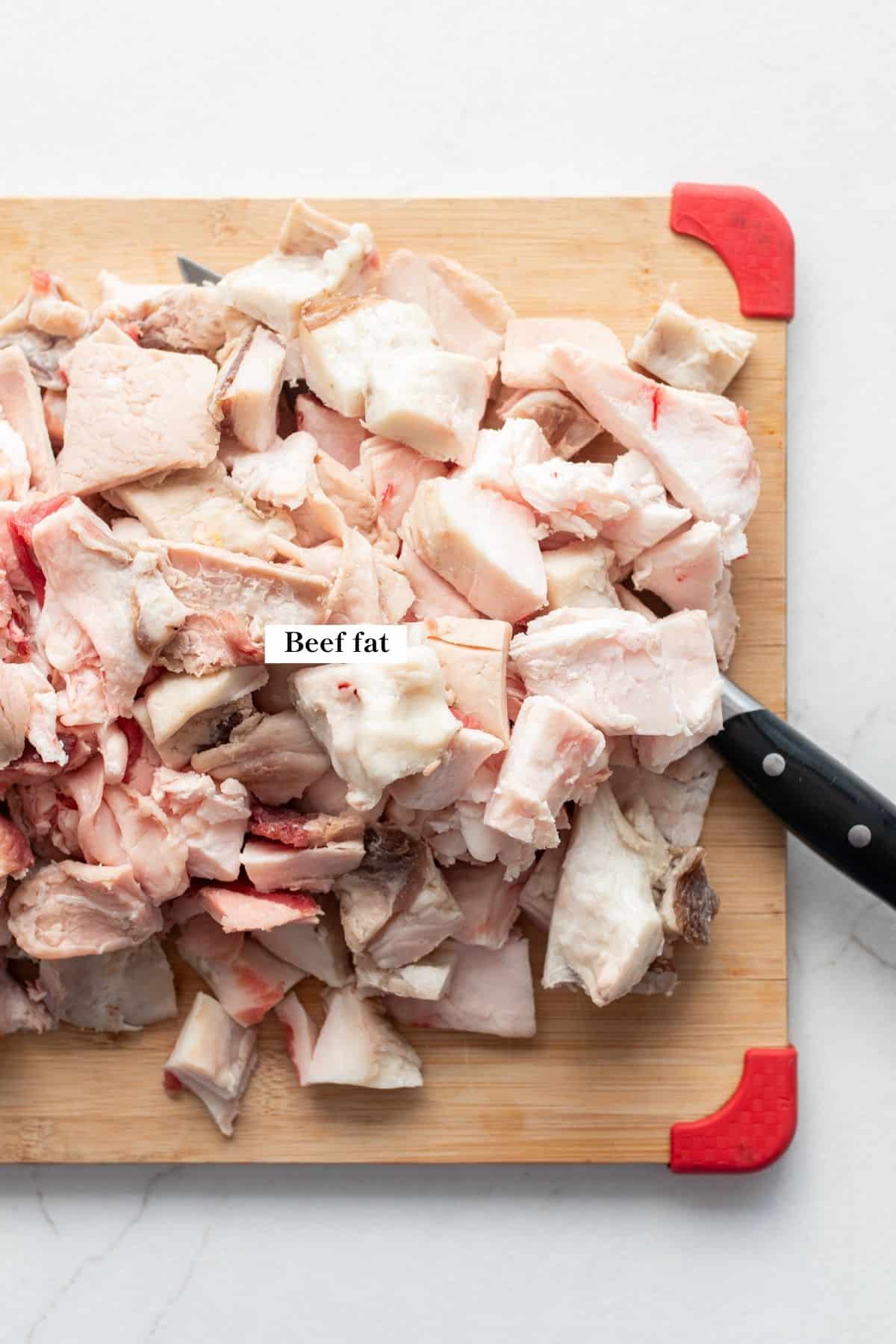
Beef fat – You can find beef fat to render in grocery store meat departments, at a local butcher shop or through a local farmer. Beef suet, a harder fat around the kidneys, will give you the longest lasting, most neutral tasting tallow, while fat trimmings will have a stronger flavor. You can also use pork fat to render and make homemade lard.
A full ingredient list with exact amounts can be found in the recipe card below.
How to Render Beef Fat
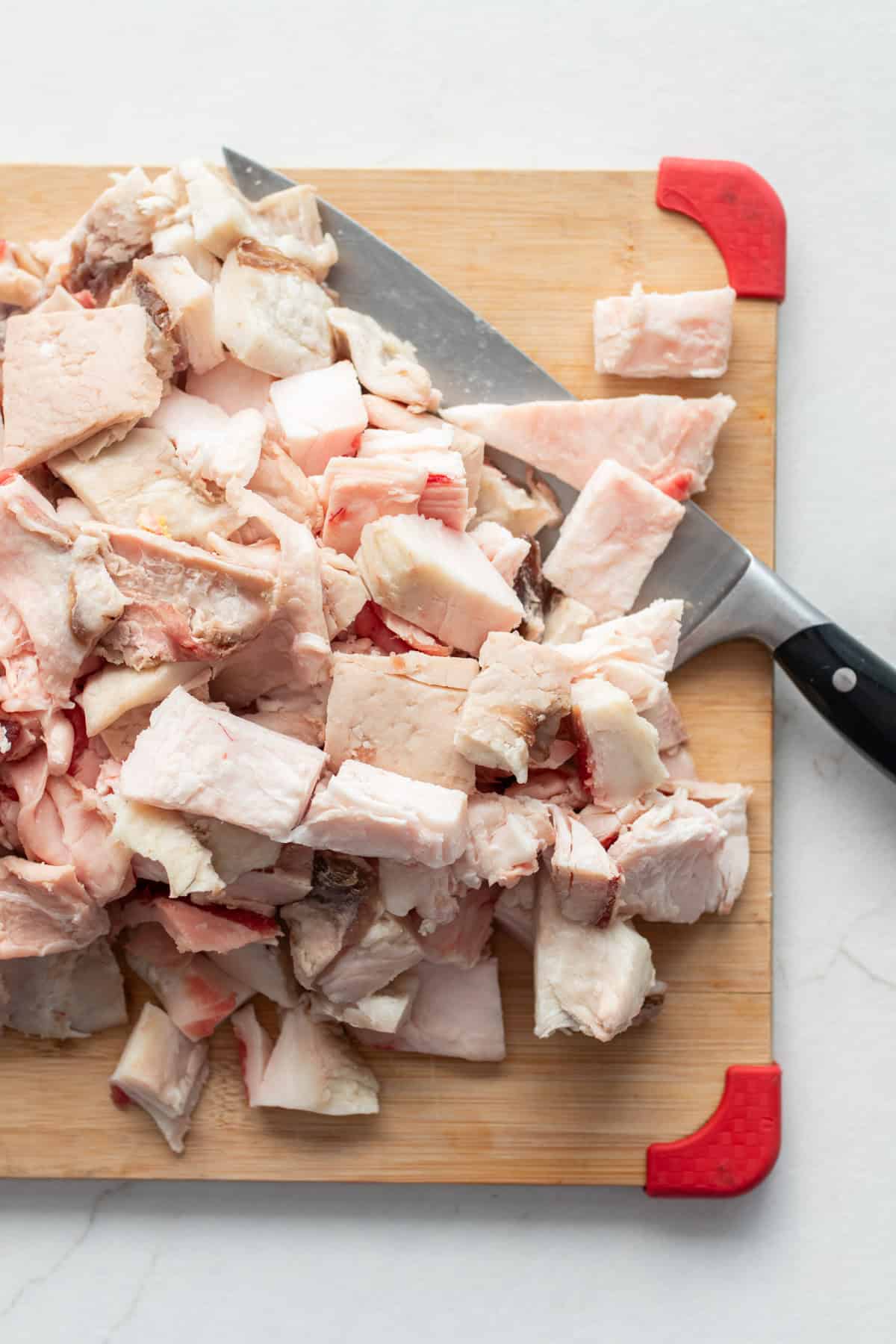
Step 1: Remove excess fat from your beef using a sharp knife and cutting board. Cut fat into small pieces, about 1-2 inch portions.
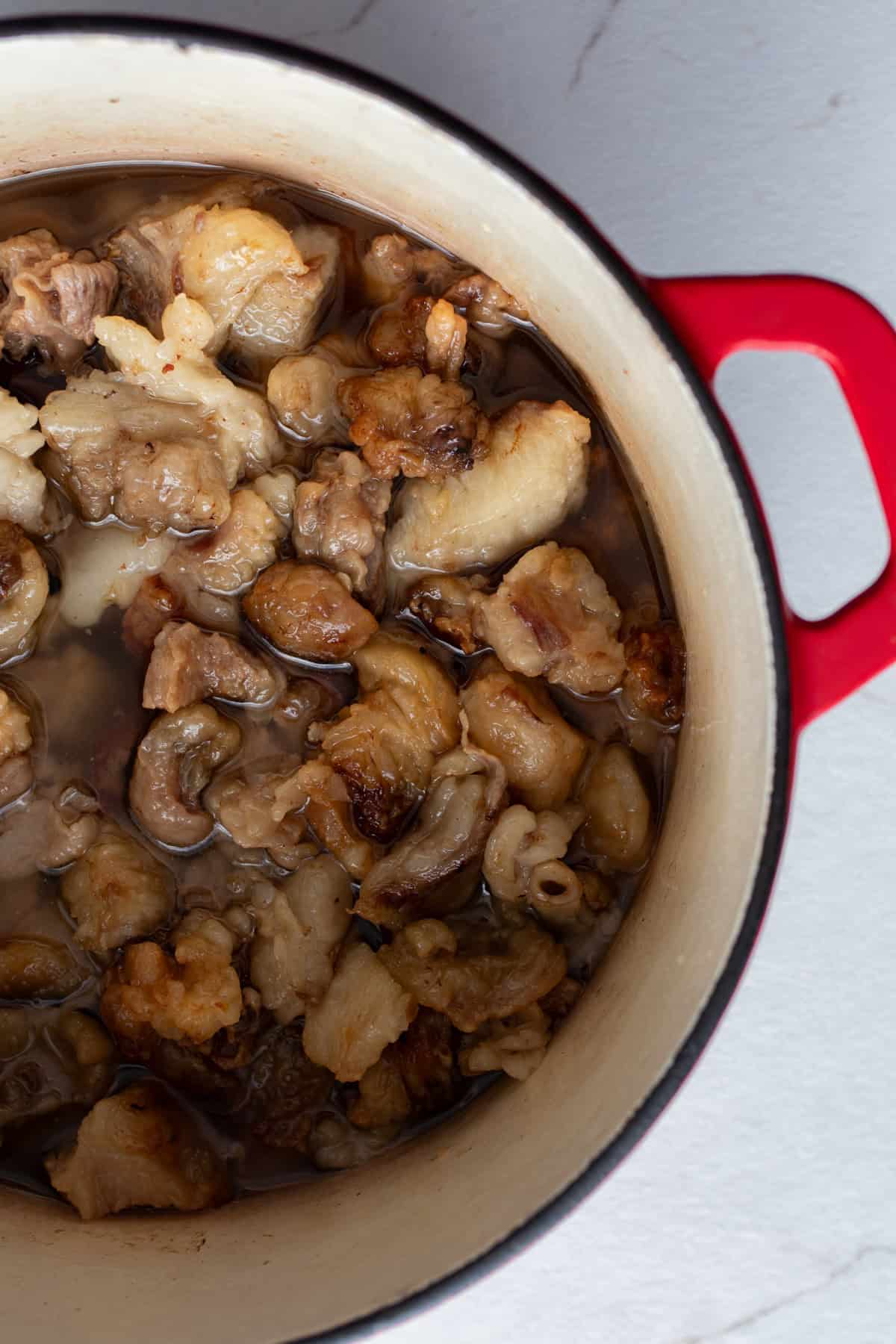
Step 2: Place into a large saucepan or pot and place over low heat for a few hours, stirring occasionally. You want the temperature to hold around 130-140 degrees. The fat should be a yellow color. If it is starting to turn brown, then the heat may be too high.
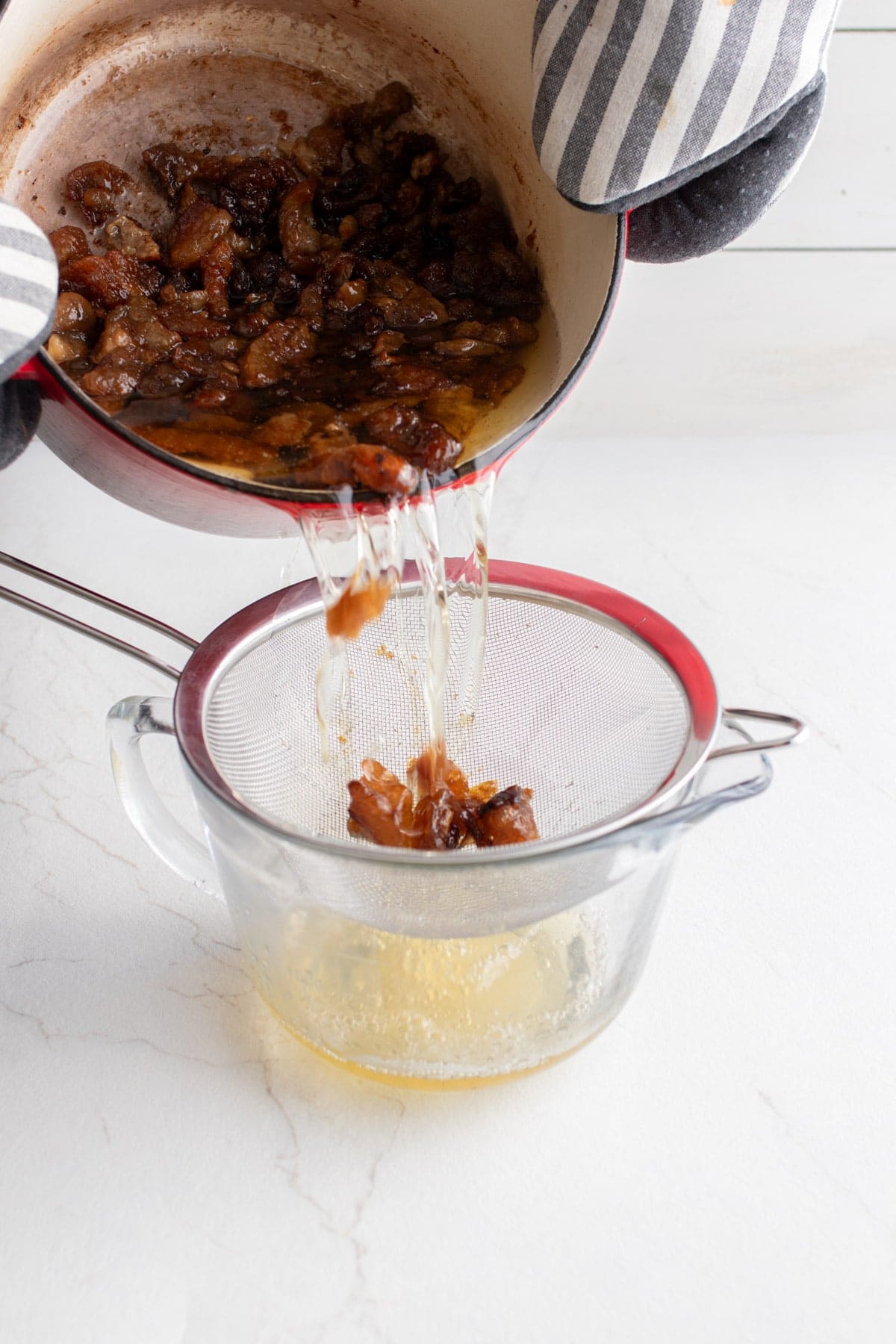
Step 3: After the beef has rendered, while it is still hot, carefully pour the tallow through a fine mesh strainer into a container. Not everything will completely melt. There will be some bits of meat and other bits that don’t render. Strain the tallow a second time through a piece of cheesecloth, coffee filter, or paper towel to remove some of the finer impurities.
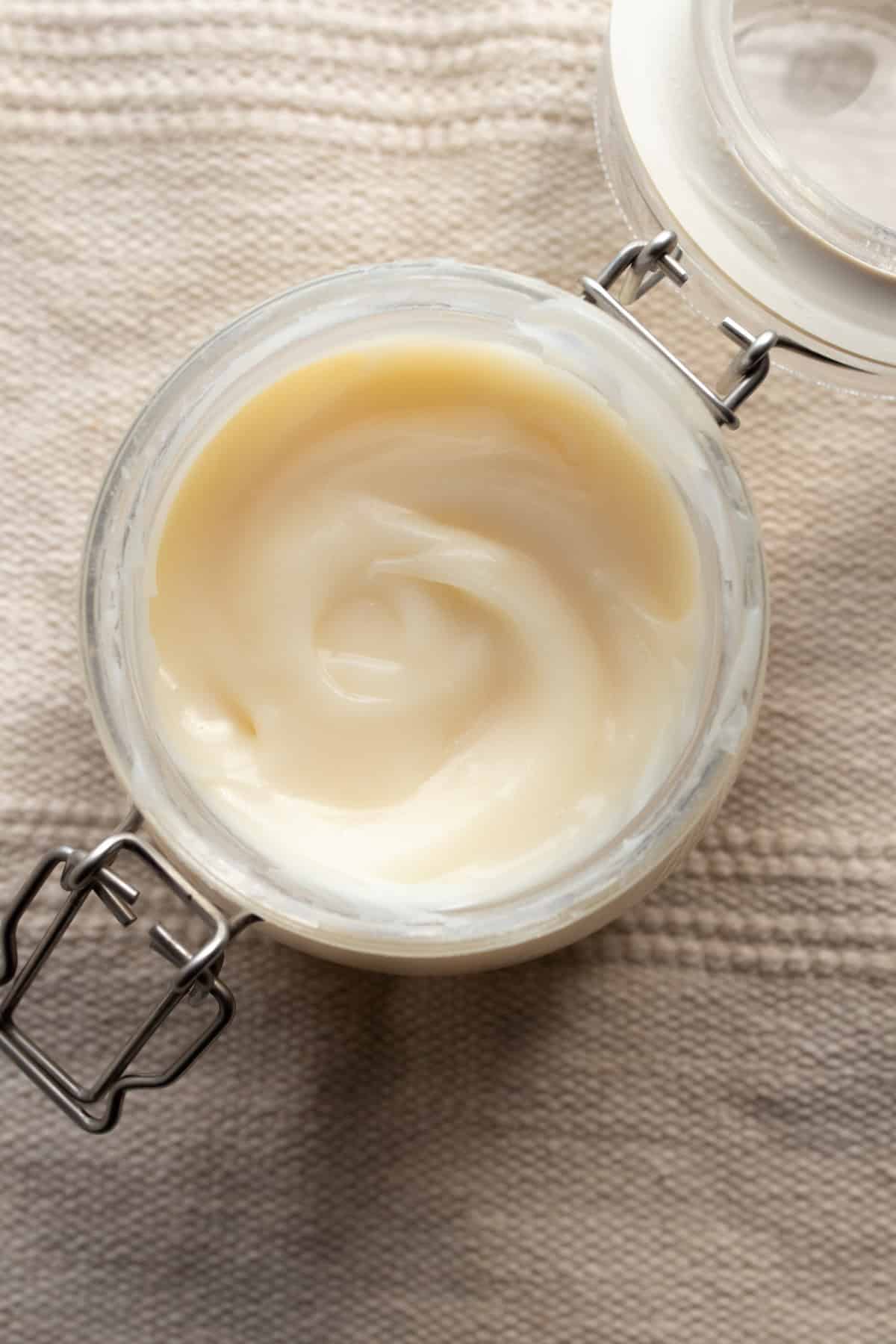
Step 4: Allow to cool in the refrigerator. Now your tallow is ready to cook with. Store in the refrigerator in an airtight container (wide mouth mason jars work great for this) for 2-3 months.
Tips
- Using a meat grinder to cut pieces of fat smaller will help the fat to render quicker.
- This is best cooked low and slow for a few hours. If your temperature is too high, you can expect it to burn during the rendering process.
- When you are cooking down the fat, there will be some meat that will not render out. Don’t expect the pot to be completely melted. The slower the fat is cooked, the whiter and more neutral-smelling it will be. You can cook it low for two hours, or even at a slightly lower temperature for 6-8 hours.
- It is best to use the whiter, more neutral tallow for baking and pastries, as there is less beef flavor to interrupt the flavor of your baked good. Less white tallow, that may have been rendered more quickly, works really well for most other cooking, as it offers a hearty beef flavor to complement your dish.
- Straining the tallow a second time with cheese cloth, a coffee filter, or even a paper towel will leave you with a more pure end result and longer shelf life, so don’t skip this step!
Recipe FAQs
I simply use a heavy bottom pot or large stock pot and melt the beef fat over very low heat for a few hours. You can also use a slow cooker or crock pot to render your tallow and maintain a nice low temperature.
It is the process of liquifying, straining, and storing fats that can later be used for cooking. Rendered beef fat is the perfect cooking medium for sautéing.
Beef fat renders at 130-140°F (54-60°C). This is a process you want to take slow, so maintain this temperature while cooking for several hours.
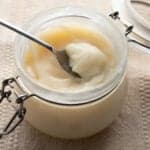
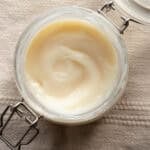
It will be a nice yellowy white liquid. Once it is strained and allowed to cool, the finished product will be creamy white.
Use rendered fat for cooking, sautéing, frying, and even in pastries. You can also use it to make candles, soaps, skincare products, body creams, and to keep your cast iron in tip-top shape.
More From-Scratch Recipes from the Farmhouse
- How To Make Sour Cream
- 12 Easy Fermented Vegetable Recipes
- How to Make Lard
- How to Make a Sourdough Starter
- How to Make Homemade Barbecue Sauce
If you try this recipe and love it, I would love it if you could come back and give it 5 stars! Tag me on Instagram @farmhouseonboone.

How To Render Beef Fat To Make Tallow
Equipment
- 1 Dutch Oven any stock pot would work
- 1-2 Mason jars
Ingredients
- 2-5 pounds beef fat, you can use more or less depending on how much tallow you want to make.
Instructions
- Remove excess fat from your beef using a sharp knife and cutting board.
- Cut fat into small pieces, about 1-2 inch portions.
- Place into a large saucepan or pot and place over low heat for a few hours, stirring occasionally. You want the temperature to hold around 130-140 degrees. The fat should be a yellow color. If it is starting to turn brown, then the heat may be too high.
- After the beef has rendered, while it is still hot, carefully pour the tallow through a fine mesh strainer into a container. Not everything will completely melt. There will be some bits of meat and other bits that don’t render.
- Strain the tallow a second time through a piece of cheesecloth, coffee filter, or paper towel to remove some of the finer impurities.
- Allow to cool in the refrigerator. Now your tallow is ready to cook with.
Notes
- 3 pounds of beef fat will typically yield around 2 full pint jars. The amount you end up with will vary due to many factors.
- You want the cooking temperature to be around 130-140. Too hot and it will burn.
- Using a meat grinder to cut pieces of fat smaller, will help the fat to render quicker.
- This is best cooked low and slow for a few hours. If your temperature is too high, you can expect it to burn during the rendering process.
- When you are cooking down the fat, there will be some meat that will not render out. Don’t expect the pot to be completely melted. The slower the fat is cooked, the whiter and more neutral-smelling it will be. You can cook it low for two hours, or even at a slightly lower temperature for 6-8 hours.
- It is best to use the whiter, more neutral tallow for baking and pastries, as there is less beef flavor to interrupt the flavor of your baked good. Less white tallow, that may have been rendered more quickly, works really well for most other cooking, as it offers a hearty beef flavor to complement your dish.
- Straining the tallow a second time will leave you with a more pure end result and longer shelf life, so don’t skip this step!
- Store in the refrigerator in an air-tight container (I like using wide mouth mason jars for this) for 2-3 months.
- Beef suet- a harder fat around the kidneys will give you the longest lasting, most neutral tasting tallow, while fat trimmings will have a stronger flavor.
Nutrition
Nutrition information is automatically calculated, so should only be used as an approximation.








Can anyone tell me what to do with what is left after the tallow is strained out. I hate to throw it away
Use it as you would any fat for cooking. Grease your pans, sub for butter, make french fries in it! Make body butter for an awesome moisturizer! If you’re brave learn how to make soap and use it there!
I want to know about this also. I know when making lard you have cracklins left. But what can you do with what’s left of the beef?
Same question here. What to do with the leftover ’meat’ or whatever it is called. I was thinking of baiting a rat trap with it.
Can you keep adding fat to fat if its rendered to save storage?
Lisa, I tried this and it was very gamey smelling/tasting. Any tips or does it not bother the taste of whats being cooked with it?
The slower it is cooked, the less flavor there will be.
Can I do this in a crock pot too?
I have not tried this, but I am sure some folks use a crock pot and that there are some recipes online!
Looks great. Another way is to add to water and boil it. Let is cool a bit, remove the fat pieces and let it cool. The fat will solidify on the top of the water and you just break up the fat and pull out. Any chunks have settled to the bottom of the water. Then you also have some great beef broth.
Thanks for sharing this tip!
Wonderful !
Can this also be pressure canned like meat for later please?
What is the yeild per pound of fat?
Thank You my tallow is looking beautiful
can you do this in a crockpot
I have seen multiple recipes where they use a crock pot, I decided to go with the oven method because I had more to do than I could fit in me crock pot.