
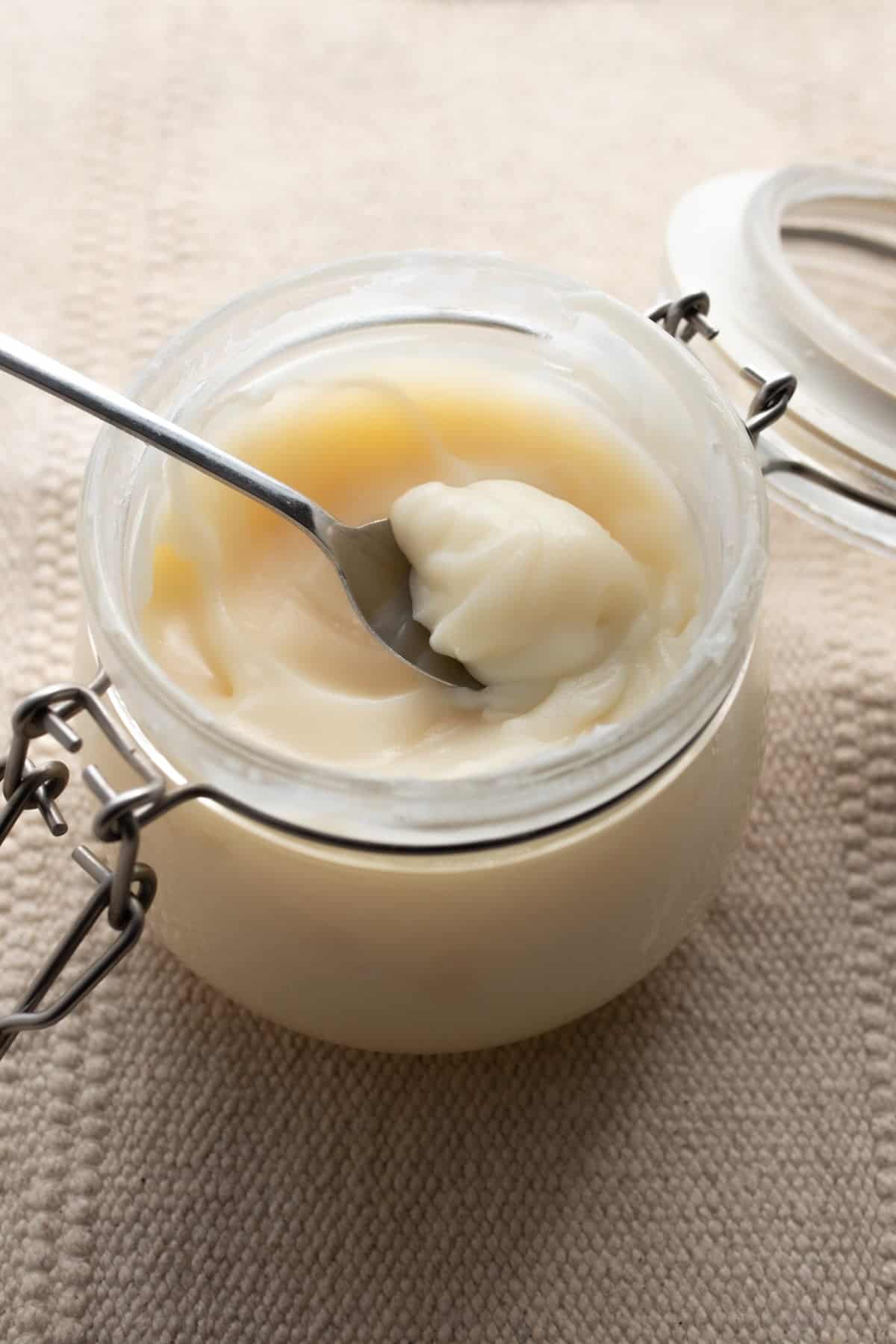
Learn how to render beef fat to make a nutritious, multi-purpose cooking oil. This process is quick and simple, requiring only a few minutes of prep and some leftover beef fat.
Having a collection of homemade pantry staples is essential to cooking in a from scratch kitchen.
Rendered beef fat, or tallow, is an amazing cooking oil that is a delicious, sustainable and economical cooking necessity. It also has some incredible health benefits such as minerals and fat-soluble vitamins like A, D, E, and K.
It has a high smoke point compared to vegetable oils, and it’s a great way to use something that normally would just be tossed away.
With a little prep work and some slow cooking, you can make a delicious and healthy oil for cooking or baking. It makes for deliciously crispy potatoes, and takes sourdough fried chicken, and chicken fried steak to the next level!
Why You’ll Love This Recipe
Budget friendly – Store bought tallow can be pricey, especially for a high quality product. Making your own is an easy way to save money on a cooking staple and be in control of the results.
A variety of uses – Tallow is not only great for cooking, but for making luxurious lotions and balms.
Added flavor in cooking – Beef tallow has a rich flavor that makes anything you cook with it taste even better!
Ingredients
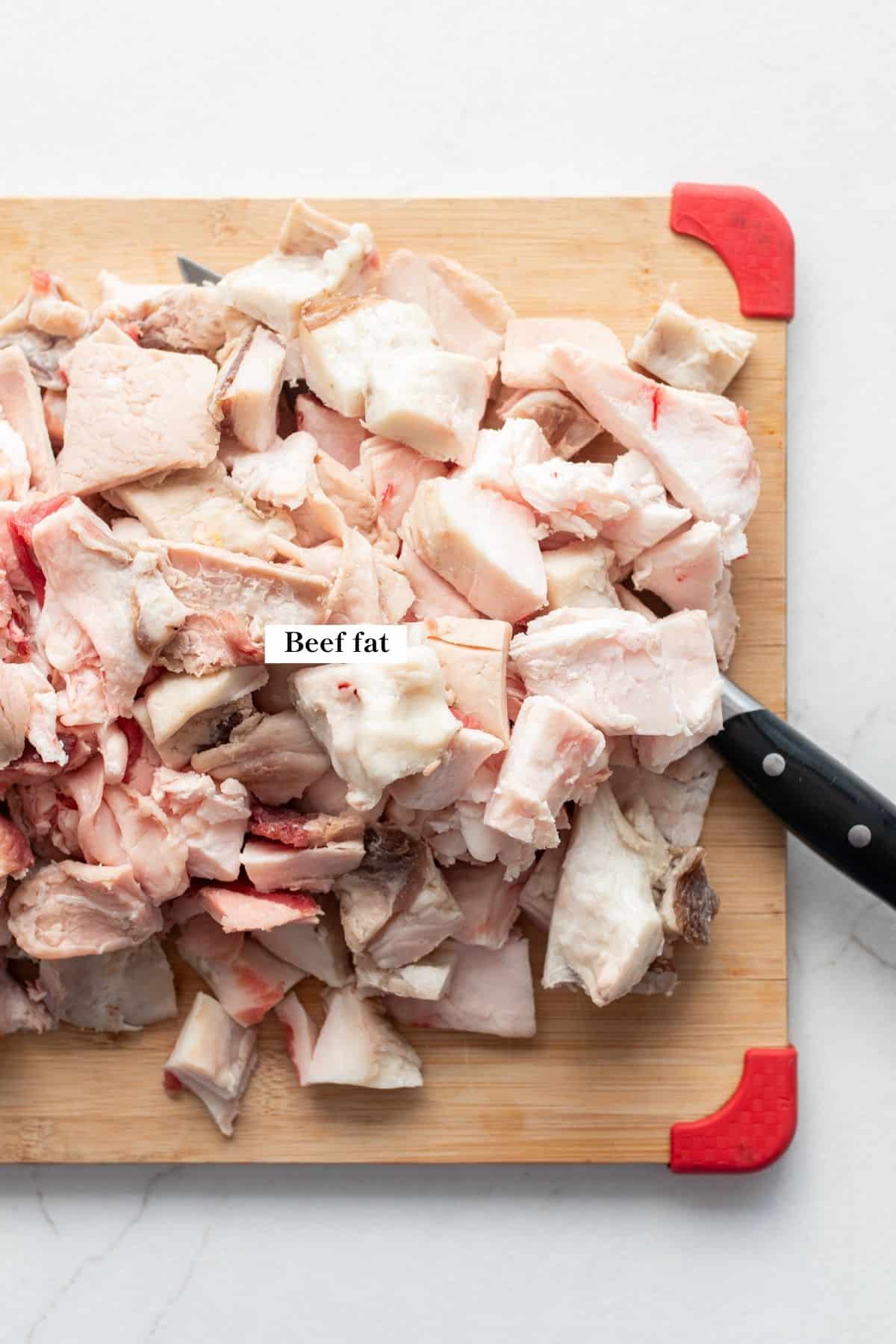
Beef fat – You can find beef fat to render in grocery store meat departments, at a local butcher shop or through a local farmer. Beef suet, a harder fat around the kidneys, will give you the longest lasting, most neutral tasting tallow, while fat trimmings will have a stronger flavor. You can also use pork fat to render and make homemade lard.
A full ingredient list with exact amounts can be found in the recipe card below.
How to Render Beef Fat
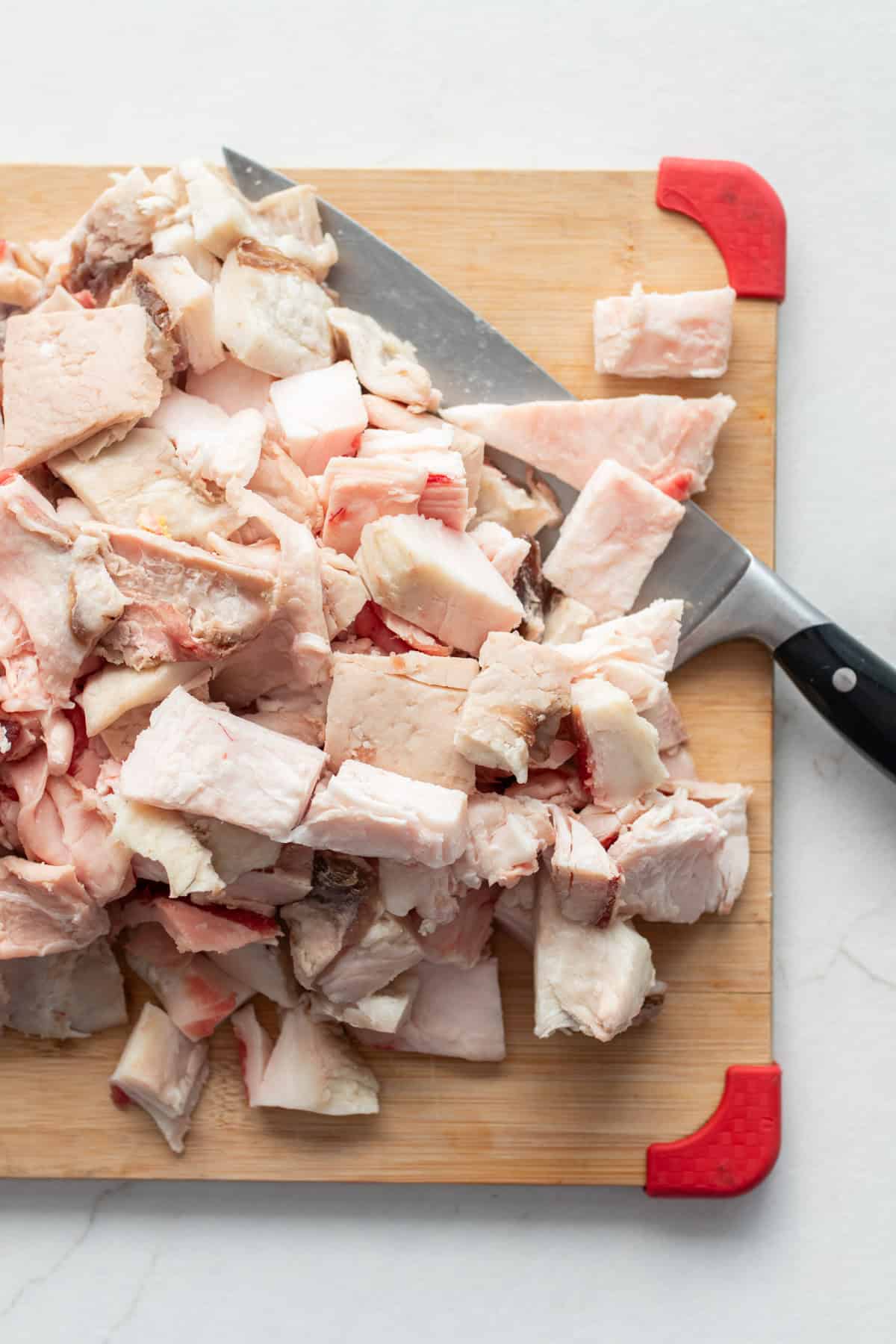
Step 1: Remove excess fat from your beef using a sharp knife and cutting board. Cut fat into small pieces, about 1-2 inch portions.
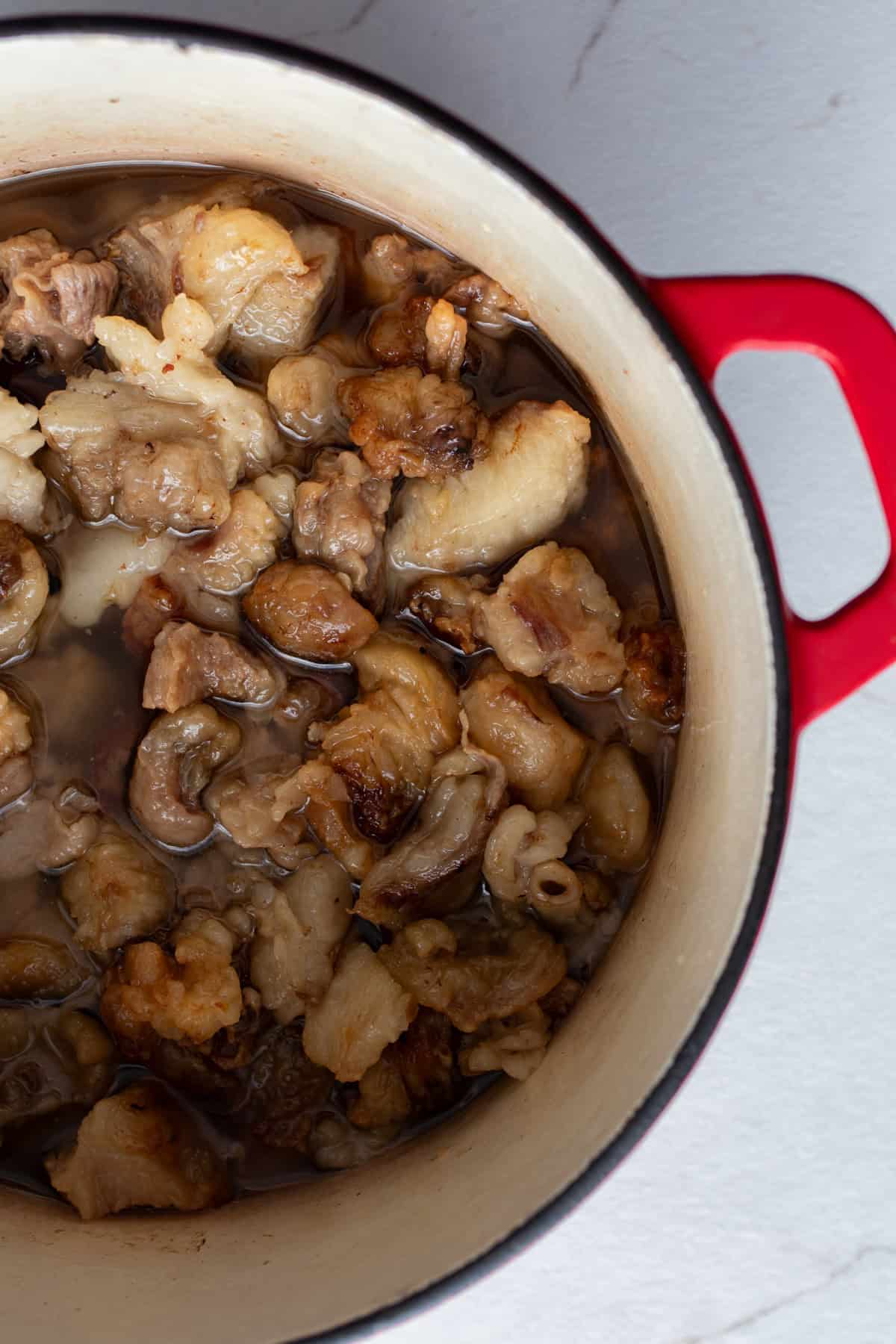
Step 2: Place into a large saucepan or pot and place over low heat for a few hours, stirring occasionally. You want the temperature to hold around 130-140 degrees. The fat should be a yellow color. If it is starting to turn brown, then the heat may be too high.
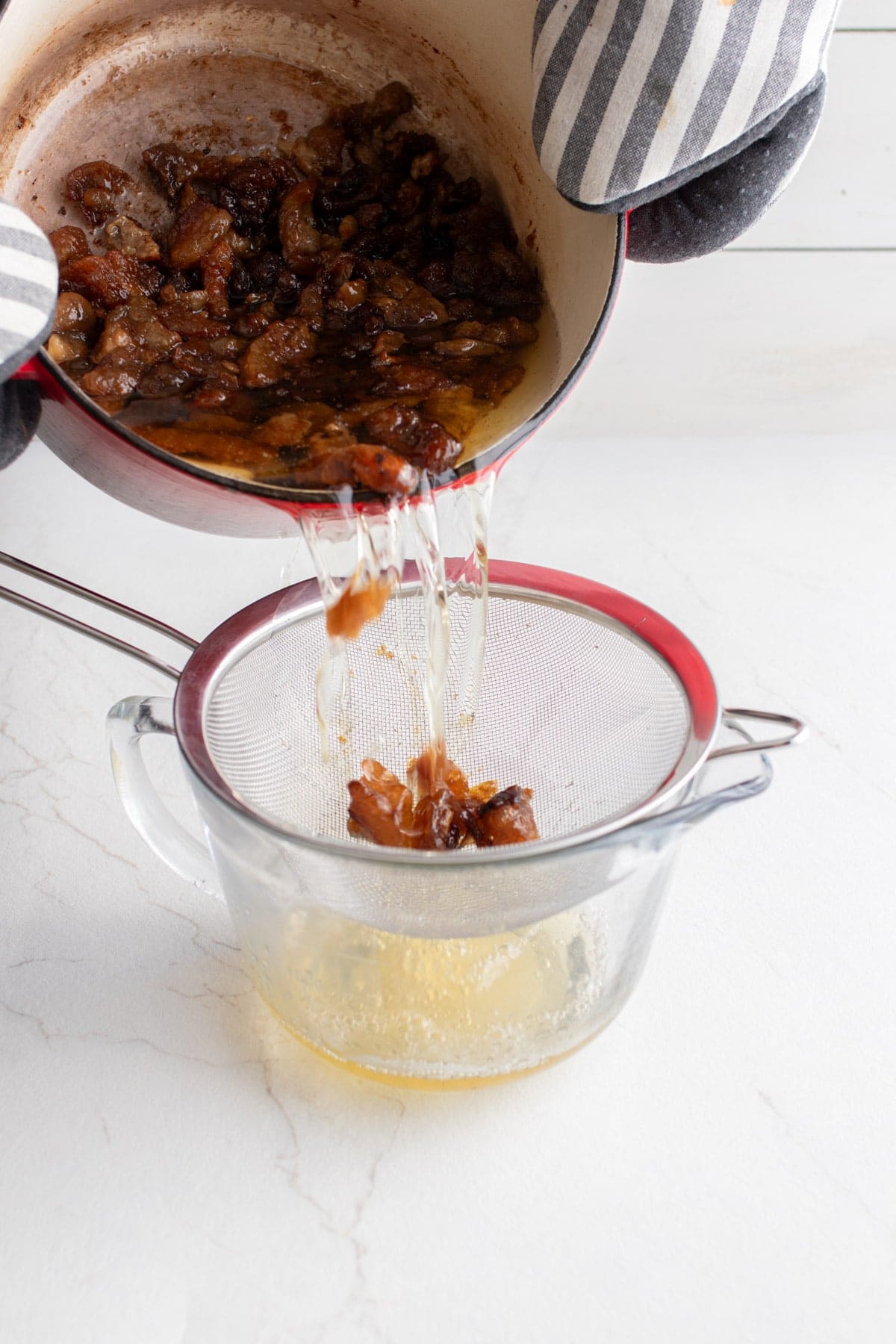
Step 3: After the beef has rendered, while it is still hot, carefully pour the tallow through a fine mesh strainer into a container. Not everything will completely melt. There will be some bits of meat and other bits that don’t render. Strain the tallow a second time through a piece of cheesecloth, coffee filter, or paper towel to remove some of the finer impurities.
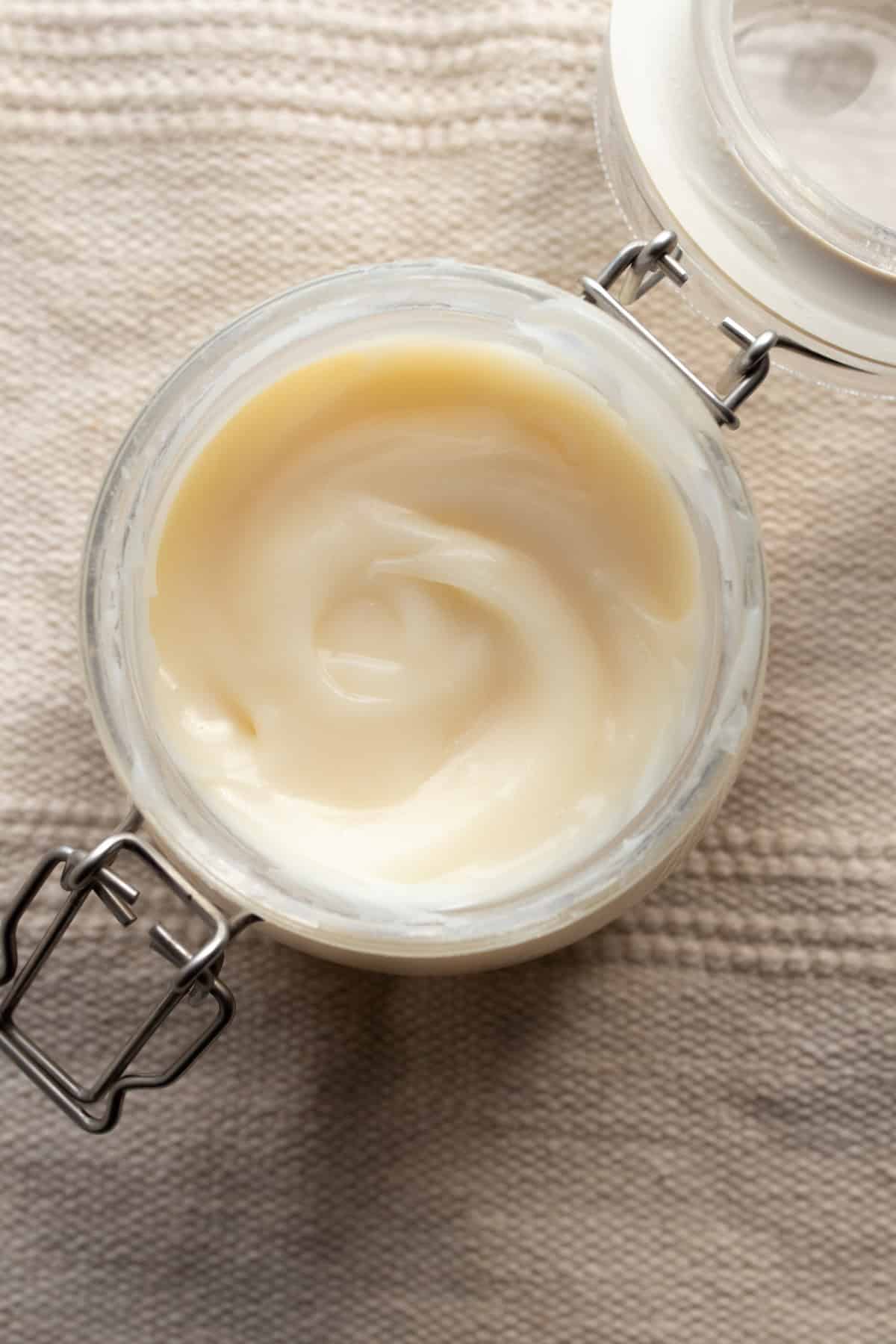
Step 4: Allow to cool in the refrigerator. Now your tallow is ready to cook with. Store in the refrigerator in an airtight container (wide mouth mason jars work great for this) for 2-3 months.
Tips
- Using a meat grinder to cut pieces of fat smaller will help the fat to render quicker.
- This is best cooked low and slow for a few hours. If your temperature is too high, you can expect it to burn during the rendering process.
- When you are cooking down the fat, there will be some meat that will not render out. Don’t expect the pot to be completely melted. The slower the fat is cooked, the whiter and more neutral-smelling it will be. You can cook it low for two hours, or even at a slightly lower temperature for 6-8 hours.
- It is best to use the whiter, more neutral tallow for baking and pastries, as there is less beef flavor to interrupt the flavor of your baked good. Less white tallow, that may have been rendered more quickly, works really well for most other cooking, as it offers a hearty beef flavor to complement your dish.
- Straining the tallow a second time with cheese cloth, a coffee filter, or even a paper towel will leave you with a more pure end result and longer shelf life, so don’t skip this step!
Recipe FAQs
I simply use a heavy bottom pot or large stock pot and melt the beef fat over very low heat for a few hours. You can also use a slow cooker or crock pot to render your tallow and maintain a nice low temperature.
It is the process of liquifying, straining, and storing fats that can later be used for cooking. Rendered beef fat is the perfect cooking medium for sautéing.
Beef fat renders at 130-140°F (54-60°C). This is a process you want to take slow, so maintain this temperature while cooking for several hours.
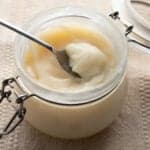
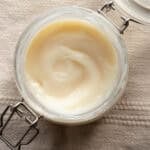
It will be a nice yellowy white liquid. Once it is strained and allowed to cool, the finished product will be creamy white.
Use rendered fat for cooking, sautéing, frying, and even in pastries. You can also use it to make candles, soaps, skincare products, body creams, and to keep your cast iron in tip-top shape.
More From-Scratch Recipes from the Farmhouse
- How To Make Sour Cream
- 12 Easy Fermented Vegetable Recipes
- How to Make Lard
- How to Make a Sourdough Starter
- How to Make Homemade Barbecue Sauce
If you try this recipe and love it, I would love it if you could come back and give it 5 stars! Tag me on Instagram @farmhouseonboone.

How To Render Beef Fat To Make Tallow
Equipment
- 1 Dutch Oven any stock pot would work
- 1-2 Mason jars
Ingredients
- 2-5 pounds beef fat, you can use more or less depending on how much tallow you want to make.
Instructions
- Remove excess fat from your beef using a sharp knife and cutting board.
- Cut fat into small pieces, about 1-2 inch portions.
- Place into a large saucepan or pot and place over low heat for a few hours, stirring occasionally. You want the temperature to hold around 130-140 degrees. The fat should be a yellow color. If it is starting to turn brown, then the heat may be too high.
- After the beef has rendered, while it is still hot, carefully pour the tallow through a fine mesh strainer into a container. Not everything will completely melt. There will be some bits of meat and other bits that don’t render.
- Strain the tallow a second time through a piece of cheesecloth, coffee filter, or paper towel to remove some of the finer impurities.
- Allow to cool in the refrigerator. Now your tallow is ready to cook with.
Notes
- 3 pounds of beef fat will typically yield around 2 full pint jars. The amount you end up with will vary due to many factors.
- You want the cooking temperature to be around 130-140. Too hot and it will burn.
- Using a meat grinder to cut pieces of fat smaller, will help the fat to render quicker.
- This is best cooked low and slow for a few hours. If your temperature is too high, you can expect it to burn during the rendering process.
- When you are cooking down the fat, there will be some meat that will not render out. Don’t expect the pot to be completely melted. The slower the fat is cooked, the whiter and more neutral-smelling it will be. You can cook it low for two hours, or even at a slightly lower temperature for 6-8 hours.
- It is best to use the whiter, more neutral tallow for baking and pastries, as there is less beef flavor to interrupt the flavor of your baked good. Less white tallow, that may have been rendered more quickly, works really well for most other cooking, as it offers a hearty beef flavor to complement your dish.
- Straining the tallow a second time will leave you with a more pure end result and longer shelf life, so don’t skip this step!
- Store in the refrigerator in an air-tight container (I like using wide mouth mason jars for this) for 2-3 months.
- Beef suet- a harder fat around the kidneys will give you the longest lasting, most neutral tasting tallow, while fat trimmings will have a stronger flavor.
Nutrition
Nutrition information is automatically calculated, so should only be used as an approximation.








Can I render it in my slow cooker?
Should the pot be covered or uncovered during the slow cooking process?
I like to keep it covered, but you do need to watch out for the steam that is collected on the lid.
Once you have the final product. Can it be vacuum sealed and frozen?
I’ve not personally tried it, but you should be able to!
I will try it and let you know the results after about 1 month or so.
how did that work out?
Just got a ton of beef fat from our local grocery butcher department for free. Will be trying this tomorrow. Have you ever done this in a crockpot? Wondering if that would work
Yes, it should work in a crock pot.
Can you use the fat from ground beef for anything?
I don’t typically use the fat from ground beef.
Is the fat left-over from frying bacon ok/healthy to eat? It’s not slow cooked so is it still technically rendered? (It solidifies to look almost exactly like the rendered beef fat above, and the rendered tallow I have bought in the past at the store) Just wondering because it seems like a big waste to throw away all that fat after frying bacon. It’s a lot!
I have cooked with this fat for my entire life; first from cooking by my mom and grandmothers and then for myself.
We use our bacon grease for everything! Always keep a bowl of it by the stove with a plate over it to keep the dust out.
Saving bacon fat is classic! I strain it through a coffee filter into a mason jar (the food particals are what will go bad, the fat on its own will last a while) and then I store in the fridge. I use it in place of oil/butter for several recipes (makes a darn good grilled cheese, and I love to use it when I make breakfast potatoes).
Can you add fat drained from ground beef in eith your cuts of fat?
I personally wouldn’t.
With grocery stores not having meat departments any more, this may be more difficult but I have wanted to do this for a long time as I am a soaper for myself and friends and family. You’ve made the process sound so easy, now all I need is the fat (maybe I
ll ask friends who own ranches, do a bit of bargaining) and get some going! Thank you, Lisa.
Yes it is! I find it online or from my sister who has a farm.
I really enjoy your site! I have 2 questions I hope you can answer.
1. Have you fermented beets? (If so, do you cool the beets first?)
2. Do I use distilled water or is city water ok?
I meant *cook* the beets
My Mom and I have both been enjoying your recipes. Just wanted you to know I have done this recipe with all fresh milled hard red wheat and liked the results. However with my white bread flour my results are always gummy
You can ferment beets, and i would use the same process as my carrot fermentation recipe here: https://www.farmhouseonboone.com/fermented-carrots-recipe
If the fat renders pure white as shown you are not actually buying/rendering grass fed beef fat. The fat will have a yellow cast to it if truly grass fed. Grain fed beef fat renders white. That’s just a fact, have been raising true grassfed beef cattle for over 20 years – and eating it. The fat is healthy and tasty(wild to some) and never white. And generally it is leaner what we harvest so not a lot of excess fat. Short ribs from the processor I think would be a good candidate for rendering. Also, asking the processor to save the fat trimmings that otherwise get tossed in this day of close trimming of roasts and steaks, etc… I really have enjoyed your recipes I’ve read, landed here some days ago looking for fermented cucumber recipes/advice.
I’m so glad you have enjoyed this recipe. Good to know about which cuts would work better with totally grass fed meats. That is not entirely true though regarding color. My meat comes from my sisters farm which is grass fed their entire life and is non-gmo grain finished (along with grass) the last few months. So I know they are coming from grass fed farm. Maybe if it was exclusively grass finished it would have more of a yellow tint.
I think grain finishing makes the difference. I buy 1/2 grass fed cow from my friend’s nephew every couple of years. He says the cows are grass fed, but the butcher told me they had to be grain finished due to the marbeling that doesn’t exist in grass fed, grass finished. Also, I get the massive amounts of leftover fat trimmings that Kate mentioned. I work many hours trying to cut out every little bit of meat to raw feed my dog. Then I render the fat that comes out clean white. I love the process and look forward to it each time. I like hearing that others do the same and love it like I do. There’s great satisfaction for me to open the refrigerator and be able to use an oil that didn’t come from some mystery product using a mystery process. I mean really, how do you get oil from cotton or peanuts, and what is a canola seed? I’ve never eaten cotton or it’s seed, canola flowers , or their seeds. ‘Not even going into how bad for us or it is to eat seed oils. I love using tallow derived from a known source.