



Learn how to store sourdough starter for short-term and long-term situations. Whether you plan to keep your starter on the counter, fridge, or freezer, these storage tips will help keep your sourdough healthy for years to come.
One of the most common questions that I receive is how I store my sourdough starter. Creating a sourdough starter can be intimidating enough without worrying about who’s going to babysit the starter if and when you need to take a trip, recover from illness, or whatever other event comes your way.
Thankfully, sourdough starter is a tough little thing, able to thrive with a little care even after taking a hefty sabbatical. I’ve known my fair share of people who have shoved their starter in the fridge for later use, forgotten about it for months, and still revived it.
While it’s actually quite normal to put your starter on hold occasionally, it’s also something that can seem overly complicated.
Fortunately, it’s simple. Sourdough starter is resilient and hard to kill even with long-term storage. I’m going to go through some of the best practices for sourdough starter storage so you can always be ready to make fresh sourdough bread, sourdough cinnamon rolls, sourdough bagels, and whatever other sourdough creations your heart desires!
How To Store Sourdough Starter: Short-Term Storage
On The Counter
Have I forgotten my sourdough starter on the kitchen counter and left it unfed for a few days? Yes. Was all well when I finally remembered it? Also, yes. It did develop a hard crust, but I just scraped it off, transferred it to a clean jar, and fed the starter.
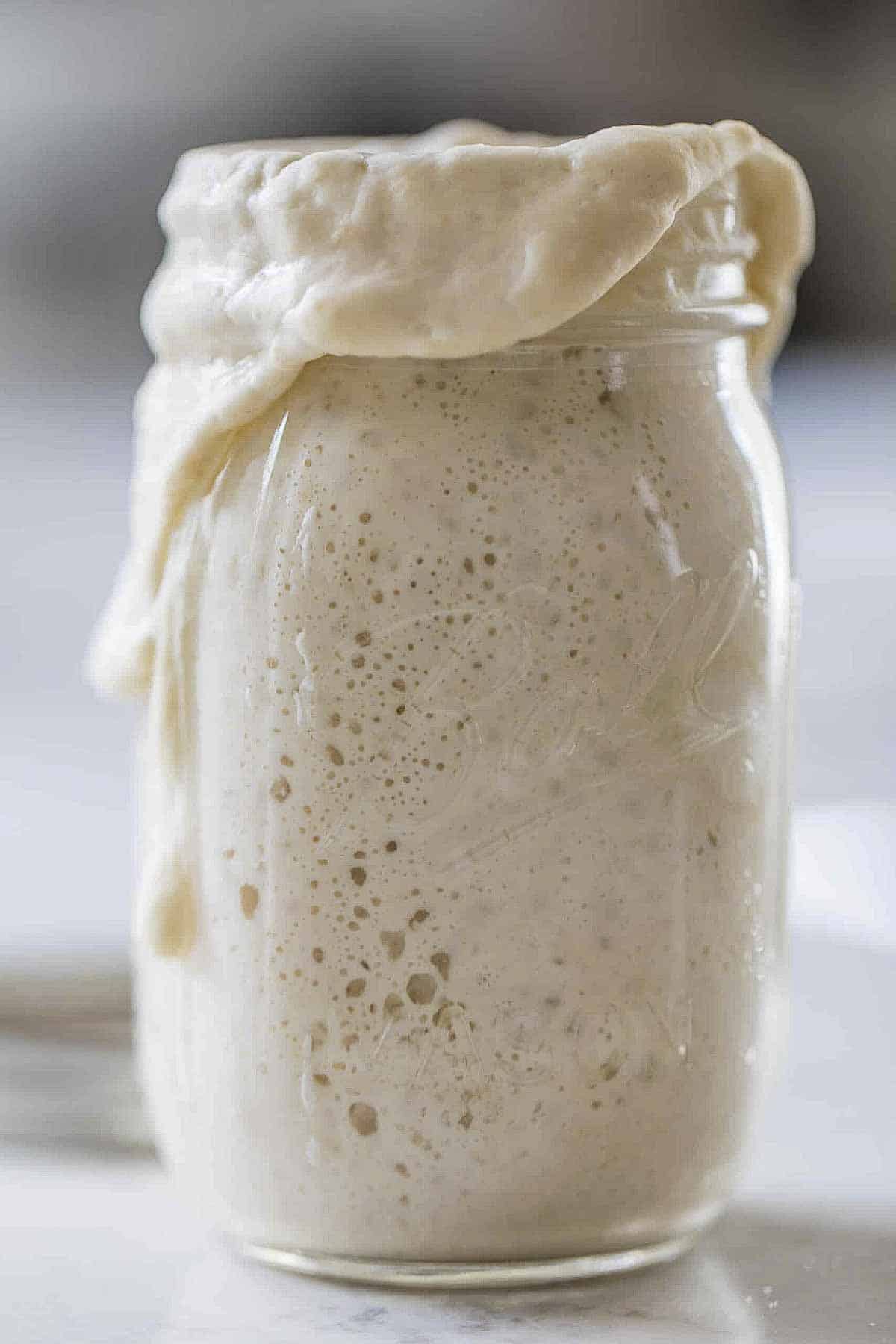
- I prefer using a large jar with a glass lid to store my starter. You can also cover it with a tea towel or a coffee filter and rubber band, but I find that becomes messy.
- Where you keep your starter determines how warm or cold it may be, which in turn determines your feeding schedule. If you have a warm kitchen or are keeping it in a warm place, you will need to feed it more often.
- In general, you want to feed your starter every 12-24 hours for it to remain healthy (see my best tips for feeding and maintaining a sourdough starter here). I’ve found that if you forget it for a little bit, it’s usually fine. There are exceptions, of course.
- Not sure if what you are seeing on your starter is mold? Check out my guide on a moldy sourdough starter. Typically, if it looks normal, smells normal, and responds well to a resumed feeding schedule, you’re good to go.
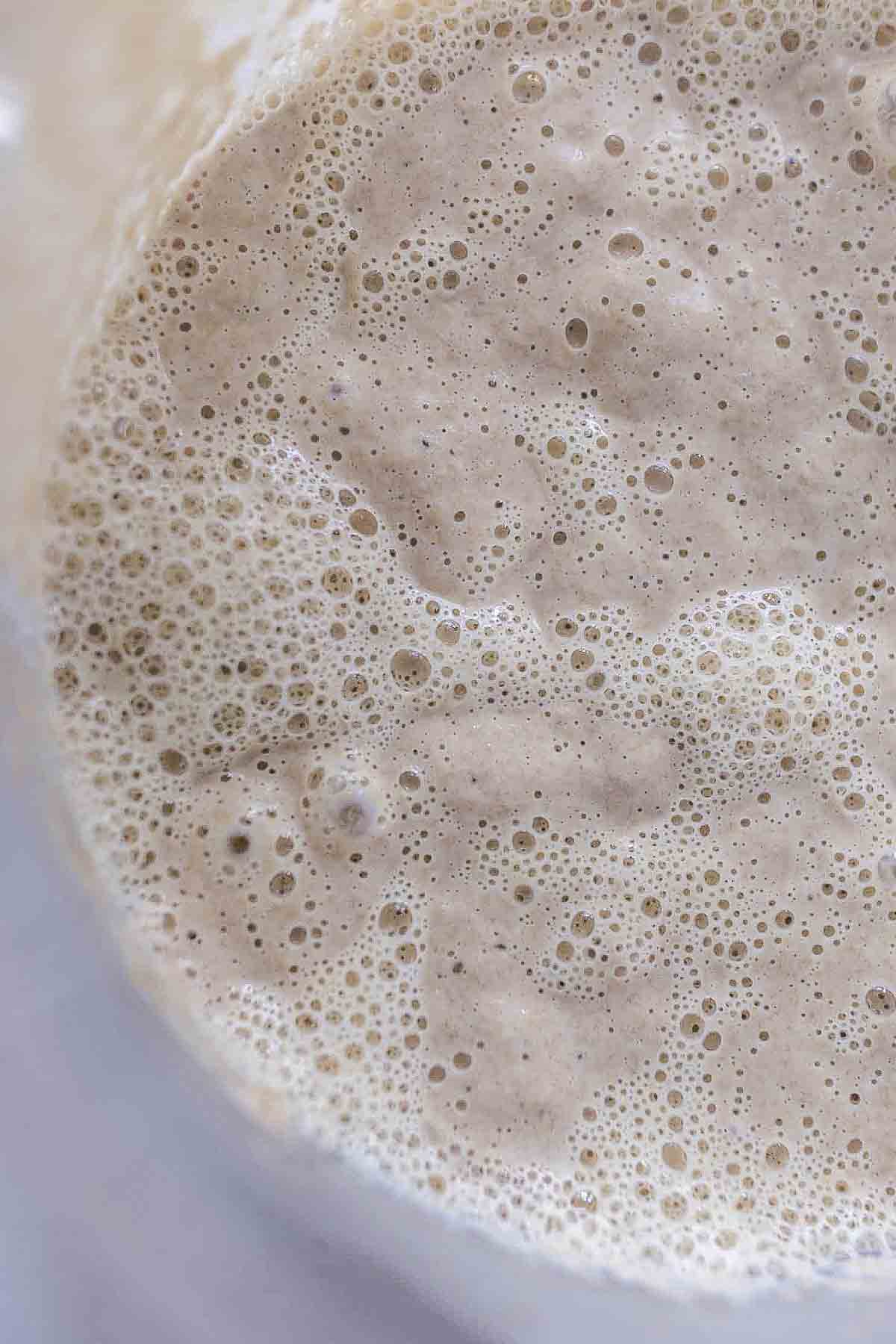
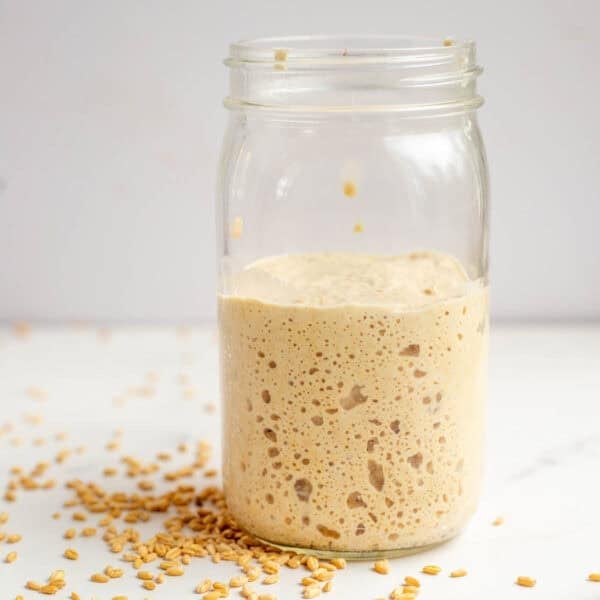
- Starter that has been stored short term on the counter may need to be fed several times before it is active enough for successful baking. You will know it is ready to bake with when it is really active and bubbly, about doubles in size, and it will pass the sourdough float test.
In The Fridge
This is typically how I store my starter if I know I will not be baking with it for a few days or weeks.
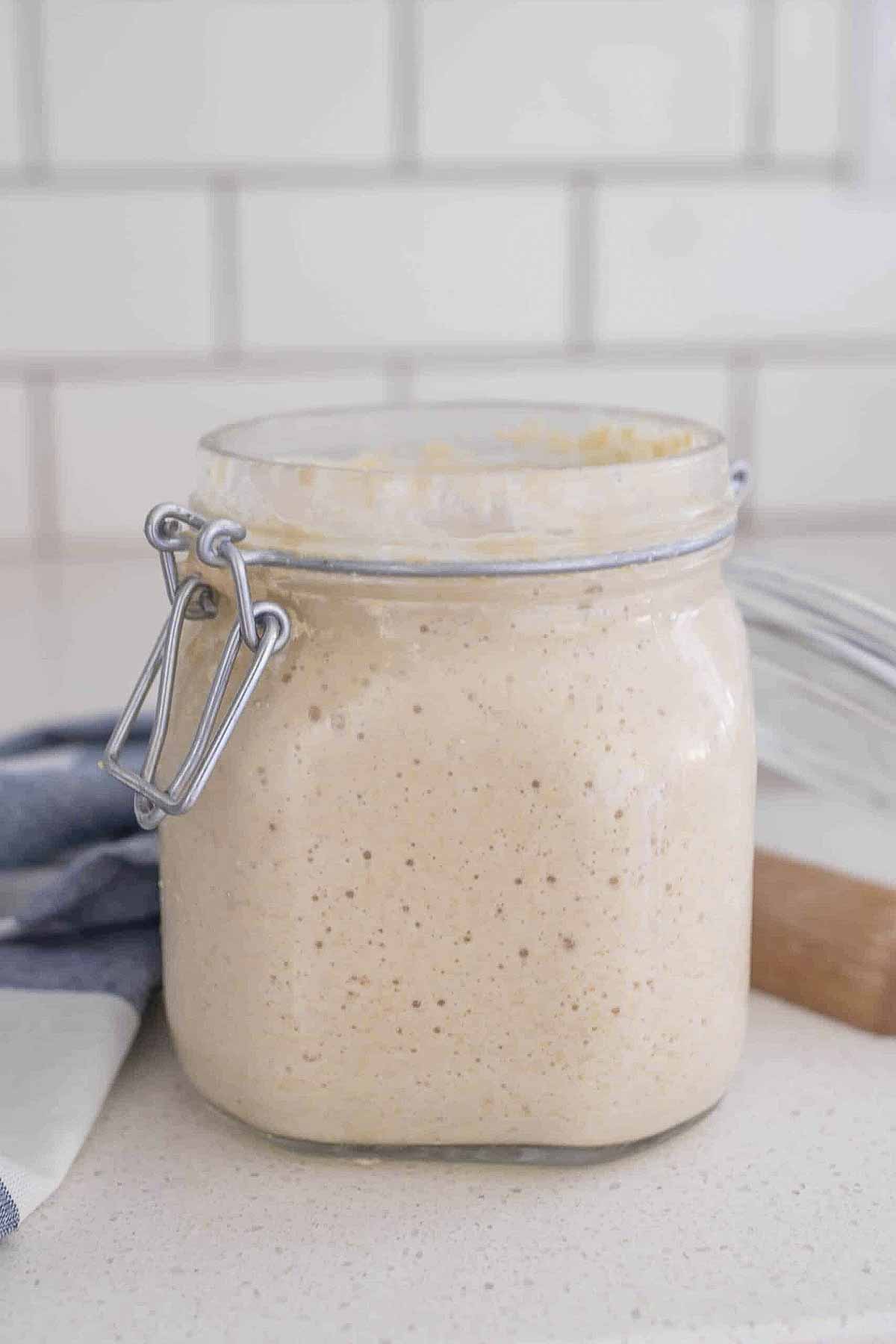
- For best results, feed your starter before placing it in the fridge and use a loose lid or tea towel.
- You will want to feed it every 7-10 days. However, I’ll say it again, this is pretty forgiving if you forget about it for a longer period of time. i know people who have stored their starter in the fridge for over a month without feeding it.
- Don’t be alarmed if and when the top layer of your starter is suddenly a suspicious gray liquid. When stored for longer periods, this liquid that develops is called hooch and is totally harmless. It essentially means your starter is needing more food. Pour the hooch off and feed your starter. (Looking for a glossary of sourdough terms such as hooch? Check out my full sourdough term list here.)
- It is also normal for your starter to have a thicker consistency after being stored in the fridge.
- When you want to use your starter, pull it out of the fridge and feed it equal proportions lukewarm water and fresh flour to reactivate. There is no need to bring it to room temperature before doing so. If the starter hasn’t been in the fridge for a very long time (less than two weeks), pull it out about 12 hours before you plan to bake with it and feed it. If it has been in the fridge for a longer period, or you forgot to feed it before sticking it in the fridge, it may need more than one feeding to activate it again. Find out how to tell when your sourdough starter is ready here.
How To Store Sourdough Starter: Long Term Storage
Life is certainly not predictable, so there are going to be times you need to step away from your sourdough starter for a long period of time and you don’t want to just start over. Here are a couple of great options for those situations.
Drying or Dehydrating Starter
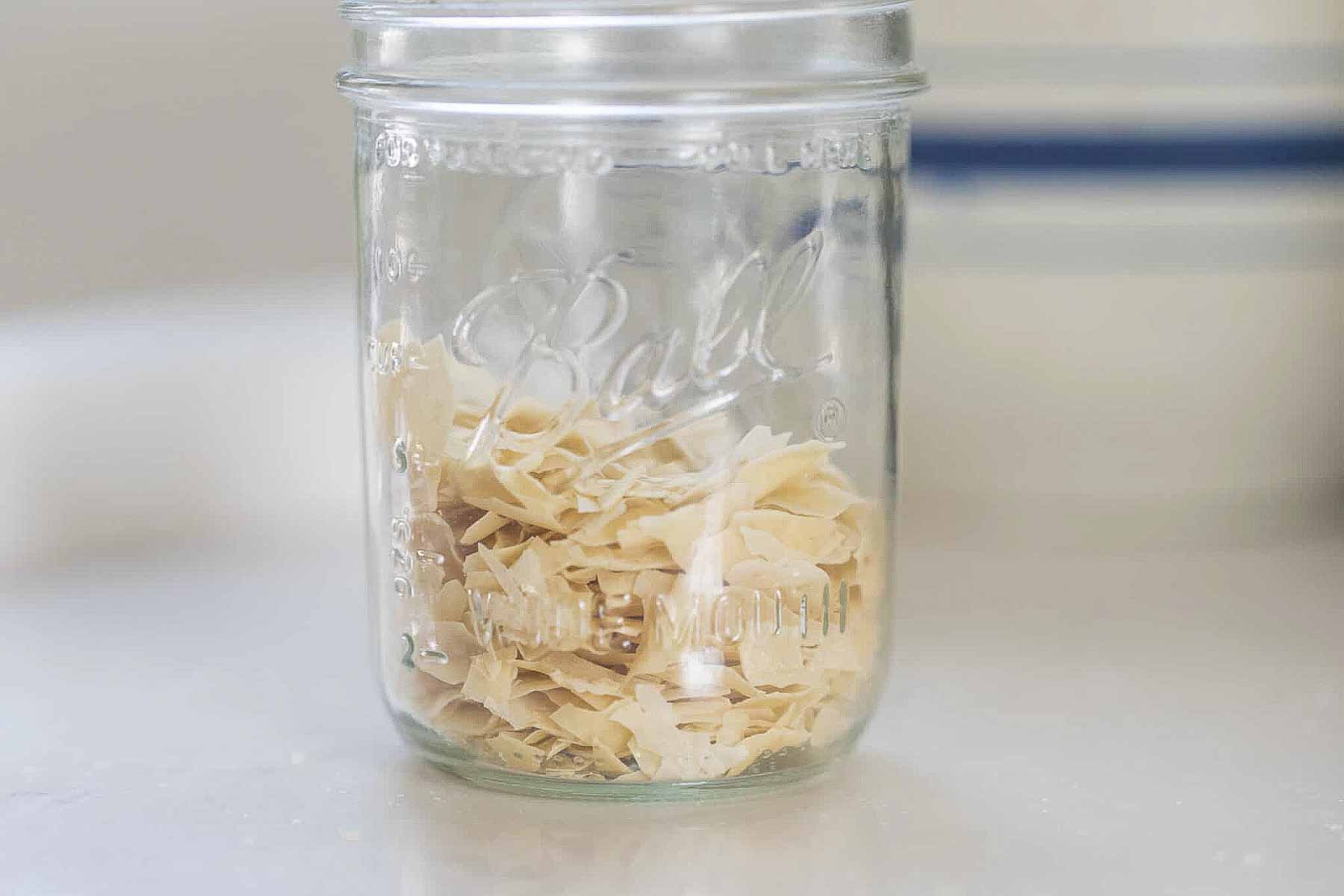
Drying or dehydrating your active sourdough starter is a simple way to effectively preserve it longer term, especially if you dry it and then freeze it. Here’s how:
- You’ll want to feed your starter 4-12 hours before drying, making sure it’s active and bubbly.
- Line a baking sheet with parchment paper, then spread your starter into a very thin layer using a spatula or similar tool.
- If using a food dehydrator, be sure to use the lowest setting, keeping the temperature less than 105 degrees F, preferably 95-100 degrees. Temperatures any higher can kill the yeast and good bacteria that we are enjoying in sourdough to begin with.
- If air drying, position the baking sheet in a safe place where there is adequate airflow and where it won’t be disturbed. An open shelf, on top of your refrigerator, or even in a closed oven without the heat on. Proper airflow is essential for your starter to dry out successfully. Drying time ranges anywhere from 24 to 48 hours.
- After your starter has dried completely, you can store it in an airtight container as it is, break it up into pieces to store in a smaller container, or even blend the starter into a powder for storage.
How to Revive a Dehydrated Starter
- To revive your dried starter, measure about 1.5 tablespoons of water and 1/2 tablespoon dry sourdough starter powder, stirring until dissolved. Then stir in one tablespoon of flour until combined well. Cover and allow to rest for 24 hours.
- The following day, proceed with the same 1 tablespoon flour, 1/2 tablespoon water feeding, stirring and allowing to sit for another 24 hours. I like to aim for a consistency similar to pancake batter.
- On the 4th day, you’ll up your feeding to 1/2 cup flour and 1/3 cup water. Cover and leave for 24 hours.
- On the 5th day, there should be a lot of activity. The starter should be doubling in size, and now you’ll add one cup of flour and 1/2 cup water to the starter, mixing well.
- At the end of 5 days, your starter should be bubbly and active, ready to use in all your favorite recipes.
- Resume a regular feeding schedule at this point.
Freezing Starter
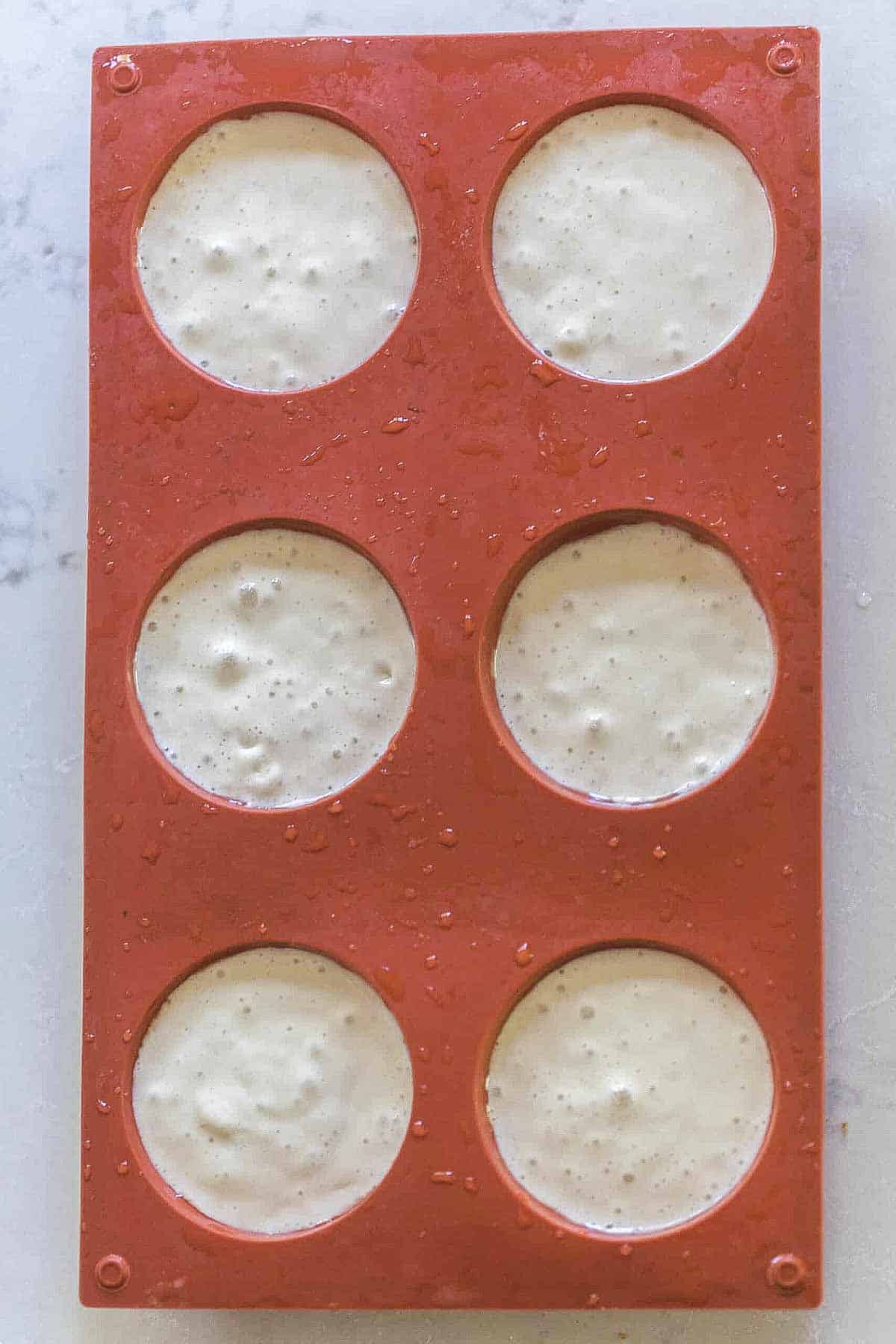
- Begin by feeding your sourdough starter 4-12 hours before freezing, allowing it to become active and bubbly.
- Measure your active sourdough starter into an ice cube tray, silicone muffin cups, or another small, divided container.
- Freeze completely, about 3-4 hours.
- Once frozen, pop out your frozen starters and store in a freezer-safe bag or airtight container.
- Learn more about freezing sourdough starter here.
Reviving a Frozen Starter
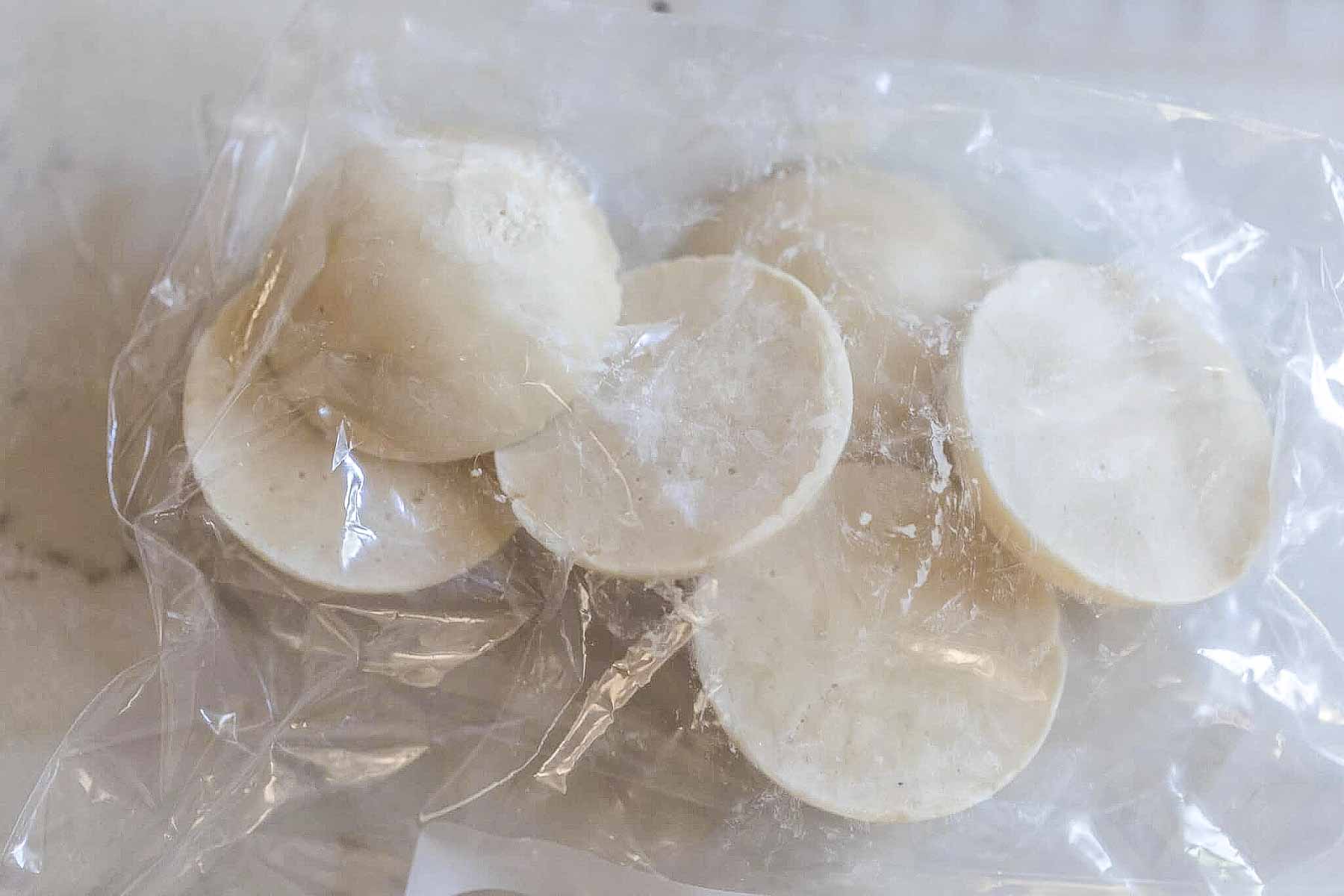
- Set your frozen starter out to thaw at room temperature in a jar, covered loosely.
- Once thawed, feed equal parts flour and water every 12-24 hours depending on the temperature of your home and the level of activity seen in the starter. If too dry or thick, add a touch more water.
- Be patient with your frozen starter. It may take some coaxing, close watching, and several feedings to revive.
FAQ’s
The best way to store sourdough starter long term is by drying (this can last years) or by freezing (up to 12 months).
It will last two months in the fridge without being fed. I’ve seen it last much longer, but much depends on the health, feeding, and activity of the starter prior. Be sure to feed your starter, with it’s consistency being the thicker the better, before longer term fridge storage.
If you are not planning to use it for a few days, then it should be stored in the fridge where it can be fed every 7 days or so. Store your starter on the counter, loosely covered, for more frequent baking.
I’ve found glass canning-style jars to work very well for sourdough. A glass jar doesn’t absorb smells or flavors like other containers do. Glass allows unhindered viewing of your starter, and it stores easily, offering a variety of shapes, sizes, lids and covers.
Stoneware could be a great option, though it does limit visibility, can be heavy to move about, and is often a bit more difficult to keep clean. Opt for a glazed stoneware so that bacteria is not given free reign inside the porous walls of the stone.
Plastic containers can also work, but plastic does degrade and leach over time, making it the least appealing option, in my opinion.
Much of the decision of container comes down to personal preference, but you will also want to make sure it’s open enough to reach your starter and clean it out thoroughly.
No, your starter is a living thing and needs to breathe. You want to keep it covered so that dust and hair and other messes do not find their way in, but too much air exposure can cause the starter to form a crusty top layer which is nice to avoid. Whether you use a tea towel or a loose fitting lid, you can still keep your starter clean while allowing it to breathe.
There are a few ways to tell if your sourdough starter is mature enough to make a loaf of bread. First, after you feed it, it should about double in size and get really bubbly within 4-12 hours. Second, if your starter passes the float test, it is ready to bake. The float test is where you take a small dollop of starter and place it in a small jar of room temperature water. If it floats, it means it is ready to make sourdough bread.
More Sourdough How-Tos
- 6+ Different Types of Sourdough Starters
- How to Use Sourdough Starter
- How To Make A Potato Flake Sourdough Starter
- How To Freeze Sourdough Bread – The Best Way
- How to Bake Sourdough Bread in a Dutch Oven









I found a glass container that has a wooden lid. The lid has a silicone band to make it airtight. When storing the starter in the refrigerator would this container be ok to use?
That should work!
Silly question, How big is that glass jar you use for your starter? I have a family of 6 to feed, we are heavy bakers. I just don’t think a small jar will hold enough starter to get us through a day. Your videos have been helping me a lot.. Thanks so much <3 🙂
Mine is a gallon sized jar!
My starter has been in the fridge for almost a year. My husband has had some serious health issues and I’ve ignored baking bread. So my starter has houch on it but no mold. Can itbe revived for baking sourdough again?
I would definitely give it a try! I would feed it every day for a week, like you would if you were making a sourdough starter. That should give it a good boost.
Lisa, please make this a pdf we can print, excellent information for reference. Is this included in your new cookbook?
Yes, this is included in the book!
I stored my sourdough in the fridge in a sealed jar for close to 3 weeks while we were gone. When we returned, the dough has a separated layer of light black liquid on the top. I’m guessing this is not healthy anymore, but tried to search on line and didn’t find any answers. Does anyone know if it’s OK to stir and still use this batch or is it spoiled?
Thanks for any input on this!
Your sourdough is just fine. That is called hooch and it’s a sign that your starter is hungry and needs to be fed again.
How do you know how much starter you have, and how crucial is it that the flour/water portions are equal to the starter portion? Also, how do you prevent your jar/bowl from overflowing? For example, I removed 1 cup discard and then just eyeballed my starter at about 2 remaining cups, so I added 2 cups water and 2 cups flour; but now my bowl is almost full, so I’m not sure how well the doubling of the starter is going to go…
Great information. Especially for us just starting on this journey.
If storing starter in the fridge and you’re ready to bake with it, does it need to come to room temp before feeding or can you feed it as soon as you take it out of the fridge?
I was given a beautiful bubbly starter. I put it in the fridge for 4 days before trying to use it. I feed it pancake batter mix of all purpose unbleached flour and warm bottled water. I stir it well— it doesn’t do anything. I’ve done this for a week. What is going wrong?!
How long are you letting it sit on your counter top after feeding it?
I love your posts! I used your sourdough starter and beginners sourdough this weekend and my loaves are amazing!