
Not only are fermented veggies delicious, they are also rich in probiotics. Learn how to ferment nearly any vegetable and check out some of our favorite fermented vegetable recipes at the farmhouse.
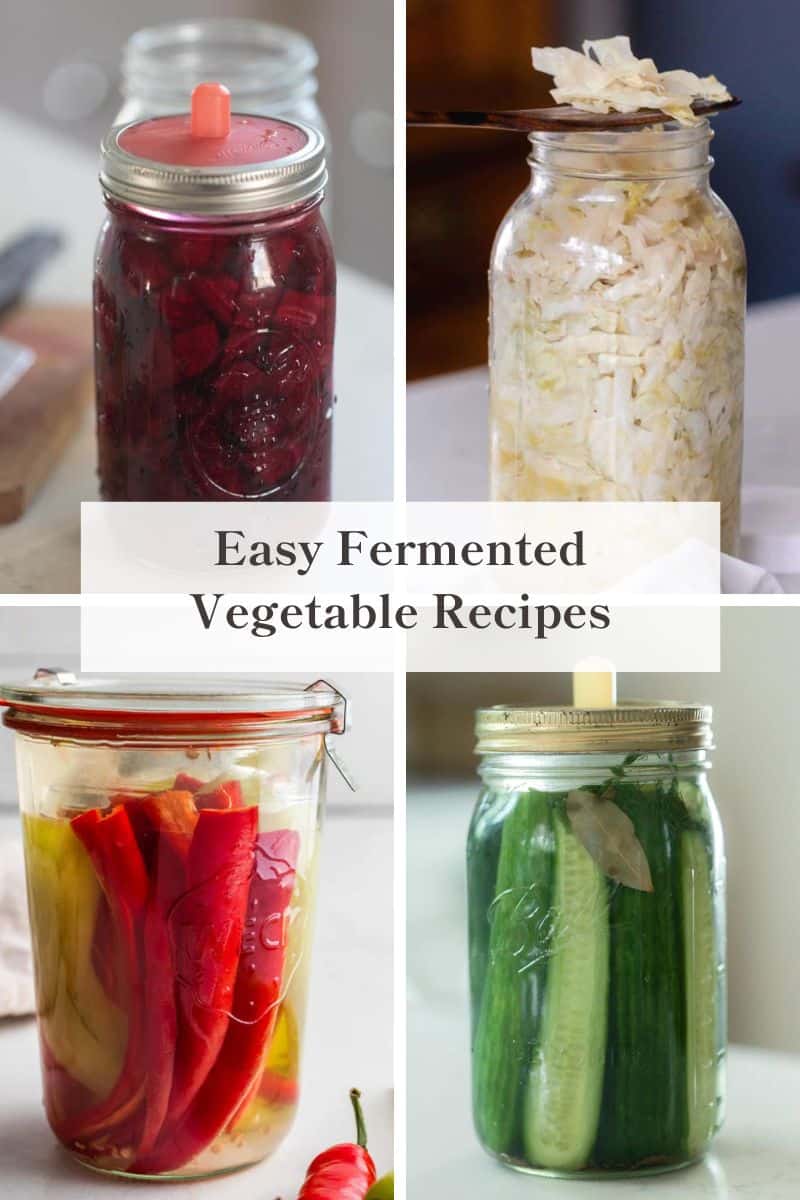
You’ll hear me talk about fermented foods quite frequently here, and for good reason. If there is ever such a thing as a “health food,” it should be this.
When you think of fermented foods, the first thing that may come to mind is dairy products, such as milk kefir or yogurt.
But the same lacto-fermentation process these dairy products undergo, can be utilized with vegetables. Everything from green beans to garlic can be fermented. (You can also ferment fruits, too!)
Lacto-fermentation takes beneficial bacteria (lactobacillus bacteria) that are naturally occurring on vegetables and converts them to lactic acid. And what does that lactic acid bacteria give you? Probiotics!
I’ve included my favorite fermented vegetable recipes below. But if you want to learn more about fermentation, check out my self-paced course, Fresh Ferments!
Why You’ll Love Fermented Vegetables
The health benefits – Lacto-fermentation increases the vitamin and enzyme levels, and improves the digestibility of the fermented food. The gut-healthy probiotics it produces also come with a plethora of health benefits, including helping the immune system, decreasing inflammation, and helping decrease the incidence of certain diseases like heart disease. (source)
Longer storage – Before there was modern day canning, people needed a way to preserve their food to last longer. Lacto-fermentation does just that. Basically, you are allowing the good bacteria (lactobacillus) that is already present on vegetables to take over while salt inhibits the bad bacteria. Fermented vegetables that are properly prepared and stored in a cool, dark place (like the refrigerator) can last at least 4-18 months. You can also water bath can many of these recipes for longer storage, but keep in mind that heating up these fermented vegetables by canning will likely kill the good probiotics.
The tangy taste – Not only is it healthy and a great way to preserve summer produce, it also gives you a delicious, tangy taste. The longer it ferments, the tangier it will be.
Tools You May Need
Fermentation lids – While you can use a tea towel and rubber band, these lids are great if you plan to do a lot of fermenting.
Fermentation weight – You can get creative here. I know some people who use a rock in a Ziplock bag. If you ferment often though, I love these glass weights.
Glass Jar – You can use any size of wide mouth jar. Since we have a big family and go through a lot of ferments, I usually use a 1/2 gallon mason jar. Quart jars also work well for smaller amounts.
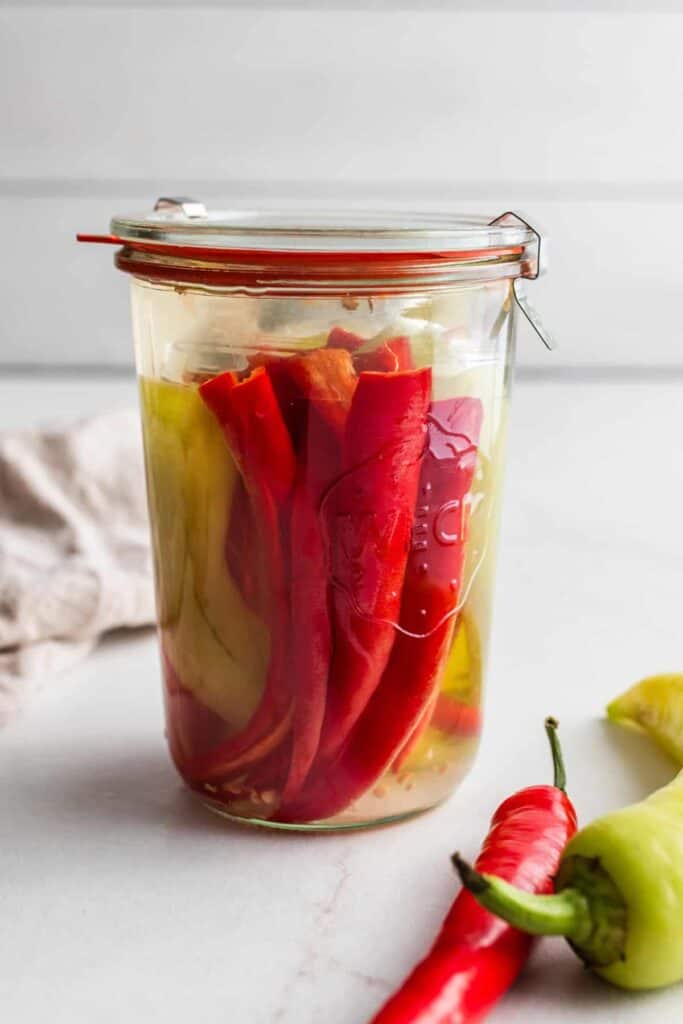
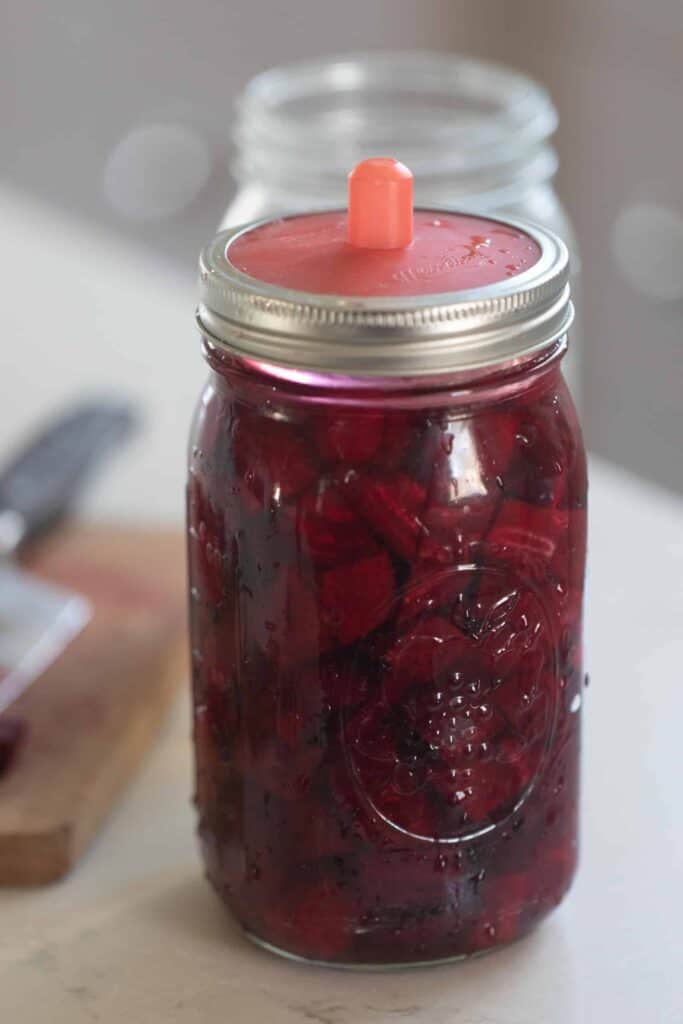
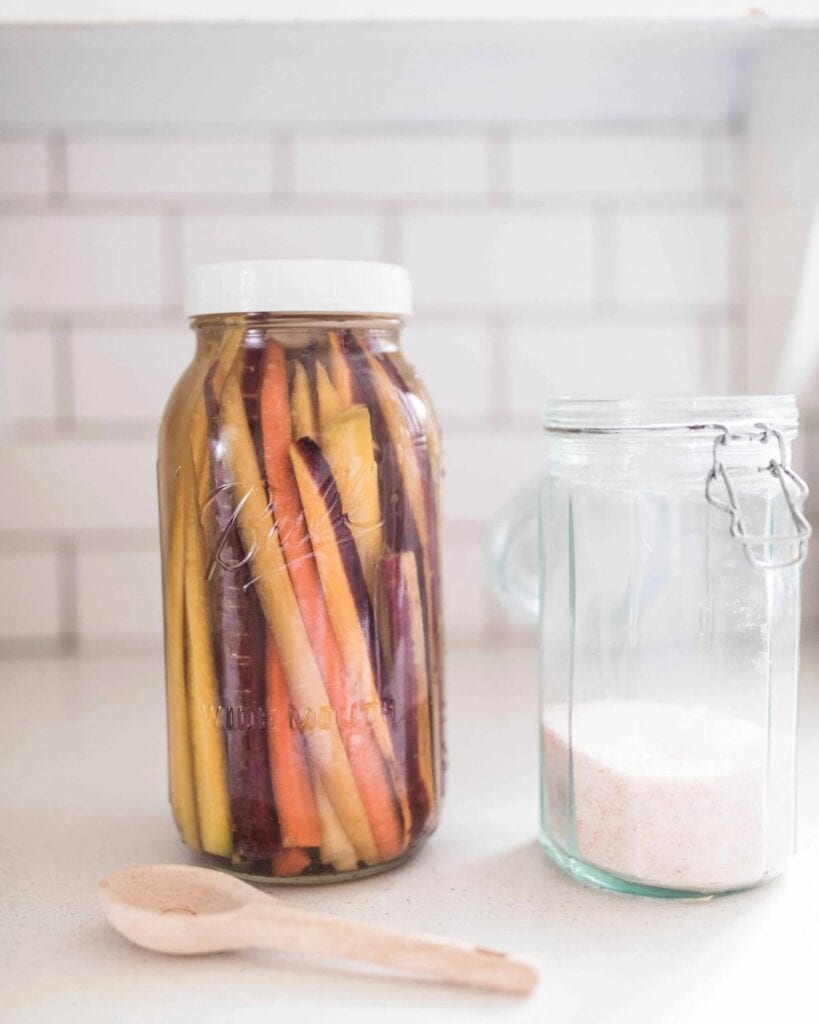
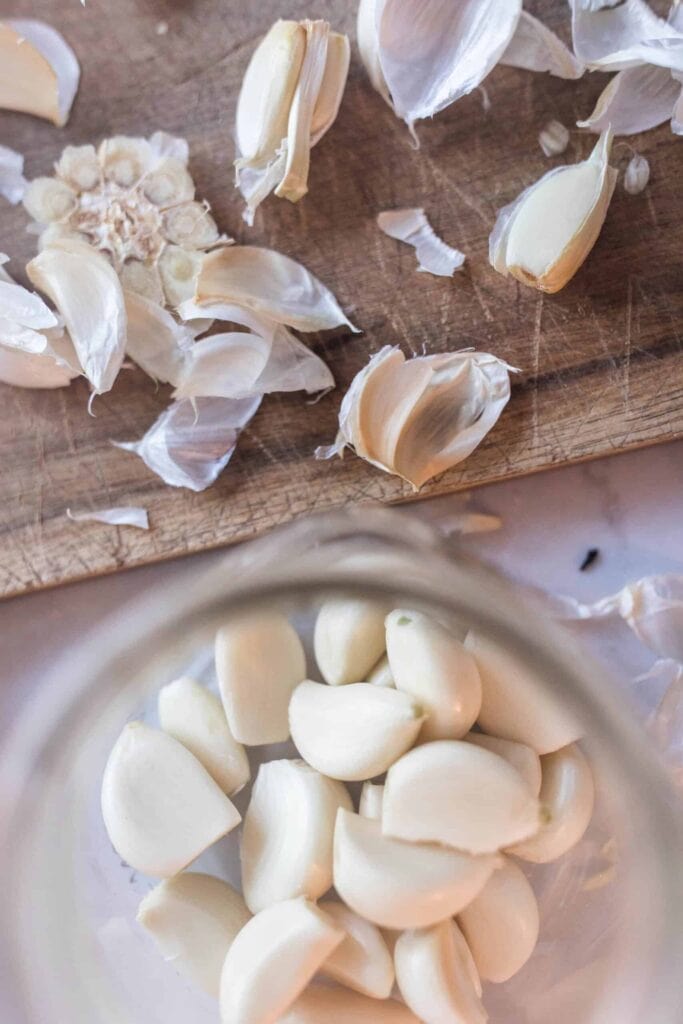
Fermented Vegetable Recipes
Tips
- The amount of time it takes for vegetables, or anything for that matter, to ferment depends greatly on temperature. If it is the middle of winter, it may take up to a week to get the fermented taste you desire. While in the summer, it may only take a couple of days.
- There are a variety of ways to enjoy fermented veggies. Try them on top of salads, as a side to dinner (they go really well with my perfect roast chicken) or on their own. Of course, sauerkraut especially can be used in many meals, like my Sausage and Sauerkraut Skillet Recipe with Potatoes or Easy Sauerkraut Soup with Sausage. Just keep in mind that heating fermented foods will likely kill most of the good probiotics.
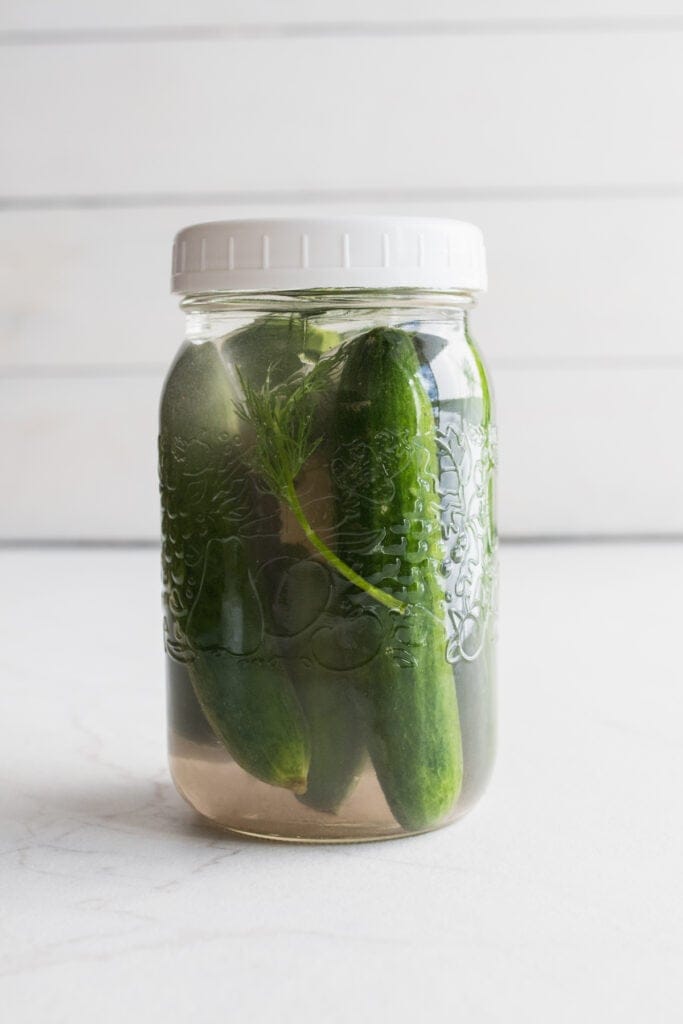
- Experiment with flavor! You can add fresh herbs and spices to your ferments for more flavor. Some ideas are bay leaves, red pepper flakes, mustard seeds, or fresh dill.
- Make sure to use a good quality sea salt. I like Redmond Sea Salt.
- Not all fermented vegetables require adding water. Vegetables with a higher water content, like cabbage (check out my delicious sauerkraut recipe), create a brine of their own from their juices just by adding salt. For recipes that do require extra water, avoid using tap water. Make sure to use some kind of filtered water. We love using our BOROUX filters.
Lacto-Fermented Vegetables FAQs
There are many different vegetables that can be fermented. Examples include beets, carrots, cabbage, garlic, and more. You can also ferment multiple vegetables together in the same jar.
While this depends on what you consider healthy for you, I personally love making my own sauerkraut. It’s so easy to do, and it provides an easy side to dinner when you are in a pinch. It’s great for gut health, and is much cheaper than buying probiotics every month.
First, sterilize your jars you plan to use. Then, clean your fresh vegetables. Pending the type of veggie, you may need to slice or chop as well. Once everything is ready, follow a step-by-step recipe for each veggie as far as how much salt and water you’ll need. Each fermentation will sit out at room temperature. How long this process takes is really up to you. The longer veggies ferment, the tangier it will become.
Pickling utilizes an acid and sometimes heat in order to create that classic pickled flavor. Fermentation does not require an acid or heat. Unlike pickled veggies, fermented vegetables provide gut-healthy probiotics.
The “lacto” portion of lactose fermentation refers to Lactobacillus, a species of beneficial bacteria which are present on the surface of all plants. This beneficial bacteria converts lactose or other sugars into lactic acid.
Basically, you are allowing the good bacteria (lactobacillus) that is already present on vegetables to take over while salt inhibits the bad bacteria. The good bacteria then grow with a little time at room temperature.
More Fermentation Recipes from the Farmhouse
- How to Make Water Kefir & Benefits
- How to Make Easy Homemade Yogurt Cheese
- Fermented Lemonade
- How To Make Fermented Fruit
- Fermented Balsamic Blueberry Vinaigrette
If you try any of these recipes and love them, I would love it if you could come back and give them 5 stars! Tag me on Instagram @farmhouseonboone.







I love this! So excited to try fermenting veggies! I had a question tho, does it matter what kind of salt? Or do you have a preference?
Use any kind of sea salt. Just don’t use table salt!
Thanks to your info I decided to just go ahead and try even though I don’t have wide mouth jars for my pickle pipes or fermentation weights. I made a jar of fermented cauliflower and was blown away by how good it tastes! Sour and tangy with a little crunch still, just like the Strubs pickles I love but with cauliflower instead. I’m hooked! Next I’m going to do sauerkraut and a mix of cauliflower, carrots, and jalapenos.
Wow! It’s amazing all that you do. Thanks so much for sharing. I really enjoy your videos. I’m learning a lot and will try fermenting carrots, cucumbers and cabbage. Blessings to you and your family.
Wow! It’s amazing all that you do. Thanks so much for sharing. I really enjoy your videos. I’m learning a lot and will try fermenting carrots, cucumbers and cabbage. Blessings to you and your family.
Hi Lisa
Thank you very much for your fermentation recipes. I already did the kimchi, jalapeños and pickels. We love them all. But I have one question regarding the pickels. I did them already 3 times and the pickels itself are fizzy when they are in the mouth. Are they still good? Why are they fizzy? Do you know what happened? I followed always your recipe.
Thanks
I have made your jalapenos several times but the last time they developed a white film…I had reused a bit of the last brine. Do you think that is to blame? I don’t think they seem safe so am throwing them out. Any ideas? Thank you! I am addicted to those jalapenos! 🙂 Thanks for the recipe.
Wow! It’s amazing all that you do. Thanks so much for sharing. I really enjoy your videos. I’m learning a lot and will try fermenting carrots, cucumbers and cabbage. Blessings to you and your family.
Love your site,always so interesting,have learn so many things.Keep up the good work.
I love your blog and your heart for homemade-healthy food.
I’m new to the home fermentation of food.
I am very afraid of giving food poisoning my family. How can I trust this won’t happen?
Thank you for any information.
Lori
Love your blog thanks. Just don’t think I can deal with all the advertising much longer. Out of control annoying.
I create all of this content completely for free. Just this article alone took several hours. I can’t justify that time investment without any compensation. It’s interesting, with cable TV you pay AND have ads. This is free and people complain about the ads.
I have a whole new level of respect for you, for upholding your boundaries and standards and not apologizing to ridiculous people!
So glad you explained and stood up for your methods. Ads help pay for the content! I don’t mind them at all, and I like to know what items you recommend anyway.
I’m in complete agreement with you. I appreciate the free content and the ad recommendations. Plus respect the need to balance how you are compensated and you standing up for your decision. The content shared is taken time from her family just like any job that you’re payed for. The knowledge has been a blessing to my family of 10. It has saved me money during hardship, provided healthy knowledge and you have earned my respect.
Well said Lisa!! I’m learning so much from you.
Going to try and do a jar of pickles tomorrow and put in a dark cabinet to ferment . Going to get some rocks ours and clean them to use!😁
Thanks for the recipe for fermenting carrot. Please what is the quantity of salt to add
2% of the total weight of water and vegetables you want to lactoferment.
Hi. I’m interested in the fermentation process, however, I’m not sure how fermented vegetables would taste. I’m familiar with the taste of fermented dairy, but not vegetables. Are fermented carrots sour? And is the texture soft or firm like a pickle? I appreciate the information you share. It’s opened up a whole new world of food to me.