
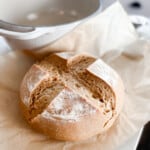
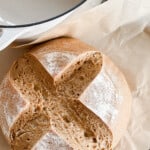
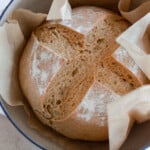
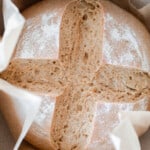
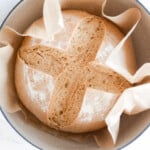
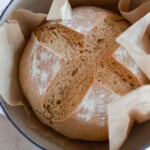

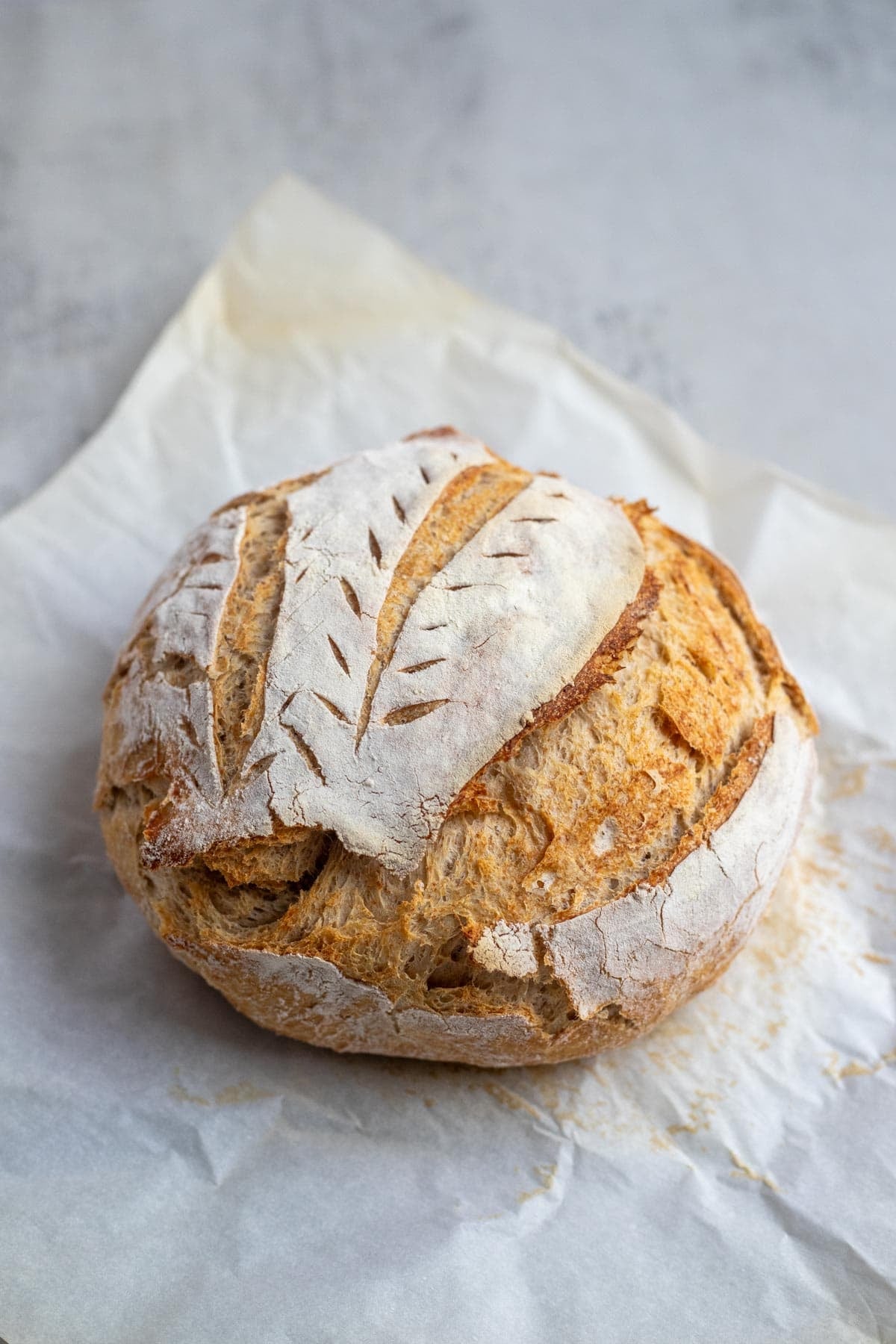
Nutrient-dense and simple to make, this einkorn sourdough bread offers a fluffy, chewy interior, a golden, rustic crust, and plenty of robust flavors from einkorn grain and fermentation.
Key Takeaways: Einkorn Sourdough Bread
- Prep Time: 1 hour 20 minutes
- Bake Time: 45 minutes
- Additional Time: 15 hours
- Total Time: 17 hours, 5 minutes
- Servings: 12 Servings
- Cook Method: Baked in a preheated Dutch oven.
- Flavor & Texture: Golden, rustic boule with whole grain flavor and a soft, airy crumb.
- Difficulty: Moderate. Simple ingredients and hands-off rise time, but some stretching and folding and shaping involved.
- Why this Recipe? Sourdough einkorn bread offers the benefits of ancient grains and fermentation in a delicious, hearty, and nutritious loaf.
This sourdough einkorn loaf combines the higher protein content and lower gluten content of the world’s oldest non-hybridized heirloom wheat with the delicious flavor and fluffy texture of a homemade loaf. Paired with a long fermentation that further breaks down gluten and phytic acid, this recipe is often suitable for those with gluten sensitivities.
I developed this recipe using the same simple techniques that made my no-knead sourdough bread such a success, and the results have been fantastic.
It’s easy to make, requires minimal hands-on work, and produces the kind of crusty, flavorful loaf you’ll want to make again and again. Enjoy it alongside a cozy bowl of creamy carrot ginger soup, toasted with butter and strawberry jam for breakfast, or topped with homemade ricotta and fresh tomatoes for lunch.
Why You’ll Love This Recipe
Delicious flavor and texture – Einkorn wheat gives this loaf an earthy, nutty flavor. Coupled with the sourdough tanginess, it’s a deeply flavorful loaf with a moist, airy, tender crumb.
Easier digestion – Einkorn has a lower gluten content and a simpler gluten structure than modern wheat, making this ancient wheat easier on the digestive system and more accommodating for those with gluten sensitivities.
Nutritious – Einkorn offers higher values of minerals, protein, and fiber, and is often free from modern fertilizers and sprays. Check out this list of 15+ favorite einkorn flour recipes!
Ingredients
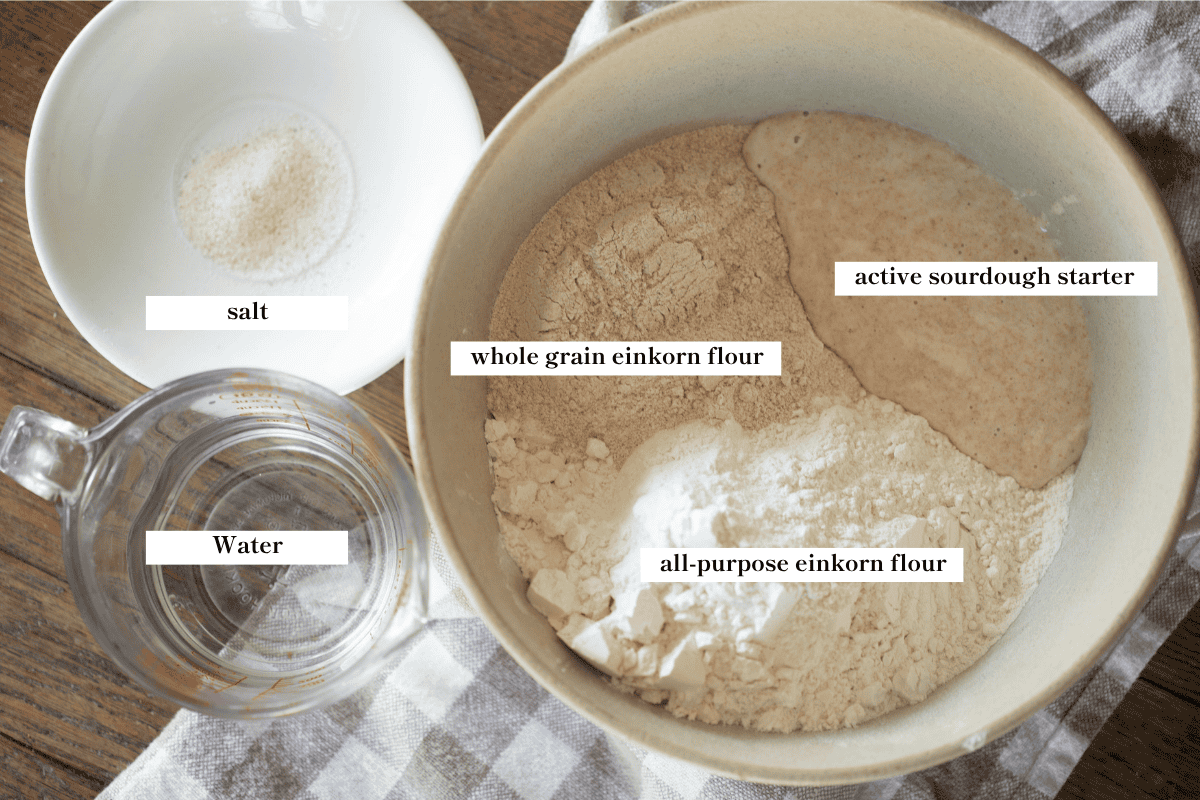
Einkorn all-purpose flour – Adding all-purpose flour produces a lighter texture than a fully whole wheat einkorn loaf. You can buy pre-ground einkorn flour, or you can mill your own flour at home to convert any recipe to freshly milled.
Einkorn whole wheat flour – Adding whole grain einkorn flour gives deeper flavor and a heartier texture. You can substitute for 100% all-purpose einkorn flour in this recipe, if preferred.
A full ingredient list with exact amounts can be found in the recipe card below.
How to Make Einkorn Sourdough Bread
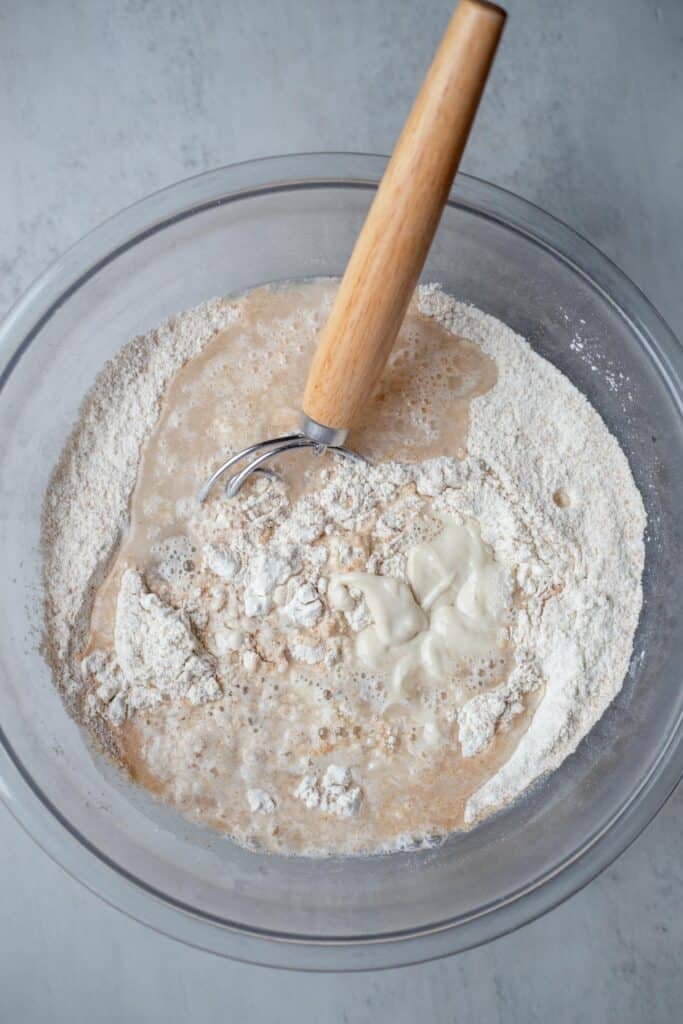
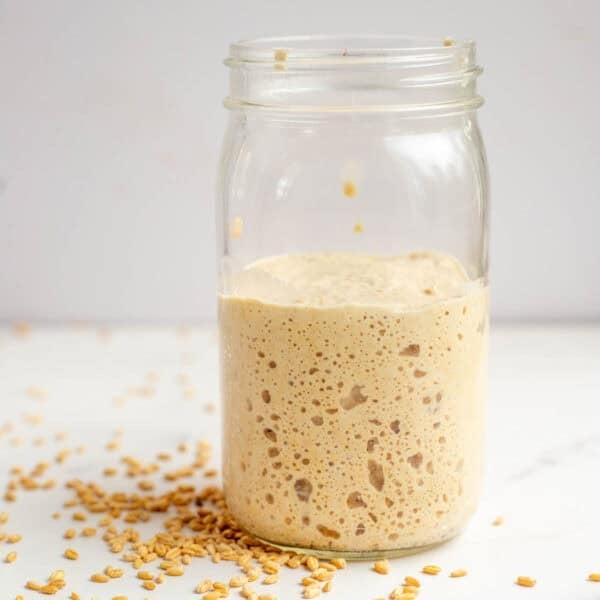
Step 1: Feed your sourdough starter 4-12 hours before starting your dough. Your sourdough starter is ready once it is bubbly and active. Add all-purpose einkorn flour, whole grain einkorn flour, salt, water, and active sourdough starter to a large mixing bowl.
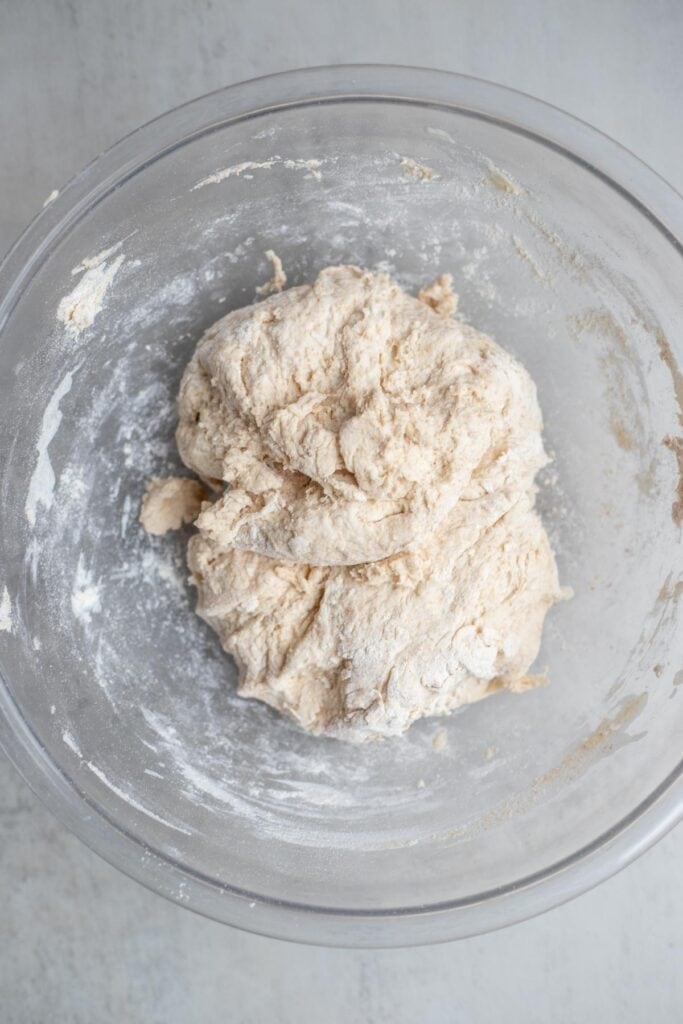
Step 2: Combine with your hands or stir with a dough whisk until it comes together. Cover with a tea towel and let the dough rest at room temperature for 15 minutes.
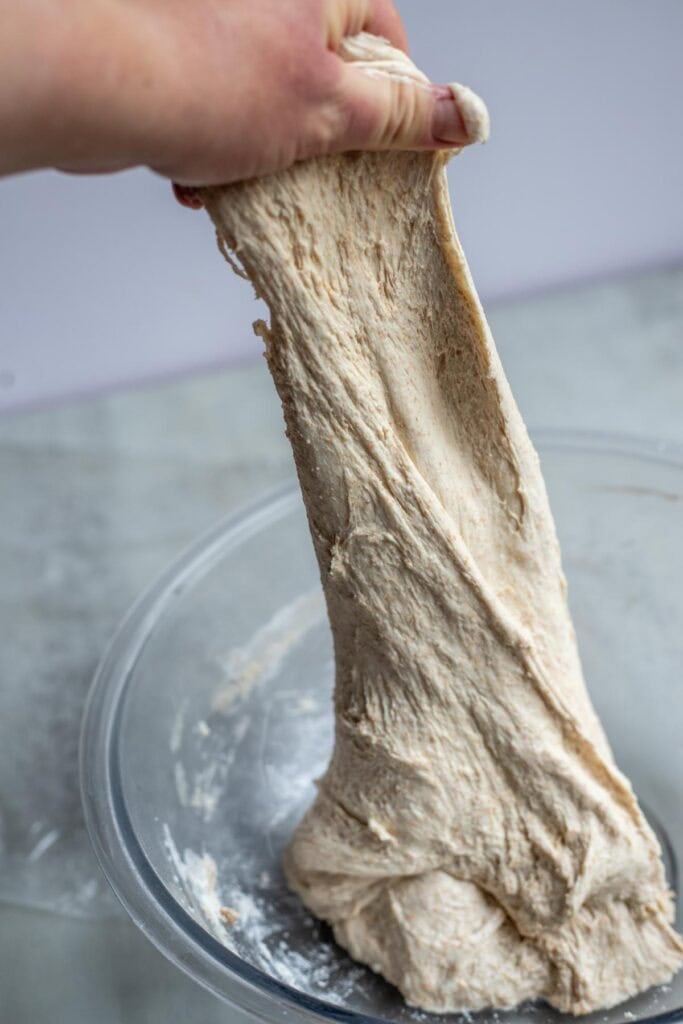
Step 3: Begin a series of stretch and folds to work the dough. Grab one edge of the dough in the bowl and stretch it upwards about six inches.
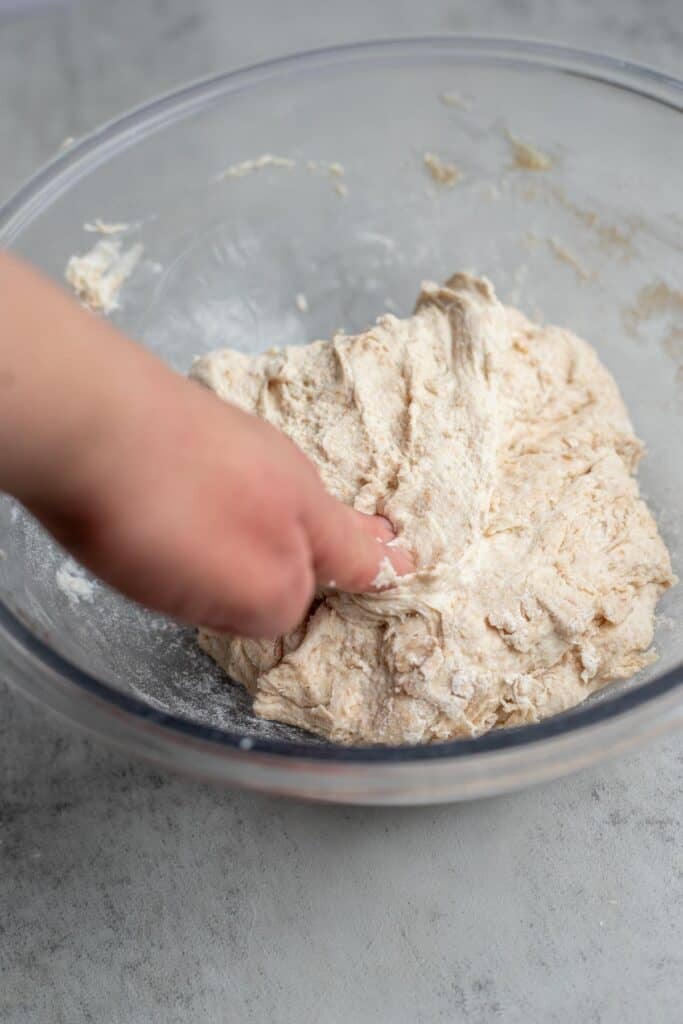
Step 4: Fold the dough back into the center and press. Turn the bowl a quarter turn and repeat the process two to three more times to complete one round of stretch and folds. Cover the bowl with a tea towel and let it rest for 20 minutes. After the 20 minute rest, continue with a second round of stretch and folds, cover and set aside for 20 minutes.
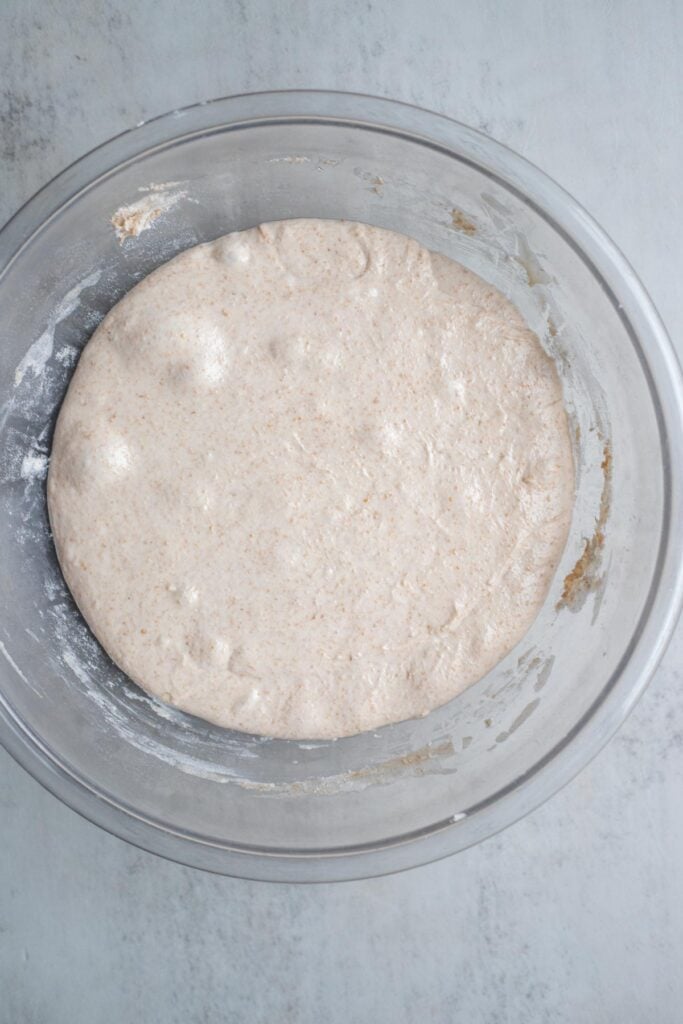
Step 5: Perform the final round of stretch and folds, finishing by covering the bowl with plastic wrap or a tea towel. Allow to rise at room temperature until doubled in size, about 3-12 hours, depending on the temperature of your home.
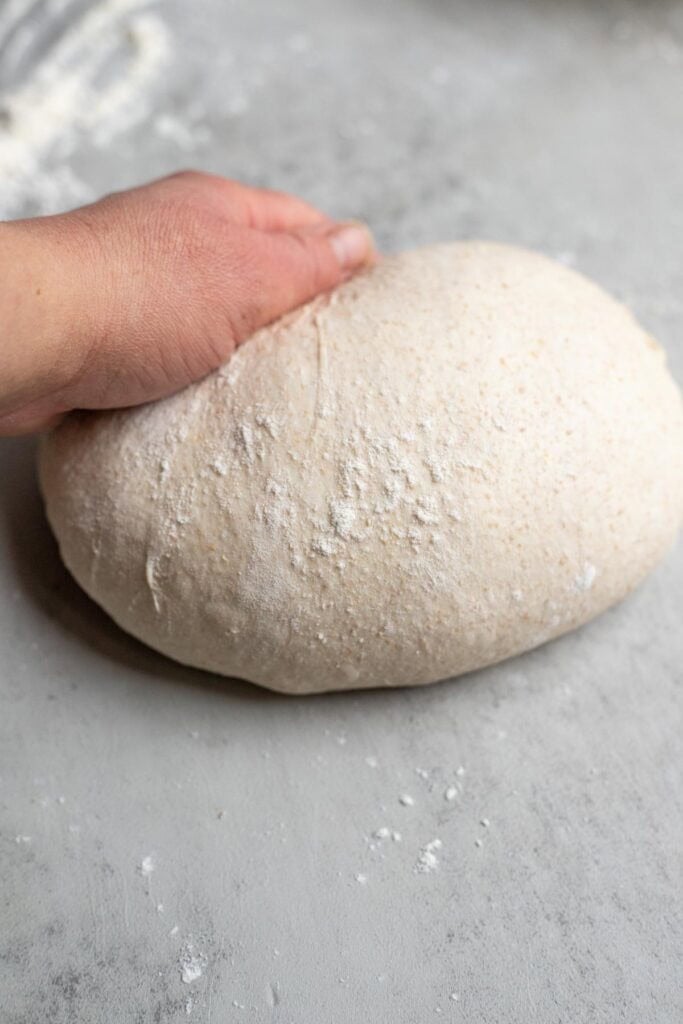
Step 6: After doubling in size, place the dough on flour-dusted work surface. Shape the dough into a ball by gently rolling it toward you.
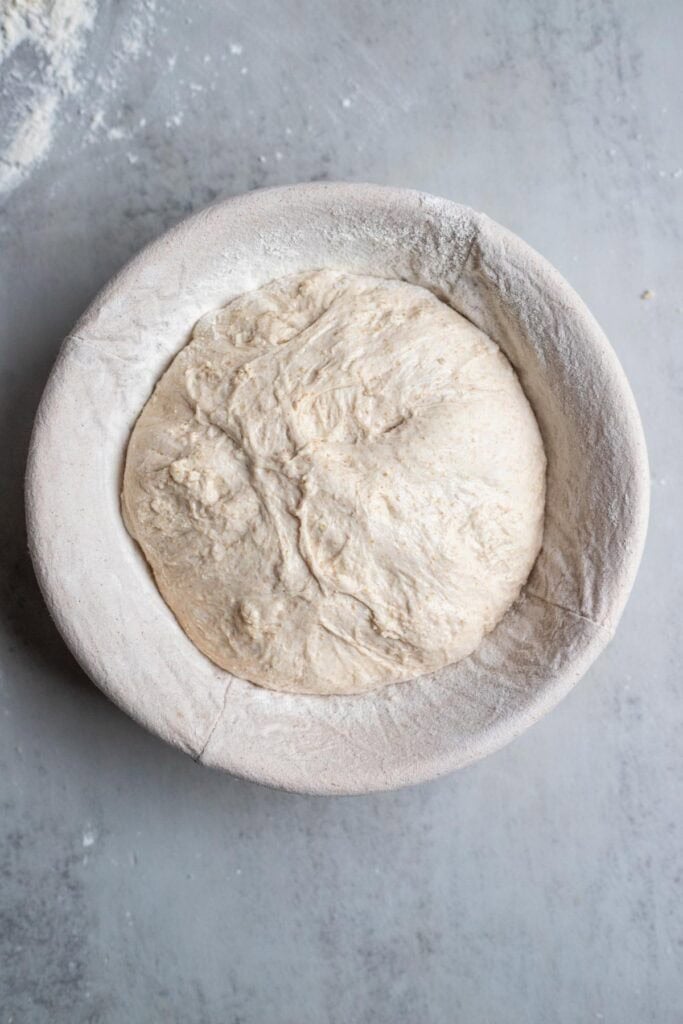
Step 7: Then, place your dough upside down (smooth side down). Fold the two sides over to meet in the middle, pinch together and then repeat on the other two sides. This creates surface tension which helps give it more oven spring (a good rise). Place the shaped dough in a floured banneton basket or a bowl lined with parchment paper and cover with plastic wrap. Place in the refrigerator overnight. I usually place the proofing basket into a plastic grocery bag and tie it shut to help keep it more air-tight.
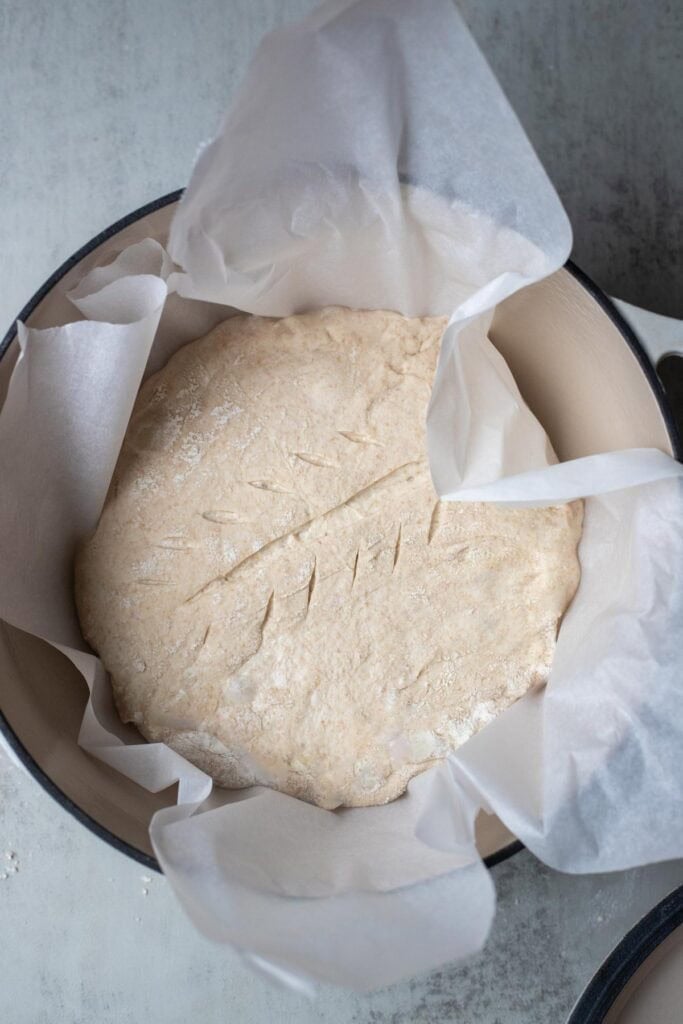
Step 8: The next day, preheat the oven to 450 degrees Fahrenheit, allowing the Dutch oven to preheat for 30 minutes to an hour. Once the Dutch oven has preheated, take the dough out of the fridge and place it onto a sheet of parchment paper. Score the top of the dough and gently place the parchment paper and dough into the Dutch oven, cover with the lid, and place in the hot oven. Don’t worry – you can still bake sourdough bread without a Dutch oven if you don’t have one.
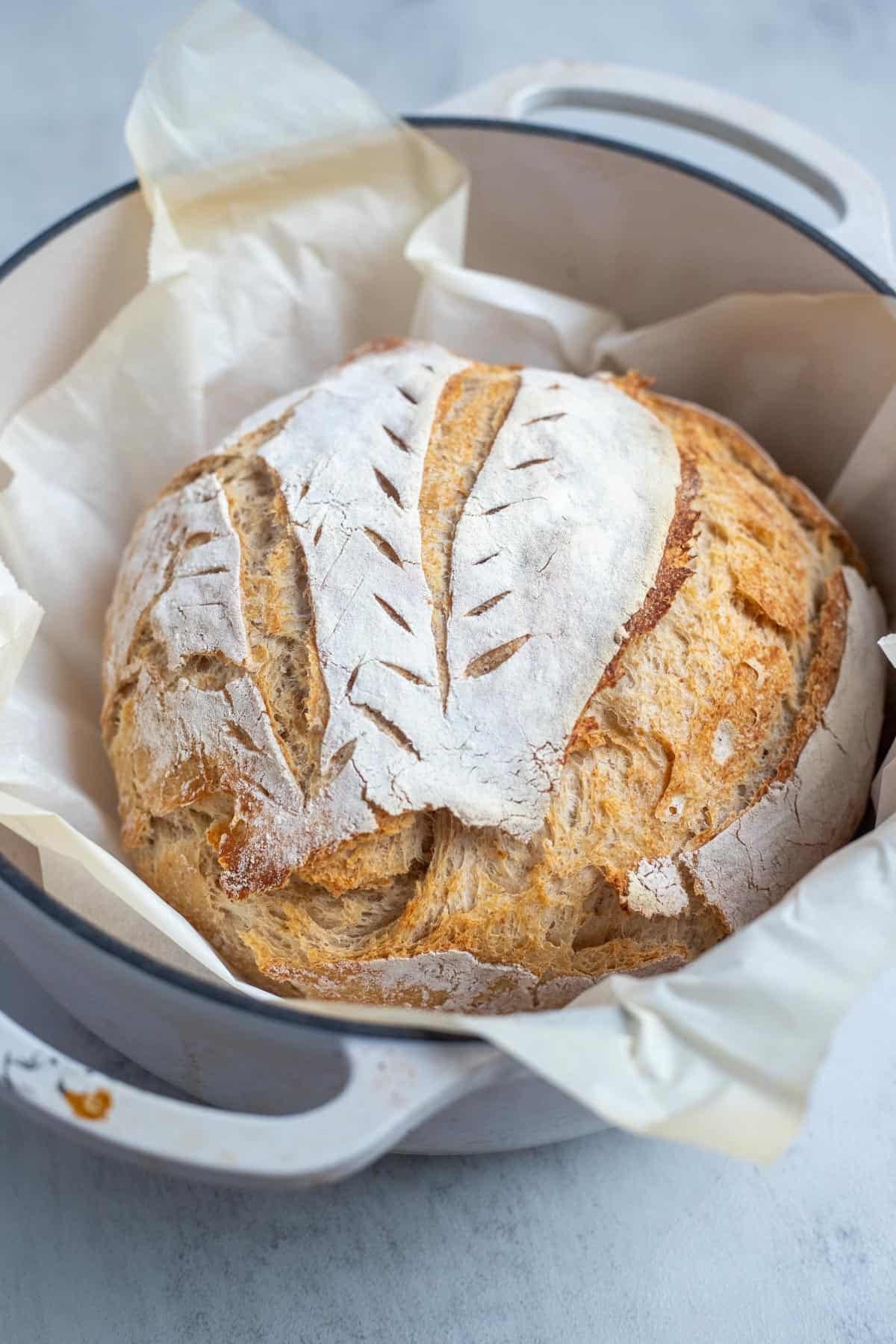
Step 9: Bake for 30 minutes with the lid on, then remove the lid and bake for another 15 minutes until golden brown. Place the boule on a wire rack and cool completely before slicing. Serve toasted or room temperature with homemade butter.
Lisa’s Expert Tips
- If milling your own flour, grind it fresh when needed for the most nutritious and flavorful flour.
- If you want to ensure your bread is 100% einkorn, start your sourdough starter with einkorn flour, or convert your current starter to einkorn flour.
- Einkorn dough tends to be much stickier than regular bread dough. I like to use dampened hands and a bench scraper to combat this without having to add extra flour.
- When using a sourdough starter, it is recommended to use filtered water. Some water may contain too much chlorine, which can kill the beneficial bacteria and yeast in your starter. I use a Boroux water filter for the best quality of water.
- For the best rise and the perfect texture, I incorporated a stretch and fold process like my no-knead sourdough bread to work the dough.
- If you do not have a banneton basket, you could use a piece of parchment paper. Place the dough on the parchment paper, place in a bowl, and cover to rise.
- Set the dough in a warm place to facilitate a speedier rise.
- I like to use both whole-grain einkorn flour and all-purpose einkorn flour. I found this combination to be best for a soft and structured crumb. You can substitute the whole grain einkorn for more all-purpose flour if that is what you have on hand.
Einkorn Sourdough Bread FAQs
Sourdough bread stores best at room temperature. Storing in the fridge can actually dry out your sourdough bread.
Einkorn adds a delicious flavor to sourdough bread. Because of its weaker gluten structure, handling the dough can be a bit trickier. Dip your hands in water or use a bench scraper to help handle sticky dough, but try not to add more flour. You can also make an einkorn flour sourdough starter.
Einkorn is an ancient grain, and one of the only grains that has not been genetically modified in some way. It is high in nutrients and boasts a mild, sweet, nutty flavor.
While not gluten-free, einkorn is a better option for individuals with gluten intolerance. Some people with gluten sensitivities can tolerate einkorn wheat without issue, especially when long-fermented.
Baker’s Timeline
This can be started or made at any time. This is just a sample timeline to help you plan.
Feed sourdough starter with flour and water.
If the sourdough starter is mature, then proceed to creating the dough. Combine the ingredients. Cover the bowl and let the dough rest for 15 minutes.
Perform three rounds of stretch and folds, resting 20 minutes between rounds.
Shape dough. Cover and place in the refrigerator for 12-15 hours.
Bake in a preheated Dutch oven for 45 minutes. Lid on for first 30 minutes; lid off for 15-20 minutes until golden. Cool completely.
More Einkorn Recipes from the Farmhouse
- Einkorn Cinnamon Rolls
- The Best Einkorn Pie Crust
- Einkorn Flatbread
- Berry Crisp with Einkorn Flour
- Einkorn Pizza Dough
If you try this recipe and love it, I would love it if you could come back and give it 5 stars! Tag me on Instagram @farmhouseonboone.

Einkorn Sourdough Bread

Video
Equipment
Ingredients
- 3 cups all-purpose einkorn flour, 390 grams
- 1 cup whole grain einkorn flour, 130 grams
- 1 ½ teaspoons salt, 8 grams
- 1 ¼ cups water, 295 grams
- 1 cup sourdough starter, 200 grams
Instructions
- Feed your sourdough starter 4-12 hours before starting your dough. You will know when your sourdough starter is ready once it is bubbly and active. Combine all-purpose einkorn flour, whole grain einkorn flour, salt, water, and sourdough starter in a large mixing bowl. Cover with a tea towel and let the dough rest at room temperature for 15 minutes.
- Begin a series of stretch and folds to work the dough. Grab one edge of the dough in the bowl and stretch it upwards about six inches. Fold the dough back into the center and press. Turn the bowl a quarter turn and repeat the process two to three more times to complete one round of stretch and folds. Cover the bowl with a tea towel and let it rest for 20 minutes.
- After the 20 minute rest, continue with a second round of stretch and folds, cover and set aside for 20 minutes.
- Perform the final round of stretch and folds, finishing by covering the bowl with plastic wrap or a tea towel. Allow to rise at room temperature until doubled in size, about 3-12 hours, depending on the temperature of your home.
- After doubling in size, place the dough on a flour-dusted work surface. Shape the dough by gently rolling it toward you. Then, place your dough smooth side down. Fold the two sides over to meet in the middle, and pinch together. Repeat on the other two sides.
- Place the shaped dough in a floured banneton basket or bowl lined with parchment paper and cover with plastic wrap. Place in the refrigerator overnight. I usually put the proofing basket into a plastic grocery bag and tie it shut to help keep it more air-tight.
THE NEXT DAY
- Preheat the oven to 450 degrees Fahrenheit, allowing the Dutch oven to preheat for 30 minutes to an hour. Once the Dutch oven has preheated, take the dough out of the fridge and place it onto a sheet of parchment paper.
- Score the top of the dough and gently place the parchment paper and dough into the Dutch oven, cover with the lid, and place in the hot oven.
- Bake for 30 minutes with the lid on, then remove the lid and bake for another 15 minutes until golden brown.
- Place the boule on a wire rack and cool completely before slicing. Serve toasted or room temperature with homemade butter.
Notes
- If milling your own flour, grind it fresh when needed for the most nutritious and flavorful flour.
- If you want to ensure your bread is 100% einkorn, start your sourdough starter with einkorn flour, or convert your current starter to einkorn flour.
- Einkorn dough tends to be much stickier than regular bread dough. I like to use dampened hands and a bench scraper to combat this without having to add extra flour.
- When using a sourdough starter, it is recommended to use filtered water. Some water may contain too much chlorine, which can kill the beneficial bacteria and yeast in your starter. I use a Boroux water filter for the best quality of water.
- For the best rise and the perfect texture, I incorporated a stretch and fold process like my no-knead sourdough bread to work the dough.
- If you do not have a banneton basket, you could use a piece of parchment paper. Place the dough on the parchment paper, place in a bowl, and cover to rise.
- Set the dough in a warm place to facilitate a speedier rise.
- I like to use both whole-grain einkorn flour and all-purpose einkorn flour. I found this combination to be best for a soft and structured crumb. You can substitute the whole grain einkorn for more all-purpose flour if that is what you have on hand.
- If you are using freshly milled grains for this recipe, I recommend weighing the flour instead of using volume measurements. Grain mills vary greatly – some create very fine and fluffy flour, while others are a little more coarse. This makes volume measurements unpredictable. Using a kitchen scale and calculating the grams is much more reliable, ensuring you end up with a delicious end product.
Nutrition
Nutrition information is automatically calculated, so should only be used as an approximation.







Dough came out too sticky and in the video the flour measurements are different.
I made my first sourdough loaf ever using this recipe, and it turned out amazing! I am so thankful for your website. I have made your Einkorn tortillas and am in the process of making the long-fermentation English muffins. My kids have not had wheat for years due to the inflammatory consequences of regular flours that contain so much gluten. I’m going to surprise them with this bread for their lunches tomorrow. They are going to be so excited!
Fantastic recipe! I am new to sourdough baking and have made 3 recipes in the past 2 weeks. This bread was so easy! It looks and tastes just like the farmers’ bread I used to get while living in Germany. Thank you for the recipe.
I have made this recipe many times. My family loves it!
Awesome recipe for sourdough bread with Einkorn flour!! Easy to follow and the video is a must see for baking the bread by following alone.
Beautiful baby:-).
BTW: I followed the recipe when measuring the flour not the directions from the video.
Following your recipe exactly, my dough was much more wet than yours looks in the video. It was so sticky and not at all easy to stretch and shape like yours seems in the video. I even added more flour. Tips??
Hmm that’s interesting! Did you let it rest? Sometimes I let me dough rest to give it more time to absorb the water.
Hi, my understanding is that freshly milled flour measures out quite differently than pre-milled flour. Would you be able to add gram measurements for accuracy?
Here is a conversion chart!
Should have read the comments also before starting and wasting expensive flour. Why post a tutorial that has different measurements than your listed recipe. Also the cups should just be listed in grams. Horrible recipe
BAKER BEWARE! I really wanted this recipe to work and I wish that I had read the comments before I wasted 4 cups of expensive einkorn flour and many hours. I had a gooey wet mess just as others had commented. The measurements in the recipe call for 1 cup less flour than the tutorial. Also, 1 cup of flour is supposed to equal 120 grams. Scooping a measuring cup into a bag will give differing results every time so it really needs to be converted to grams for accuracy especially when using einkorn flour. Many people have commented on these issues and yet, the discrepancies still exist. Why this is, I don’t know, but I recommend passing on this recipe or take your chances and add another “cup”of flour to see what you get.
A wonderful recipe that makes working with einkorn flour so much easier! Thank you!