


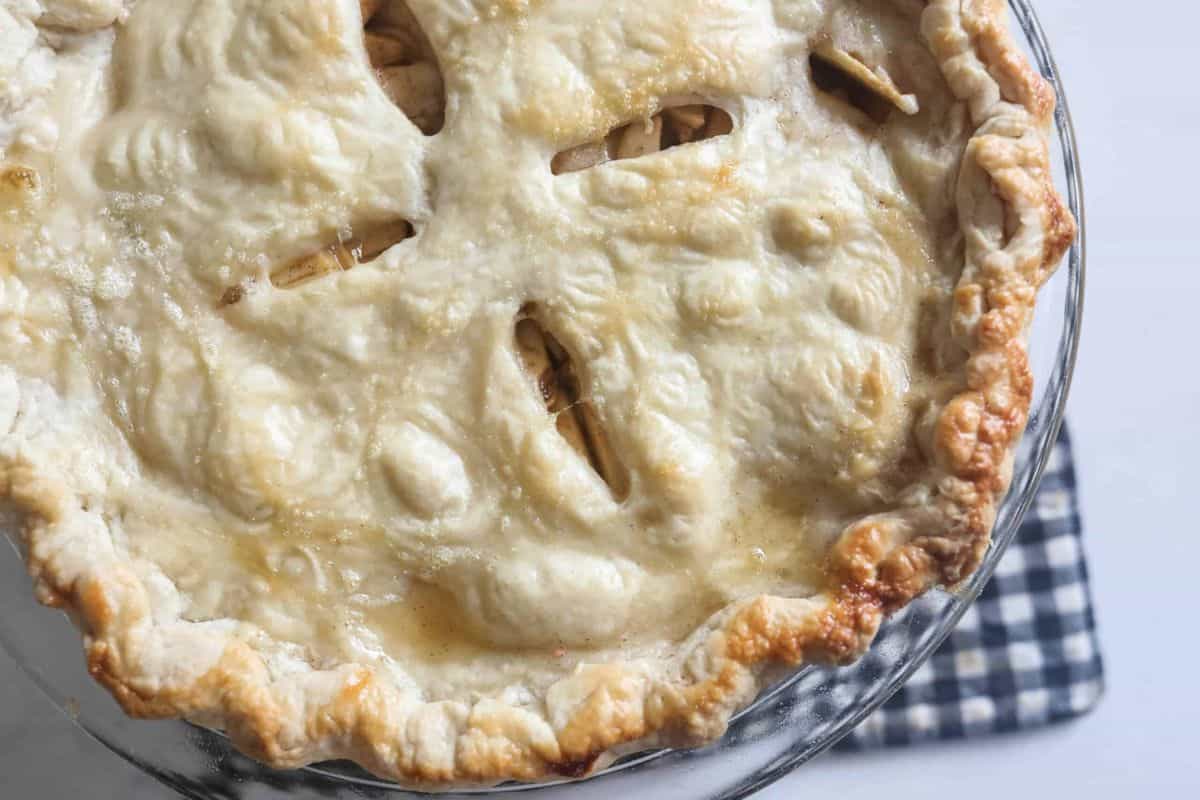
Flaky and buttery, this sourdough pie crust is the perfect base for your favorite sweet and savory pies. Sourdough starter adds a unique, robust flavor to a classic crust.
Key Takeaways: Sourdough Pie Crust
- Prep Time: 15 minutes
- Chill Time: 2 hours
- Total Time: 2 hours, 15 minutes
- Servings: 2 crusts
- Cook Method: Baked in a pie pan.
- Flavor & Texture: Buttery with a mild, tangy sourdough flavor and a crisp, flaky texture.
- Difficulty: Easy. This recipe is straightforward and offers a simple, hands-off long-fermentation period.
- Why this Recipe? This simple pie crust offers delicious sourdough flavor and a rich, tender, flaky crust perfect for any sweet or savory pie.
Sourdough pie crust is the perfect foundation for your favorite fillings. Whether you’re planning a homemade apple pie or a savory chicken pot pie or savory tomato galette, sourdough discard enhances the tenderness and flavor of the crust, and using all butter gives rich flavor and a golden-brown, crisp crust.
When I first started making pie crust, I had a hard time rolling it out without it breaking apart. This recipe changed all that. The addition of the sourdough starter makes it very beginner-friendly. When my daughter Johanna started baking, she had immediate success rolling this sourdough pie crust. It’s still all she makes to this day, even though she is a seasoned baker now.
Why You’ll Love This Recipe
Simple ingredients – Pantry staples and sourdough discard keep this recipe simple and accessible, while also offering the flavor and fermented benefits of discard. Between the butter and discard, this crust turns out tender, flaky, and rich.
Sourdough benefits – This recipe may be long-fermented in the refrigerator for up to three days, softening the grains, increasing bioavailability, and improving the tenderness and texture of the crust. You can also use it directly after the two-hour chilling period, reducing the fermentation time.
Versatile – This recipe works well in sweet or savory recipes. It works great as a make-ahead option to store in the refrigerator for several days, too.
Ingredients
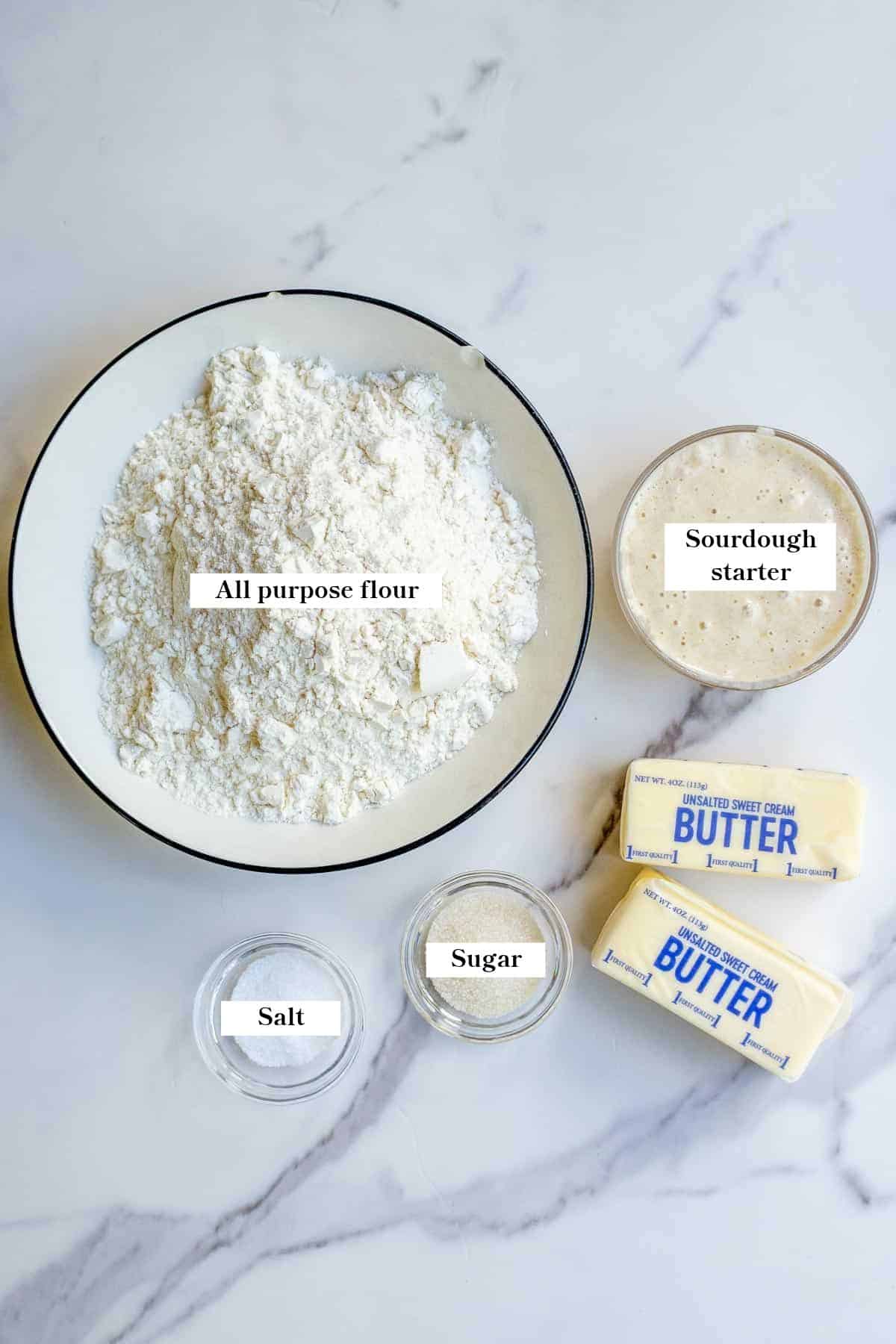
Flour – All-purpose flour works great in this recipe. I buy grain in bulk and freshly mill it for the most flavor and health benefits. Learn how to convert any recipe to freshly milled in my how-to post.
Sourdough starter – Either active or discard works great. Sourdough discard adds the most flavor if you’re not going to long-ferment, while active starter is more mildly flavored. Check out more ways to use up your sourdough starter in my guide.
A full ingredient list with exact amounts can be found in the recipe card below.
How to Make Sourdough Pie Crust
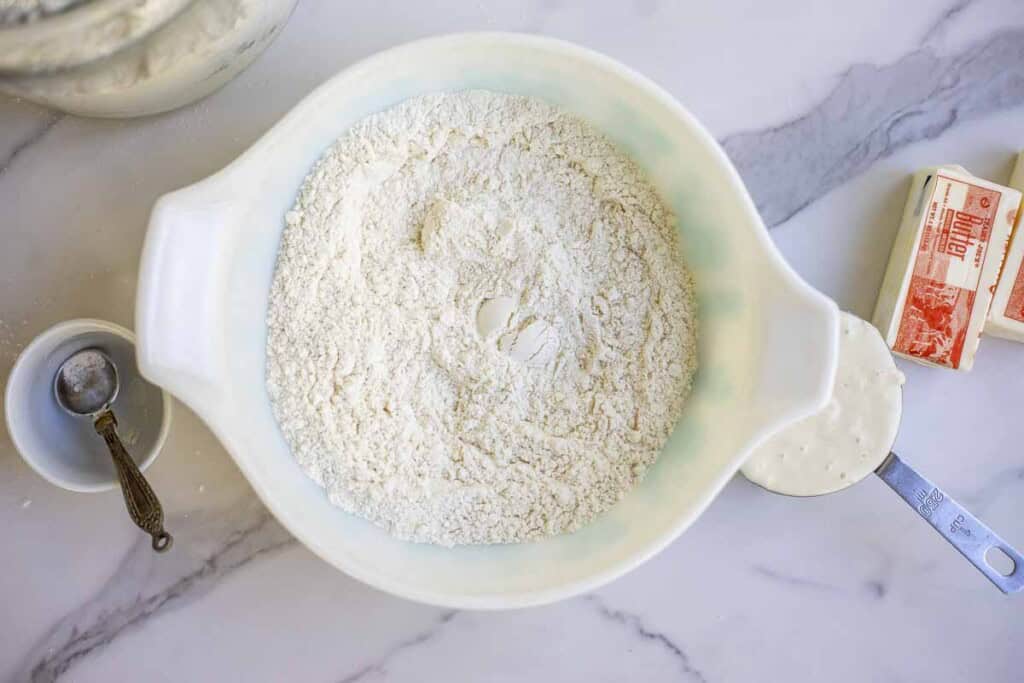
Step 1: In a large bowl or a food processor, mix the flour, sugar, and salt.
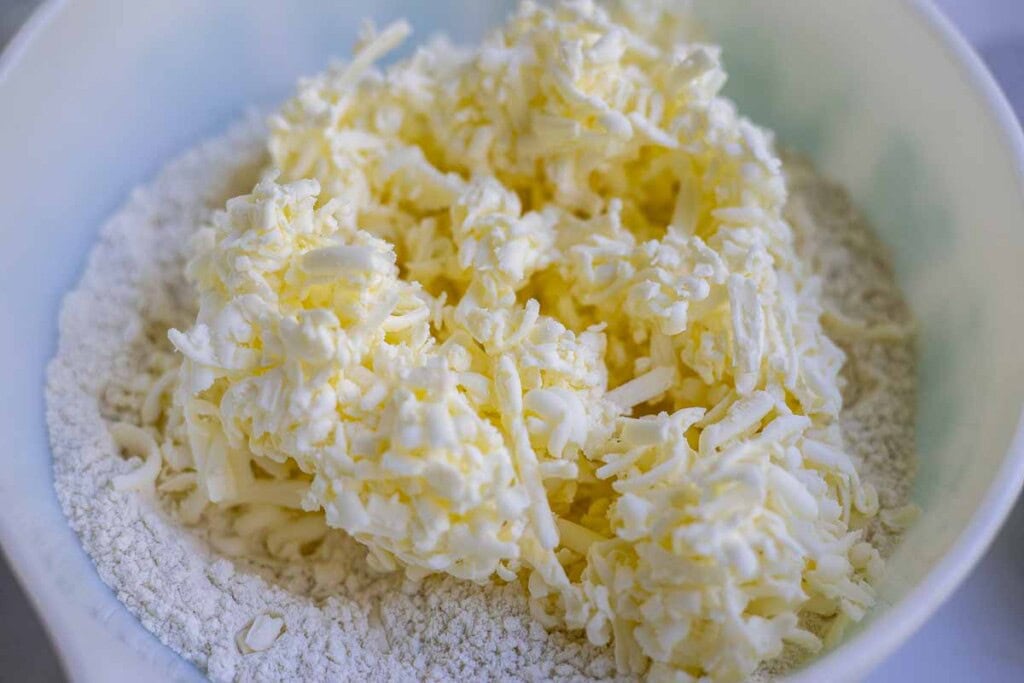
Step 2: Cube the butter and add it to the flour mixture. You can cut the butter into the flour mixture most easily with a food processor, or you can use a fork or pastry blender to cut it in by hand. Work the butter into the flour until the mixture has a sandy texture.
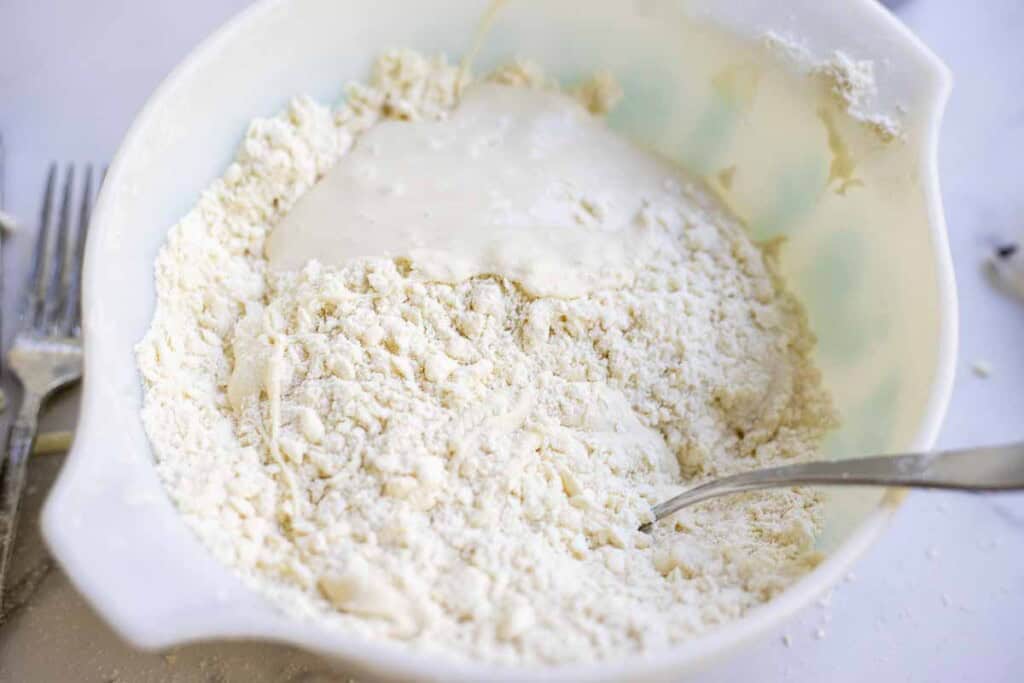
Step 3: Add the sourdough discard and stir just until combined.
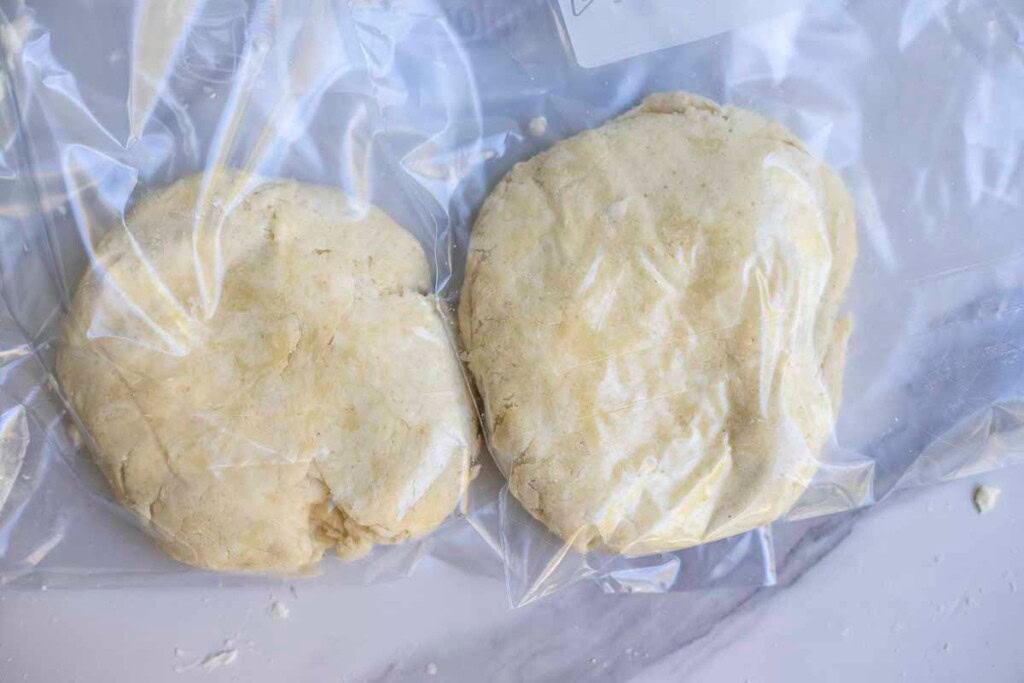
Step 4: Divide the dough in half, then shape each half into a disk and wrap in plastic wrap. Chill in the fridge for at least 2 hours or up to 3 days. For longer fermentation, I find that 8 hours or overnight is a good amount of time to develop the flavor and ferment the dough.

Step 5: Sprinkle a clean countertop with flour and roll out one ball of dough until it is approximately 12” in diameter. I like to press my rolling pin down into the middle of the dough ball and roll it back and forth, turn the disc about a quarter turn, then roll back and forth again, continuing to do so until I have a circle. You can add a touch more flour to the workspace if the dough starts to stick.

Step 6: Drape the dough over a 9″ pie plate, gently pressing it into the bottom and sides. Add your filling of choice. Roll out the other half and drape it over the filling. Trim the excess and press the edges together. Bake according to your specific recipe.
Lisa’s Expert Tips
- You want everything cold before baking. Keep the dough refrigerated until ready to roll out and bake.
- If you are new to sourdough and need a starter, you’ll find that sourdough friends are always eager to share, or I have a recipe for making your own starter from scratch. You’ll also find recipes on the blog for 6+ different types of starters and instructions for how to use your starter.
- This recipe makes a double crust. If you only need a single crust, just wrap the extra half in plastic wrap and place it in the freezer until you need it. You’ll be glad you did!
- I like to double this recipe and stick the extras in the fridge. This gives them more time to ferment, and I can pull them out at any time throughout the week to make easy hand pies, sourdough galettes, and ground beef pot pie.
- Crimp the edges and add a design to the middle to release steam. You can make slits in the top or use cookie cutters for a design in the top crust before placing it over the filling.
Sourdough Pie Crust FAQs
If storing unbaked pie crust dough, wrap it well and refrigerate for several days, or freeze for several months. A baked pie shell can be kept at room temperature, covered, for several days, or refrigerated, covered, for several days. If filled, store according to the filling recipe.
A long-fermented sourdough crust offers easier digestion, lower gluten content, and more robust flavor. Adding sourdough discard but skipping the long-ferment still has benefits, namely in flavor and texture, but digestion remains about the same.
Yes, the recipe allows for active starter or discard.
A chewy, rather than tender, flaky crust tends to be the result of overworking the dough or adding too much flour. Once the butter is cut in and the discard added, working the dough should be minimal. Simply, bring the ingredients together into a ball before chilling and rolling out. Additional flour added while rolling the dough out should also be minimal.
More Recipes from the Farmhouse
- Whole Wheat Blueberry Cobbler
- Homemade Sourdough Oatmeal Cream Pies
- Lemon Poppyseed Muffins
- Baked Apple Cider Donuts
- One Bowl Lemon Olive Oil Cake
If you try this recipe and love it, I would love it if you could come back and give it 5 stars! Tag me on Instagram @farmhouseonboone.

Sourdough Pie Crust
Equipment
- Food Processor or pastry cutter
Ingredients
- 2 cups all purpose flour, 280 grams
- 2 teaspoons sugar, 8 grams
- 1 teaspoon salt, 5 grams
- 1 cup cold butter, 227 grams, cubed
- 1 cup sourdough starter discard, 250 grams
Instructions
- In a large bowl or a food processor, mix the flour, sugar, and salt.
- Cube the butter and add it to the flour mixture. You can cut the butter into the flour mixture most easily with a food processor, or you can use a fork or pastry blender to cut it in by hand. Work the butter into the flour until the mixture has a sandy texture.
- Add the sourdough discard and stir just until combined.
- Divide the dough in half, then shape each half into a disk and wrap in plastic wrap. Chill in the fridge for at least 2 hours or up to 3 days. For longer fermentation, I find that 8 hours or overnight is a good amount of time to develop the flavor and ferment the dough.
- Sprinkle a clean countertop with flour and roll out one ball of dough until it is approximately 12” in diameter. You can add a touch more flour to the work space if the dough starts to stick.
- Drape the dough over a 9″ pie plate, gently pressing it into the bottom. Add your filling of choice. Roll out the other half and drape it over the filling. Trim the excess and press the edges together. Bake according to your specific recipe.
Notes
- This recipe can be long-fermented with an extended chill time in the refrigerator. If you need to make it more quickly, it may be prepared, chilled, and baked without the longer fermentation time.
- For sourdough flavor, a longer fermentation will develop a more pronounced tang to the crust, or if you don’t plan to long-ferment, sourdough discard will give a stronger flavor than active starter.
- You want everything cold before baking. Keep the dough refrigerated until ready to roll out and bake.
- If you are new to sourdough and need a starter, you’ll find that sourdough friends are always eager to share, or I have a recipe for making your own starter from scratch. You’ll also find recipes on the blog for 6+ different types of starters and instructions for how to use your starter.
- This recipe makes a double crust. If you only need a single crust, just wrap the extra half in plastic wrap and place in the freezer until you need it. You’ll be glad you did!
- I like to double this recipe and stick the extras in the fridge. This gives them more time to ferment and I can pull them out at any time throughout the week to make easy hand pies, sourdough galettes, and ground beef pot pie.
- Crimp the edges and add a design to the middle to release steam. You can make slits in the top or use cookie cutters for a design in the top crust before placing it over the filling.
Nutrition
Nutrition information is automatically calculated, so should only be used as an approximation.






Finally a homemade pie crust that tastes wonderful and is simple to make! Thank you! Been searching for something like this for years.
I subbed lard in place of the butter to accommodate a friend with a dairy allergy and it was fantastic! By far the best and easiest pie crust I’ve ever attempted. Thank you!
Wish I could add a picture of my pie!! Turned out great and if anyone was wondering if dairy free butter worked, that’s what I used!
So good! This was my first time making pie crust from scratch and I used this recipe to make individual sized chicken pot pies. The crust came out so buttery and flaky that I savvier every bite! Thanks Lisa!
I’m so excited to try this recipe. The pictures look crusty and flaky. Big plus it’s sourdough!
Delicious crust! Just one question…do you let it sit out of the fridge for a bit? I left in fridge for 2 days and the dough was so hard to roll out! Any tips/tricks?
I’ve seen Lisa write elsewhere that the long fermented doughs are hard to manipulate so she recommends a mixer. I’ll be investing in a kitchen aid as these recipes are amazing!
im definitely a beginner when it comes to pie crust cause i made it but have such a hard time rolling it out! but in the end it tasted amazing!
This pie crust was so easy to make and is super versatile. Definitely worth printing and saving in my recipe binder.
The dough was definitely thicker and fuller then thre previous recipe I’ve used, but it shrunk to the point where I couldn’t use it after thr blind bake. I let the dough sit in the fridge for 1 1/2 day, so what else could have gone wrong here?
I wouldn’t blind bake for a recipe like this. I use metal tins and add cornflour to the filling to avoid soggy bottoms.
This is absolutely fantastic! I even used half the butter (because it’s expensive) and it was flaky and chewy! My husband and I have never agreed on pie crust but this was the best either of us had ever eaten! I do a double batch to have extra in the fridge. Such a wonderful meal prep addition😋
We use it for pie as well as quiche!