









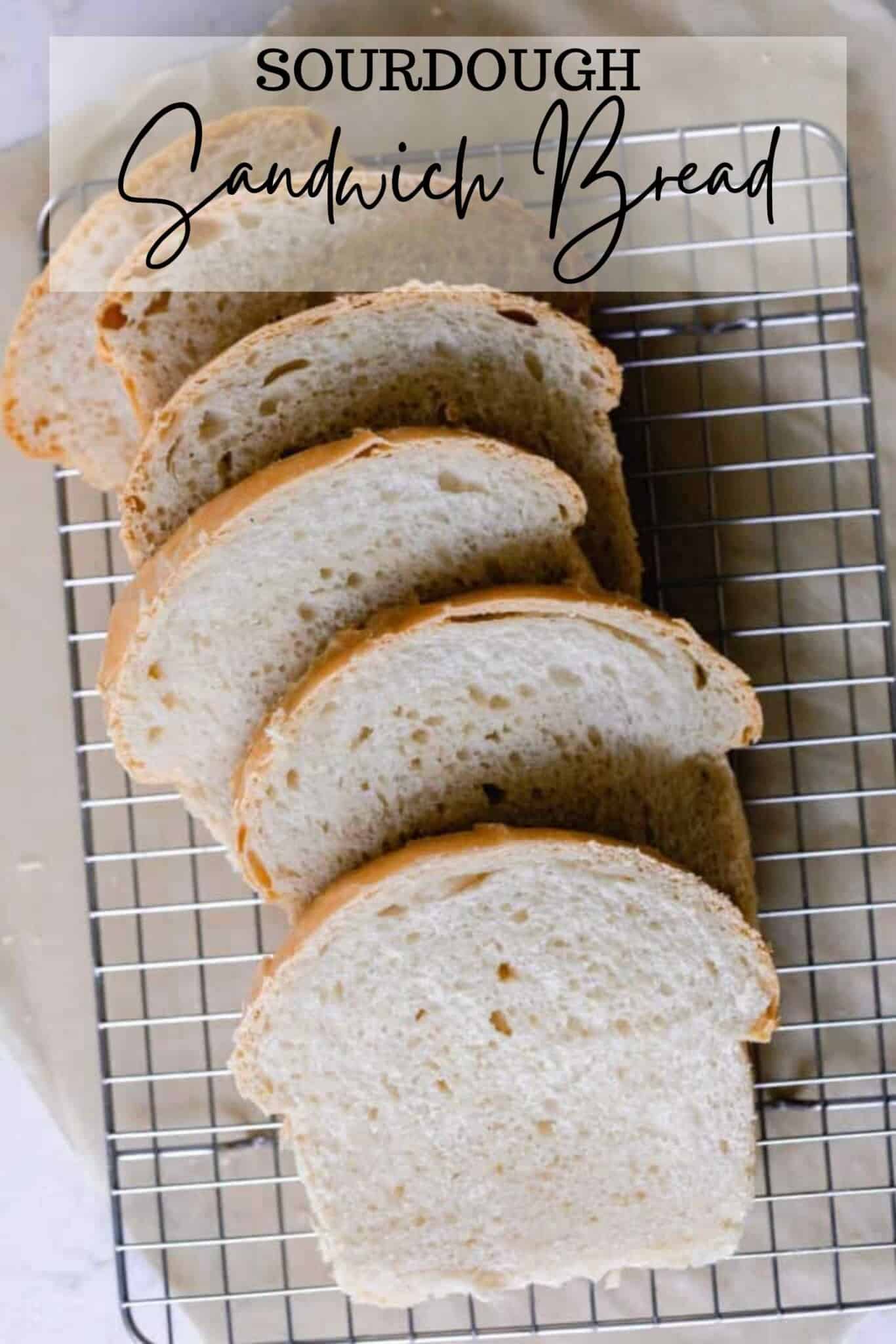
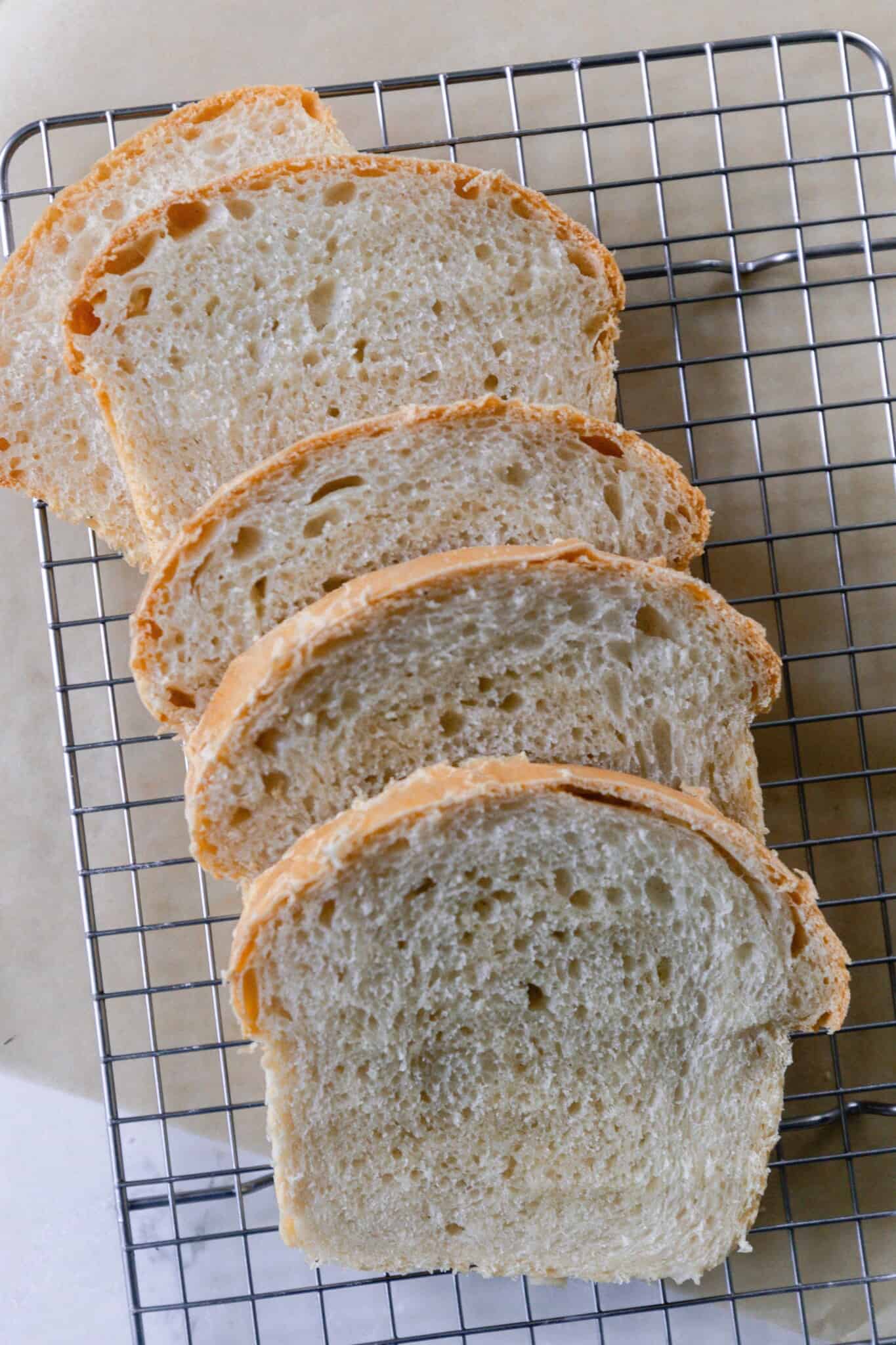
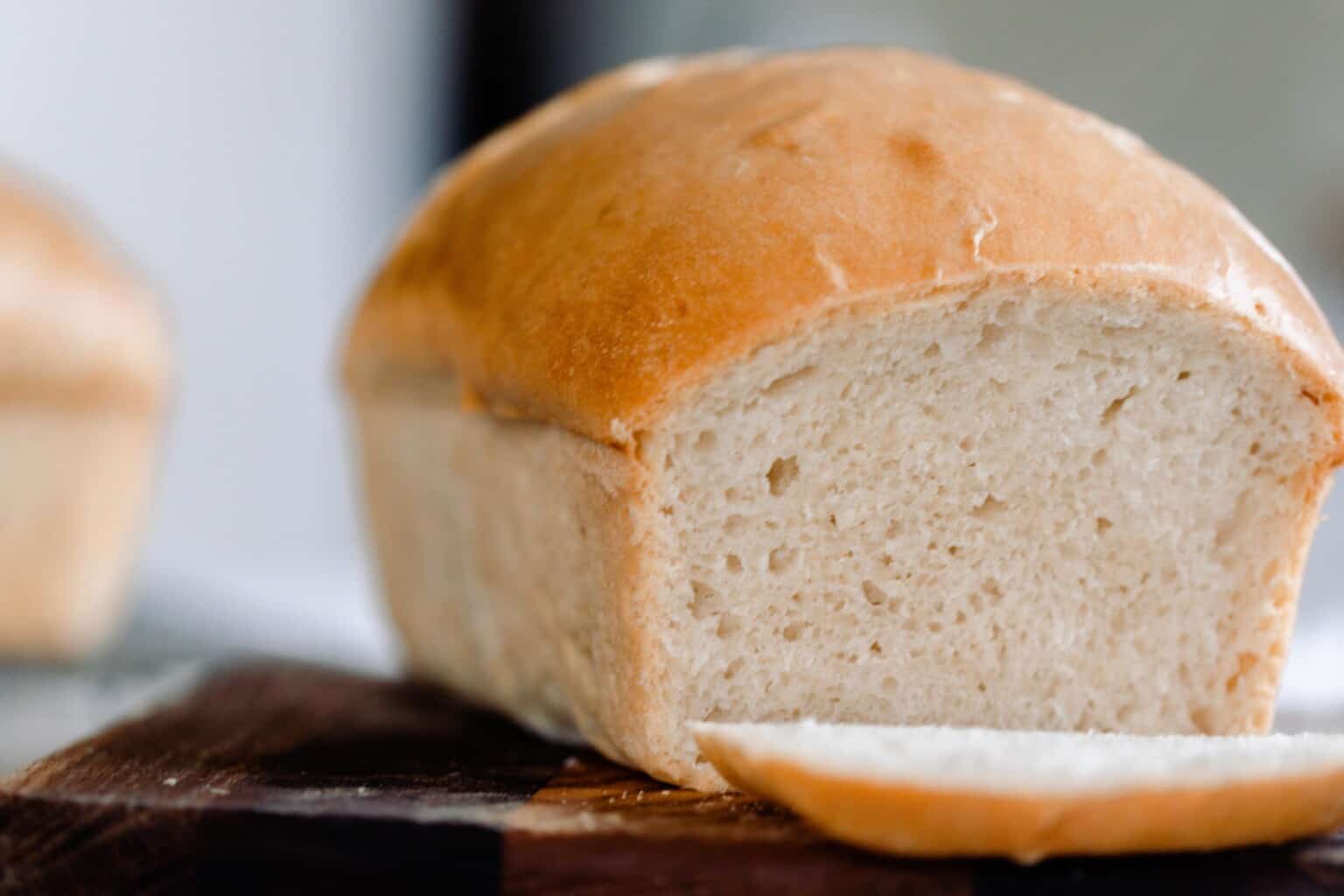
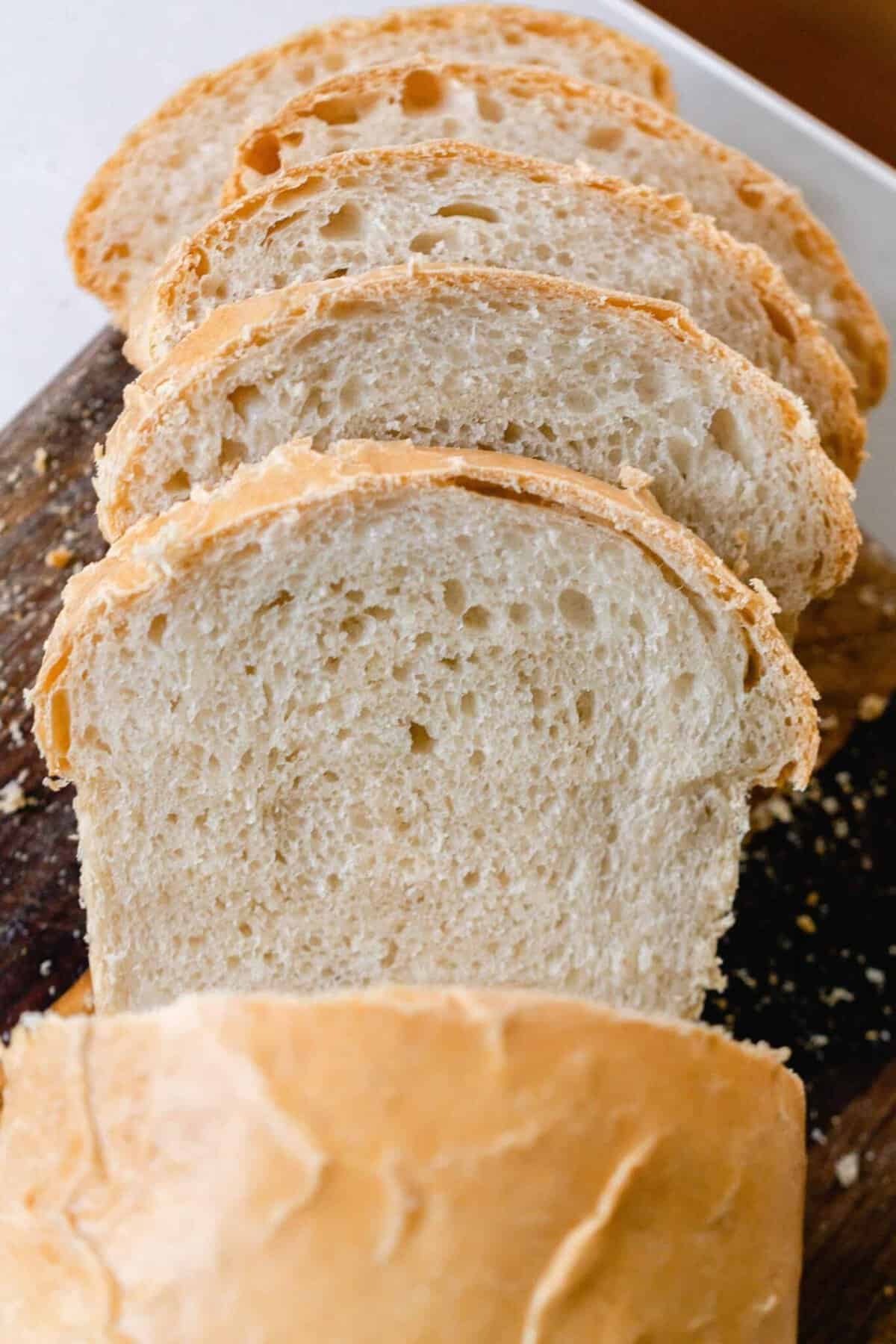
Soft and fluffy sourdough sandwich bread is the perfect bread to have on hand. Made with all purpose flour, sourdough starter, butter and a little honey, this fermented bread has a lighter texture and tangy flavor.
One of the main complaints I hear about making crusty sourdough from readers is that they miss the soft sandwich loaf style of bread.
Not only is this recipe absolutely delicious (making it really hard to ever go back to store-bought bread), but it is also super simple. No strange ingredients, no stretching and folding every 30 minutes… Just mix, rise, shape, rise again, and bake.
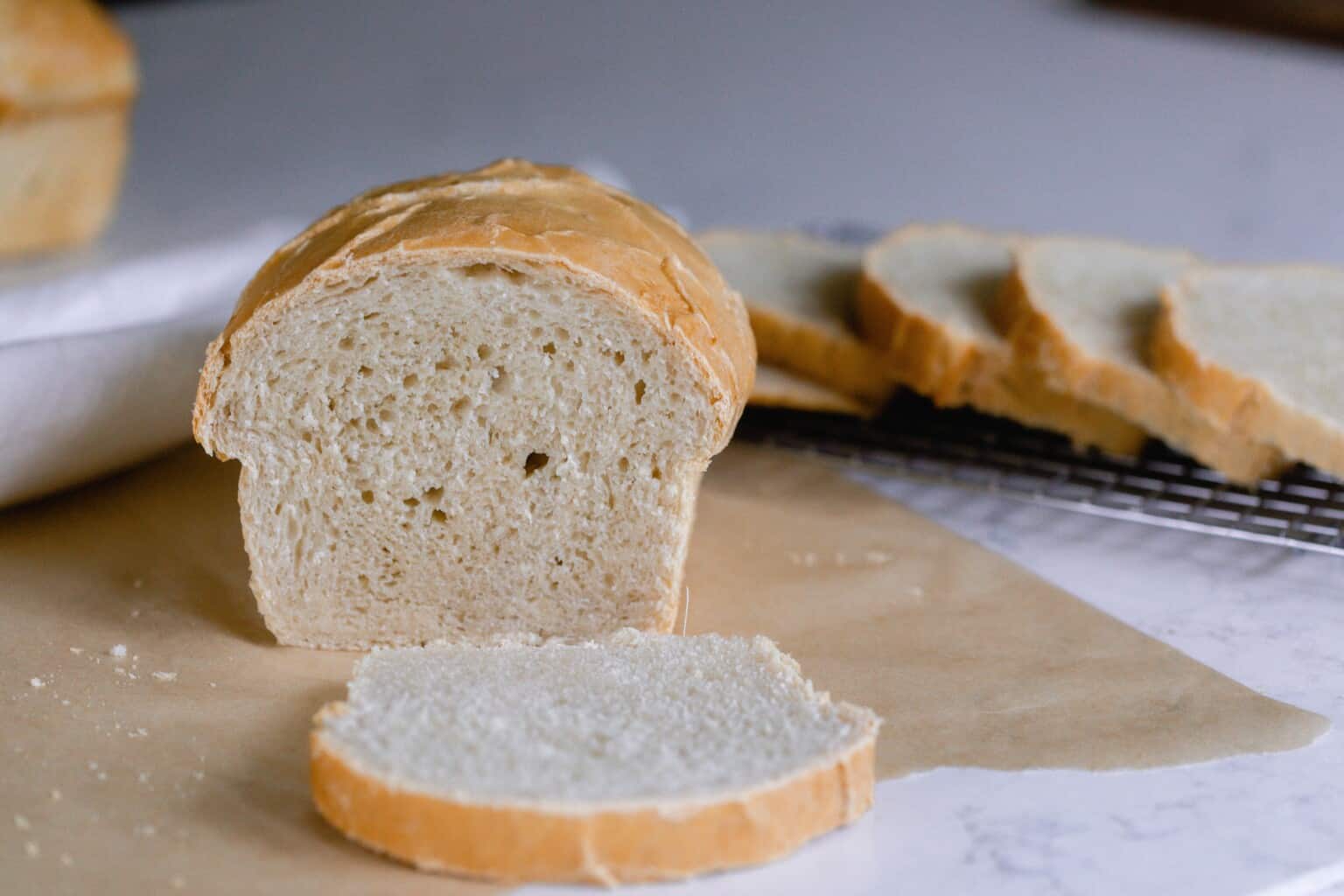
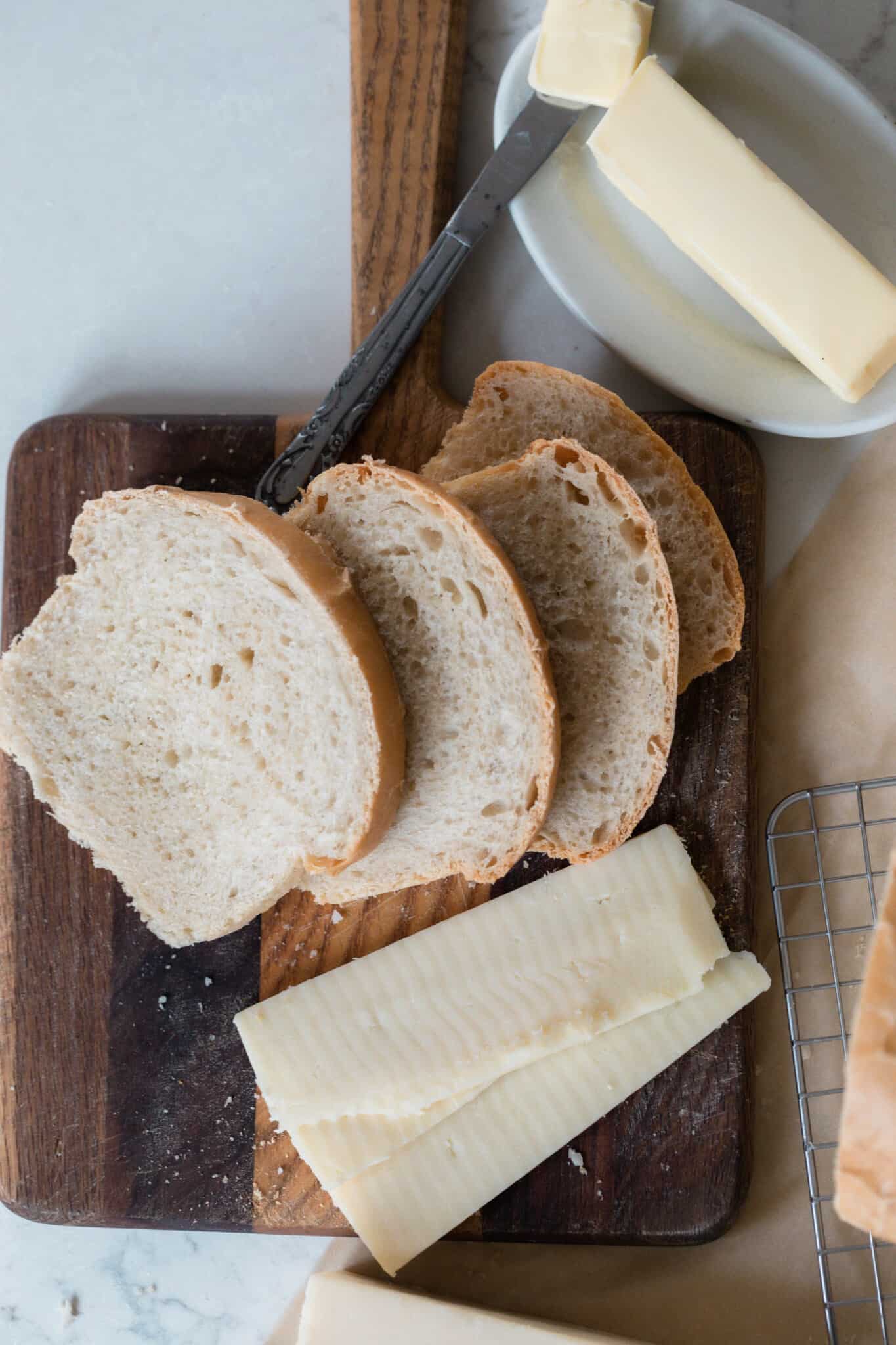
Let it cool, slice and slather it with butter. It’s so yummy and it reminds me of a bread you would get on a breadboard from a restaurant.
Let’s be honest, though, it’s way better since it’s made from scratch and has that wonderful sourdough tang.
Make sure to save this sourdough loaf bread recipe for the future. It will be a go to for sure.
Tips:
- Use really soft butter and cube it up so it blends easier.
- Don’t over ferment the dough. It will turn into a wet sloppy disaster that won’t rise well. Still edible. Maybe. It could also be turned into sourdough croutons.
- When making the dough, using a stand mixer makes the process much easier and hands off. You can also do this with your hands.
- If you are new to sourdough, you can check out how to make a sourdough starter here, find my sourdough conversion chart, and baking glossary of terms.
This post contains affiliate links, which means I make a small commission at no extra cost to you. See my full disclosure here.
Tools you may need:
Measuring cups and spoons. You could also use a kitchen scale
FAQ:
Does sourdough bread make good sandwiches?
Yes. The delightful tanginess adds to the flavor profile of the sandwich, making it a wonderful addition. You can use crusty sourdough bread or this soft sourdough sandwich loaf.
Why is my sourdough sandwich bread not rising?
There could be a few reasons for this. The most likely one is that your sourdough starter may not be active enough or is weak.
Another contributor could be the temperature of the room where you are placing your dough to rise. The cooler the temperature the longer it will take for bread to rise.
Lastly, the water you use in your dough mixture could be a factor. If the water used was too hot, it may have killed the starter. Additionally, if you are using city water the chlorine could potentially kill the yeasts in the starter.

Are sourdough sandwiches healthy?
Sourdough is one of the healthiest breads since the grains are fermented, which makes it more digestible and the nutrients more available for your body to absorb.
Top with your favorite healthy toppings and you can have a wholesome and filling meal in one sandwich.
Ingredients:
Butter (softened) or coconut oil – I prefer using butter for that savory buttery flavor. If you are wanting to make a vegan version, you can use softened (not melted) coconut oil.
Honey or sugar – I like to use honey since it is a natural sweetener.
Salt – This gives the bread so much flavor and skipping it will leave you with a tasteless loaf.
Sourdough starter – You want a nice active and bubbly starter to make bread. Starter that isn’t ripe won’t produce nice fluffy bread.
Water – Room temperature.
All-purpose flour – The best part of this recipe is that it uses good ol’ plain all-purpose flour. Nothing fancy.
How To Make Sourdough Sandwich Bread
To a stand mixer, add all of the ingredients. I like to add the flour last, so I can add a bit less or more depending on my starter’s hydration.
Knead until dough is stretchy and smooth. You want it to pull away from the sides of the mixing bowl and be smooth and elastic – about 10 minutes. It should pass the windowpane test. Grab a small ball of the dough and stretch it into a square. It should stretch thin enough to see through without breaking.
Tip: This isn’t a super hydrated dough and won’t be very wet like other doughs.
Allow to bulk rise for 10-12 hours in a warm place like on top of a stove or refrigerator. You can go longer if you want the benefit of the fermentation, but if it gets over-proofed the dough will turn into a sloppy mess!
In the summer, I ferment mine more like 8 hours but can get away with longer in the colder months.

Shape The Loaves And Rise

Grease two loaf pans or add parchment paper.
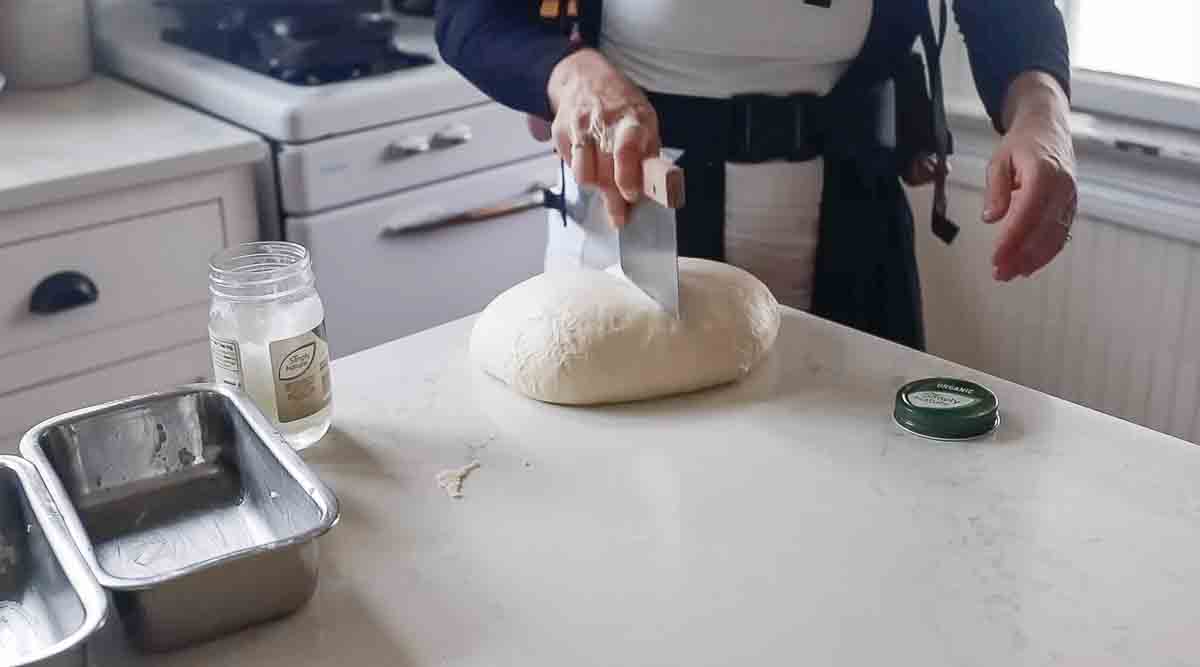
Divide in two equal parts.

Shape by rolling the dough flat into a rectangle and rolling it up.
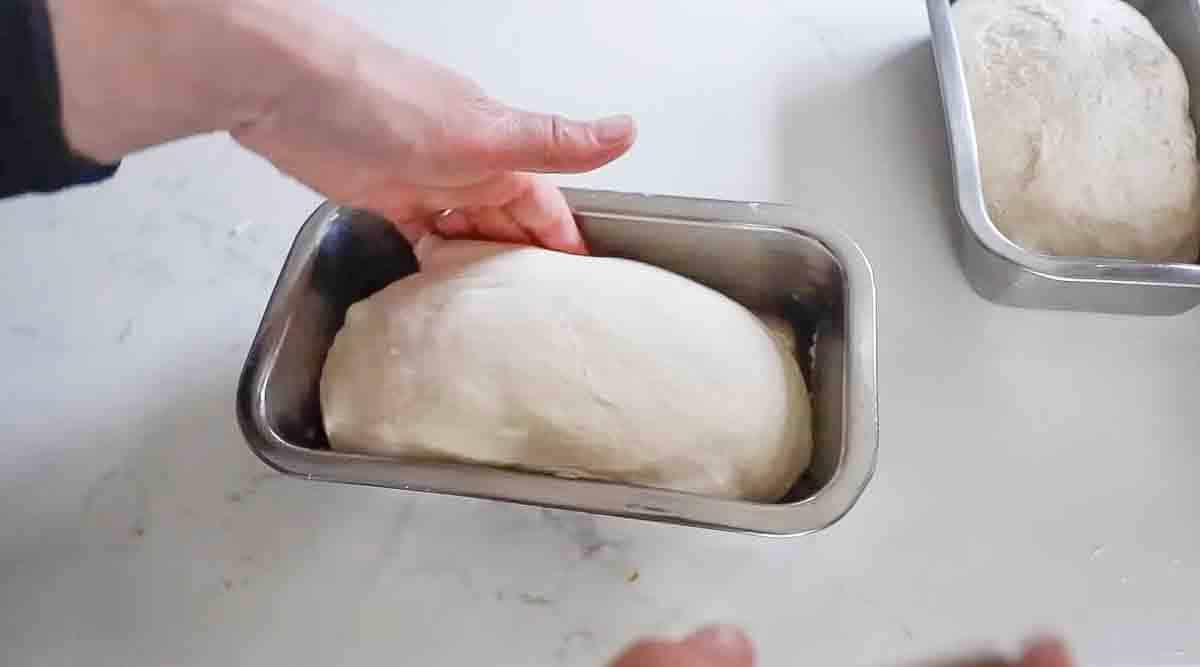
Add to parchment lined or buttered loaf pans.
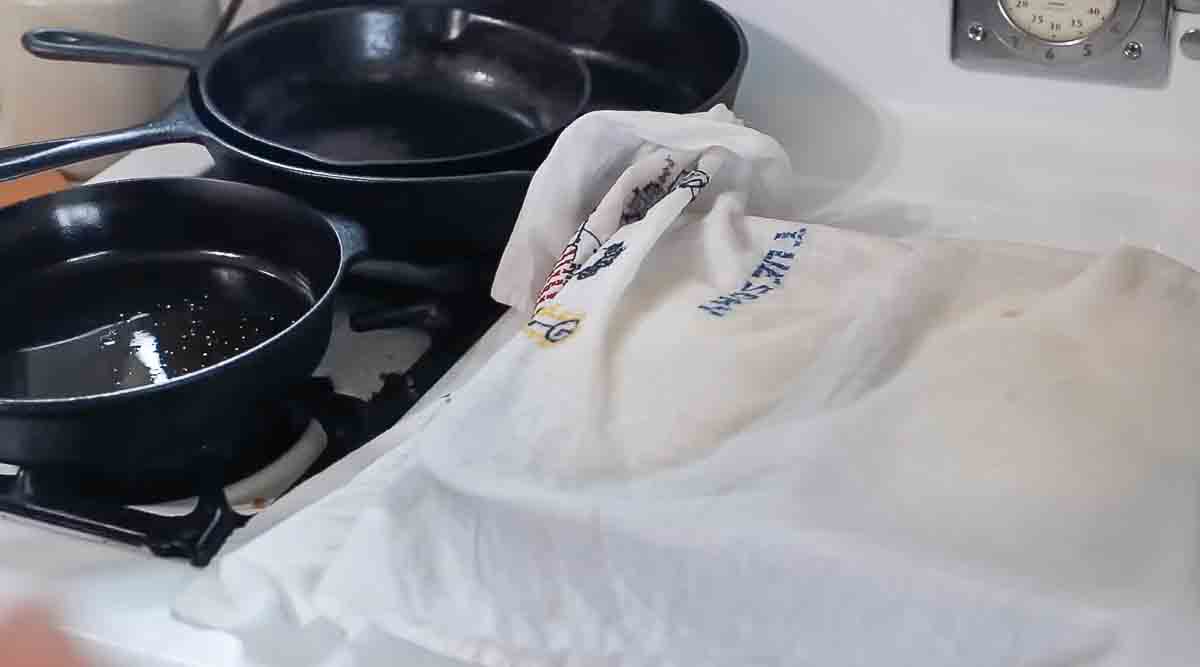
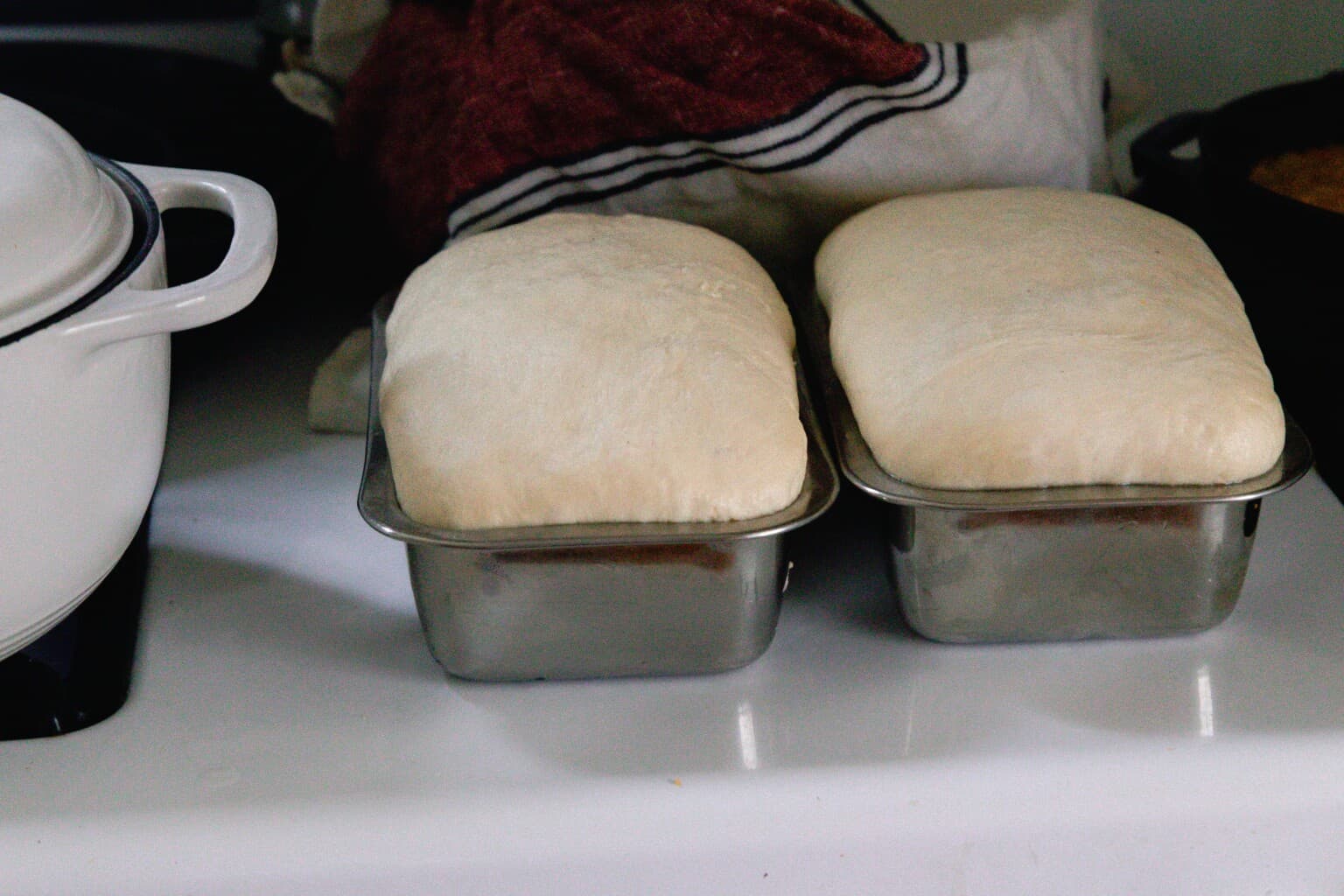
Second rise for 2-4 hours at room temperature, or until doubled. Again this depends on the temp! It could be as little as 1 hour if the house is warm and the starter active. Do not skip this step.It adds volume and strength to the dough.
Bake
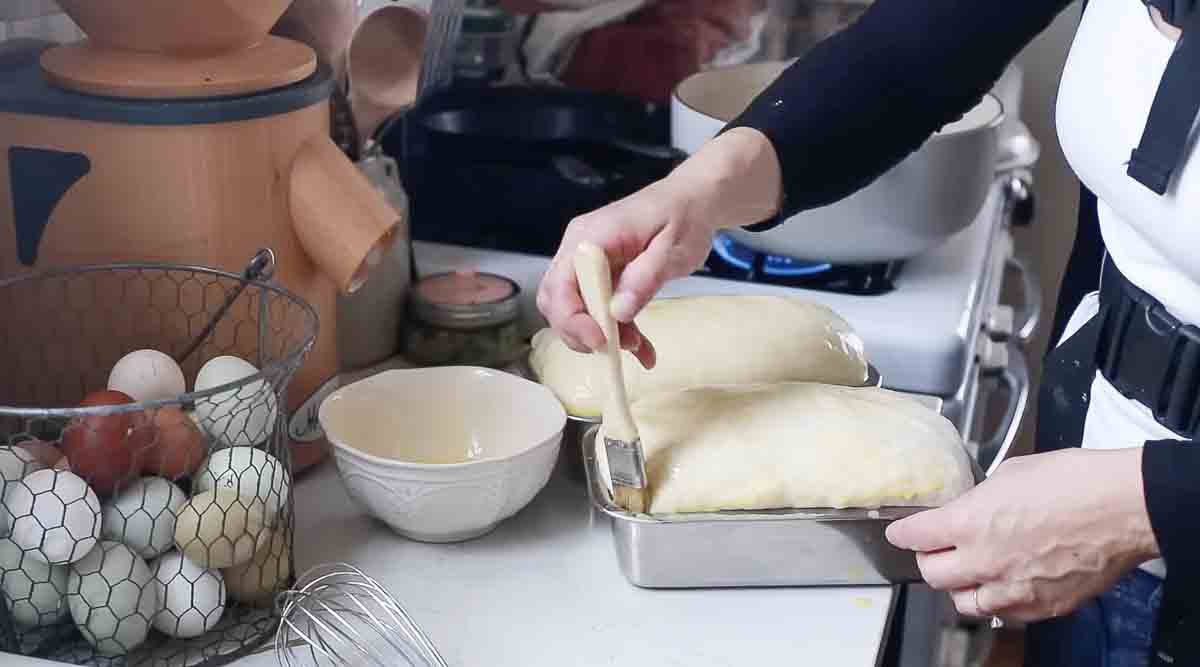
You can add an optional egg wash for more browning.
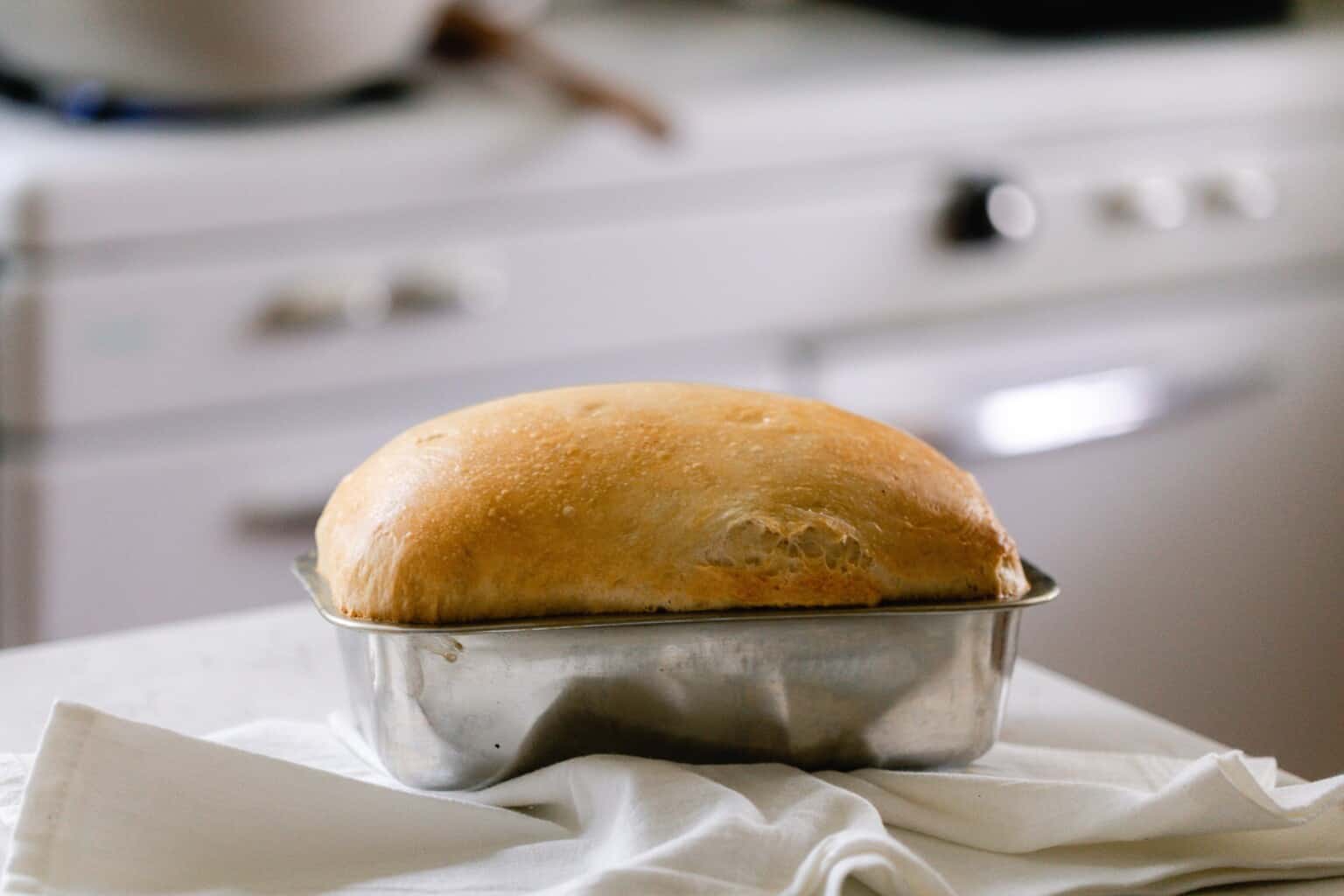
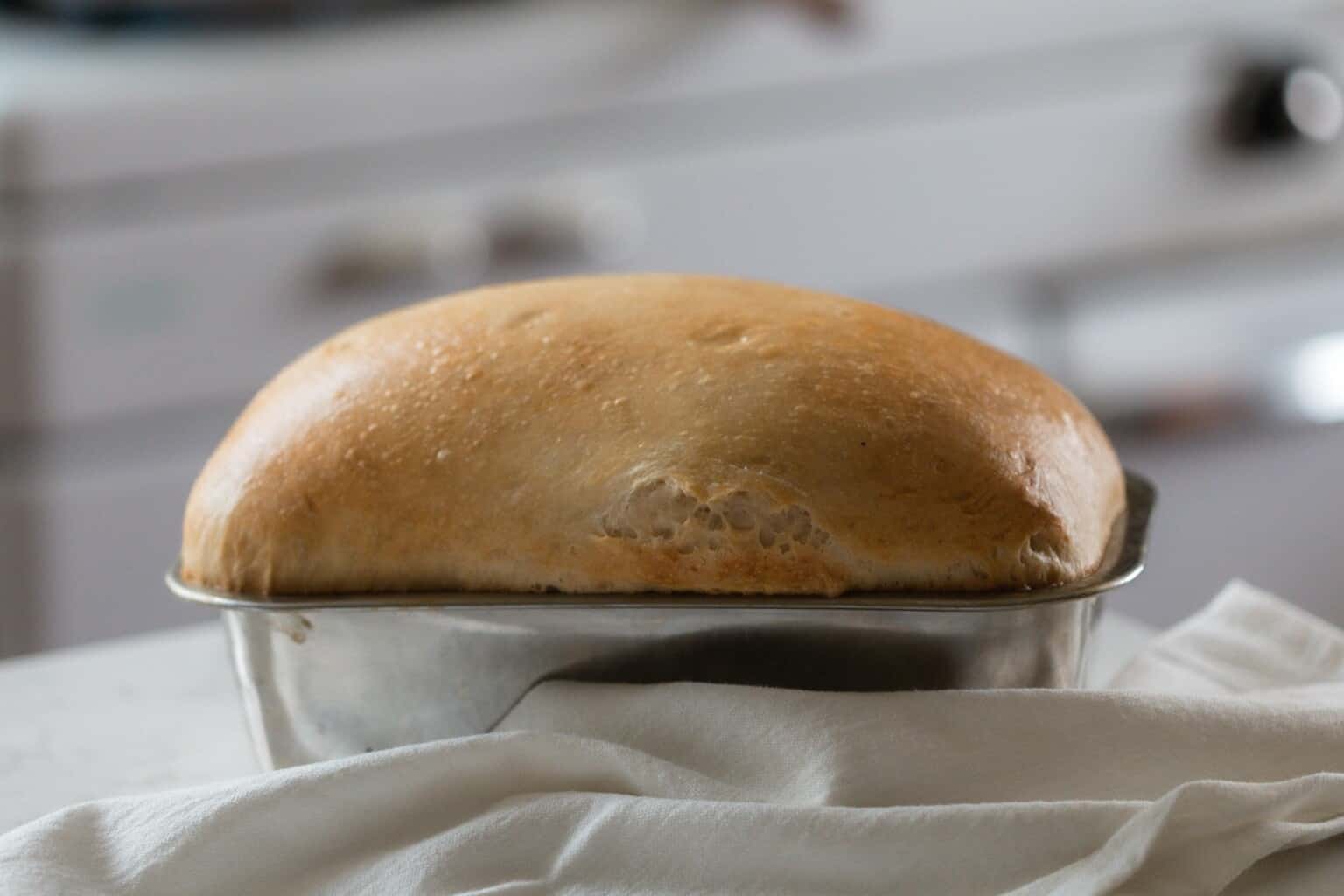
Bake at 375 for 45 minutes, or until golden on top.
Allow to cool completely before slicing.
Storage:
Store in an air-tight container for up to five days for best results.
You can also freeze loaves in freezer safe plastic bags for 3-6 months.
Find More Of My Sourdough Recipes:
- Sourdough Zucchini Bread
- Easy Homemade Sourdough Pasta Recipe
- Sourdough Coffee Cake
- The Best Soft Sourdough Pretzels
- Sourdough Brioche
If you try this recipe and love it, I would love if you could come back and give it 5 stars! Tag me on Instagram @farmhouseonboone .

Sourdough Sandwich Bread
Ingredients
- 1/2 cup butter, 113 grams, softened or coconut oil
- 2 tablespoons honey or sugar, 42 grams for honey, If using sugar, 24 g
- 1 tablespoon salt, 15 grams
- 1 cup starter, 200 grams, active and bubbly
- 2 1/2 cups water, 590 grams
- 8 cups all purpose flour*, 1120 grams
Instructions
- To a stand mixer, add all of the ingredients. I like to add the flour last, so I can add a bit less or more depending on my starter's hydration.
- Knead until dough is stretchy and smooth. You want it to pull away from the sides of the mixing bowl and be smooth and elastic – about 10 minutes. It should pass the windowpane test.
- Allow to bulk rise for 10-12 hours in a warm place like on top of a stove or refrigerator.
- Divide in two equal parts.
- Shape by rolling the dough flat into a rectangle and rolling it up.
- Add to parchment lined or buttered loaf pans.
- Second rise for 2-4 hours at room temperature, or until doubled.
- Bake at 375 for 45 minutes, or until golden on top. You can add an optional egg wash for more browning.
- Allow to cool completely before slicing.
Notes
- *Some people have said making two loaves is too much for their stand mixer to handle. This depends on the type of stand mixer you have. If you have a standard KitchenAid mixer, you may want to halve the recipe and make one loaf.
- Use really soft butter and cube it up so it blends easier.
- Don’t over ferment the dough. It will turn into a wet sloppy disaster that won’t rise well. Still edible. Maybe. It could also be turned into sourdough croutons.
- When making the dough, using a stand mixer makes the process much easier and hands off. You can also do this with your hands.
Nutrition
Nutrition information is automatically calculated, so should only be used as an approximation.








Can I use half whole grain flour with this recipe?
Yes! Make sure it is a hard wheat though.
We have loved this sandwich bread and we have been making it almost every week for the last year. I’m now looking to start milling my own flour and wondered if you have a suggestion of how to convert this recipe to fresh milled flour instead of all purpose.
When using a hard red or hard white wheat, you can swap the flour 1-1.
This is one of the best loaves we’ve found for slicing and eating as a sandwich loaf. The bread is soft and delicious but holds together perfectly! It’s our go-to recipe!
I have very inconsistent results with my bread. I proof it in my oven with the light on over night and 9/10 it doesn’t rise. In the 12 hrs. I have tried other recipes and I still don’t have a consistent rise. I do the windowpane test before I put it in the bowl to proof over night. I do the float test with my starter before I make the dough. I don’t know what I am doing wrong. It’s so frustrating to go through all the ingredients and time for it to not turn out.
Is your starter doubling in size after feeding? I’m making this recipe currently and I fed my starter about 6 hours before mixing the dough together. It had visibly doubled in size and was very bubbly on top. Then I mixed the dough ingredients together and left on top of my over overnight (oven was used for dinner so warm air coming out the vent). It was definitely doubled in the morning. Perhaps try making sure your starter is good and active? I don’t use the float test I go more off of bubbles, rise, and appearance of the starter. Hope you’re able to figure out what’s going on!
Get a proofing box. Really. Made an huge difference during the winter keep the house relatively cold during the winter. If I want a rise at 78F, I set it for that. Inexpensive and collapsible for storage if you don’t bake every day. My wife has become resigned to the fact that the Sourdough “home” (mini fridge/heater) and the proofing box are on the counter all the time. My kitchen, my rules 😀
For the second rise–could you put in the fridge overnight and bake first thing in the morning?
Hi Lisa,
I’m just getting started into milling my own flour. This sandwich loaf sourdough recipe has been my main loaf recipe for our family. Two questions: Can this recipe be used with the same measurements and substitute the all purpose flour for freshly milled hard red wheat? Also, can I use my sourdough starter that’s been fed with all purpose flour for a loaf made with freshly milled flour?
Appreciate you so much!
-Maggie Wilborn
Yes, that is correct! You can use your same starter.
Do you have different measurements for using milled hard red wheat instead of all purpose?
No, I am able to substitute it one for one.
I have used this recipe 3 times now and each time is easy and it turns out perfectly!
How do you store?
I like to store in a zip log bag or a bread bag, once it is completely cooled.
One more question for you today, Lisa, if you don’t mind, regarding the nutrition labelling at the bottom of the sourdough sandwich bread recipe. My husband is an insulin-dependent diabetic. He is very careful about the carbs he consumes so he can appropriately dose his insulin so I pay attention to carb count per serving when I’m cooking for him. If he doesn’t know how many carbs is in something, he won’t eat it & I’m anxious from him to be able to receive the benefits of eating bread from freshly milled whole grains. How can I convert the per serving carb count from your standard recipe to one using freshly milled hard white wheat flour?
Thank you once again!
If you google, there should be a nutrition calculator. I would put in all the ingredients and the freshly milled flour into the calculator. I don’t want to steer you in the wrong direction by my guess!
Lisa, I’ve just received my anxiously-awaited Mockmill grain mill attachment for my KitchenAid stand mixer & have begun the next step of my sourdough & from scratch bread journey. When converting a recipe from all-purpose flour to freshly milled flour (both hard & soft wheat varieties), what amount should I use? My husband & I are both in our 70s & I am anxious to provide wholesome, from-scratch made foods to our diet to keep us healthy & active for many more years! I have followed you for some time now & am impressed with your calm, easy-going manner (particularly your approach to using & feeding your sourdough starter) of preparing food for your sweet family! God bless you all & thank you for any tips you can provide for adapting recipes to using freshly milled flour.