


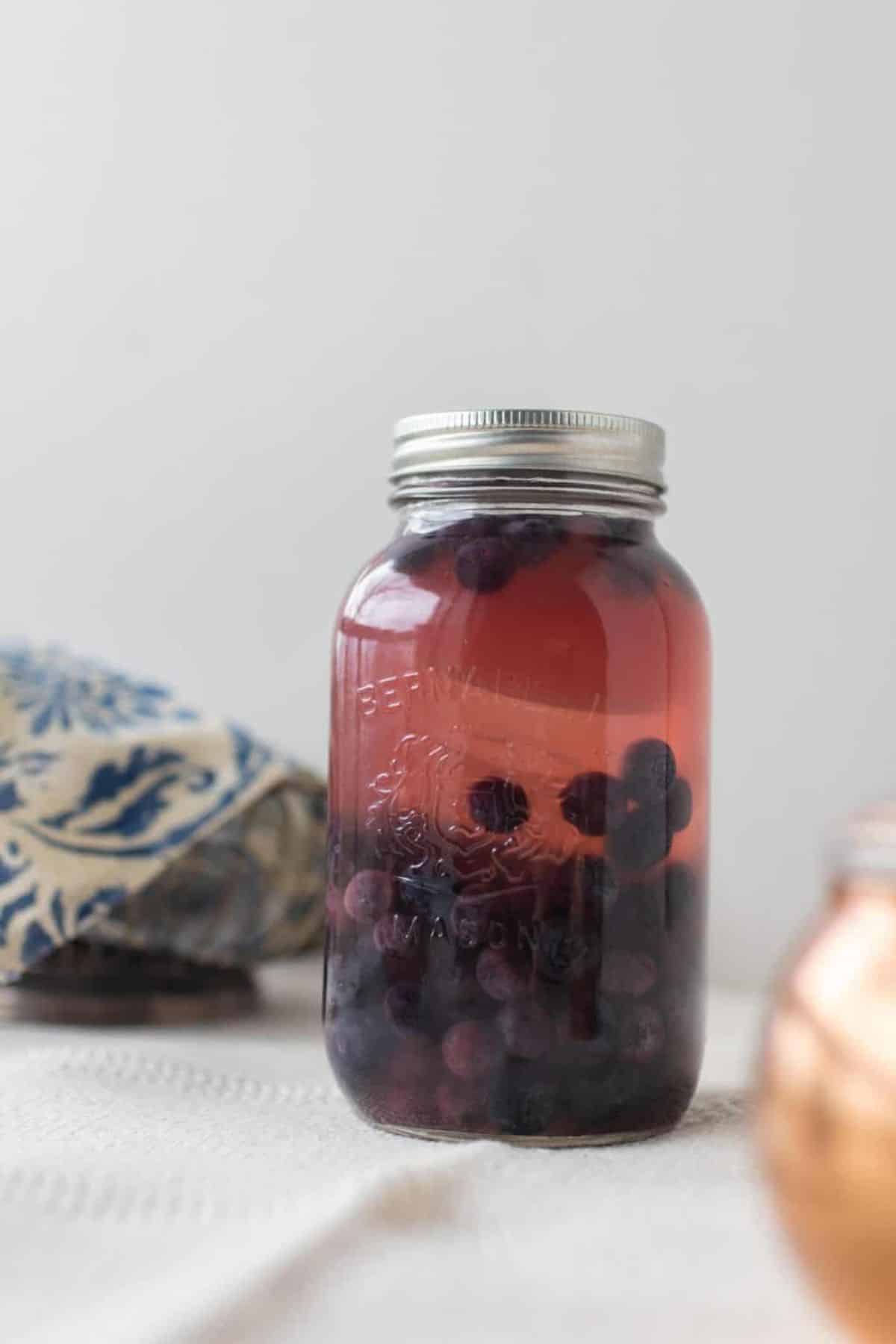
Learn how to make fermented fruit for results that are not only delicious, but full of probiotics. These fermented blueberries are a great way to get beneficial bacteria into your diet.
If you’ve been around here for any amount of time, you know my deep passion for all things fermented.
From traditional homemade sauerkraut and homemade sour cream to sourdough recipes, and all things in between. We have fermented foods multiple times a day, and my kids beg for kefir soda.
Bacteria – the good kind, of course – may just be my favorite type of food.
These fermented blueberries are no exception to my love for fermented foods. This fermentation method boasts a sweet, tangy flavor that easily incorporates into a variety of dishes.
If you enjoy this recipe and want more fermentation resources, check out my online, self-paced course, Fresh Ferments.
Why You’ll Love This Recipe
Health benefits – There are so many reasons to love fermented foods. They’re rich in probiotics, which have been shown to help improve gut health. They improve the gut micro-biome, aid in digestion, and increase immune functions (since much of immune function lies in the gut).
It can also increase vitamins like A, B, C, and K, making the vitamins and minerals more bio-available for absorption.
Simple – Fermenting fruit is an easy way to get probiotics and is also extremely simple to make with only a few minutes of prep!
Great for preservation – Making lacto-fermented fruit is a great way to take your ripe fruit and make it last a little bit longer. It can help cut down on food waste by making good use of fresh fruits that need to be used up.
Ingredients
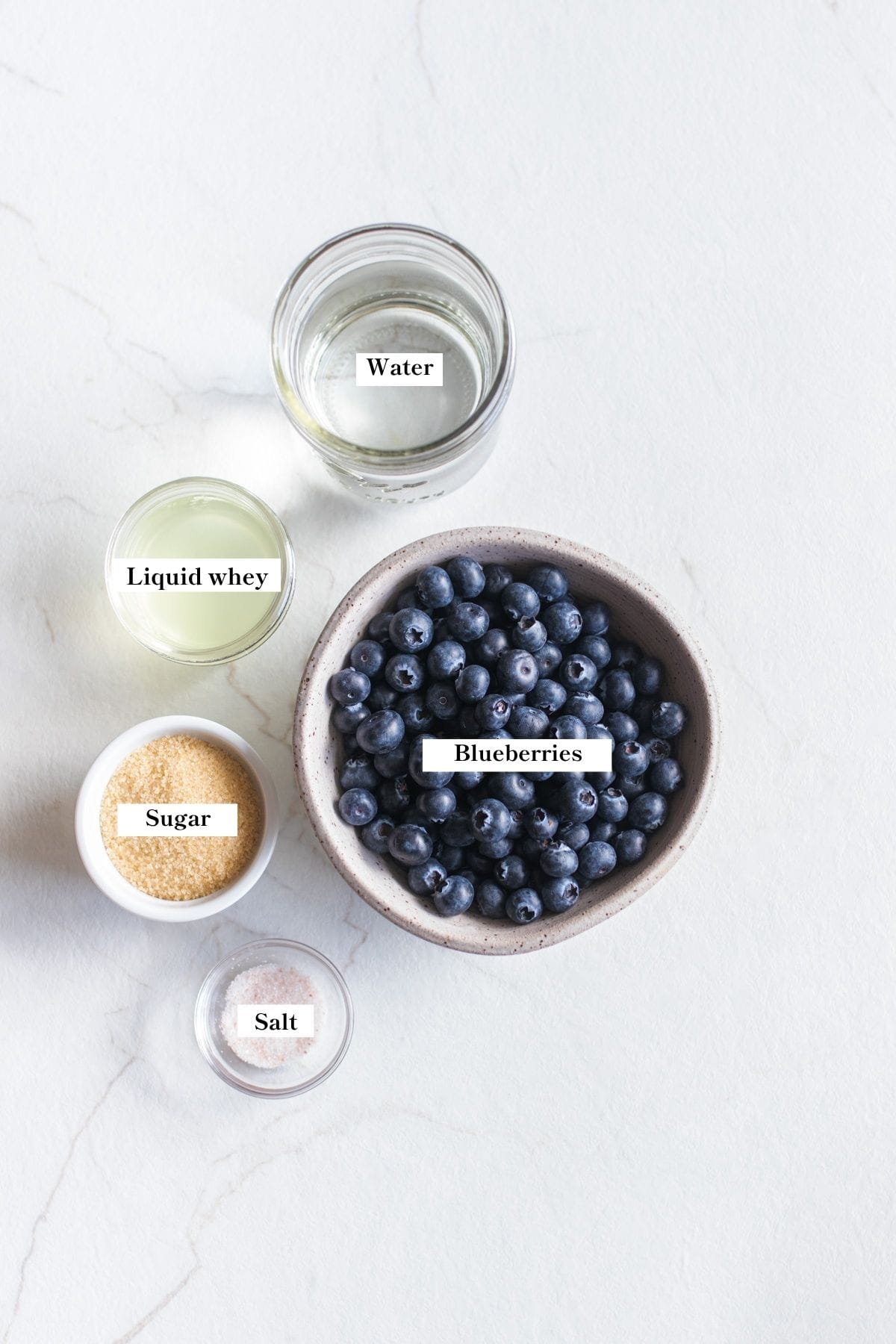
Blueberries – You can also use frozen blueberries, but the blueberries melt down into a more mashed up/syrupy consistency. I like to use organic blueberries for the highest quality product.
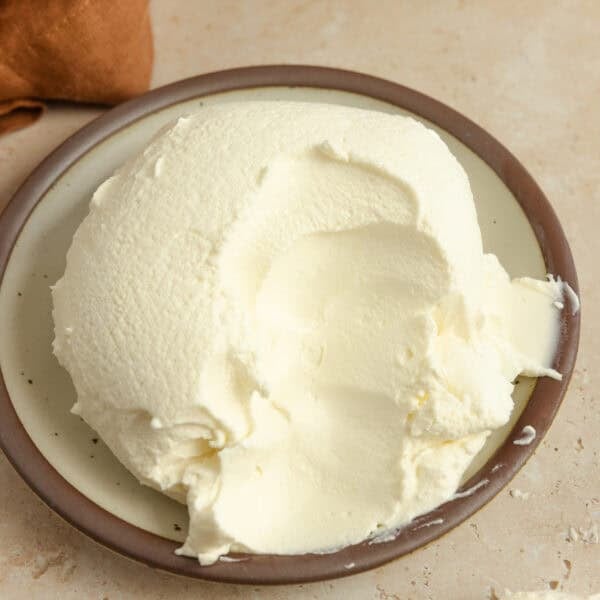
Liquid whey – I strained my own whey from homemade yogurt using cheesecloth, and then I enjoyed some Greek yogurt. It worked perfectly! You can also do this with store-bought yogurt.
Salt – Be sure to use salt that is not iodized
Filtered water – Clean filtered water is a must for ferments. Check out my Boroux water filter review for more information on the water filtration system I use and love!
A full ingredient list with exact amounts can be found in the recipe card below.
Tools You May Need
Jar lids or pickle pipes – I love these silicone pickle pipes.
How to Make Fermented Fruit
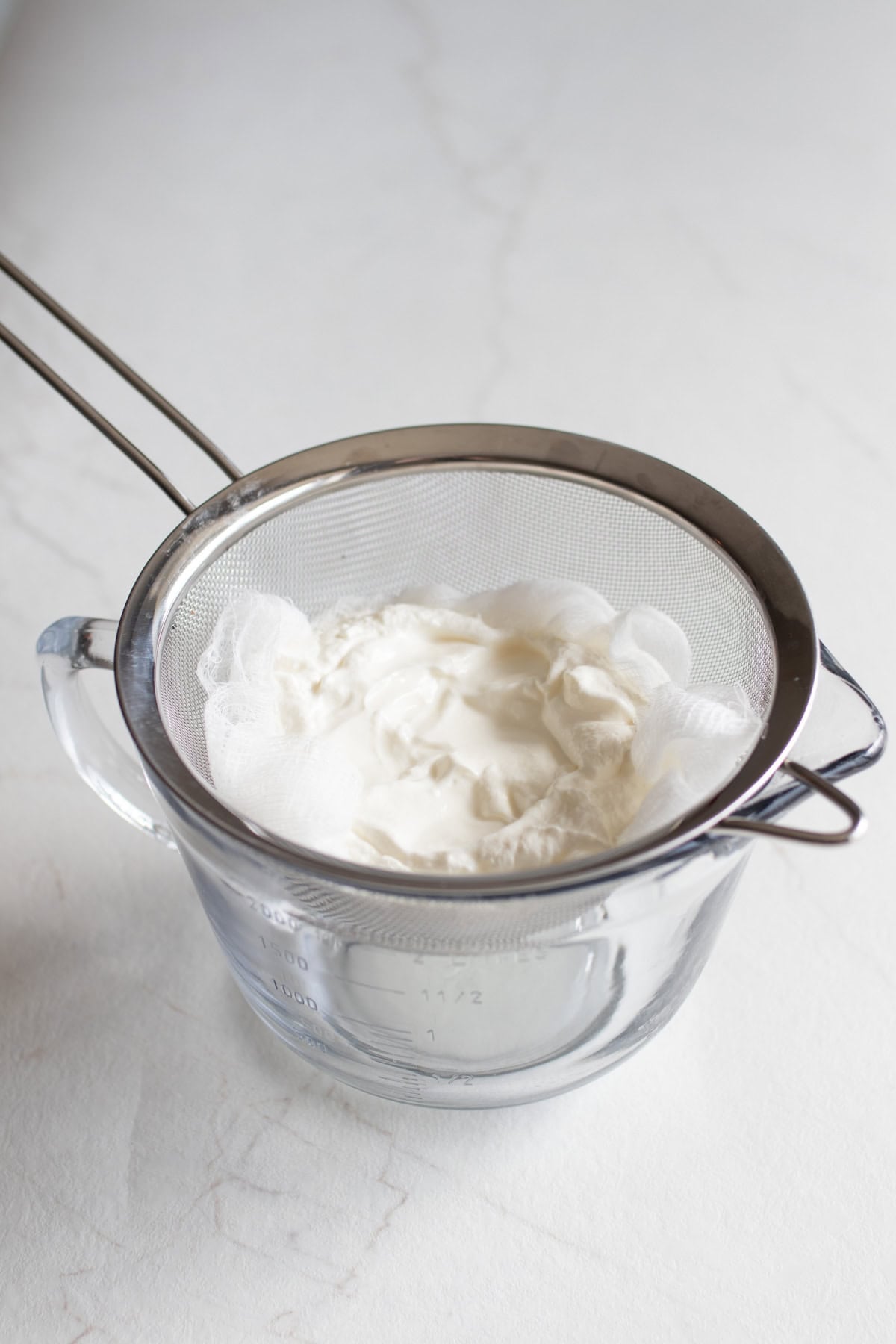
Step 1: To collect whey from yogurt, line a fine mesh strainer with a few layers of cheesecloth and set it over a bowl. Spoon in plain yogurt and let it drain in the fridge for several hours, or until you’ve collected about 6 tablespoons of whey.
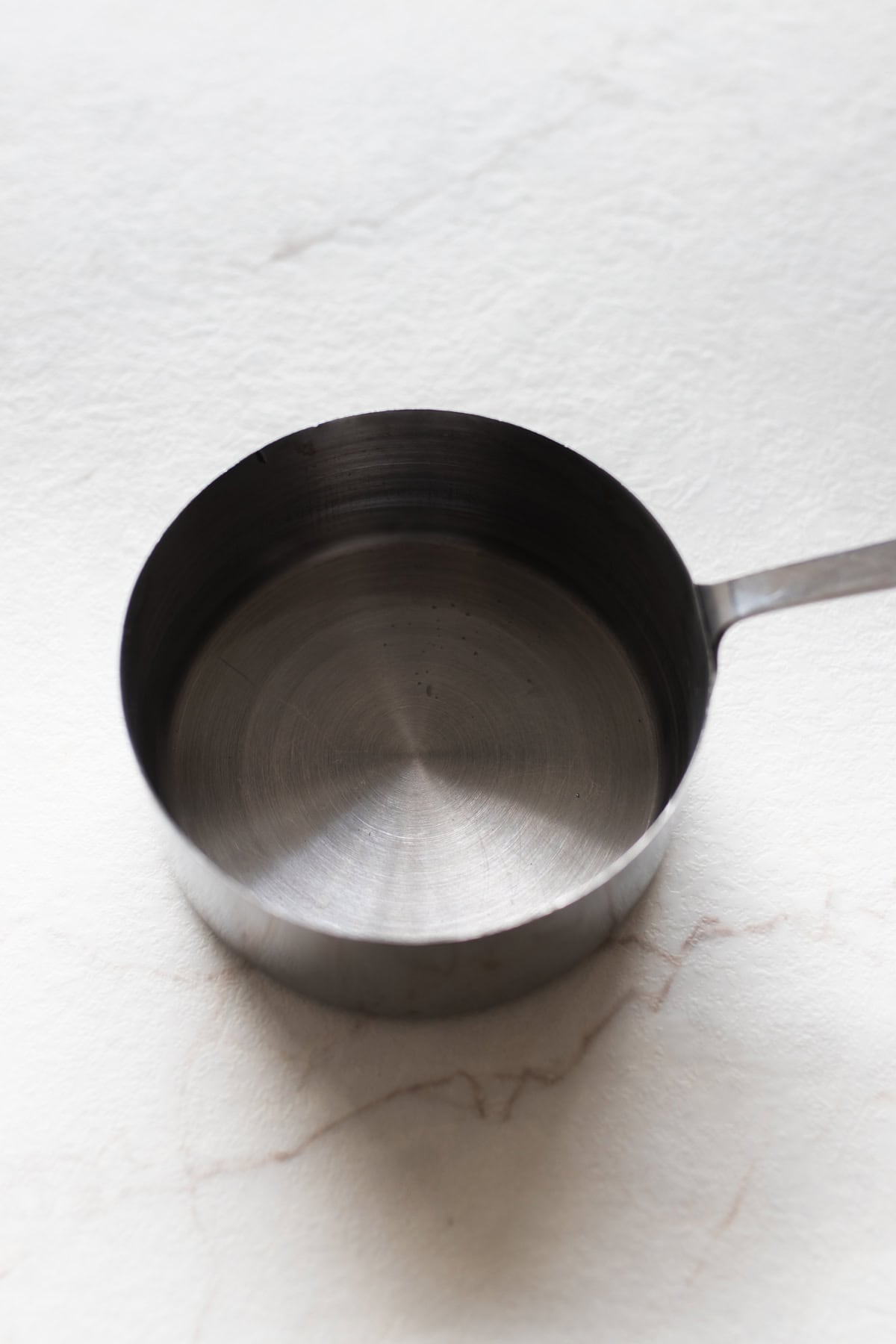
Step 2: Warm the water in a saucepan. This will help to dissolve the salt and sugar.
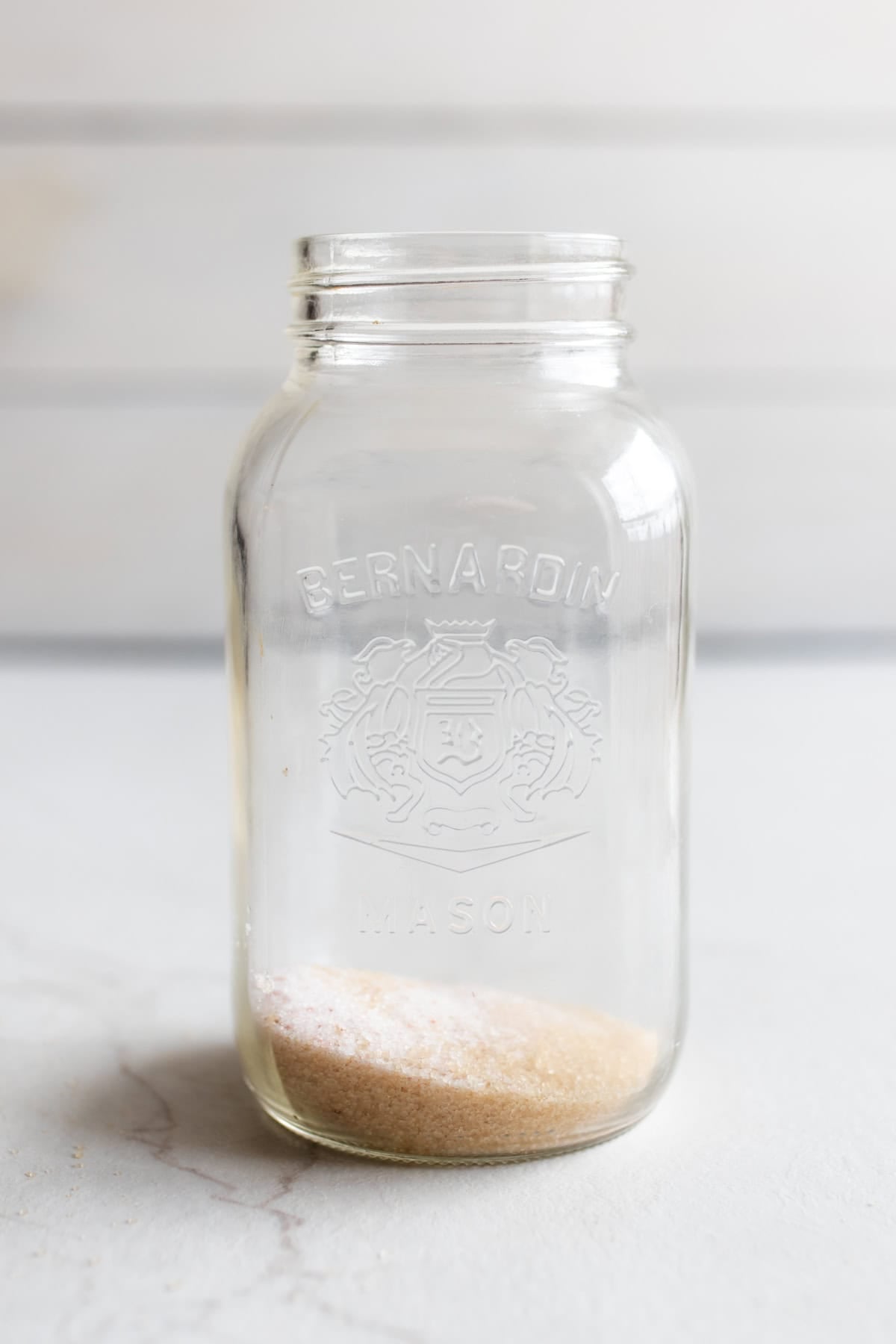
Step 3: In a clean jar, combine the sugar and salt.
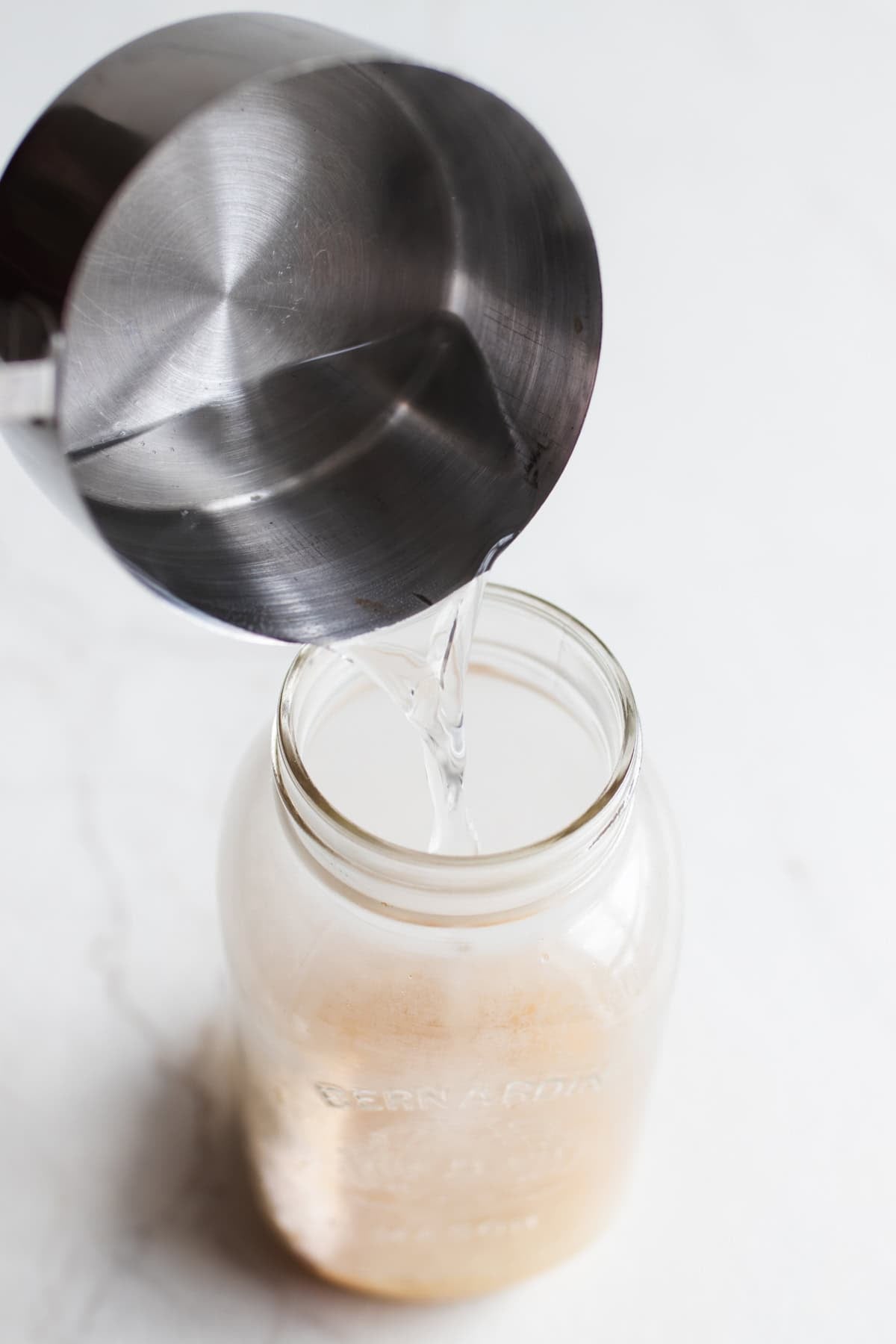
Step 4: Pour in the warm water. Stir or shake until fully dissolved. Let the mixture cool to room temperature.
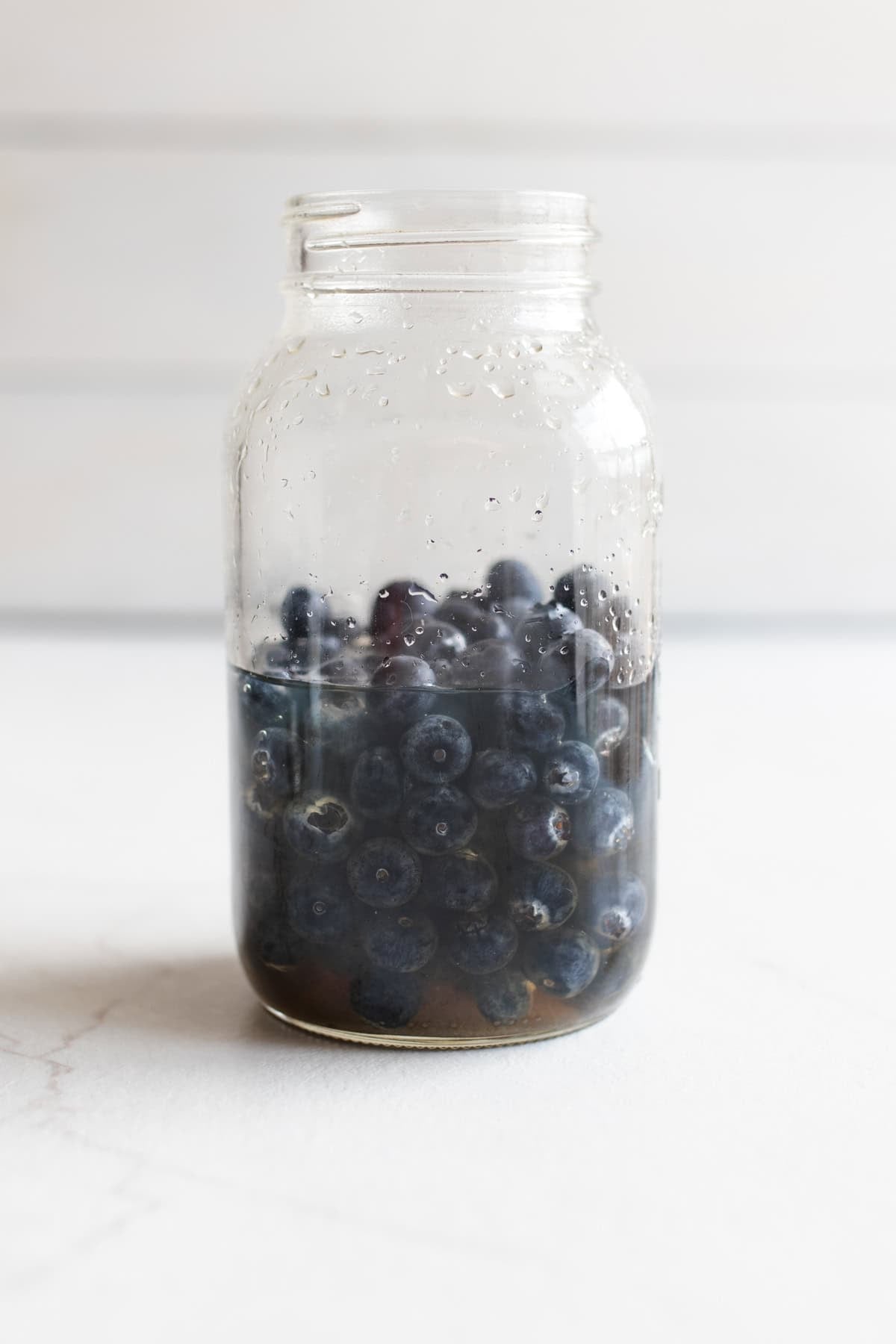
Step 5: Once cooled, add the whey and blueberries to the jar.
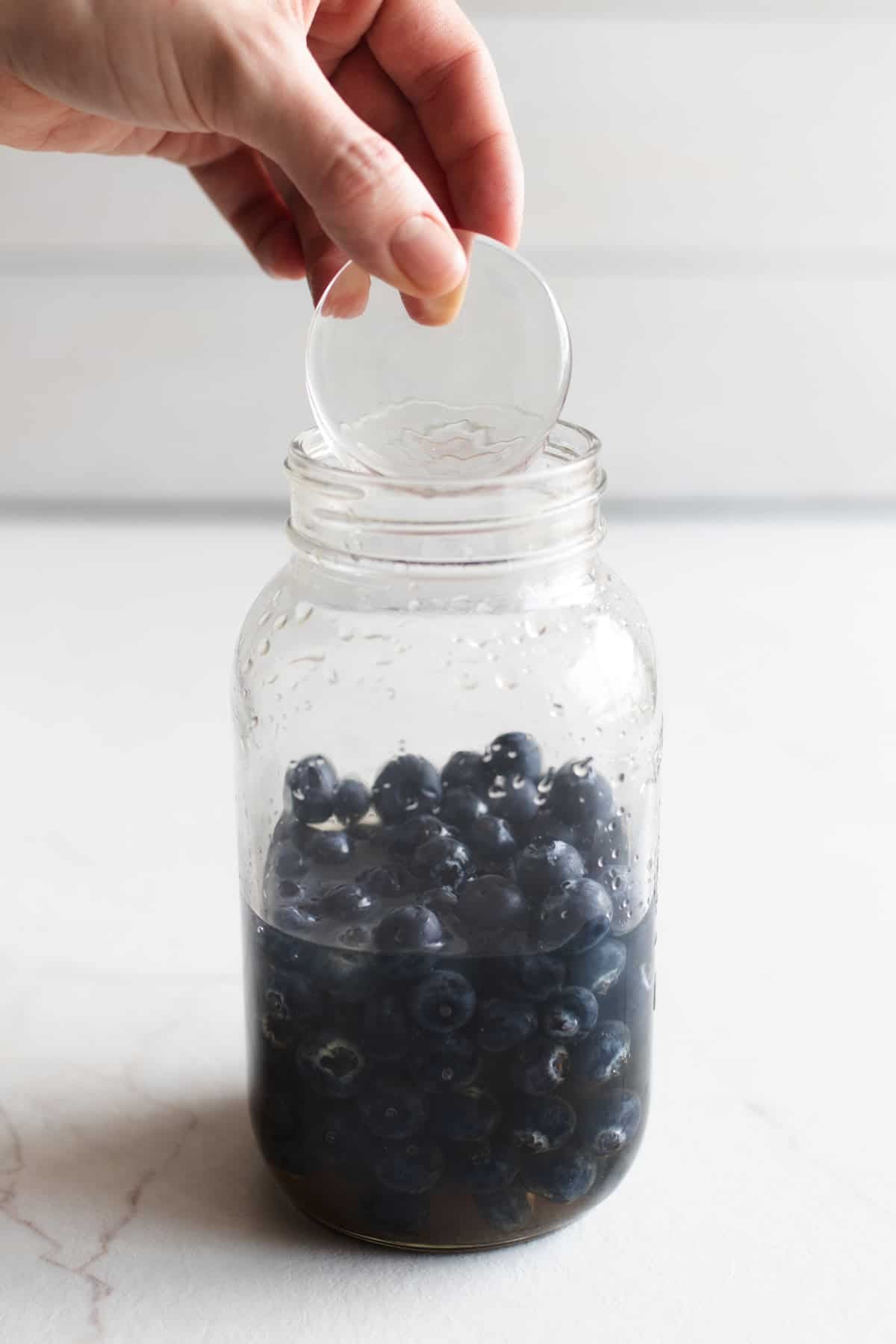
Step 6: Use a fermentation weight to keep the blueberries fully submerged in the liquid. If you don’t have a weight, you can use a small glass jar or pinch bowl that fits inside the jar opening to press the fruit down. Another option is to fill a small zip-top bag with water and place it on top to weigh everything down.
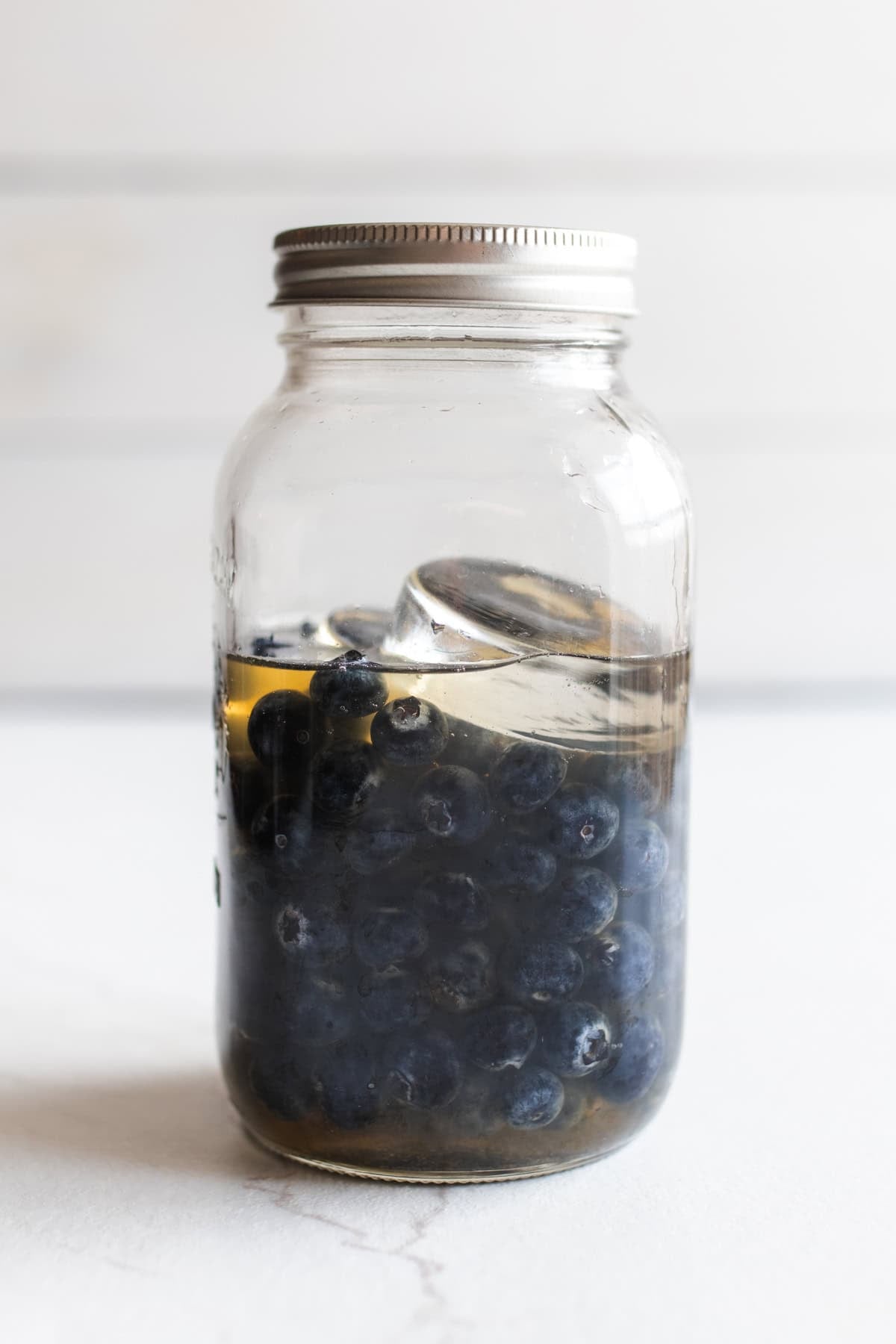
Step 7: Make sure all the fruit stays below the brine. If needed, add a little extra water, one tablespoon at a time, until everything is covered. Cover the top of the jar with a loose lid to allow carbon dioxide to escape.
Step 8: Let the blueberries ferment at room temperature. After 24 hours, begin tasting daily until they reach your desired level of tanginess, usually 2 to 3 days.
How To Use Your Fermented Fruit
- Blend into smoothies like my berry kefir smoothie.
- Spoon over oatmeal or einkorn cream of wheat.
- Use it to top fluffy ricotta cheese pancakes or a warm sourdough Dutch baby.
- Blend into homemade blueberry popsicles.
- Top homemade yogurt or date ice cream for a delicious treat.
- Mash into a jam (don’t heat) and serve with toasted sourdough bread.
- Blend into homemade salad dressings like blueberry vinaigrette.
- Balsamic fermented blueberry dressing (recipe coming soon!).
- Puree fermented blueberries as a condiment for meats.
Tips
- For quality of ingredients, you will want to choose non-iodized salt, filtered water, and organic fruit when fermenting.
- Fruit ferments quicker than vegetables. Make sure to test it every day after 24 to 48 hours, because it can cross the threshold into alcohol quickly.
- With fruit fermentations, it is best if they have a jump starter culture like the whey, water kefir, or kombucha, so they will ferment quickly and not turn into alcohol.
- Make these recipes in small batches, because they will not last more than a few weeks in the fridge.
- Keep your fermentation mixture in a dark place like a cupboard or pantry, or out of direct sunlight during the fermentation process.
- In this post, I’m going to show you how to ferment blueberries, but you could also try cherries, pineapple, and raspberries.
Recipe FAQs
Fermented fruit is safe to eat as long as you follow directions, use clean jars and tools, and don’t over-ferment your fruit.
Always check for signs of mold, and if it smells or looks funky, toss it.
These fermented blueberries are a sweet tasting ferment, sweet, tart, with a little tang, great for enjoying on top of yogurt and ice cream.
Any food can make you sick, and fermented foods are no different. There are a few precautions: if it smells bad or looks moldy, toss it out.
Remember that fermented fruit does not last as long (only a few weeks) compared to fermented vegetables (which can lasts months, even up to a year) in the fridge.
A lot of your favorite fruits can be fermented! Citrus fruits, as well as stone fruit, berries and even tropical fruits work well for fruit fermentation. Whatever type of fruit you choose, it’s sure to be a delicious way to get your probiotics!
More Ferments from the Farmhouse
- Fermented Beets Recipe
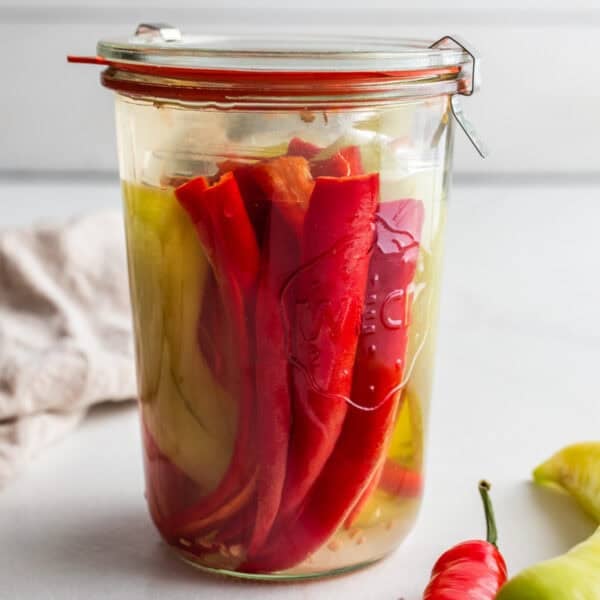
- Fermented Peppers
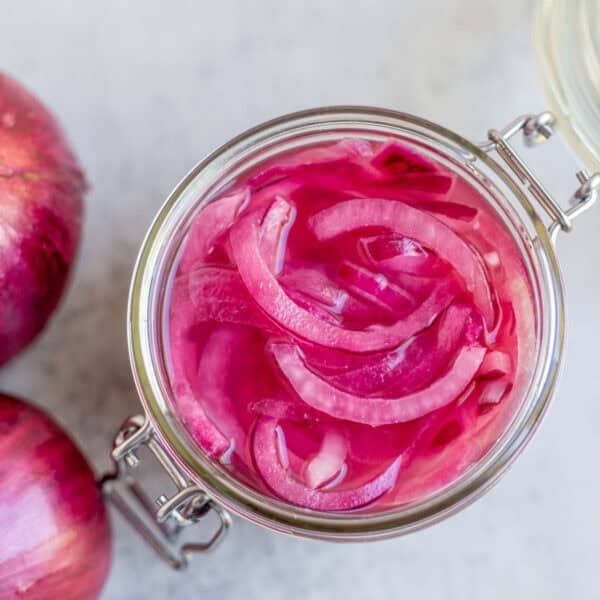
- Fermented Onions
- Homemade Fermented Pickles
- Homemade Fermented Ketchup
If you try this recipe and love it, I would love it if you could come back and give it 5 stars! Tag me on Instagram @farmhouseonboone.

How to Make Fermented Fruit

Equipment
Ingredients
- 2 cups fresh blueberries
- 6 tablespoons liquid whey
- ¾ teaspoon good quality salt
- 6 tablespoons organic cane sugar
- 9 tablespoons filtered water
Instructions
- To collect whey from yogurt, line a fine mesh strainer with a few layers of cheesecloth and set it over a bowl. Spoon in plain yogurt and let it drain in the fridge for several hours, or until you’ve collected about 6 tablespoons of whey.
- Warm the water in a saucepan to help dissolve the salt and sugar.
- In a clean jar, combine the sugar and salt.
- Pour in the warm water. Stir or shake until fully dissolved. Let the mixture cool to room temperature.
- Once cooled, add the whey and blueberries to the jar.
- Use a fermentation weight to keep the blueberries fully submerged in the liquid. If you don’t have a weight, you can use a small glass jar or pinch bowl that fits inside the jar opening to press the fruit down. Another option is to fill a small zip-top bag with water and place it on top to weigh everything down.
- Make sure all the fruit stays below the brine. If needed, add a little extra water, one tablespoon at a time, until everything is covered.
- Cover the top of the jar with a loose lid to allow carbon dioxide to escape.
- Let the blueberries ferment at room temperature. After 24 hours, begin tasting daily until they reach your desired level of tanginess, usually 2 to 3 days.
Notes
- For quality of ingredients, you will want to choose non-iodized salt, filtered water, and organic fruit when fermenting.
- You can also use frozen blueberries, but the blueberries melt down into a more mashed up/syrupy consistency.
- Fruit ferments quicker than vegetables. Make sure to test it every day after 24-48 hours, because it can cross the threshold into alcohol quickly.
- With fruit fermentations, it is best if they have a jump starter culture like the whey, water kefir, or kombucha, so they will ferment quickly and not turn into alcohol.
- Make these recipes in small batches, because they will not last more than a few weeks in the fridge.
- Keep your fermentation mixture in a dark place like a cupboard or pantry, or out of direct sunlight during the fermentation process.
- In this post, I’m going to show you how to ferment blueberries, but you could also try cherries, pineapple, and raspberries.
Nutrition
Nutrition information is automatically calculated, so should only be used as an approximation.







nice, easy, effective
Hi Lisa, would it be okay to use raw honey instead of sugar?
Yes, you can.
Hi thank you for this information. Can dried fruit such as dates or raisins be fermented please?
I do not think so. I have never tried.
How much water do you use for each of these methods?
Method #2 uses 9 tbsp of filtered water
Hello, I was wondering if it would be safe to ferment the blueberries using the kombucha at room temperature like how kombucha is made? Thanks!
I have not personally tried this.
Hi— I just found my basement freezer unplugged. This means I have about 2 gallons or more of fermented cherries picked from my tree. Anything I can do with this many? Is it safe?
Please help! I’m not sure what to do— and it’s such a waste to compost so many…. Maybe not a waste. Arg I’m at a loss.
I’m so sorry, that is really frustrating. I’m not sure as it would depend on how long the freezer was unplugged for. Sorry I don’t have any answers for you.
Can I use frozen blueberries or do they need to be fresh?
Thoughts on a lesser salt percentage, such as 1%? I find 2% a bit too salty.
You need at least 2% to keep the bacteria at bay. You can always rinse the fruit/ vegetables after they have fermented and before using, as needed to reduce some of the salt , but don’t cut back in the fermentation or storage phase.
Would that rinse off the probiotic or does it not work that way?
Did you leave water out of the first recipe intentionally? Seems like there should be water in there instead of just berries and salt, especially if you’re calling for a weight to be used. Thank you.
Did you ever get an answer? I’m wondering the same. Just started this ferment today.
The water will draw out of the fruit. You don’t need to add water. If you do, you need to adjust you salt amount to account for the addition. Standard lacto fermentation for pickling you mix salt into the food matter as stated in the directions given. Adding water will give you something more like a salty kvass or a drink instead of fermented fruit.
You need at least 2% salt by weight to keep bacteria at bay
Hi Lisa, great article. I used to ferments lots of vegetables, maybe cranberries but I have a big project in front of me today – replay asap requested. I have, in my freezer, about 20 lbs of saskatoons, raspberries, strawberries, blackberries, even cherries, persimmon pulp, pomegranate and mixed fruit. some organic, some not. I need to empty my freezer and don’t want endless jars of jam. So, it occurred to me to ferment. A) can I use frozen fruit or are the microorganisms dead? Any workaround? B) As a retired beekeeper, I have some 200 lbs of honey, 1/2 pail at 30% moisture fermented a bit, (I use it in my coffee etc). Can I use this? c) can I use fresh brine from a just finished container of feta? Thanks for your wisdom.
Thanks for the nice website and great article on fermenting fruit. Besides the two you shared, there’s another even sweeter way to ferment fruit – in Honey! I’m currently tending jars of honey fermenting with (in different jars) cranberries, blueberries, ginger, green fennel seed (saved from my garden) and garlic. Check it out sometime.
Is it possible to get the recipes with honey?