

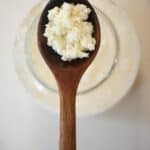
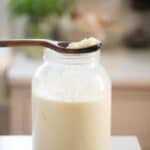

Milk kefir is a tangy, creamy, and bubbly fermented milk. It is rich in gut-healthy probiotics, simple to make, and can be easily incorporated into your diet.
I love to make fermented foods. I always have something fermenting on the counter, whether homemade sauerkraut, water kefir, kimchi, or even fermented jalapeños. We love it all. If you are interested in getting started with fermented foods at home, milk kefir is a perfect way to begin. The process is so simple that you can’t mess it up.
Kefir is easy to make, easy to use and incredible for your gut health. It is something that I make every single day in the farmhouse. You can drink kefir by itself, but some of our favorite ways to enjoy it are in berry kefir smoothies, kefir cheese, and even a creamy kefir ranch dressing!
What Is Kefir?
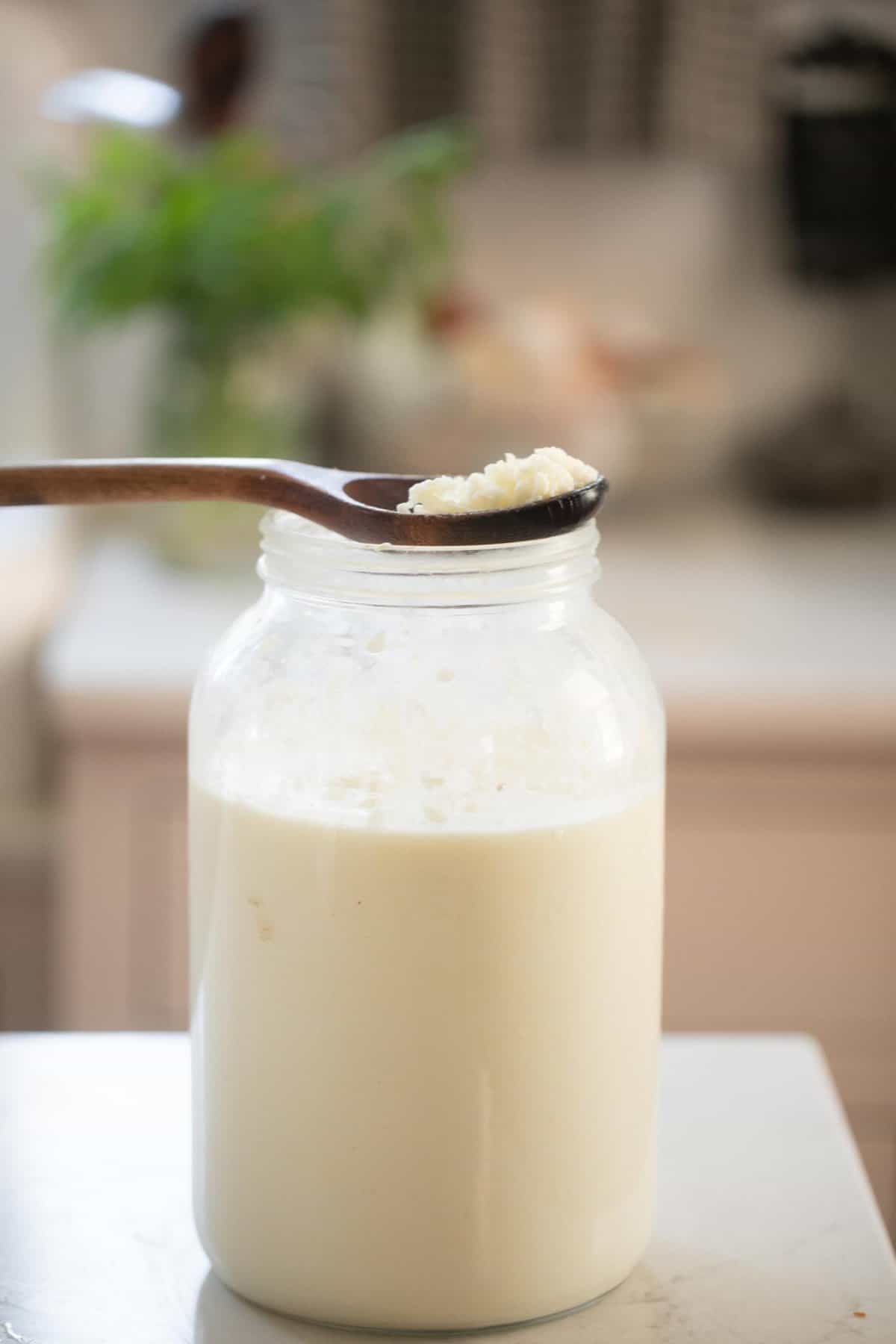
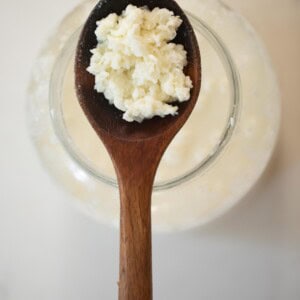
Milk kefir is a probiotic-rich, fermented drink that starts with milk that has been soaked with live kefir grains at room temperature. During this soaking, the milk goes through a fermentation process and produces lactic acid and carbon dioxide. The result is a tangy, slightly sour, and bubbly fermented drink. It tastes very similar to a thin drinkable yogurt.
If making your own yogurt interests you, head over to my post on how to make raw milk yogurt in the instant pot. It’s simpler than you’d think and so good!
There are a number of reasons to reap the health benefits of kefir. Kefir is known for improving gut health and digestion. It can also reduce inflammation in the body and help to support the immune system. It is full of healthy bacteria and yeasts making it a very strong source of probiotics.
Why You’ll Love This Recipe
Healthy – Milk kefir is probiotic and nutrient-rich. It’s full of protein, calcium, and vitamins B, A, and K, as well as the beneficial bacteria that assist in rebuilding gut health.
Delicious – While it may be an acquired taste, milk kefir does have a pleasant, fresh flavor, much like yogurt. The tanginess and bubbly nature of kefir are quite refreshing.
Great to share with others – Milk kefir is so easy to incorporate into your daily routine. It’s simple to maintain and easy to add to smoothies, overnight oats, and so much more. It can even used as a buttermilk substitute! In an age where everyone is scrambling for the best probiotic gummy vitamins, milk kefir can be exciting to share with friends and family.
Ingredients
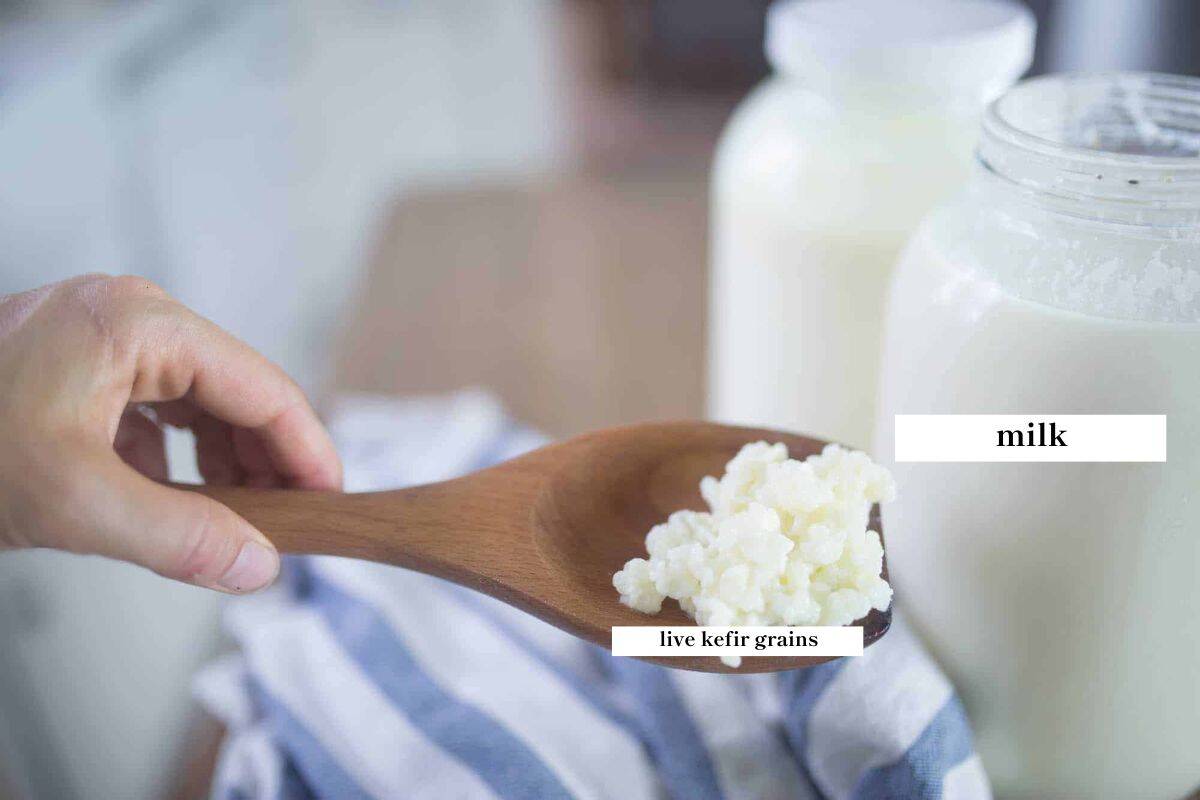
Live kefir grains: You can purchase these online or possibly find them locally through a friend willing to share.
Milk: You can use cow, sheep, or goat milk. Raw or pasteurized will work. You can technically use low-fat milk, but it may need to be refreshed with whole milk every once in a while to keep the grains healthy.
I use raw milk and find it to make the highest quality kefir. However, you are still able to make kefir with store-bought milk. The only milk that will not work is lactose free or ultra-pasteurized (for example, Horizon Organic milk is ultra-pasteurized milk), so make sure to check your label.
A full ingredient list with exact amounts can be found in the recipe card below.
How To Make Milk Kefir
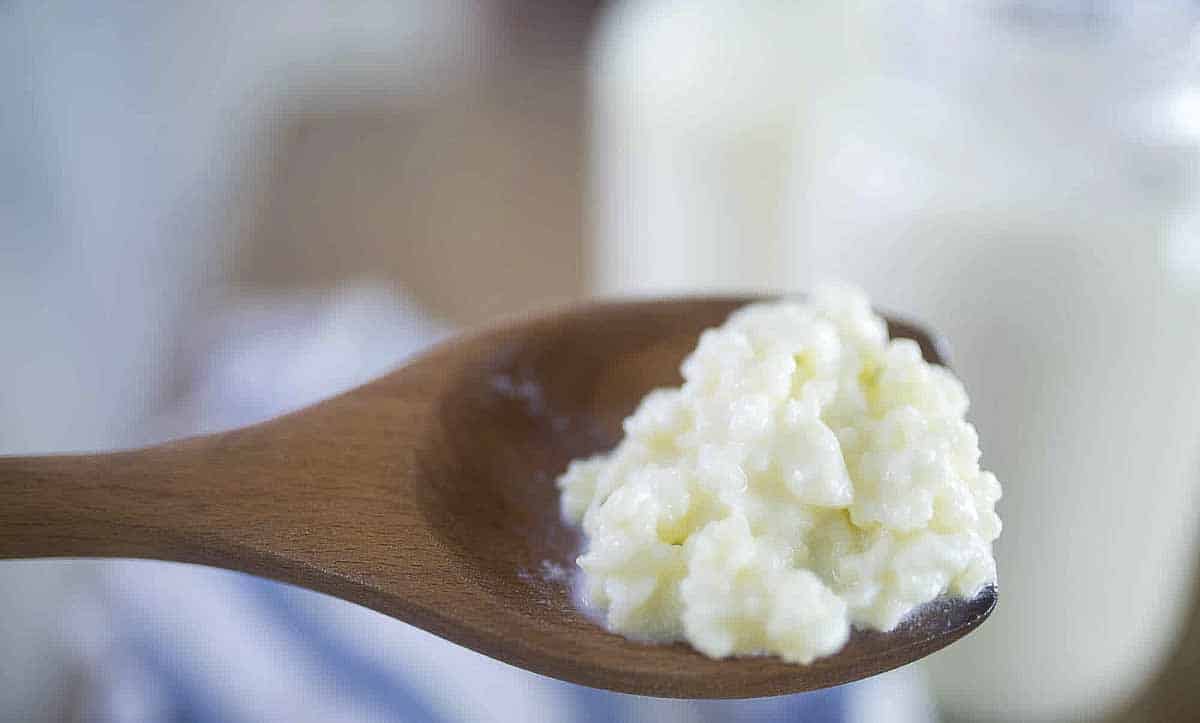
Step 1: Measure two tablespoons of milk kefir grains into a clean half-gallon jar.
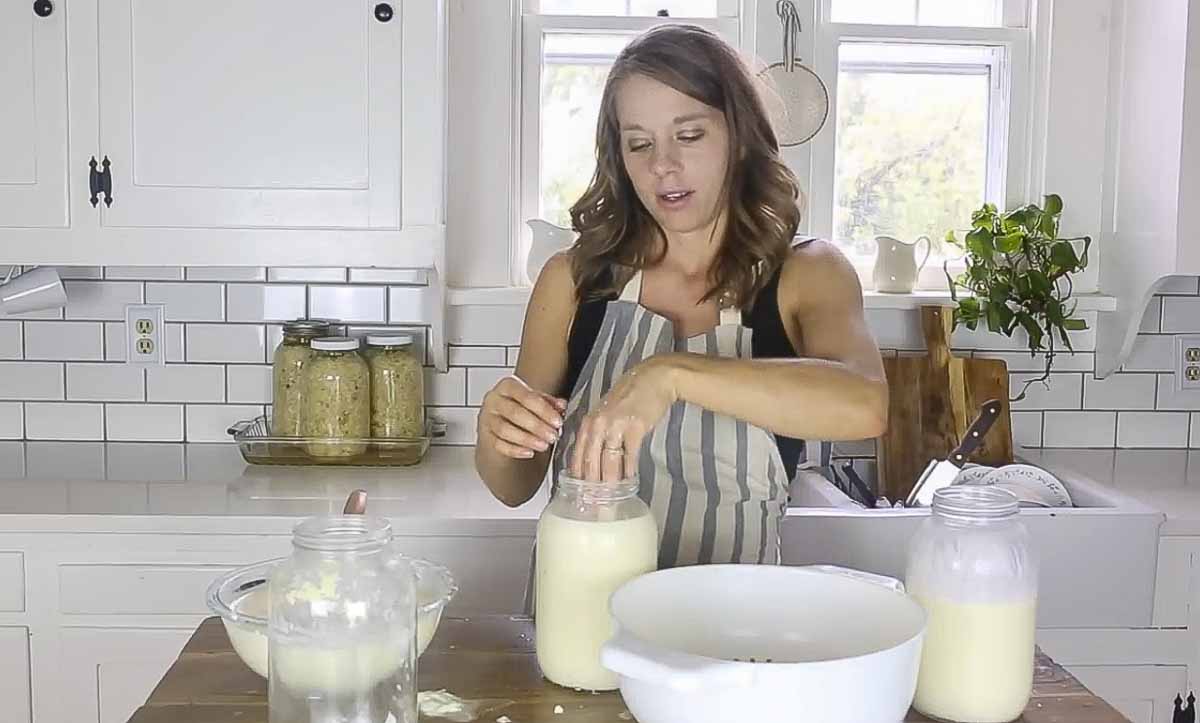
Step 2: Add two cups of milk. The amount of milk you use will correspond to the amount of kefir grains. If you have a lot of grains, you will be able to use more milk to make more homemade milk kefir.
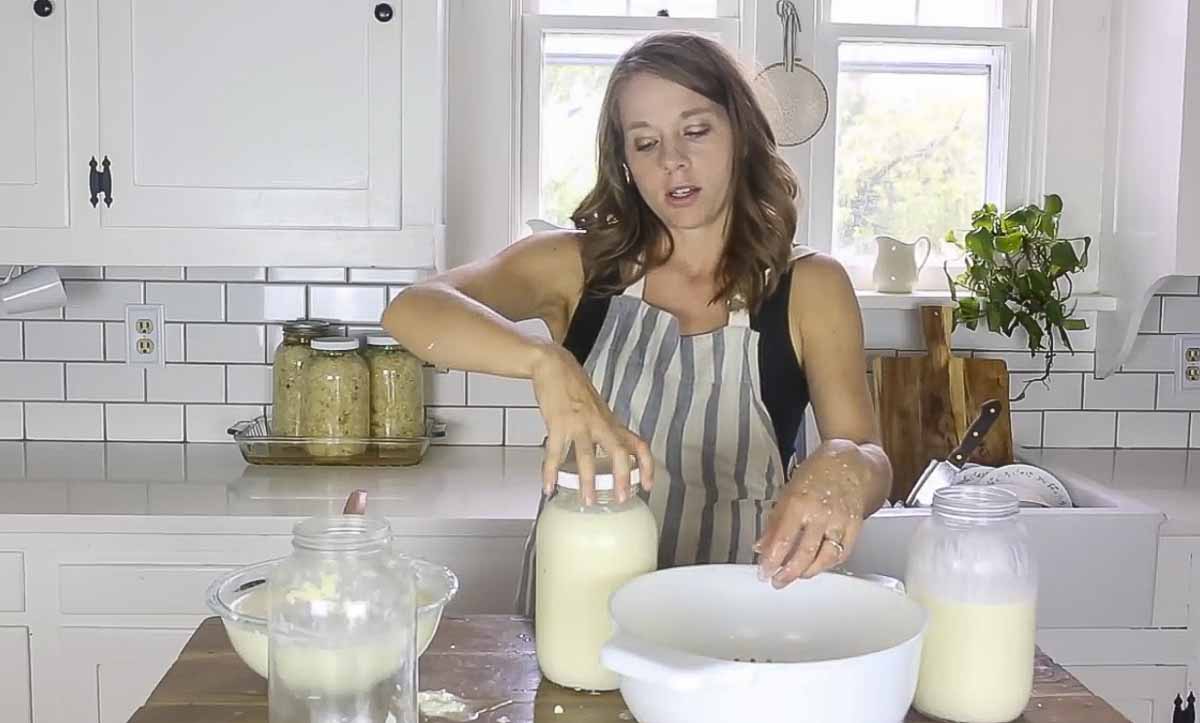
Step 3: Cover with a coffee filter, paper towel, or tea towel, securing with a rubber band. You can also place a plastic lid loosely over the top.

Step 4: Let the milk kefir sit out at room temperature until the desired thickness and sourness are achieved. This will be somewhere between 12-36 hours based on preference. I like the probiotic benefits of extra thick and sour kefir, so I leave mine out for about 36 hours. Others prefer 12 hours.

Step 5: After fermentation, strain the kefir grains out using a strainer. You can use the kefir right away or keep it in the fridge, with a lid, for up to two weeks.
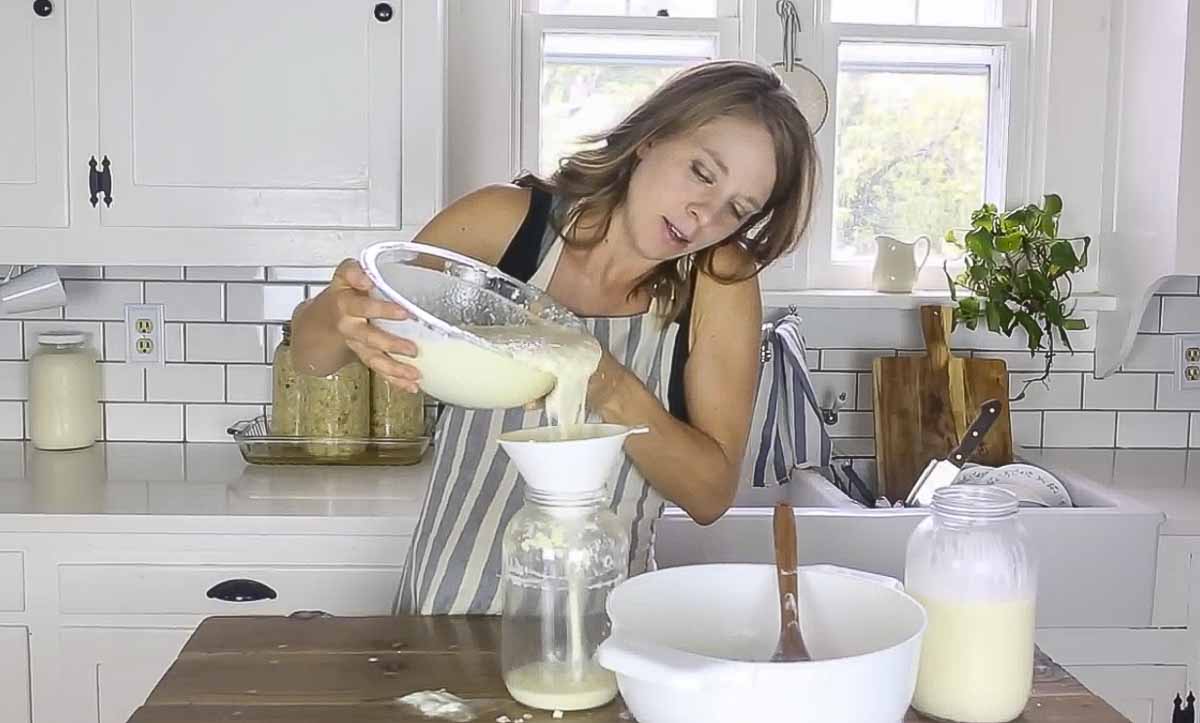
Step 6: You can now start your next batch of milk kefir with those grains, or you can store the grains between batches in the refrigerator in a glass jar covered with milk.
Tips
- Be sure to use a glass jar when making kefir as it does not react with its acidity. Avoid metal when making kefir. Use a wood or plastic spoon when handling kefir and do not use a metal container for fermenting or a metal lid for covering.
- When milk kefir grains are “fed” regularly with fresh milk, they will multiply like crazy. Soon you will have more than you even know what to do with! Pass them along to family and friends.
- The temperature of your kitchen will impact the fermentation time. It may need to ferment longer in colder temperatures and may ferment quicker in warmer temperatures.
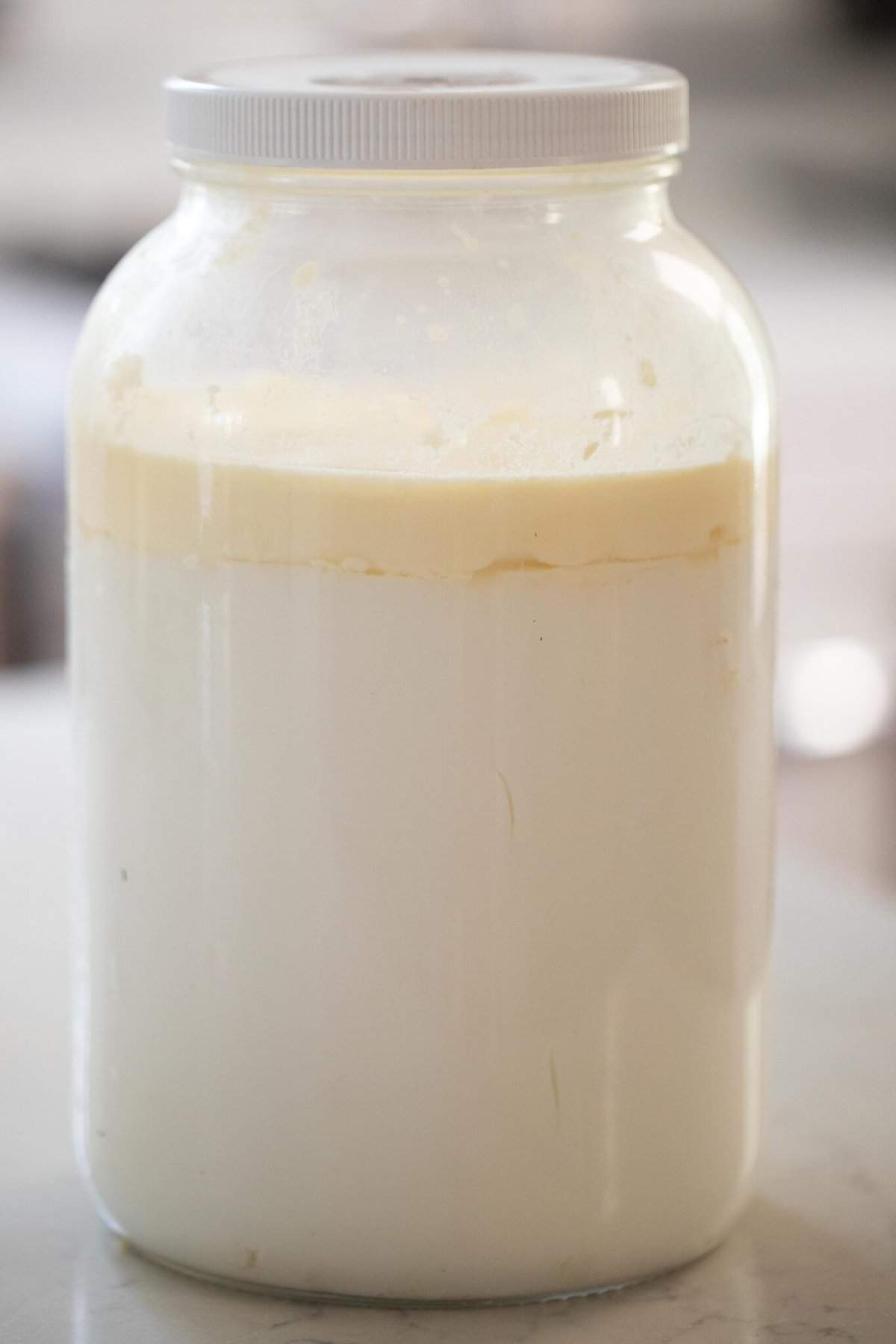
- It is normal if your kefir separates. The whey separating from the milk naturally happens with fermentation.
- Kefir grains will last years. I’ve been using the same ones for over six years now.
- You don’t want to add too many kefir grains to your milk or it will ferment much faster than you want.
- When you first start using kefir grains, your milk kefir may not turn out as well as you’d like. This is because they are adjusting to a new environment. Give them a few times to start making really good batches.
- It may be a good idea to incorporate kefir into your diet slowly to let your body adjust to the probiotics if you are new to drinking it.
- Those who have mild lactose intolerance may be able to tolerate kefir, especially if made with raw milk. The fermentation process reduces the amount of lactose present in the milk.
Kefir FAQ
You can safely store kefir grains in the refrigerator for up to 3 weeks if you want to put them on pause. Place the grains in a clean jar, cover with milk, and add a lid. Place in the fridge. When ready to use again, strain the old milk and resume your regular kefir routine. Kefir that has been made and strained will last two weeks in the fridge.
You can use cow, sheep, or goat milk. Raw or pasteurized will work. You can technically use low-fat milk, but it may need to be refreshed with whole milk every once in a while to keep the grains healthy.
I use raw milk and find it to make the highest quality kefir. However, you are still able to make kefir with store-bought milk. The only milk that will not work is ultra-pasteurized (for example, Horizon Organic milk is ultra-pasteurized), so make sure to check your label.
Yes, you can make a non-dairy kefir with non-dairy milk like coconut milk, but you need to alternate back to cow’s milk after a few batches to revive your grains. They will start to lose their effectiveness in plant-based milk alternatives, like coconut and almond. Another dairy-free option would be to get water kefir grains to make your own water kefir.
Drinking kefir any time of day works just fine, but you should avoid drinking kefir in the evening before going to bed. Kefir can affect your digestive system, which may interfere with a good night’s sleep.
Store-bought kefir tends to have less good bacteria than homemade. This is due to the types of cultures used and the commercialized process. Homemade can have around 50 different strains and 20 billion CFUs. (source)
Yes, it’s not only safe but very good for you!
More Recipes from the Farmhouse
- Fermented Carrots Recipe
- Lacto Fermented Salsa Recipe
- How To Make Sour Cream From Raw Milk
- Homemade Sauerkraut
- Fermented Pickles
If you try this recipe and love it, I would love it if you could come back and give it 5 stars! Tag me on Instagram @farmhouseonboone.

How to Make Milk Kefir
Video
Equipment
- 1 Strainer
Ingredients
- 2 tablespoons kefir grains
- 2 cups milk, preferably whole
Instructions
- Measure two tablespoons of milk kefir grains into a clean half-gallon jar.
- Add two cups of milk.
- Cover with a coffee filter, paper towel, or tea towel, securing with a rubber band. You can also place a plastic lid loosely over the top.
- Let the milk kefir sit out at room temperature until the desired thickness and sourness are achieved. This will be somewhere between 12-36 hours based on preference. I like the probiotic benefits of extra thick and sour kefir, so I leave mine out for about 36 hours. Others prefer 12 hours.
- After fermentation, strain the kefir grains out using a strainer. You can use the kefir right away or keep it in the fridge, with a lid, for up to two weeks.
- You can now start your next batch of milk kefir with those grains, or you can store the grains between batches in the refrigerator in a glass jar covered with milk.
Notes
-
- When milk kefir grains are “fed” regularly with fresh milk, they will multiply like crazy. Soon you will have more than you even know what to do with! Pass them along to your naturally-minded family and friends.
- The temperature of your kitchen will impact the fermentation time. In the winter, when the temperature is cooler, it may need to ferment longer than during the summer.
- It is normal for the whey to start separating from the milk. This naturally happens with fermentation.
- Kefir grains will last years. I’ve been using the same ones for over six years now.
- You don’t want to add too many kefir grains to your milk or it will ferment much faster than you want.
- When you first start using kefir grains, your milk kefir may not turn out as well as you’d like. This is because they are adjusting to a new environment. Give them a few times to start making really good batches.
- The amount of milk you use will correspond to the amount of kefir grains. If you have a lot of grains, you will be able to use more milk to make more homemade milk kefir.
Nutrition
Nutrition information is automatically calculated, so should only be used as an approximation.






I noticed that in the pictures the half gallon jar and the quart jar are both full. But in the directions it says to only add 2 cups of milk. that would only half fill the quart jar. Can I increase the amount of grains and put 4 cups of milk in the quart jar? Or use a half gallon jar and put 2 quarts/fill the jar and use more grains?
Yes, as long as you increase the amount of grains!
Hi Lisa! This will be my first attempt at making milk kefir. I’m excited! Could you tell me why culturesforhealth.com says to initially use pasteurized milk first & not raw milk first to activate dehydrated kefir grains? Or would it be just fine to use raw milk to activate? What did you personally do to begin activation?
I personally used raw milk. It’s because the raw milk can develop curds from the fermentation that are not kefir grains, but look similar.
Where does one buy kefir grains?
Cultures for Health!
Can I use cows milk in kefir grains that have only had goats milk used in them so far or is there a transition needed?
Yes, you can swap them out no issue.
Hi Lisa,
Great video tutorial! We use raw milk and love it. I usually strain some/most of the cream off and make butter. Can I do that and still make kefir or do I need to leave the cream on the milk?
Hi! I’m so excited to try this because I love all your other recipes! I went to order the green juice suggested but they are currently unavailable. Do you have another Amazon suggestion?
Thanks!
I’m so so excited to try this because I love all your recipes! I went to buy the green juice suggested but they are unavailable on Amazon. Do you have another suggestion?
Thanks!
Have you ever done a second Ferment with your milk kefir? If so, how long do you let it sit?
My grains just arrived today and I like the store bought flavoured kefir so wanted to try flavouring my own
Is it possible to make kefir from store-bought kefir, similar to making yogurt without a “starter”? Or will that method not work as well for kefir?
No, because kefir needs grains! Similar to kombucha, you have to have a scoby to start it. You can’t use a jar of kombucha from the store to start it. Hope this helps to answer your question.
I’ve been making and using raw milk kefir for awhile, and I’m happy with it, but puzzled that mine does not act like anyone else’s description. On my counter, in 12-24 hrs depending on temperature, it sets up solid, like yogurt or gelatin, then quickly separates to a firm cheese and clear liquid. Definitely not a bubbly liquid that is pour able. Whats going on?
That’s a sign that your kefir has over-fermented.